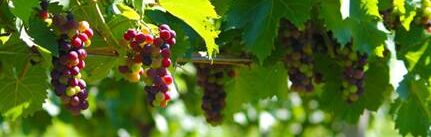
With the heat this week things moved fast, vines at the UVM vineyard hover around 1-2 inches of growth and those at my house at 1440 feet in elevation are at bud burst. It’s time to really be thinking about protecting vines from early season disease infections. Most cold-climate cultivars will not need disease protection until 5-8” of shoot growth, but any vineyards with heavy disease pressure last year and organic vineyards may wish to begin earlier, especially if inoculum reduction through thorough removal of diseased wood and mummy berries and/or dormant application of lime sulfur was not performed. I still recommend our fact sheet, An Initial Integrated Pest Management (IPM) Strategy for New Cold Climate Winegrape Growers as the best resource to boil the decisions down to a simple ‘prescription’, with the caveat that since it was written some new pest management materials have been released and inoculum may have increased in your vineyards which could lead to increased disease pressure. Growers should have an up-to-date copy of the New England Small Fruit Management Guide (on-line and hard copy versions) and/or New York and Pennsylvania Pest Management Guidelines for Grapes as a reference for specific materials, their efficacy, and use considerations. Remember however that the guidelines are written largely for vinifera and less disease-resistant hybrids, so the specific spray programs recommended may be overkill in Vermont vineyards.
The primary disease of concern at this point is phomopsis, as rachis infection at this point in the season is may cause significant fruit loss at harvest. Anthracnose may also be active at this point , given the warm/hot weather are expecting later this week. Vineyards that have had recent problems with those diseases or organic growers using copper or other less-effective materials may consider treating this week; if you haven’t had major problems with those diseases, treatment can wait until the 5-8” growth stage as long as you are using a highly effective contact fungicide like mancozeb or captan. Organic growers are in for a bit more work. The standard fungicides, copper and sulfur, have only fair efficacy against this disease at best.
It is worth noting that both copper and sulfur (including lime sulfur) can cause phytotoxicity on certain cultivars. Dr. Patty McManus summarized her research on copper and sulfur sensitivity in cold-hardy grapes in the 2/8/16 Northern Grapes newsletter, and I’ll summarize it to say that Brianna should receive no copper; and Frontenac (all types), La Crescent, Leon Millot, Marechal Foch, Marquette, and St. Croix should receive no more than 2-3 copper sprays per season. Save those for later when black rot and downy mildew become bigger concerns. Sulfur sensitivity was observed on several cultivars, and its use (including lime sulfur) is discouraged on Foch, Millot, Brianna, and Louise Swenson; with limited (2-3) applications suggested on LaCrescent and St. Croix.
I’d say any time now is good to get your shoots thinned down to 3-6 shoots per foot of canopy. Keep more on more vigorous vines, less on weaker ones.
__
Terence Bradshaw (he/him)
Associate Professor, Specialty Crops
Chair, Dept of Agriculture, Landscape, and Environment
(formerly Plant and Soil Science)
College of Agriculture and Life Sciences
University of Vermont
117/210 – Jeffords Hall | 63 Carrigan Dr
Burlington, VT 05405
(802) 922-2591 | tbradsha
https://go.uvm.edu/alebradshaw
UVM Commercial Horticulture | UVM Fruit Blog
Horticulture Research and Education Center
Message me on Teams
UVM’s Our Common Ground Values:
Respect | Integrity | Innovation | Openness | Justice | Responsibility

UVM is subject to the Vermont Public Records Act and communications to and from this email address, including attachments, are subject to disclosure unless exempted under the Act or otherwise applicable law.