

A downloadable PDF of this blog post is available here.
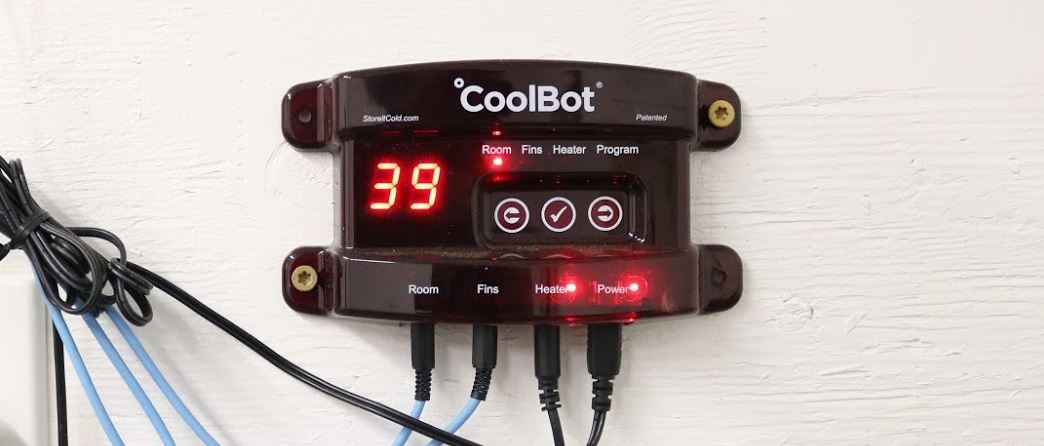
Demand for on-farm cold storage of produce is increasing as local markets for these goods expand. Many local producers are asking about CoolBots™, a tool that works with a window air-conditioner to make a cooler out of an insulated space. This article collects information about CoolBots and highlights some considerations growers should be aware of.
Why use a CoolBot?
CoolBots cost less to install than a traditional refrigeration system. They can be installed by anyone with basic mechanical skills. The maintenance is also something that can be done by most people with basic skills.
In a nutshell
- Understand your storage needs;
- How much of each crop is being stored? How much space is needed for each crop?
- Target temperature and humidity for each crop or group (see USDA Handbook 66 and UVM Crop Storage Planner)
- Cooler size (UVM Crop Storage Planner)
- How often will you be opening the cooler door? How can you reduce that?
- How will you remove field heat prior to storage?
- Build a good cooler box (room)
- Understand the limitations of the CoolBot
- Use a recommended AC unit of appropriate size
- Plan for maintenance (cleaning the air conditioner coil, off-season storage, protection from elements, clearing the drain pan and drain hole, etc.)
- Maintenance and troubleshooting guides are available from storeitcold.com
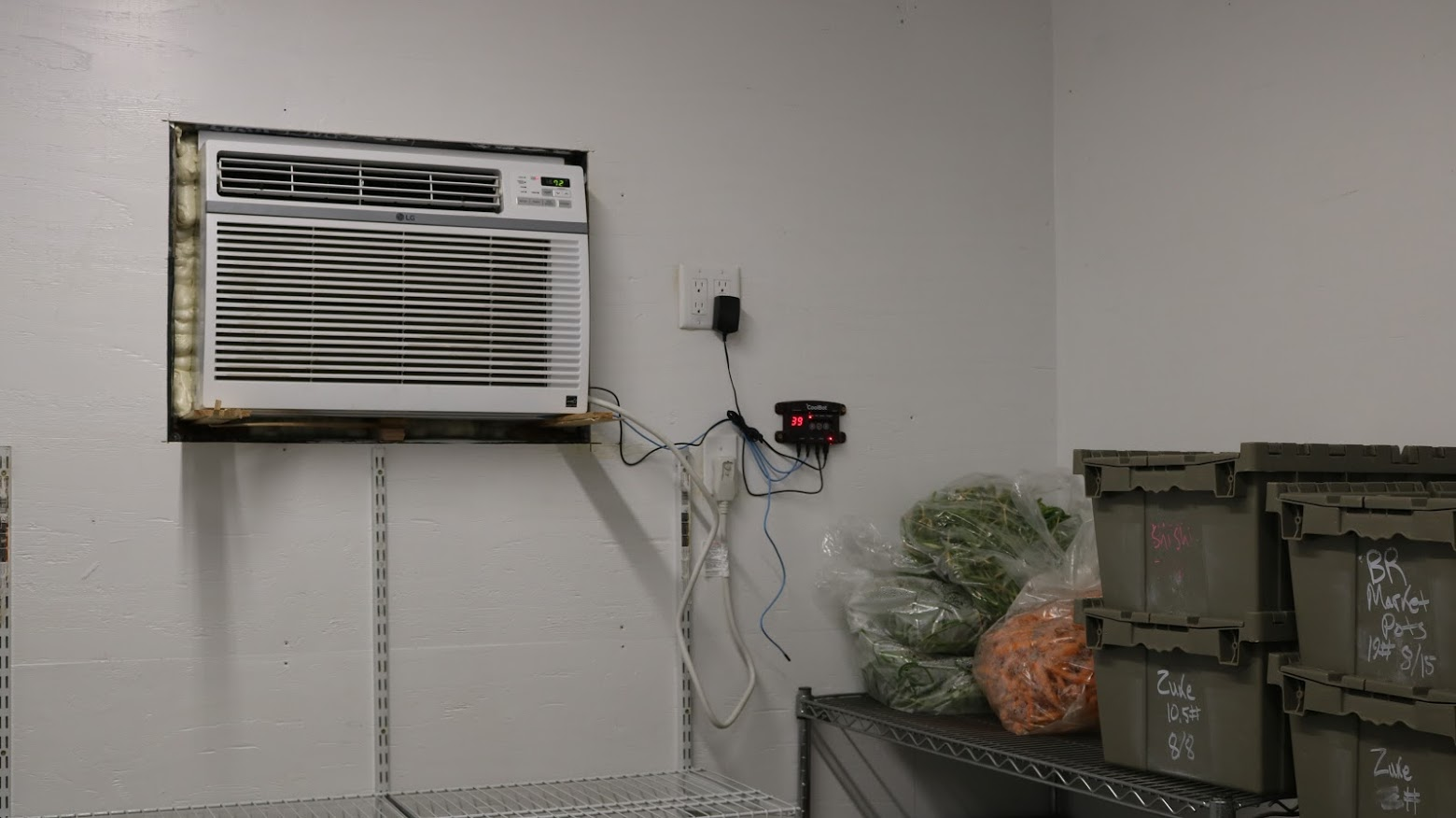
Many vegetable farmers utilize Coolbots ($349), a controller that allows the AC unit to run with a lower temperature than normal, to simplify the refrigeration system of their walk-in coolers.
Store It Cold, the manufacturer, has a website with excellent resources and FAQ’s,including a list of recommended AC units.
CoolBots are NOT recommended for:
- Rapidly cooling a product
- As a freezer – CoolBots perform best above 36 °F and will not go below 32 °F.
- Sites with many door openings per day (for example > 6 times per hour)
- Running through the winter – not a show stopper, but you need to be more careful about which AC unit you choose
Other things to be very aware of, according to the CoolBot controller manufacturer, include
- A well-constructed cooler box – Start with a well-insulated (>R24), well sealed (caulk and spray-foam everything, no gaps) cooler box. The University of Kentucky has an excellent set of documentation, and presentation for a low cost cooler design. North Carolina State University also has a fact sheet with guidance on cooler sizing and construction.
- A well-suited AC unit – avoid portable AC units. The AC unit will need to have a digital display and automatic restart.
- Cooling a space above 61 °F.
A NYSERDA report found that a cost estimate of the CoolBot system (15,000 BTU/hr) is $750 installed compared to $4,400 for a conventional system. The operating costs of a CoolBot system are comparable to traditional refrigeration system.
Cooler Cleaning Checklist
Whether your winter storage rooms are getting bare or you are making the transition from sweet corn to potatoes, what better time to do a good cleaning and even sanitizing than now?
Download this Guide & Checklist as a PDF or read more in the blog post: Spring Cleaning – Farm Cooler Checklist
Comments are closed.