
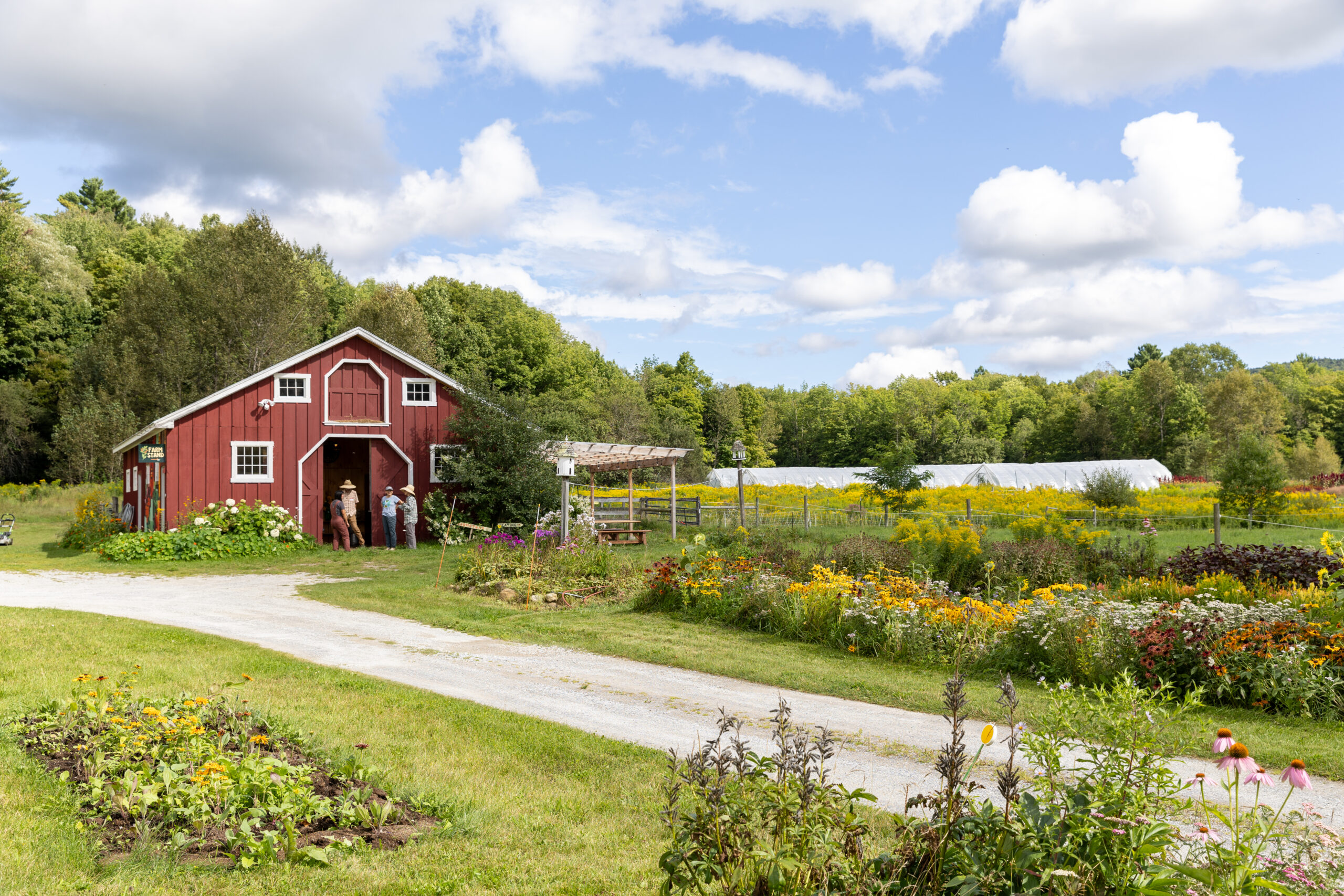
On Tuesday August 25 the VT Vegetable and Berry Growers Association and UVM Extension hosted a workshop at Stone’s Throw Farmstead in Shrewsbury, VT. Jess Purks and Connor Self grow certified organic vegetables and flowers at a human-powered scale with minimal tillage on one acre. The pasture surrounding the farm is used for a small flock of sheep and a few alpacas. This is their fourth growing season at Stone’s Throw Farmstead in Shrewsbury, Vermont. Products are sold through two farmers’ markets, a farm stand and wholesale accounts.
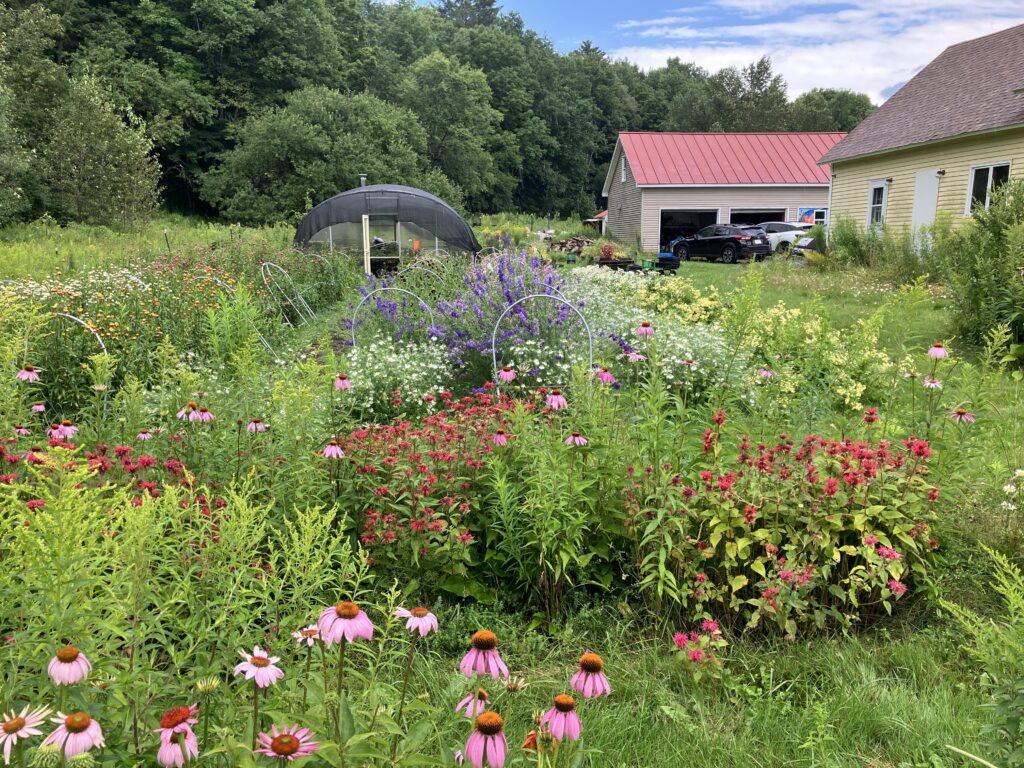
Cut flowers on the farm
Cut flower production brings several benefits to the farm. Flowers add beauty to the landscape and biodiversity to support insects, birds and the soil. Bouquets are a high value item at farmers market that increases individual customer purchase totals. Dried flowers extend late season flower sales.
NRCS Practices
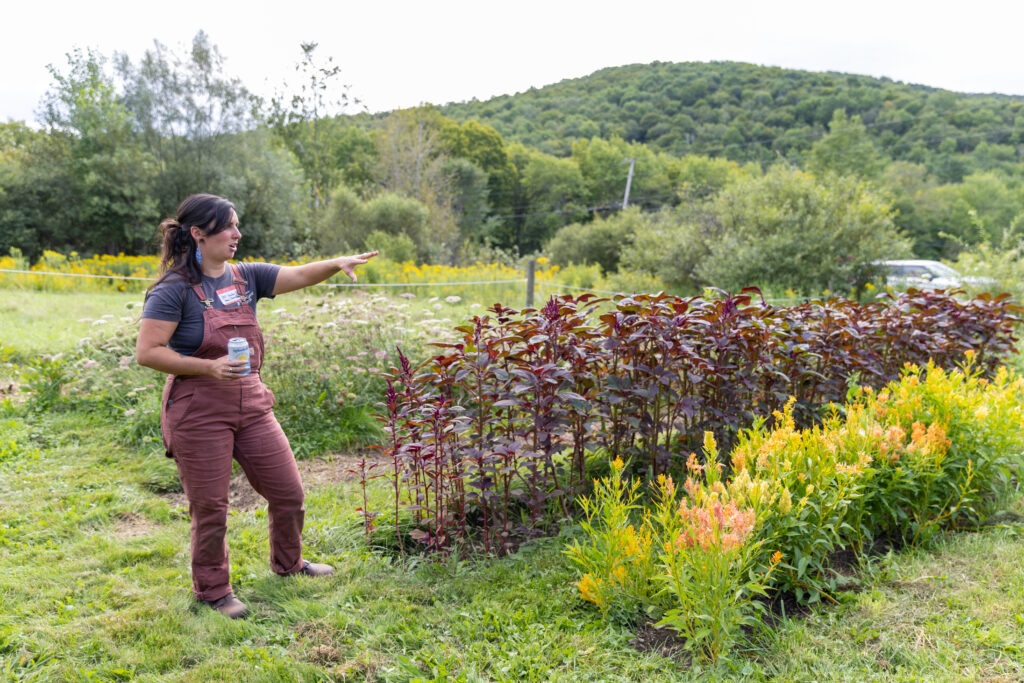
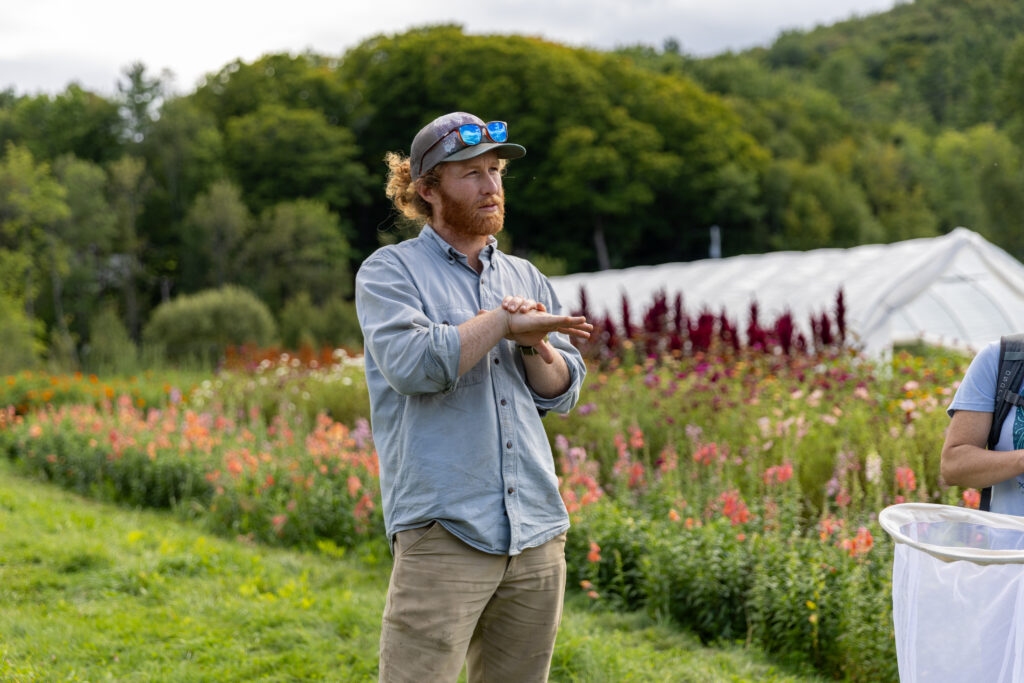
Our conversation on NRCS practices was guided by the interests and questions of all our workshop participants. This provides a snapshot of a few NRCS practices in action on a late August day. Jess and Connor wrote out goals for their farm and reviewed the list of NRCS practices before meeting with their planner. Their thoughtfulness and clear communication helped them to identify practices that were right for their farm when planning with NRCS.
High tunnels (325)
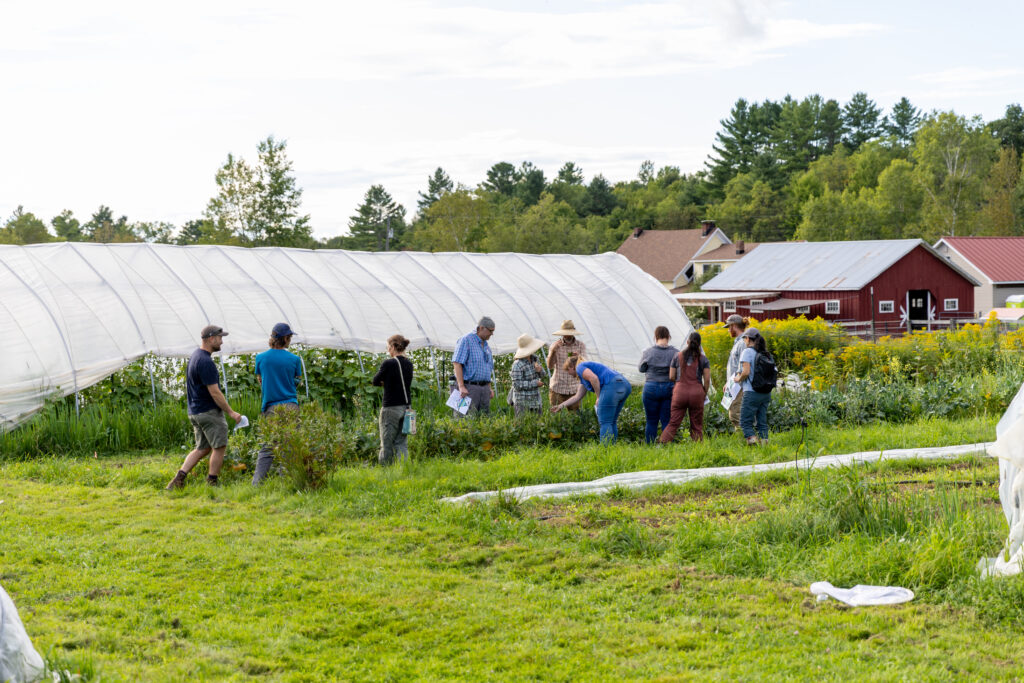
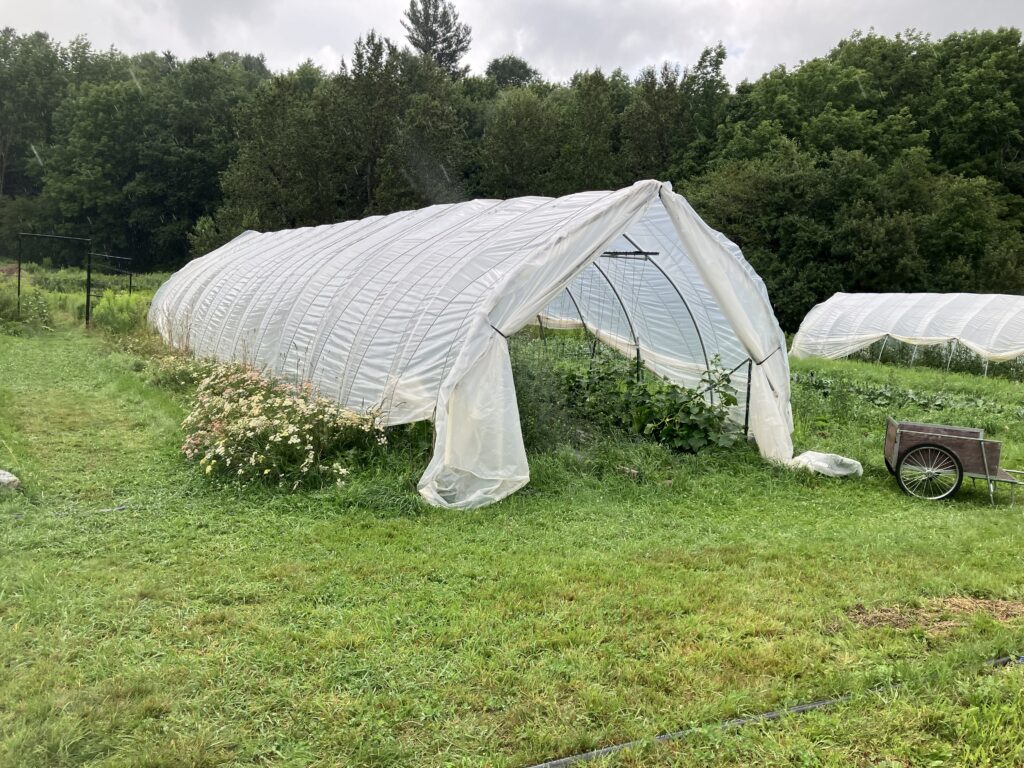
To match the human-scale of the farm, they have a 50’ bed system where they utilize movable 16’ x 50’ Farmer’s Friend gothic caterpillar tunnels. Moving the tunnels fits their crop rotation system and allows them to put a tunnel over a growing crop (e.g. move the tomato tunnel over a bed of winter greens). We had a good discussion on field versus tunnel growing conditions and when it makes sense to have permanent tunnels versus movable tunnels.
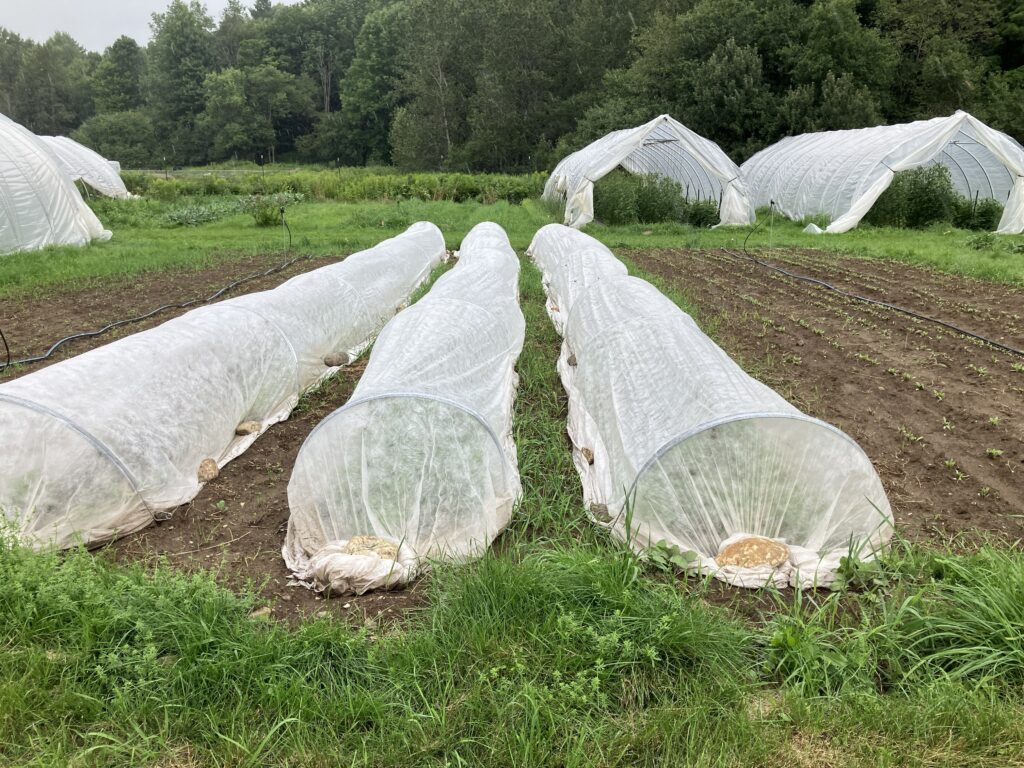
Low tunnels (821)
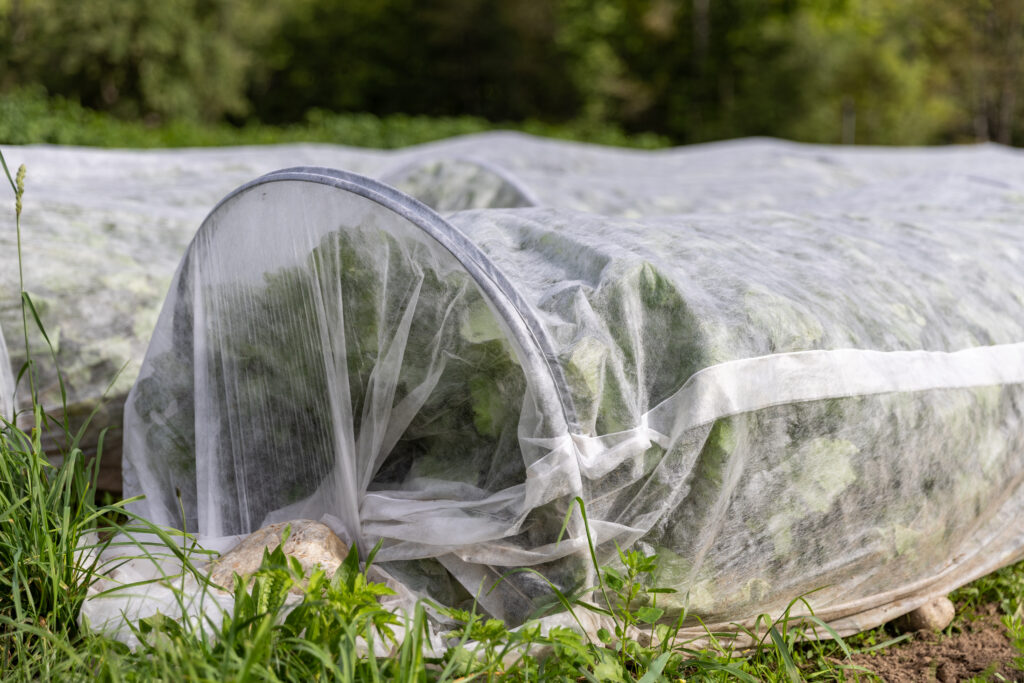
They are using the Kwik Hoop system, which is a hoop that has a channel for a wire retainer to secure your row cover without needing to bury or sandbag the edges of the cover. This system is great for frost protection, but not as effective for excluding insects.
Reduced Tillage (345)
Jess and Connor began the farm as no-till with all hand labor. They are shifting to a reduced-tillage model with a BCS walk behind tractor to use for flail mowing and bed prep. Bare soil is kept to a minimum by using transplants that quickly grow a canopy to protect soil or direct seeding fast growing crops. They are also experimenting with sod pathways to keep more of the soil covered.
Pest Management Conservation System (595)
The NRCS implementation requirements for Trapping, Monitoring, Scouting guided planning this practice. Jess and Connor discussed the target pests to focus on and the records needed to track scouting and methods used to control pests with their NRCS planner. Connor has a log to track pests on the farm. This UMass template is one example of how to track pests and control measures implemented.
Pest Management Strategies in use on the farm
- Physical barriers to prevent pest damage (flea beetles, cabbage maggot)
Insect netting or row cover is used to exclude flea beetles from arugula and cabbage root maggot from radishes. For arugula the edges of the netting are buried to completely exclude the pest. For cabbage root maggot you can look at the NEWA models to track flight times of the root maggot fly. - Change the cultural conditions (slugs)
Mulching of flower transplants with old hay or livestock bedding led to transplants being completely skeletonized. Jess and Connor now apply mulch to cover the soil over the winter then remove it in the spring. - Change the timing of crop plantings to avoid the pest (Colorado potato beetle)
Delaying potato planting until late June or early July helps to avoid the first generation of Colorado Potato Beetle (CPB). VVBGA webinar on What’s new in CPB control including delayed planting. - Encourage natural predators and parasitoids (Japanese beetle, CPB)
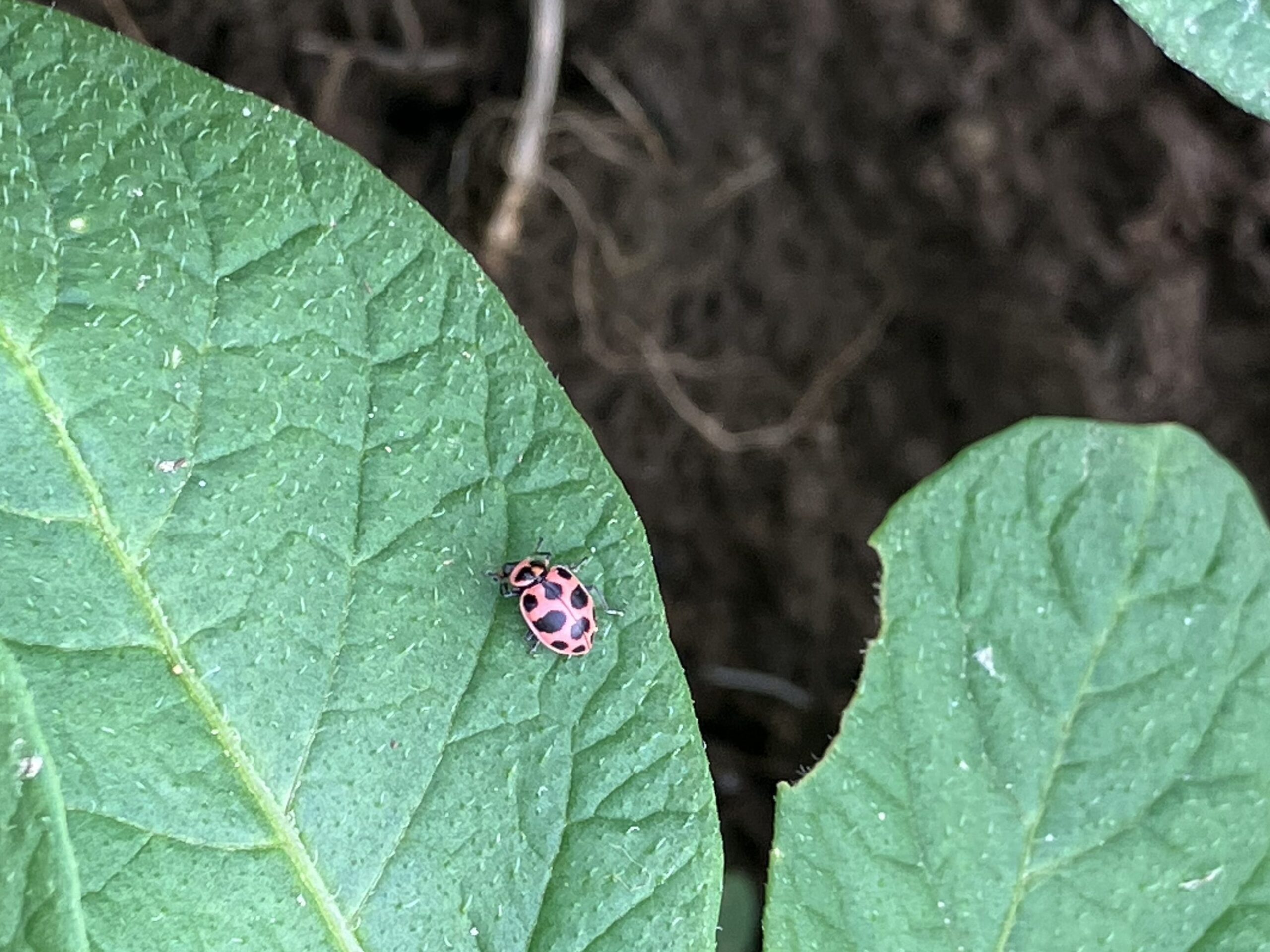
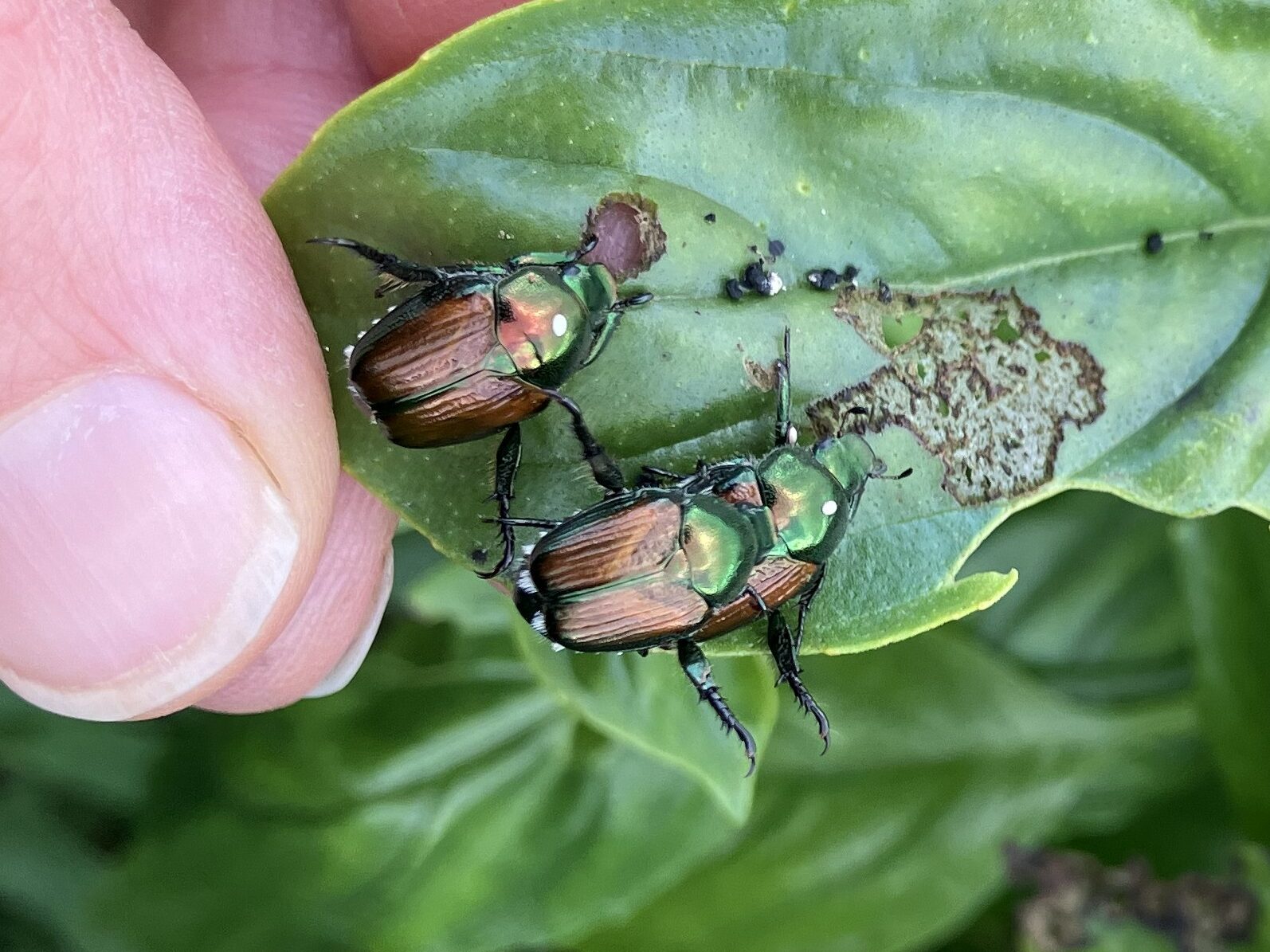
There is a lot of great habitat on the farm encourage insect predators and parasitoids that can help with pest control. Many Japanese beetles on farm were parasitized by the winsome fly. Since this parasitoid was not providing a high level of control for the farm, we discussed when and how mass trapping can work for Japanese beetle control. Julie scouted this planting in late July and only found 3 CPB beetles plus many spotted lady beetles which eat CPB eggs. - Choose disease resistant varieties
Downy mildew resistant varieties are important in baby greens production.
Scouting fun on the farm
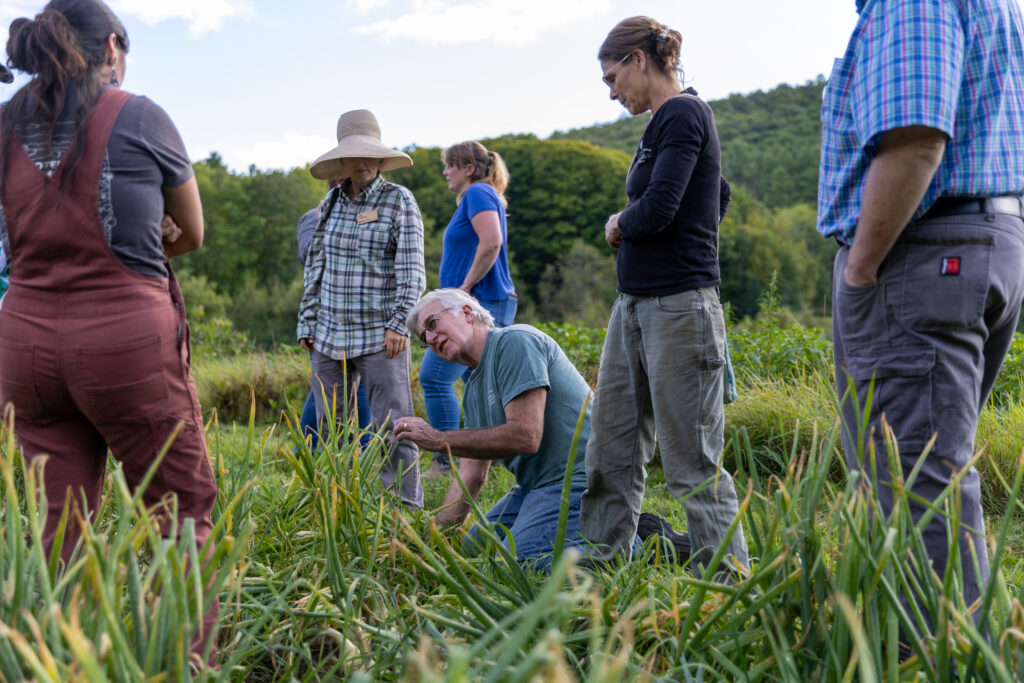
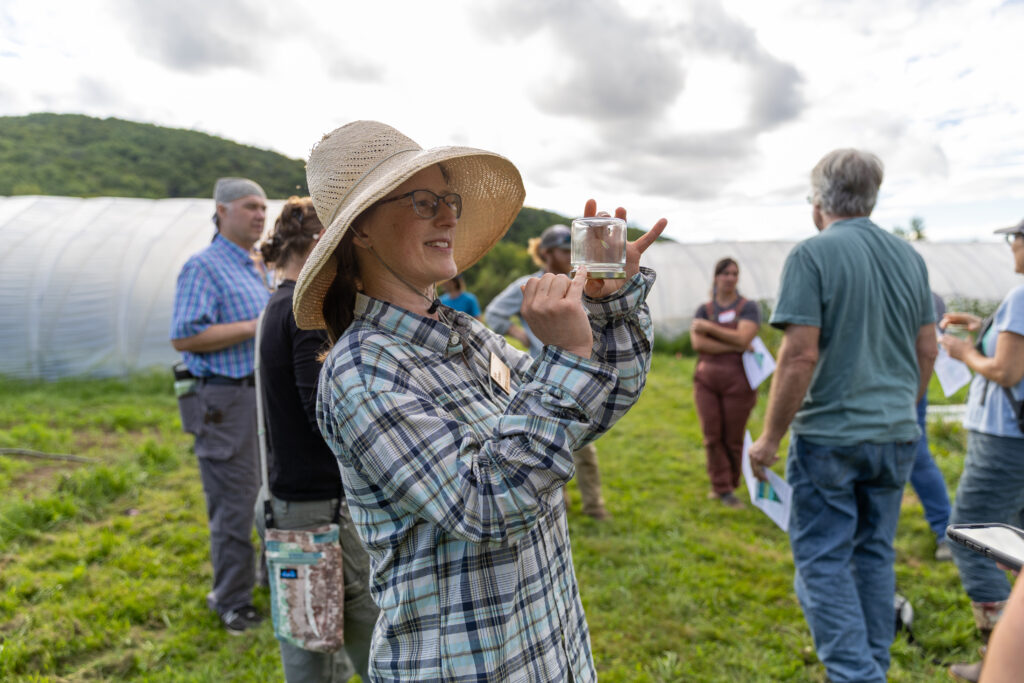
We scouted for pests in the sprouting broccoli, potato, onion and beet crops. While we did see some pests, none of them were doing enough damage to be of concern.
What did we see?
-Sprouting broccoli- Low levels of flea beetle and imported cabbage worm.
-Onions- Overall the crop looked great! There was some thrips damage and secondary disease as a result. Vern recommended paying attention to good curing conditions to prevent problems in storage. VVBGA webinar on managing diseases and pests in onion.
–Potatoes- Beautiful crop of several different varieties! We saw some leaf hopper, but no signs of hopperburn. Becky shared that different varieties of potato vary in susceptibility to leaf hopper, so varietal selection can be one technique to deal with leaf hoppers.
-Beets- Very low levels of Cercospora and a few leaf miners.
Resources for ID, management and scouting
New England Vegetable Management Guide for ID and current management options
New England Small Fruit Management Guide for ID and current management options
UVM Plant Diagnostic Clinic for helping with insect and disease ID
UVM scouting blog
UMass scouting resources
UVM High Tunnel Scouting for beginners
Xerces Society Resources on Beneficial Insects
Insects at Work: Beneficial Insects in Small-Scale Farms and Community Gardens
Beneficial Insect Scouting
Beneficial Insects for Natural Pest Control: Soil Scouting
Beneficial Insects for Natural Pest Control: Foliage Scouting
Beneficial Habitat and Insects on the Farm
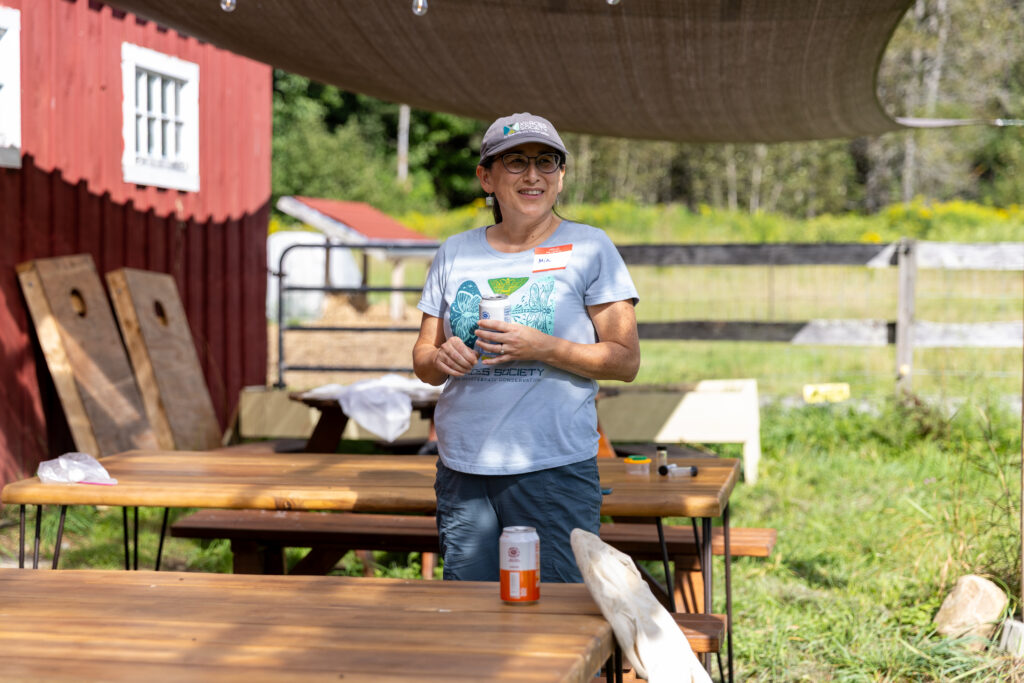
This event was supported by the Transition to Organic Partnership Program, One Hive Foundation and the Vermont Agency of Agriculture, Food, and Markets. Thank you to Mia Park from Xerces Society for joining us to talk about insects and the 595 Pest Management practice! Photos by Andy Chamberlin and Julie Callahan.