
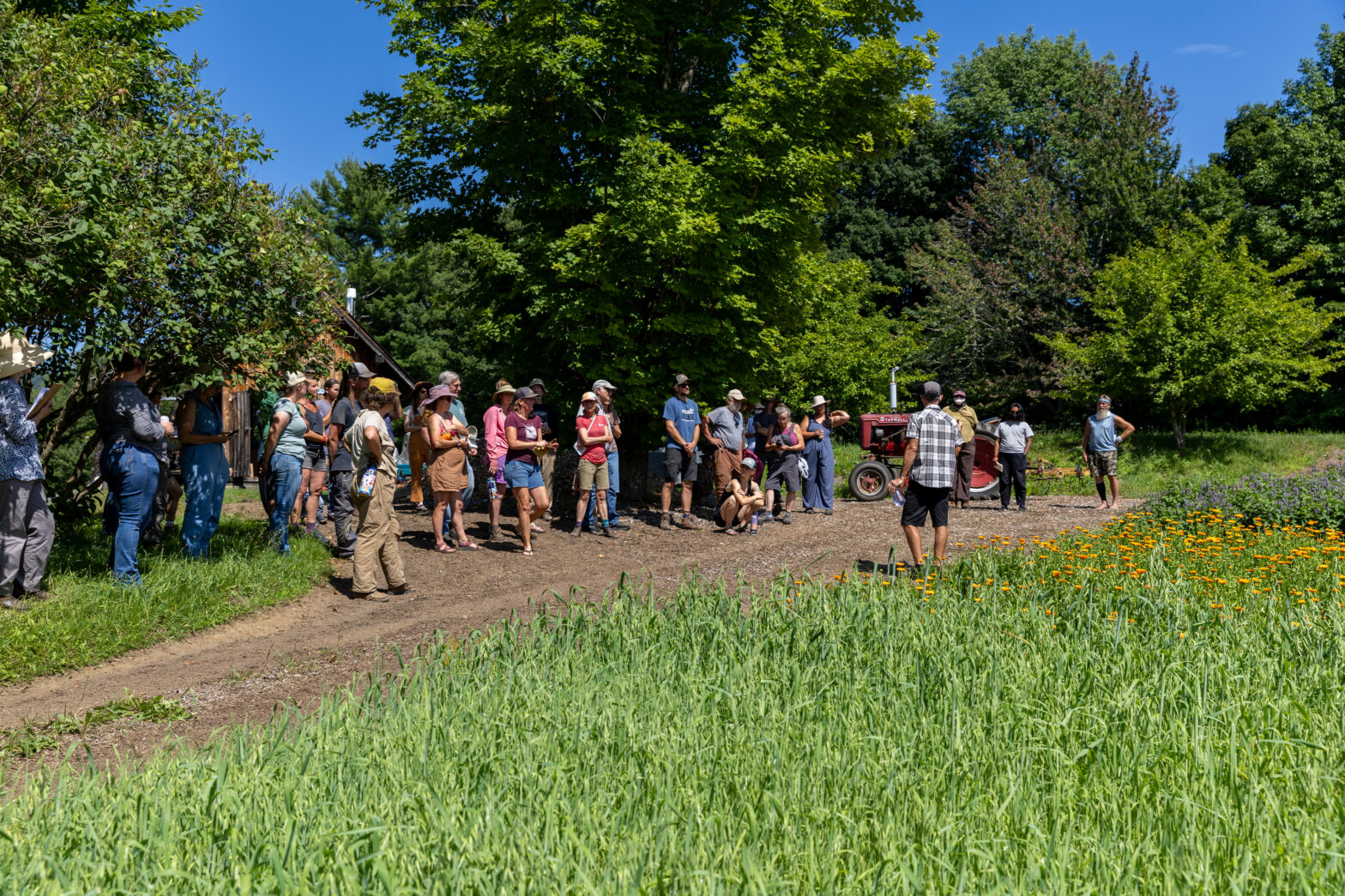
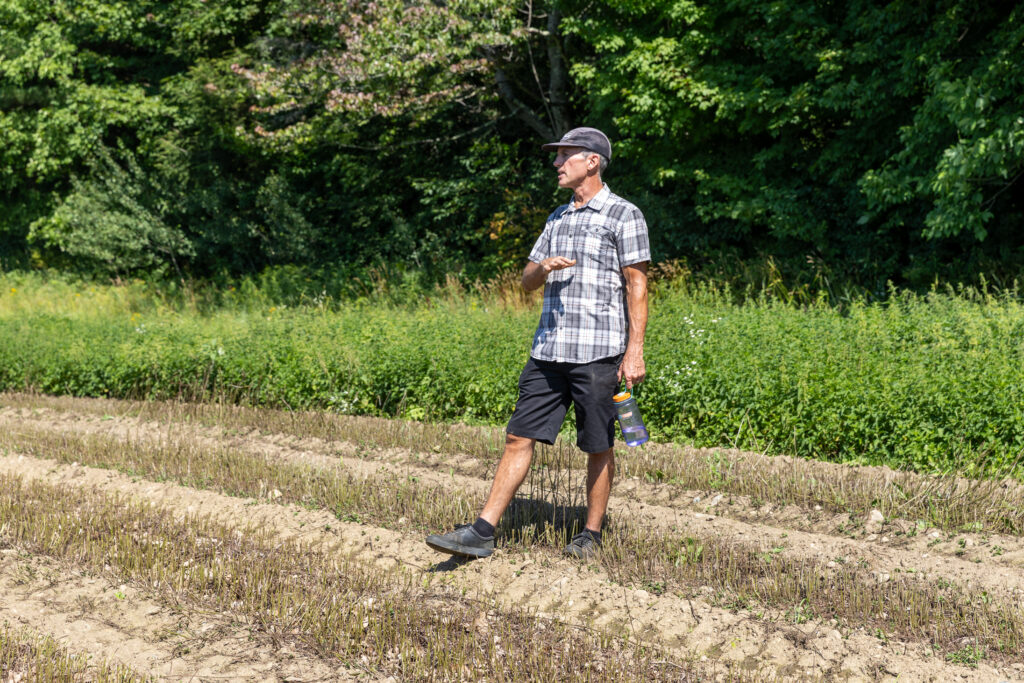
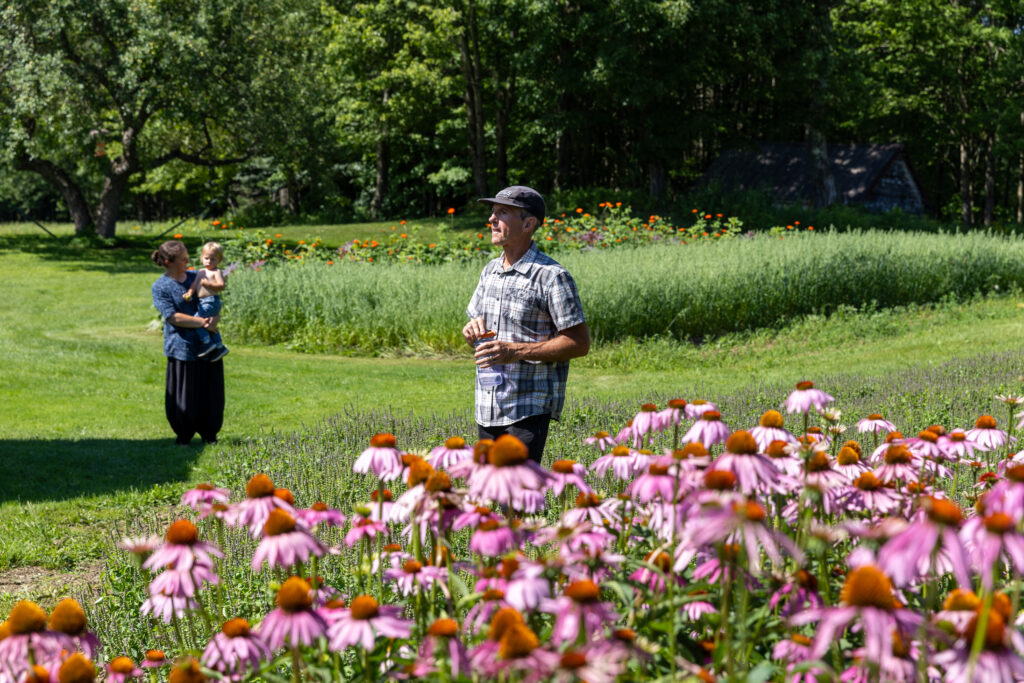
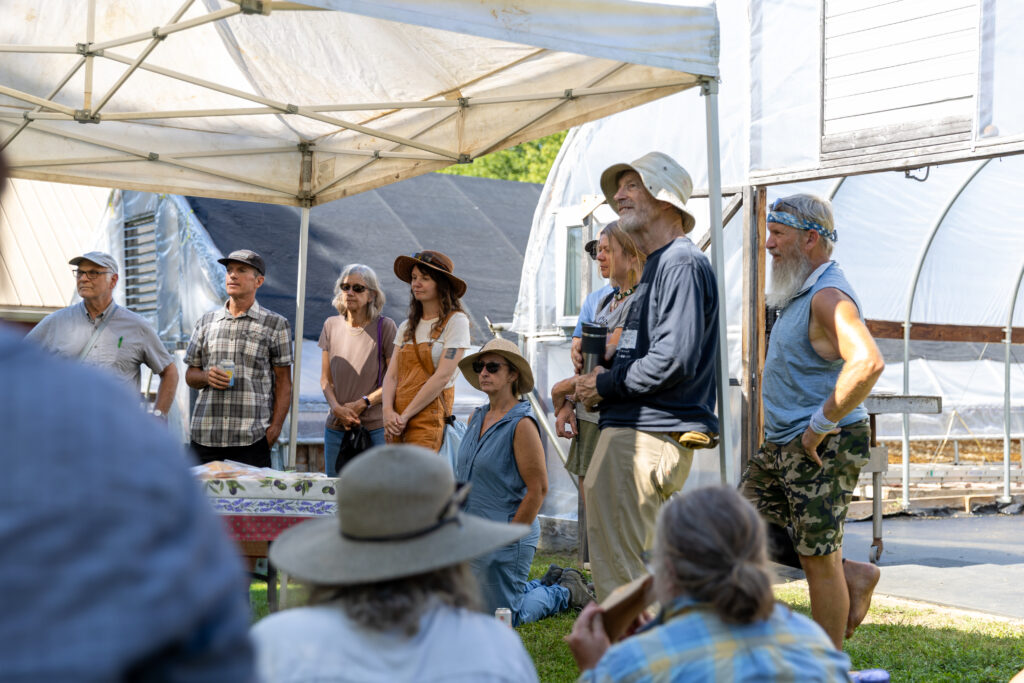
On Wednesday August 5 the VT Herb Grower Growers Initiative, in partnership with the VT Vegetable and Berry Grower’s Association, hosted a workshop at Zack Woods Herb Farm in Hyde Park, VT. Jeff and Melanie Carpenter shared a wealth of information during the farm tour.
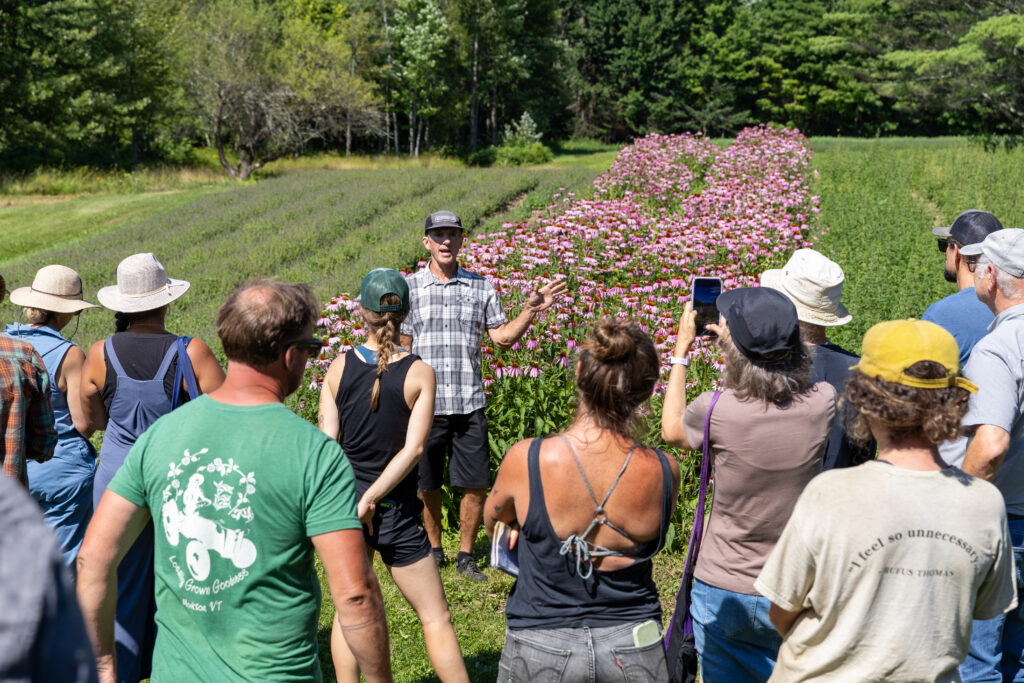
Farm Background
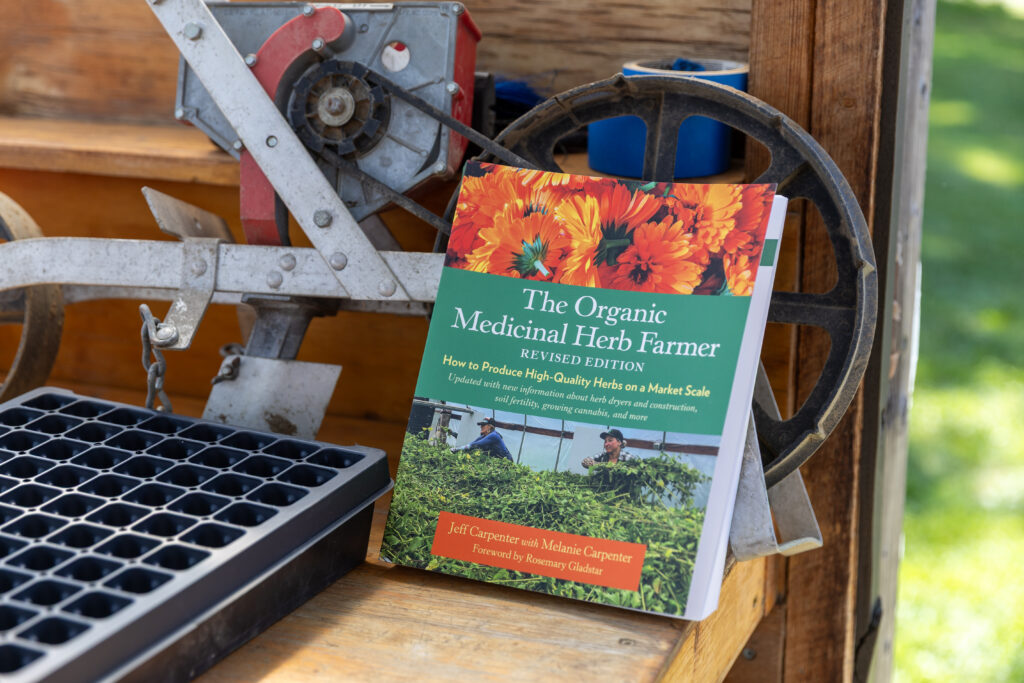
Zack Woods Herb Farm started in 1999. This is their 27th year growing herbs – a testament to the joy and success in the work. There has been an expansion and contraction of the business over the years. They are now reaching the sweet spot with 5 to 6 acres in production focusing on 12-13 species. These species are suitable for the climate, enjoyable to grow and in high demand. In 2012, they had a farm business mentorship with Richard Wiswall through a NOFA VT program. With Richard’s help they learned to “Farm for profit, not production.” The Vermont Farm Viability program can help you find a business advisor for your farm. The Organic Medicinal Herb Farmer by Jeff and Melanie is a great resource for technical information for mid-scale herb growers.
Harvesting tools
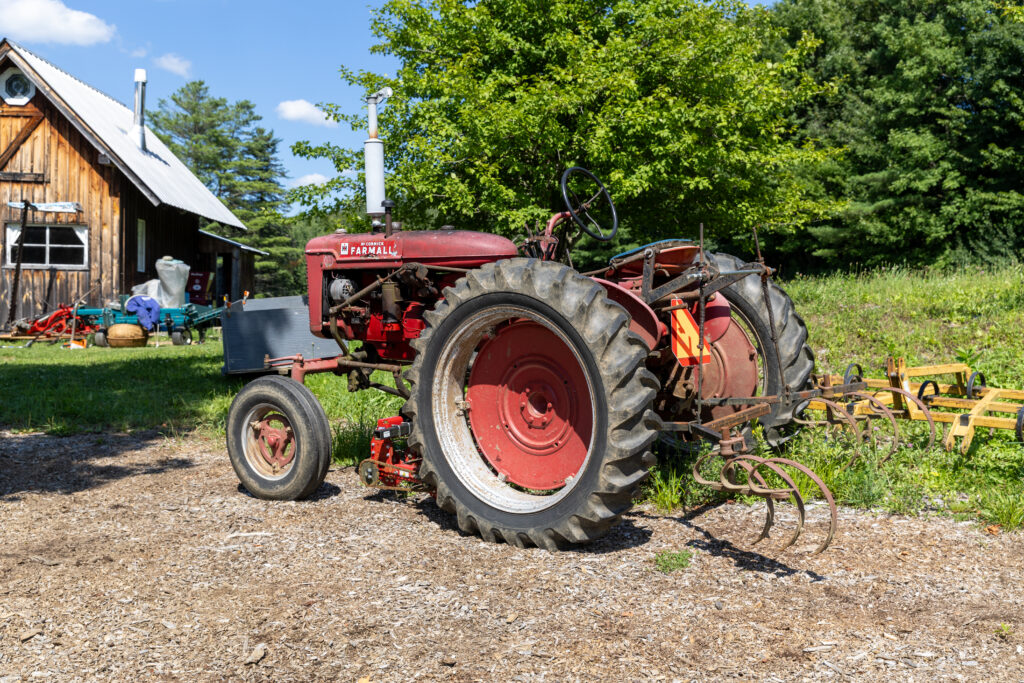
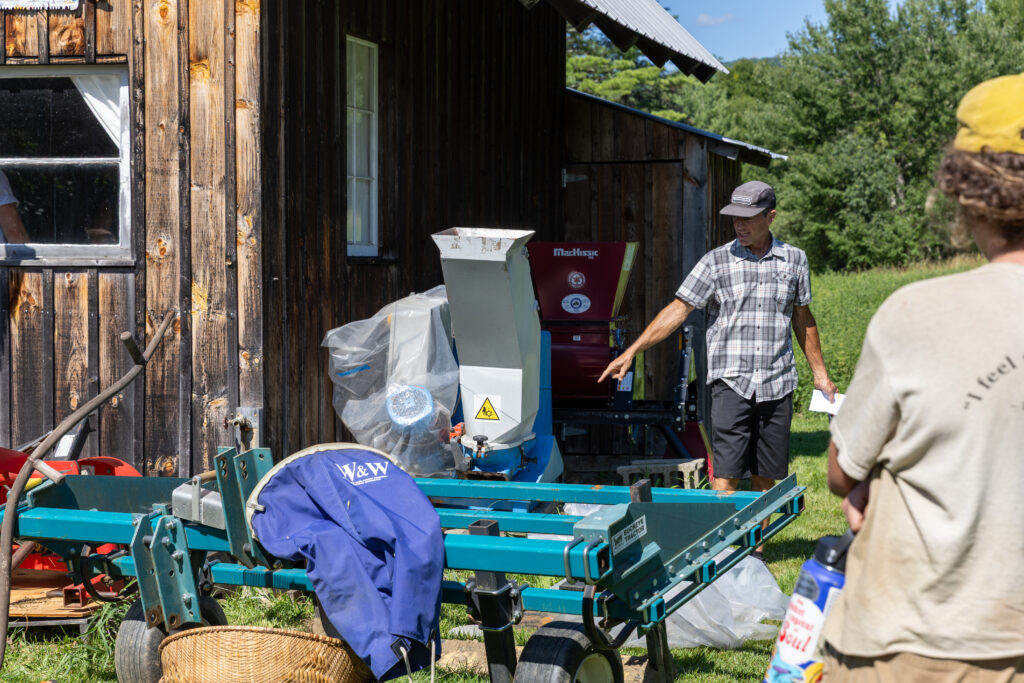
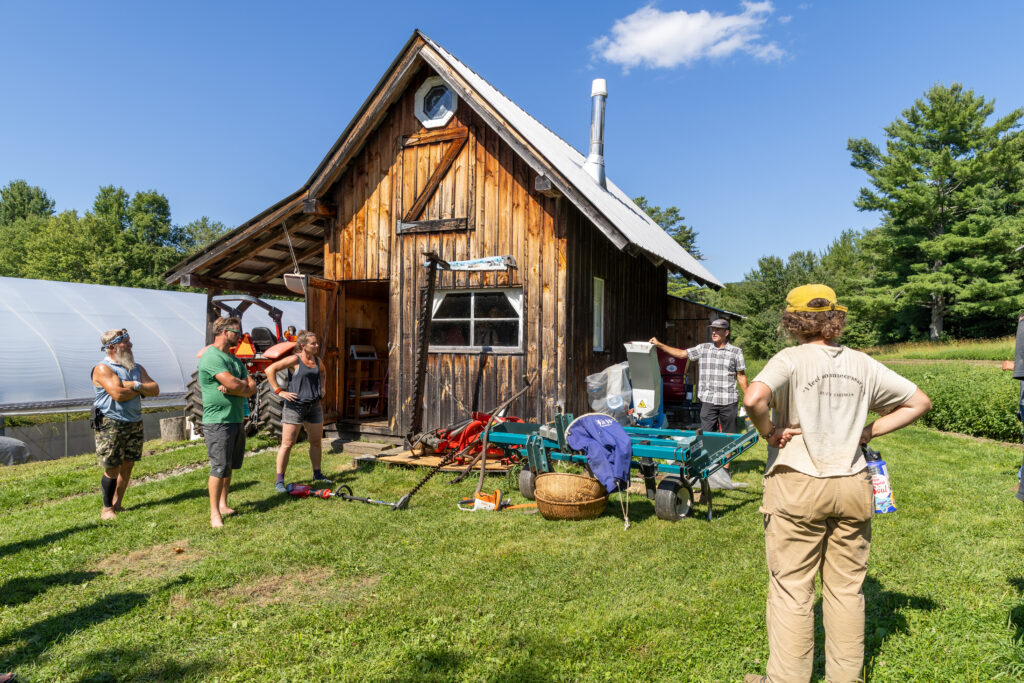
Jeff and Melanie are fiscally conservative and were hesitant to “tool up”. Wiswall helped them realize mechanization was worth the investment. The return on investment for some equipment was almost immediate (i.e. transplanter, root digger, sickle bar mower). Harvest solutions change as you scale up production. Examples include moving from Field knife to scythe to electric hedge trimmer to tractor-powered sickle bar for leaf harvest or from spading fork to chain lifter to bed lifter for root harvest. Blossom harvest is still done by hand into Wells and Wade harvesting bags or baskets.
Sarah from Hillside Botanicals recommends the Milwaukee M18 FUEL Articulating Hedge Trimmer as a nice, ergonomic option for those who may be cultivating smaller acreage. Think of it like a hand-held, battery powered sickle-bar mower/harvester. This is excellent for scaling up from harvest knives for larger amounts of herbaceous crops (i.e. mint family, nettles etc) if you don’t have the need, space or tractor for a full PTO-driven sickle bar mower/harvester. You can also opt for the QUIK-LOK system, which has interchangeable heads (weed wackers etc.) allowing you to use the same power head.
Drying set up
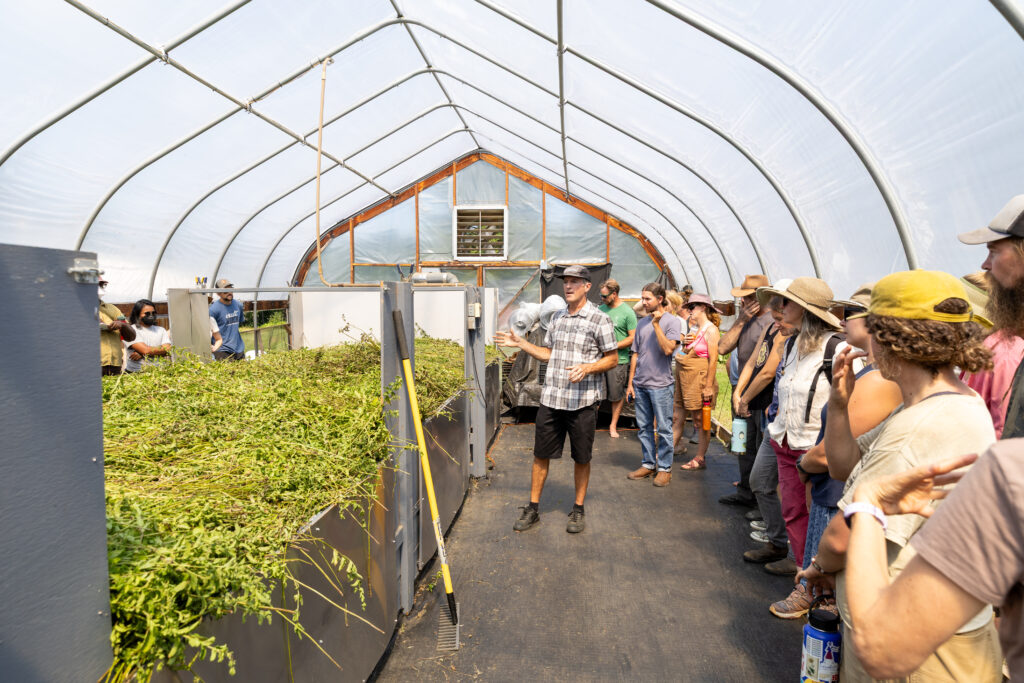
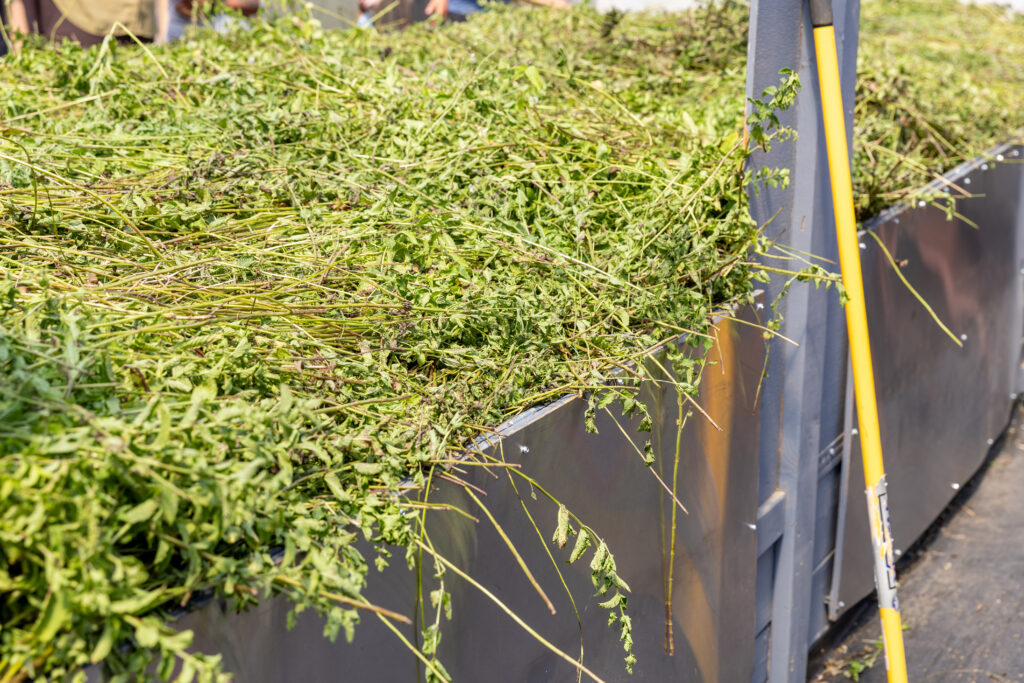
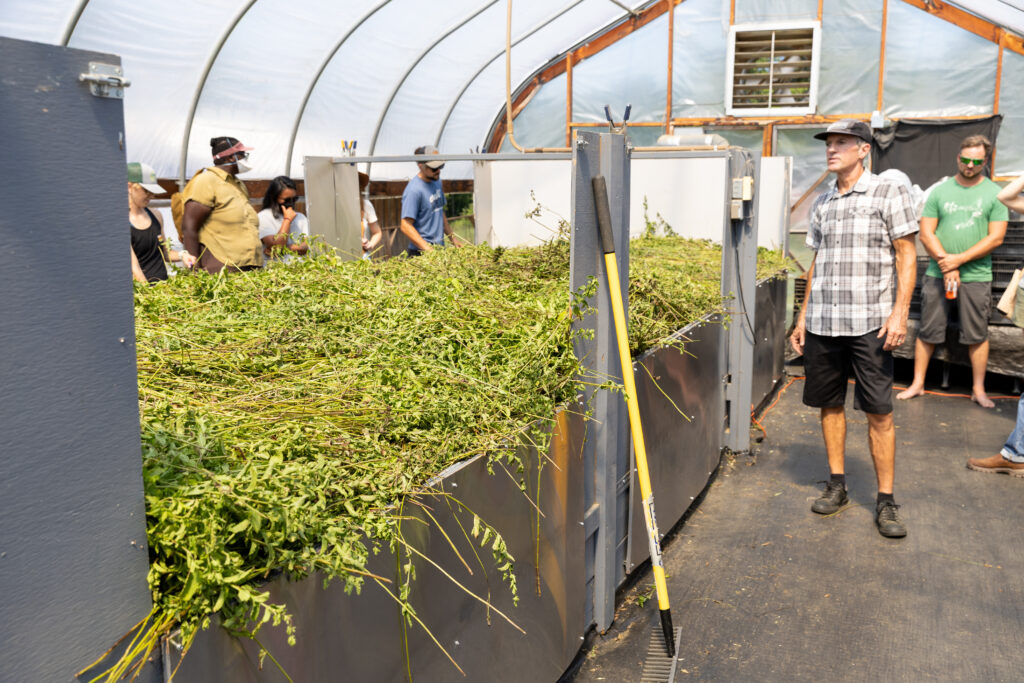
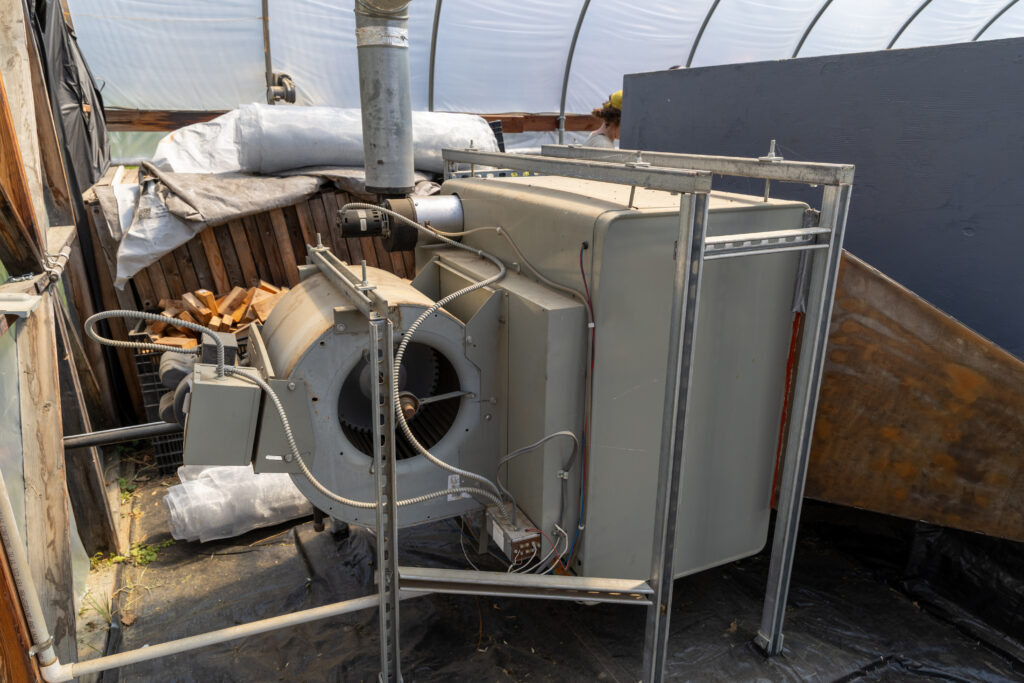
The farm started with a passive tunnel drying system with racks and screens that relied on heat from solar gain. Jeff toured herb farms to look at different drying systems. Chris Callahan (UVM Extension-Ag Engineering) helped them create their own batch dryer design based on what they saw. The batch dryer (aka “magic box”) features a stainless-steel lining and stainless grates, which double as a screen for the first garbling. They benefit from having this unit in a tunnel for two reasons: 1) Solar gain means they need to use less propane and 2) The open sides vent humidity so fans run less using less electricity.
Processing of herbs
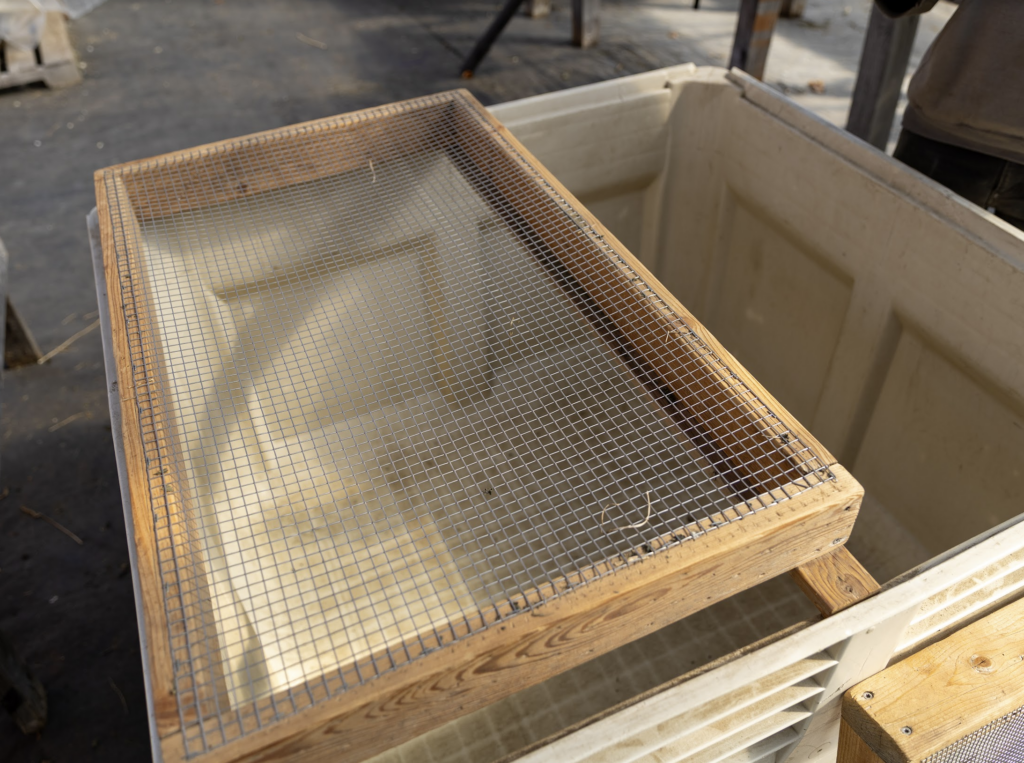
Hand processing of herbs can be done efficiently. You need to be thorough and speedy to make a profit. Hand processing adds quality control step, a higher quality product than machine-processed herbs and the medicine of people processing by hand. Food grade equipment is used for storage and handling- shovels, plastic macro bins, woven plastic totes, and ½” or ¼” stainless steel mesh used for garbling. To work safely with all the herb dust – wear a mask, roll the sides up and use exhaust fans. Protect dried products from light (using tarps) and moisture (keep the product on a pallet to prevent ground moisture from infiltrating).
Production
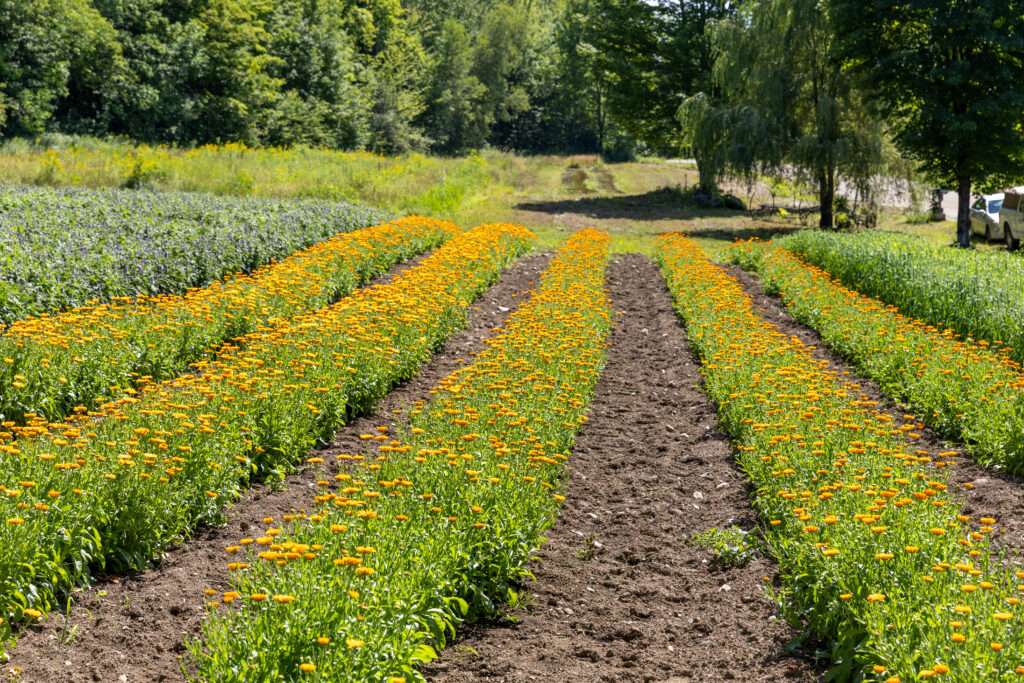
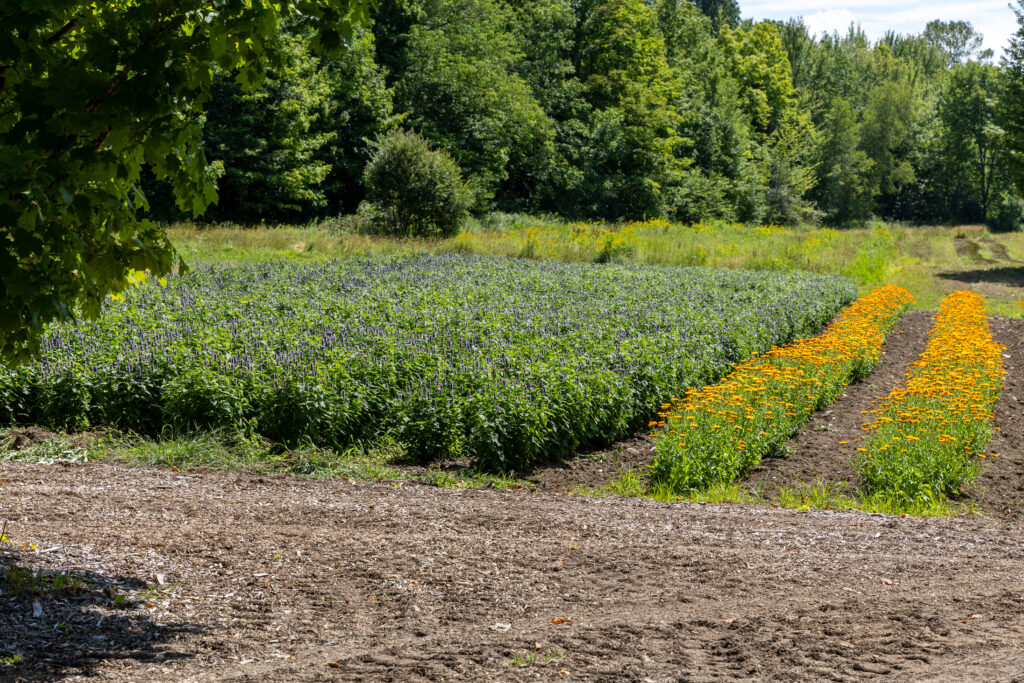
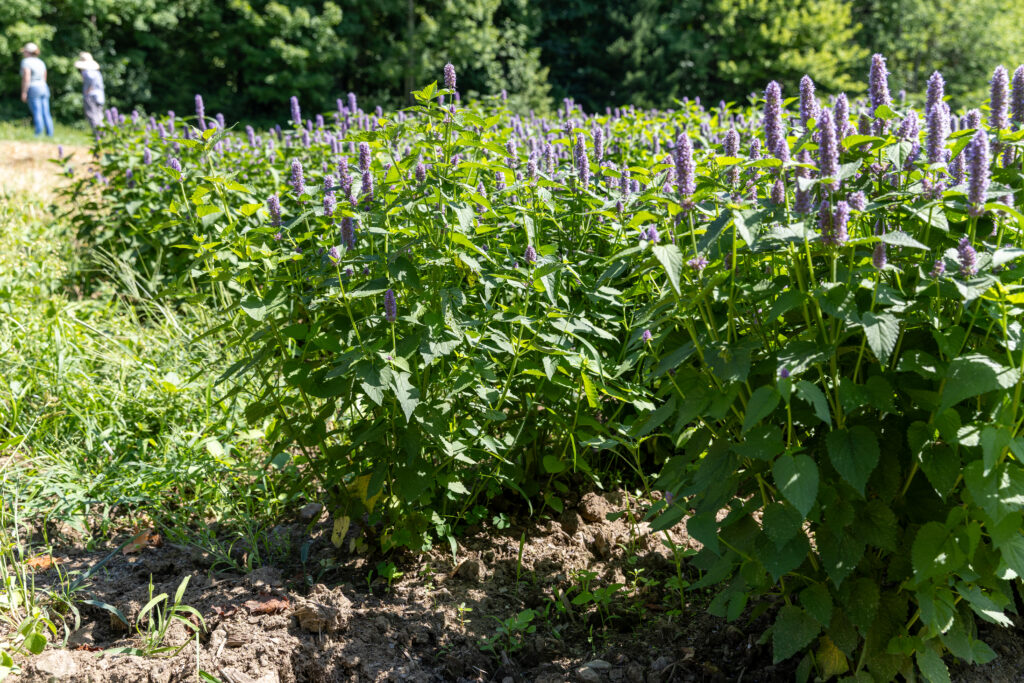
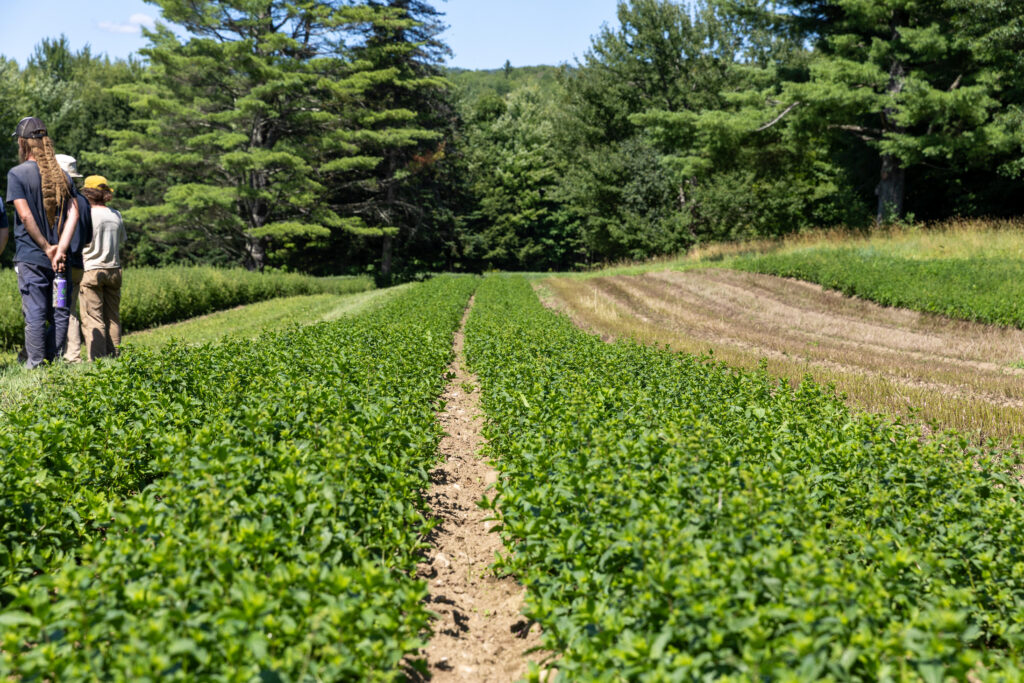
Their field planting schematic is designed to meet the plant needs and for efficient use of tools. Beds are 6’ on center with crops grown in 1 row (calendula), 2 row (anise hyssop) or 3 row (California poppy) beds. Crop rotation is driven by the perennial nature of the herbs. Adapting to climate change needs to be part of your plan. Weather patterns and extremes have ramped up in the years they’ve farmed. One resilience strategy is using soil conservation practices on their sloped land like cover cropping.
Herbs are wild plants, so are often resistant to disease and pests. They have a mind of their own regarding germination as compared to cultivated flowers and herbs. They seed heavily into 20-row trays to make up for spotty germination. Other herb propagation tips include using overhead misters to keep germinating perennials from drying out and lightly cover seeds with soil (rather than no cover) to reduce damping off. They also propagate some plants from vegetative cuttings (lemon balm, mint, stinging nettle). Perennial plants decline over their lifespan, so cuttings from young plants are best.
Organoleptic assessment
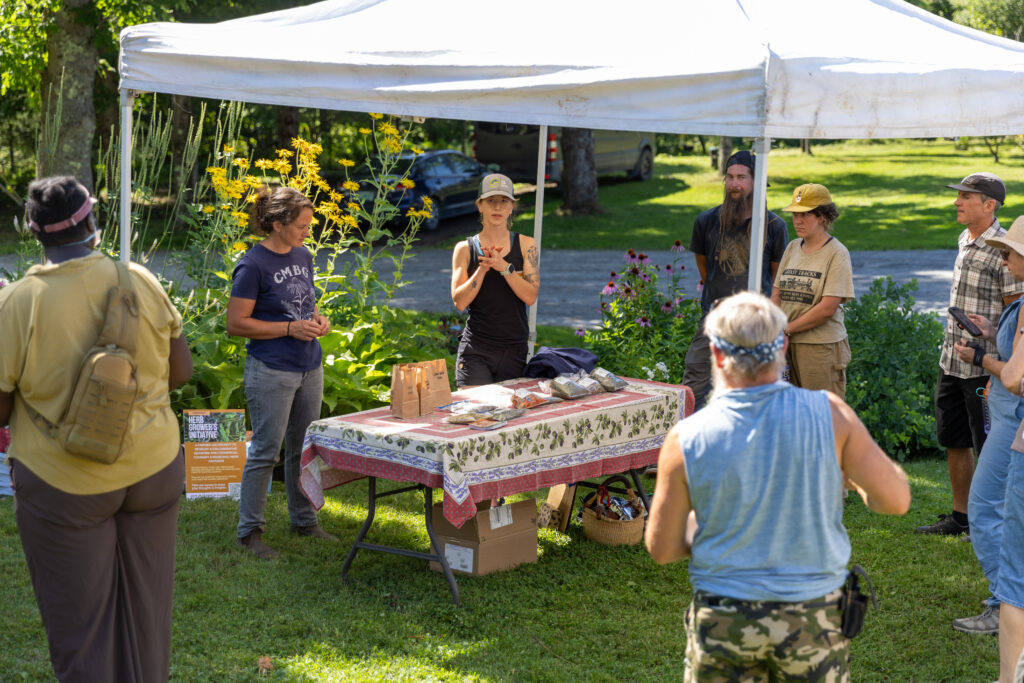
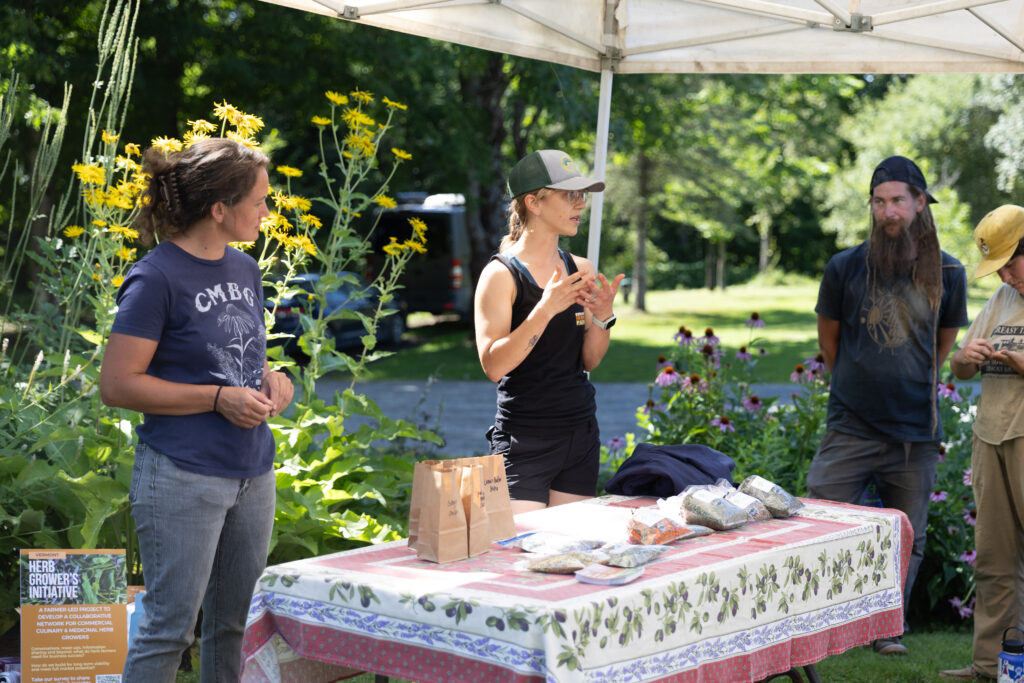
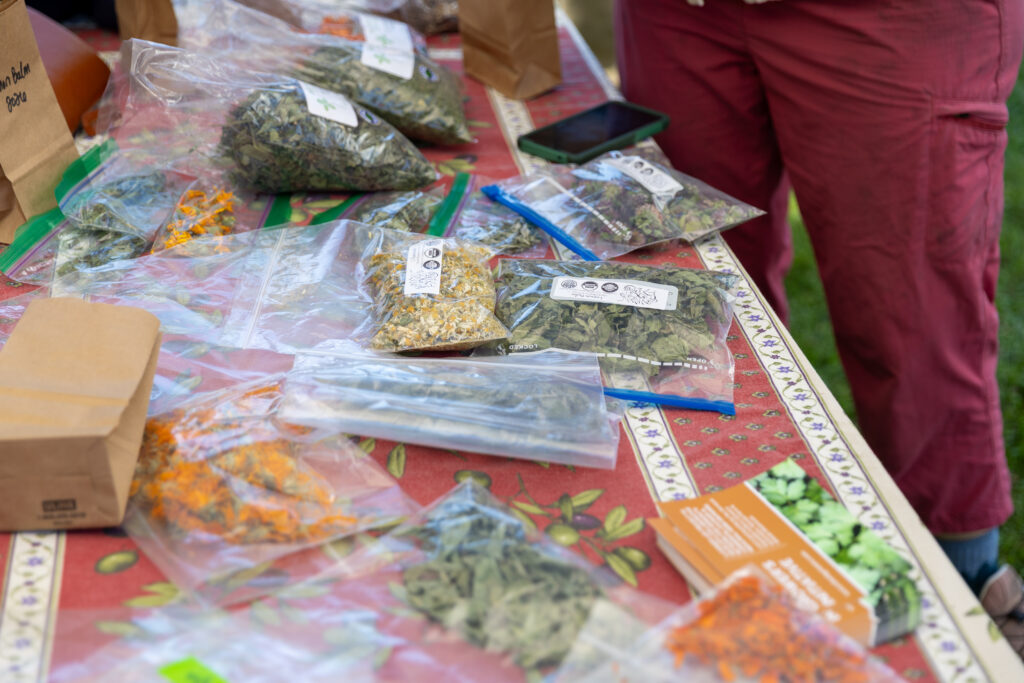
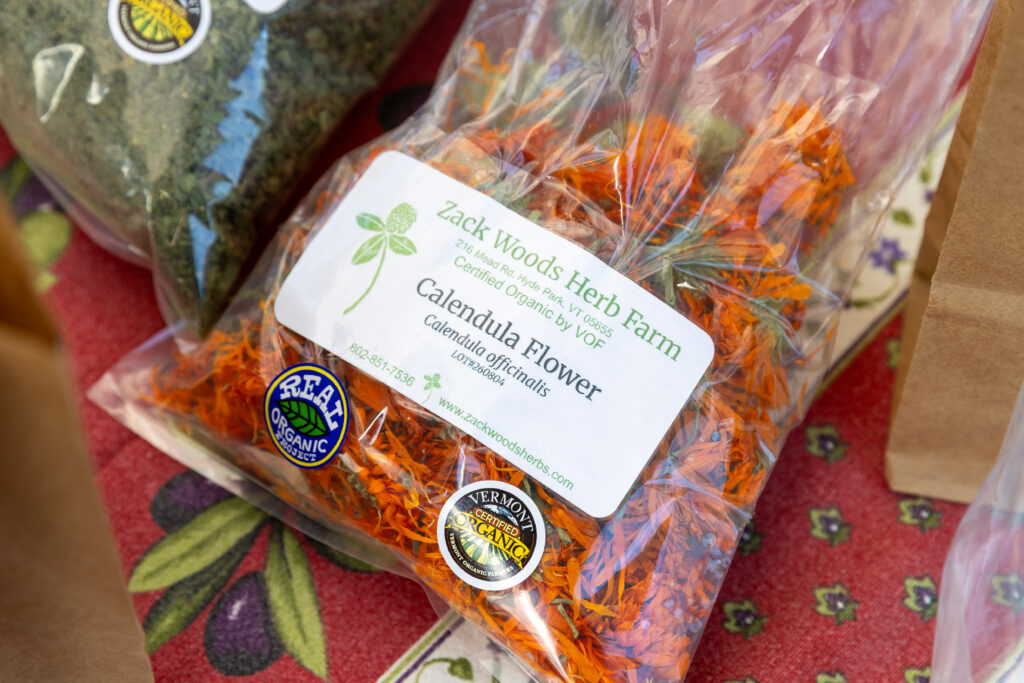
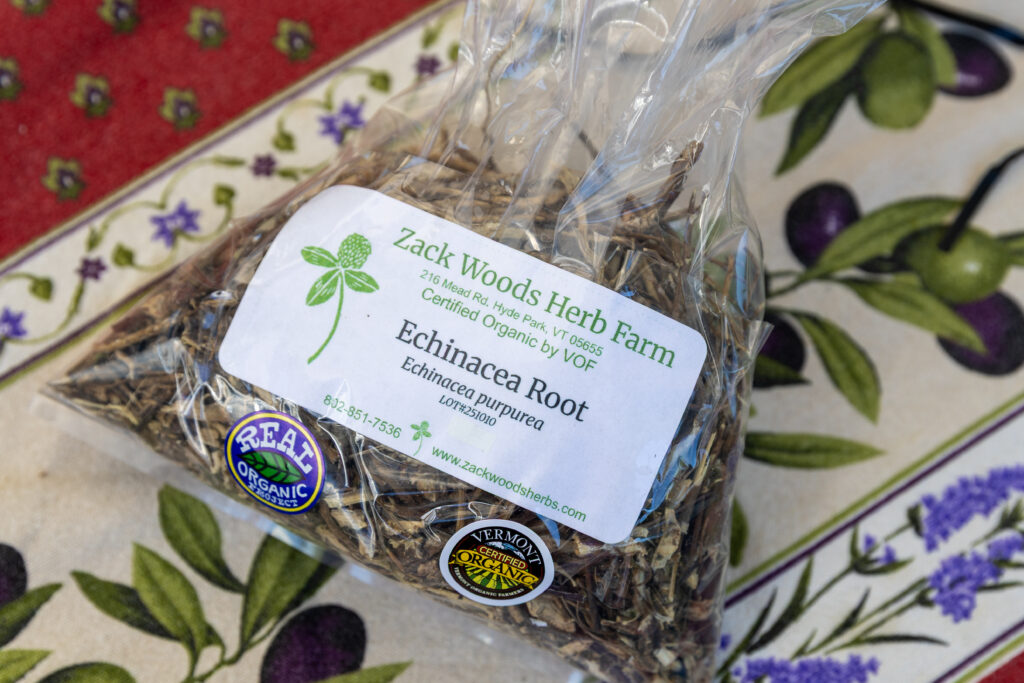
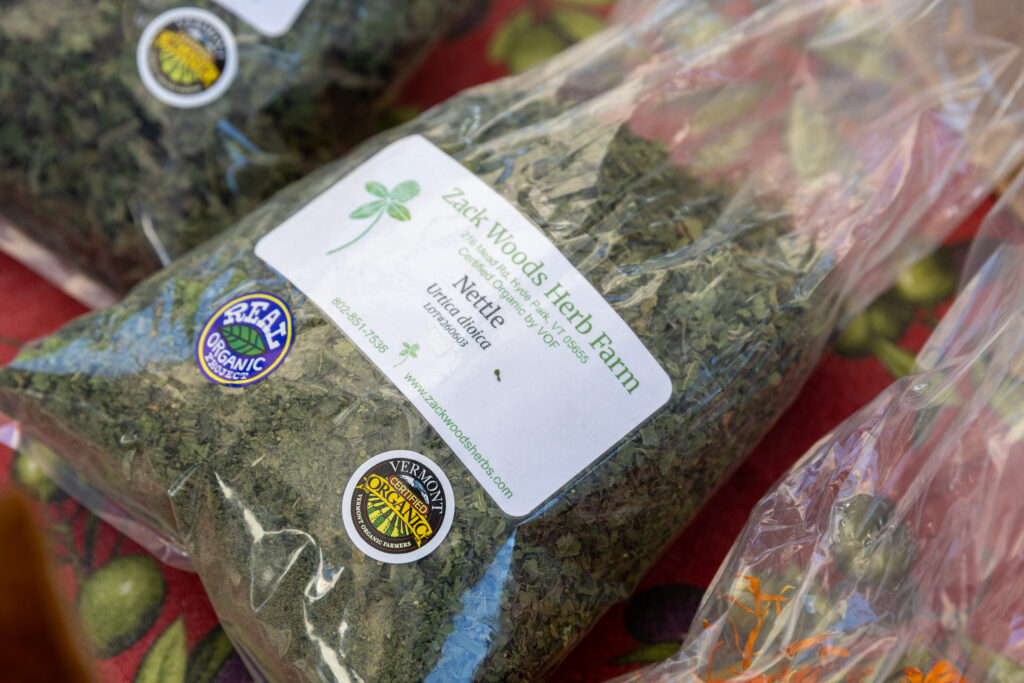
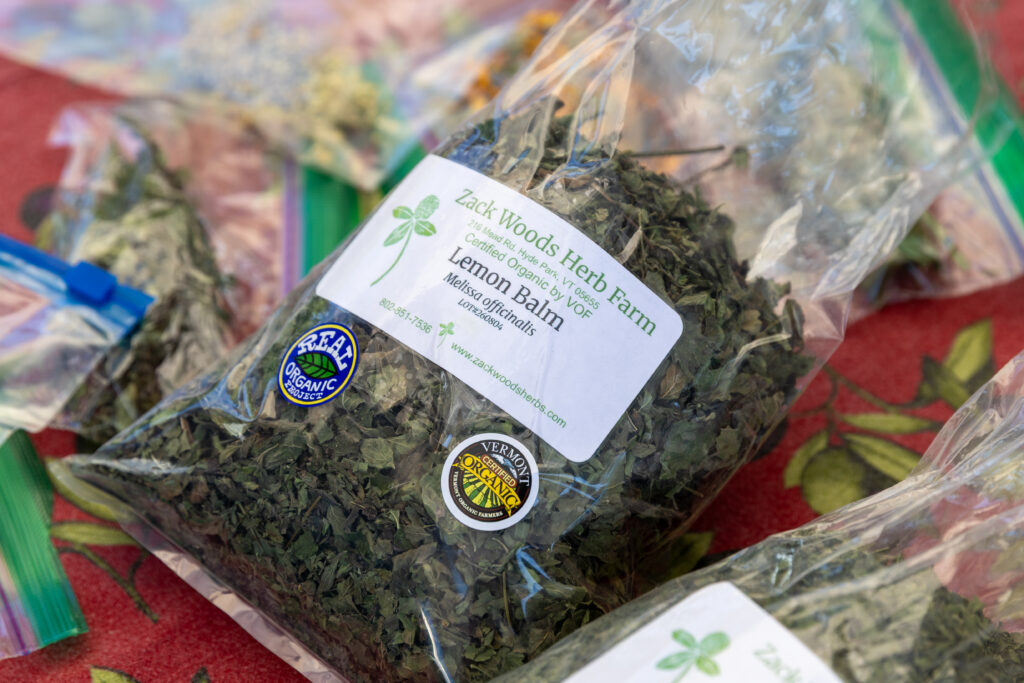
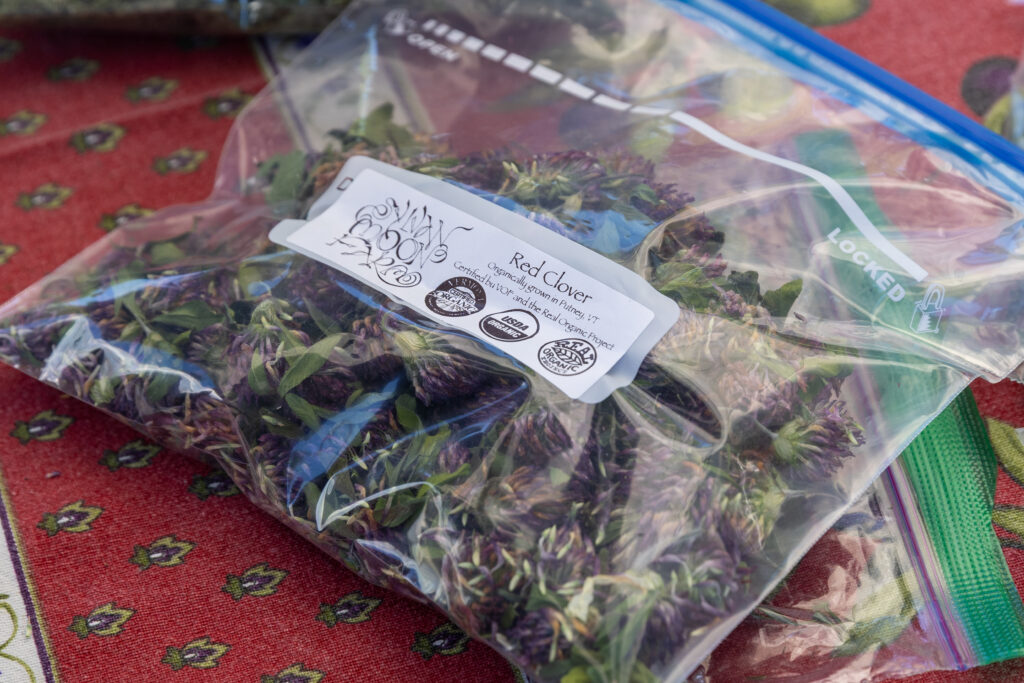
Sarah and Julia led the group in an organoleptic assessment of samples from attendees and Zack Woods. This assessment is great to do in a group and is a tool in your toolkit for evaluating your fresh or dried herbs. They guided us through these steps:1) Look at the plant for characters like color and variations in size; 2) Smell- different herbs have specific characteristics (e.g. grassy); 3) Feel – To test for dryness make sure they crumble easily or have that “snap, crackle, and pop”; and 4) Taste – on its own or seeped in water. Photos taken during organoleptic assessment are a helpful reference point for you and buyers.
Listen to a podcast with Jeff!
Thanks to UVM Extension team member Julie Callahan for organizing the notes and resources on the topics we discussed and Andy Chamberlin for the photos.
This event was supported by the Vermont Herb Growers Initiative through a grant from the Vermont Agency of Agriculture Specialty Crop Block Grant program.