
Vermont’s Top Scams of 2018

Top 10 Scams of VT 2018

Vermonters filed 5,471 scam reports with the Attorney General’s Consumer Assistance Program (CAP) in 2018 according to the Attorney General’s list of top 10 most commonly reported scams of the year. This amounts to a 4.55% increase in scams from 2017. As new scams emerged, old scams persisted. The IRS scam, which involves scammers claiming to be government officials collecting back taxes, was the most common scam for the fifth year in a row. Vermonters filed 1,429 reports regarding the IRS scam.

Spoofing, when scammers falsify information on Caller ID to appear as though the call comes from a local number, is on the rise. One type of this call is the “reflector” scam, which involves repeated calls coming in from ones’ own number. Another new scam this year reported by more than 100 Vermonters was a threatening email containing an old password and demanding money. The number of social security number phishing scams also increased, rising sharply at the end of the year.

“Scam calls are everywhere and affect everyone,” Attorney General T.J. Donovan said. “I urge Vermonters to stay alert and know the common scams. And please continue to report scams to my office so we can work to educate and protect Vermonters.”

Scam reports total over one-third of all contacts to CAP, making them one of the most common consumer issues affecting Vermonters. To counter the overwhelming number of scams, Attorney General T.J. Donovan, in partnership with the Department of Public Safety, launched a new scam alert system in 2017 to warn Vermonters about new or widespread scams. Vermonters can report a scam or sign up for the Scam Alert system by going to ago.vermont.gov/cap or by calling CAP at 1-800-649-2424.

The top 10 scams of 2018 are:

  1. IRS imposter
  2. Social security number phishing
  3. Computer tech support
  4. Grandchild imposter
  5. Debt collection threats
  6. Spoofing
  7. Reflector (claim to be Microsoft)
  8. Email extortion
  9. Publishers clearinghouse sweepstakes claims
  10. Sweepstakes claims (general)

Information about each scam:

  1. IRS Imposter

 The scam: A phone call claiming you owe “back taxes” or payments to the government allegedly from the IRS or “US Treasury and Legal Affairs.” They may threaten you with arrest or investigation.

How to ID the scam: The IRS will never call you at home to threaten legal action.

What to do: Don’t respond to these callers. If you think you may actually owe back taxes, hang up and contact the IRS directly at 1-800-829-1040.

  1. Social Security Number Phishing

The scam: An attempt to obtain your social security number by posing as the Social Security Administration or a business. They may try to get access to your social security number by telling you it has been compromised or stolen.

How to ID the scam: If social security (or any official agency) wanted to contact you, they would not call to ask for your personal information, especially your social security number, over the phone.

What to do: Be wary responding to unsolicited contacts and never provide personal information to unknown contacts.

  1. Computer Tech Support

The scam: A phone call or pop-up message on your computer claiming to be from Microsoft/Windows or another well-known tech company. They will say that there’s a virus or other problem with your computer and try to persuade you to give them remote access to resolve the issue.

How to ID the scam: Legitimate customer service information usually won’t display as a pop-up. Companies like Microsoft, Apple and Google do not call you to notify you of malware on your computer.

What to do: Never provide remote access to your computer to a stranger or click links from an unknown sender in an e-mail or pop-up message. If you get a call from “tech support,” hang up. Also, be careful when searching for tech support numbers online. Some users have been scammed by calling illegitimate company numbers.

  1. Grandchild Imposter

The scam: Scammers pose as grandchildren and claim to be in serious trouble, such as in prison or at the hospital. They urgently request money in the form of wired funds or prepaid gift cards.

How to ID the scam: Call your grandchild or family members on known phone numbers to ensure your grandchild is safe.

 What to do: Never wire or otherwise send funds unless you can verify the emergency.

  1. Debt Collection Threats

 The scam: Scammers pose as a debt collector or government official and say legal action will be taken against you if you don’t pay them what you owe.

How to ID the scam: If you did owe a debt collector or official agency money, they are not allowed to threaten you with arrest over the phone.

What to do: Hang up the phone, and if they call again let it go to voicemail. If you think you do actually owe money to a debt collector or other agency, make sure you call and check using a trusted number.

  1. Spoofed Calls

 The scam: Spoofed calls come from a number that appears local to Vermont – or even your town. But in reality, the scammer is often calling from overseas, and “spoofing” the number to make it show up on caller ID as a neighbor so you’ll be inclined to answer.

How to ID the scam: The call comes from a number you don’t recognize and/or happens repeatedly at all hours. It may be your own number.

What to do: Ignore the call. Don’t call the number back – chances are the person you are calling has nothing to do with the scam.

  1. Reflector (claim to be Microsoft)

 The scam: Similar to other spoofed calls, these scammers will call you on what appears to be your own number. Upon picking up, the scammer tells you that your Microsoft software or your computer IP address has been compromised. They will ask you to pay them immediately over the phone to protect your computer data.

How to ID the scam: Nobody from Microsoft would call you to say that your data has been breached or your IP address compromised. They especially wouldn’t ask you to pay immediately using Google Play gift cards or your credit card.

What to do: Never give personal or financial information to an unverified person or service that contacts you.

  1. Email Extortion Scams

The scam: You may receive a threatening email from a person you don’t know saying that they have an old password of yours or some other personal information. They use that against you in order to scare you into paying them.

How to ID the scam: Legitimate actors would never threaten you, even if they had access to your old information.

What to do: Never click on links that are in the email because they may give the scammer remote access to your computer or download viruses. Don’t reply to the email or interact with it in any way and delete it from your inbox. If they refer to a valid password, go to your account directly and change your password.

  1. Publisher’s Clearinghouse Sweepstakes Claims 

 The scam: A call, email or letter claiming that a consumer has won big from Publisher’s Clearinghouse and needs to pay a fee to collect winnings. Sometimes this will include a realistic-looking check.

How to ID the scam: If you actually win a major prize from Publisher’s Clearinghouse, they will contact you in person. For smaller prizes (less than $10,000), winners are notified by overnight delivery services (FedEx, UPS), certified mail, or email in the case on online giveaways. They never make phone calls.

What to do: Never pay an upfront fee to receive winnings. If you win something, they will pay you – not the other way around.

  1. Sweepstakes Claims (general)

 The scam:  A phone call or mailing claiming that you won money or a prize but have to make a payment in order to receive it. Sometimes the outreach includes a realistic fake check. The check bounces and no “winnings” are ever dispersed.

How to ID the scam: If it is a well-known organization, try contacting them to verify the information. If it is an unknown organization, chances are the winnings are fake. An unsolicited check in the mail from an unknown sender is usually a scam.

What to do: Never pay upfront to receive winnings. If you win something, they will pay you – not the other way around. No actual contest or sweepstakes would you make you pay first to receive money.

Contributing Writer: Sarah Anders
Content Editor: Crystal Baldwin
Vermonters of the Month: Matt Kehaya and Steve Gagner

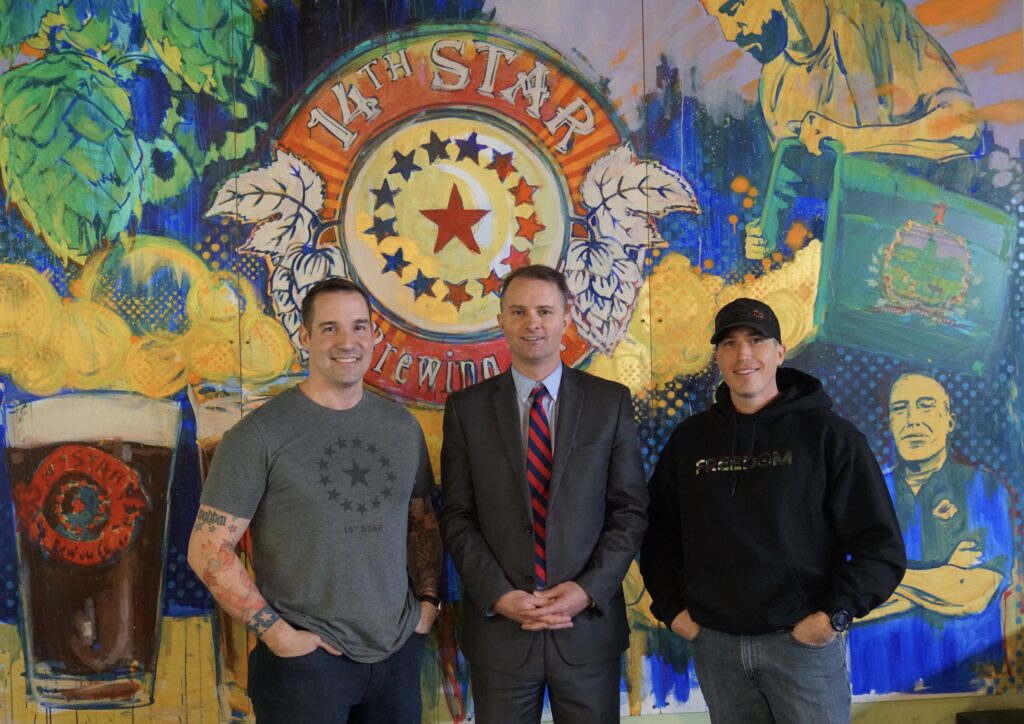
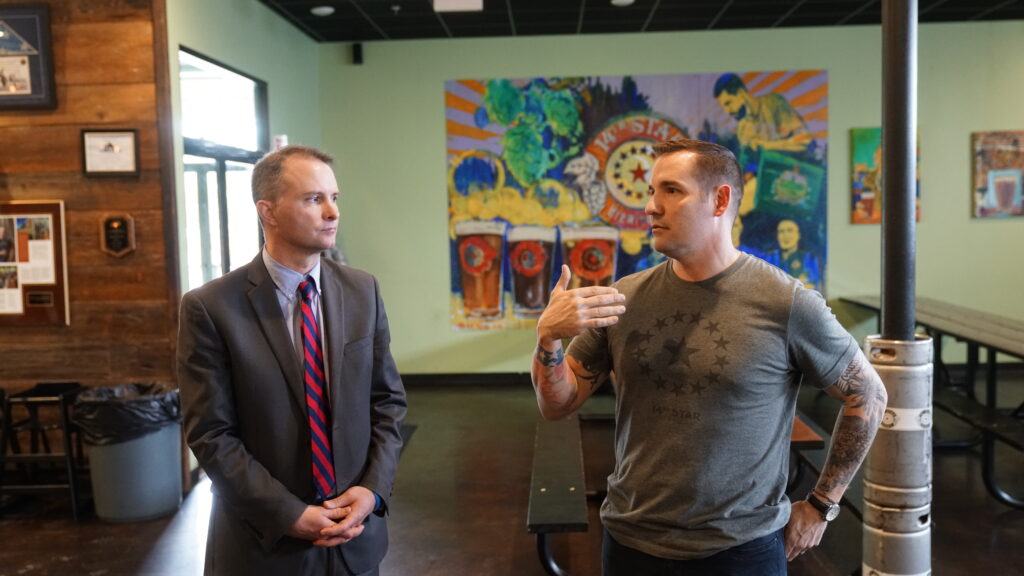
TJ Donovan, Matt Kehaya, and Steve Gagner at 14th Star Brewing CompanyThis is a monthly series in which the Attorney General will feature a Vermonter doing exemplary work in their community. Have someone you think should be featured? Email AGO.CAP@vermont.gov.
Through the “power of great beer” Matt Kehaya and Steve Gagner, our December Vermonters of the Month, are proving that “a company can create positive outcomes in our community and show other businesses that there is a tangible benefit to serving others before serving the bottom line.” When Matt and Steve founded their company 14th Star Brewing Co. in 2011, they knew that they wanted their beer to be “brewed with a mission” which is why these Vermont-natives and Army veterans founded the business on the principles of “improving our communities and inspiring others to put their neighbors first.”

The business plan for 14th Star was drawn up on the back of a notebook while Matt and Steve were deployed together in Afghanistan. When they returned home, they decided to take the leap from homebrewers to entrepreneurs with the mission of continuing to serve others. Since opening 14th Star in 2011, the St. Albans-based business has grown to 24 employees and distributes their beer in 5 states. In keeping with their mission, the business gives back to organizations like Purple Hearts Reunited, the Josh Pallotta Fund, Make-A-Wish Vermont, Vermont Adaptive Ski and Sports, and Martha’s Kitchen, while also hosting community events at their Taproom.

With 20(+) years of service, Matt (20 years) and Steve (23 years), attribute much of their success as business owners to skills they learned from the Army. Leadership, strategic planning, safety, mentorship and teamwork are all skills that they have applied directly to entrepreneurship. Now, Matt and Steve (along with partner Zac Fike) have made it their mission to share this knowledge with other veterans. Their latest venture, Danger Close, is a whiskey-distillery that teaches other veterans to draw on skills they learned through service to start their own businesses.

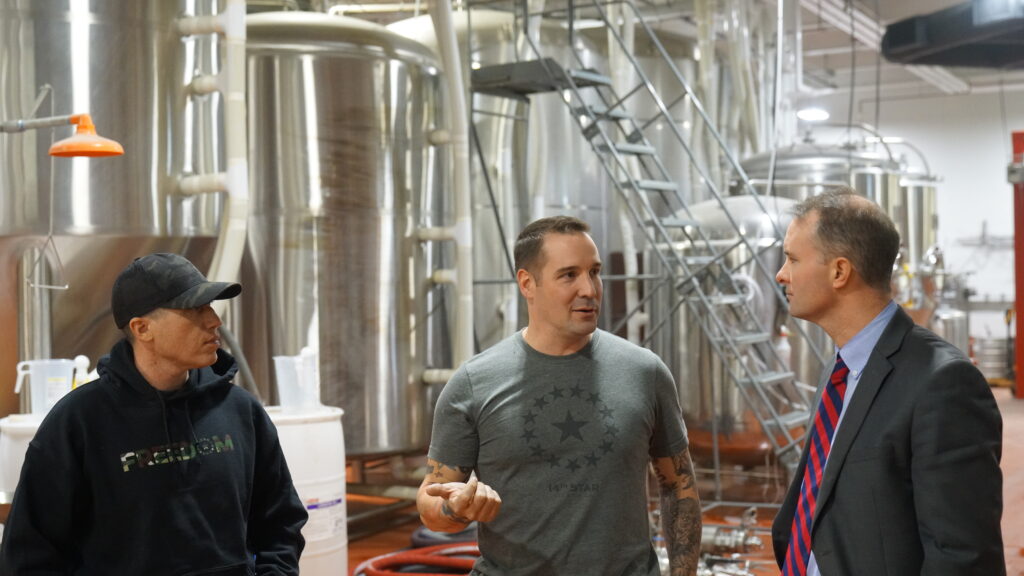
We visited Matt and Steve at 14th Star’s Brewery and Taproom in St. Albans to learn more about the inspiring work they’re doing.

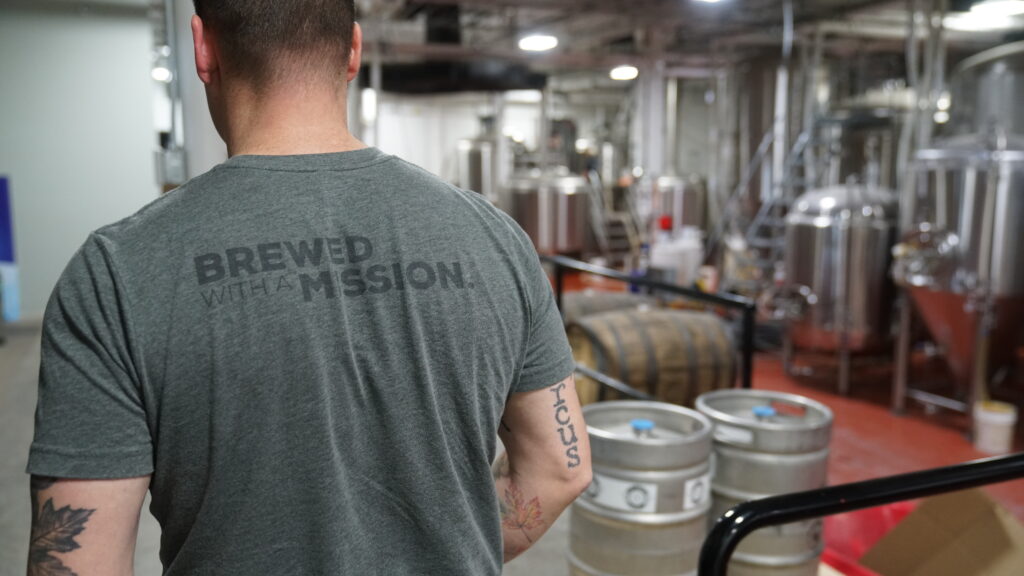
Brewed with a Mission logo on t-shirt


Tell us a little about yourselves (What are your official titles? What have been your career paths? How did you get to where you are?) 

(Matt): I’m from Burlington, Vermont and currently live in Swanton. I am married with two wonderful boys. I am a platoon sergeant in the Vermont Army National Guard’s Mountain Infantry Battalion and have served in the Army for 20 years. I have two deployments (Iraq and Afghanistan – both with Steve) and we founded 14th Star Brewing together in 2011. Steve and I met in late 2000 and we knew early on that we wanted to continue to find ways to work together. After our 2010 deployment to Afghanistan, Steve and I decided to put the brewery business plan we wrote overseas into action. We never envisioned the brewery to grow as big and as fast as we did, but we find that our military experiences have helped us grow the business.

(Steve): I am originally from Highgate, Vermont and live in St. Albans with my wife and two children. I am the executive officer for the Army’s Mountain Warfare School in Jericho, Vermont. I have served in the Army for almost 23 years. I think our time in the Army, and the Vermont Army National Guard in particular, has helped us as entrepreneurs. As full-time guardsmen, we assist the traditional guard leaders who work the “one weekend a month, two weeks a year” schedule in completing their goals and training objectives. Since we aren’t at the brewery full time, we use the very same tactics in leading the organization: We have a talented team of full-time staff and leaders at the brewery and simply provide them guidance and direction and let their natural talents shine.

What inspires your work with the Army, 14th Star Brewing, and in the community?

The desire to serve others and our community not only led us to joining the military, but to continue that service through our business. We believe that leaders should show others what right looks like and inspire them to “Follow Me.” We look for those very same characteristics in our employees and partners because we know that our efforts as a company can create positive outcomes in our community and show other businesses that there is a tangible benefit to serving others before serving the bottom line.

What sets 14th Star Brewing apart from other brewers? What’s its mission?

Well, we can start with amazing beer! But seriously, there is some fantastic beer being made throughout Vermont. We think the thing that sets us apart is that we have a reason for doing what we do—beer happens to be the product we create. This translates directly to our motto of “Brewed with a Mission.” This means that we work to improve the lives of our nation’s veterans and our local communities through the power of great beer.

You give to so many organizations, is there a cause or organization that you are most proud to support?

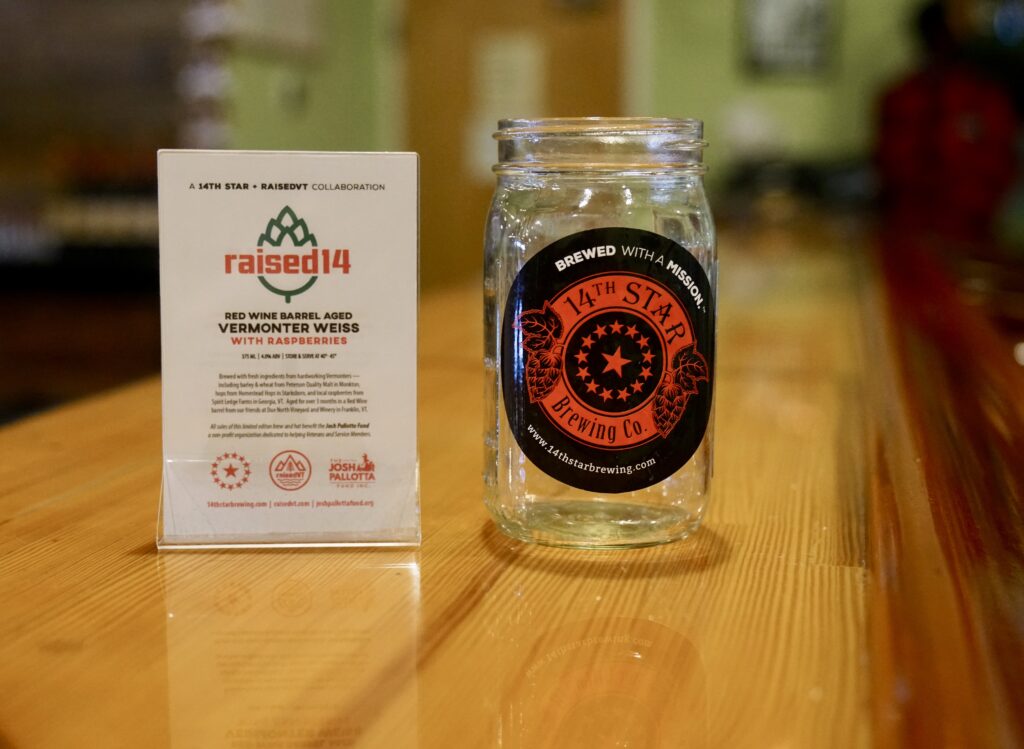
We are proud of all of our efforts in working with organizations dedicated to doing good and helping others. From the very beginning, we have been a supporter of Purple Hearts Reunited and their mission of return lost or stolen purple hearts and medals of valor to veterans and their families. We also have a very deep connection with the Josh Pallotta Fund, founded by Valeria Pallotta, the mother of a Soldier who deployed to Afghanistan in our Brigade and who took his own life after struggling with PTSD and Traumatic Brain Injury. Outside of the veteran organizations, however, we are pursuing projects like Vermont’s first “The House That Beer Built.” Working with the Green Mountain Habitat for Humanity and gathering support from other Vermont Craft Brewers, we’re working to fund the building of a home for families in need – simply through the power of great beer. Helping these organizations certainly keeps us busy, but it is the kind of work that the brewery was founded on: Improving our communities and inspiring others to put their neighbors first.

What advice do you have for other businesses looking to impact their community?

It’s not as daunting as you think it is. The return on investment in terms of goodwill and community engagement you’ll receive from your efforts, no matter how big or small, is infectious and you’ll find that it eventually makes its way into your financials. The important part is not the size of your efforts or contributions, but the fact that you’re engaged. “Many hands make light work” and if every business were involved in the improvement of the community as a responsible corporate citizen, our little corner of the world would be a far better place!


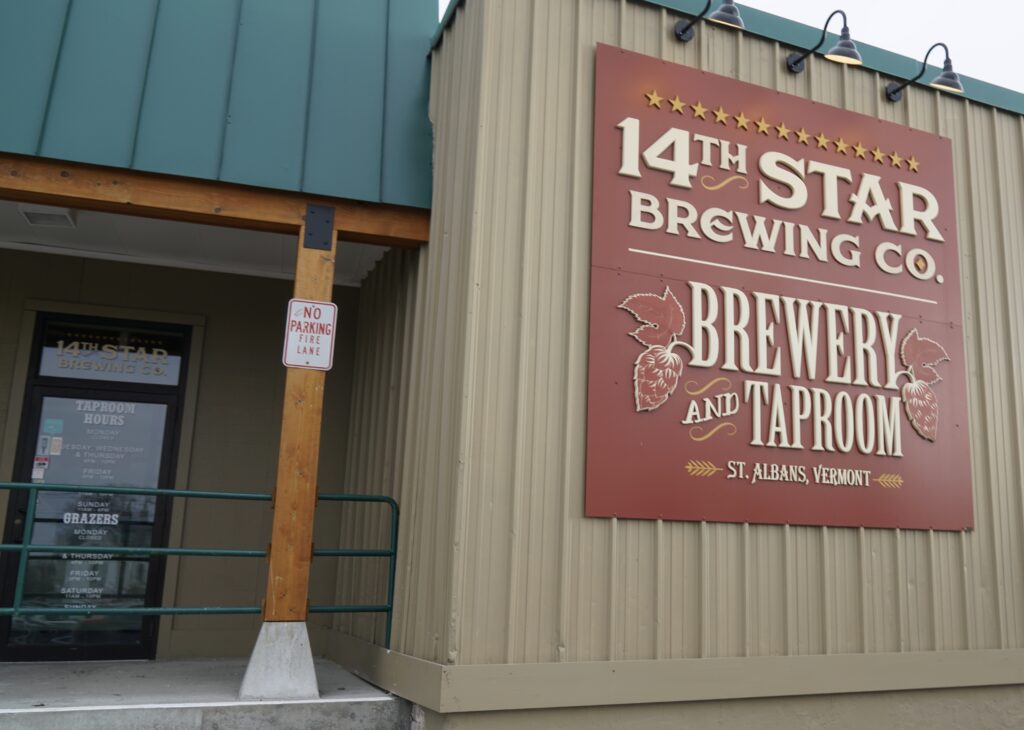
Matt Kehaya, Steve Gagner, and TJ Donovan at 14th Star Brewing Company brewery14th Star Brewing Company glass with logoSteve Gagner speaking with TJ Donovan14th Star Brewing Company taproom and brewery sign

Winter in Vermont: Fuel Costs and Staying Warm

As Vermonters, we are familiar with cold temperatures. It gets cold here in the winter. Propane tanksThat’s why access to heat is so important. The Vermont Attorney General’s office is charged with seeing that companies remain in compliance with Consumer Protection Rule 111: Regulation of Propane. Our Consumer Assistance Program (CAP) receives propane complaints each year. Since 2011, there has been an overall decline in propane complaints which is good news.

However, Vermonters contact us more and more about heat insecurity and their inability to afford the lowest cost delivery option of fuel. The Vermont Department of Health recently warned that between 2008 and 2016, 26 Vermonters died from hypothermia. That is 26 too many. VDH advises “Hypothermia happens when your body temperature is abnormally low. It is caused by being in cold temperatures for an extended period of time…Older adults, infants and people with chronic medical conditions are especially susceptible to hypothermia, even after relatively short exposure to cold weather or a small drop in body temperature.”

When consumers can’t afford the cost of fuel or energy to heat their homes, there is a severe risk of hypothermia, especially during such cold winters here in Vermont. People often turn back the dial on their thermostats in order to preserve fuel to forgo the added expense. The CAP hotline has heard stories of families in need of fuel, living on low to no heat in the middle of winter. Lack of fuel is beyond a consumer protection issue; it’s a health risk.

Fuel Truck in the WInter

If you or someone you know is having trouble affording heat this winter, here are some programs that can help: Vermont has the Low-Income Home Energy Assistance Program as well the WARMTH Program to help. We encourage people who need heat to seek out Vermont Fuel Assistance. Vermonters can call 1-800-479-6151, visit their local Department of Children and Families or Community Action.

Don’t qualify for fuel assistance? Your Community Action office may have a supplemental program, like Fuel Your Neighbors that may be able to help. Also, check with your fuel dealer. The Vermont Fuel Dealer’s Association has “Split the Ticket Program” that delivers free heating fuel to individuals through donations from fuel dealers, local businesses, organizations, and private donors.

For those who agree that going without heat in Vermont is unconscionable, please consider making a donation to support your neighbors in need. Can’t afford it? You can commit to performing wellness checks on people who you suspect may be keeping the dial back. Your neighbors will appreciate the warmth.

Contributing Writer:  Crystal Baldwin

Vermonter of the Month: Jason Fitzgerald

Jason FitzgeraldThis is a monthly series in which the Attorney General will feature a Vermonter doing exemplary work in their community. Have someone you think should be featured? Email AGO.CAP@vermont.gov.

Father. Exercise Physiologist. Athlete. “Diaper Guy.” These are just a few ways one can describe Jason Fitzgerald, our November Vermonter of the Month.

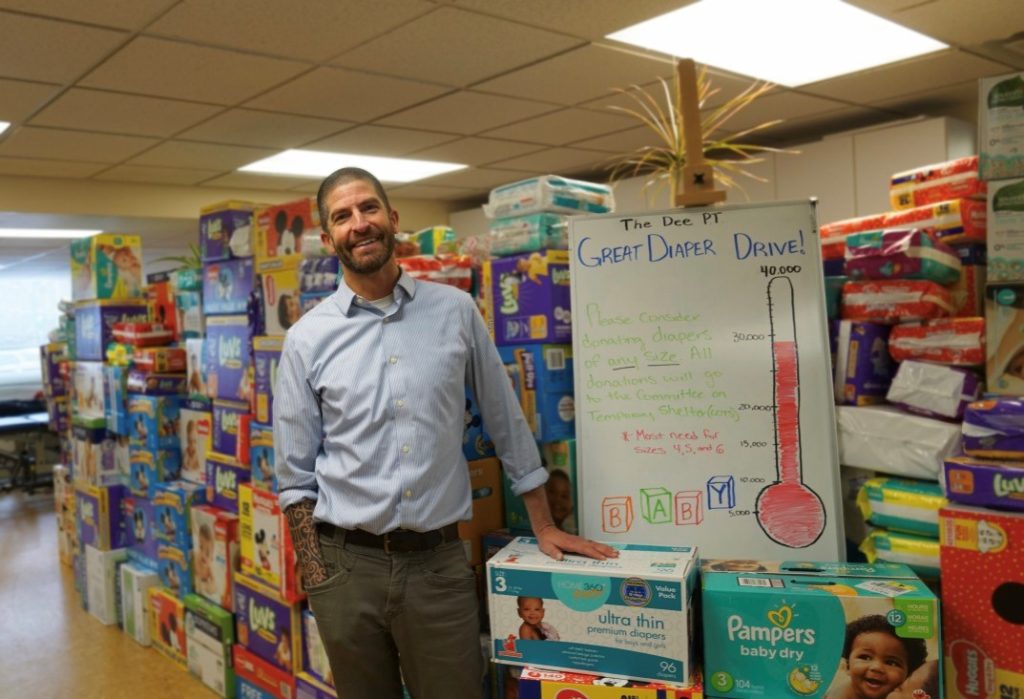
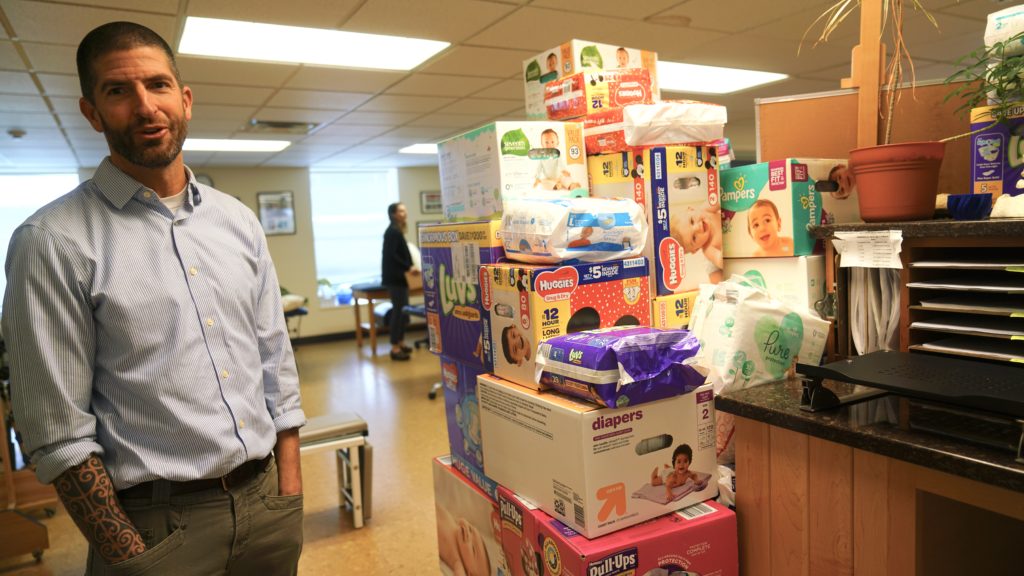
In 2007, Jason was out for an early morning run when he started thinking about different ways to help Vermonters, and it hit him: diapers! According to the National Diaper Bank Network, 1 in 3 American families experience “Diaper Need” and lacks access to a sufficient supply of diapers. As a father, Jason understands the financial burden that purchasing diapers can put on a family, especially given the lack of public funding available specifically for purchasing diapers. With the help of his employer, Dee Physical Therapy (Dee PT), Jason created the Great Diaper Drive, which collects diapers for families assisted by the Committee on Temporary Shelter (COTS). Through sheer force of will, the drive, under Jason’s leadership, has collected more than 325,000 diapers over the past 11 years for Vermont families in need.

A native of Massachusetts, Jason came to Vermont as an undergraduate student at Champlain College. He left after college, but always knew that he would be back. So, when a job opportunity opened for him in Vermont, he jumped at the chance to return to the state he loved. Jason began working at Dee PT in 2007 where he currently serves as a Clinical Coordinator and Exercise Physiologist. At Dee PT, Jason is able to combine his professional pursuits with his passion for helping others to make a positive impact on the community. Here’s more about the amazing work that Jason is doing:

What inspires your work, both at Dee Physical Therapy and in the community?

My work at Dee Physical Therapy is inspired by my coworkers. They put so much into the job and care so much about the wellness of other people. I’m one of those people who enjoys coming to work every morning. I’m so fortunate to be able to come to work and know that I’m helping people get stronger and reach their goals.

My work in the community is inspired by my kids. I am lucky that I was put in a situation with Dee Physical Therapy that I was able to work at a place that allowed me to start a fundraiser. I want my kids to see that when you are put in these situations you should find ways to reach outside of the four walls you work in and try to help people every day.

Why diapers? How did you come up with the idea of the drive?

I start each day with an early morning run. I use this time to think and come up with different ideas. Some of these ideas seem amazing at the time, but when reflecting on them the next day, they often seem ridiculous. In 2007, I had two children both in diapers—Riley (now aged 14) and Kaia (12). I was out for my daily run when I thought about diapers—how expensive they are and how, as a parent, you are constantly worried about running out of them. I wondered if there were any organizations or fundraisers that collected diapers and I couldn’t think of any. When I went to work that day, I mentioned it to my coworkers who thought it seemed like a good idea. I then reached out to the Committee on Temporary Shelter (COTS) to see if they would be interested in a fundraiser that collected diapers. COTS said that there was a need for families living in their shelters and seeking services from their organization, but that no one was collecting diapers at the time.

What has been the impact of the Dee PT Great Diaper Drive and what does it mean to you?

When the drive started in 2007, 6,000 diapers were donated and sustained a couple of COTS’ families. Now, as the drive has grown, we are able to collect enough diapers to last for an entire year for all of the families COTS serves. The impact of the drive is more than just diapers; it allows families to save money that would otherwise be spent on diapers for independent housing. We did the math and a box of 100 diapers can cost about $35. Depending on how many kids you have, what ages they are, and what’s going on with their bodies, a family can go through 10-12 diapers a day. Since the drive began 11 years ago, we’ve collected over 325,000 diapers. As a parent, there is nothing worse than knowing that you don’t have a diaper for your child. The diaper drive has taken away some of this burden that parents are dealing with on a day-to-day basis and is allowing them to save for housing.

This drive means a lot to me. I’m fortunate to be the one that gets to talk about the drive and spread awareness, but it really is the community around me that supports this effort. Through the drive, I’ve been able to make connections with amazing people. There are people that come back each year to donate diapers that they’ve been saving up all year. It’s a true community effort.

What’s your goal for this year’s diaper drive and where can people donate?

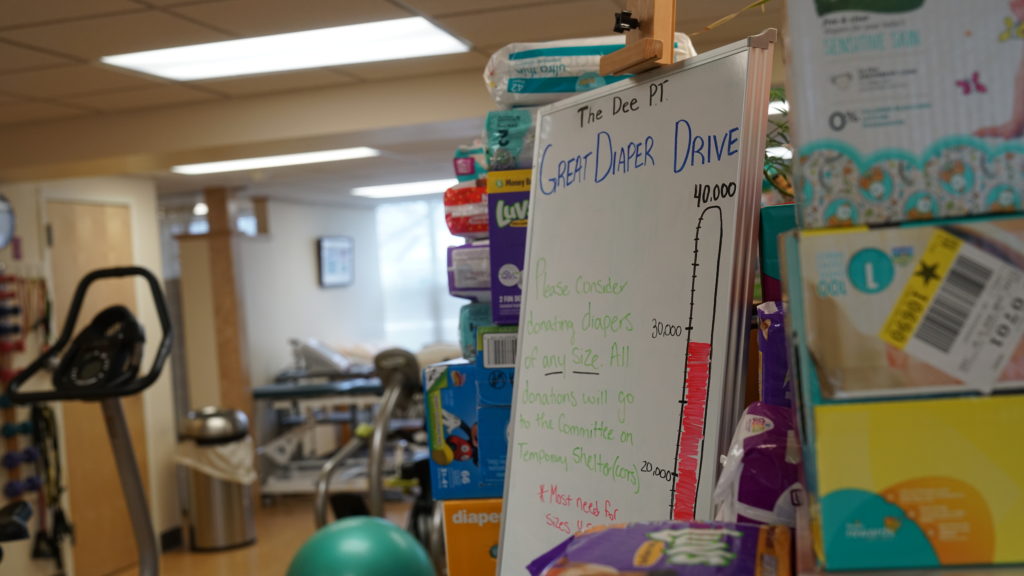
The goal is to collect 40,000 by December 21st. We’re on our way towards meeting this goal but want to collect as many diapers as we possibly can.  Donations can be dropped off between 7 a.m. and 6 p.m. Monday through Thursday, and 7 a.m. and 4 p.m. on Fridays at the following locations:

  • Dee Physical Therapy at 23 San Remo Drive, South Burlington
  • Dee Physical Therapy at The Field House, 166 Athletic Drive, Shelburne
  • Dee Physical Therapy at 52 Farmall Drive, Hinesburg

What advice do you have for other businesses (or individuals) looking to impact their community?

Look around you. See what resources you have and take advantage of them. I’m not a fundraising guy and it’s a lot of hard work, but I’m so glad I did it. Every year I think about how to make the drive more efficient and effective.

Ask for help. Vermonters want to help each other, including people they don’t know. This is a huge asset and a great part of living here.

Dee PT Diaper Drive PosterJason Fitzgerald


Tips for the Charitable Giving Season

Don't let scammers take the cheer out of your giving seasonAs a little girl, I fondly remember watching my dad open scores of charitable solicitations, some containing gifts of greeting cards or address labels, others with a simple request to help their cause.  This giving season, I am now the one who opens the mail with thoughtful poise and consideration, “Which causes should I support this year?”  In this time of giving, many of you may be asking the same question.  To help you decide, I’ve outlined the steps that I take before giving:

1.  When I get a solicitation for a new cause that piques my interest, I research the cause before donating.  Helpful websites, like Charity Navigator and the Better Business Bureau’s Giving Wise Alliance (BBB), have information on charities.  Charity Navigator pulls its information from charities’ IRS tax documents and the BBB has an accreditation program for charities.

2.  I check and double-check solicitation mailing addresses and phone numbers.  I do this even with charities that I regularly contribute to.  I always ask fundraising callers to mail me the solicitation so that I can check the contact information.  If the mailing address and phone number does not pass this verification test, I contact the charity directly.

3.  I look for paid fundraiser information.  A paid fundraiser is a third-party solicitation company that, aside from the fundraising campaign, is not affiliated with the charity.  This means that a portion of the funds raised are split between the charity and the soliciting business.  Vermonters can ask if a third-party fundraiser is involved.  When they are, however, they should disclose this information upfront.  The Attorney General’s Office keeps a record of paid fundraisers registered in our state.  All Vermonters can look to see how funds are allocated between the paid fundraiser under the charities section on our website.  This information can also be requested by contacting the Consumer Assistance Program at 800-649-2424.

4.  I am mindful about the presence of disaster scams.  With the unknown that comes with natural disasters, giving following such events can seem imminent as evidenced by the aftermath of the California wildfires.  Unfortunately, less scrupulous efforts may attempt to take advantage of those who want to help.  Following the above tips will help to identify the scams.  For more on this topic, check out our blog.

These steps help me verify that my money is going to the cause that I intend, and not to a scammer.  It’s easy for a motivated scammer to create a realistic looking website to try to legitimize a fake charity.  If you receive a solicitation that seems suspicious, but just aren’t sure, give the Consumer Assistance Program a call.  We’ll help walk you through the steps that we would take before donating.

Contributing Writer:  Crystal Baldwin is in her tenth year of service with the Consumer Assistance Program.