The five most common scams for businesses include: Imposters of business personnel, fake orders of goods or services, business identity theft, phishing, and government imposters.
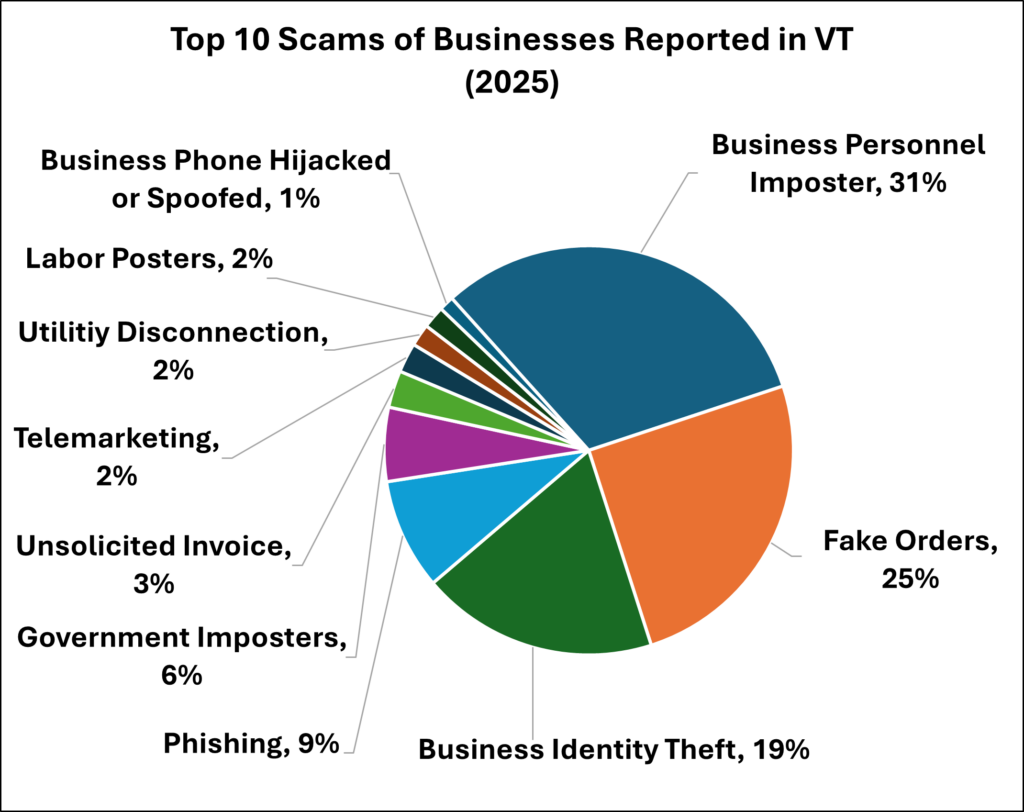
Vermont businesses submitted 176 of the 3,982 scams reported to the Consumer Assistance Program (CAP) in 2025.
The top scam businesses must look out for is the Imposter of Business Personnel aka the Business Email Imposter Scam:
The scam: Scammers impersonate employees or familiar internal or external business representatives via email. They contact company bookkeepers and office administrators, asking them to redirect wire transfers, update direct deposit or bank account information, or to write checks. By impersonating an employee’s email address or creating a fake personal email for the employee, scammers can steal money from businesses and their employees’ paychecks.
How to spot: Scammers will use an email address that only slightly varies from an employee’s true email and can be difficult to spot when using a mobile device. Be suspicious of emails coming from outside your company’s domain. The sender will refuse to connect on a live call due to being preoccupied (in a meeting, no cell service, very busy).
What to do: Vermont businesses and non-profits should always verify email addresses and speak directly with an employee or business representative in person or by calling using a verified phone number when sending money or changing payment information. CAP urges business owners to educate their entire company on scams that target businesses.
To learn more about how to protect your business from these scams, watch CAP’s Avoiding the Business Imposter Email Scam Video and read the CAP Connection blog, Vermont Business Imposter Email Scams Are on the Rise.
Avoid Scams
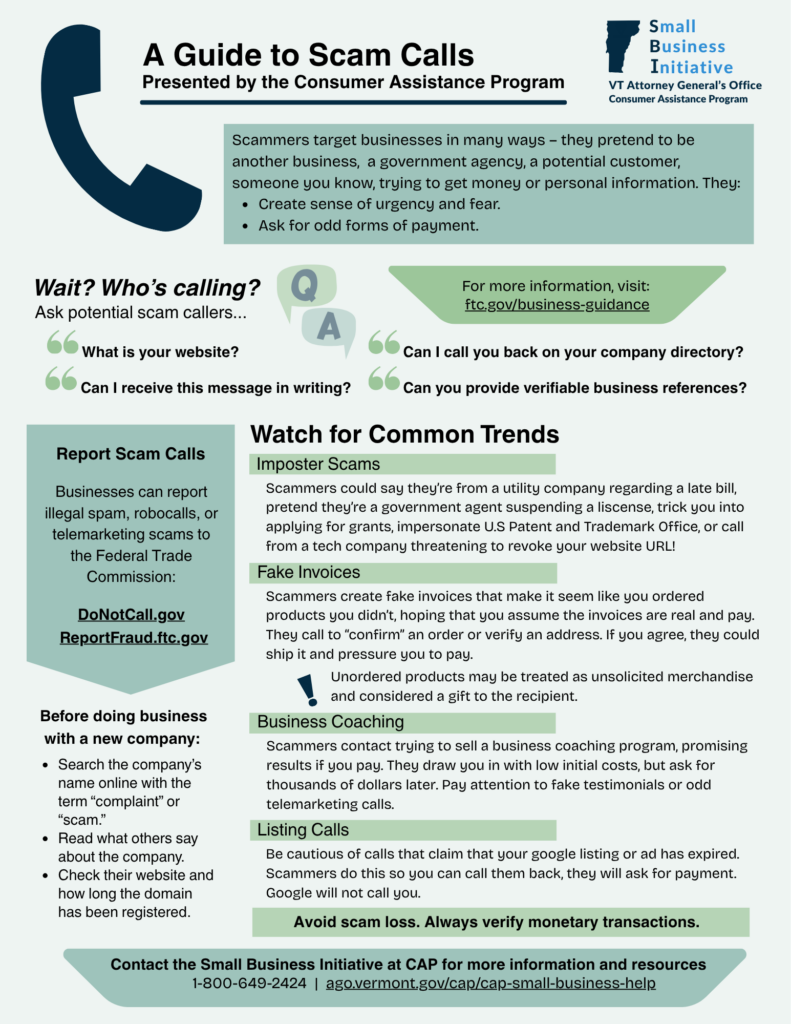
CAP encourages businesses in Vermont to take the following steps to help prevent scams:
Train Your Employees: Your best defense is an informed workforce.
Verify Invoices and Payments: Check all invoices closely. Never pay unless you know the bill is for items that were actually ordered and delivered. Tell your staff to do the same.
Be Tech-Savvy: Don’t believe your caller ID. Imposters often fake caller ID information so you’ll be more likely to believe them when they claim to be a government agency or a vendor you trust.
Know Who You’re Dealing With: Never send money to parties you cannot verify. Check registration history and recommendations and confirm contacts by calling. Before doing business with a new company, search the company’s name online with the term “scam” or “complaint.”
