Start of the season: Early season copper on VT apples

With the warm weather coming in, we expect most Vermont orchards to be at green tip in the next few days if they have not gotten there yet. This is an ideal time to think about beginning your pest management season by applying a whole orchard copper spray. Copper should be applied to apples before the quarter inch green tip bud stage to reduce the likelihood of fruit russeting. Copper is a relatively weak fungicide, but can provide enough protection for the first one or two apple scab infection periods when ascospore maturity may be relatively low. The primary purpose for copper at this time of the season is to reduce the load of bacteria which may spread fire blight. Copper needs to be on the surface of the plant when bacterial ooze starts to exude from the tree around bloom. The specific type of copper is of less importance than the total amount of elemental copper that is on the surface of the plant after application. We generally recommend any of the main forms of powdered coppers including copper sulfate, copper hydroxide, or copper octanoate applied at label rates.

If you choose to get a jump on insect and mite management, you could consider applying spray oil at this time also. However, spray oil may be more effective if applied a little later in the season—say, between half inch green and no later than tight cluster. If applied at this point a 2% by volume mixture of spray oil in water could be used. Oil sprays should go on either at full dilute or at most a 2X concentration, so I would recommend most orchards be treated with at least 100 gallons of water when making that application. This makes oil sprays slow going and so it may be best to wait until a long window of agreeable application weather is available.

Speaking of weather, it looks like the best window to apply copper or any other spray material in the next few days is Sunday morning 4/12, as we will be between wind events at that time.

Separate from spraying, good orchard IPM practices include cultural and biological controls as well. One important practice to consider at this point which can be done even while the wind is blowing is flail mowing brush and especially leaves to help aid with decomposition and to reorient leaves now that ascospores have developed. Over the winter, the apple fungus develops pseudothecia in which ascospores are formed which result in the primary inoculum for the disease season. Pseudothecia develop facing the sunlight, and so even if 1/2 of leaves are flipped over during a mowing operation, those ascospores within them will eject into the ground rather than into the canopy during wedding events. Therefore, a careful mowing of foliage can have a significant impact on the potential inoculum as we head into the primary disease management season.

As always, check the New England Tree Fruit Management Guide or the Cornell Tree Fruit Management Guide and always follow the label for your specific materials.

The UVM Tree Fruit and Viticulture Program is supported by the University of Vermont Agriculture Experiment Station, UVM Extension, USDA NIFA E-IPM Program, and USDA Risk Management Agency.

Issued in furtherance of Cooperative Extension work, Acts of May 8 and June 30, 1914, in cooperation with the United States Department of Agriculture. University of Vermont Extension, Burlington, Vermont. University of Vermont Extension, and U.S. Department of Agriculture, cooperating, offer education and employment to everyone without regard to race, color, national origin, gender, religion, age, disability, political beliefs, sexual orientation, and marital or familial status.

Where trade names or commercial products are used for identification, no discrimination is intended and no endorsement is implied. Always read the label before using any pesticide. The label is the legal document for the product use. Disregard any information in this message if it is in conflict with the label.

UVM Fruit Program/VTFGA IPM Monitoring Program UPDATE and SIGN UP

This is a joint announcement from the UVM Fruit Program and the Vermont Tree Fruit Growers Association. We typically consider April 1 the ‘start’ of the apple growing season in Vermont, so here we are- trees still dormant, weather cold and damp, but green tip and the start of the 2026 crop right around the corner. We are partnering with VTFGA on our orchard monitoring program this year- they are sponsoring our collaboration with Farmable for collection of scouting data, we are providing traps to growers who agree to participate. Funds to provide traps are limited so we do ask limit this offer commercial growers (however you choose to define that). We’ll have regular trainings via email or online meeting to help implement scouting this year. Farms do not need to participate in the scouting program to receive our now roughly-weekly email bulletins, they will come through this list as usual. -Terry

Hi everyone,

We have been working to refine the 2026 UVM Fruit Program/VTFGA IPM Monitoring Program and seek to share some updates. This years efforts include launching a multi-year Program to support Vermont growers in tracking pest activity and sharing monitoring data with the UVM IPM Program. This information helps provide timely guidance on pest pressure and management decisions, strengthening and refining effective IPM practices across Vermont orchards.

Your participation is important. The more growers involved, the stronger our Vermont-specific data will be—supporting better recommendations, industry reporting, and research that directly benefits our state’s orchard industry.

We encourage all VTFGA members to please participate and help build a stronger, more informed pest management network for Vermont growers.

What’s new this year

We’ll be using the Farmable app to make it easier to record observations while you’re out in the orchard. You can log trap counts and notes directly into the app on your phone, rather than needing to go back and enter data later. The VTFGA will support a shared account that allows participating growers to easily share their scouting data to the UVM Fruit Program. UVM will use this data to provide membership timely guidance on pest pressure and management decisions as well as use the information for industry reporting and further Vermont orchard research.

This year will be a trial run as we explore how well the app works for growers. A free version of Farmable is available for mapping and note-taking (including trap counts). Growers will also have the option to upgrade to a Pro version at a discounted rate if they’re interested in additional features like calculating tank mixes, spray records, job creation and harvest tracking. Farmable Pro, a $399/ annual cost will be offered at $149 for VTFGA members for 2026.

If you’re interested in participating but are not comfortable using a phone-based app, please feel free to reach out—we’re happy to talk through other options to ensure your participation.

What’s expected

Growers who participate will:

· Set up and monitor provided traps throughout the season

· Conduct weekly scouting

· Share scouting observations with UVM (ideally through the Farmable app). ALL Farmable data is owned by the orchard. Orchards select what they share with UVM.

Farmable will provide how-to videos and technical support. The UVM IPM Monitoring Program will also be available for additional guidance and support.

Next steps

Please see the links the UVM Fruit Program/VTFGA IPM Monitoring Program interest form and Participation Agreement which outlines the program in more detail. If you would like to participate this season, please fill out both forms and return the Agreement by April 5th tovtappleinfo. With this information, we will coordinate to deliver traps to you and give you next steps in Farmable or otherwise to get you started.

https://go.uvm.edu/2026uvmapplescoutinterest

https://go.uvm.edu/2026uvmvtfgascoutagreement

Please do not hesitate to reach out with any questions. Thank you and here is to a great kick off to the 2026 growing season!

Best Regards,

Jess Yates and the VTFGA Board

Terry Bradshaw and the UVM Fruit Program

VT Veg and Berry Growers PYO website promotion

Julie Callahan from the UVM Vegetable and Berry Team reached out to offer this opportunity to advertise your farms on their website. -TB

VVBGA Pick Your Own website- Please create or update your listing!

Last year, 723 people visited the Vermont Vegetable and Berry Growers Association Pick Your Own website with almost 2,000 views of individual farm listings. Please help us build on that success by adding more tree fruit farms! It takes 5 minutes to create a listing you can update whenever you want. Customers can find your farm at vermontpickyourown.org using a map or list.

How to set up a VVBGA member account to create a listing
1) If you are not a VVBGA member, go to https://vvbga.org/user/register/farm and create an account.
2) Click on the “Complete Online Membership Form” button to complete membership. Since you won’t be using most of the membership features, you can choose the $0 payment option under membership fee.
3) Click “Pick-Your-Own-Listing” on the left-hand menu.
4) Click the orange “Add Your Listing” button.
5) When you click on each section of the listing, a drop down will appear to fill in the details of your farm’s PYO operation.
6) Hit the "Save” button at the bottom of the page after you complete your listing.

Prefer visual or video instructions? A visual guide to creating your listing is posted here. First 4 minutes is of this webinar an intro to the PYO site. The next 5 minutes describes how to create your listing.

Thanks to the 47 farms and orchards who created listings to market a wide variety of PYO crops- apples, berries, flowers, pumpkins and more! This website is owned by VVBGA, so you can share feedback on how to make it better.

Please reach out if you have questions or need help creating a listing. Julie Callahan, julie.callahan, 518-944-7149

Julie Callahan (she/her), Farmer Engagement Specialist

Julie.callahan 518-944-7149

UVM Extension Commercial Horticulture Team

Information on Funding Opportunities https://go.uvm.edu/vegfundinglist

“vineyard nutrition” EVEF webinar – March 3

Passing on this webinar to anyone interested. These are great webinars that many may find useful. -TB

Link: https://extension.psu.edu/advancements-in-grapevine-nutrition

Description: Advancements in Grapevine Nutrition

This session brings together four members of the USDA/SCRI Hi-Res Vineyard Nutrition Project to share concise research updates and practical deliverables that support balanced grapevine nutrition in commercial vineyards. Presenters will address practitioner perspectives on nutrient needs across regions, best timing and tissues for macro- and micronutrient sampling, new outcomes from fertilization studies, and the use of spatial technologies to guide variable rate applications. The program will conclude with an open discussion and question-and-answer period to encourage applied learning and grower‐focused dialogue.

The Eastern Viticulture and Enology Forum (EVEF) Webinar Series is a collaborative initiative of the Penn State Extension Grape and Wine Team and partnering viticulture and enology extension programs from U.S. land-grant institutions. You will have the opportunity to submit questions prior to the webinar using the link contained in your registration confirmation email.

Cain Hickey, PhD

Assistant Teaching Professor of Viticulture

Department of Plant Science

Penn State

318A Tyson Building

University Park, PA 16802

viticulture

814-440-5534 (mobile)

Penn State Extension Grape and Wine Production Website (extension.psu.edu/grapes-and-wine)

PSU Wine and Grape Team Facebook Page

https://extension.psu.edu/grape-and-enology-team-sign-up

https://extension.psu.edu/cultivars-in-the-commonwealth

Follow up from 2/20 VTFGA / UVM Fruit meeting

Thanks, everyone, who made it out to the 130th annual VTFGA / UVM Fruit Meeting yesterday in Middlebury, VT. We just avoided the snow until the end, and I’m sure at least a few including myself had dicey drives home. We appreciate the effort and participation. For those who attended on Zoom, I’m glad we could make that happen and hope the quality was at least passable. I am headed out of town for the week and just dumped all the gear in my office, but when I get back I hope to check the video and see if we have anything salvageable to put up on out YouTube channel. No promises there, as were weren’t producing with intent to make a good recording.

The slides from all talks are posted here:  20260220_VTFGA_UVM_Fruit_mtg

Please let me know if I promised any follow ups to questions or conversations we had.

Thanks again,

Terry

The UVM Tree Fruit and Viticulture Program is supported by the University of Vermont Agriculture Experiment Station, UVM Extension, USDA NIFA E-IPM Program, and USDA Risk Management Agency.

Issued in furtherance of Cooperative Extension work, Acts of May 8 and June 30, 1914, in cooperation with the United States Department of Agriculture. University of Vermont Extension, Burlington, Vermont. University of Vermont Extension, and U.S. Department of Agriculture, cooperating, offer education and employment to everyone without regard to race, color, national origin, gender, religion, age, disability, political beliefs, sexual orientation, and marital or familial status.

Where trade names or commercial products are used for identification, no discrimination is intended and no endorsement is implied. Always read the label before using any pesticide. The label is the legal document for the product use. Disregard any information in this message if it is in conflict with the label.
Northeast Fruit Consortium Winter Webinar Series starts next week!

The Northeast Fruit Consortium is again hosting our winter webinar series (https://www.umass.edu/agriculture-food-environment/fruit/news-events/northeast-extension-fruit-consortium) starting February 4. Please register here (https://go.uvm.edu/2026netfcwebinars).

There are six webinars planned that cover strawberry IPM, kiwiberry production, apple color and sunburn prevention, pest mating disruption, changes to the Endangered Species Act and implications on pesticide use, and drought management.

February 4, 2026 noon -1:00pm
Title: Management of Up and Coming Strawberry Diseases in the Northeastern United States (pesticide credits approved)

February 11, 2026 noon – 1:00pm
Title: Kiwiberry Production in the Northeast (no pesticide credits)

February 18, 2026 noon – 1:00pm
Title: Heat Mitigation: Sunburn and Fruit Coloring (no pesticide credits)

February 25, 2026 noon – 1:00pm
Title: The Dating Game; Updates in Lepidopteran Mating Disruption (credits approved)
March 4, 2026 noon – 1:00pm
Title: USEPA Endangered Species Act Strategies and Pesticide Use (credits approved)

March 11, 2026 noon – 1:00pm
Title: Practical Drought Management for Fruit Growers (no pesticide credits)

We are charging a nominal fee for webinar access to help support the annual meeting of the Northeast Tree Fruit IPM Working Group which facilitates shared programming and collaborative research and Extension projects among IPM professionals across the region. If you would like a discount code for free registration, please email madeline.baughman before registering Extension activities are available to all growers regardless of ability or interest to pay. Registration for all webinars should be completed at the same time, and the links you receive in your confirmation email should be saved for use on the day of the webinar.

__

Terence Bradshaw (he/him)
Associate Professor, Specialty Crops

Chair, Dept of Agriculture, Landscape, and Environment
(formerly Plant and Soil Science)
College of Agriculture and Life Sciences

University of Vermont
117/210 – Jeffords Hall | 63 Carrigan Dr
Burlington, VT 05405

(802) 922-2591 | tbradsha
https://go.uvm.edu/alebradshaw

UVM Commercial Horticulture | UVM Fruit Blog
Horticulture Research and Education Center
Message me on Teams

UVM’s Our Common Ground Values:
Respect | Integrity | Innovation | Openness | Justice | Responsibility

UVM is subject to the Vermont Public Records Act and communications to and from this email address, including attachments, are subject to disclosure unless exempted under the Act or otherwise applicable law.

Happy New Year and programs to watch for in 2026

Good morning:

I hope everyone’s holidays have been good ones and wish you all the best as the calendar prepares to turn over yet again. As winter is the time for meetings and learning opportunities, I wanted to highlight a few activities that are coming up:

  1. The Northeast Fruit Consortium is again planning to host our winter webinar series (https://www.umass.edu/agriculture-food-environment/fruit/news-events/northeast-extension-fruit-consortium) starting February 4. Please register here (https://go.uvm.edu/2026netfcwebinars).

    There are six webinars planned that cover strawberry IPM, kiwiberry production, apple color and sunburn prevention, pest mating disruption, changes to the Endangered Species Act and implications on pesticide use, and drought management.

    We are charging a nominal fee for webinar access to help support the annual meeting of the Northeast Tree Fruit IPM Working Group which facilitates shared programming and collaborative research and Extension projects among IPM professionals across the region. If you would like a discount code for free registration, please email madeline.baughman before registering Extension activities are available to all growers regardless of ability or interest to pay. Registration for all webinars should be completed at the same time, and the links you receive in your confirmation email should be saved for use on the day of the webinar.

  2. The 130th annual Vermont Tree Fruit Growers Association and UVM Fruit Program Annual Meeting will be held February 20, 2026 in at the American Legion Middlebury, VT. The agenda is here (https://go.uvm.edu/26uvmvtfgaagenda) and the registration link is here (https://go.uvm.edu/26uvmvtfgamtg).

While I have you, I’d like to introduce our ‘new’ program support technician Madeline Baughman who will be providing me support for extension and research projects, maintaining the UVM orchard and vineyard, and working with undergraduate students at UVM Catamount Educational Farm. Madeline has worked with me for the past three seasons and graduated last May with a B.S. in Agroecology and Landscape Design from UVM. Many of you have met her already, those that haven’t feel free to say hello when you see her at the meeting in Middlebury.

Thanks for doing all you do for Vermont agriculture and I’ll see you soon,

Best,

Terry

__

Terence Bradshaw (he/him)
Associate Professor, Specialty Crops

Chair, Dept of Agriculture, Landscape, and Environment
(formerly Plant and Soil Science)
College of Agriculture and Life Sciences

University of Vermont
117/210 – Jeffords Hall | 63 Carrigan Dr
Burlington, VT 05405

(802) 922-2591 | tbradsha
https://go.uvm.edu/alebradshaw

UVM Commercial Horticulture | UVM Fruit Blog
Horticulture Research and Education Center
Message me on Teams

UVM’s Our Common Ground Values:
Respect | Integrity | Innovation | Openness | Justice | Responsibility

UVM is subject to the Vermont Public Records Act and communications to and from this email address, including attachments, are subject to disclosure unless exempted under the Act or otherwise applicable law.

2025 Agriculture Drought Impact Survey closes on 12/15

Passing this on from the VT Agency of Agriculture. -TB

We have less than one month to collect survey responses to the Agriculture Drought Impact Survey.

Please encourage the Vermont agricultural community to complete and submit a response to the survey with their impacts before the survey closes on December 15, 2025.

We have 168 responses to date, mostly from small farms expressing the impacts and losses they’ve experienced during the 2025 drought.

You can find highlights of aggregate responses on the Agriculture Drought Impact survey dashboard on the VAAFM drought webpage.

High Level Summary:

  1. Scope: This survey is appropriate for all agricultural businesses, organizations, or individuals who raise animals, meat, or poultry and/or grow feed and other crops (including produce, maple products, Christmas trees, horticultural plants), in Vermont for anyone beyond their immediate family.
  1. Deadline: This survey is open through Monday, December 15th, 2025.
  1. Outreach Resources: We are sharing several items to support survey distribution and completion. These include:
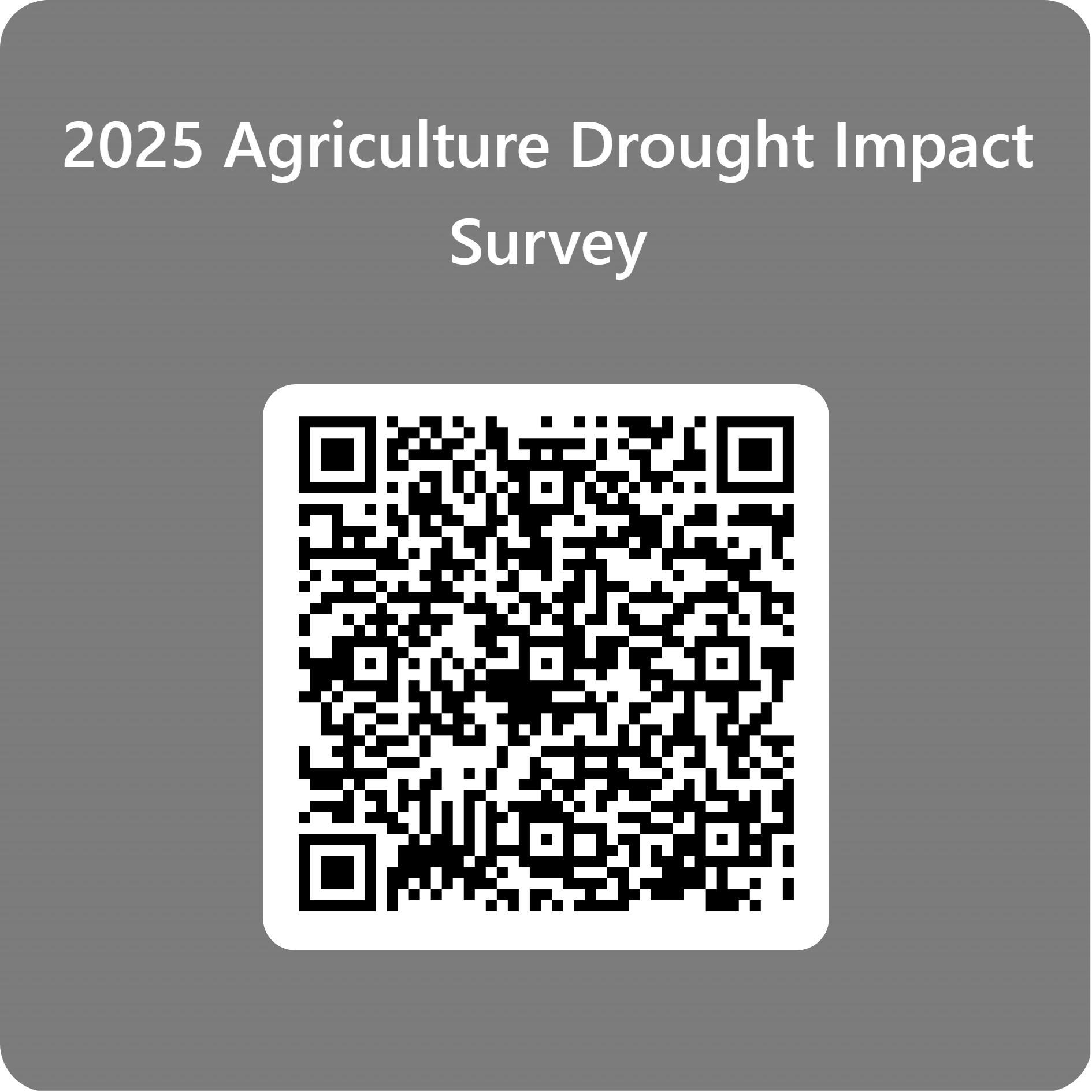
  1. Link to the survey: https://forms.office.com/g/dFMQZDQCMe
  1. QR code for survey (attached)
  1. Printable PDF Version* (attached survey paper copy)

*Printable PDF Version & Process

Attached you will find a printable pdf version of the survey. Please feel free to print these copies to bring on farm visits, to larger events, and/or to have in your offices. As outlined on the top of the pdf, surveys should be sent via mail to the provided address, OR, if a TA provider has filled it out for a farmer, they are welcome to scan it and email it to AGR.Drought. Please note paper copies must be postmarked by December 15th, 2025.

We recognize that this survey is capturing estimated losses and additional impacts may not be realized until spring 2026 or next growing season. At that point, we will reevaluate the agriculture industry need and consider additional data collection tools to capture longer term or more comprehensive impacts from the 2025 drought.

Visit the VAAFM drought webpage, AGR.Drought or 802-828-2430.

  • Items accessible on this webpage include survey link, live dashboard of results, agricultural resources (financial support, water sources, technical assistance), and links to other important reporting sites (i.e. drought.vermont.gov).

Thank you for your collective support in ensuring our agricultural community is aware of this ag drought impact survey and encouraged to share their experience.

Thanks,

Abbey

Abbey Willard (she/her)

Agricultural Development Division Director | Vermont Agency of Agriculture, Food & Markets

116 State St., Montpelier Vermont 05620 | http://agriculture.vermont.gov

Tel:802-272-2885 |

Sign up to receive our weekly Ag Development e-newsletter updates on marketing opportunity, events and grants!

2025 Agriculture Drought Impact Survey_Paper Copy.pdf

Save the Date: 130th VTFGA / UVM Fruit Program annual meeting February 20, 2026

The 130th (???) annual meeting of the Vermont Tree Fruit Growers Association and UVM Fruit Program will be held on February 20, 2026 at the American Legion Hall, 49 Wilson Rd., Middlebury, VT. Please hold that date on your calendars and keep an eye out for further details.

Have a happy Thanksgiving,

Terry and the UVM Fruit Program

__

Terence Bradshaw (he/him)
Associate Professor, Specialty Crops

Chair, Dept of Agriculture, Landscape, and Environment
(formerly Plant and Soil Science)
College of Agriculture and Life Sciences

University of Vermont
117/210 – Jeffords Hall | 63 Carrigan Dr
Burlington, VT 05405

(802) 922-2591 | tbradsha
https://go.uvm.edu/alebradshaw

UVM Commercial Horticulture | UVM Fruit Blog
Horticulture Research and Education Center
Message me on Teams

UVM’s Our Common Ground Values:
Respect | Integrity | Innovation | Openness | Justice | Responsibility

UVM is subject to the Vermont Public Records Act and communications to and from this email address, including attachments, are subject to disclosure unless exempted under the Act or otherwise applicable law.

Live Webinar Series on Farm Succession and Transfer starting January 8th

Live Webinar Series on Farm Succession and Transfer starting January 8th

Mike Ghia, VT Farm Viability Program

What is the future of your farm? If you are like most farmers, you are so busy with the day-to-day business of farming you find it difficult to take the time to plan long-term, particularly planning for a transition from one generation to the next. It can be especially challenging during times of financial uncertainty. And it can be difficult if there is not someone immediately lined up to take over the farm. At the same time, you probably have hopes for the future of your farm and have thought some about what you would like to happen to your business and your land. With sound succession planning with concrete action steps, it is more likely that the goals and desires of all the generations involved can be met, and there is a greater likelihood that the farm will stay in farming.

The “Farm Succession Planning Webinar Series” is for farmers to learn about key issues, tools and resources to help them make informed decisions and take steps towards transferring their farm to the next generation of their family or a non-family successor. Farmers will learn from professionals who can help in the process and from other farmers. Topics include retirement, financial, and estate planning, taxes, legal entities, and determining goals for retirement, business transitions, and your land. All generations, including family and non-family members, who may play a role in your farm’s future are encouraged to attend.

This series is organized by Land For Good, in partnership with the info for more information