
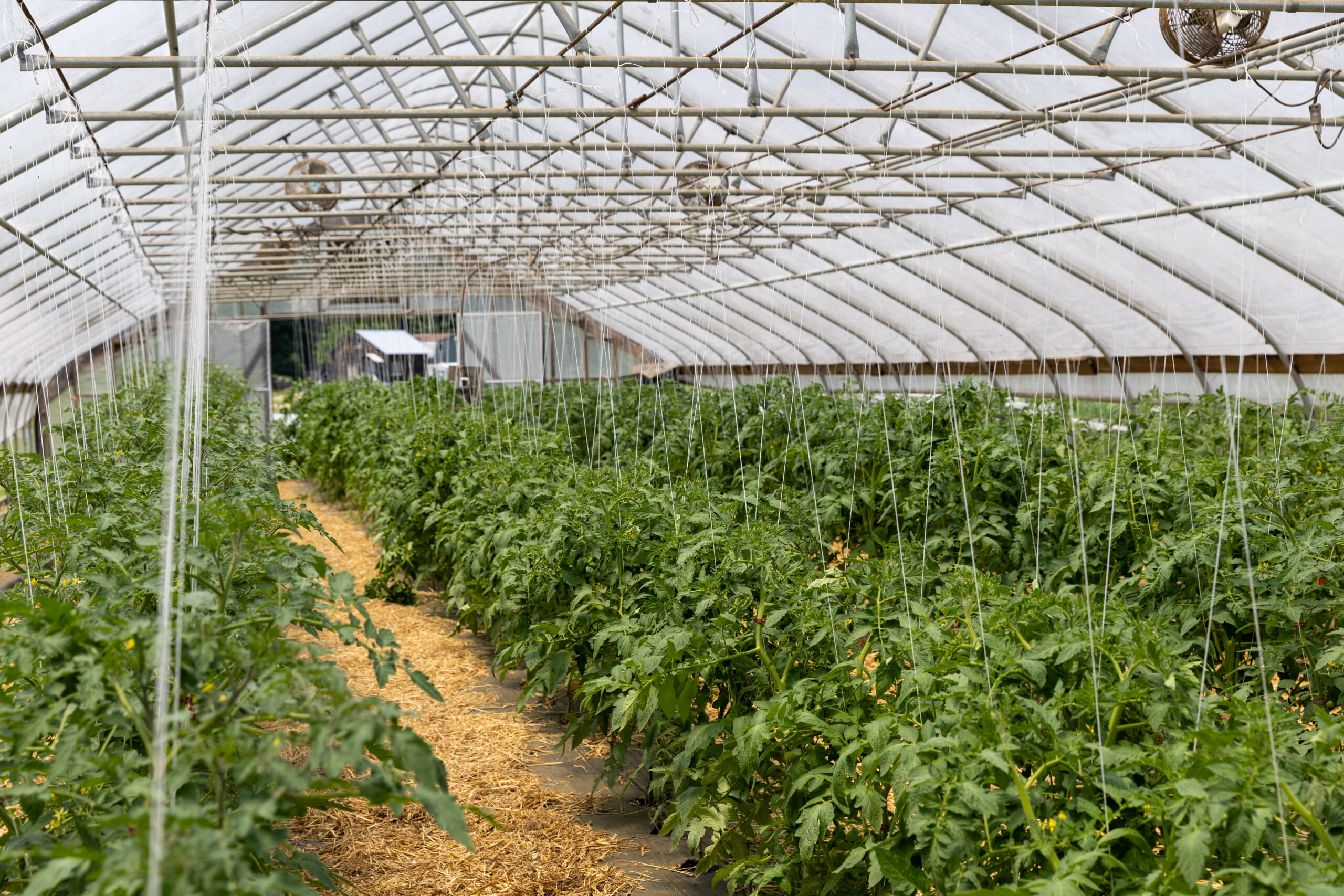
The summer of 2025 is barely behind us, leaving a lot of lessons learned about how to manage tunnel crops during hotter, drier summers. For most warm season tunnel crops (peppers, eggplant, tomatoes, cucumbers), optimum growth temperature is between 70°–75°F. Above 85°F, plant growth slows and stress symptoms such as wilting, marginal scorch, leaf roll, bud abortion and decreased fruit set may develop. According to the National Weather Service (weather.gov), Burlington, VT had 9 days in June, 18 days in July, and 14 days in August over 85°F, with temperatures often exceeding 90°F. During these stretches of intense heat, crops can suffer stress and damage, resulting in decreases in yield and crop quality.
Impacts of Heat
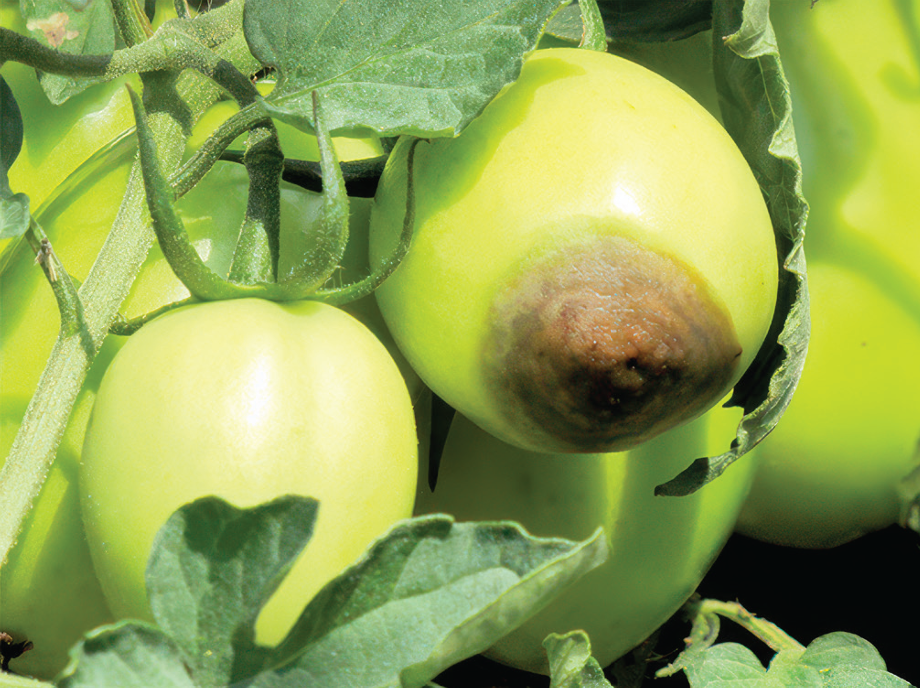
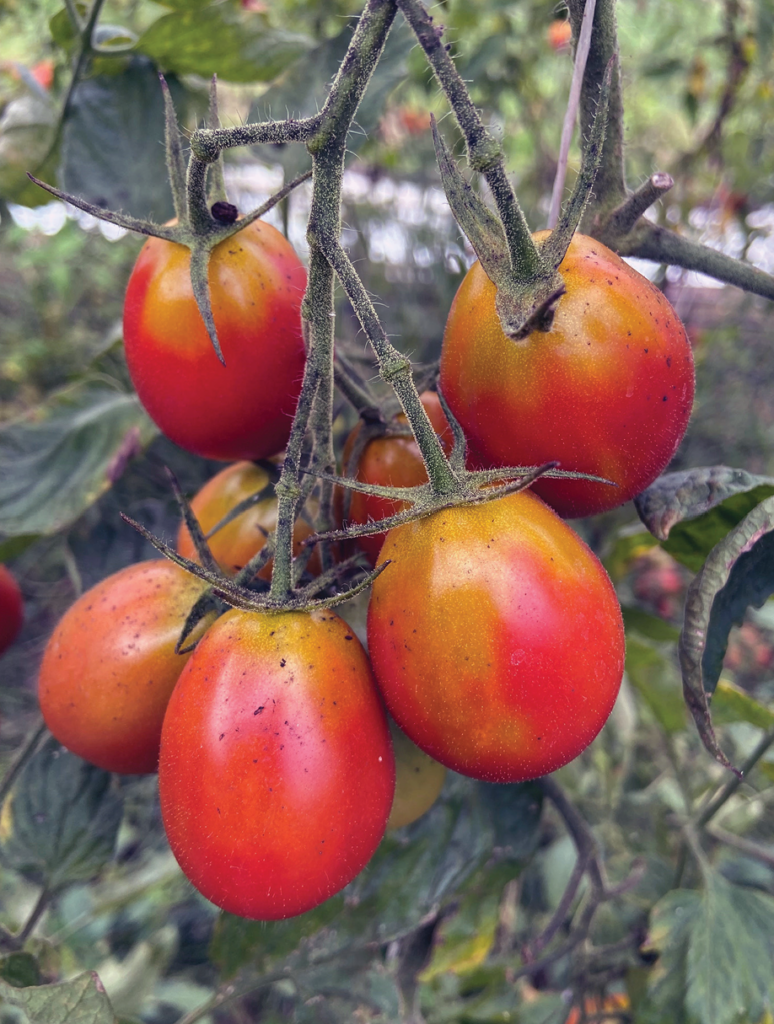
High temperatures affect mechanisms that are important in photosynthesis and water balance resulting in smaller plants and lower yields. Flowers and fruit are more sensitive to high temperatures than leaves and stems; when high temperatures occur 1–2 weeks before flowering, abortion of buds and dropped flowers will be evident, leading to gaps in harvest. Daytime temperatures over 90° F can cause problems in pollen and nighttime temperatures over 70° F can also lead to bud drop and flower abortion. In most fruiting crops, this can lead to either losses of fruit sets and/or distorted fruit. Once fruit has set, high heat can diminish fruit quality (often linked to water and nutrient uptake) such as yellow shoulders, uneven ripening, blossom end rot, cracking and misshapen fruit. Sunscald is the physical damage caused by direct sun on mature fruit, especially common when there is no foliage protecting fruit. High temperatures can also increase relative humidity, increasing the risk of foliar disease. Leafy crops are also negatively impacted by heat, leading to bitter favors and/or premature bolting.
Tips for Managing Hot Conditions
Irrigation. Water needs are higher with high temperatures, especially during fruit production, so growers need to increase or adjust the frequency, timing, and amount of irrigation during heat spells.
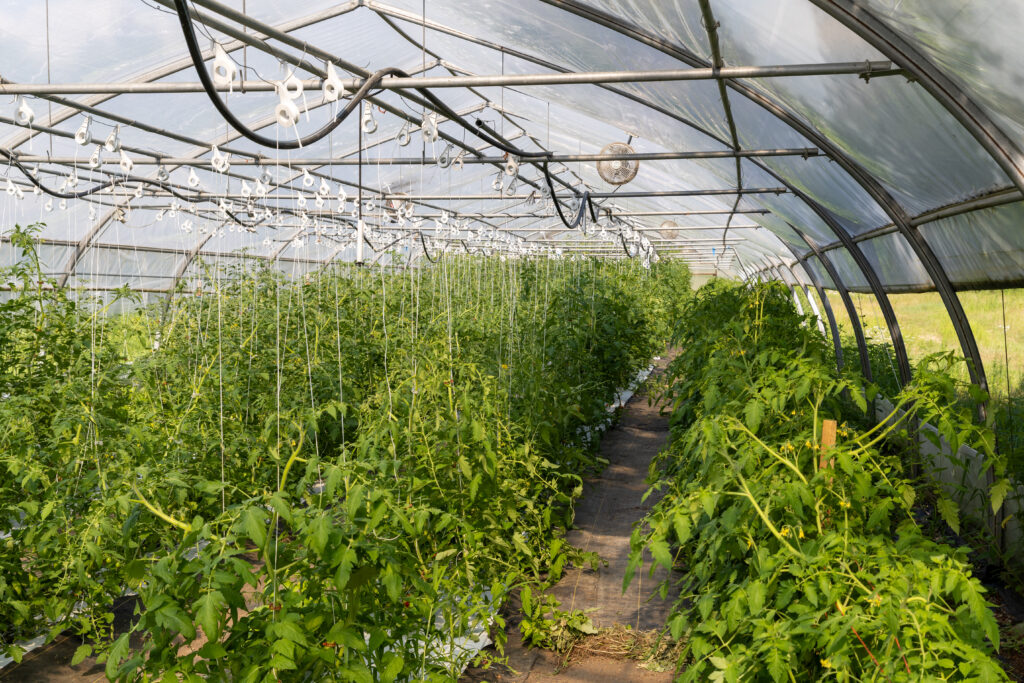
Improve tunnel ventilation and circulation. Create openings to allow hot air and humidity to escape from the tunnel — remember, hot air rises so peak vents, butterfly vents, or ridge vents are all good options. It’s also important to circulate air through the tunnel to cool the air and keep it fresh around the plants — this is especially important during peak plant growth to provide optimal CO2 when the plants need it most for photosynthesis. More about ventilation and circulation can be found on UVM’s Ag Engineering Blog.
Shade cloth or greenhouse paint. During peak heat, shading the tunnel can relieve heat stress. See the article by Jonathan Ebba in this issue of High and Dry!
Cultivar selection. Heat tolerance can vary by cultivar, with some being more tolerant of high temperatures than others. Ask seed reps for recommendations and pay attention to what varieties do well under heat stress.
Keep humans cool. If it is too hot for crops, it’s probably too hot for people. Adjusting work hours and making sure farmers and workers are hydrated is critical. Read here for more about avoiding heat stress for farm workers. (Portable neck fans might just be an essential greenhouse tool in this era of climate change!)
In summary, high tunnels are an excellent tool for protecting crops from most weather elements, but once the outside air is above a certain temperature, crops in tunnels can be at risk of heat stress. For most high tunnels, it is not practical or cost effective to actively “cool” the tunnel, but by planning ahead and implementing the strategies noted above, your crops can survive, and even thrive, during hotter summers.
Download this as a PDF
http://blog.uvm.edu/commhort/files/2026/09/High-and-Hot.pdf
Written by Ann Hazelrigg and Becky Maden
UVM Extension Issued in furtherance of Cooperative Extension work, Acts of May 8 and June 30, 1914, in cooperation with the United States Department of Agriculture. University of Vermont Extension, Burlington, Vermont. University of Vermont Extension, and U.S. Department of Agriculture, cooperating, offer education and employment to everyone without regard to race, color, national origin, gender, religion, age, disability, political beliefs, sexual orientation, and marital or familial status. Any reference to commercial products, trade names, or brand names is for information only, and no endorsement or approval is intended.