
High tunnels create a distinct growing environment with altered soil health characteristics due to the intensity of production, high inputs, and lack of rainfall — which makes managing tunnel soil year after year challenging. Furthermore, many growers are limited in their ability to implement fundamental soil health practices such as crop rotation and cover cropping due to production pressures of year-round growing. Many tunnel growers have instead relied on a long-term soil building approach, with high applications of compost, mulches, and other amendments. Over time, these practices lead to high soil organic matter levels and soils that are highly buffered with excellent water and nutrient retention, but can also have excessive/unbalanced nutrients and high salt levels.
Since high tunnel soils behave quite differently than field soils, they should be tested and managed differently. Standard soil tests often underestimate the nutrient needs of tunnel crops and can lead to deficiencies. Fortunately, both the University of Maine Soil Testing Service and UNH Soil Testing Service offer analysis specific to high tunnel soil.
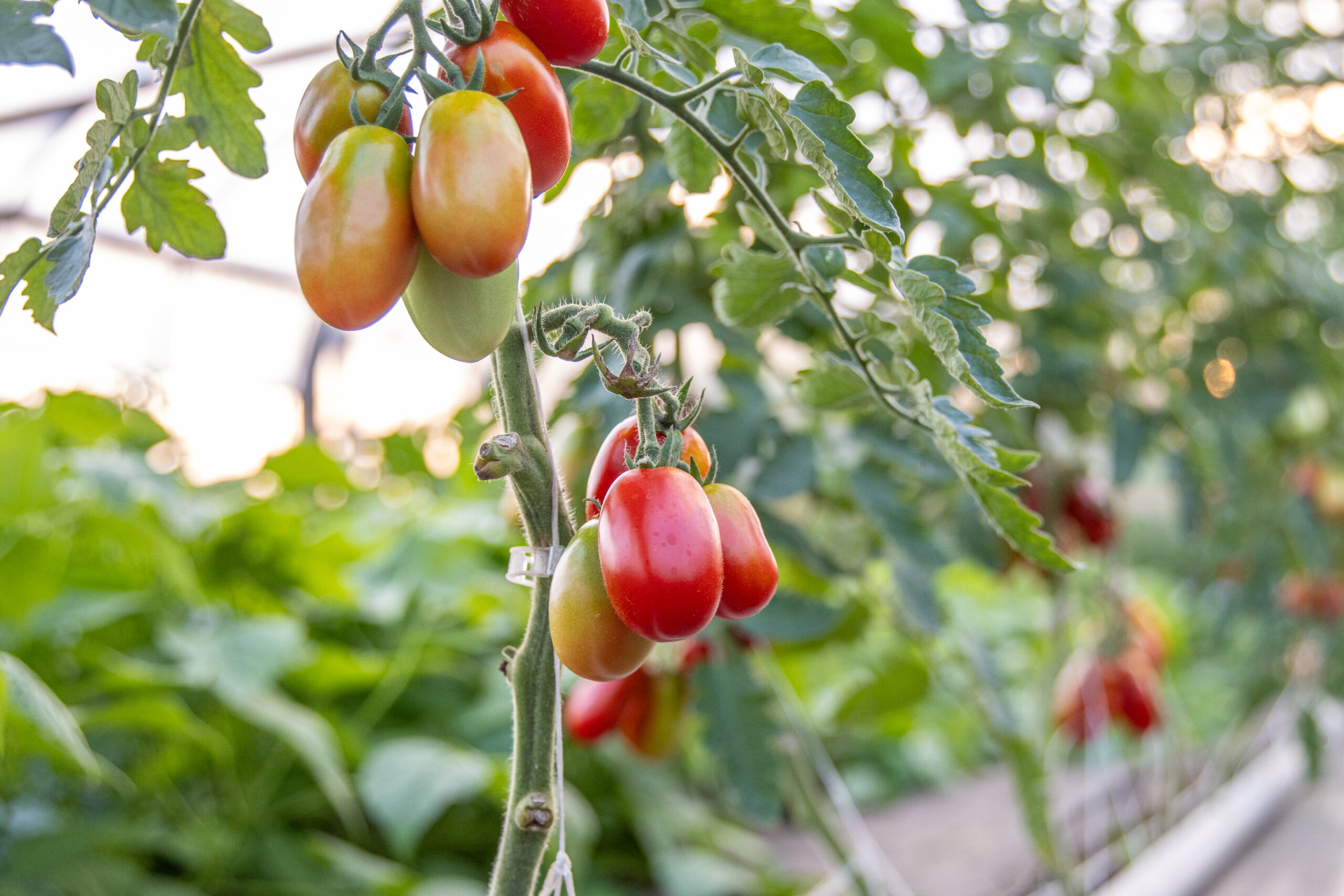
Meeting the nutrient demands of summer tunnel crops can be achieved with amendments through a combination of preplant fertilizing, side dressing, and fertigating. Tomato, pepper, cucumber, and eggplant transplants going in tunnel soils are typically big plants that are ready to grow—but they need the available nutrients to do so. Nitrogen (N) and potassium (potash, K2O) are key amendments for a successful crop. Phosphorus and other nutrients are also critical, but these are often in abundance through additions of compost. However, these nutrients are not to be ignored, so recommendations from soil tests are important to pay attention to.
Tunnel crops need abundant N during the vegetative phase of growth to support a healthy plant and moderate levels of N during fruiting. The amount of N applied should be adjusted based on yield expectations. The charts included in this article are specific to tunnel tomatoes, showing four different fertility rates based on expected yield; vigorous and longer season crops (like a grafted hybrid) require more than shorter season crops (like a determinate). In organic systems, about ⅔ of the recommended N can be applied in the form of a seed meal (soybean, alfalfa, peanut) when the soil is warm and moist about two weeks before planting. This allows time for the N in the fertilizer to mineralize into plant available forms. The seed meals will continue to mineralize and provide the plants with N for many weeks.
N Application Rate Based on Yield
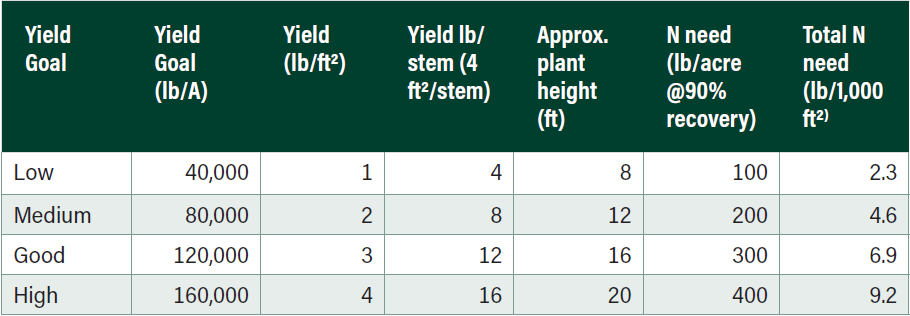
(Source: https://nevegetable.org/crops/tomato-green-house-and-high-tunnel)
K2O Application Rate Based on Modified Morgan’s Soil Test Result and Yield Goals
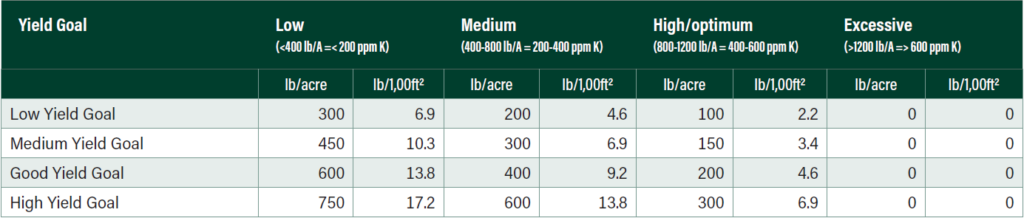
Similarly, K2O rates for tunnel tomatoes should be applied in alignment with the yield expectations of the crop, but it is important to note that even at the “low” yield goal, K2O tunnel rates are higher than typical field rates. 100% of the K2O can be added before planting, although using a blend of potassium sulfate “fines” and standard potassium sulfate is a good technique to ensure long term availability. Water is critical for uptake, so make sure plants have adequate drip lines (up to 4 per plant, especially on sandy soils). Many growers don’t notice deficiency until the fruit is nearly ripe and this can dramatically reduce marketable yields.
The remaining ⅓ of recommended N and additional K can be applied via drip irrigation, or “fertigation” 4-6 weeks after transplanting. Many organic growers fertigate with fish emulsion (2–4–1) on a regular basis, which provides the plants with a steady low dose of N. This can cause clogging of drip tape, so be sure to check lines and flush regularly if this is a preferred material. Low-cost choices
many growers use are dissolved sodium nitrate (15–0–2) and potassium sulfate fines (0–0–51). These products are immediately available for plant use when delivered through the drip but can contribute to soil salt levels. The fertilizer industry is offering more choices for soluble fertilizers, so check with your supplier for options. A weekly dose of 0.25 lb each of N and K per 1000 sq feet is a good starting point for growth maintenance. If fertigation is not possible, it is also useful to sidedress with the remaining ⅓ of the N in a granular form 3–4 weeks after transplanting. Again, be sure adequate water is available to help mineralize nutrients for plant uptake. Tissue tests are a good way to assess and refine mid-season nutrient management.
Paying attention to soil test results and fertility in organic high tunnel tomato production can lead to vastly better yields and fruit quality. A recent benchmarking study by Vern Grubinger and Becky Maden at UVM Extension with 48 growers demonstrates that growers with highest yields conduct the UMaine High tunnel soil tests and follow nutrient recommendations. At a time when there is a lot of uncertainty in farming, managing nutrients carefully in high tunnels is a good strategy to ensure a reliable, profitable crop.
Download Blog Post this as a PDF
See More High Tunnel Resources
Becky Maden, UVM Extension