
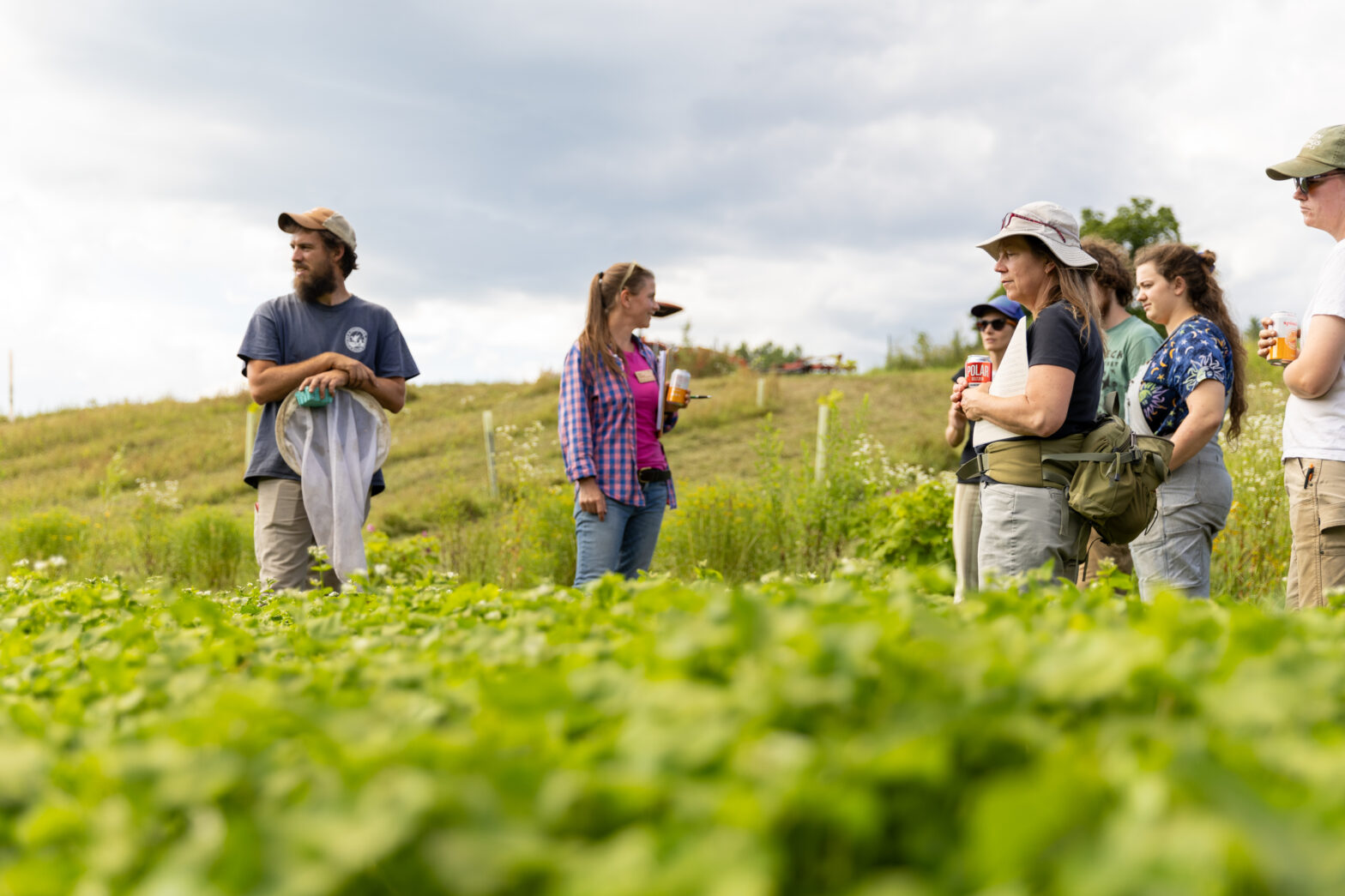
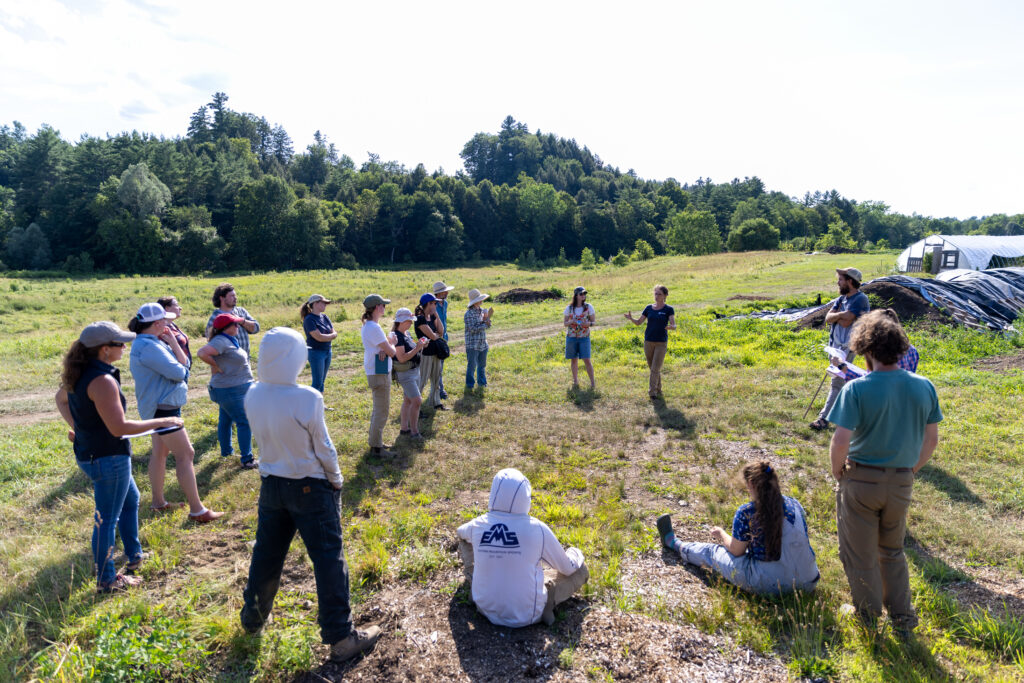
On Thursday July 23rd the VVBGA hosted a workshop focusing on pollinators at The Farm Upstream in Jericho Vermont. The Farm Upstream is a collectively owned, certified organic farm and native plant nursery established in 2021. Located on 20 acres along the Lee River, the farm focuses on sustainable practices, riparian protection, and community-centered agriculture, offering a popular veggie CSA, farm stand, and locally sourced native shrub nursery.
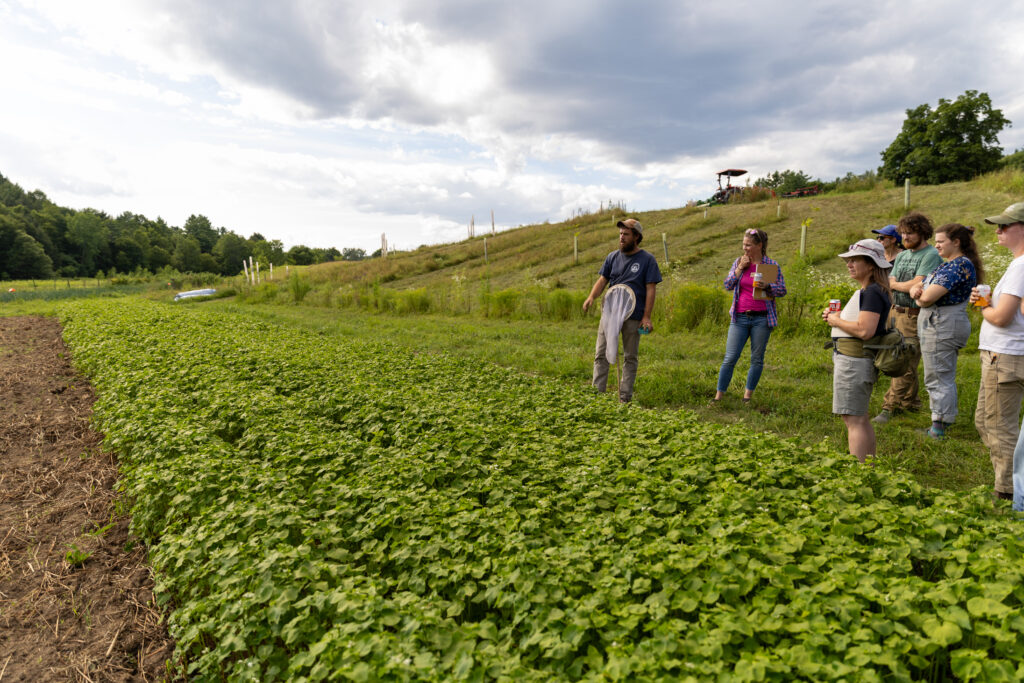
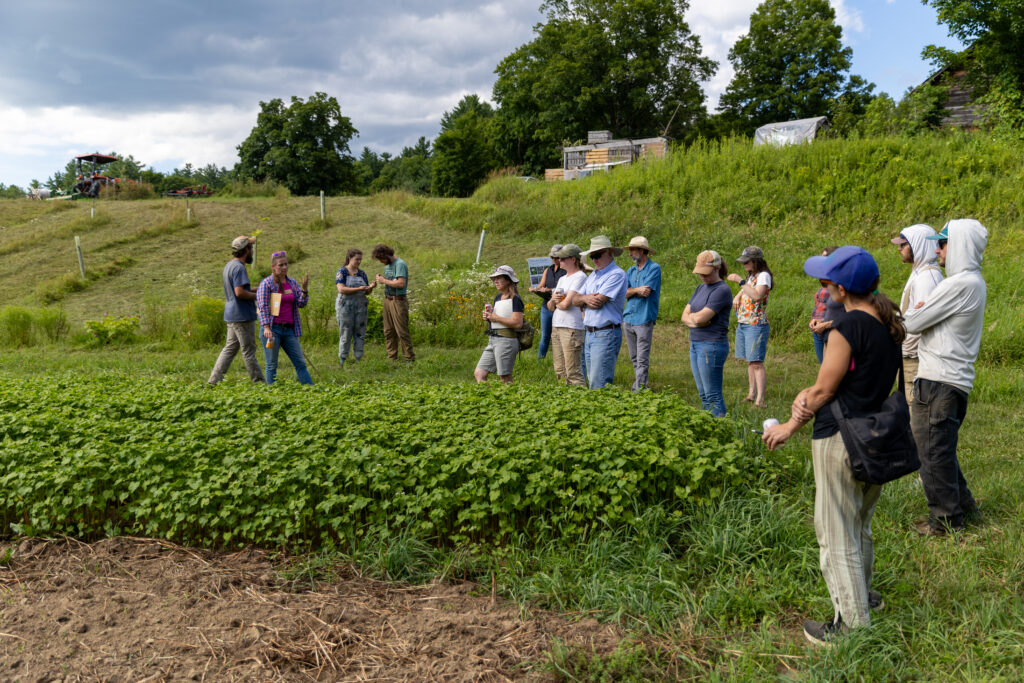
We took a tour to observe and discuss the farm’s management approaches to soil health and pollinator support. We discussed cover cropping, mulching, compost additions, and pollinator support in annual, biannual, and perennial production systems. Thank you to everyone who showed up and contributed to the conversation both farmers and UVM folks!
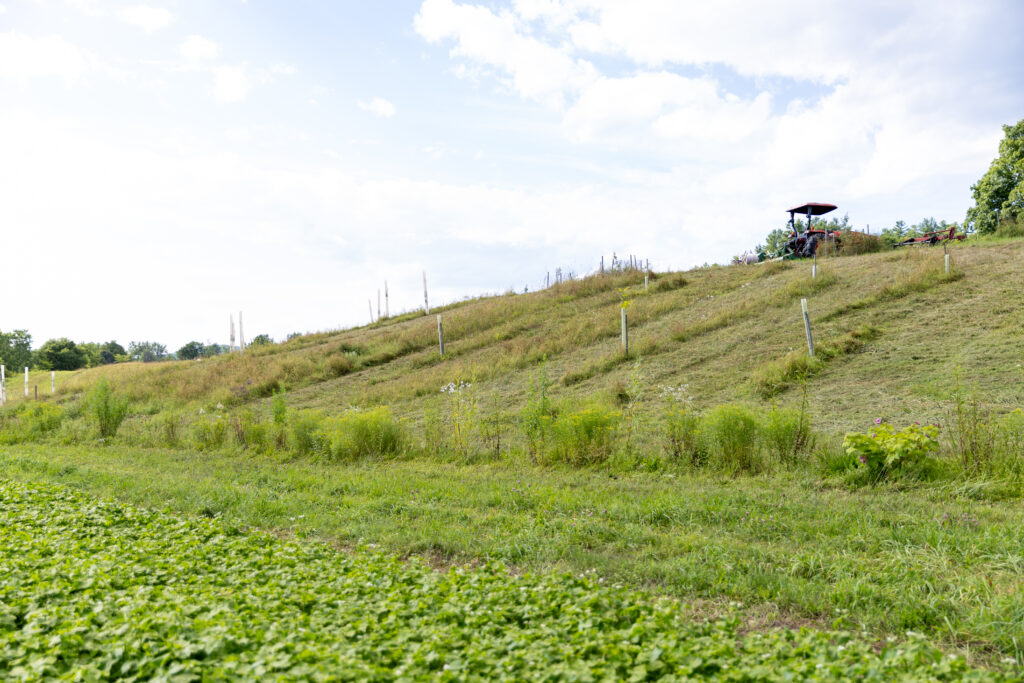
Pollinator Hedgerow
This project was part of the VT Pollinator Working Group. Site preparation is important when establishing a hedgerow. The hedgerow is loosely modeled on the NRCS 420 Practice – Wildlife Habitat Planting with added perennial plants.
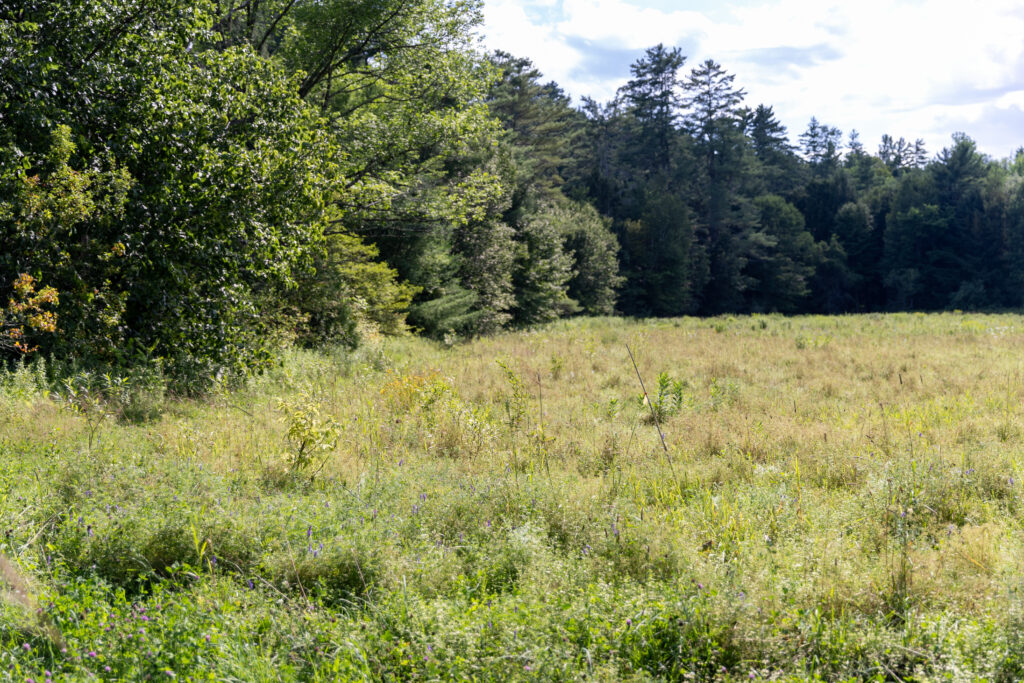
Riparian Planting
This approximately 1 acre planting was a requirement from the land trust when the property was conserved. The project was funded by “Streams for Trees” through the local conservation district. Volunteers planted the trees which were purchased from The Farm Upstream and other local nurseries and included species like willow and dogwood that provide early bloom for pollinators.
Buckwheat Plantings
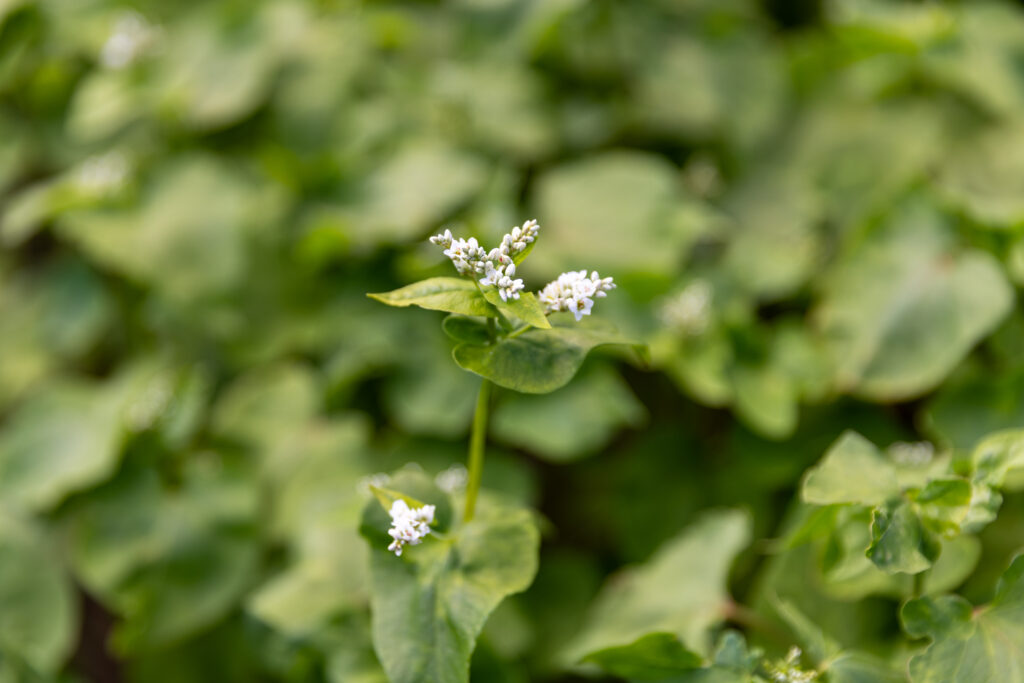
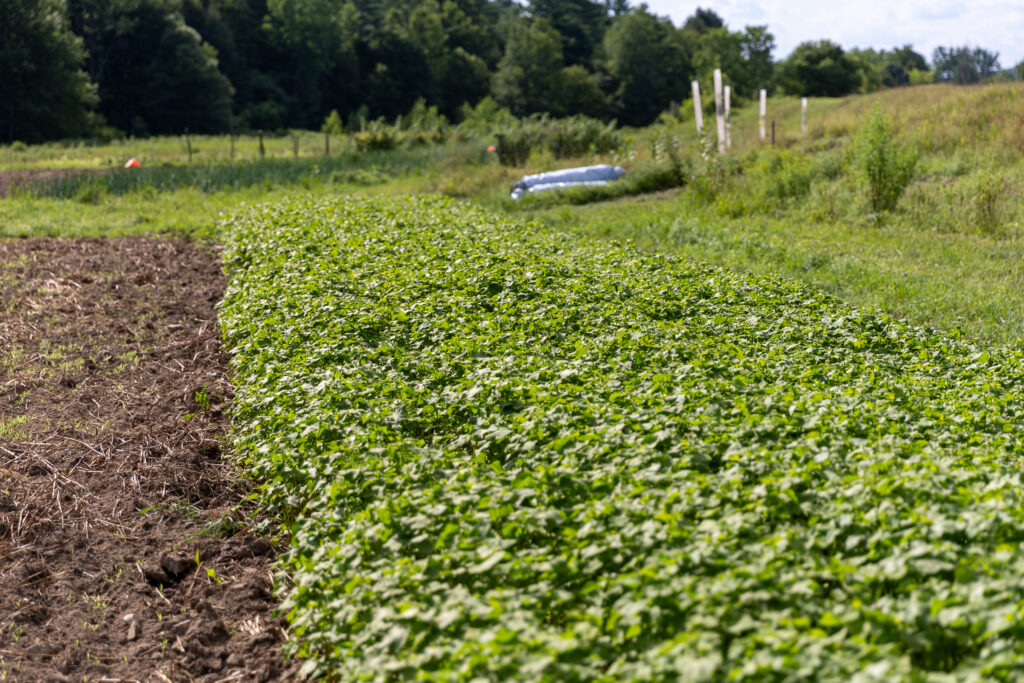
15 farms are doing sequential plantings of buckwheat to provide a pollen and nectar sources for pollinators and beneficial insects. Last year’s results are here. This year the team is also surveying insects and measuring nitrogen held by those plantings and dry matter gained. The Know Your 5- Cover Crop Fact sheet details some of the pollinators seen in cover crops. Cheryl described other insects she has observed in buckwheat- beneficial insects (syrphid flies, predatory thrips, lady beetles, tachinids, parasitic wasps, Orius) and pest insects (tarnished plant bugs, thrips).
Compost
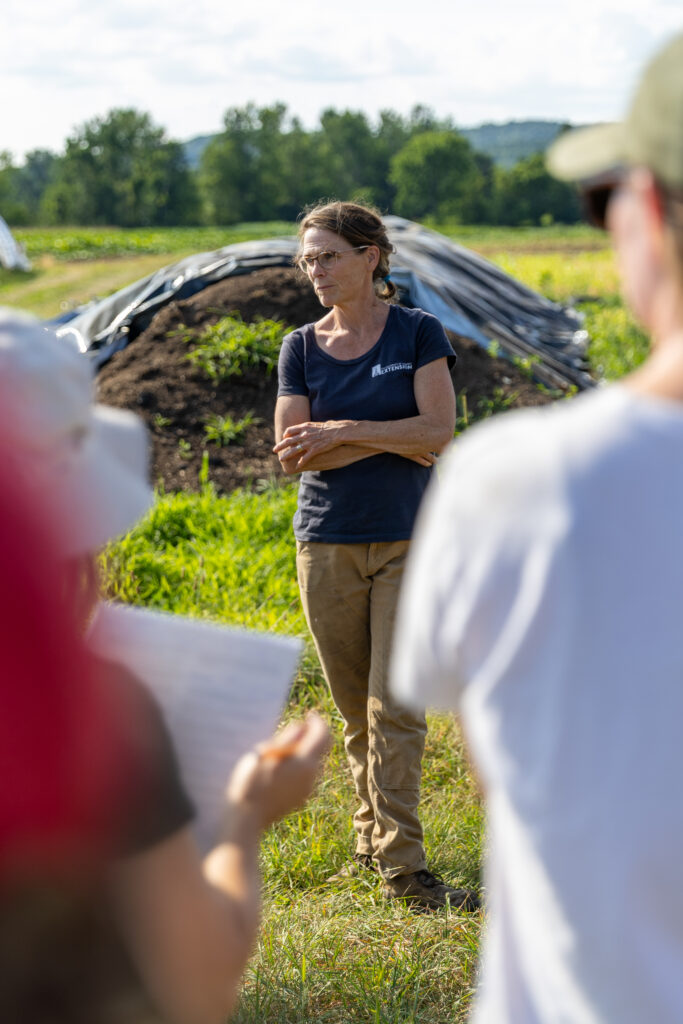
The Farm Upstream received some NOFA VT funding to make their own compost. They have an NRCS contract that pays them to spread manure on the fields for 4-5 years. (Practice 336- Soil Carbon Amendment) Becky recommends that you get compost tested and reach out for help to interpret the results before applying. Penn State (Vern recommends the $60 test) and UMaine are two labs that offer compost testing.
Colorado Potato Beetle Control
Since pesticides are working less effectively for CPB, farmers are looking to cultural controls. We checked out the delayed potato planting which is part of a larger UVM research effort. Grower sourced ideas on cultural control are in this VVBGA listserv post. Check out the UVM Scouting report for the latest news on CPB and other pests. Also see the blog post: Beating Beetles Better: Mechanically Controlling Colorado Potato Beetle
Wild bees
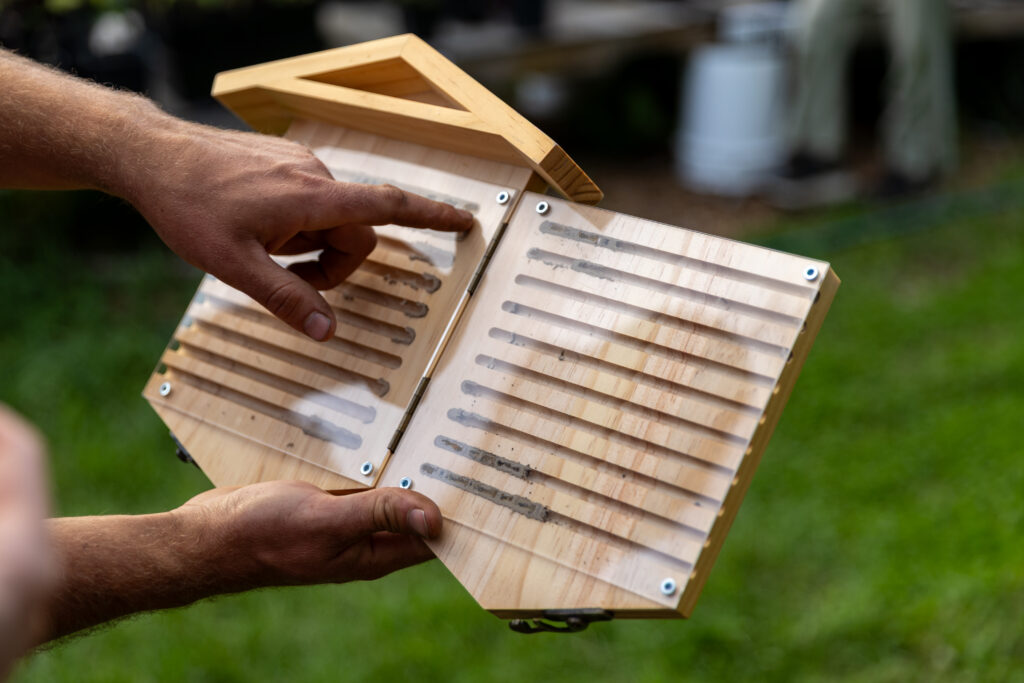
Webinar with Laura, Spencer and others on the current project looking at wild bees on different types of farms.
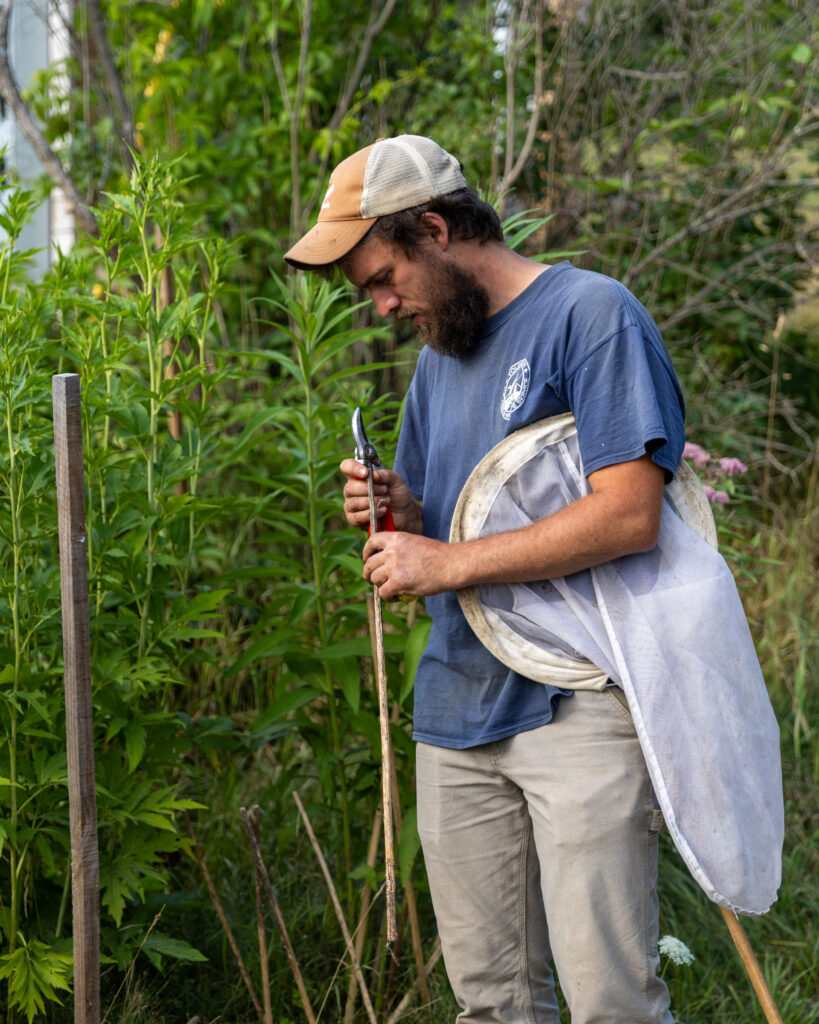
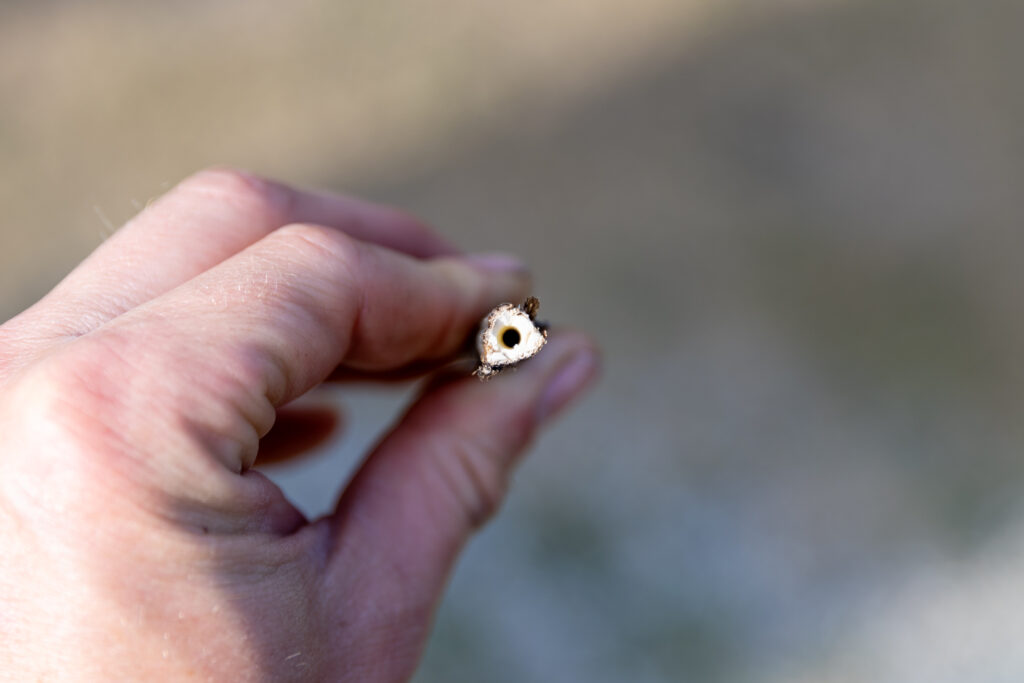
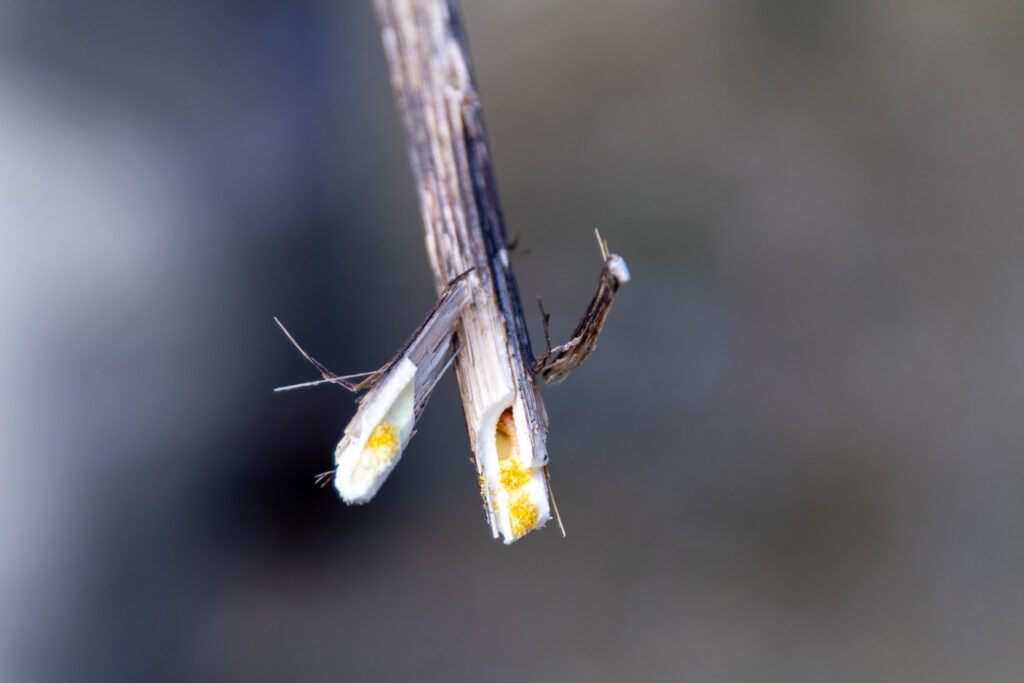
Please reach out to our team if you have any questions!
Thanks to UVM Extension team member Julie Callahan for organizing the notes and resources on the topics we discussed and Andy Chamberlin for the photos.
This event is supported by the VVBGA, Transition to Organic Partnership Program and the Vermont Agency of Agriculture, Food, and Markets.