All posts by Beth Holtzman

About Beth Holtzman

Beth Holtzman is outreach and education coordinator for the UVM New Farmer Project the Women's Agricultural Network.

Cover Crops

Improving Soil Health, Stewardship and Profitability on the Farm

This 2026 SARE handbook helps farmers improve their understanding of how cover crops can fit into their operations.
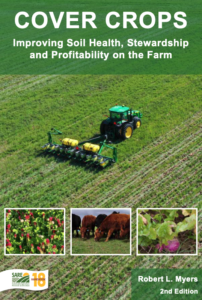
Cover of the "Cover Crops" handbook for decorative use only.Research shows that cover crops can improve soil, break pest cycles, reduce input costs and improve yields. But choosing the right cover crops, and managing them successfully, can require careful consideration to identify the right mix of species, timing, and equipment that best serve your farm’s goals.

Drawing on decades of research and farmer experience, the handbook covers:

Now in its second edition, Cover Crops: Improving Soil Health, Stewardship and Profitability on the Farm includes new chapters on using cover crops in grazing, horticulture, and organic systems. The stories of 12 grain, vegetable, and livestock farmers from across the country highlight how they manage cover crops and what they have learned along the way.

“Start small,” recommends author Rob Myers, director of the University of Missouri Center for Regenerative Agriculture. “The land you work with can be green and healthy if you take the steps to get there.” 

Read Cover Crops: Improving Soil Health, Stewardship and Profitability on the Farm for free online or order a print copy at www.sare.org/cover-crop-book.

The Basics of Farm Business Planning

The Basics of Farm Business Planning with photo of person holding bucket surrounded by goats.The Basics of Farm Business Planning (June 2025) offers a framework to help farmers clarify their goals, evaluate their resources, and build financially and ecologically sound enterprises. Developed with input from experienced farmers and educators, the guide introduces five essential planning steps: Identifying values; understanding your farm’s history and current situation; defining vision, mission and goals; strategic planning and evaluation; and implementing and monitoring. Hard copies of the bulletin is available in quantity for free to educators for use in educational workshops, classes or tours.

Relationships for On-Farm Research

A team from the University of Vermont’s Commercial Horticulture program developed an etiquette guidance document for those new to farm partnerships to help foster positive relationships. Facilitating Positive Relationships with Farmers for On-Farm Research (June 2025) provides guidance on making initial contact with farms, next steps when a farm agrees to participate, recommended practices when visiting farms, biosecurity measures, and components of wrapping up a project. Authors include Vern Grubinger, Becky Maden, Heather Darby, and Joshua Faulkner and Laura Olsen.

Toolkit for Impactful Farmer Programs

Impactful outreach and education programs get people to change something. Western SARE’s  “Best Practices Toolkit for Developing Impactful Educational Programs” provides:

  • An overview of learning styles, what they mean, why you should care and how they can be used to your advantage including specific teaching strategies you can use that address each kind of learning style.
  • Insights into how to best market your educational program from the very beginning so people will be inspired by what you have to offer.
  • Instructions on how to identify your target audience, get them in the room, and how to introduce new information with them in mind based on their learning styles/cultural preferences.
  • Ideas on how to build trust so you can most effectively transfer the information needed to bring about the change you seek.
  • Tools to measure how well you are incorporating learning styles into your teaching and learning strategy.