Getting to Know the Class of 2019: Torsten Dworshak

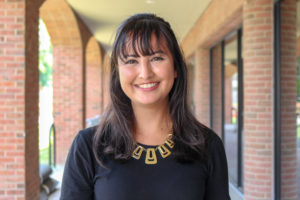
Torsten — or, Tor — comes to The Sustainable Innovation MBA with a background in digital marketing and strategic management. While at the University of Rhode Island, Tor was a member of the varsity track and field team. Connect with him on LinkedIn.

Why did you choose to attend The Sustainable Innovation MBA program?
If ever there has been an MBA program designed with disruption and creative destruction in mind, it’s this one. This MBA isn’t a fast track to Wall Street, it’s a fast track to learning how to be a serial industry disruptor.

What has been your favorite element/part of the program so far?

Not a single day goes by when I don’t learn something new.

What are three things someone considering the program should be aware of?

1. This is a fast moving program. Don’t forget to breathe.

2. Always be ready for opportunity.

3. After you remember to breathe, breathe again.

While you are taking time to breathe, make time to reflect. Material comes at you so fast that if you don’t actively make time for reflection, it’ll be difficult to create long lasting takeaways.

How has The Sustainable Innovation MBA benefitted you so far?

We meet a ton of professionals who are incredibly passionate about what they do. The opportunity to learn from their successes and failures is a gift.

Anything else you’d like people to know?

All of the speakers from Ben and Jerry’s bring ice cream with them!

The Cap Raise: Valuation

EDITOR’S NOTE: This article is a collaboration between Cairn Cross of FreshTracks Capital and Diane Abruzzini ’17 of VENTURE.co Holdings, Inc. It is one of a series we will be publishing concurrently with FreshTracks Capital.  Cairn Cross co-founded FreshTracks in 2000, and has worked as Managing Partner of the firm since that time. Notable FreshTracks VC investments include SunCommon, Mamava, and Eating Well. Cairn has helped to build a true Vermont entrepreneurial ecosystem by hosting pitch events, accelerator programs, workshops, and teaching at multiple Vermont universities and colleges. He is a former co-chair of The Sustainable Innovation MBA Advisory Board.  Diane Abruzzini has built her career as a food and agriculture entrepreneur and business consultant. She was a student of Cairn Cross during her time at UVM’s Sustainable Innovation MBA program. After completing her degree, she spent time working for FreshTracks partners as an analyst. She currently works in marketing and communications at VENTURE.co Holdings Inc, who’s wholly owned subsidiary VENTURE.co Brokerage Services LLC is a FINRA-licensed broker-dealer.

The valuation process can be murky for both entrepreneurs and investors. Private company stock is typically a “Level III” asset under ASC Topic 820 and its value “cannot be determined by using observable inputs of measures such as market prices or models.” Fair value is estimated rather than observed through readily observable market prices.

Entrepreneurs and investors often disagree on the valuation approach that should be used in a particular transaction. Should one base a private company’s valuation on the comparable metrics for publicly traded companies operating in the same industries, or should one base valuation on the estimated present value of a projected stream of cash flow? If you use public market comparables, which metric is most important to valuation? Revenue? EBITDA? Users? Growth Rate? If estimating the net present value of a stream of cash flow, which discount rate do you choose and are you being too aggressive or conservative in cash flow estimates? Do you arbitrarily choose the mid-growth position? Every entrepreneur, venture capitalist (VC), broker-dealer (BD), and investment bank will use a variety of criteria in order to determine valuation. None of the approaches are perfect–there is no secret sauce–but there are important differences to how VCs and BDs tackle company valuations.

First, we must consider to whom VCs and BDs have responsibilities. VCs are trying to create strong investment returns for the Limited Partners (LPs) who are the investors in the VC fund. Valuation and other terms such as dividends will be negotiated to give the venture investors an investment return commensurate with perceived risk. Before making an investment, VCs rely on the business plan and financial projections supported by company documentation as well as prior investment experience among the VC partners and external due diligence efforts to determine a reasonable company valuation. Continue reading “The Cap Raise: Valuation”

The Sustainable Innovation MBA Co-Hosts Global CEO Forum

On a beautiful autumn day in mid-October — the kind of day Vermont is famous for — the International Academy of Management came to the campus of UVM to host the Global Forum on Sustainable Innovation and Business Transformation.

The event, co-hosted by the Grossman School of Business and The Sustainable Innovation MBA program, featured a keynote speech and conversation with Muhtar Kent, chairman of the Coca-Cola Company. Our MBA students also had the opportunity to listen to and network with some of the U.S.’s and Vermont’s most innovative business leaders.

Kent, who has made innovation and the transformation of Coca-Cola a vital focus of his time at the helm of one of the world’s most recognizable companies, told the Forum’s 150 attendees that, at Coca Cola, innovation flows from the power of partnerships — that the best ideas are often found on the outside.

This slideshow requires JavaScript.

Kent also made the case that a “golden triangle” of forces — business, government, and social-mission organizations —  must come together to solve the world’s most pressing problems. Therefore, he said, business leaders must be master relationship builders.

The Forum also featured reflections by three forward-thinking business leaders. Mary Powell, CEO of Green Mountain Power; Brian Griffith, chairman of Griffith Foods; and Joey Bergstein, CEO of Seventh Generation, shared their own personal and organizational stories of transformation and innovation.

Getting to Know the Class of 2019: Esteban Echeverria

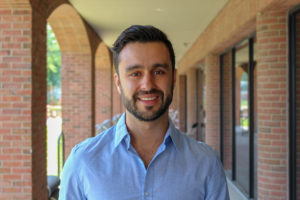
Esteban, born and raised in San José, Costa Rica, returned to his native country after living for six years in the United States and obtaining BSc. and MSc. degrees in Mechanical Engineering from the University of Maryland.  He comes to the program from Ad Astra in Costa Rica, where he was a project engineer for its renewable energy and environmental sciences division. Connect with him on LinkedIn.

Why did you choose to attend The Sustainable Innovation MBA program?

As a mechanical engineer working in the renewable energy and hydrogen fuel sector for six years, I started to notice that the development of these disruptive technologies will not reach full commercialization out of pure environmental enthusiasm. I understood that the creation of new business models based on sustainable practices that serve the vested interests of not just some, but all of the stakeholders, should be the objective to be pursued. It was then that I realized it was time to go back to school. I chose to attend an MBA program because I saw business as a tool to complement my engineering background. However, I specifically chose this program because it has an primary objective that I did not find in any other MBA program ― to make the world a better place.

What has been your favorite element/part of the program so far?

Every classmate of the cohort has a similar story and reason to be in the program. We are all deeply passionate about sustainability issues and finding ways to solve them. This makes us create strong bonds as well as a respectful and caring environment to share our ideas and learn from each other.

What are three things someone considering the program should be aware of?

1. If you are not into sustainability and contributing to solve the global environmental and social issues, this might not be the program for you.

2. The program is only one year, which makes it really intensive. It is really hard for anyone to attend while having an unrelated side project or job.

3. The city of Burlington is a beautiful developed rural area, unlike anything I have seen before. It has a very strong sense of community, and their citizens are very much interested in being active participants and helping each other.

How has The Sustainable Innovation MBA benefitted you so far?

Before starting this program, I had only worked with engineers and I was used to their particular way of thinking, solving problems, debating. It has been quite useful to be exposed to such a diverse group of people, with such different backgrounds, ranging from international development to finance, art, and even fashion. This has taught me that there are many ways of solving the same problem, and its always better to bring different fresh ideas to the table.

Anything else you’d like people to know?

I am an international student, from Costa Rica, and I strongly recommend this experience to anybody who lives outside of the United States. Since I came, everybody has been very friendly and helpful to me. You will feel just like home.
The Cap Raise: Introduction

EDITOR’S NOTE: This article is a collaboration between Cairn Cross of FreshTracks Capital and Diane Abruzzini ’17 of VENTURE.co Holdings, Inc. It is one of a series we will be publishing concurrently with FreshTracks Capital.  Cairn Cross co-founded FreshTracks in 2000, and has worked as Managing Partner of the firm since that time. Notable FreshTracks VC investments include SunCommon, Mamava, and Eating Well. Cairn has helped to build a true Vermont entrepreneurial ecosystem by hosting pitch events, accelerator programs, workshops, and teaching at multiple Vermont universities and colleges. He is a former co-chair of The Sustainable Innovation MBA Advisory Board.  Diane Abruzzini has built her career as a food and agriculture entrepreneur and business consultant. She was a student of Cairn Cross during her time at UVM’s Sustainable Innovation MBA program. After completing her degree, she spent time working for FreshTracks partners as an analyst. She currently works in marketing and communications at VENTURE.co Holdings Inc, who’s wholly owned subsidiary VENTURE.co Brokerage Services LLC is a FINRA-licensed broker-dealer.

U.S. Companies in multiple industries seek private capital to kindle a startup or fuel growth. Most entrepreneurs are aware of venture capital and angel investors as target sources of funds – pop culture shows such as Shark Tank and Dragon’s Den, as well as press-earning “unicorn” valuations – have earned ‘Venture Capital’ a spot in layman’s language. Far less understood is the work of investment bankers – particularly those raising capital in the private market.

We intend to discuss the differences between raising funding from venture capital firms and raising funding via broker-dealers. We’ll start with some general definitions.

A Venture Capital firm is most often a Limited Partnership (LP), managed by a team of General Partners (GPs). General Partners first obtain committed capital from accredited investors or qualified purchasers–Limited Partners–and use these commitments to form a fund. Each fund usually has a defined lifespan and specific industry or geographical focus. Typically, General Partners have full investment decision-making discretion over their Limited Partner funds, the funds have a defined life (typically 10 years) and investments in portfolio companies are made during the “investment period”, which is usually the first two or three years of the fund’s life. VC fund returns are reliant upon the sale of the fund’s stake in portfolio companies to private equity firms, strategic acquirers, or occasionally via an Initial Public Offering (IPO).

The number of U.S. Venture Capital deals per annum (post the economic recession of 2008) increased from 4,458 in 2009 to a peak of 10,444 deals in 2014 before slipping to 8,637 deals in 2017.  But despite the decrease in the number of VC deals per year from 2014 through 2017, there has been a marked increase in the dollar size of individual deals. This growth, in terms of investment and capital deployment, came alongside a rise of disruptors: technology-enabled companies whose business models cut long-standing, high-profit industries off at the knees. Continue reading “The Cap Raise: Introduction”

Family Matters

This post was written by Jeffrey Lue ’19.

EDITOR’S NOTE: For an enhanced experience with this post, please take a listen to this 1990’s throwback.

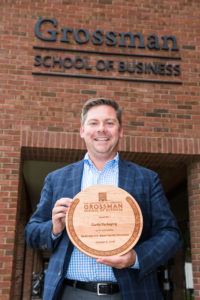
The Sustainable Innovation MBA Advisory Board member Don Droppo, CEO of Curtis Packaging (and UVM ’96) accepted the U.S.-based Multi-Generational Family Enterprise Award.

It’s a rare condition, this day and age, to find emphasis being placed on the importance of family businesses. But at the Family Business Awards in early October, the Grossman School of Business and supporting community has the opportunity to acknowledge family businesses who are leaders in their respective industries. This year, we celebrated Lake Champlain Chocolates, Curtis Packaging, and Foster Brothers Farm / Vermont Natural Ag Products Inc. for their innovation and commitment to sustainability.

Hearing the stories of the three 2018 winners and their 2017 counterparts were a beautiful example of love and tradition of the grand design. Since 1983, Lake Champlain Chocolates has been aspired to providing extraordinary chocolate moments. In addition to creating wonderful chocolates, LCC has demonstrated their commitment to sustainable business practices with their certifications (B Corps, Fair Trade) and community service.

It’s impressive enough to find a business in operation since 1845, but some people say it’s even harder to find one with the vision to incorporate environmental stewardship into its core competencies after all those years. Curtis Packaging achieved both accolades, becoming the first packaging company in North America to use 100% renewable energy, be carbon neutral, and a zero-waste-to-landfill facility.

The Lampman family of Lake Champlain Chocolates.

What’s the secret to the success of these small businesses? Well there must be some magic clue inside these gentle walls in the new dairy barn at Foster Brothers Farm. This fifth-generation farm has innovation engrained in their DNA. They built one of the first of New England’s methane digesters back in the early ’80s, expanded their portfolio to include an organic line of compost (MOO), and recently implemented a heat recovery system designed to capture and repurpose the heat created during the aerobic composting process.

These families are an inspiration of how business should be done. At today’s ceremony, there was real love burstin’ out of every seam of Ifshin Hall, and it was clear to see that it’s the bigger love of the family that will keep these businesses going strong. Congratulations again to all the 2018 winners!

Princeton Review Names UVM #3 Top Green School

The University of Vermont has again been named a Top 50 Green School by the Princeton Review, climbing to the #3 spot this year, up from #4 last year.

This annual ranking of the 399 most environmentally responsible colleges takes stock of the efforts schools are making to adopt sustainable policies,prepare students for citizenship and careers in a world defined by climate concerns, and provide a healthy and sustainable environment on campus.

The Sustainable Innovation MBA is currently ranked the #1 Green MBA by Princeton Review.

Click here to read more.

Getting to Know the Class of 2019: Alyssa Schuetz

A recent graduate of Drexel University, Alyssa brings a passion for apparel, textiles, and product development to the The Sustainable Innovation MBA program. Connect with her on LinkedIn.

Why did you choose to attend The Sustainable Innovation MBA program?
As the #1 Green MBA program in the country, I knew the program could give me the skills, tools, and knowledge that I would need to in order to further my career in sustainability and the fashion industry.
What has been your favorite part/element of the program so far?
My favorite element of the program is the diversity of my cohort — it makes for lively class discussions that have taught me so much more than a textbook ever could.
What are three things someone considering the program should be aware of?
1) There is a huge focus on leadership and teamwork to make you the best leader and team player that you could be, 2) The group work bonds you to your cohort, and 3) Your cohort will become your extended family.
How has The Sustainable Innovation MBA benefitted you so far?
I have learned that there are so many ways to implement sustainability in a business model that is both ethical and cost-effective.
Anything else you’d like people to know?
The program’s location in Burlington, Vermont is inspirational as the culture here lives and breathes sustainability and the great outdoors.

How to Make a Fortune…

While the chicken and broccoli was fantastic, this was hard to swallow:

We simply don’t agree. At The Sustainable Innovation MBA, we believe you can have both — take care of business, and make the world a better place. Download our e-book, or drop us a line. And embrace the power of “and.”

The State of Sustainable Business 2018

BSR and GlobeScan have released “The State of Sustainable Business 2018,” an interesting insight into the world of sustainable business and identified common perceptions and practices of corporate sustainability professionals.

In addition to measuring shifting priorities and challenges in corporate sustainability, this year’s survey presented a unique opportunity to understand how business is responding to the changing social landscape.

To hone in on actions of companies within the sustainable business community, this year’s data draws from the responses of one sustainability practitioner at each of 152 BSR member companies who participated.

The survey results can be viewed and downloaded here.