This post was written by Ariella Pasackow ’18
 On December 6, Slow Money Vermont hosted its 3rd annual Entrepreneurial Showcase at the Main Street Landing Performing Art Center in Burlington. Together with the Moulton Law Group, Milk Money, Flexible Capital Fund, City Market, and other sponsors, the program brought together entrepreneurs and investors with a shared vision for local, sustainable food and farms. Slow Money Vermont “catalyzes new investment opportunities in the people, businesses and community that contribute to a sustainable food economy.” A project of the Farm to Plate Network, Slow Money Vermont is part of a national movement headquartered in Boulder, Colorado.
The Entrepreneurial Showcase presented two panels, along with opening remarks by Slow Money Vermont chair Eric DeLuca. The plenary panel was introduced by Janice St. Onge, president of Flexible Capital Fund, who discussed the life cycle of businesses and the need for a succession plan. Allison Hooper from Vermont Creamery and Bill Cherry from Switchback Brewing Company both spoke to their own exit strategies, and the challenges of thinking about selling your business before you even begin. After years of discussion and possible “suitors,” Vermont Creamery was purchased by Minnesota based Land O’Lakes in March 2017. Switchback Brewing became employee owned in February 2017, and changed their logo to reflect that decision: “Employee & Vermont Owned, Forever.” Matt Cropp from Vermont Employee Ownership Center also joined the panel to discuss broad based employee ownership programs and the ESOP model. Panelists offered advice to aspiring entrepreneurs to think about the culture that want to cultivate within their company and the legacy they want to leave behind.
Following the panel, five entrepreneurs presented a brief pitch, including an “ask” for capital and other resources, with time for questions and answers. Kimball Brook Farm, Zenbarn, Metta Earth, Kingdom View Compost at Tamerlane Farm, and Eden Specialty Ciders shared their story and plans for future growth, and showcased the diversity of businesses throughout the state. Audience members asked about the opportunities and challenges the entrepreneurs faced, and what they needed to help them succeed. Though each entrepreneur was seeking to solve very different problems, they were all committed to growing companies grounded in local, sustainable, and innovative business practices and beliefs. Additional information about the Slow Money Movement can be found here.
 One of the key points many of the speakers made throughout the weekend was on mindset. Changing mindsets about the current globalized economy is the first step towards changing the system as a whole. One of the ways speakers encouraged a change in mindset was to recognize that in our current system we commodify all aspects of our life. Indigenous Leader
 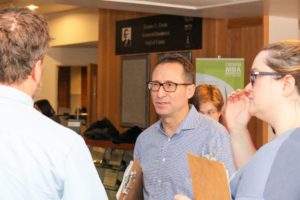 On the last day of November, the students of The Sustainable Innovation MBA hosted their annual Business Model Trade Show in the bustling lobby of Kalkin Hall. Visitors toured booths, sampled products and learned about the creative enterprises students have been working on throughout Module 2. For the students, it was a great opportunity to hone their elevator pitch and get feedback for their business ideas from noted visitors like venture capitalist and UVM alum
 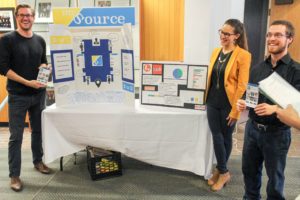 Many of the businesses focus on creating consumer goods that fill an unmet or underserved need in the marketplace. For instance, B3 is a consumer health company that offers simple, effective and environmentally friendly shampoo products made entirely from water, baking soda, and essential oils. Visitors to the trade show learned that the average shampoo contains more than 30 ingredients, many of which are known to cause adverse health and environmental effects. Another team of students with science and engineering backgrounds created Conscious Coffee Pods: small on the go servings of coffee in an algae-based pod that are shelf-stable, easily dissolved in water, and produce no packaging waste. Yet a third team created Flip Balm, an on the go algae-based sunscreen that attaches to a wristband made of recycled ocean plastic.
 What has been your favorite part/element of the program thus far?
 Finding time to both reflect on and celebrate successful team projects, or debrief on things that could have worked better, has often taken a backseat to other pressing needs.
 This was the weekly struggle this semester as I attempted to keep up with classwork, teamwork, and a community supported agriculture (CSA) share. My share, paid for at the beginning of the season to provide farmers a more stable income and seed start up costs, got delivered weekly to a campus drop off spot. (For more information about CSAs please see
  With some very experienced hikers in this year’s cohort we’ve had a handful of successful hikes including Mt. Mansfield and Starks Nest. Other classmates have hit the road and enjoyed a charity bike ride for Old Spokes Home and one of our very own classmates, Becky Miller, led a local yoga class that many attended. Being a graduate student at UVM means you get to enjoy a beautiful landscape and a vibrant community. Beyond the university offerings, Burlington has a variety of outdoor offerings for everyone.
 During the semester, almost half of our class participated in intramural sports offered by campus recreation. Campus Recreation offers a variety of options from multi-week team sports to one-night clinics, all free, or practically free. As a class we competed in broomball, kickball and volleyball. Games are weekly and the games and the season-ending tournament usually last from 4 to 6 weeks. While we didn’t take home any campus-wide championships this semester, we won some games, worked off some steam and got a little exercise, which is always nice after sitting in class for most of the day. There were also awesome events like a “Learn How to Curl” event in which a local curling club taught us the basics of curling. Due to our busy schedules, we won’t be joining the 2018 Winter Olympics, but we might shoot for the 2022 Winter games.