This article from the Graduate Family Business Sustainability Club focuses on the von Trapp family and the Trapp Family Lodge. Four current SI-MBA students traveled to Stowe, Vermont and spoke with Kristina von Trapp and Walter Frame about the family business and the importance of sustainability.
Etched into Vermont’s horizon, the Green Mountains lure those far and wide with their humble magic. For the von Trapp family, they provided a new home while evoking reminiscent feelings of their Austrian past. Take a journey to the hills of Stowe, Vermont, and you’ll discover how the Trapp Family Lodge seamlessly blends Austrian hospitality with values rooted in creating a sustainable future—or as the family says, “A Little of Austria…a Lot of Vermont®!”
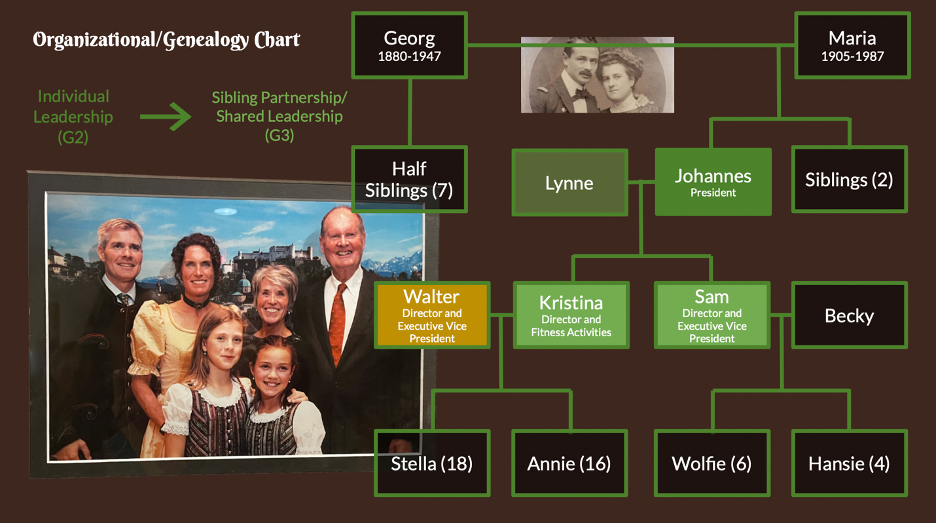
In 1950 Maria von Trapp created what became a 2,500-acre hospitality sanctuary. Maria’s son Johannes is now president and, at 82, remains highly involved in the lodge’s day-to-day operations. Johannes lives on the property with his wife, Lynne. Their two children, Kristina and Sam, each built homes for their families down the road from where they grew up and are co-owners and operators of the family business, along with Kristina’s husband, Walter Frame.
Image courtesy of: Allyson Rigutto, SI-MBA ’22
The Trapp Family Lodge recently celebrated 70 years of business, with sustainability at its core from the start. Protecting and caring for the land is both a fundamental value and essential business practice for the family. As a founding member, Johannes set aside roughly 1,500 of the family’s 2,500 acres for conservation under the Stowe Land Trust. Guests are encouraged to explore the property’s 60 miles of ski, bike, and hiking trails and contribute to conservation with a $1-per-night trust donation built into each reservation. The land also supports a maple sugaring operation and rotating timber harvests to create a healthy forest and provide wood to heat the lodge.
Johannes defines sustainability as, “Working off the land, getting what you could from close by, and reusing everything you could.” Ingredients sourced directly from the property create a farm-to-table experience for guests. In addition to fresh produce, the family raises numerous animals including layer-egg chickens, pigs, cows, and sheep. Longstanding composting practices are intended to both reduce inputs into local dumps and enrich soil for more abundant crops and livestock. The von Trapp Brewing launch in 2010 was an important test of sustainable expansion. Today, von Trapp beer is sold in 10 states, and the byproducts of the beer-making process are spread across the acreage.
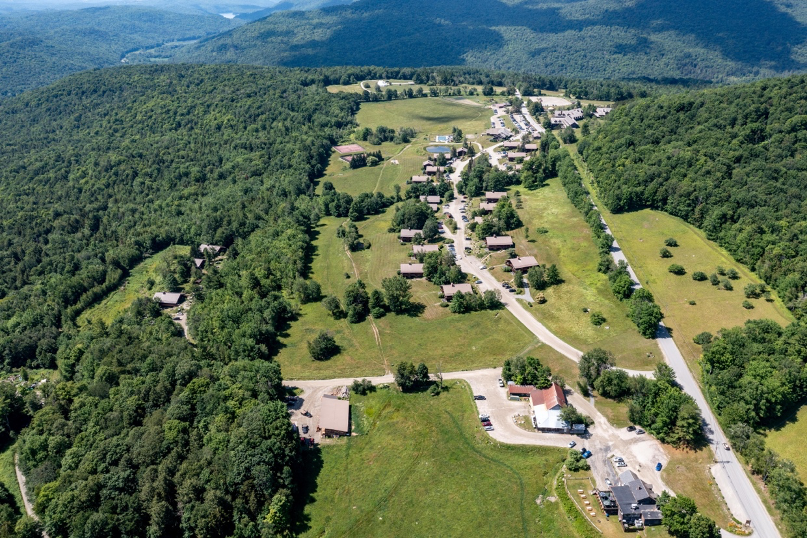
An aerial view of the Trapp Family Lodge property (Photo courtesy of Trapp Family Lodge)
For the von Trapps, sustainability extends beyond respecting the planet. The family believes in “Gemütlichkeit,” the German term meaning cozy, unpretentious, and professional hospitality. This value of care is extended to both guests and the community. The von Trapps engage in various philanthropic initiatives in the greater Stowe area, including afterschool fitness and recreation programs. With approximately 300 employees on payroll today, the von Trapps understand that supporting peoples’ livelihoods is an integral part of success. Providing employees with stable, well-paying, and purpose-driven jobs is key to the business’s resilience and growth during challenging times.
As for the traditional bottom line, embracing all facets of sustainability enabled the Trapp Family Lodge to have its most profitable year to date, despite a global pandemic. The von Trapp family is a pillar of success in the greater Vermont community because they keep people and planet at their core, showcasing what it truly means to be a sustainable family business.
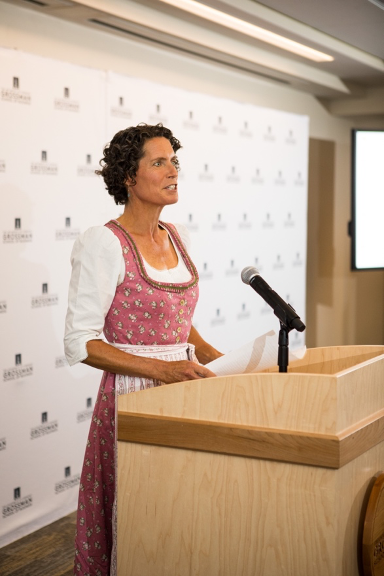
Kristina von Trapp accepting the 2019 Multi-Gen Family Enterprise award at the Grossman School of Business’s Family Business Awards
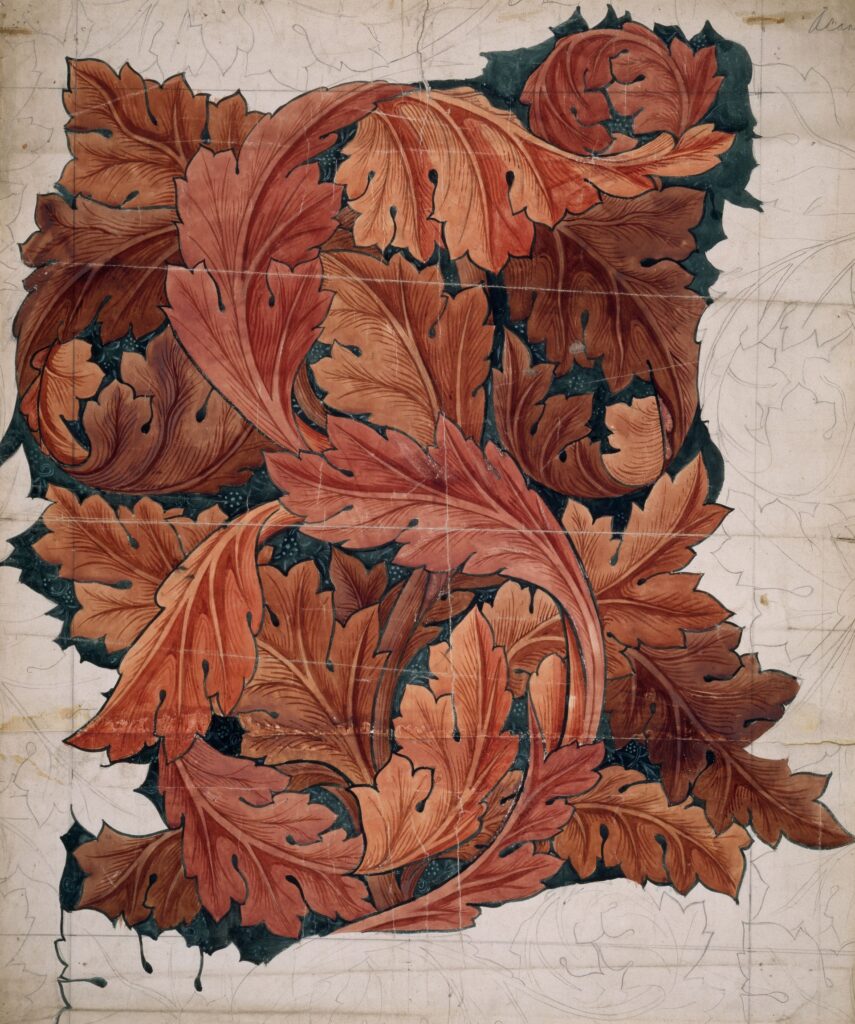
‘Acanthus’, a naturalistic wallpaper design by 19th century entrepreneur William Morris. Credit: Birmingham Museums Trust https://unsplash.com/photos/v15kmerLWcA
Many of us tend to think of sustainable business as a recent phenomenon. It’s certainly true that in the last few decades, the climate crisis has compelled a new wave of companies to benefit both people and planet through their everyday operations. But in the wise words of American poet and civil rights activist Audre Lorde: ‘There are no new ideas. There are only new ways of making them felt.’[1]
In Professor Dita Sharma’s Entrepreneurial Family Business class, we learned that notions of “sustainability” have evolved over time. While the world’s most pressing concern today is the climate crisis, previous generations have also harnessed the power of business to tackle various social and environmental problems. They might not have used the word “sustainability”, but the concept of protecting people and planet would have been familiar to them.
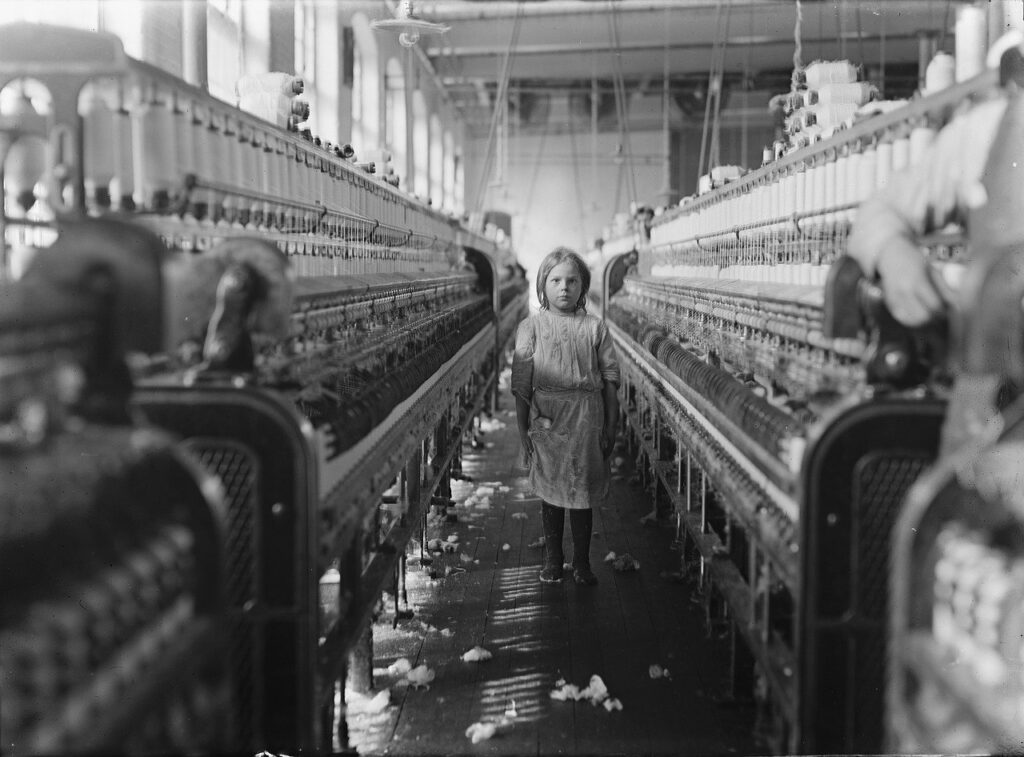
I joined the SI-MBA program as an international student from the UK, a country with a rich history of sustainable business pioneers determined to change the status quo. Many of them worked against the backdrop of the Industrial Revolution, which began in the 18th century and had a brutal impact on the poorest people in society. For centuries, millions of working-class people labored for twelve to sixteen hours each day for little pay in dirty, cramped and extremely dangerous conditions. Workers’ rights were virtually non-existent, employers were often cruel and dictatorial, and child labor was a common and accepted reality.
This was the world that Welsh factory owner Robert Owen (1771-1858) grew up in. In 1799, Owen purchased the New Lanark cotton mill from his father-in-law David Dale. While Dale was already considered a generous employer for the time, conditions at the mill were still, objectively, brutal. As a first step, Owen immediately banned corporal punishment for children, stopped accepting child workers from the local poor house, and raised the minimum age of employment to ten.
Eventually, Owen phased out the hiring of children completely and sent his remaining child workers to a purpose-built school. He also made many other decisions which, at the time, were nothing less than revolutionary: from implementing measures to increase his workers’ autonomy and motivation in the workplace, to improving workers’ housing, to opening an adult night school for his workers (commonly credited as the first in the world)[2].
In 1807, President Jefferson passed the Embargo Act, which put American cotton exports to Britain on hold. In response, most British cotton mills began laying off their workers. Owen, however, made the highly unusual decision to keep his workers on at full pay, earning him even more respect and loyalty from his employees. His approach reminds me of Dan Price, the tech CEO who in 2015 famously took a pay cut to pay all his employees a minimum salary of $70,000.
Owen is often remembered today as a philanthropist. However, this characterization glosses over the fact that his social initiatives could always be justified on economic grounds. The social improvements he pioneered weren’t simply acts of charity, but considered business decisions – and under his management, the factory became exceptionally profitable, with returns of over 50% on investment.
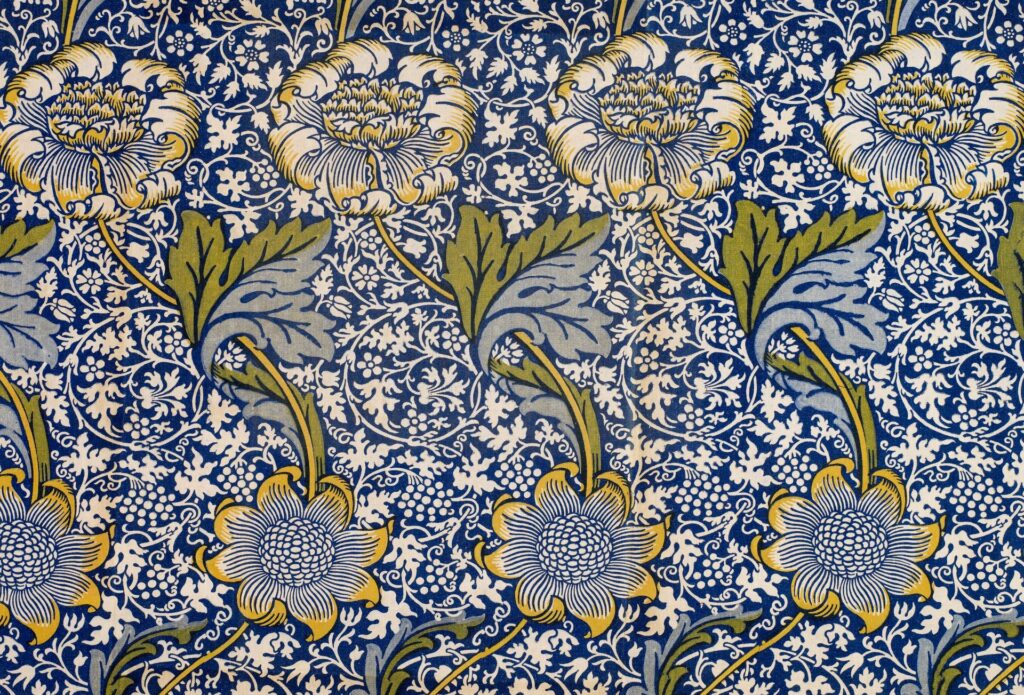
Textile designer William Morris (1834-1896) was another sustainability-minded entrepreneur whose ideas were far ahead of his time. Morris’ designs, famously inspired by the forms and shapes of the natural world, are as popular in British homes today as they were over a century ago. But fewer people are aware of the activism that accompanied his business acumen.
A committed environmentalist and campaigner, Morris was infuriated by the effects of industrial waste and pollution on the natural environment. He eschewed industrial production methods, instead opting to use small-scale, artisan production at his furnishings company, Morris & Co. He revived obsolete, artisanal production techniques, insisted on the use of high-quality raw materials, and used almost exclusively natural dyes[3]. He was also socially progressive, proving himself lightyears ahead of his time by hiring women as decorators in an era when this was far from considered a suitably “feminine” profession[4]. Even today, CEOs in male-dominated sectors tend to be far less proactive in this respect.
As an egalitarian and a committed socialist, the fact that only affluent households could afford Morris’ products was deeply troubling to him. While he never fully resolved this problem, his tactic was to educate consumers into making fewer purchases of higher quality. Today, many purpose-driven businesses still grapple with the very same issue: like Patagonia, whose striking “Don’t Buy This Jacket” campaign encouraged customers to buy less, but buy better. Morris’ message, then, seems more likely to resonate with customers in the 2020s than it was in the 1870s (at least, for those of us who constantly struggle to stop buying things we don’t need and achieve Marie Kondo levels of minimalism).
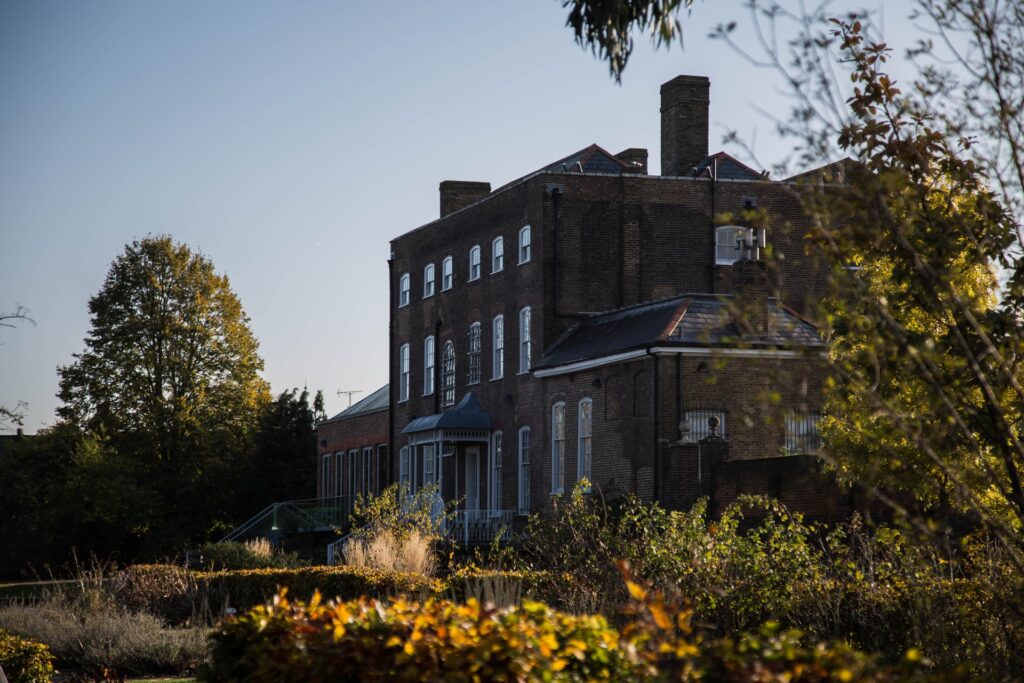
Morris’ childhood home in Walthamstow, north east London, is now the William Morris Gallery. Credit: Kenny Orr/Unsplash https://unsplash.com/photos/aQSZqWzzjg4
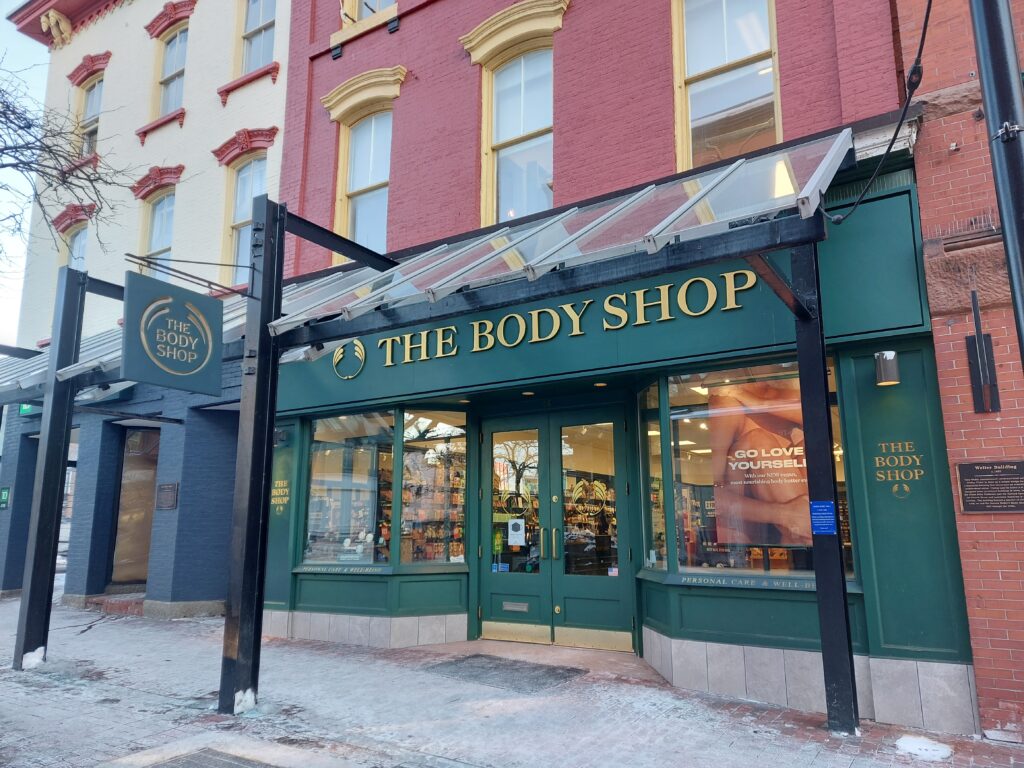
A century later, in 1976, trailblazing entrepreneur and activist Anita Roddick (1942-2007) opened the first Body Shop in Brighton on the south coast of England. This was an era long before the advent of Fairtrade certification, the trend for zero-waste stores, and the boom in natural and vegan cosmetics. But Roddick was already travelling across the Global South to buy directly from farmer groups, asking customers to use refillable bottles, and campaigning against animal testing[5]. In the profit-obsessed, Thatcherite 1980s, Roddick was seemingly the antithesis of everything a CEO should be.
Roddick was no stranger to controversy, and her decision to take the business public in 1984 angered many who felt she had compromised her principles (and she did live to regret her decision). But few would deny that Roddick truly broke the business mold and paved a path for others – particularly women – to follow. Before anyone had coined the phrase ‘B Corporation’, ‘social enterprise’, or ‘Triple Bottom Line’, Roddick had already succeeded at growing a purpose-driven, activist enterprise in an extremely unforgiving and profit-obsessed business ecosystem.
Started in 1977, in 2022 there are now approximately 3,000 Body Shop stores worldwide – including this branch in Burlington, VT. Credit: Nancy Demuth
Though the world has changed dramatically since Owen, Morris, and even Roddick’s time, the problems they railed against still exist in some form today. As sustainable business students, we tend to constantly look ahead to the future at the potential of the latest technological advances to drive positive change. But more often than not, there’s also a great deal of inspiration to be found from the ingenious ideas of the past.
The opinions expressed in this article are my own, and do not represent the views of UVM or the Sustainable Innovation Review editorial team.
It felt like waking up to learn school is cancelled for a snow day. It was December 22nd and SI-MBA students finally received something we’d been waiting for with bated breath for weeks – our Practicum Project assignments.
The Practicum Projects are the capstone experience of the SI-MBA program. They are a full-time, hands-on, consulting project with an organization seeking to advance sustainable business within their own organization or their industry. These organizations may be entrepreneurial ventures, B corporations, NGOs (non-governmental organizations, or non-profits), or large, international corporations. Projects focus on a range of issues – from supply chain, to impact investing, to sustainable business strategy, to measurement and reporting of GHG emissions, to affecting sustainable behavior change through media and entertainment content.
Teams of two to four students are paired with a host organization before the new year, and once January rolls around, the preliminary research begins. This is where our cohort is now – holding kickoff meetings with host organizations and beginning to wrap our minds around the scope of our projects. It’s a very exciting time, as we’re able to start applying what we’ve been learning in the classroom to solve real-world problems. What is even more exciting, the organizations we are engaged with – which include Microsoft, Burton, Clorox, SAS, and a consortium of film and TV companies including HBO and Disney – may actually implement the ideas we come up with. While the Practicum is not job placement, these projects open doors to industries of interest and provide critical networking opportunities and practical experience which, who knows, could lead to a job offer in the future. Here are some common questions about Practicum Projects:
Are the host organizations the same every year?
No – while SI-MBA has relationships with several companies that do repeatedly host Practicum Projects, it is not always the same organizations from one year to the next. As the program grows, expands its reach, and makes new connections, new host organizations become part of the UVM network.
Additionally, students are able to build their own connections with specific organizations of interest in the hopes of setting up a Practicum Project. This is great for the student if they have a specific goal or organization in mind and it is great for the program, as it expands their network.
How does the selection process work?
The SI-MBA administration and faculty advisors work hard throughout the fall semester cultivating Practicum Projects. Interested host organizations submit Practicum proposals with a brief description of the project. Then, before the new year, the cohort receives the full list of proposals. We then rank our top three choices, and it’s almost guaranteed that we will be placed in either our first or second choice. Because students are placed in teams of two to four people, many projects do not get chosen, so it can be a competitive process for the host organizations.
Does the Practicum happen at the same time as coursework?
Yes and no – the bulk of the Practicum work takes place from mid-May through July, once our core coursework has been completed. This is when we are expected to be working full-time on the project. However, we are expected to conduct research and fully scope the project from January through mid-May on a part-time basis.
Do students get paid for their work on the Practicum projects?
No – students receive course credit for the Practicum and do not get paid. However, these projects provide invaluable networking opportunities, practical experience, and resume content.
Do students work remotely or travel to the host organization?
This is largely up to the host organization, who will cover the costs of any travel if it is deemed necessary. For the most part, work is done remotely as this greatly increases the breadth of potential host organizations, from local Vermont companies, to US-based and international organizations.
As the year progresses, we will be sharing more information about our Practicum Projects and the work we are doing. Additionally, be on the lookout for this years’ list of Practicum Project descriptions on the SI-MBA website, coming soon!