Introducing the Graduate Family Business Interest Group at the Grossman School of Business: Spotlight on Professor Dita Sharma, Ph.d

Written By:

Zoe Kurtz ‘22
Contributing Writer
Connect with Zoe on LinkedIn

Riley Nelson ‘22
Contributing Writer
Connect with Riley on LinkedIn

It is our pleasure to introduce the Graduate Family Business Interest Group at the Grossman School of Business (GSB). We are a group of Master of Accounting and Sustainable Innovation MBA students interested in learning and sharing how family businesses are leading innovative changes to embed sustainable development goals into their core operations.

Throughout the year, we will spotlight innovative families and incorporate student perspectives to explore and illustrate the impact of family businesses in society and the economy. To kick things off, we interviewed Professor Dita Sharma, the Schlesinger-Grossman Chair of Family Business at GSB to paint a picture of the importance of family business. Dr. Sharma has spent her whole life around family businesses, from her own family’s as a child to countless others as an advisor. She received her Ph.D. from the University of Calgary, and her research heavily focuses on succession, governance, and innovation. Her skills and expertise add value to family businesses all over the world, and she is now focused on family enterprise run by UVMs alumni in Vermont and beyond. Founder of GSB’s Family Business Awards and the Schlesinger Global Family Enterprise Case Competition, she maintains focus on integrating classroom learning with the lived experiences of business families.
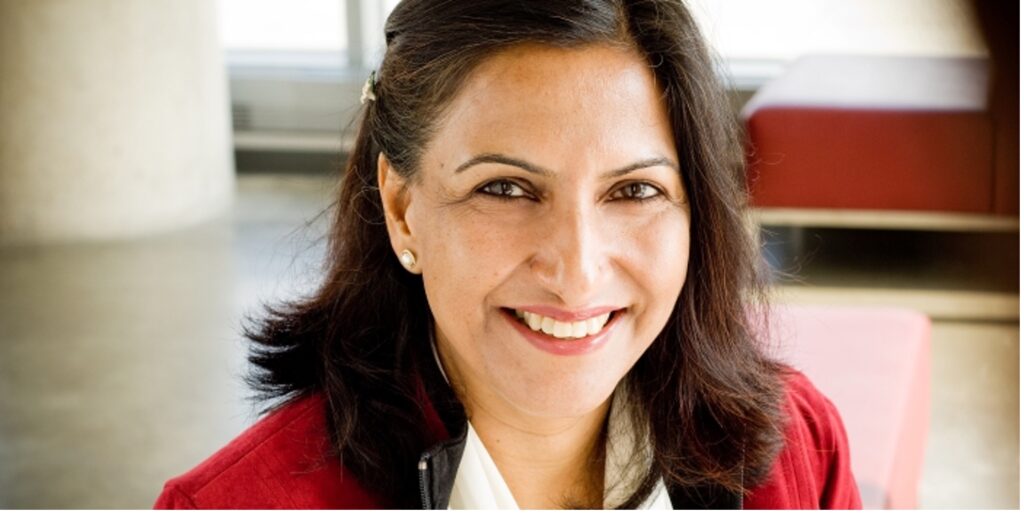
Professor Dita Sharma, Ph.D

What defines a family business? How do they differ from normal businesses?

Family business (FB) is an enterprise whose vision and strategic direction is controlled by members of a family through ownership, management and/or governance. The controlling family often aspires for transgenerational continuity and a positive legacy in the community. 

In non-family businesses no single family has enough ownership to control the company’s vision or direction. While a large majority of the world’s businesses are family controlled, enterprises in which the operational roles are held by non-family members are sometimes perceived as non-family businesses.

Tell us about your personal experience in family business.

I grew up in a business family in an industrial town in India. Everyone I knew – my classmates, friends, relatives, neighbors – were entrepreneurs running small and medium enterprises in different industries. My family was highly regarded in our community for its integrity as we worked hard to provide for our family and those of our employees. New ventures were launched regularly to meet the product and service needs of the community; and existing ventures were transformed into new directions. So, for me, entrepreneurship and family business are a good way to make a living, support a community, and leave a legacy. As an educator, I enjoy developing innovative programs to support the learning of students and bring them closer to business families.

So, for me, entrepreneurship and family business are a good way to make a living, support a community, and leave a legacy.

What are challenges that family businesses face today and how are they better able to adapt to those challenges than other types of businesses?

Family business leaders must learn to run two separate and overlapping human systems of family and business successfully. Troubles in one can easily seep to the other and managing this challenging polarity day after day, year after year, decade after decade, takes significant effort and patience. The porous boundaries also turn into strengths during tough times as the family pulls its resources to support the business, or vice versa. 

In your experience, have family businesses embraced sustainability faster than other companies? If yes, what about family businesses make this possible?

Long-lived family firms have operated on the basis of stakeholder capitalism for centuries, so the concept of sustainability is not new to them, though the terminology as used today might be. However, multi-pronged efforts are underway by family business associations like the Family Business Network and Family Firm Institute, consulting companies like KPMG and PwC, and university programs like Grossman School’s Graduate Certificate in Sustainable Family Enterprise to help expedite the comfort level with related terminology and insights. As each nation sets its ambitious sustainability targets, there is increased interest in engaging family business leaders help to accomplish them. And, business leaders are responding with interest.

How has COVID affected family businesses in the past year?

An external crisis like the COVID-19 pandemic exposes the underlying strengths and weaknesses of an organization. Family businesses like State Garden, Rhino Foods, and our other UVM FB Award winners, that continue to reinvest and reinvent themselves, remain frugal in their expenditures and earnest in supporting their employees and communities, and take time to build strong family relationships and networks, have found many opportunities to transform themselves and accelerate their sustainable development journey amidst this pandemic. Others, marred by fundamental family or business issues have faced swift bankruptcies and closures, or are slowly limping towards that end.

How does UVM support family businesses, and what are specific goals for the university within the family business arena going forward?

With its focus on sustainability, entrepreneurship, and family business, University of Vermont’s Grossman School of Business is already positioned strategically in global conversations related to sustainability. Several faculty members focus their research on family business interface. Generated knowledge is shared not only in our undergraduate and graduate classrooms but also through experiential programs like the Family Enterprise Case Competition, FB-Sustainability Forums, and FB Awards. We believe in providing students opportunities to build their own professional networks and find ways to bring students in close interaction with business leaders working to embed sustainable development principles into their core operations. We aspire to continue on this pathway. 

Do you have advice for students looking to work with/for family businesses?

Four possibilities: launch a family business – buy an existing family business – join a family business – build a consulting practice. In all cases, start small dream big. 

First pathway to career launch could be to start a new venture by pooling talent and resources with family members. Over time, such ventures grow and provide opportunities to contribute to the community while building a positive legacy.

Second possibility is to join an existing business with an aim to buy into it over time. This could be a business within your networks or in an industry or location of interest. As the boomer generation retires over the next twenty years, several enterprises will change hands and those with experience will find an opportunity to become owner-entrepreneurs.

Third, students eager to join large family businesses will benefit from studying the shareholder reports and company history to understand the values and aspirations of the controlling family. Where possible, conducting informational interviews with family members and/or long-term employees will shed light on their views on sustainability. Working in a company with values aligned to your own helps to accelerate careers. 

A fourth possibility is to join a consulting company focused on functional areas in which you have an expertise – accounting, finance, business analytics, marketing etc., and focus on family (or private) businesses and serving their sustainable development needs.

Alignment of values and interests is key in any career success. Taking time to clarify your own values and how you are projecting them – your brand can be useful. In three words or less, what does your name stand for today?

Alignment of values and interests is key in any career success. Taking time to clarify your own values and how you are projecting them – your brand can be useful

Lastly, what is your favorite place in Burlington?

I enjoy walking and hiking typically at Shelburne Farms or Mount Philo. Sunrise over Camel’s Hump and sunsets across the lake often serve as great reminders of the blessing of living in Vermont. 

Professor Dita Sharma was kind enough to provide a highlight of family businesses and their unique intricacies in this interview, but there is a lot more to learn. Family businesses are all around us. They comprise 90% of firms in North America and, according to The Economist, comprise over 90% of firms world-wide. GSB is working towards becoming a focal point of knowledge and connection for family business, and there are lots of ways for interested students to become involved. Professor Sharma’s research and her courses dive into the specifics of creating and governing innovative family businesses. Additionally, the undergraduate and graduate family business clubs provide deeper peer-to-peer conversation and learning/networking opportunities for students interested in family business. If you are interested in joining either of these clubs, please reach out to Riley Nelson (riley.nelson@uvm.edu) if you are a graduate student and Dani Schmidt (Daniele.Schmidt@uvm.edu) if you’re an undergraduate.

Innovators in Residence: King Arthur Baking Company

Written By:

Billy Corbett ’22
Contributing Writer
Connect with Billy on LinkedIn

Lindsay Jarrett ’22
Contributing Writer
Connect with Lindsay on LinkedIn

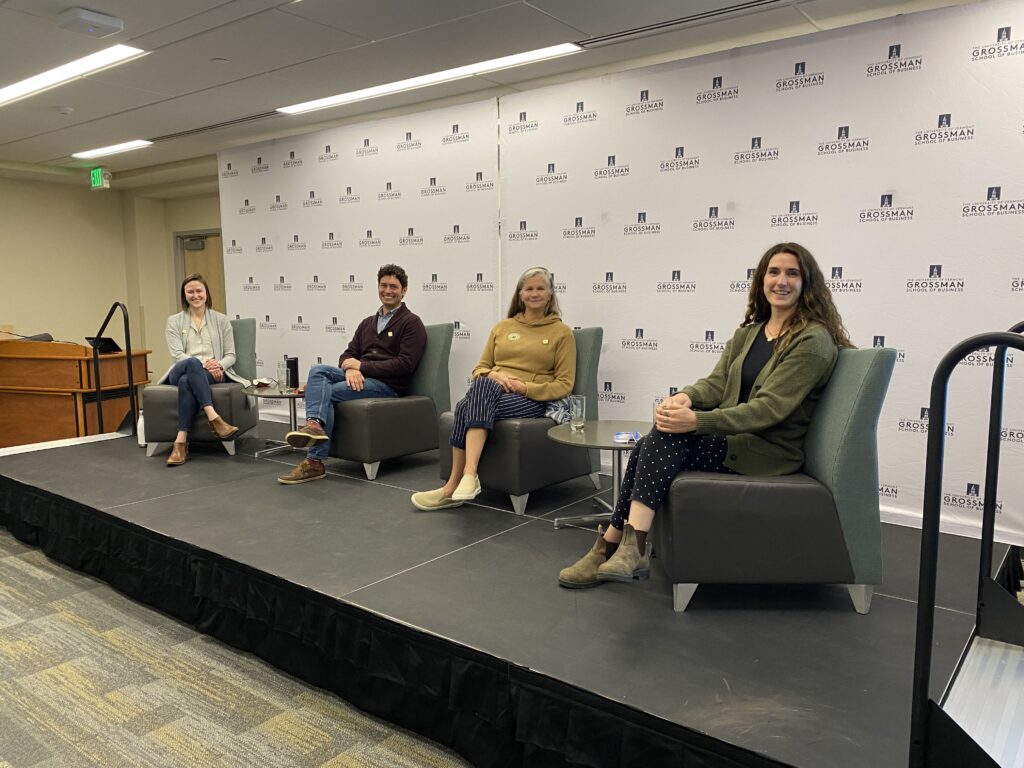
As we start our third month of SI-MBA, it is clear that what distinguishes the program is the community it brings together – from current students and alumni to innovators, entrepreneurs and business leaders around the world. In order to learn from those who use business to positively impact our world, SI-MBA’s Innovators in Residence series brings in leaders to discuss key business challenges for a changing world. In these talks, students hear first hand what sustainable business looks like outside the classroom. Last week, the Class of 2022 was fortunate to hear from a variety of leaders at King Arthur Baking Company for our first session.

King Arthur is based just down I-89 in Norwich, VT, only an hour and a half from the UVM campus. Started in 1790, King Arthur became a 100% employee-owned business in 2004. Steeped in a rich 230-year history, its true strength is its forward looking posture and inclusive vision for the future. We were joined by Suzanne McDowell (VP of CSR and Sustainability), John Henry Siedlecki (VP of Innovation), Katie Jones (Associate Brand Manager of Innovation), and Molly Lawrence (Corporate Social Responsibility Manager). For the entire afternoon, SI-MBA students learned from and asked questions of these leaders.

The cohort asked a range of questions about their employee benefits, their recent rebrand, their supply chain relationships, and more. At the end of the session, the King Arthur team posed a question back to us: “What should we be doing to enhance our sustainability efforts?” Some of the ideas that the class floated included a study on compensation equity, encouraging consumers to bake more sustainably, and more.

We were lucky enough to ask our four guests a few questions before their presentation. Below are a few of the highlights (Note: questions and answers from our conversation are paraphrased):

Lindsay & Billy (L&B): King Arthur has a complex set of stakeholders. How do you balance stakeholder needs?

King Arthur Baking Company (KABC): We see working with our stakeholders as a privilege. Our consumers, bakers and employees are at the center of what we do. We strive to leave a seat at the table for our consumers. The environment is also key; without a seed and fertile soil, we don’t have a business. “We don’t want to just sustain, we also want to regenerate.” Ultimately, we are committed to our values of quality, community, passion and stewardship, and strive to demonstrate this through our relationships with stakeholders. We are committed to the education of our stakeholders, whether that be customers, employees or the community at large.


We don’t want to just sustain, we also want to regenerate.”


L&B: What does governance look like for King Arthur under an ESOP (Employee Stock Ownership Plan) structure?

KABC: King Arthur holds regular “town meetings” where employees are informed about the company’s strategy and finances. During these meetings, employees are encouraged to engage with leadership. This encourages transparency and employee buy-in. Our posture toward our employees makes King Arthur a place where people are proud of where they work.

L&B: Recently, King Arthur changed its name. Why? How did that process unfold?

KABC: The re-brand had been in the works for a while. We wanted a name and imagery that reflected where the company is today. We changed “King Arthur Flour” to “King Arthur Baking Company” and changed the image of the knight to an image of a wheat crown. Our product line goes beyond wheat products now, and one of our most popular products is the Gluten-Free Flour. King Arthur Baking Company gives us the freedom to continue to innovate and explore. The rollout was as good as could be expected. With flour flying off the shelves during Covid, the product with the old brand was replaced quickly. Stakeholders were generally very supportive.

While we only had a short time with our new friends from King Arthur, we learned so much from them about using business to reflect our values. We are grateful to have these four innovators as a part of the SI-MBA community.

P.S.: Check out this King Arthur Baking Company Recipe for your Thanksgiving Holiday!

Pumpkin Cake Bars with Cream Cheese Frosting
Photo Credit: King Arthur Baking Company

No Better Time to Study Sustainable Business

This post was written by:

Josh Kriesberg ’22
Contributing Writer
Connect with Josh on LinkedIn

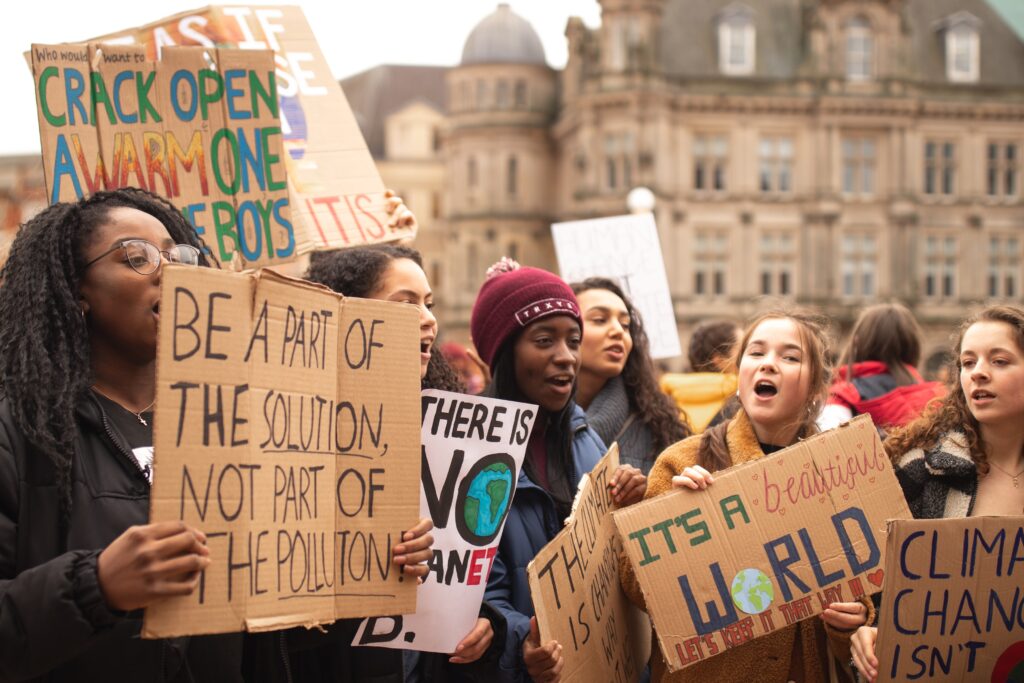
The planet is burning, but make no mistake, this is not another sob story about mother nature. This is a story of opportunity.

As world leaders meet at COP26, they’re discussing what it will take to address the climate crisis. But what exactly is needed? Paradoxically, the same human activity that got us into this mess has the best chance of helping us dig ourselves out. The same way Thomas Newcomen changed the world with the steam engine, entrepreneurs today have the chance to reinvent our way of life, our economic system, and, yes, our relationship with mother nature. 

While that challenge may seem daunting, the world has never been more prepared for this moment. Brands like Kind, Patagonia and many more are showing that customers, job seekers, and, yes, even investors, react positively to genuine efforts by business to make the world a better place. This is not your parents’ world. In 2011, JPMorgan, the Rockefeller Foundation, and the Global Impact Investing Network (GIIN), published a report claiming impact investment would reach between $400 billion and $1 trillion in assets under management by 2020. Mercifully, 2020 has come to pass and in fact, GIIN estimates impact investing reached $715 billion in assets under management. The International Finance Corporation (IFC) put the estimate even higher: $2.1 trillion[1]. What will this figure look like by 2030? 

Furthermore, governments across the world are turning their attention to this opportunity. Beginning with the Paris Agreement in 2015, nations have been devoting resources to spur innovation, recognizing that the nation who produces the next great innovator has more to gain than simply financial returns.

Morocco recently invested over $600 million in the worlds largest concentrated solar farm. Situated on the edge of the Sahara Desert, it stretches more than 3,000 hectares in area – the size of 3,500 football fields[2]. Many European nations have made strong commitments to reduce their impacts on the climate and have created funding opportunities for entrepreneurs to research, develop, and commercialize new products.

Here in the US, the Biden Administration includes funding for innovation as a key component of the domestic agenda and a new infrastructure bill earmarked $47 billion for combating climate change. The reality is that national political desires can change on a whim, as administrations change, and new issues become priorities. Locally, however, clean energy initiatives have tremendous opportunity to save people money, increase quality of life, and create opportunities for breakthroughs across all income levels and ways of life. Between the growth in impact investing and the proliferation of government funding programs, entrepreneurs looking for their big breakthrough or their next financing opportunity would be foolish to ignore these bountiful sources of capital.

The SI-MBA program is lucky to have Stuart Hart as a founding member and professor of Business Strategy. Professor Hart is the author of Capitalism at the Crossroads and a leading voice on reinventing capitalism with an eye towards creating sustainable value. In a recent conversation, he remarked:

Photo by Callum Shaw on Unsplash

“The stars may finally be aligning when it comes to clean tech entrepreneurship: exponential clean tech evolution combines with the emergence of patient capital, supportive Next Gen, corporate purpose, and a shift from neoliberalism to an activist government focused on creating a sustainable future.” – Stuart Hart

Professor Hart’s class and the entire curriculum at SI-MBA prioritize sustainable innovation and entrepreneurial spirit. There’s never been a better time to join this movement and simultaneously become a leader in business and an advocate for sustainability.

It’s clear we’ve reached a unique inflection point in our shared history. For generations we’ve chased GDP growth as the holy grail of societal welfare. However, as David Attenborough succinctly said during COP26, “No nation is yet ‘developed’ because no nation is yet sustainable.” Wrapping our minds around such a large challenge is daunting, but great moments are born from great opportunities. Entrepreneurs seeking ‘the next big thing’ need not look any further. The breakthrough is upon us, for those bold enough to reach out and take it.


[1]Lamy, Y. S., Leijonhufvud, C., O’Donohoe, N., & Lamy, Y. S. (2021, March 16). The next 10 years of impact investment (SSIR). Stanford Social Innovation Review: Informing and Inspiring Leaders of Social Change. Retrieved November 5, 2021, from https://ssir.org/articles/entry/the_next_10_years_of_impact_investment.

[2] Shields, N., & Masters, J. (2019, July 16). Morocco in the Fast Lane with world’s largest … – CNN. cnn.com. Retrieved November 5, 2021, from https://www.cnn.com/2019/02/06/motorsport/morocco-solar-farm-formula-e-spt-intl/index.html.

The Sustainable Innovation Review is Back!

This post was written by:

Vanessa Chumbley ’22 
Managing Editor 
Connect with Vanessa on LinkedIn 

Carly Joos ’22
Digital Content Editor
Connect with Carly on LinkedIn

Welcome to the new Sustainable Innovation Review
After more than a year, The Sustainable Innovation Review is back! The 2021-2022 SI-MBA cohort is in the trenches of this one-year, intensive MBA program, but we chose to take on the added task of breathing new life into the program’s online journal.  

Be prepared for interviews with SI-MBA guest speakers, professors, alumni, and other thought leaders; reflections on students’ unique experiences; and our thoughts on current events and the world around us. 

Meet the SI-MBA Class of 2022
First, we want to introduce you to this years’ cohort. We come from a diverse set of backgrounds – spanning several countries and dozens of industries. Our cohort has experience in marketing, engineering, sustainability, public policy, non-profit work, the performing arts, teaching, food systems, and so much more. Our unique backgrounds bring dynamic conversations to the classroom every single day.  

In discussions with classmates, this thought diversity and breadth of experience consistently comes up as a valuable aspect of the program. We learn from each other in addition to our professors. We are laying the foundation for our future careers and building our networks.  

As SI-MBA student, Josie Brownell, put it:

“I feel really fortunate to be part of a cohort with such wide-ranging backgrounds and interests. Everyone came to SI-MBA for a different reason and holds a different interpretation of how sustainability can inform their career path. Module 1 was overwhelming, exciting, and at times incredibly frustrating, but it was also so fun to learn more about what each member of the cohort brings to the conversation of how to change business for good.” 

Of the 47 cohort members, 40 responded to a short survey. Of those 40: 

  • 52.5% identify as female, 42.5% identify as male, 2.5% identify as non-binary, and  2.5% chose not to answer 
  • 60% are between the ages of 20 – 29, 32.5% are between the ages of 30 – 39,  5% are between the ages of 40 – 49, and 2.5% chose not to include their age 

Prior to coming to SI-MBA, 35% of the cohort had never been to Vermont. Here’s what was keeping us busy: 

  • 2.5% were in the workforce for 16-20 years 
  • 7.5% were in the workforce for 11-15 years 
  • 35% were in the workforce for 6-10 years 
  • 52.5% were in the workforce for 0-5 years 
  • 2.5% were in an undergraduate degree program 

Reflecting on Module 1
As of today, we’ve completed our second week of Module 2. Looking back on Module 1, our cohort braved its way through seven different courses. We honed our financial and analytical skills through courses such as Cost Models for the Transformational Enterprise, Business Economics, and Finance for Innovators I. We gained valuable teamwork skills through Teamwork for Sustained Innovation. We also broadened our perspectives and learned about radical, sustainable innovation through our courses in Entrepreneurial Family Business, Sustainable Brand Marketing and Business Strategy for a Sustainable World. 

We asked the cohort which Module 1 class they predicted would be their favorite at the onset of the Module. The top three predictions were:  

  1. Business Strategy for a Sustainable World 
  2. Sustainable Brand Marketing 
  3. Teamwork for a Sustained Innovation 

We then asked which class actually ended up being their favorite, and the top three were: 

  1. Business Strategy for a Sustainable World 
  2. Sustainable Brand Marketing  
  3. Cost Models for the Transformational Enterprise  

The cohort spent the majority of our time in our three favorite courses – Business Strategy for a Sustainable World, Sustainable Brand Marketing, and Cost Models for the Transformational Enterprise. Marketing, business strategy, and cost modeling are fundamental courses in any MBA program and the SI-MBA program brings a sustainability lens to all three – emphasizing the importance of developing strategies and business models that support a triple bottom line, people, planet, and profit. 

Cost Models for the Transformational Enterprise is a managerial accounting course that will enable us to make informed, strategic financial decisions in any job we take on in the future. Through this course we learned how to perform a breakeven analysis, analyze the profitability of various business units, identify cost drivers, and more. Cost Models equipped us with the skills to ensure that we can run profitable businesses that enable us to make a more scalable impact on people and the planet.  

Sustainable Brand Marketing and Business Strategy for a Sustainable World challenged us to think critically about serving the other two elements of the triple bottom line approach – people and the planet. Both of these courses allowed us to explore real case studies about the challenges that companies such as Unilever, Boeing, Dow Chemical, and Novelis have faced on their quests to become more sustainable enterprises. Both courses also included group projects that lasted the entire module and encouraged us to think critically about real-world problems that businesses and society are facing in 2021.  

Beyond our coursework, many of us have already been participating in case competitions and other extracurricular activities, and more of us will do so as we get further into the program. We’re excited to share all of this with you as we go, and we look forward to you getting to know us better throughout the year. 

Stay connected with us by following SI-MBA on Instagram and checking this blog regularly. Thank you for joining us on this journey!