Posted in Uncategorized on April 30, 2023 by kgundal
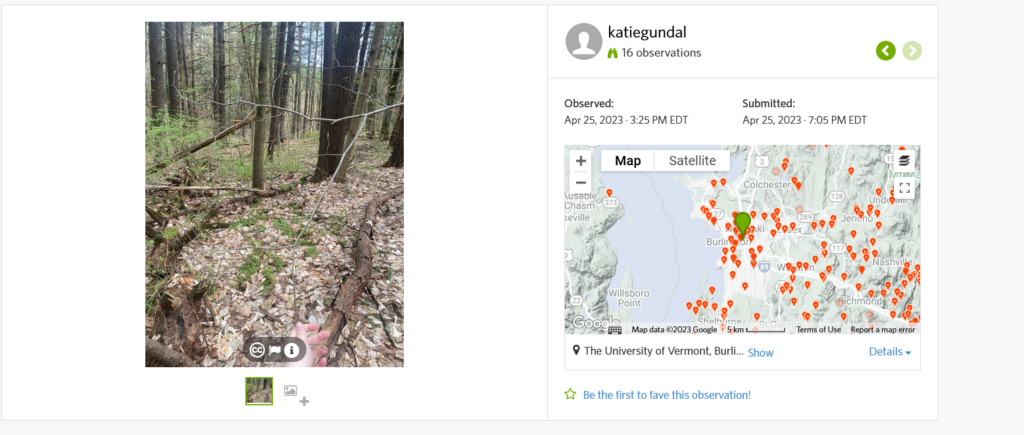
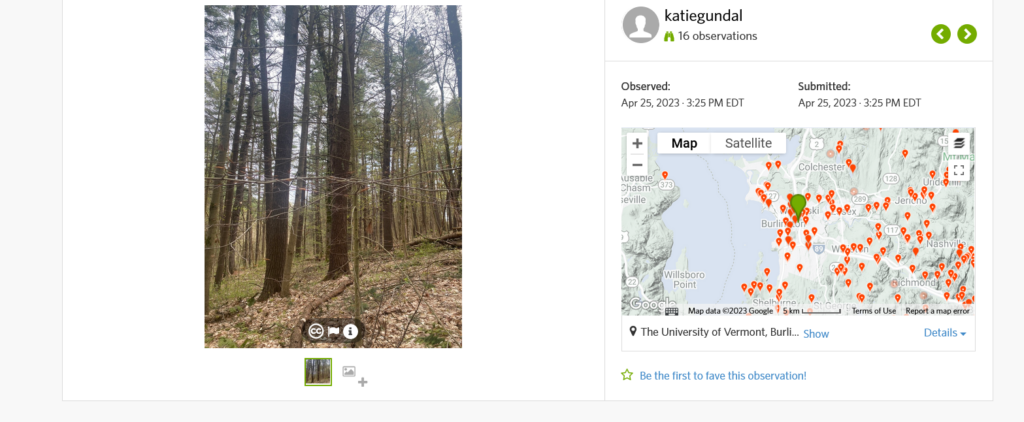
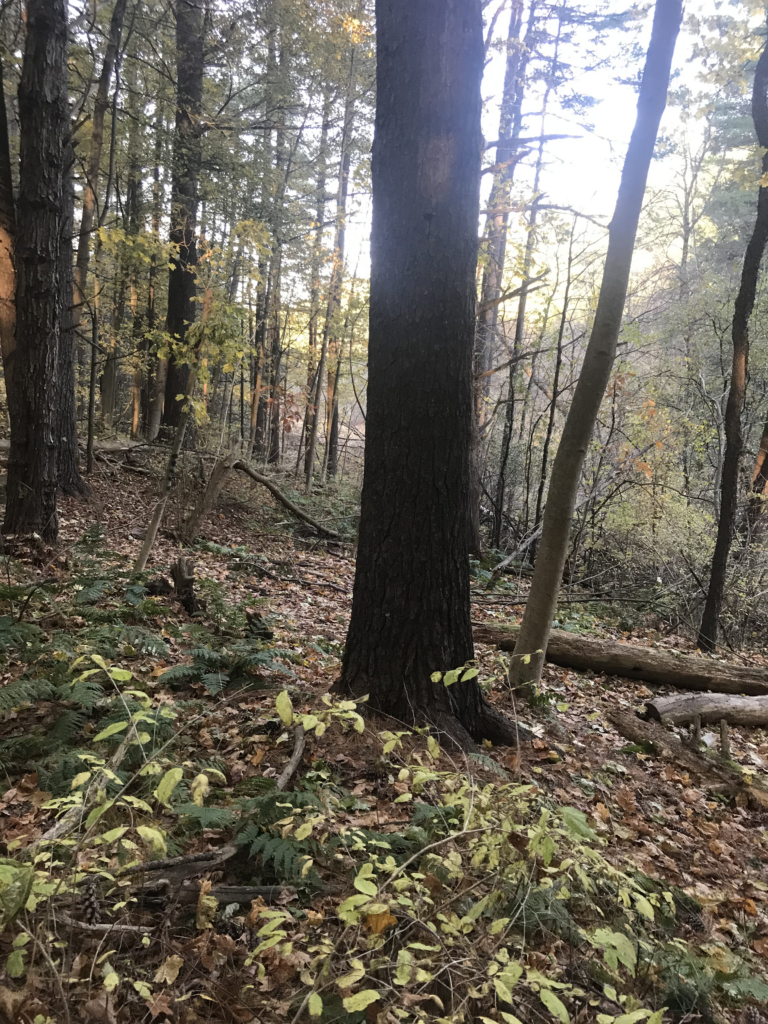
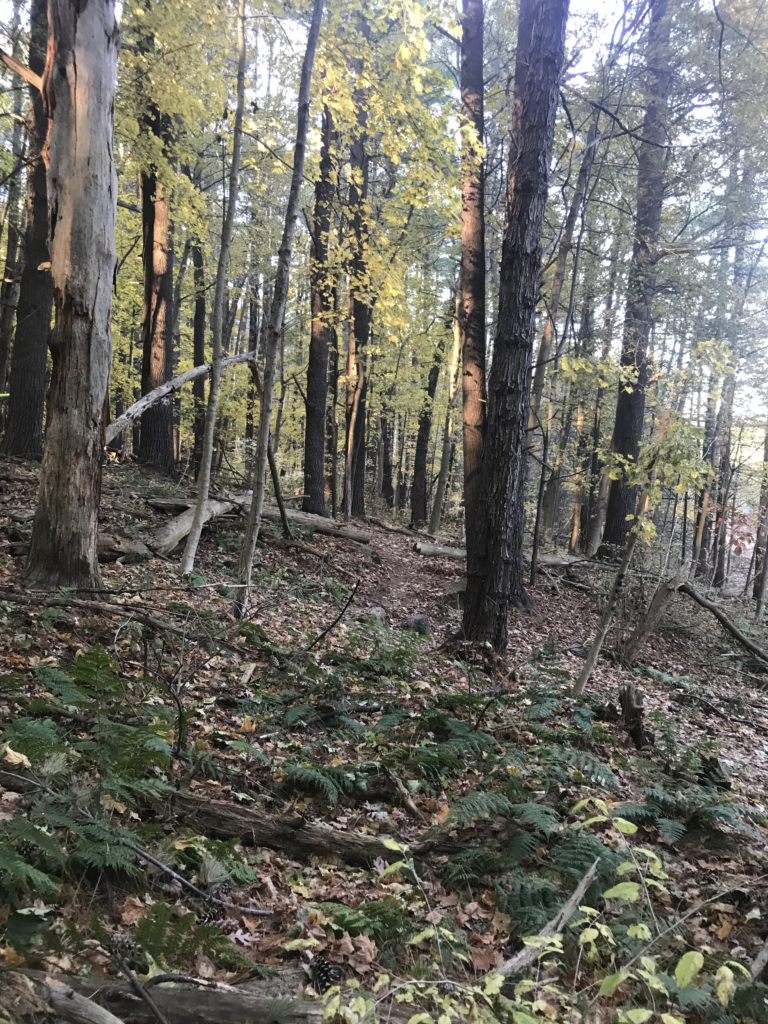
There are no man-made or large changes to my site. The site has changed a lot since I last visited in the winter. The snow has melted and vegetation is starting to come up. I am familiar with my area because there is a path that goes close by it and there are a couple of big trees that work as good landmarks. Nature and culture intertwines here because of how frequently humans walk past my site. My site also used to be indigenous land and thus has a special connection with the indigenous culture. I consider myself a part of this place. When I am at my site, I feel comfortable, and watching the land change over the seasons and years makes me feel a strong connection to this place.
Posted in Uncategorized on April 12, 2023 by kgundal
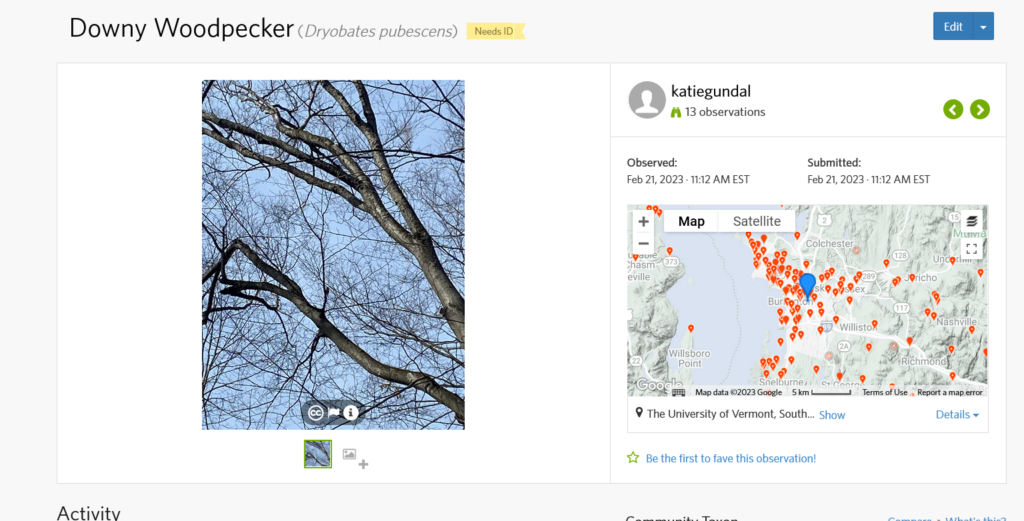
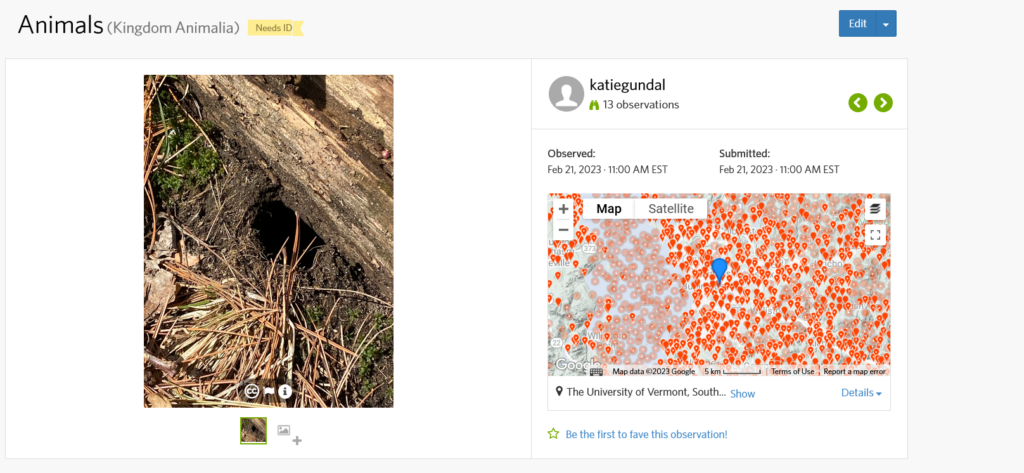
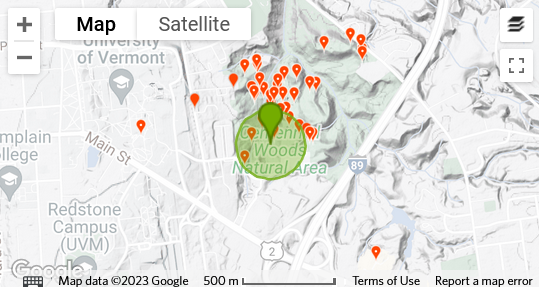
On 2/21 I went to a part of Centennial Woods that I hadn’t explored yet. I saw multiple Downey Woodpeckers, I heard Perching Birds and I found a small burrowed hole. I identified the Downey woodpecker from the sound it made pecking wood and because it was small, and Downey woodpeckers are small. I also heard perching birds. I was unable to identify the Perching birds by sound, but someone on Inaturalist did.
Posted in Uncategorized on March 27, 2023 by kgundal
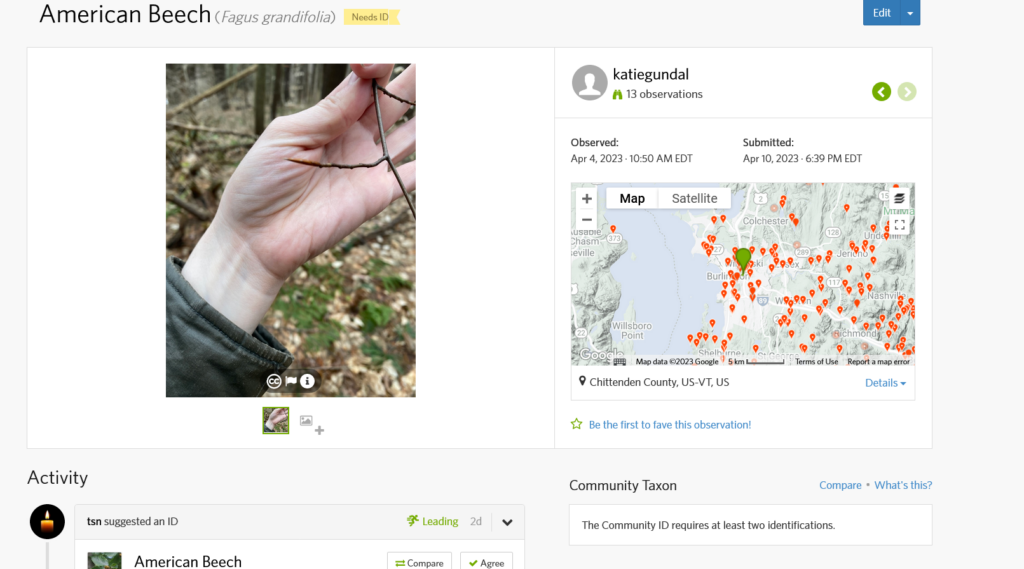
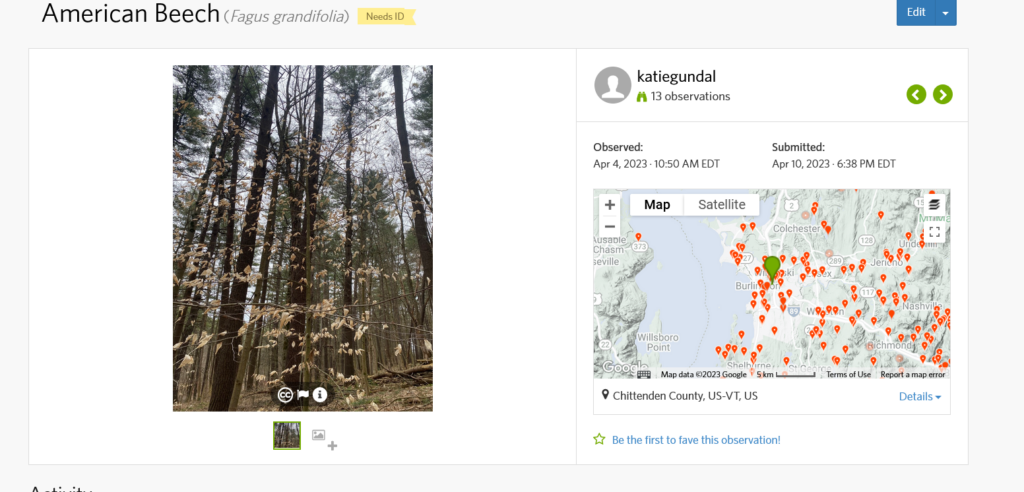
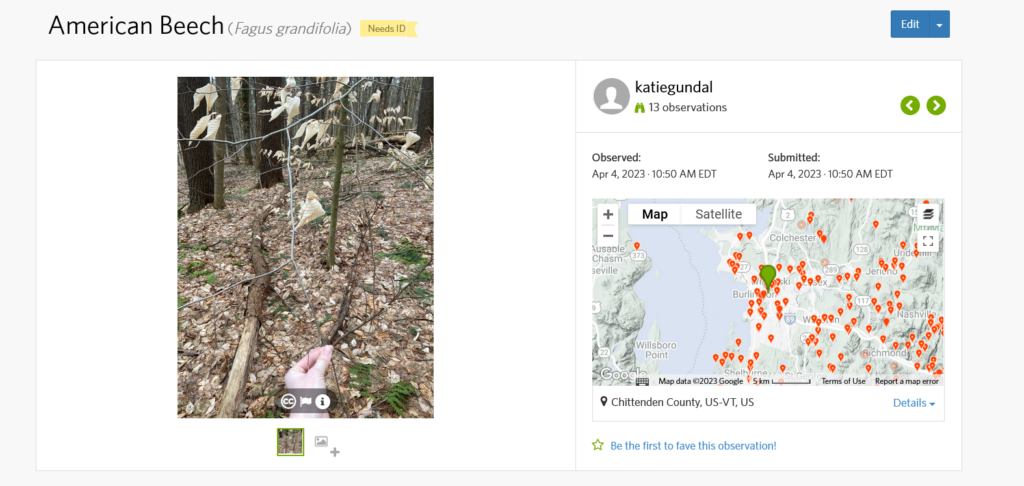
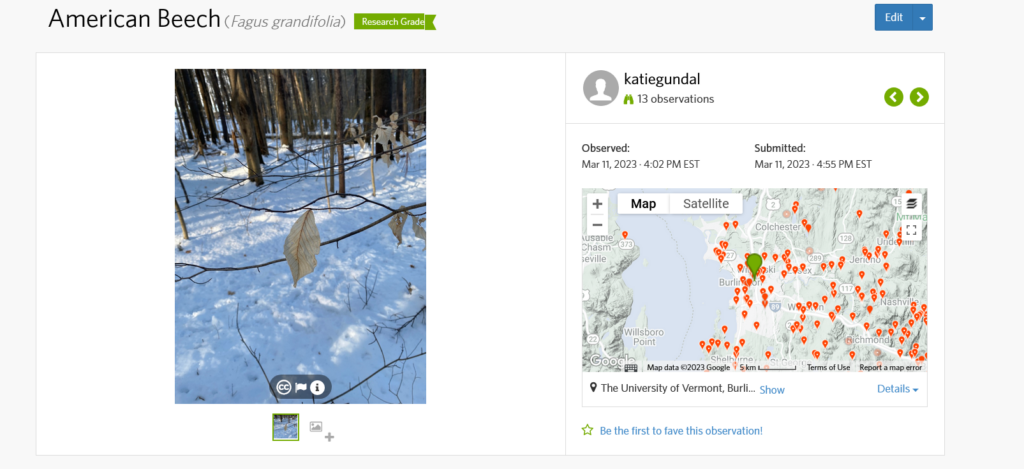
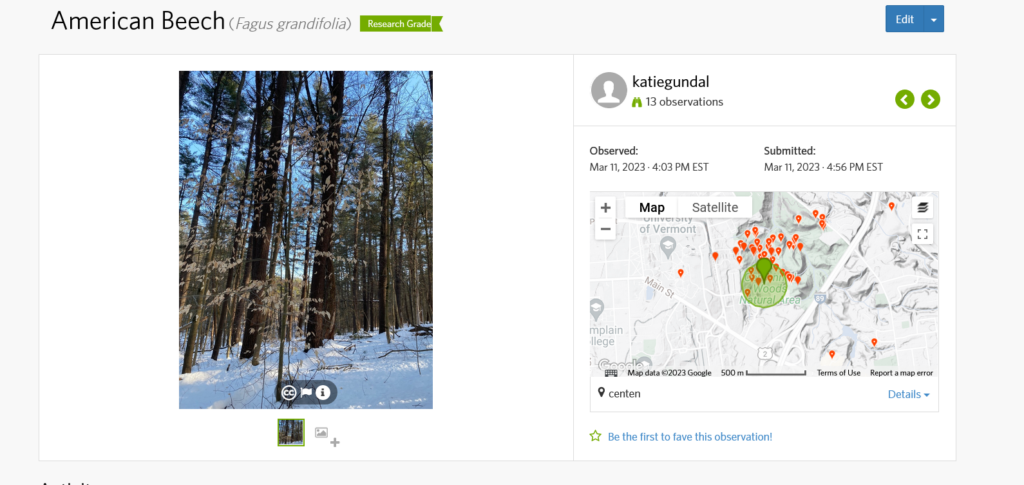
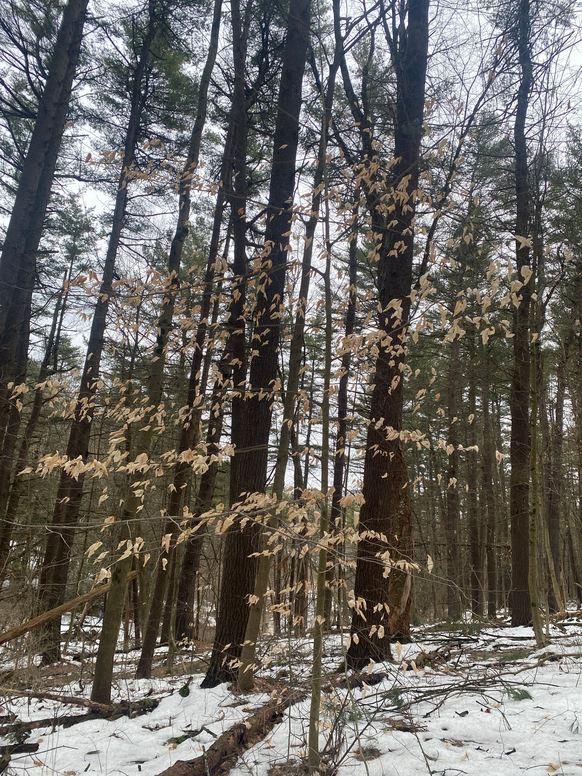
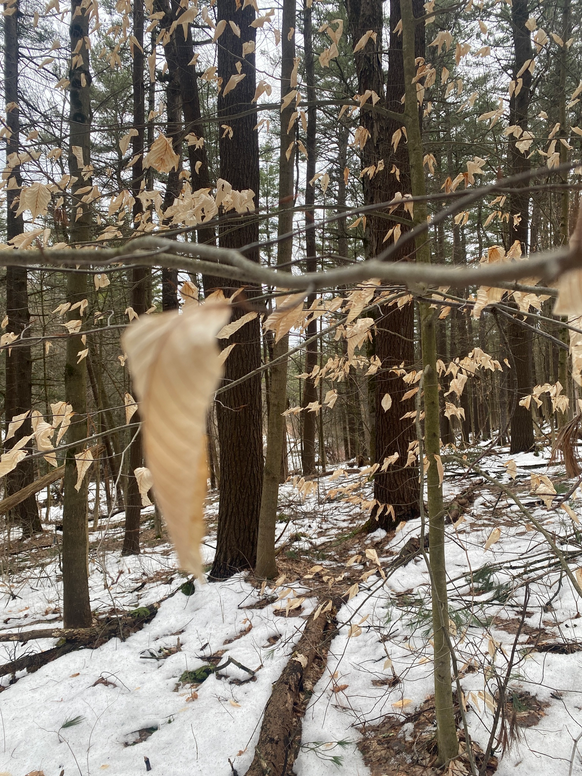
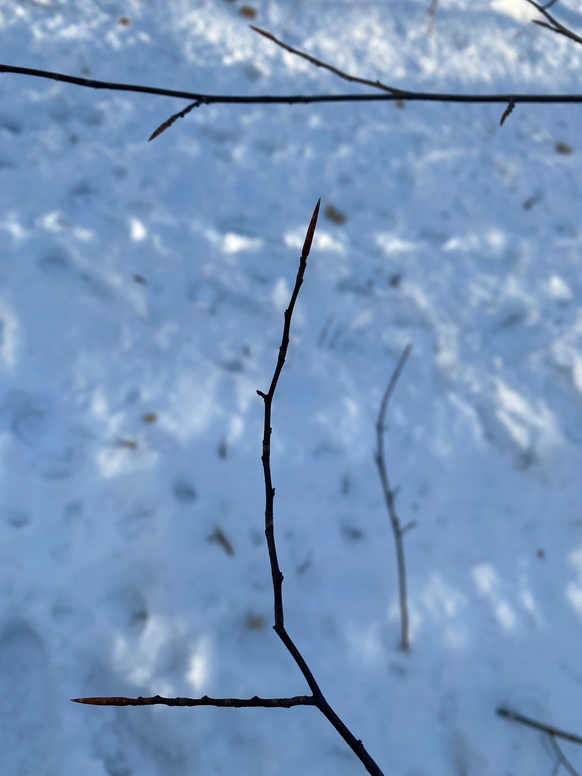
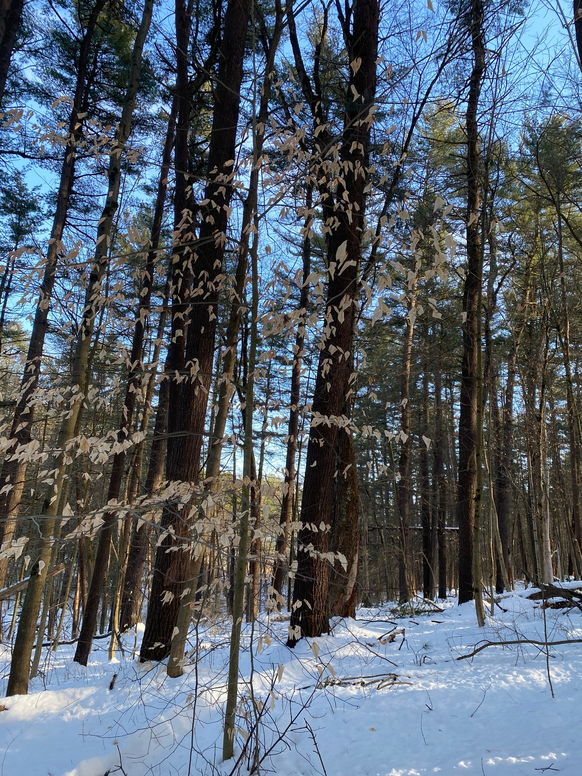
There doesnt seem to be any obvious changes with the American Beech tree I chose. There is still no sign of budding yet, and the dead leaves are still on the tree.
Posted in Uncategorized on March 17, 2023 by kgundal
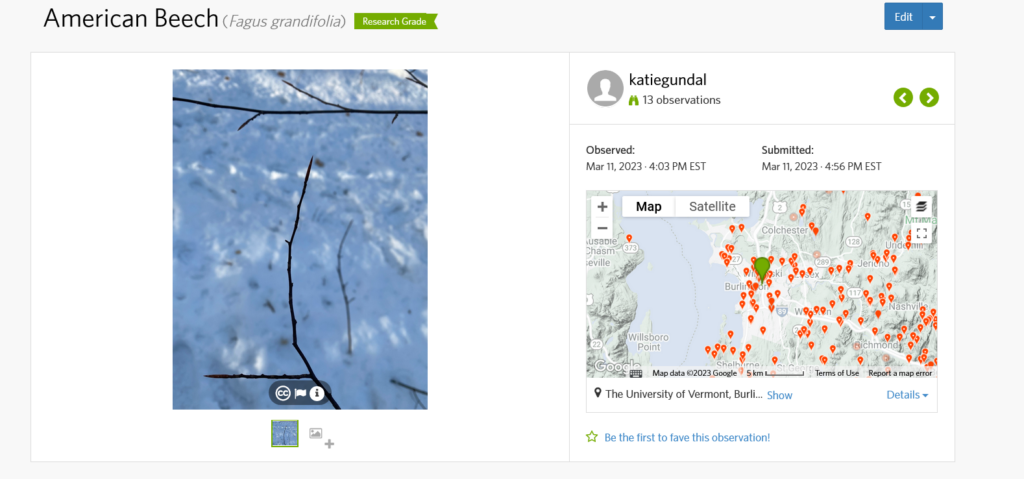
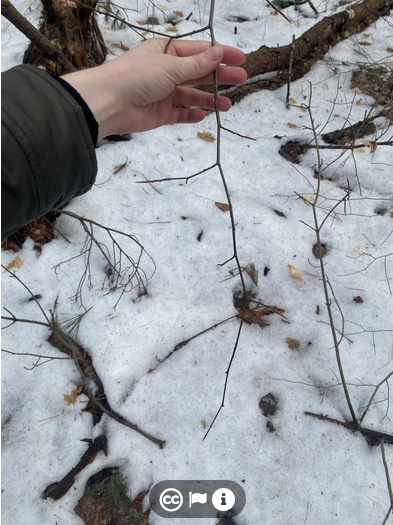
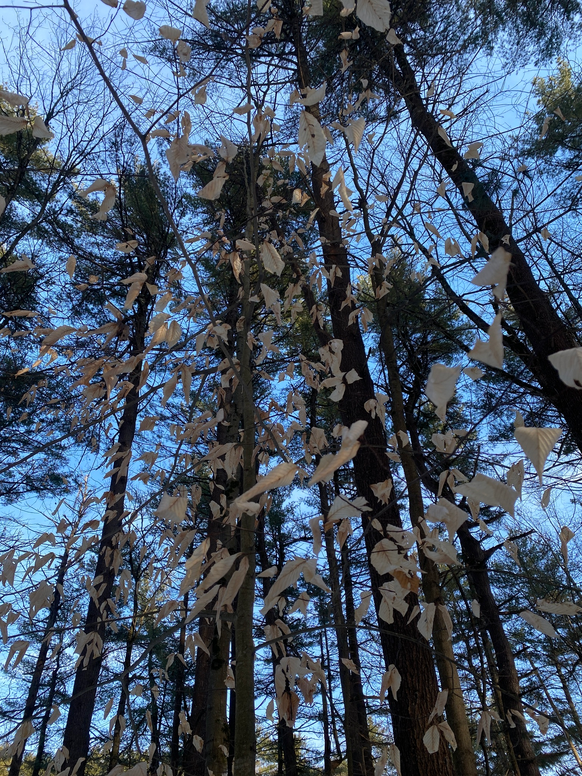
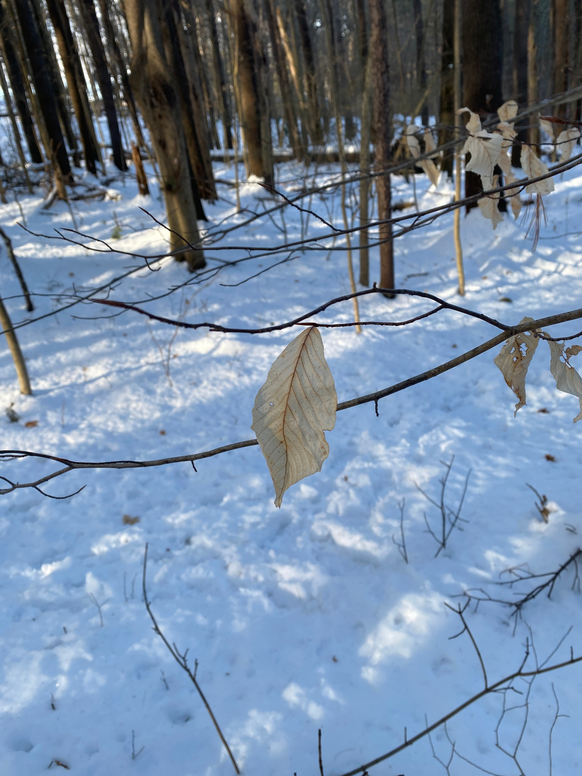
I chose to find an American Beech tree. I was able to identify the tree mostly through its leaves which were still on the tree. Unlike most other deciduous trees, American Beech trees keep most of their leaves during winter. I was able to identify the leaves as American Beech leaves by their pale yellow/ brown leaves (which are this color in winter), thier oblong circular leaves with ridges on the edges. The bark of American Beeches are also smooth and gray.
Posted in Uncategorized on February 3, 2023 by kgundal
My spot looked very different commapred to the Fall. It has snow now, there is little vegetation and leaves have fallen from trees. I didnt notice as many animals compared to the fall but I did see a couple of squirrels.
Posted in Uncategorized on December 5, 2020 by kgundal
Centennial woods has gone through extreme changes to become how it is today. In the last glacial period, glacial ice covered the Lake Champlain area. As the glaciers retreated over time and melted, they formed the Champlain sea, which was a shallow tropical sea that was home to organisms such as coral and crustaceans. As time went on, the sea turned into Lake Champlain, giving way to the land which was underwater before. Centennial woods was part of the Champlain Sea. As it changed into Lake Champlain, parts of Centennial woods that had been underwater before started growing vegetation. As time went on, a forest started to form. There are many dry-stone walls all over Vermont and in Centennial Woods. As settlers moved into this area, they cut down the trees to use the land for farming for sheep, and they created dry stone walls to fence in the sheep. As sheep farming started to lose business, dairy farming grew popular. In some parts of the forest, there are still remnants of hog wire used to fence in the cows. At this time, what we now see as Centennial woods, was split up into five farms. UVM started buying these farms up. At first, without any use for the land UVM used it as a dump. To this day, old oil drums can still be found in Centennial Woods. In 1974 Centennial woods was designated as a natural area, but it took until 1997 until conservation efforts started. Today it is a beloved and protected natural area.
The University Of Vermont. (2020). History of Centennial Woods. Natural Resources and Human Ecology.
Posted in Uncategorized on December 5, 2020 by kgundal
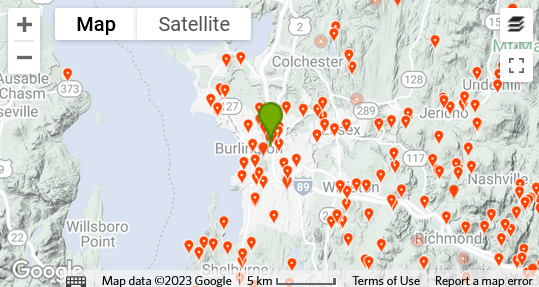
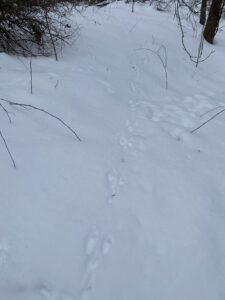
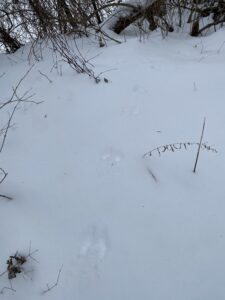
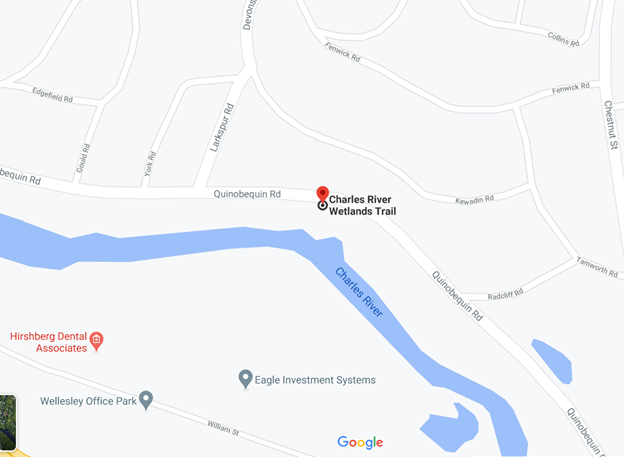
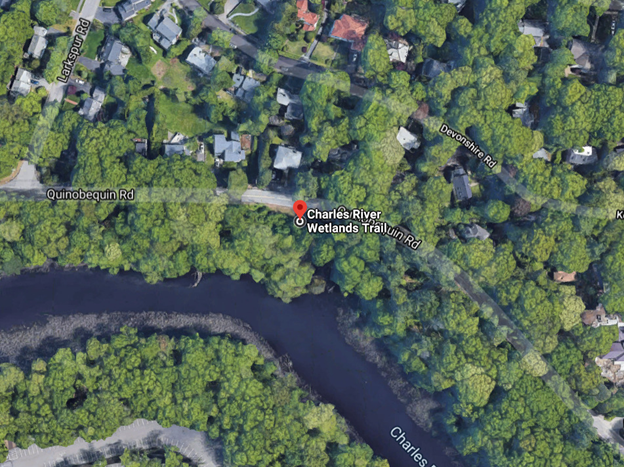
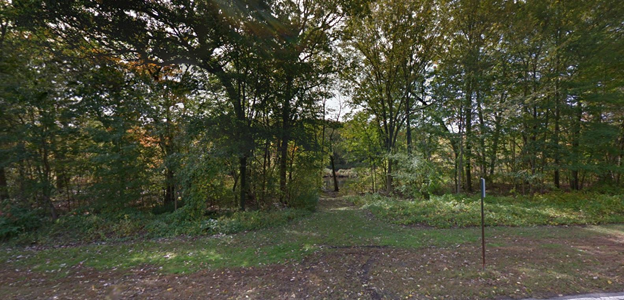
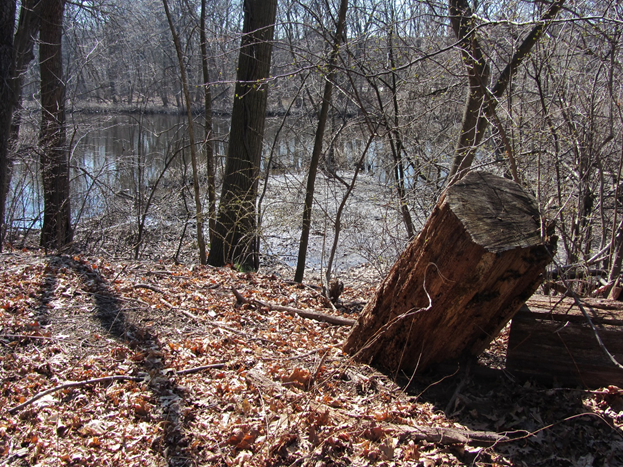
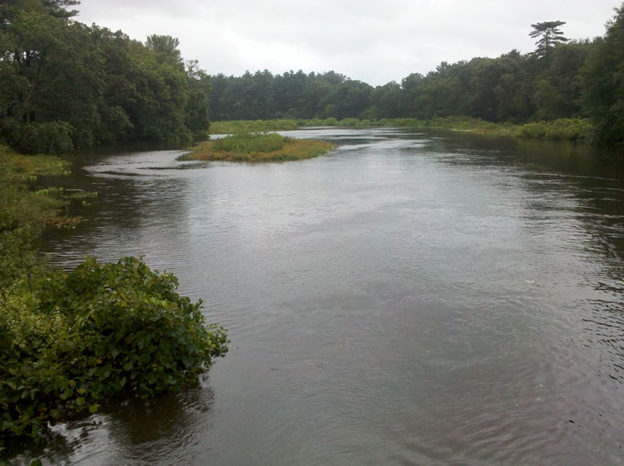
For my new spot, I chose an area around the Quinobequin trail in Newton, Ma. The Quinobequin trail is a smaller, narrower trail than the one in Centennial Woods. Vines and vegetation overrun it. Since the area around the path is narrow, this spot was a little smaller than my last spot. My spot lies between the road and the Charles River. The land is uphill by the road and has many Maples, Eastern White Pines, and Oaks in its overstory. As this highland slopes down, my spot enters a small wetland. Red Oak and Sugar, Red and Norwegian Maples are also in the wetlands area, but there are more Hemlocks in the overstory. Purple Loosestrife, Bittersweet, and Ferns make up the understory around the wetlands. This natural area helps reduce flooding by absorbing the water from the suburban landscape that runs parallel to it. The wetland absorbs some of the nutrients in the runoff, protecting the river from algae blooms. While my spot has three very different habitats, a dry highland, a wetland, and an aquatic river, they all work together to keep the ecosystem healthy. Suburban Newton has very few natural habitats, which is why this one is so important. Since it has three different habitats in one area, it can support a wide range of animals and organisms while also helping with flood prevention. The trail was built thirty years ago, but since then has become more and more worn down and forgotten. In hopes of preserving it, a group called the Friends Of The Quinobequin have been working on removing trash, getting rid of invasive species and poison ivy, clearing the overgrowth of vegetation, and even has a website documenting different plant species. While this path is being given more attention and love, it’s hard to tell how much the well-intentioned people will be able to get done. Despite the cleanups, trash is still littered all over the area and at times is unusable because of poison ivy that takes over. Over the years, the trail has become less popular and The Friends Of Quinobequin receives fewer funds and resources. While I hope it lasts longer, I fear that this path may only have five years left of being a preserved path. My new spot is not very similar to my spot at Centennial woods. Trash littered my Quinobequin spot, while my Centennial woods spot was always clean. As well, my Centennial Woods spot was a drier highland ecosystem, where my Quinobequin spot had wetlands and drylands. Both spots had similar overstory trees, but my Quinobequin spot had more understory diversity. I only saw squirrels in both spots, but I was able to use the mud by the wetlands of the Quinobequin spot to make guesses at Blue Heron, Raccoon, and Deer tracks. I’m guessing Centennial Woods also had more animals, I did hear some birds chirping and was able to make out a Chickadee call, but I was unable to see any or any tracks. Overall I enjoyed visiting both of my locations.
Google. (n.d.). Charles River Wetlands Trail. Retrieved from https://www.google.com/maps/place/Charles+River+Wetlands+Trail/@42.321299,-71.2331844,17z/data=!3m1!4b1!4m5!3m4!1s0x89e38236e1e007a7:0xef9437402c6c0732!8m2!3d42.321299!4d-71.2309957Google. (n.d.). Charles River Wetlands Trail. Retrieved from https://www.google.com/maps/place/Charles+River+Wetlands+Trail/@42.321299,-71.2331844,17z/data=!3m1!4b1!4m5!3m4!1s0x89e38236e1e007a7:0xef9437402c6c0732!8m2!3d42.321299!4d-71.2309957Charles River Wetlands Trail. (n.d.). Wetlands, the final frontier!. Retrieved from www.qbqtrail.org/Charles River Wetlands Trail. (n.d.). Wetlands, the final frontier!. Retrieved from www.qbqtrail.org/Charles River Wetlands Trail. (n.d.). Wetlands, the final frontier!. Retrieved from www.qbqtrail.org/
Posted in Uncategorized on December 5, 2020 by kgundal
Gundal.K. (2020). Trees in Centennial Woods. Retrieved from Centennial WoodsGundal.K. (2020). Trees in Centennial Woods. Retrieved from Centennial WoodsGundal.K. (2020). Trees in Centennial Woods. Retrieved from Centennial Woods
Posted in Uncategorized on December 1, 2020 by kgundal
October 25th
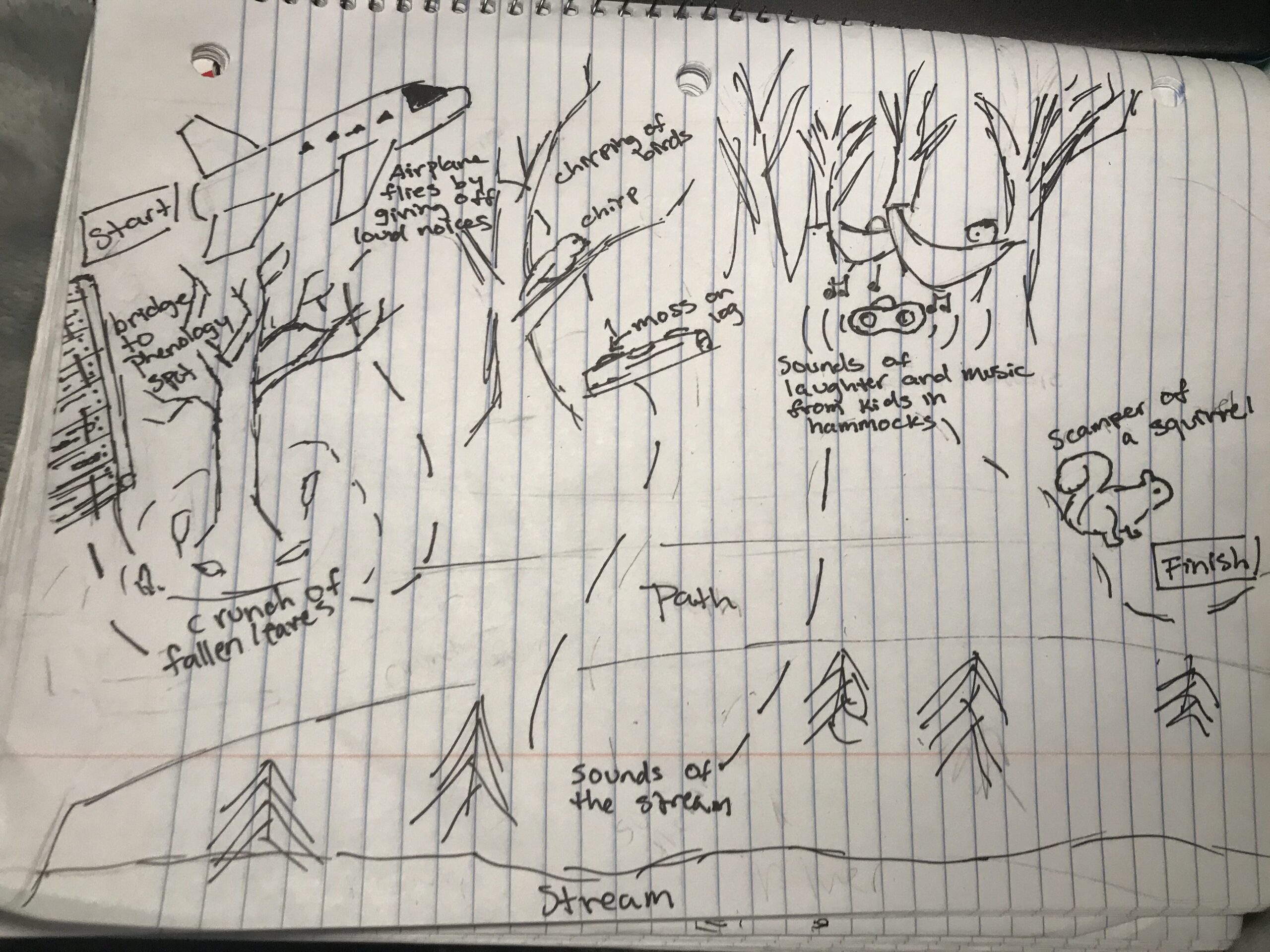
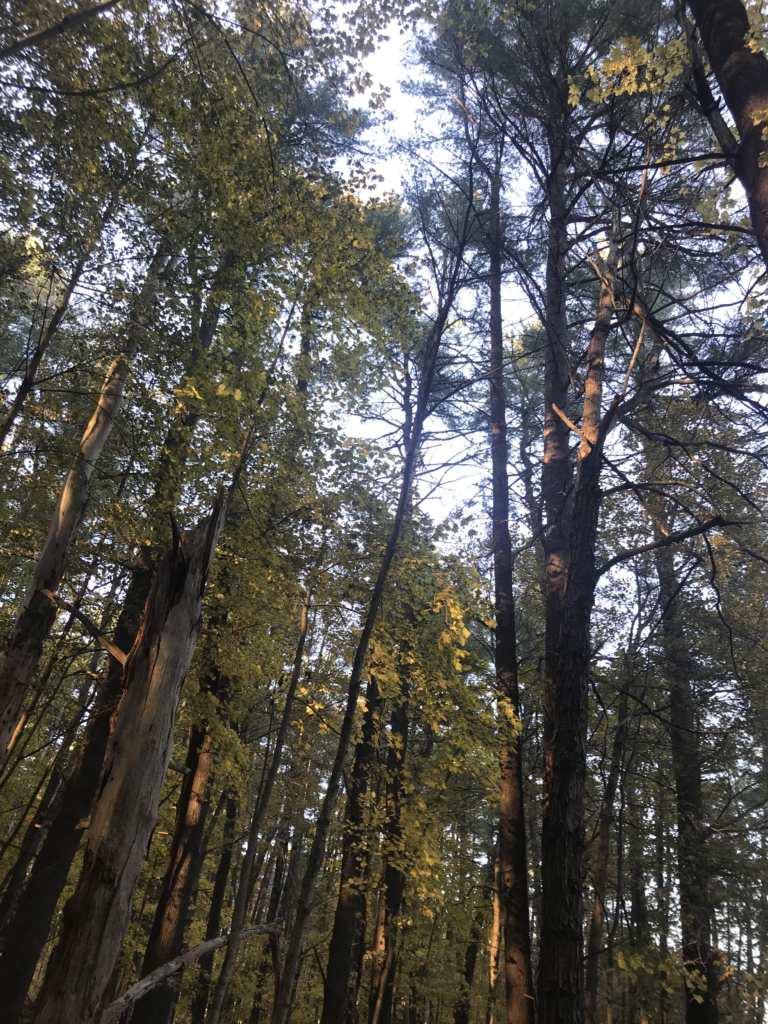
Since my last time at my spot, there have been many changes seasonally. Before, the trees had started losing their leaves, but for the most part, they were still bright green. When I came back to this spot this time, there were a lot of changes. Much more leaves had fallen, and the trees were starting to change color. The trees that were still green were less vibrant compared to before. As well, the temperature was much colder. There were fewer insects and animals. This time around, there were many more people around my spot. There was a loud group of students who were hammocking and listening to music on a speaker. I could also hear what sounded like a family with young kids from across the river and a group of college-aged kids back near the main entrance. When I first entered my spot, I did hear a bird chirping, but soon after, a military jet flew by, silencing the bird. With all the disruption, I didn’t see any animals, other than hearing a couple of birds. The colder weather could have also brought across this change. More animals could be preparing for winter or could have migrated, meaning they wouldn’t be out and about.