323 Stearns St, Carlisle, MA 01741
Weather:
On Thursday, the temperature at Malcolm Preserve was 76˚F. It was very humid with little wind. It had rained earlier in the day, so everything was wet. The sky was cloudy and appeared like it was going to rain again. As I was leaving it did start to drizzle.
Observations:
On Thursday, Malcolm Preserve was very wet. It had rained that morning and the ground was quite muddy in some areas. All the plants and trees appeared wet and had some raindrops still coating their leaves. I noticed that they were a lot of new mushrooms that I had not seen the week before. Previous days of rain must have brought out these mushrooms, as there were quite a few. Along the trail, I saw some mushrooms that were small. They were growing on exposed roots and within the forest debris on the ground. I noticed a few amanita mushrooms species. They had a white stalk with a bulb at the bottom. Their tops were yellow with some white scales. I also saw some mushrooms that looked similar to chanterelles. They were an orange-yellow color and had ridges on the underside of their cap. A few species of mushrooms were coated in a web-like mold. It almost looked like a spiders web had consumed the mushrooms.
There were also a few mushrooms growing on the sides of trees. One mushroom I saw was a slime mold that was brown and appeared spongy and porous. It was interesting because it grew over top of the lichen covering the tree. There were also some larger white mushrooms growing on the base of some trees. Many of them seemed to have been previously disturbed as they were broken apart. Perhaps they were eaten by an animal or another person was observing them. Several of these mushrooms also had ants crawling on them. Most of the mushrooms I saw grew in groups. There was two or more of the same species of mushroom grouped together in one area.
Species Identification:
Species #1
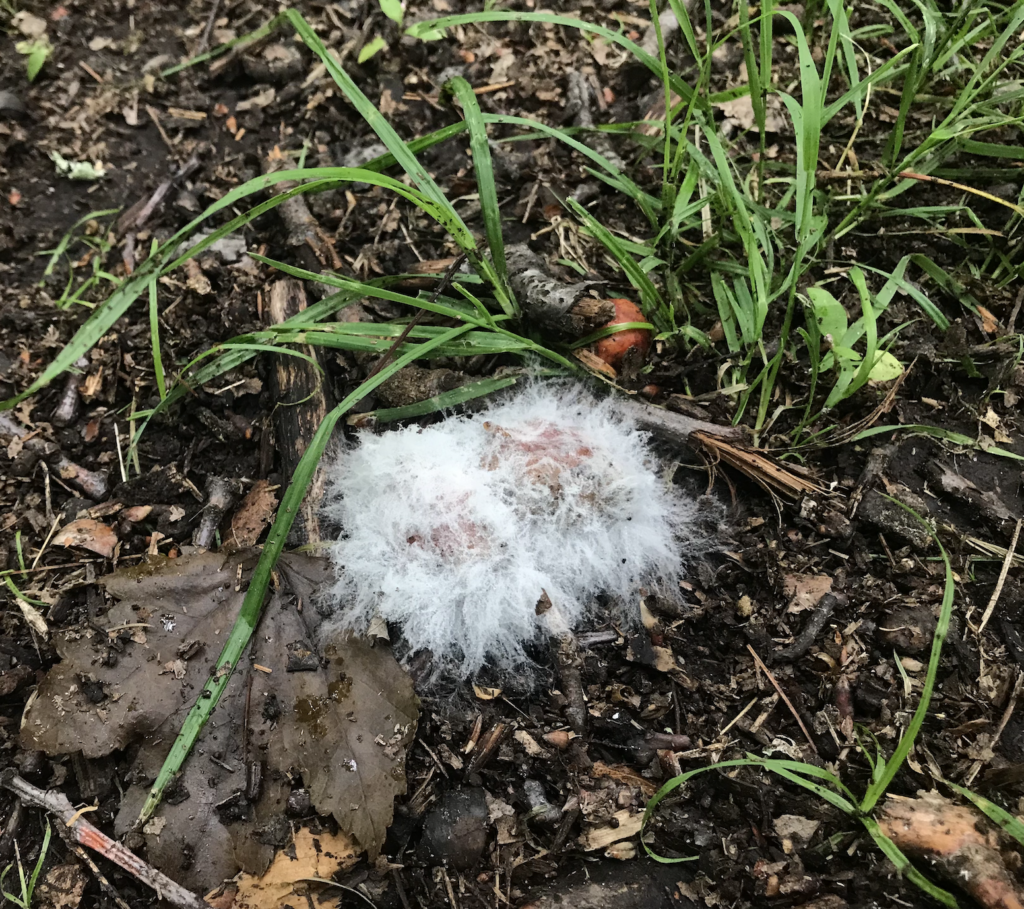
This species of fungus is a Syzygites megalocarpus. This species does not have a common name, and most people just refer to it as Syzygites. It is a mold that feeds off of other fungi. To identify this species, I googled “white, web-like mold growing on mushrooms”. I found it very difficult to use a mushroom database because they required to input a photo, so I chose to google the characteristics. From there, I searched through Google images until I found one that appeared similar to what I had found. That lead me to some great mycology sites where I was able to find the name and facts about the mold.
Syzygites was the first ever fungus found to be able to reproduce through sexual reproduction. Christian Gottfried Ehrenberg, the scientist who named the species, made the observation that two of the web-like filaments of the species would interact with each other to form zygospores. These spores are essentially fungus seeds that produce new fungi1.
Species #2
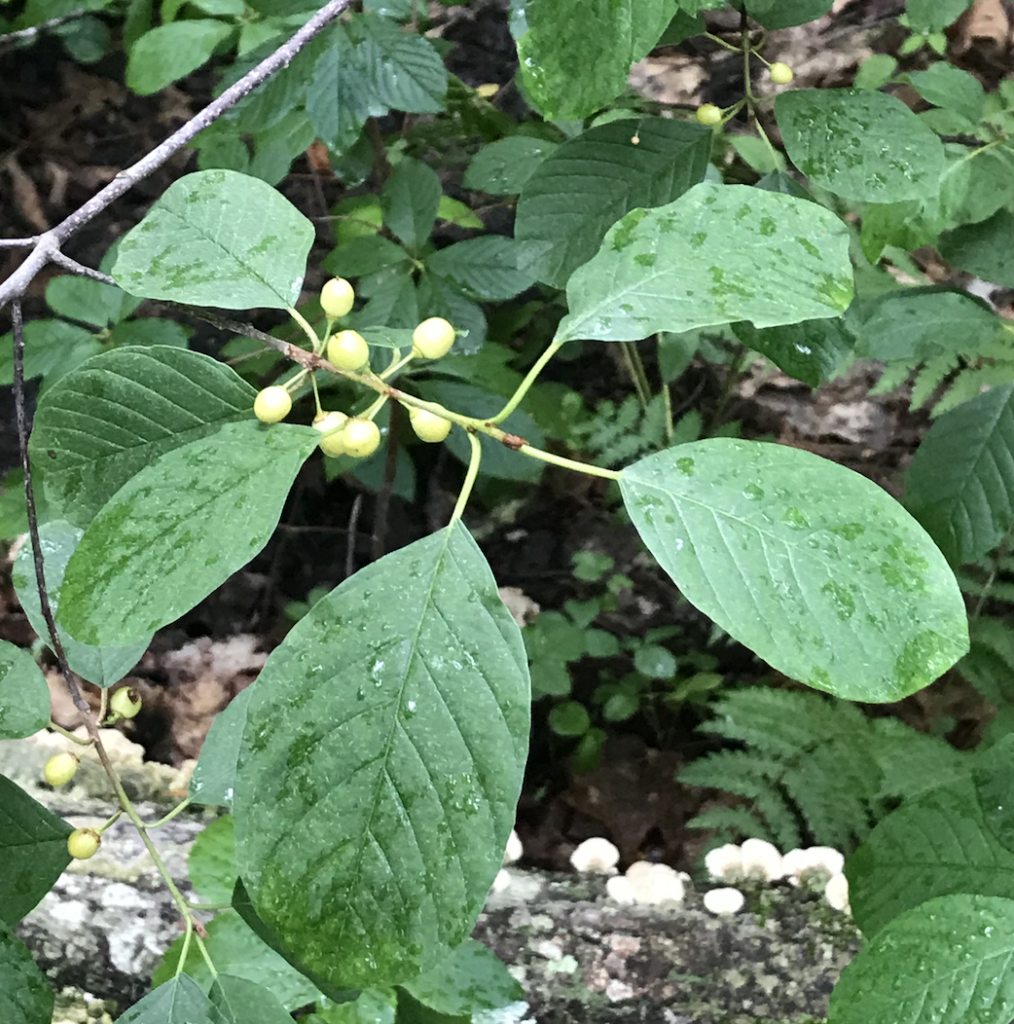
This is a Alder Buckthorn (Rhamnus frangula). It is a shrub that produces berries which several species of birds consume. I was able to identify this species through the USDA Natural Resources Conservation Service Plants Database. It took a while to find through there, but I narrowed it down to shrub species and input the characteristics I could see. From there, I was able to search through photos to find one that matched the photo I had taken.
The buckthorn originated in Europe and Asia, because of this it can be an invasive species here in the northeast. The birds, who eat the berries, disperse them into fields and other woodlands. The seeds propagate and the buckthorns invade new areas. They spread easily and can take down native species in an area2.
Sketches:
Sketch #1
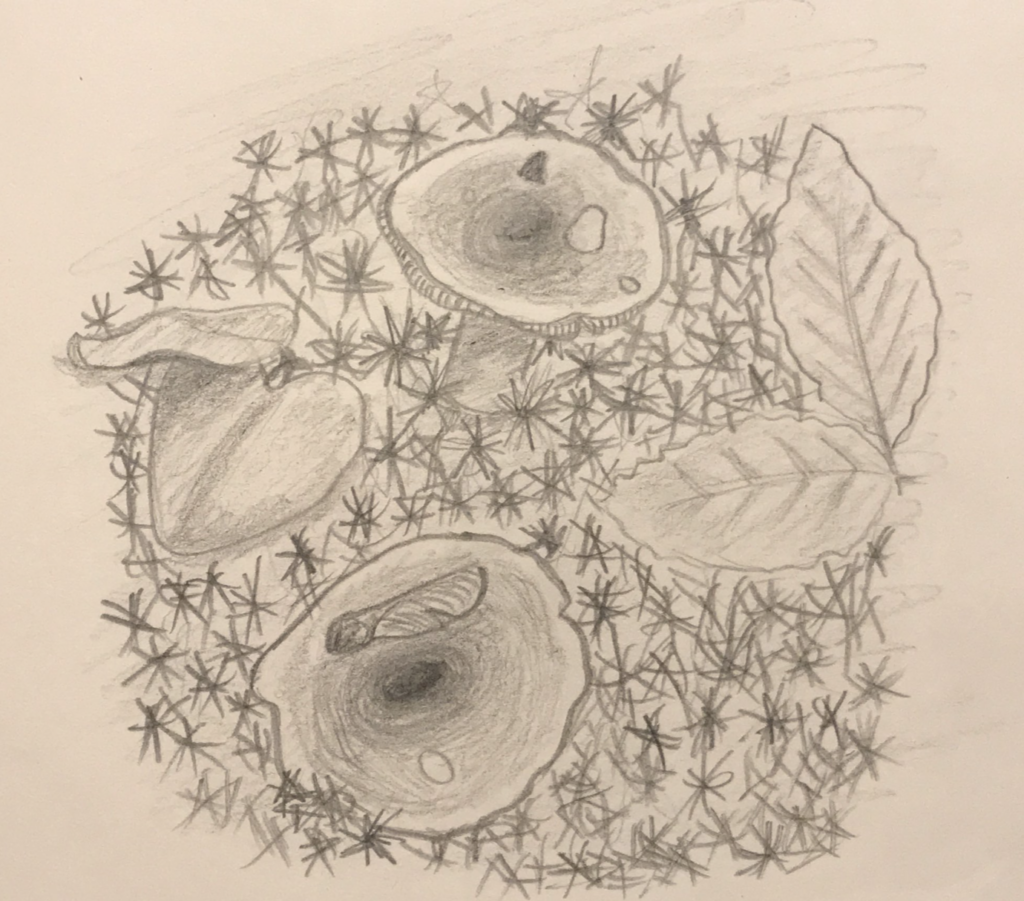
I chose to draw this sketch because I thought it was really interesting that the mushrooms were growing between so many different species of plants and saplings.
Sketch #2
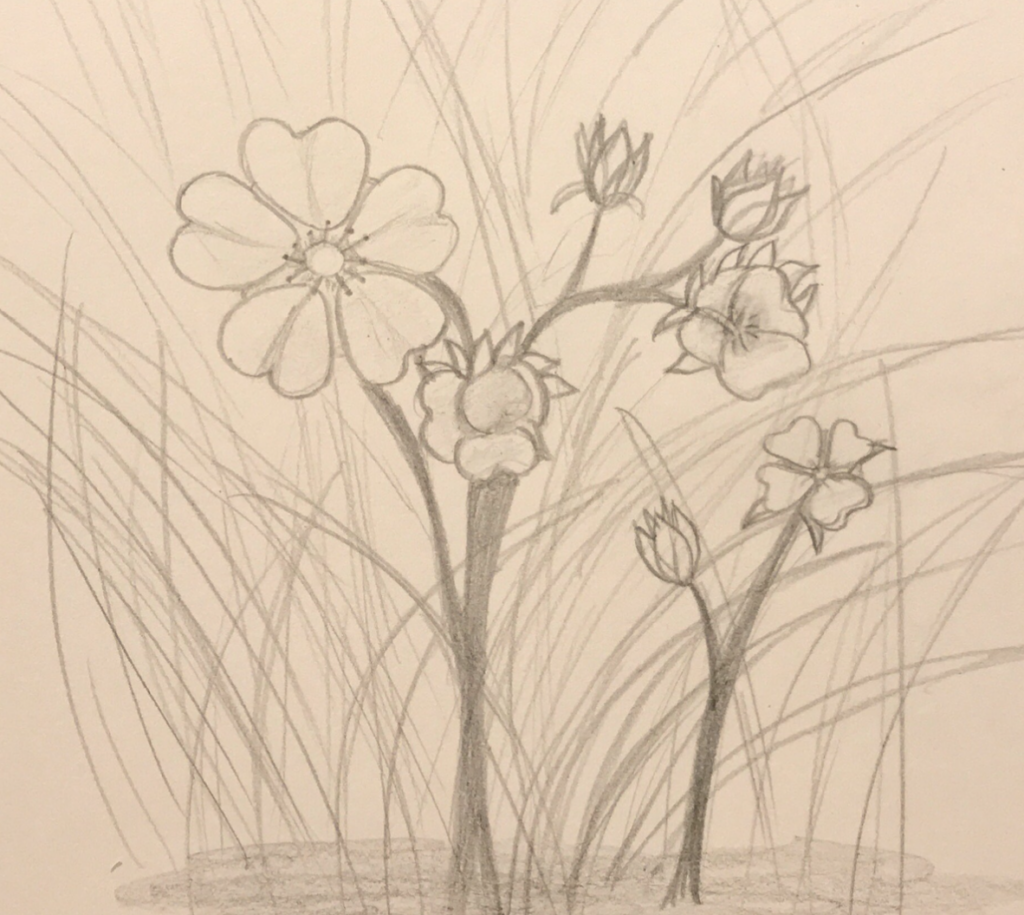
I drew these flowers because it surprised me that they grew along the trail. They were the only flowers I saw, the rest of the plants nearby were ferns and other low-lying plants. It was also interesting that they appeared within a grassy patch.
Sketch #3
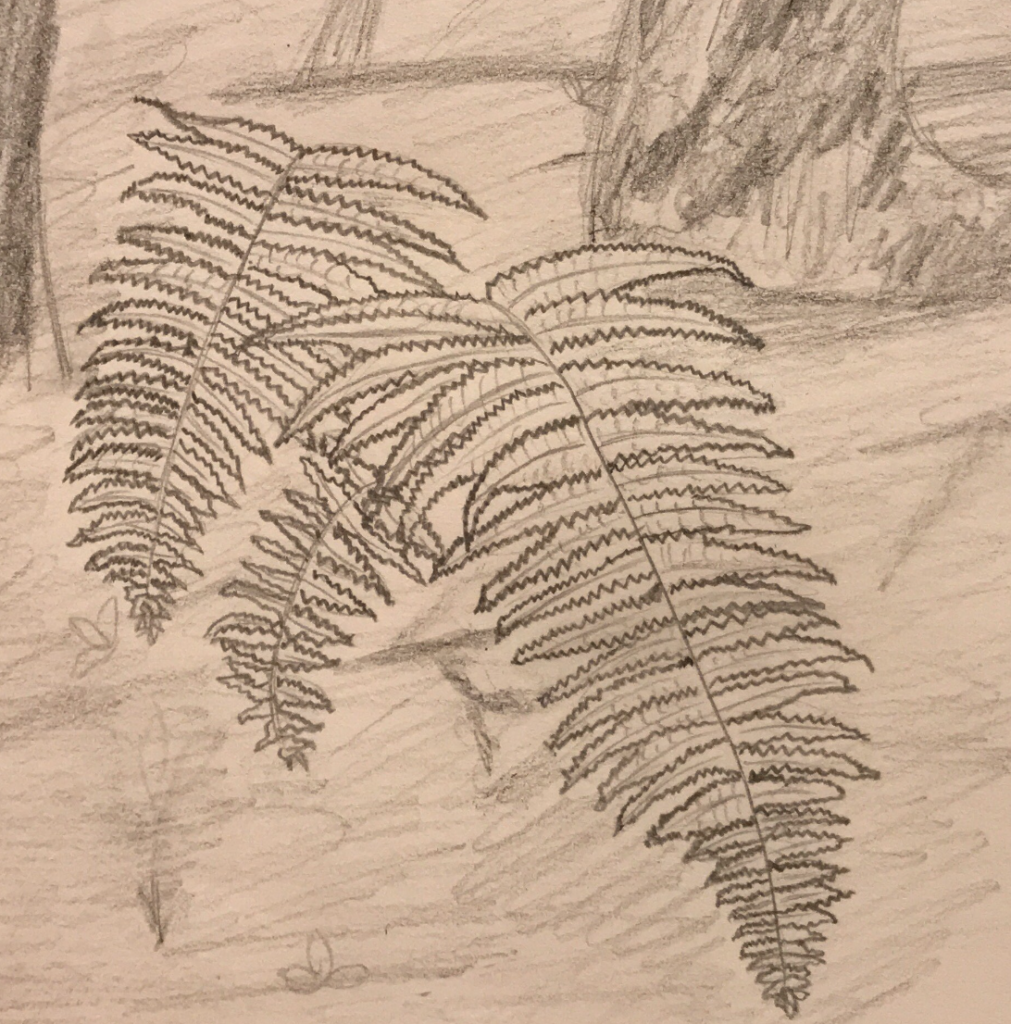
Ferns were one of the most numerous plants along the trail at Malcolm Preserve. There were so many of them and they all appeared to be the same species. I decided to sketch them because they are such a large part of the landscape.
Sketch #4
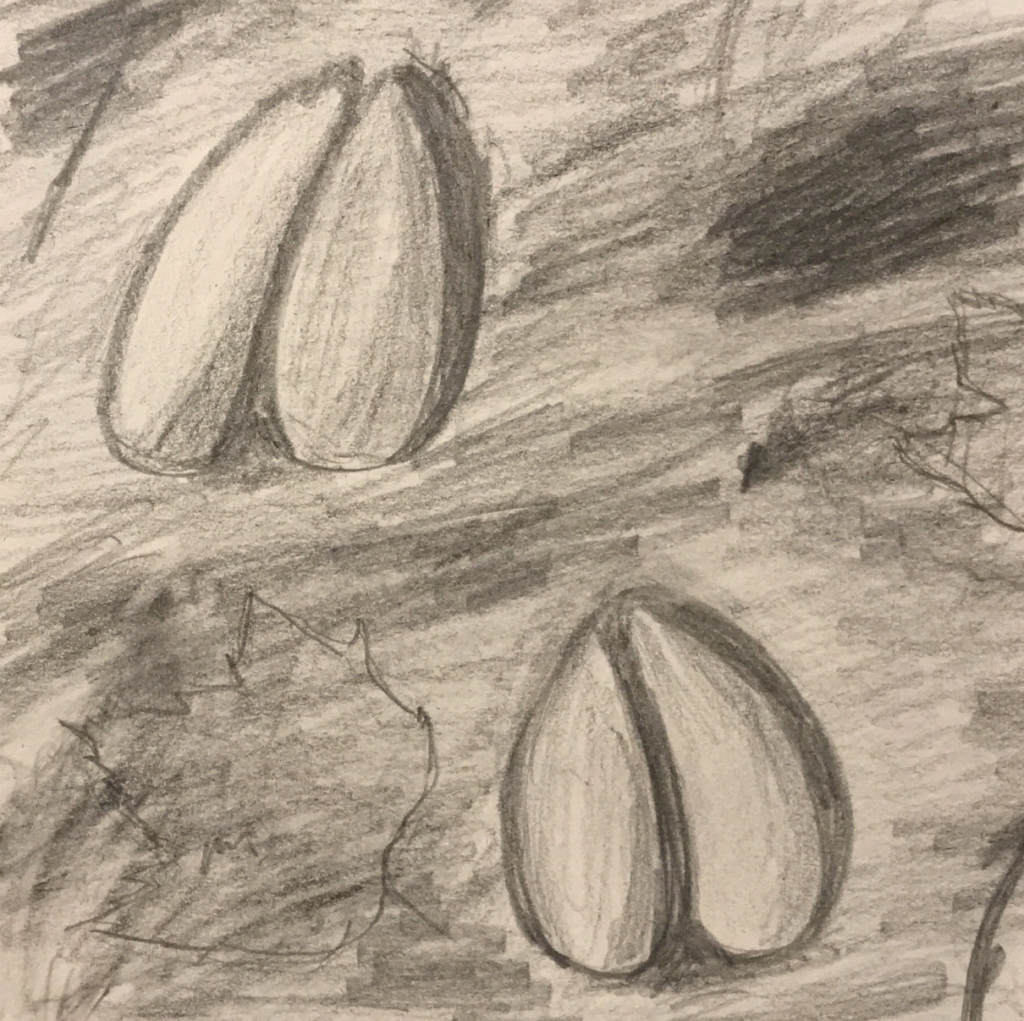
The last time I visited the preserve, I saw deer tracks as well. I thought they would be important to sketch because it appears that deers frequent this area and, therefore, could potentially have a vital role within the ecosystem.
Sketch #5
Conclusion:
I enjoyed this task of sketching whilst in the field. It was interesting to challenge myself and really focus on the objects in front to try my best and capture their likeness. Some were harder than others to draw, The deer tracks, for example, I had a hard time depicting that they were tracked through mud. It was difficult to add texture to the ground and show that it appeared muddy without covering up the deer track sketches themselves. Another aspect that was challenging was several small insects flying around me. They bothered me and constantly flew around my ears, making it difficult to concentrate.
Despite the setbacks, I still really enjoyed the process. I don’t consider myself to be the best at sketching, so I liked that I was able to practice my skills and improve them. I also found that as I was sketching, I noticed more details within the objects that I could then try and incorporate into my sketches. Overall, the process was an enjoyable one and I’d like to try sketching in nature more in the future.
For the next visit, I would like to try and focus more on the wetland areas of Malcolm Preserve. I got distracted this week by all the mushrooms that had popped up, so I didn’t get to focus on the wetland areas this time. Hopefully, next week I can check out the bog and pond area to make more observations.
References:
- Rc. “Syzygites Megalocarpus Has Good Taste in Mushrooms.” Rosin Cerate, www.rosincerate.com/2015/05/syzygites-megalocarpus-has-good-taste.html.
- | Concord, MA, concordma.gov/779/Glossy-Buckthorn-Frangula-Alnus.