323 Stearns St, Carlisle, MA 01741
Weather:
On Sunday, it was 67˚F and cloudy. The air was humid and there was rain scheduled for later on it the day. There was no wind and within the woods it appeared darker from the shade of the trees combined with the clouds.
Observations:
This week, it rained nearly everyday and was quite cold compared to the previous hot and humid weather of the previous weeks. This prolonged amount of rain brought out several species of nematodes and molluscs, such as worms and slugs. There were also several fungi that had appeared along the trail as well. The first thing I noticed was that there were several patches of Indian Pipe, a white, parasitic plant. They grew in small bunches within forest debris on the edge of the trail. I also noticed several different slugs throughout my walk. Some were on the sides of trees, others on mushrooms, and some on decaying logs. One species of slug I saw appeared brown with an orange undertone, they were small and only about 2 inches long. Another species I saw was a darker brown color with some black markings along its side. I lifted up a log, and beneath the log there were worms crawling in the mud. Because everything was very wet, there were many organisms out that thrived in wet conditions. I had not seen these species on my previous visits when the conditions were dryer.
I also got to observe the bog area within Malcolm Preserve on this visit. The bog had overflowed onto the trail, causing the pathway to be flooded. I could see through the water and the ground below appeared reddish in color, I wonder if this is due to a presence of iron or clay in the soil beneath the water. The bog was very lush with an overgrowth of several different water plants. The water was also flowing out of the bog and filling another area with water. Where the water was moving, I saw a small whirlpool formed that must have been caused by the water flowing in multiple directions. Aside from the bog, I also witnessed some deer in the area. As I was leaving the trail to head back to my car, a group of 5 deer were bounding through an area of high grass, heading towards a wooded section of the preserve. They were a caramel-brown color with white undersides. It was really interesting to see so many of them at the same time traveling together. They appeared to have been spooked by something because they were moving quite fast through the area.
Natural History Mystery:
Why does Indian Pipe occur when mushrooms also appear?
I have often noticed that after a period of rain, mushrooms will grow. Along side those mushrooms, I have also seen Indian Pipe. I know that Indian Pipe is not a fungus, so why does it follow a similar growth pattern to fungi?
After some research, I found that Indian Pipe (Monotropa uniflora) is a parasitic plant that does not photosynthesize1. It was given its common name because of the way it looks with a long white stem and a bell-shaped flower on the end. It does not have any leaves because of the lack of photosynthesis. It also lacks chloroplasts, giving it is all white appearance. While Indian Pipe is not a fungus, it does behave similarly to one. Like mushrooms, the plant will borrow nutrients from decaying matter, trees, and fungi to survive. This process does not harm the other organisms, they have a symbiotic relationship that allows both to survive. The reason Indian Pipe follows a similar growth pattern to mushrooms is because they both grow in damp, shady areas often after rain, and feed upon decaying organic matter.
Photos:
Photo 1:
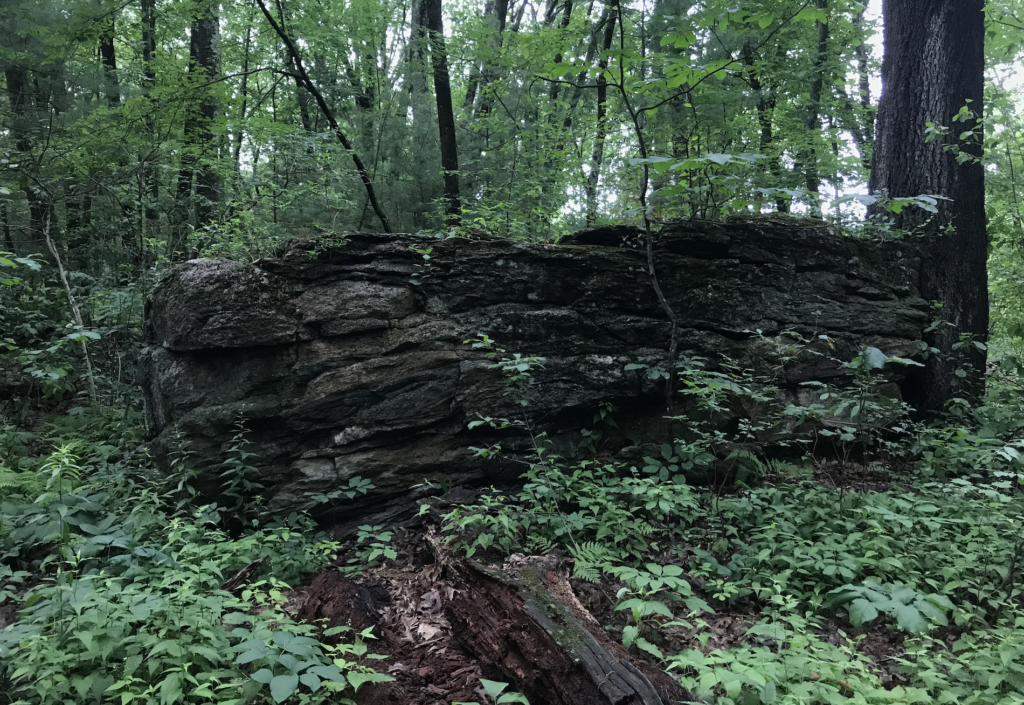
I chose to take this photo because it reminded me of our first lessons at the beginning of this class and talking about rock types. I wonder if this is a sedimentary rock because it does appear to be made out of several different layers fused together. This rock is also right at the beginning of the trail head and such and important landmark within the preserve.
Photo 2:
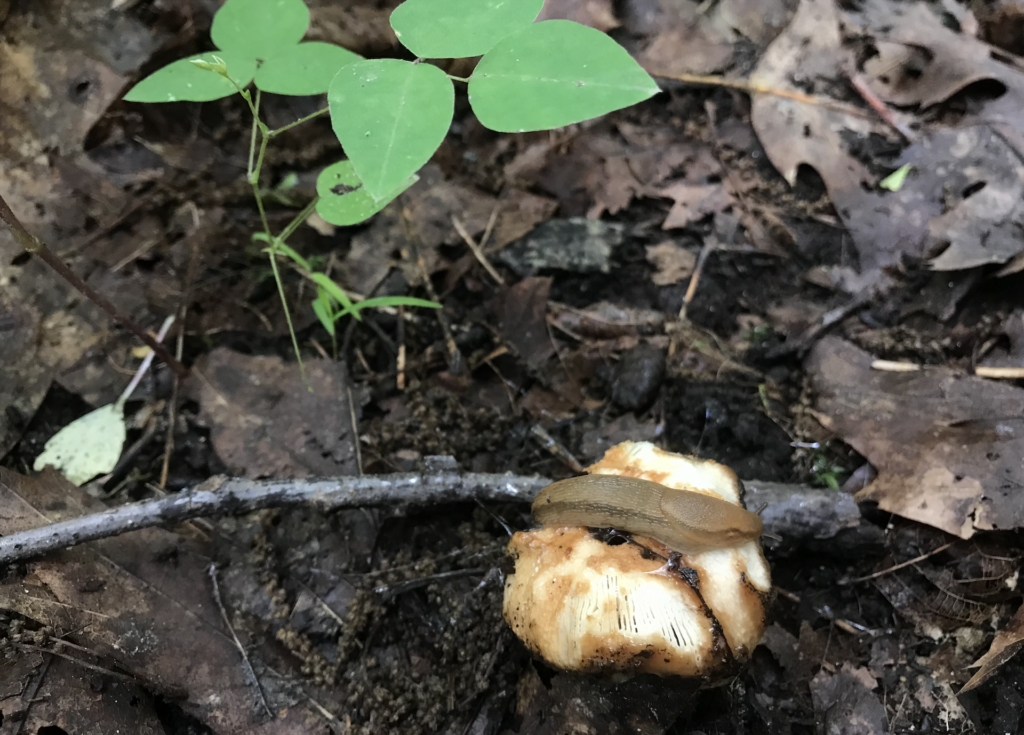
I decided to include this photo because it was interesting to see what and how slugs eat. This slug, and many others like it, sat upon decaying matter and you could see them consuming the organisms.
Photo 3:
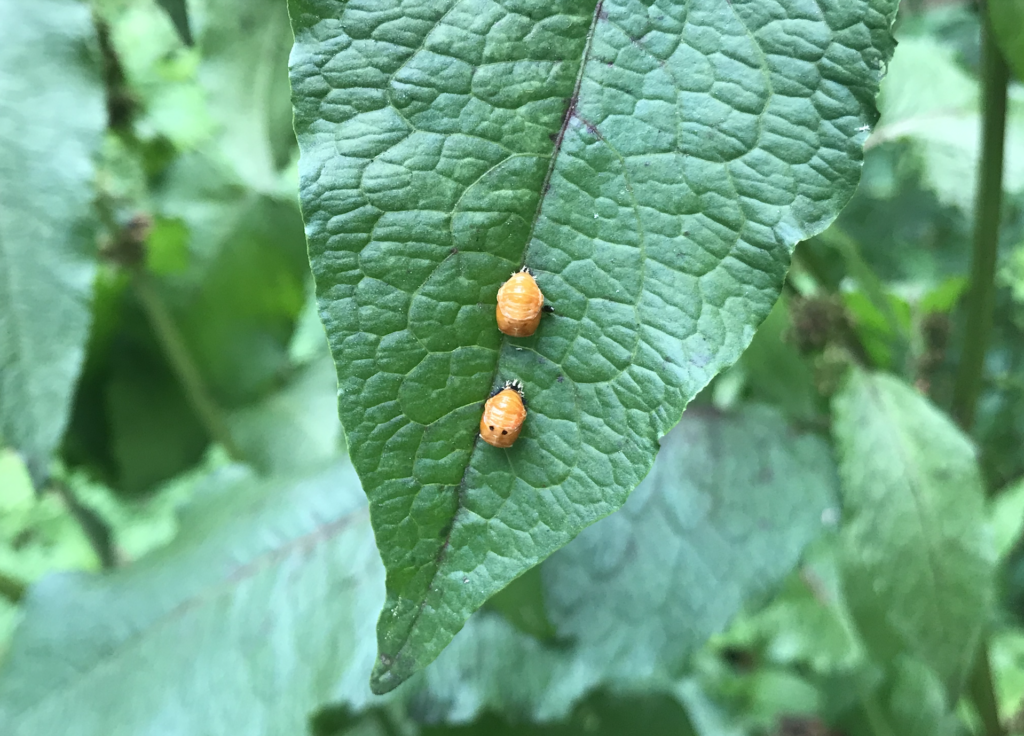
I thought this insects were really interesting, I had never see beetles like these before and I wanted to share them as part of my blog. I liked how their orange exoskeleton contrasted with the sea of green behind them. I felt lucky to have spotted them because there were so many leaves that all looked the same in the area and I had just happened to notice these two very small beetles.
Photo 4:
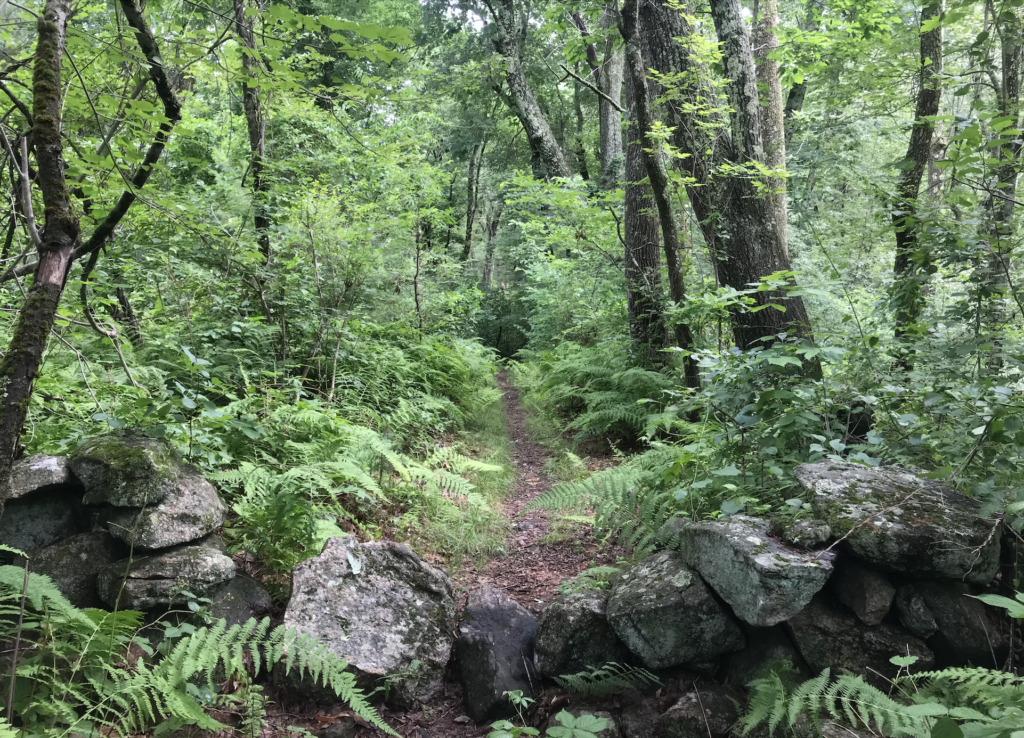
I chose this photo because I liked how the trail cut across the old stone walls from the previous farming. It also made me think about how the land has transformed so much from that time period. It is interesting to see how the past is still present by relics left behind.
Photo 5:
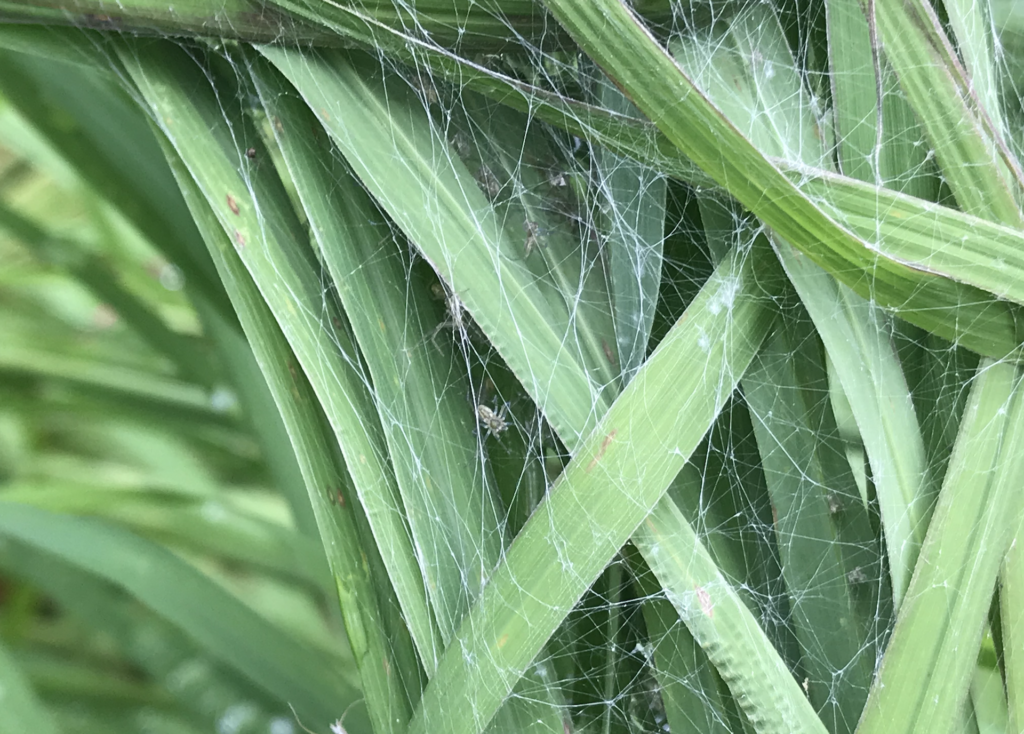
I chose this subject because it was amazing to see all the juvenile spiders within their nest. I have never seen a nest of spiders where they weren’t all still within eggs, so this was really cool to see. This photo also made think about how many different kinds of organisms call Malcolm Preserve home. They all live within the same area but all live so differently.
Conclusion:
I really enjoyed the process of taking photos at the preserve. I was focused more on smaller aspects of Malcolm Preserve and wasn’t looking at everything as a whole. That zoning in made me understand so much more about how all of these species exist in this one ecosystem. One new thing that I noticed was how much the area can change in such a short period of time because of the excess rain.
Taking the photographs was similar to sketching because it really caused me to slow down and focus on one subject at a time. I had to be more careful about what I was doing as to not spook any organisms and to get good quality photos. It differed from sketching though because I had to keep reviewing my work as I went. Each time I’d take a photo, I had to look it over and then try and get another shot from another angle. For the sketching, I only drew from one chosen angle and so I had to sit a lot more in just one place.
This Wonder Blog entry focussed a lot on the changes that have come to Malcolm Preserve after several days of rain. I also focussed on smaller organisms that live within the preserve, such as spiders, slugs, and insects. This blog post gave me an opportunity to see the recent changes to the area and question why they arose.
References:
- “U.S. Forest Service.” Forest Service Shield, www.fs.fed.us/wildflowers/beauty/mycotrophic/monotropa_uniflora.shtml.