Introduction
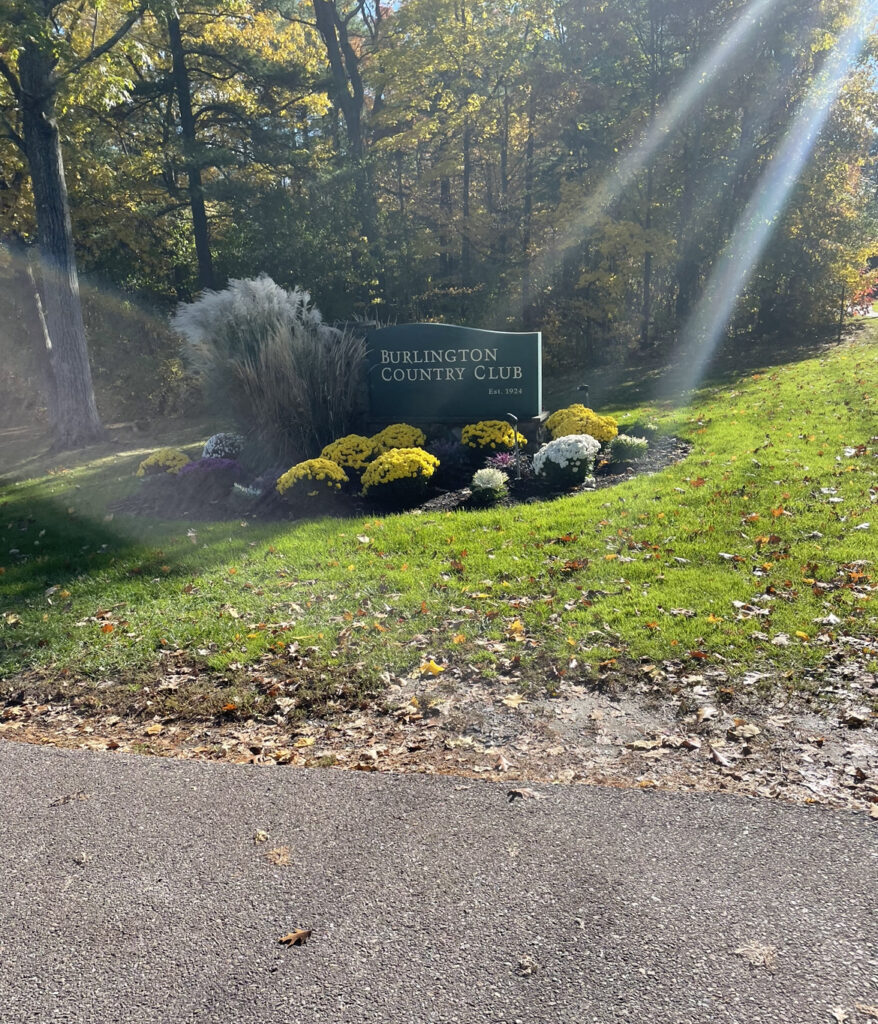
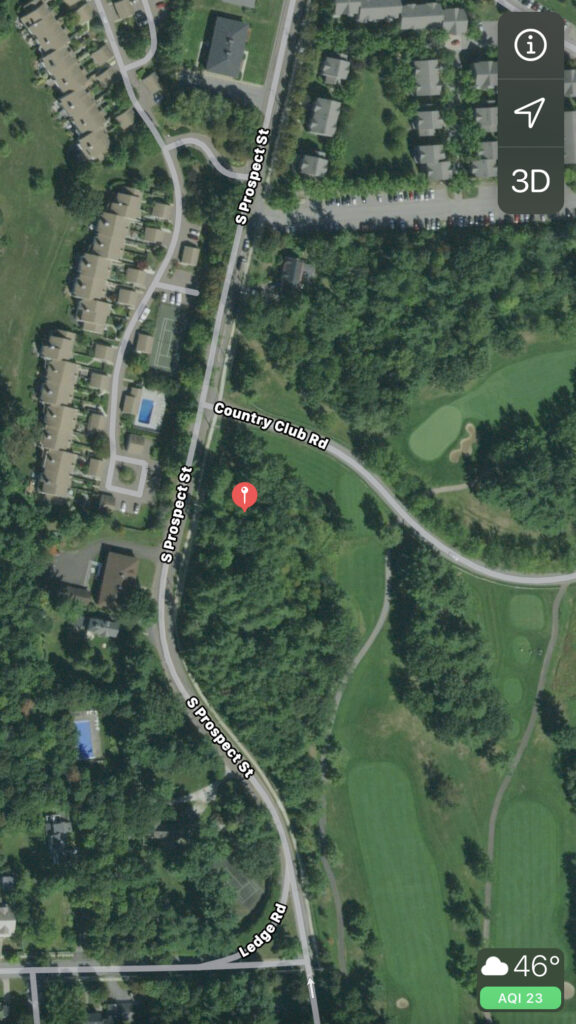
A small, woody oasis surrounded on one side by a residential street and the other The Burlington Golf Course. This small wood is probably often overlooked and not often ventured in to because of its location and first impression it gives off looking from the outside. From the outside it just seems like a few trees providing a barrier between residential homes and a large golf course. But if you were to venture through the first fencing of trees, you would see a whole ecosystem hidden within a bubble. I chose this place, because it felt like it would be a good investigation of how small forests are effected by their urban surroundings. Being bordered by a golf course, i’m sure these woods are effected by chemicals as well as human traffic. In order to get here you don’t need to walk too far from campus. You walk east down south prospect just past the golf course entrance and then you will see the woods. There is no entrance into the woods and no trails so you have to find a slight less dense part of the trees end enter through there.
Vegetation
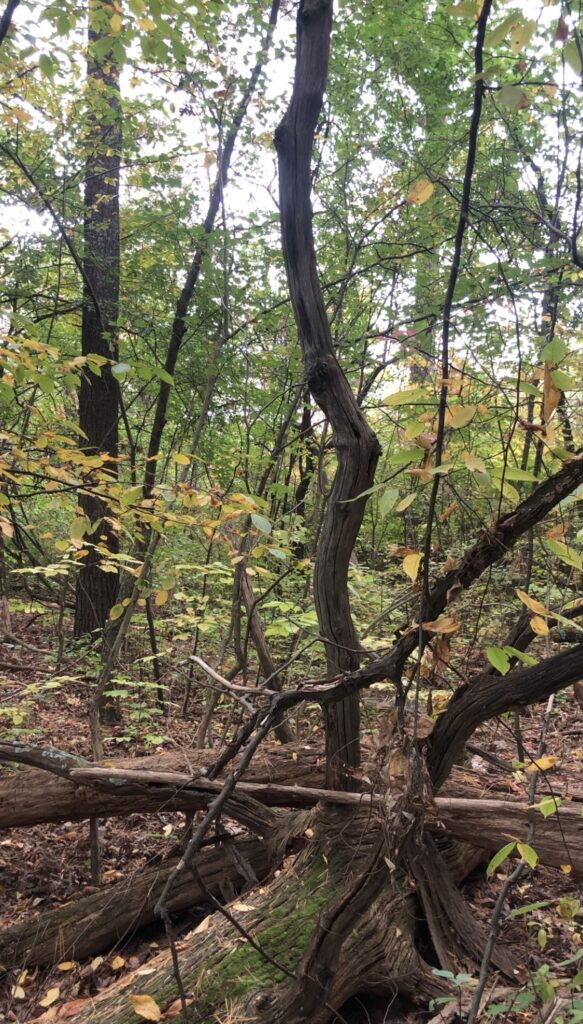
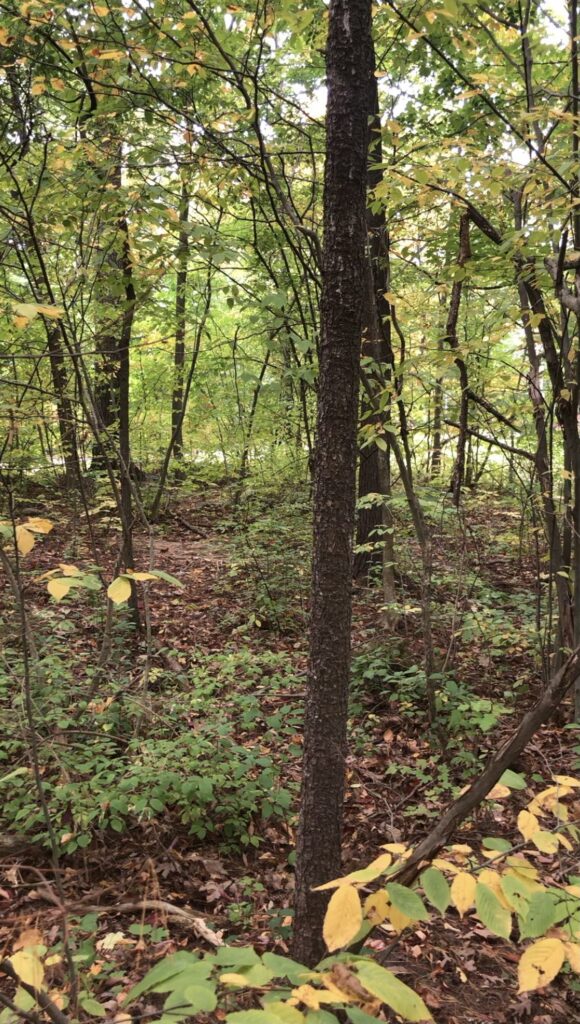
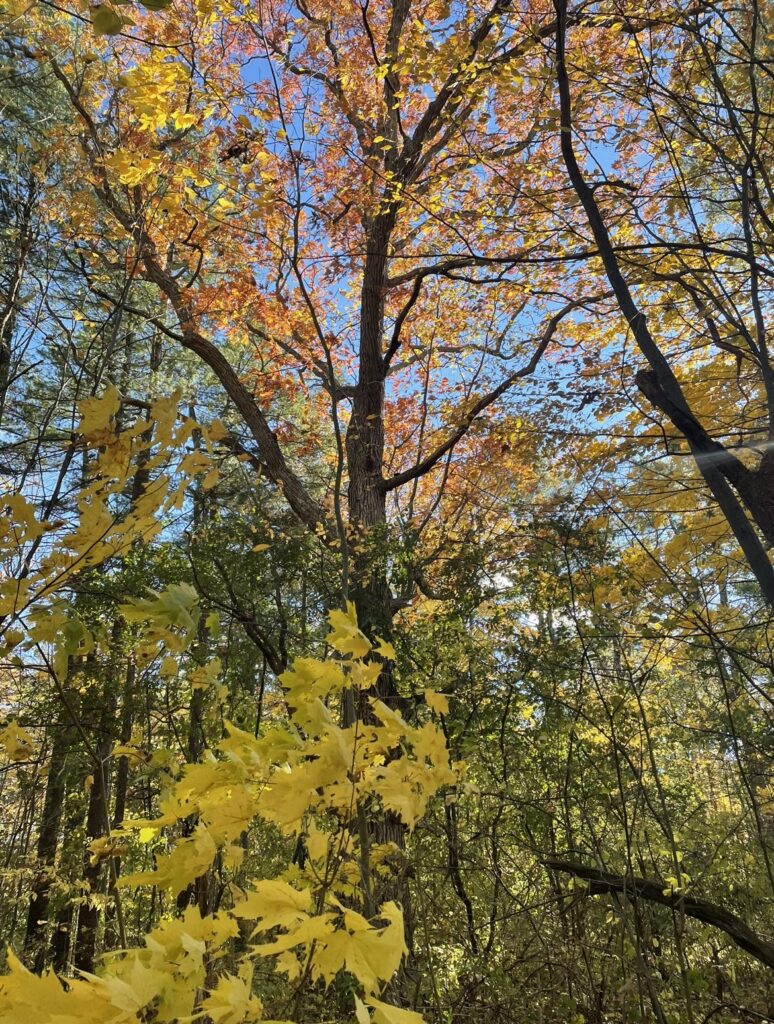
There is a diverse variety of plants in these woods. The dominant species is Norway Maple and White Oak with a prevalence of Red maple and Northern Red Oak as well. Other trees in the over-story consist of American Beech and Northern White Pines. There is also a large White Oak tree fairly centered amongst the other trees and shrubbery. The over-story as well as the understory are dominated by Maples. The under-story also consists of many buckthorn. The ground cover is largely made up of broken twigs and branches, there is a noticeable amount of dead and fallen tree branches and underbrush. Moss covers many of the fallen, decaying trees.