Posts

Assignment 3

Georgia Hannock
Blog Assignment 3

Baxter International is a multinational company that produces health care equipment and services used in hospitals, pharmacies, and homes around the world. As a corporation, they claim to partner with “world-class institutions, clinicians, and scientists” to lead innovation in the healthcare industry, all while protecting the planet and providing an inclusive work environment. Baxter has over 50 manufacturing facilities across the globe, with several of their facilities awarded the Shingo Prize for operational excellence.
Medical equipment is the top export in Costa Rica. In 1987, Baxter was the first medical device manufacturing operation set up in the country. The manufacturing plant is located in Cartago, Costa Rica, specializes in producing products meant for administering medication and delivering IV solutions. According to an article written in 2009, this plant is 152,000ft^2 and employs 1,200 individuals. I believe since then, the size of the plant, the number of employees, and product operations have all increased. The Baxter Facility in Cartago has been certified by ISO (International Organization for Standardization) which is a third-party certification for companies that meet the set international standards for quality and credibility. The certification for the Cartago Plant infers that the products produced at this facility are of advanced product quality planning methodology. The production that has taken place at the Baxter Plant at Cartago is of high quality, and they continue to reach quality standards regards to their environmental footprint and their low incident rate. In 2006, this manufacturing facility has reduced its energy consumption by 9%, reduced waste by 29%, and cut gas consumption by 44%. By 2006, they also reduced their incident rate per 100 from 0.63 in 2000 to 0.06 by 2006. The Baxter manufacturing facility in Cartago has received the Shingo Prize of operational excellence in 2008, which is given to facilities for their achievements of quality improvements in productivity and manufacturing cycles. This is attributed to the employee’s dedication and strong leadership displayed at the Cartago facility.
Baxter International is an American multinational, and its establishment in Cartago can be considered an example of a western power expanding its reach globally to increase its profit. However, Baxter International’s presence in Costa Rica appears to have brought environmentally and socially sustainable employment opportunities to the area, all while generating economic activity. This scenario could be considered an example of a neo-liberal framework, as the free market has allowed Baxter International to globalize its company and establish a presence in Costa Rica. However, I am hesitant to categorize this example as neo-liberalism because of its negative connotation. It seems that the Cartago Facility has had a positive impact and is an example of the free market successfully expanding through globalization.

Baxter International (BAX). Forbes. https://www.forbes.com/companies/baxter-international/?sh=69596fed2319

Our Story. Baxter. https://www.baxter.com/our-story

Worldwide Facilities. Baxter: Biopharma Solutions. https://biopharmasolutions.baxter.com/about-us/worldwide-facilities

Baxter Healthcare Cartago Facility. (16 August, 2009). Pharmaceutical Technology. https://www.pharmaceutical-technology.com/projects/baxter-cartago/

Baxter’s Costa Rica Facility Recognized with Shingo Prize for Excellence in Manufacturing. (February 6, 2008). Pharmaceutical Online. https://www.pharmaceuticalonline.com/doc/baxters-costa-rica-facility-recognized-with-s-0001
Blog assignment 1

Georgia Hannock

January 20, 2022

Palm oil

While Palm oil production is unethical in terms of sustainability, it is an extremely valuable commodity, as the global palm oil market is predicted to reach $55.2 billion by 2026. Palm oil is the cheapest and highest-yielding vegetable oil crop, and it is found in almost every ingredient list for processed foods. Agricultural production is a large part of the economy in the Osa Peninsula, so the high demand for palm oil makes it an attractive crop for farmers in that region. Even though palm oil is profitable on the global market, farmers on the Osa are seeing very little profit for the amount of labor required to harvest palm oil fruit. There are also many risks associated with palm oil plantations as they are a monoculture and are susceptible to disease.

Research and Markets. (July 19, 2021). Global Palm Oil Market Report 2021: Market to Reach $57.2 Billion by 2026 – U.S. Market is Estimated at $11.9 Billion, While China is Forecast to Reach $11.7 Billion by 2026. GlobeNewswire News Room. https://www.globenewswire.com/news-release/2021/07/19/2264586/28124/en/Global-Palm-Oil-Market-Report-2021-Market-to-Reach-57-2-Billion-by-2026-U-S-Market-is-Estimated-at-11-9-Billion-While-China-is-Forecast-to-Reach-11-7-Billion-by-2026.html

Beggs, Emily. Morre, Ellen. (June 2013). “The Social Landscape of African Oil Palm Production in the Osa and Golfito Region”. Stanford Woods Institute for the Environment Stanford University. https://inogo.stanford.edu/sites/default/files/African%20palm%20social%20landscape%20INOGO%20June%202013.pdf

Ecotourism

The Osa Peninsula is known for being one of the most biodiverse places on the planet, and ecotourism has brought many conscious visitors to this spot to enjoy its beauty while having a minimal impact. Tourists traveling to the Osa to support the conservation of biodiversity are also supporting residents and their small businesses. The support towards the local economy, as well as support towards sustainable initiatives in the region. Conscious tourists stay in eco-lodges run by locals, visit farms that practice sustainable agriculture, and support other ecotourism-based businesses that are both benefiting the local economy and the surrounding environment.

Hunt, Carter & Durham, William & Driscoll, Laura & Honey, Martha. (2015). Can ecotourism deliver real economic, social, and environmental benefits? A study of the Osa Peninsula, Costa Rica. Journal of Sustainable Tourism. 23. 10.1080/09669582.2014.965176

Cacao

Cacao farming in the Osa Peninsula has a long history, and cacao production can be practiced sustainably, allowing for it to be an interactive business that is supported by ecotourism. The biodiverse rainforests are ideal for cacao cultivation. Cacao seeds are very valuable and are used as currency by the locals, but some organic cacao plantations have been able to sell cacao seeds on the global market, and offer ethically sourced cacao that can be sold and processed into chocolate.

Cacao & Organic Farm. Osa Experience Costa Rica. http://www.osaexperience.com/package/chocolate-tour/

Cherney, Madeline del Toro. “Costa Rican cacao economy: an ethnographic study of social justice observed.” Forum on Public Policy: A Journal of the Oxford Round Table, spring 2009. Gale Academic OneFile, https://go.gale.com/ps/i.do?id=GALE%7CA216682606&sid=googleScholar&v=2.1&it=r&linkaccess=abs&issn=1556763X&p=AONE&sw=w&userGroupName=vol_oweb

Vanilla

Vanilla is another valuable commodity that is grown in the Osa. It aligns with the conservation in the Osa Penninsula because the vanilla vines are found in forests. The Osa is the perfect climate for vanilla to grow, and the vine plays an important role in the rainforests. Vanilla harvesting is an important economic activity for locals because it is so profitable in the global market, and it is another economic incentive for land conservation on the Osa.

Watteyn, Charlotte & Fremout, Tobias & Karremans, A. & Huarcaya, Ruthmery & Bolaños, Jos & Reubens, Bert & Muys, Bart & Azofeifa-Bolaños, José. (2020). Vanilla distribution modeling for conservation and sustainable cultivation in a joint land sparing/sharing concept. https://www.researchgate.net/publication/339751683_Vanilla_distribution_modeling_for_conservation_and_sustainable_cultivation_in_a_joint_land_sparingsharing_concept

The Unexpected Values of Vanilla. (June 14, 2017). Osa Conservation. https://osaconservation.org/unexpected-values-vanilla/

Timber

Timber plantations and timber extracting have been economically viable for the Osa for a long period. The Osa Peninsula has valuable timber resources that have been sold on the global market. However, harvesting timber does not fit the sustainability values of the Osa, and conserving forested land has proven to be more economically, environmentally, and socially viable. However, some forests are still being cut down for timber because it is profitable. Because of the harm that residents face due to deforestation, timber harvesting from the Osa Peninsula has dramatically decreased from the market.

Ecosystem Services and Sustainable Ecotourism. Vascular Plants of the Osa Peninsula Costa Rica. http://sweetgum.nybg.org/science/projects/osa/ecosystemservices/

Blog assignment 2 rural livelihoods

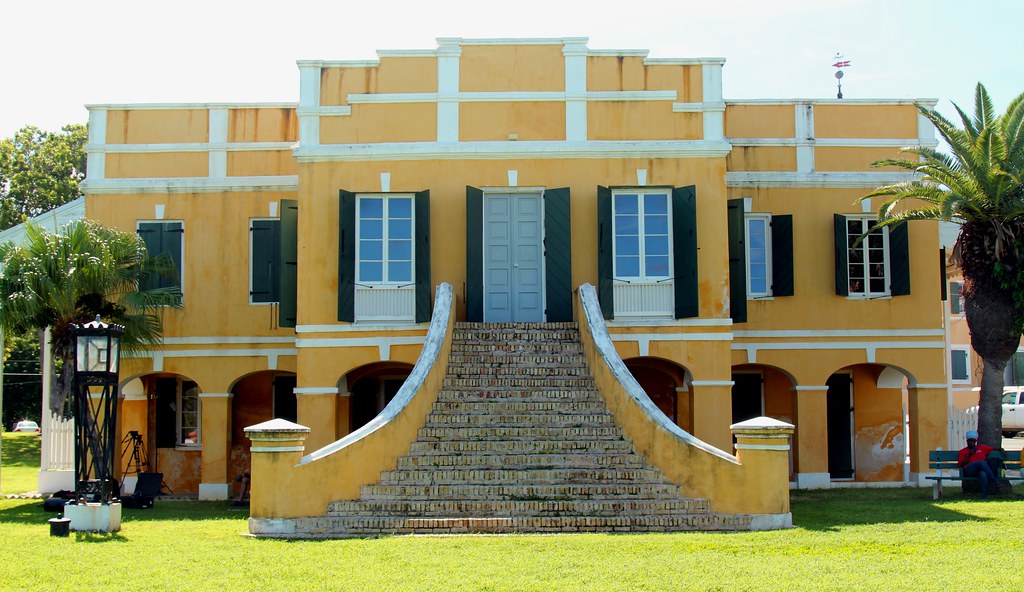
Christiansted. Old Danish Custom House

(Nov. 28, 2015) .Christiansted ~ St. Croix. Flickr. https://www.flickr.com/photos/prayitnophotography/23063040190/in/photostream/

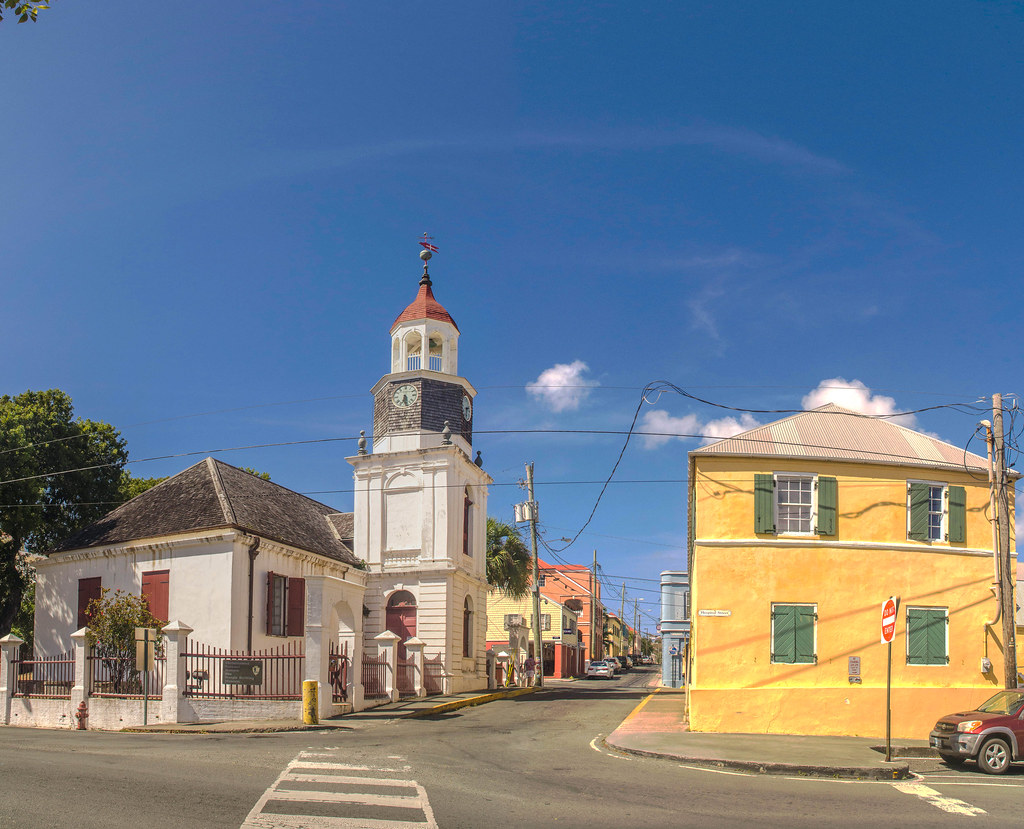
First Lutheran Church on St. Croix and former headquarters of the Danish West India and Guinea Company

Hsieh, Wayne. (May 02, 2015) Steeple Building and Danish West India and Guinea Company Warehouse. Flickr. https://www.flickr.com/photos/whsieh78/17321564056/in/photostream/

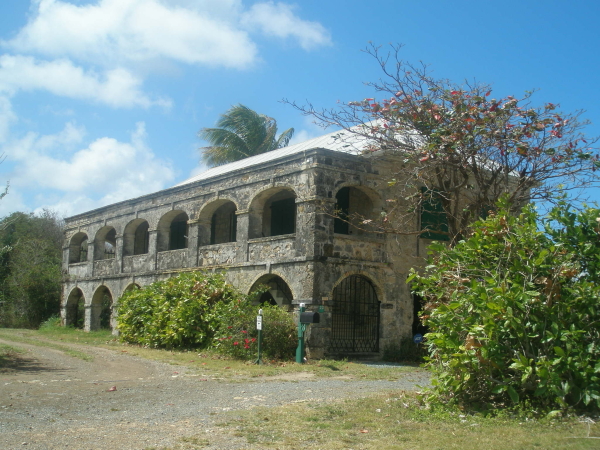
Danish Hospital Building on St. Croix

(2008) Saint Croix. Wikimedia Commons. https://commons.wikimedia.org/cwiki/File:Estate_Little_Princess_building.jpg

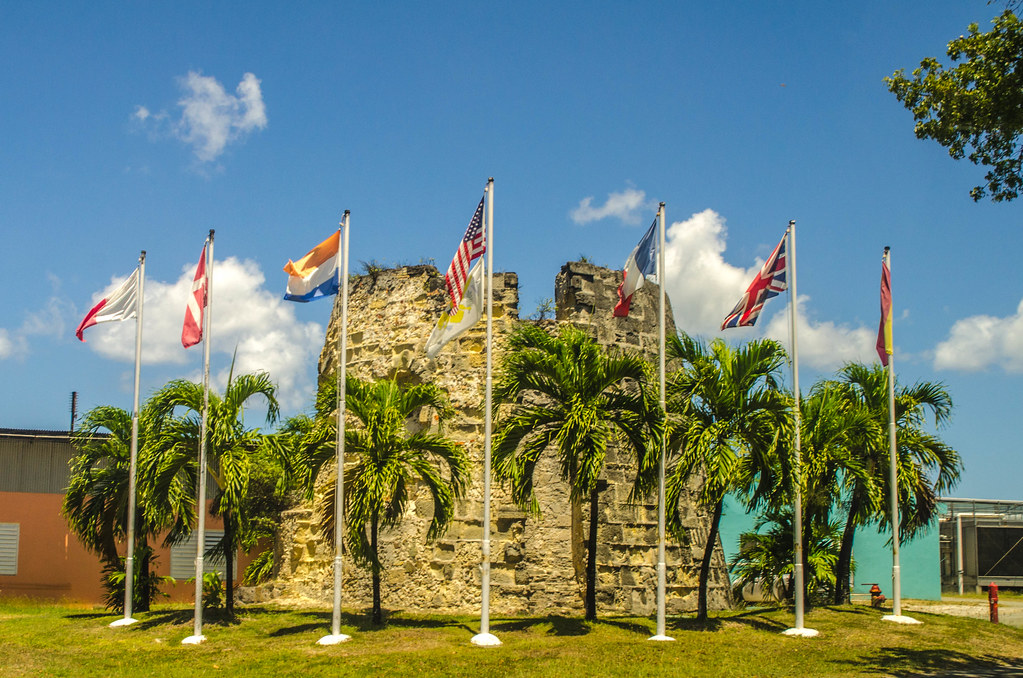
Ruins of the Rum Sugar Mill in St. Croix

Hsieh, Wayne. (March 29, 2015). Cruzan Rum Sugar Mill Ruin. Flickr. https://www.flickr.com/photos/whsieh78/16750632904

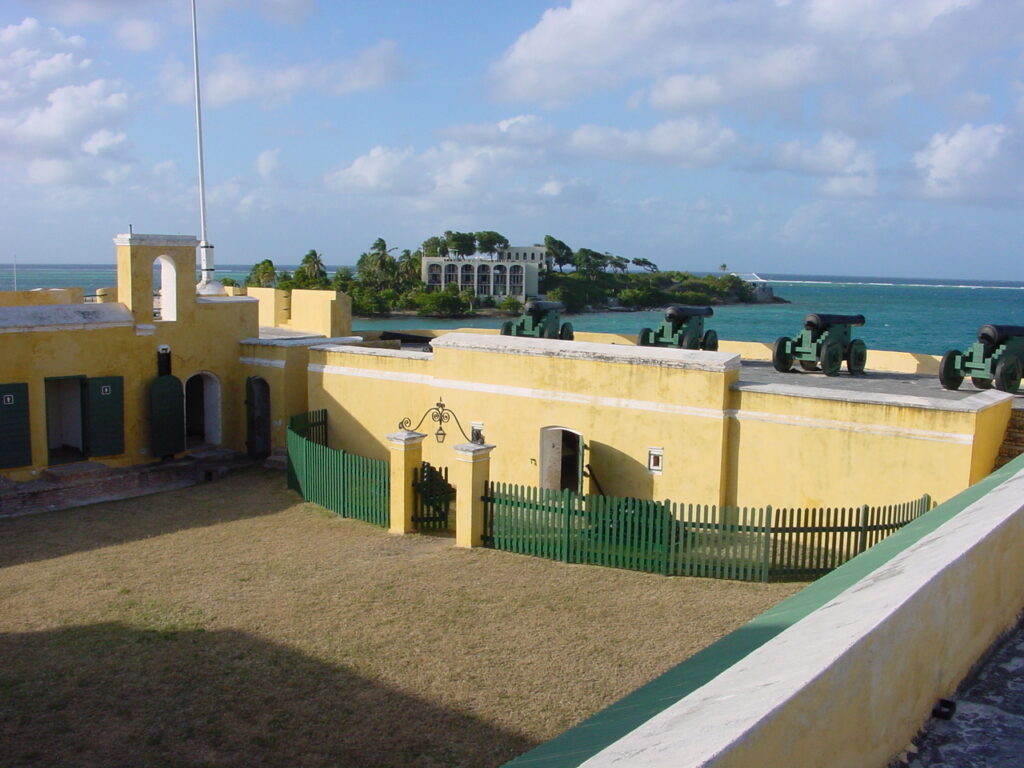
Cannons on the Courtyard of Fort Christiansvae

(Feb 13, 2005). Fort Christiansvaern Christiansted St Croix. Wikimedia Commons. https://commons.wikimedia.org/wiki/File:Fort_Christiansvaern_Christiansted_St_Croix_USVI_27.jpg

St Croix

  1. The colonial economy of St. Croix was based upon slave labor on plantations. Sugar production was the most profitable, but there were also other crops grown on the island, like cotton, rum, and molasses. Slave labor was the source of all the crop production that took place in St. Croix. The majority of the population were slaves imported from West Africa.
  2. Before the European colonization of St. Croix, the original inhabitants of the island had been there for thousands of years. There were various indigenous tribes, but one tribe of Cannibals was called the Caribs. Christopher Columbus and the Spanish first arrived in St. Croix in 1493. The first encounter between the Spanish and the Caribs was violent and was the beginning of nearly a century of conflict between the indigenous tribe and Spanish colonizers. The Spanish were in St. Croix for about 100 years before they gave up. Then, both the Netherlands and Great Britain colonized the island in 1643. St. Croix was becoming a more attractive colony because of how profitable sugar production was. After the Dutch Governor was killed on the island, St. Croix was controlled by the English until the Spanish came back in 1650 and killed nearly everyone. The Spanish rule was short-lived, as that same year, the French captured St. Croix. The French colonization was also short-lived, because in 1651, a religious group from Jerusalem, called The Knights of Malta, bought St. Croix. In 1665, The Knights of Malta resold it to the French West India Company, as they could live up to the job of a colonizing ruler. Once St. Croix became a French colony, its plantation economy flourished. By 1696, the French could no longer control St. Croix, and the Island was uninhabited until 1733 when it was then sold to Denmark. Under Danish rule, other colonial powers could move to the island and purchase plantations. This led to rapid development on the island. Once the sugar industry began to fall and slaves were freed in 1878, St. Croix’s economy declined. Denmark sold the island to the United States in 1917, and since then it has been a part of the US Virgin Islands.
  3. The colonization of St. Croix was motivated by capitalism and the vent for surplus from the beginning. This is evident with the hostile relationship the Spanish initially had with the indigenous people of the island before slaughtering them and importing slaves to carry out production on the island. Whipping out the indigenous population made it easier for the various colonial powers that ruled St. Croix to establish power and exploit the resources on the island.

Britannica, T. Editors of Encyclopaedia (2018, February 15). Saint CroixEncyclopedia Britannica. https://www.britannica.com/place/Saint-Croix

Lawaetz, Frans. Seven Flags : The History of St. Croix. (June 18, 2014). US Virgin Islands. https://usvi.net/st-croix/seven-flags-the-history-of-st-croix/

Columbus Landing Site–Historic Places in Puerto Rico and the Virgin Islands; A National Register of Historic Places Travel Itinerary. National Parks Service. https://www.nps.gov/nr/travel/prvi/pr47.htm

Skip to toolbar