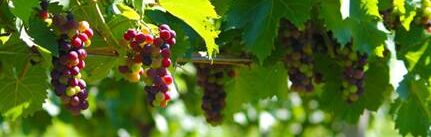
We caught our first codling moth in pheromone-baited Traps on May 20th, which set our biofix date for the degree day model used to track egg hatch and larval development. As of today we have reached the threshold for treatment in South Burlington, and will be treating our orchards tomorrow morning. It is important for growers to ascertain their biofix date for their own operation, so that they may specifically target this particularly damaging test. If you do not have traps in your orchard, you may assume somewhere around May 20th if in the northern Champlain Valley, and probably a week to 10 days after that if in a cooler inland or upland site. Warmer sights in the southern Champlain Valley or southern Vermont may need to advance that, but it is always best to maintain your own traps. This biofix date may be used in the NEWA codling moth model. Treatments for the first generation with most insecticides are best applied at 220 degree days base 50°F after the biofix date.
Other things to keep in mind during this part of the year:
- Honeycrisp trees could receive low-level (2-4 oz per acre) NAA applications for the next four weeks to improve return bloom.
- Keep an eye on the results of any thinning treatments and consider one final application if inadequate numbers of fruit have thinned off. Most orchards are reaching the end of the window for most effective thinning.
- All cultivars, and especially Honeycrisp, will benefit from regular applications of foliar calcium now through mid summer.
- We are nearing the end of the window when soil applied nitrogen fertilizers should be applied.
- Apple scab should be largely finished with its overwintering spores so preventative management of that disease should be done in near every Vermont orchard. It is very important to carefully scout orchards for any scab that may have broken through spray applications before secession of fungicide applications. If fresh scab is found, growers should maintain regular preventative fungicide applications for at least another month.
The UVM Tree Fruit and Viticulture Program is supported by the University of Vermont Agriculture Experiment Station, UVM Extension, USDA NIFA E-IPM Program, and USDA Risk Management Agency.
Issued in furtherance of Cooperative Extension work, Acts of May 8 and June 30, 1914, in cooperation with the United States Department of Agriculture. University of Vermont Extension, Burlington, Vermont. University of Vermont Extension, and U.S. Department of Agriculture, cooperating, offer education and employment to everyone without regard to race, color, national origin, gender, religion, age, disability, political beliefs, sexual orientation, and marital or familial status.
Where trade names or commercial products are used for identification, no discrimination is intended and no endorsement is implied. Always read the label before using any pesticide. The label is the legal document for the product use. Disregard any information in this message if it is in conflict with the label.