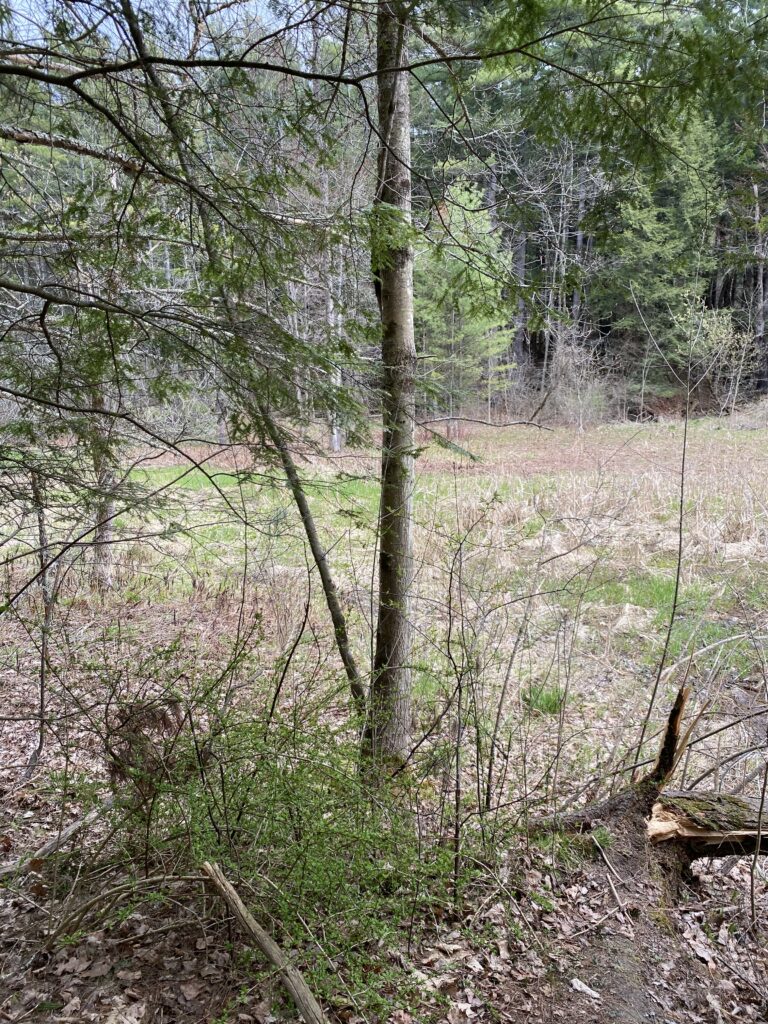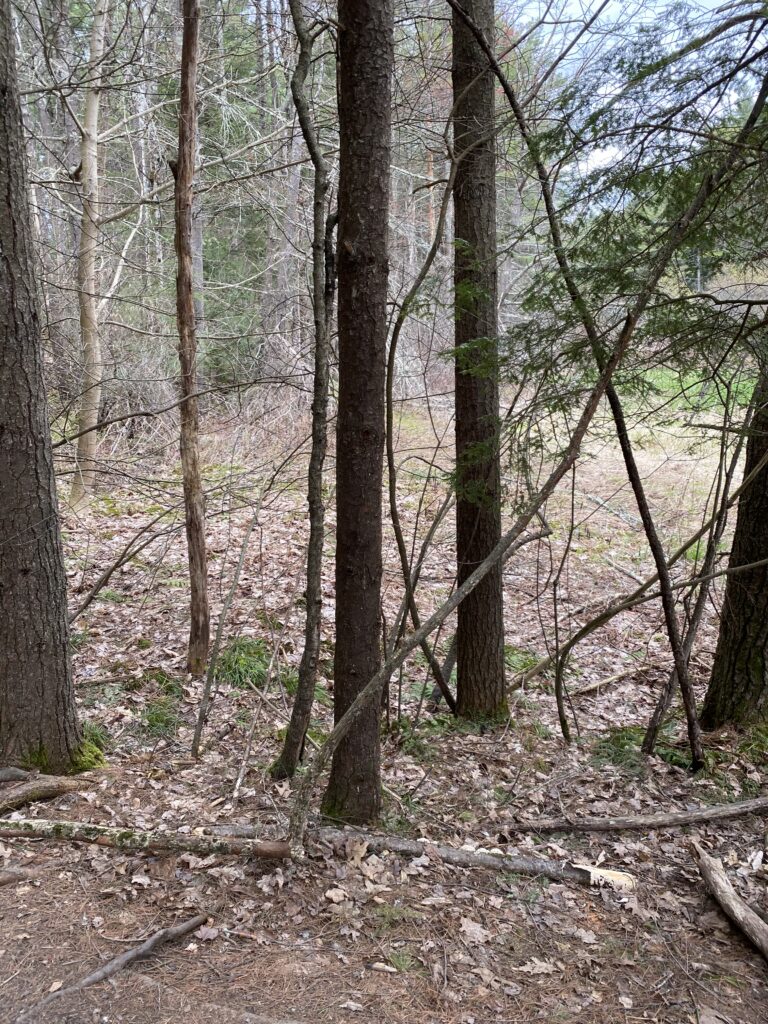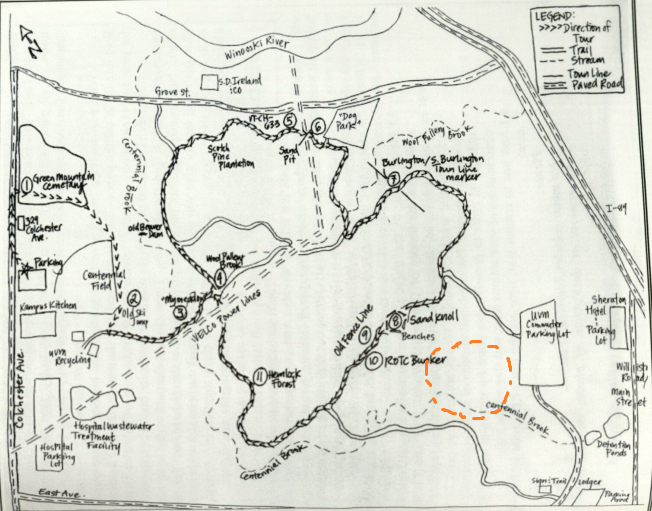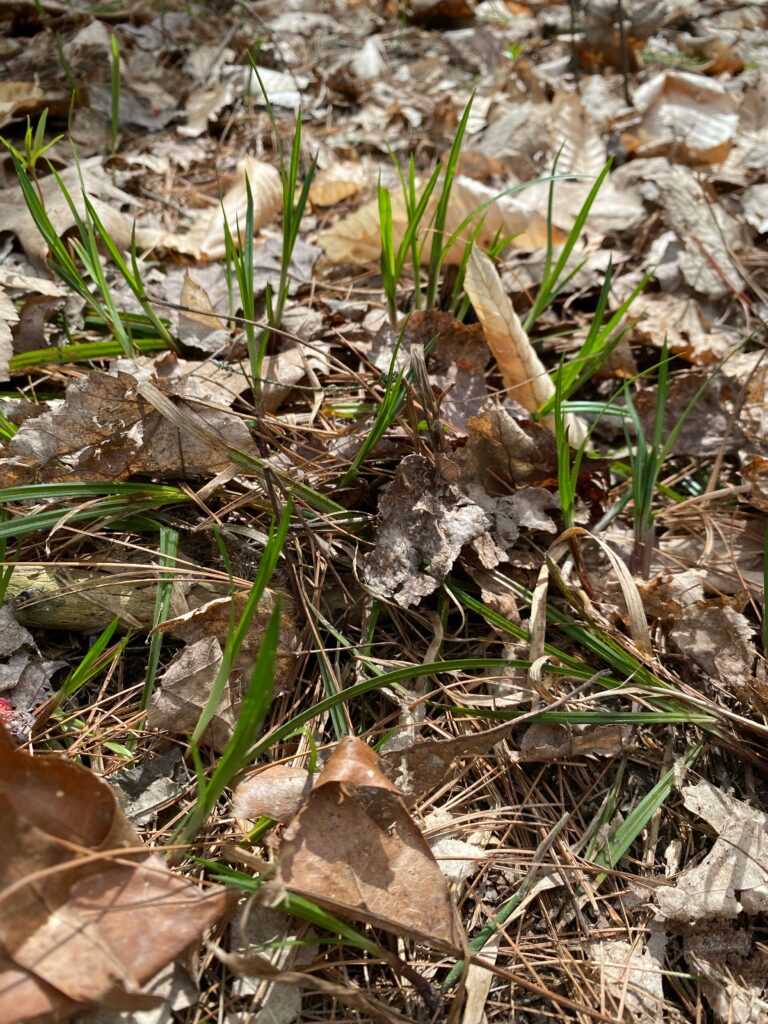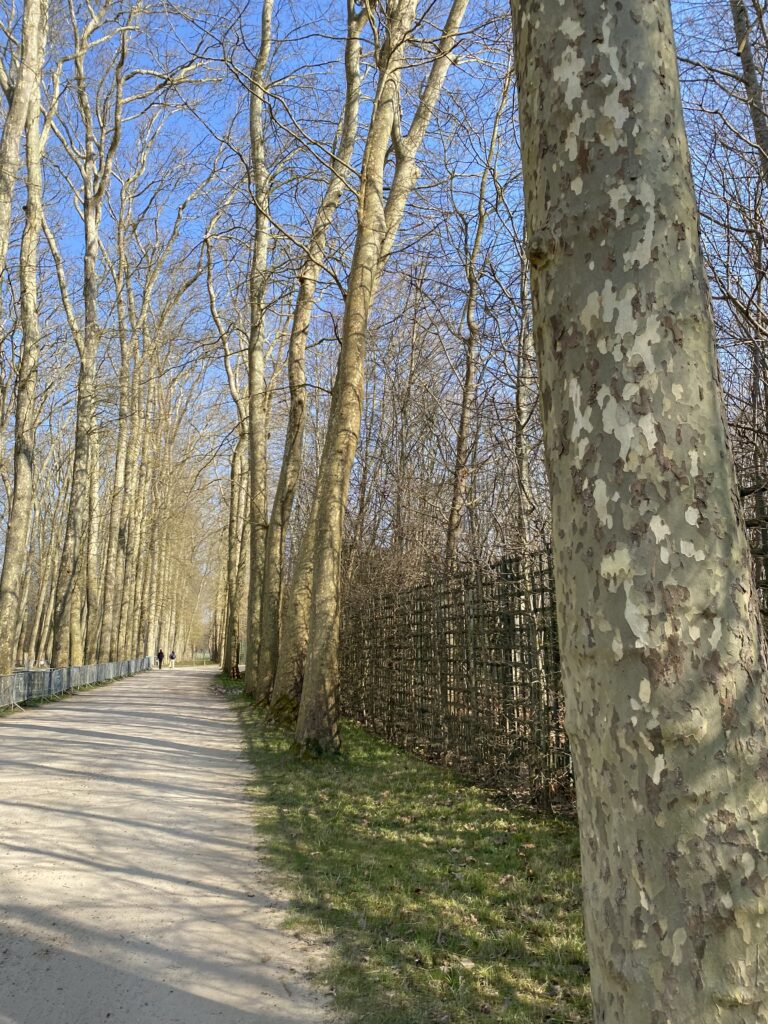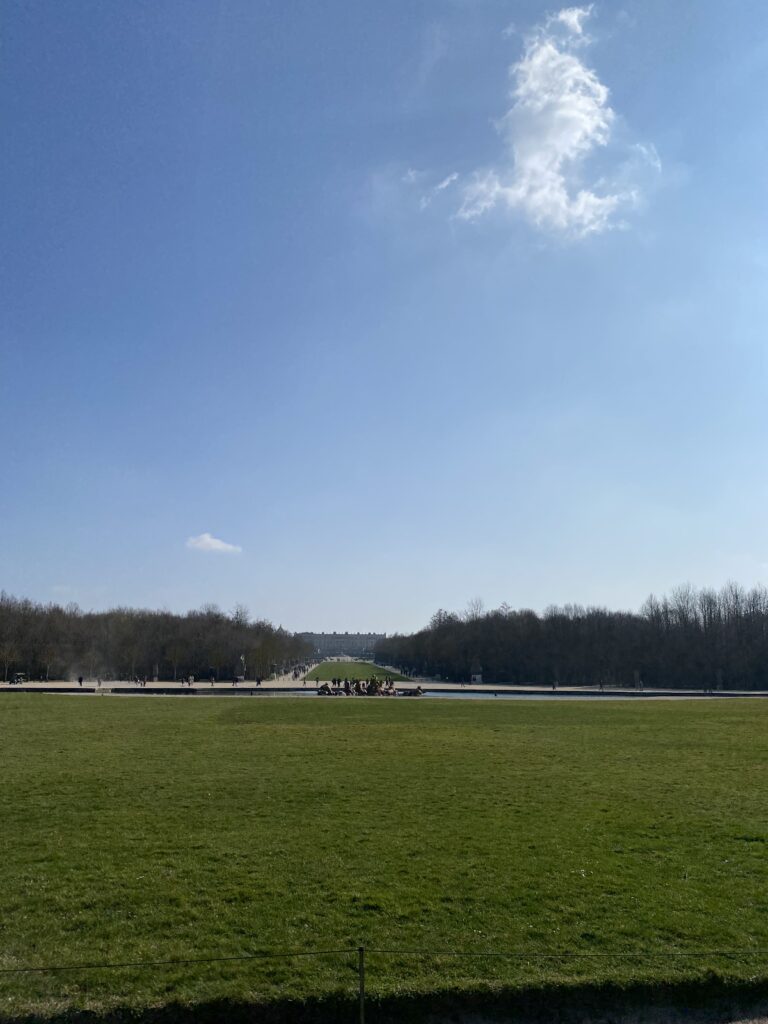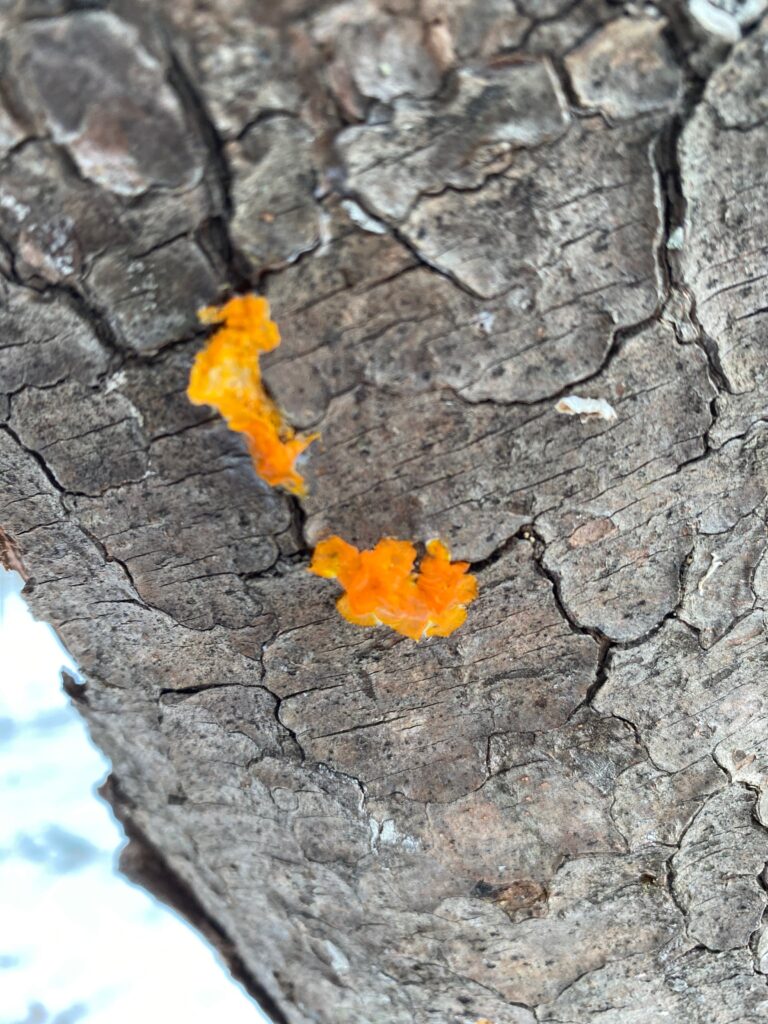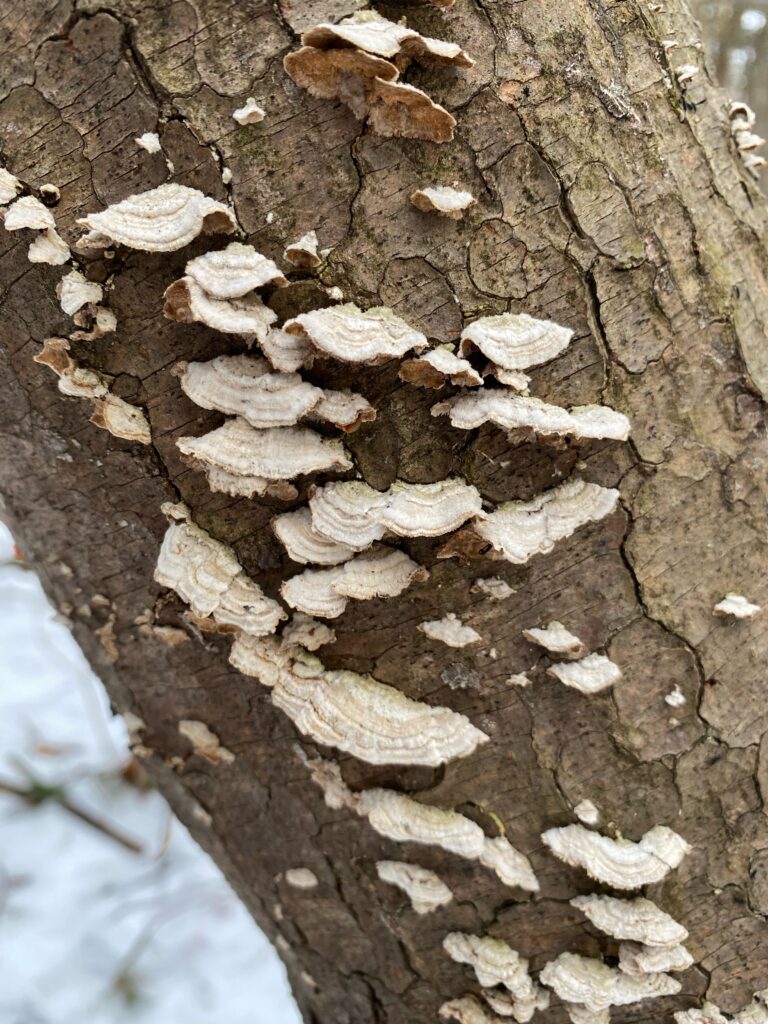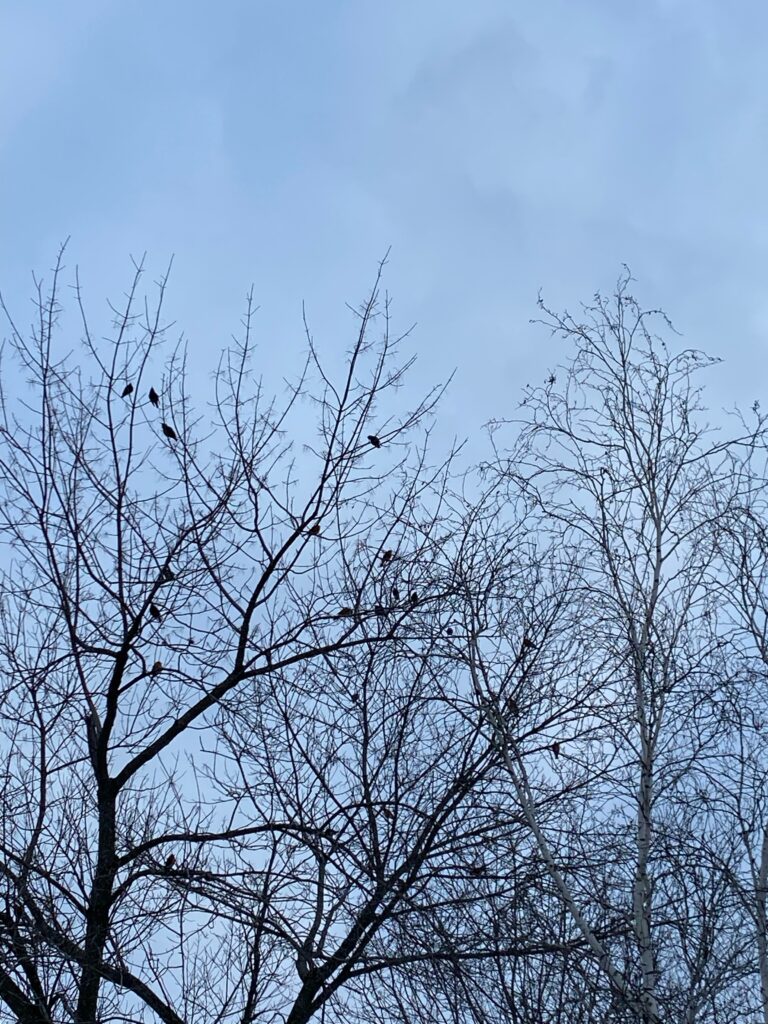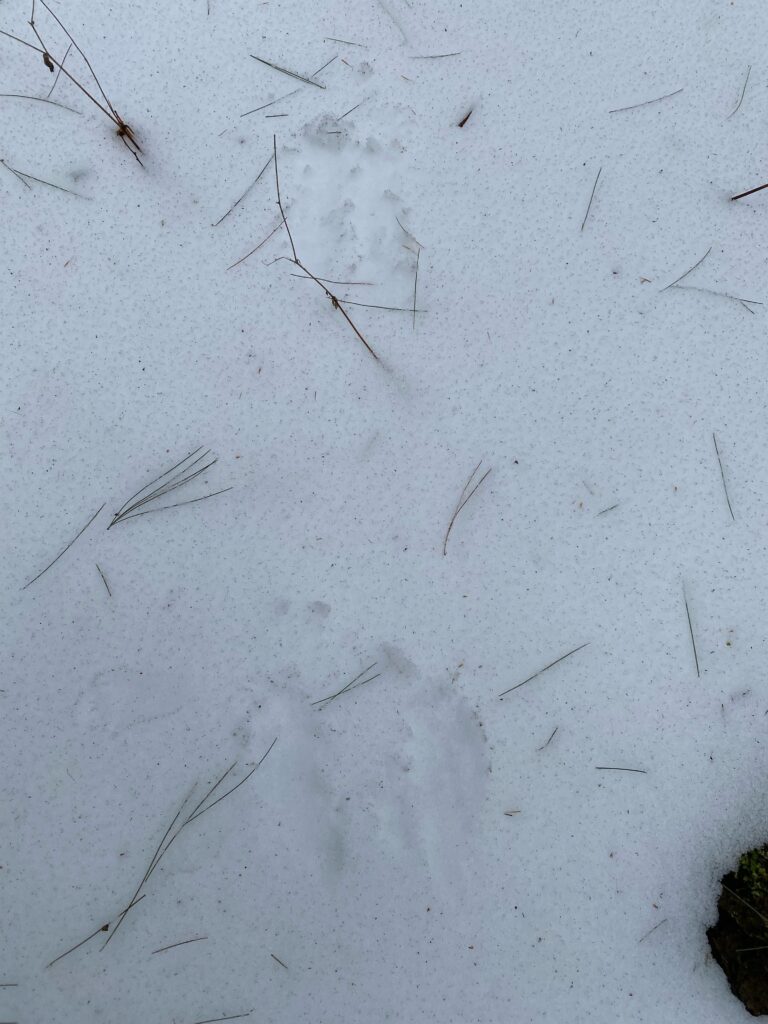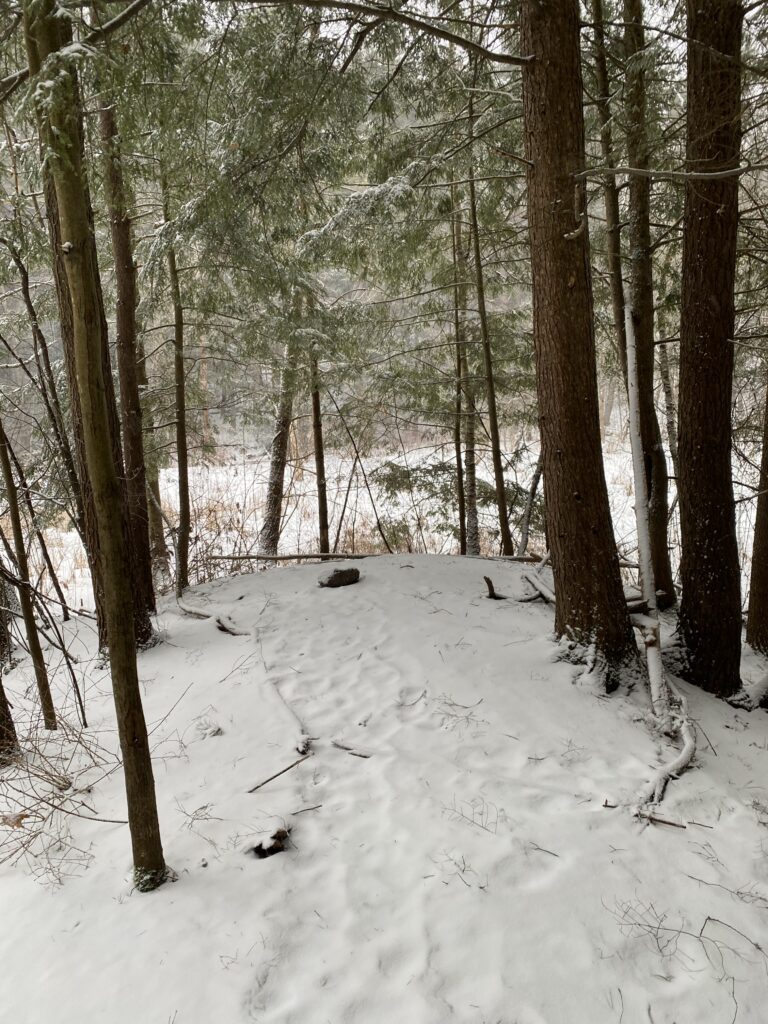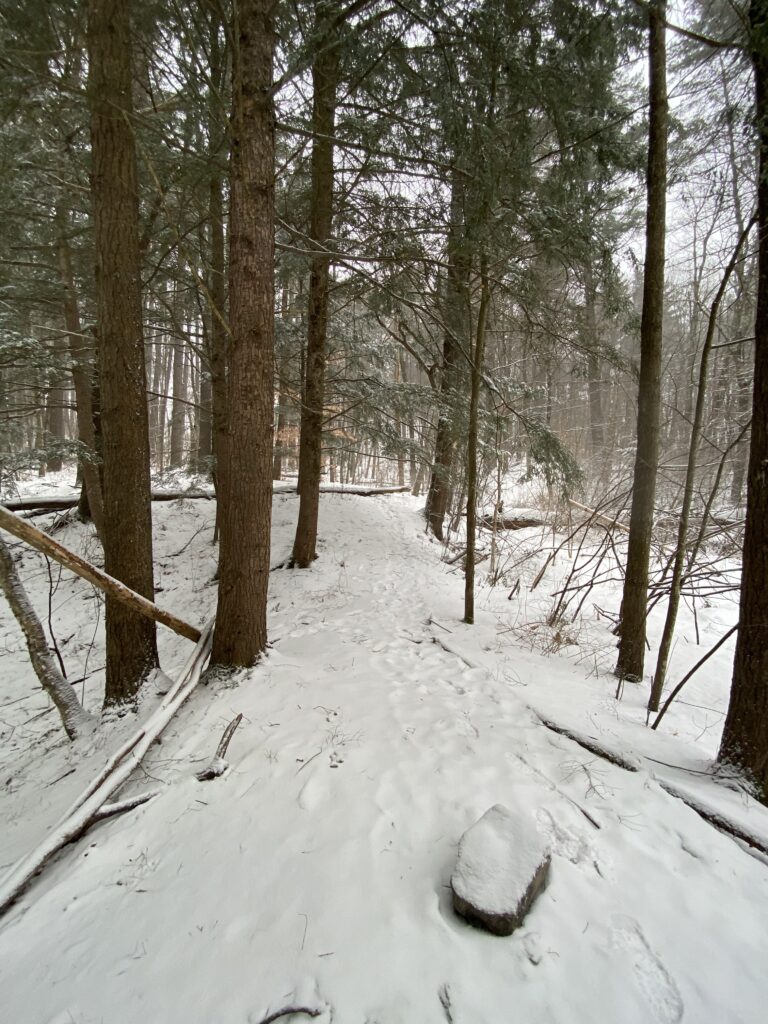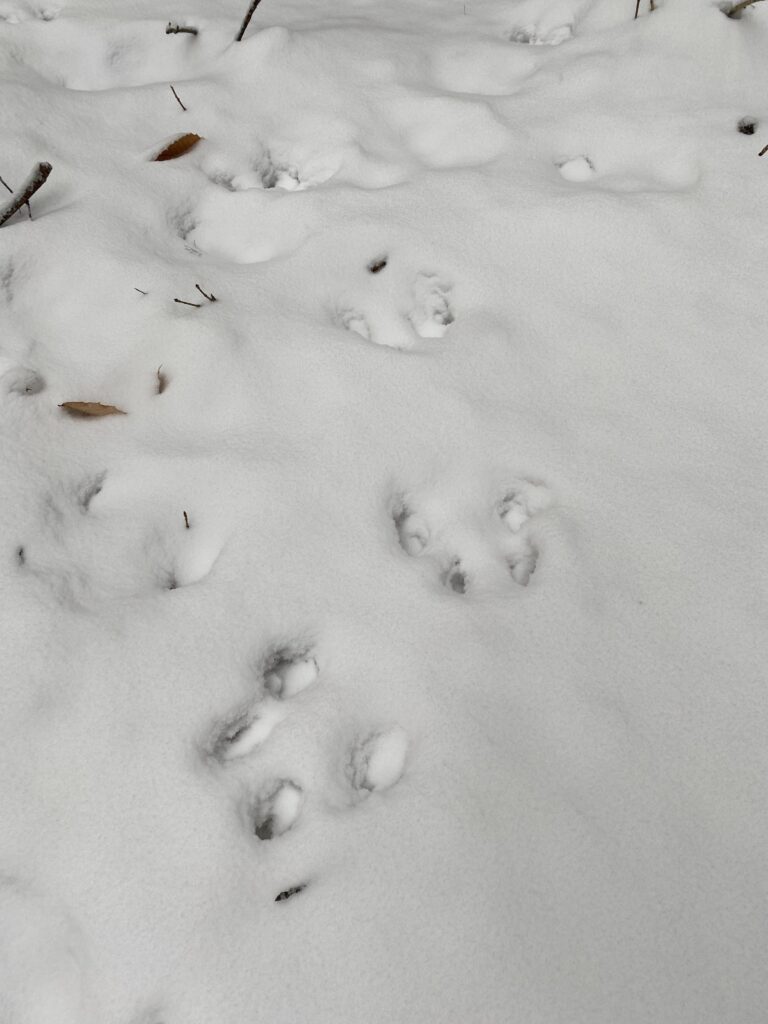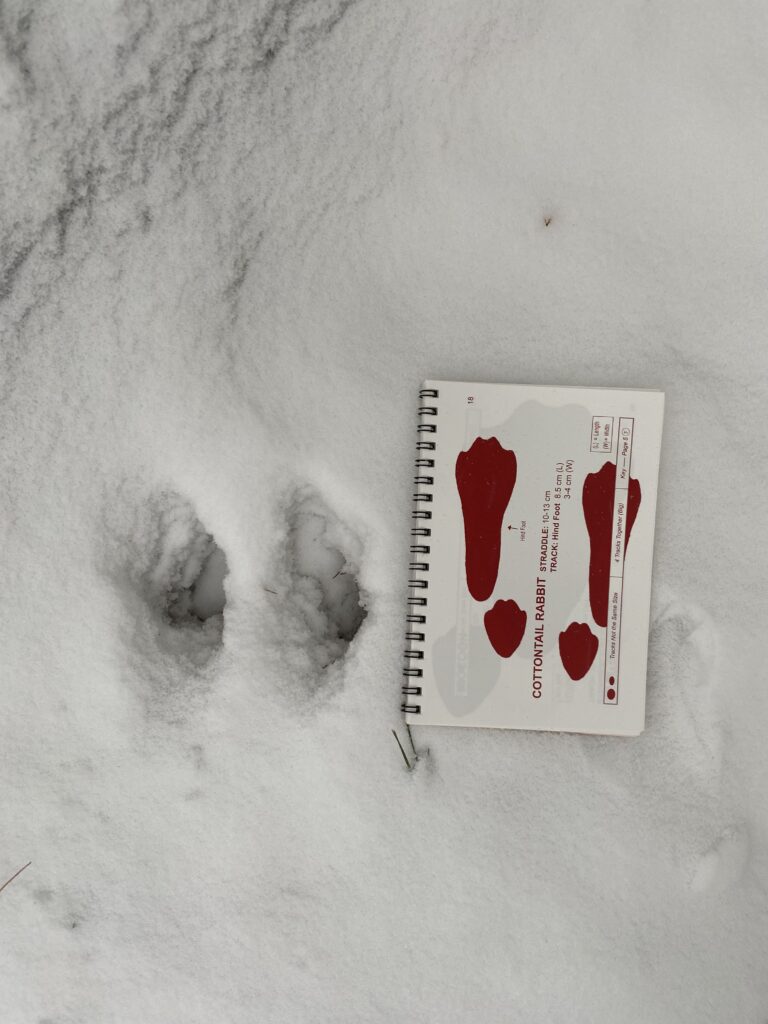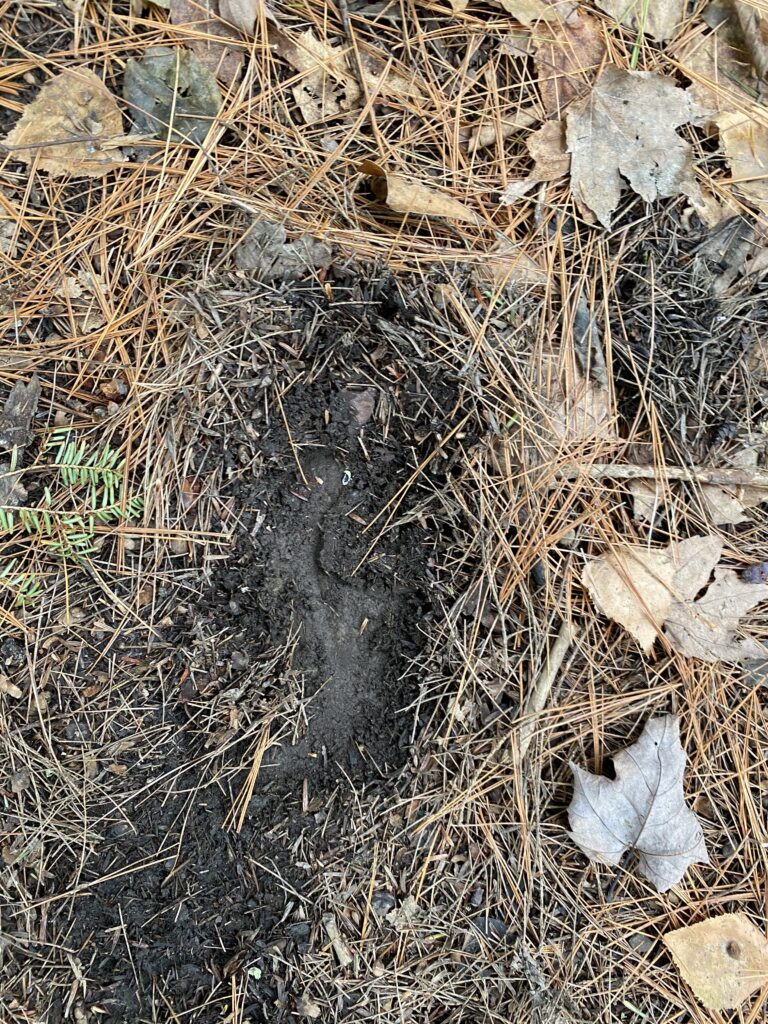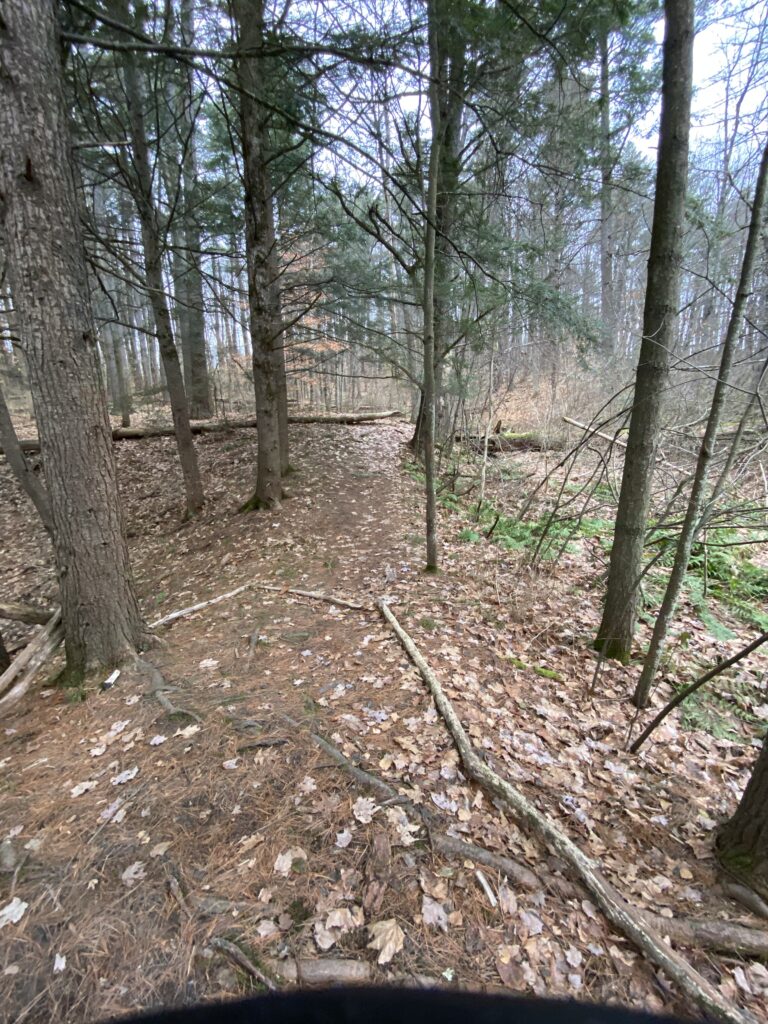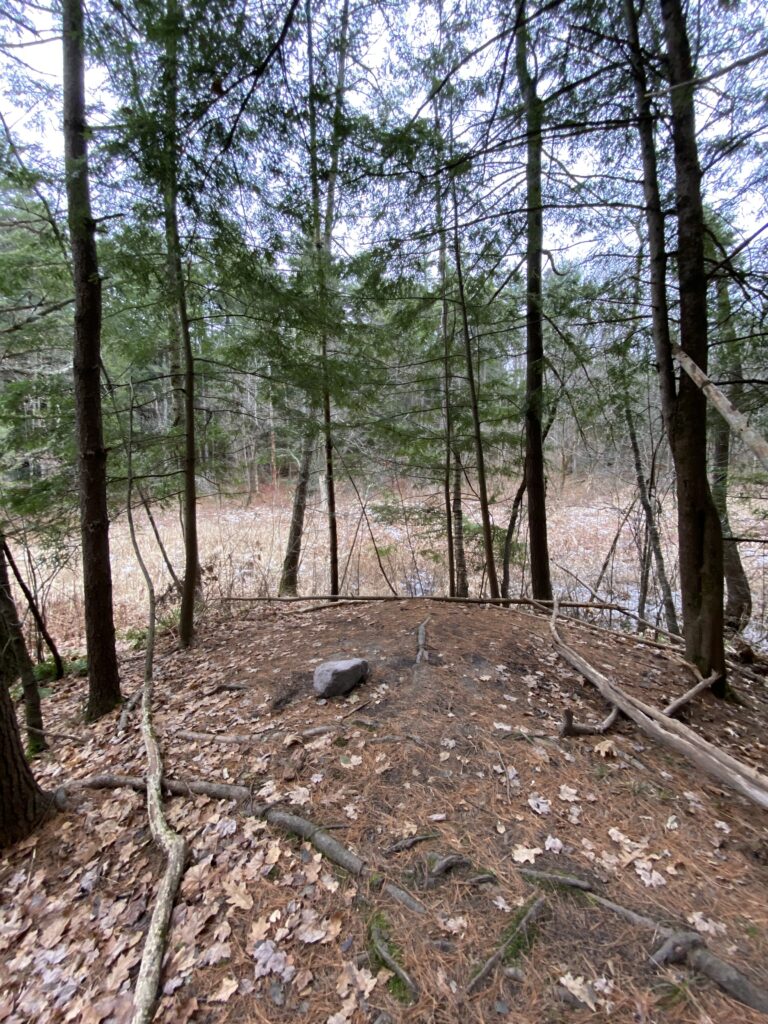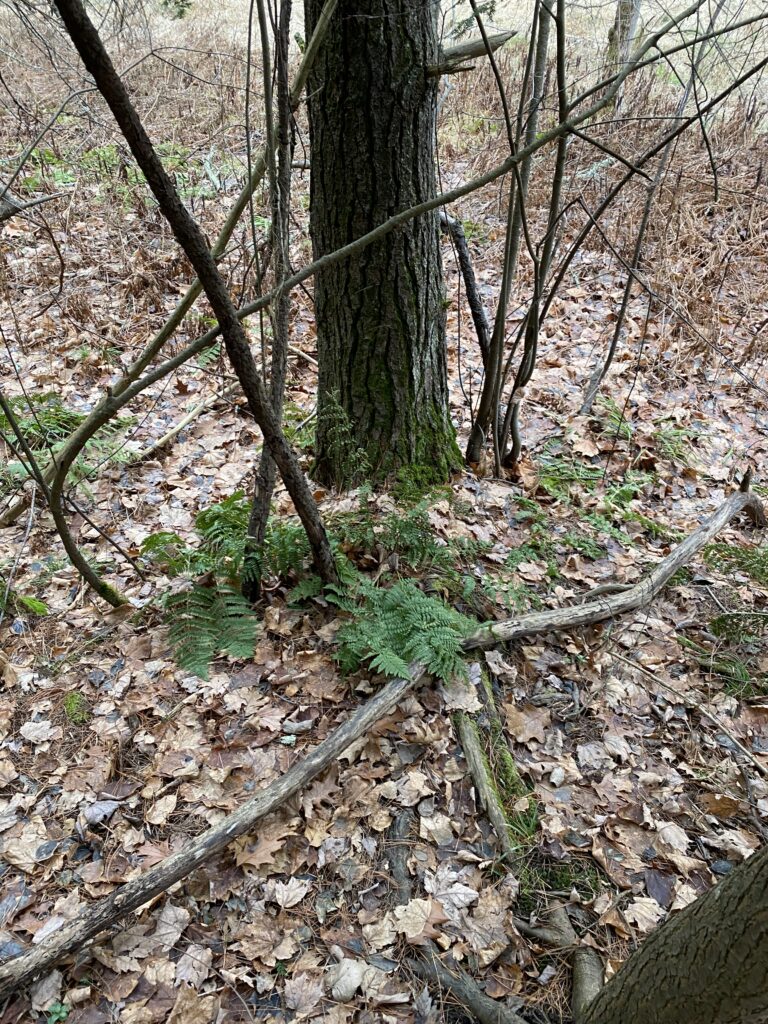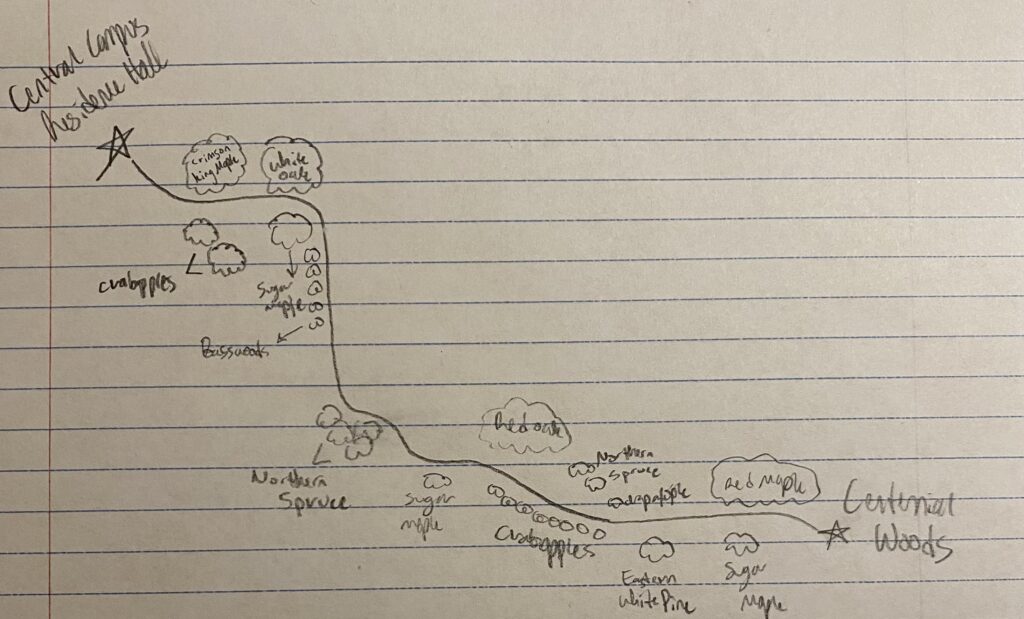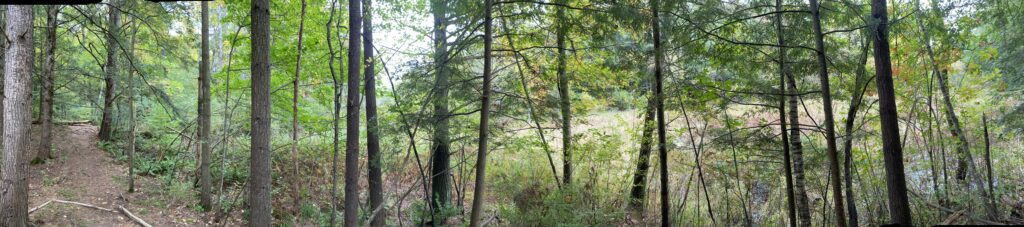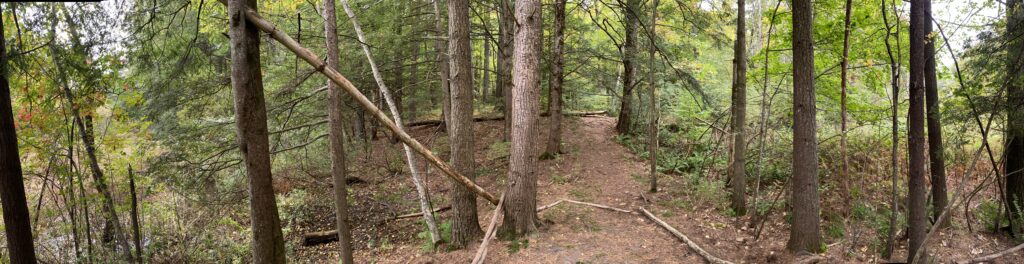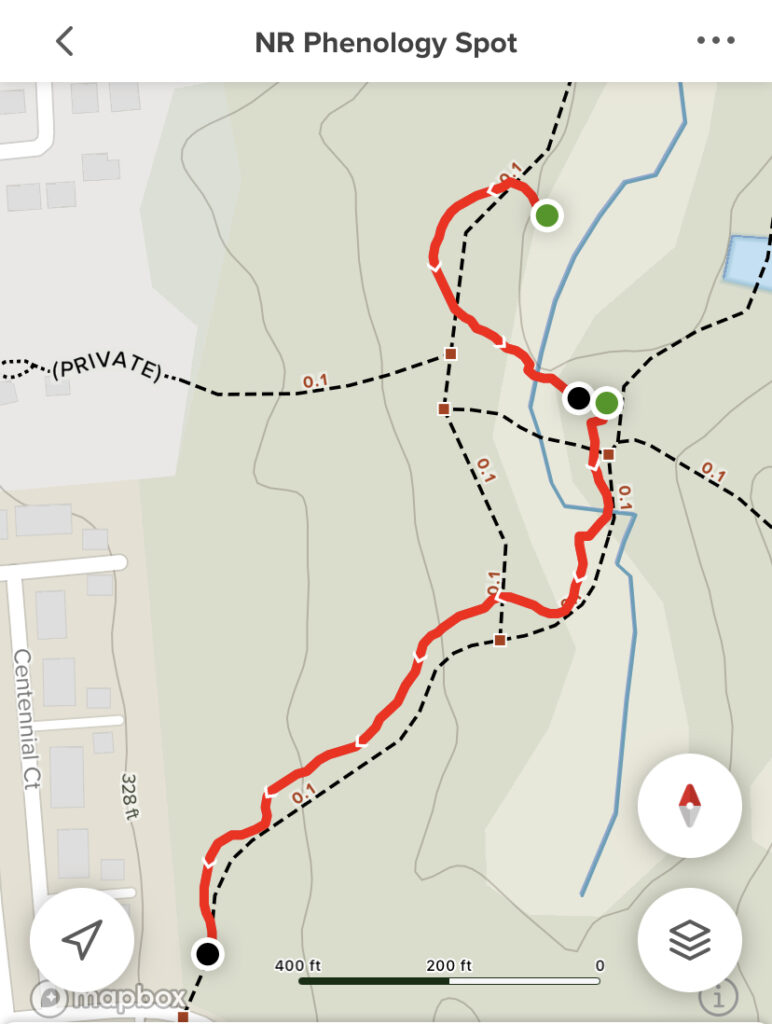
With summer knocking on Vermont’s door, my phenology site in Centennial Woods has been drastically changing since my last visit back in January: the snow is gone, the sun is out, and little green bundles-of-joy our starting to sprout out of the ground. While walking to my site, I had a somewhat bittersweet realization that this would be my last time visiting my spot for NR2 and the rest of this school year. Like always, I enjoyed the creaky floorboard crossways, journeying over the small brook on a log, and even saying hello to the squirrels that follow me on my walk; my sense of place has now followed me throughout the woods.
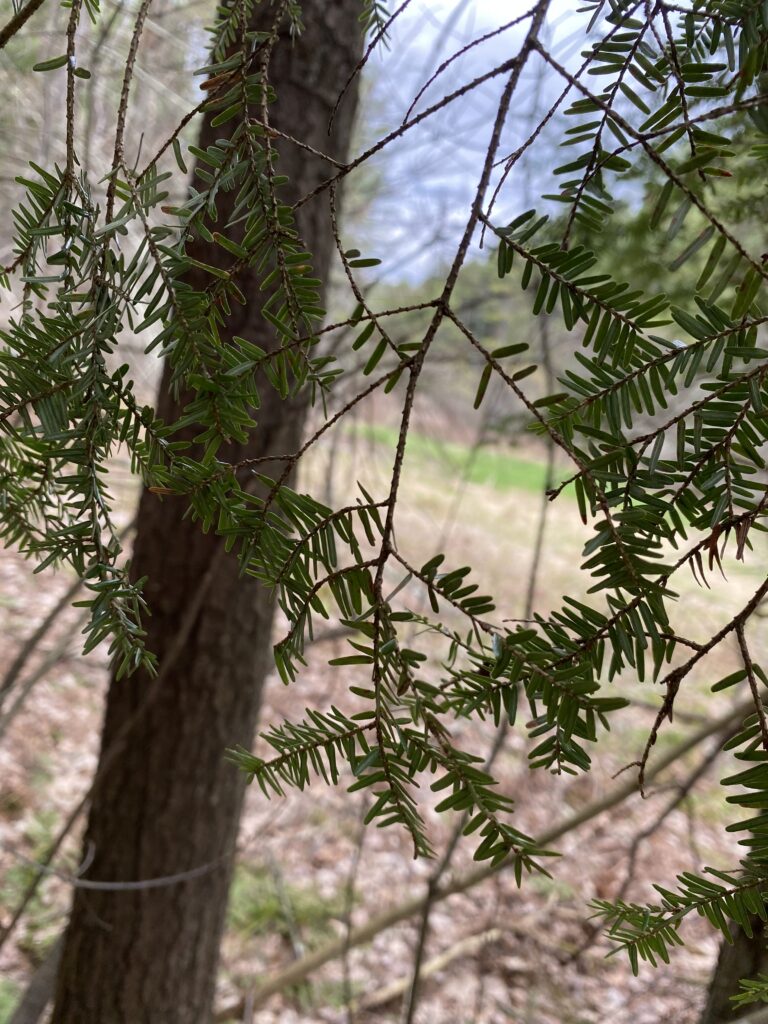
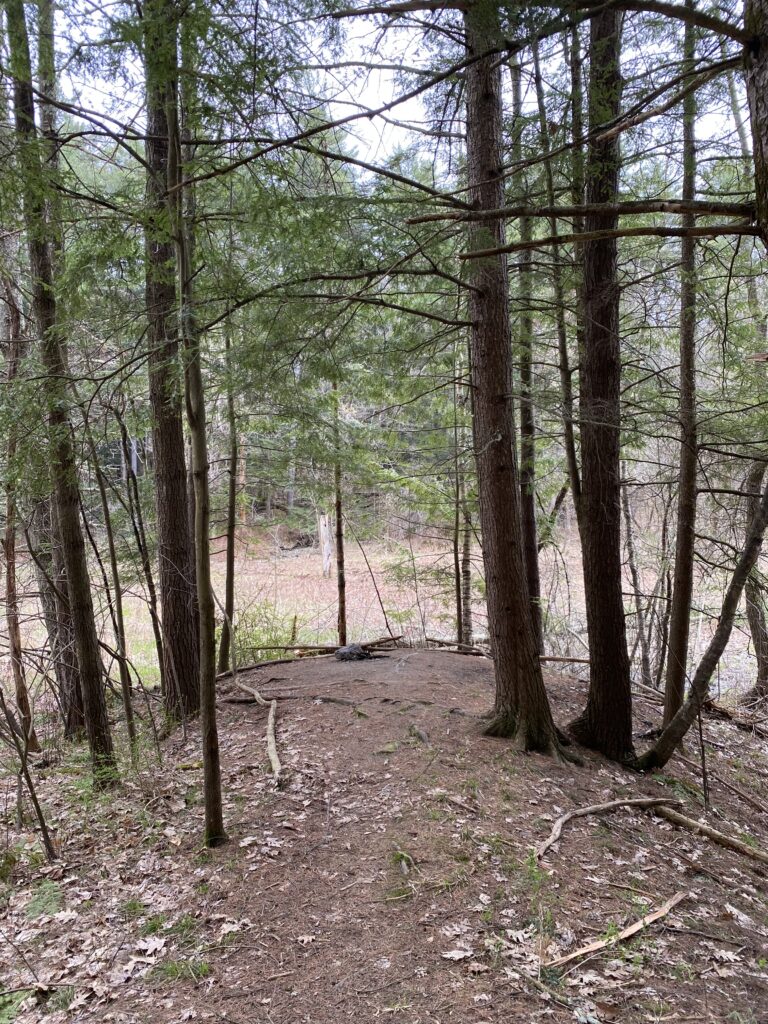
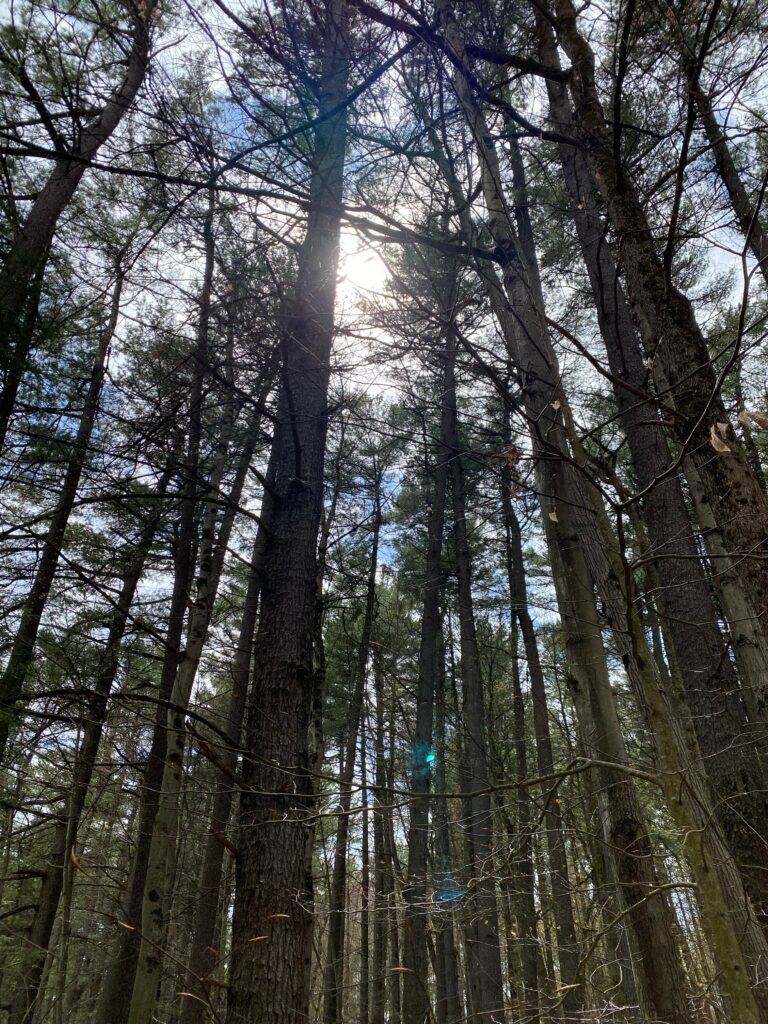
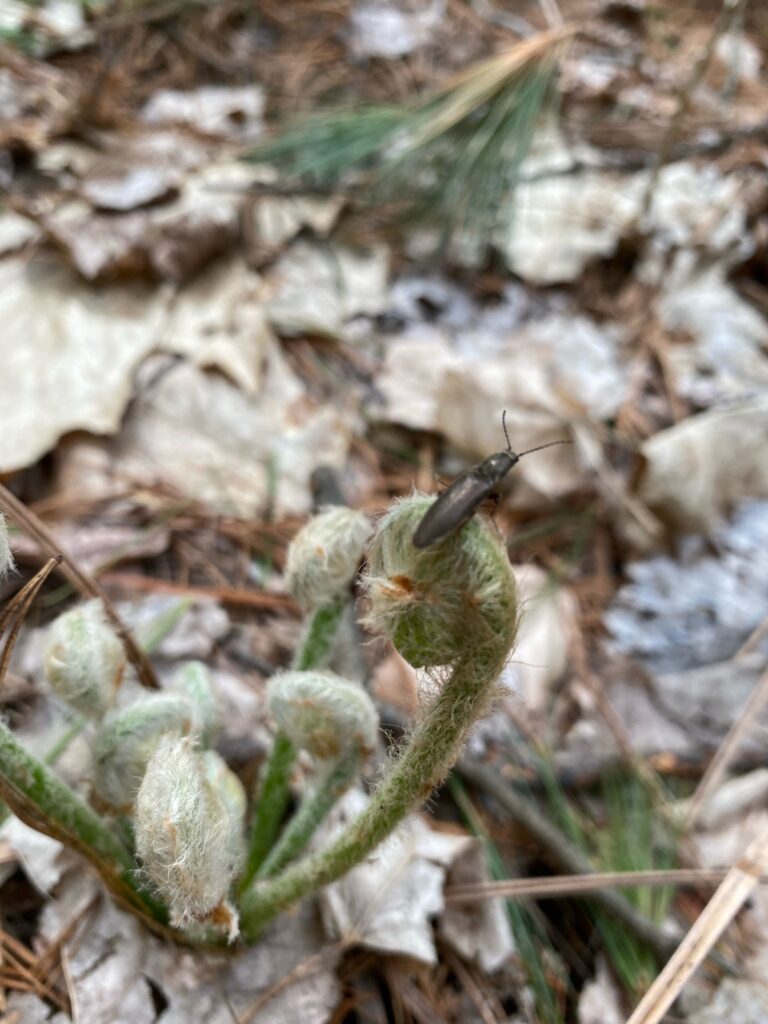
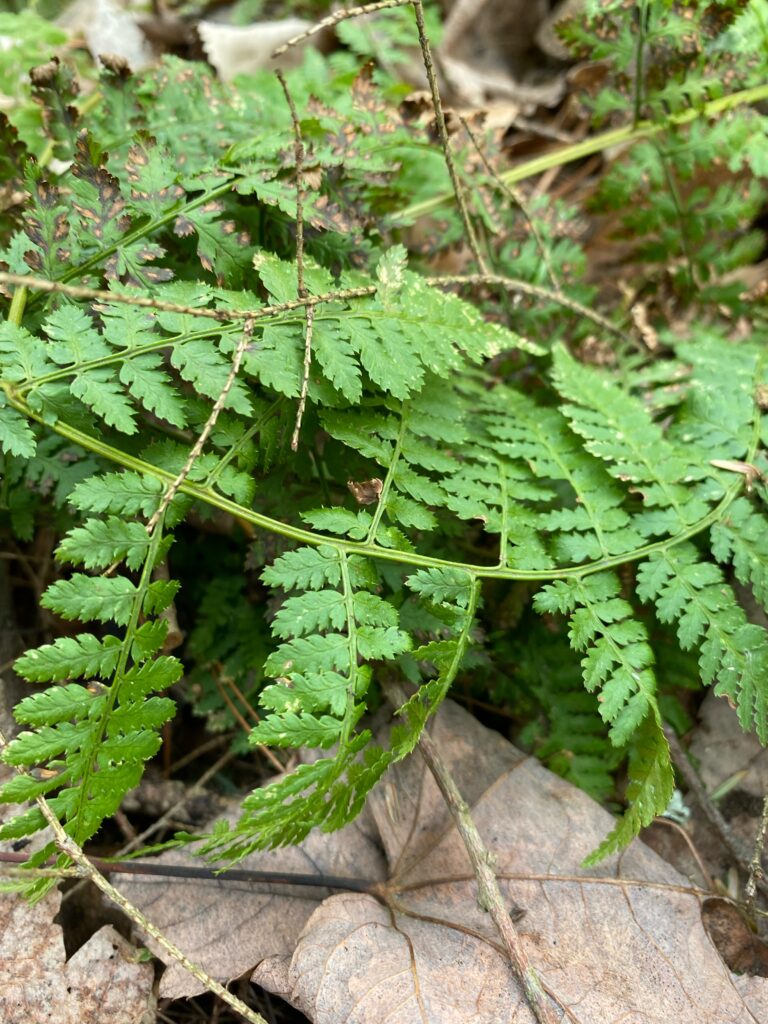
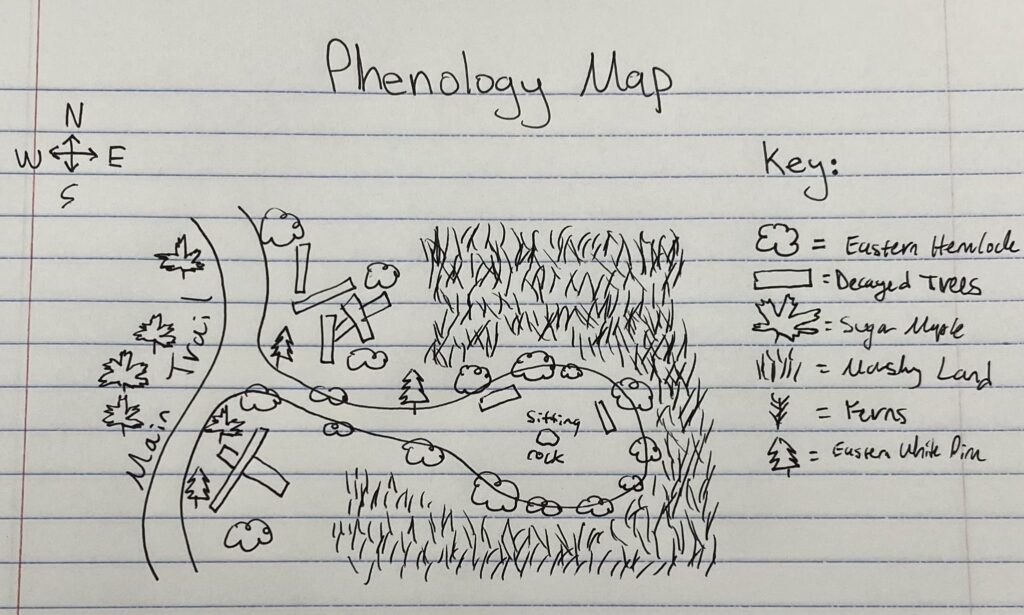
When arriving at my spot, I felt a sense of relief flow over me. One of the many beauties about my location is that it is deep within Centennial Woods, so whenever I go there I truly feel disconnected from the outside world. The hemlock grove was green as ever and the lady ferns in the understory were stretching their leaves toward the sky. One distinct change I noticed that I’ve never seen before was remnants of a campfire. I am not sure what the policy of having a fire in Centennial Woods is (I’m assuming frowned upon) but if allowed my spot would be the perfect place due to its circular shape and proximity to the marshy land below. Oddly enough, I also know of two UVM students who got married this past spring at my phenology spot too. These human interactions at my spot have played a grand role in the relationship between nature and culture as it serves for a place not only place-based learning but recreation as well. This intersection of culture and nature help further develop humans’ involvement in socio-ecological systems, which breaks down the barriers that nature and man are unequal when they truly are. When both ecosystems and humans thrive in unison, it creates a sustainable balance allowing humans to use an area, like my phonology site, as a place dedicated to recreation, education, or spirituality without implicating the nature of the environment.
Throughout my journey these past semesters visiting my site, I have grown quite fond of the time I have spent with it, ultimately allowing me to feel a part of my place. When I first came to the spot, I felt like an outsider who was disturbing the natural peace of the environment. Yet, with time and learning about place-based education, I learn the beauty behind coexisting with my phenology spot. After making this realization, I felt the forest greet me every time I returned, no matter how long we had been apart. It may sound odd to say, but I did grow a love for my spot. It felt very sentimental visiting it for the last time because it looked similar to how I first viewed it, making me notice the journey my spot and I took together. I hope my spot doesn’t miss me too much over summer break, and I look forward to visiting it once again when I return to campus.