Posts

Wonder Blog Mini-Project

Easy-read map of Falling Springs Run Park:
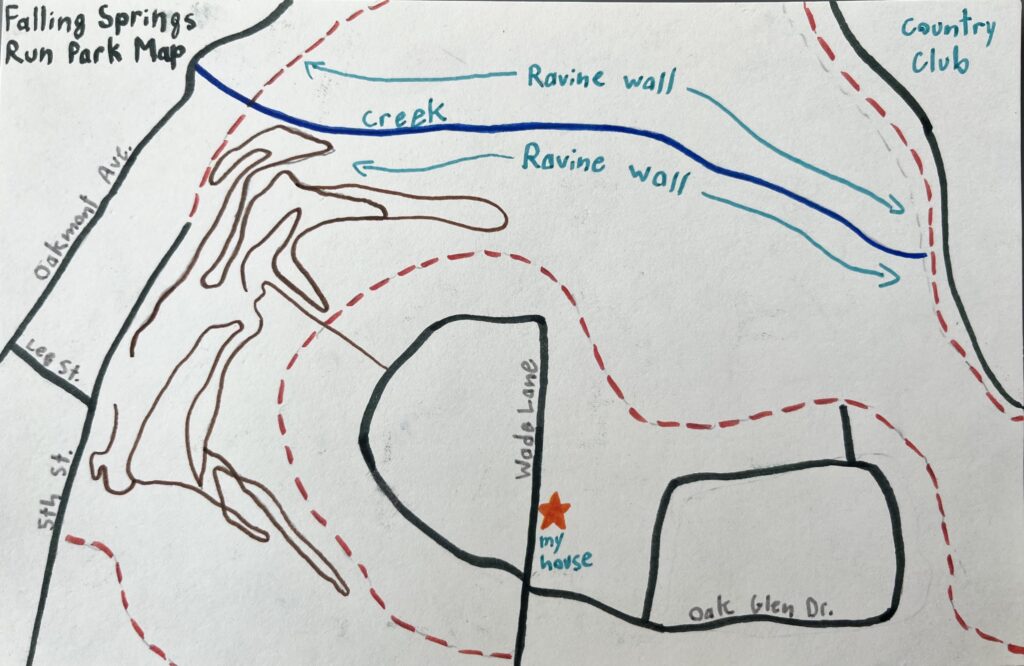
Key:

Black lines – road

Brown lines – bike paths

Red dotted line – boundary of woods

Star – my house

Blue line – creek

Description:

I realized, as I was describing things in my wonder blog posts and podcast, that I could not accurately describe the area which I was in. This led me to create a small detailed map of the woods surrounding my neighborhood. This way, the posts make more sense overall if referring to this image. I decided to walk the entirety of the trails, and I drew them out roughly as I went along. As you can see, it is not a very large area. It is completely surrounded by development. However, it has a very “middle of the woods” feel the whole way through, especially near the creek and ravine. I could not figure out how to accurately draw topography on this map, so I settled for showing where the ravine walls are. There is about a 200 foot elevation change from the top of the ravine to the creek down below. What really interested me when making this map was just how short the creek actually is, with designated start and stop points. I know that it ends in sort of a marshy area, but I am not sure what the source of the water really is. I had a lot of fun creating this mini-map of my neighborhood and the surrounding area. I think that the wonder blog assignments overall have greatly deepened my relationship to the area.
Wonder Blog Assignment #3

Part 1:

Wednesday, 7/05/23. 1:00 PM

Falling Springs Run park, Oakmont, PA 15139

Weather: It is incredibly hot and sunny today. The forest is muggy, & there is lots of mud from the past few days of rain.

Part 2:

When I arrived in the woods today, it was very hot and sticky. immediately I was swarmed with pesky bugs, such as mosquitoes and gnats. As I began walking down I could tell there has been more growth since I started coming in here. I was definitely walking through more brush than I remembered. Compared to when I used to play in this area as a kid, it is barely recognizable. Where the forest floor used to be all O soil horizon, many new plants and bushes have sprung up. There was not much new for me to see, no animals were scurrying about. In my search for photographs, I found many good contenders. Lots of natural features that I had not previously noticed, that I found quite interesting. at some points while I was trying to get the right shot, I had to deal with mosquitoes landing on my hands. I had to let them do their thing, as I needed to stay still for the pictures.

Part 3:

Q: What geologic events may have led to the creation of this specific ravine that runs through this forest?

A: The Grenville, Taconic, Acadian, and most recently the Appalachian Oregonys all had impacts on the state of Pennsylvania.

Part 4:

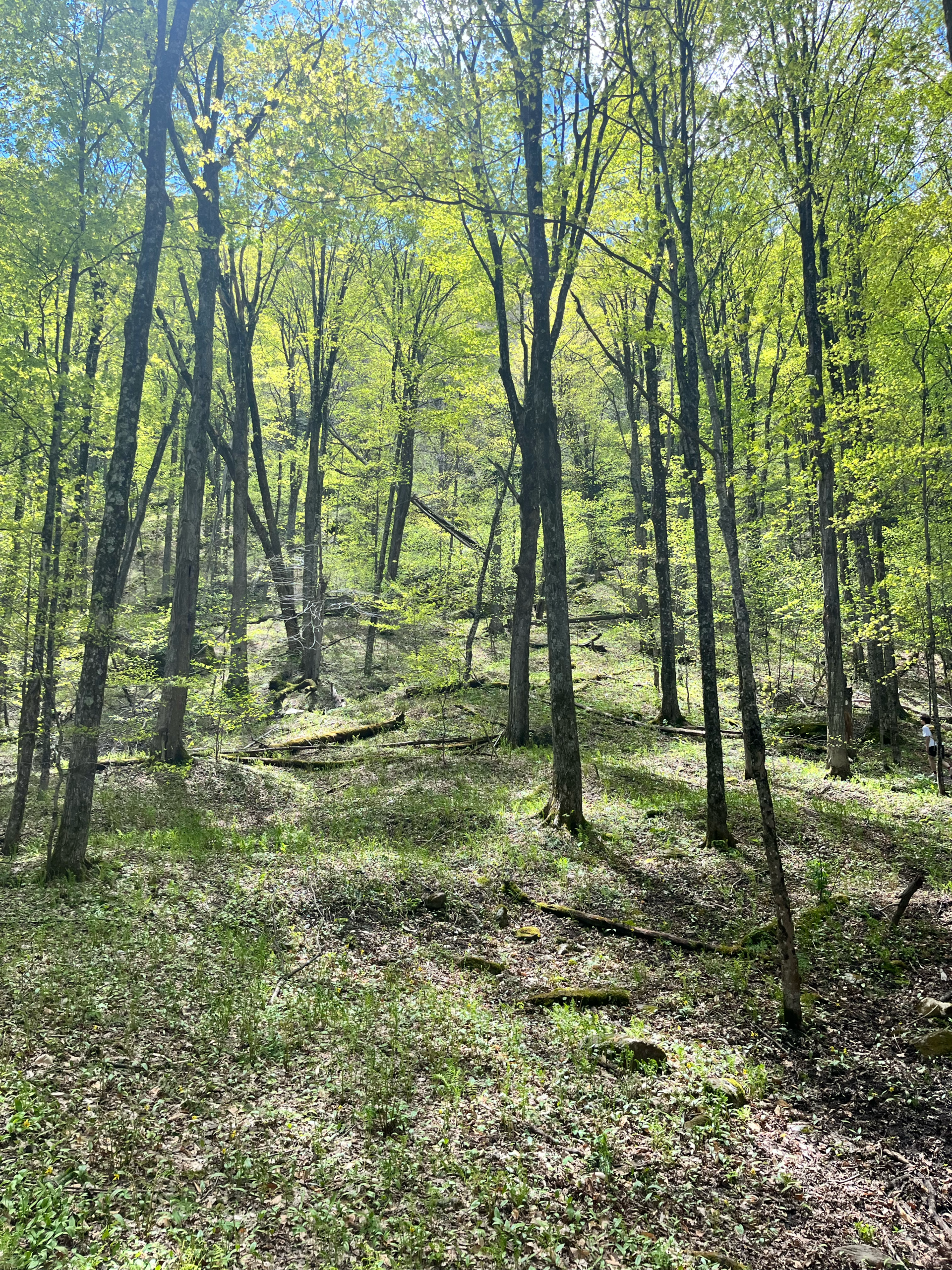
A lit up area in an otherwise shady forest – I chose this subject as when I was there, it naturally drew me in. This one small area of sun was very welcoming and gave spotlight to certain trees.
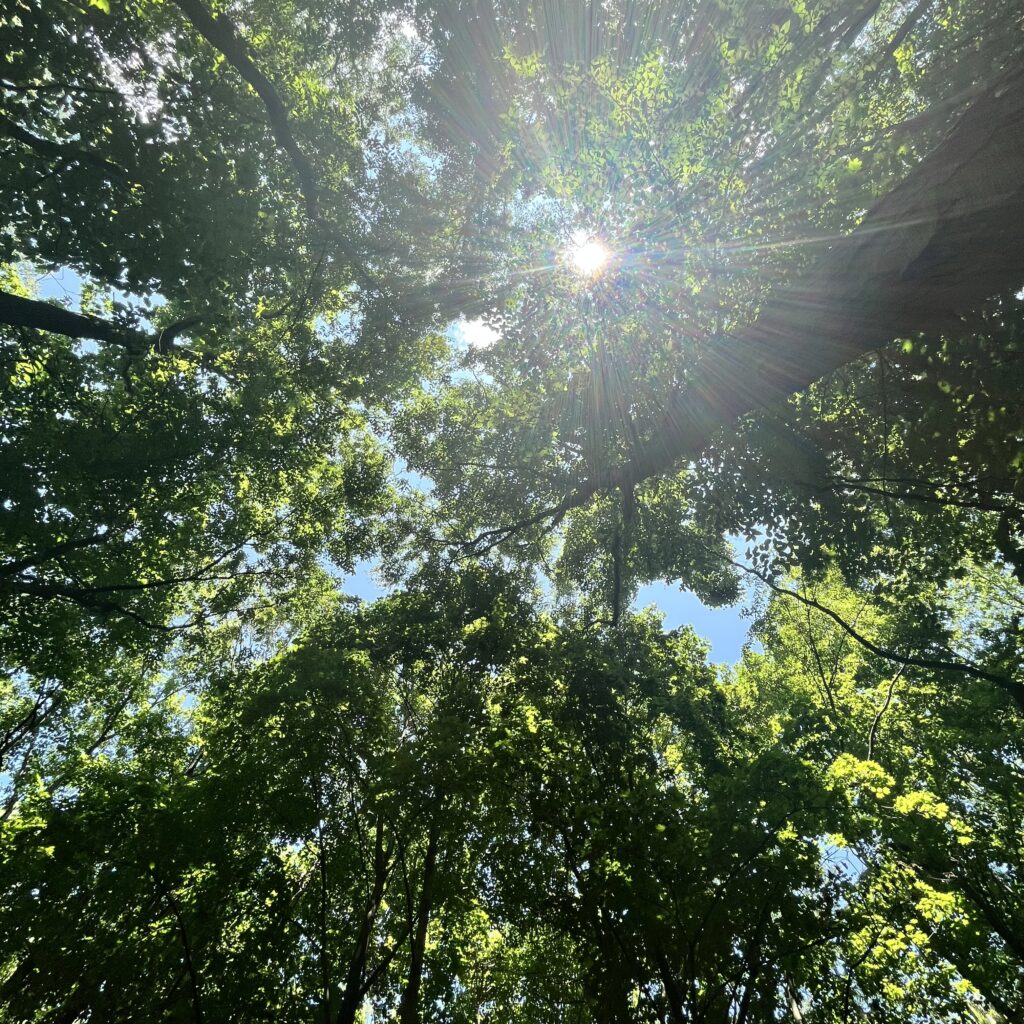
Light piercing through the tree canopy – I chose this subject as I felt it captured the vastness of this specific forest. Large trees looming overhead, that only get to stay because we have designated this area a park.
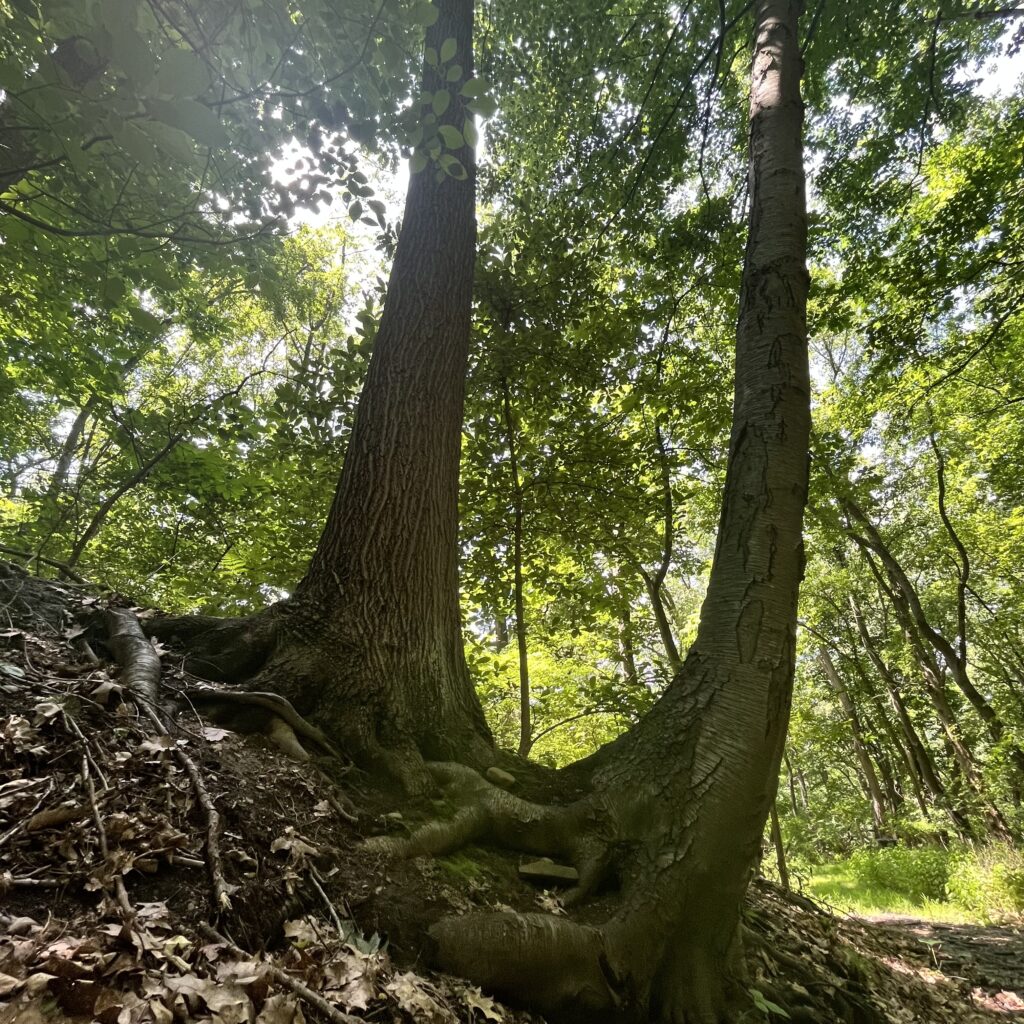
Two trees joined at the roots – I chose this subject because I felt these trees told a nice story. While they both get to grow and be independent of one another, there is still something that binds them at the core. They share food and space, learning to coexist.
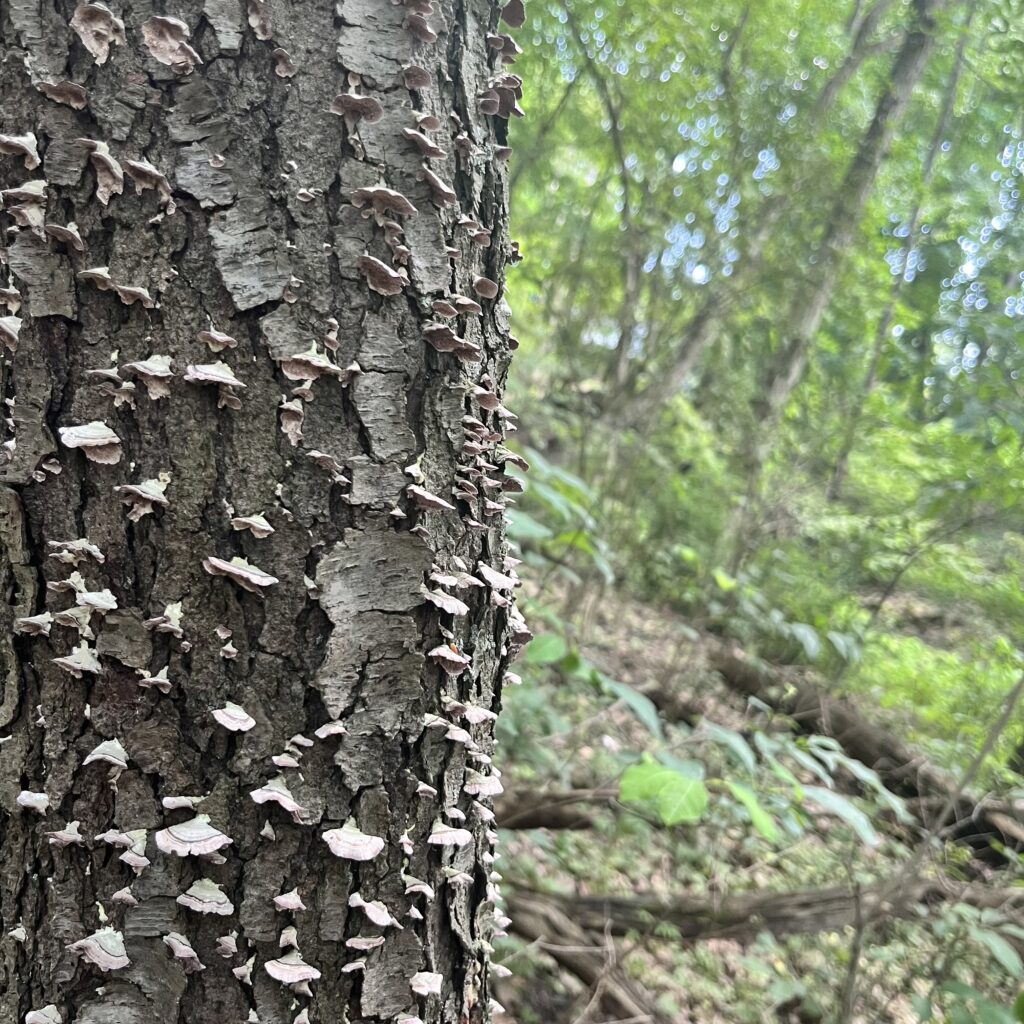
Fungi covered tree – I chose this subject because I was impressed by how this fungi has fully taken over the tree, but not other trees in the area. I framed it so that you could see the depth of the forest behind it.
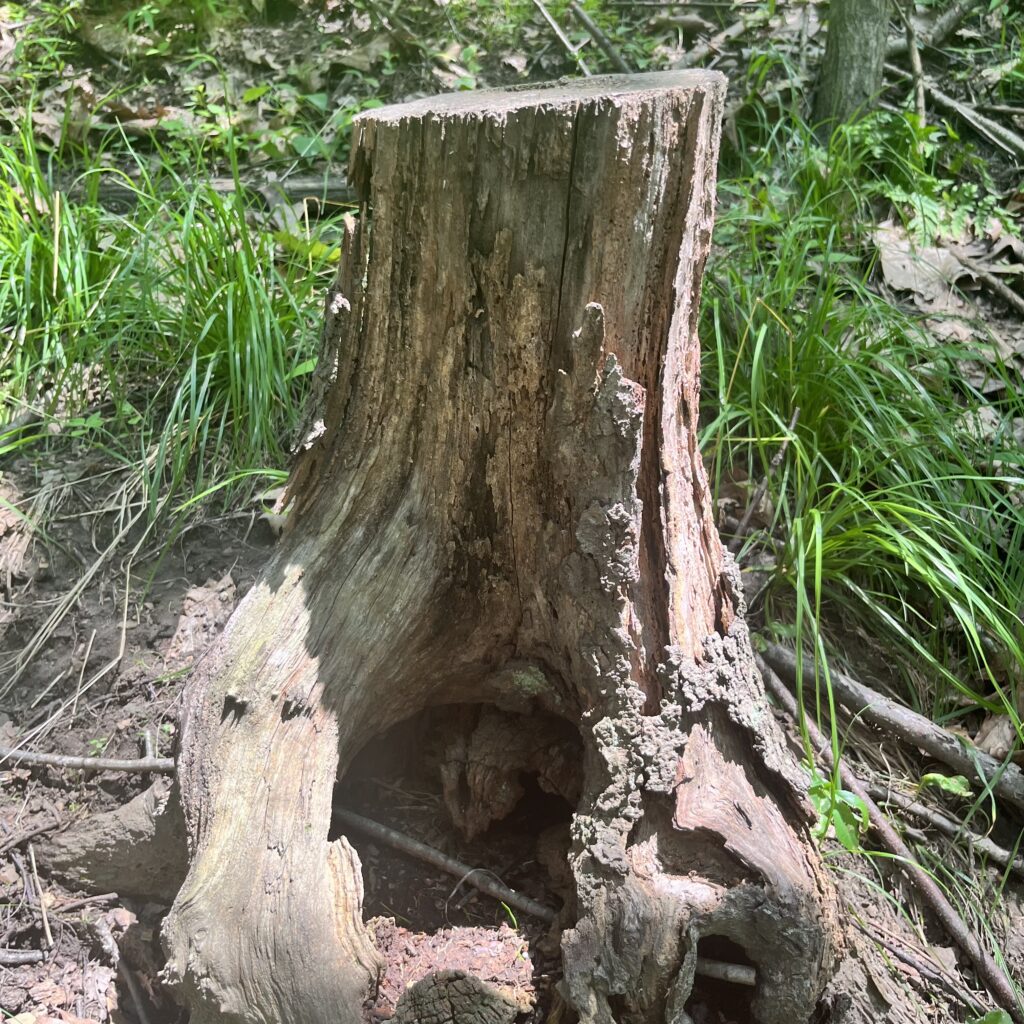
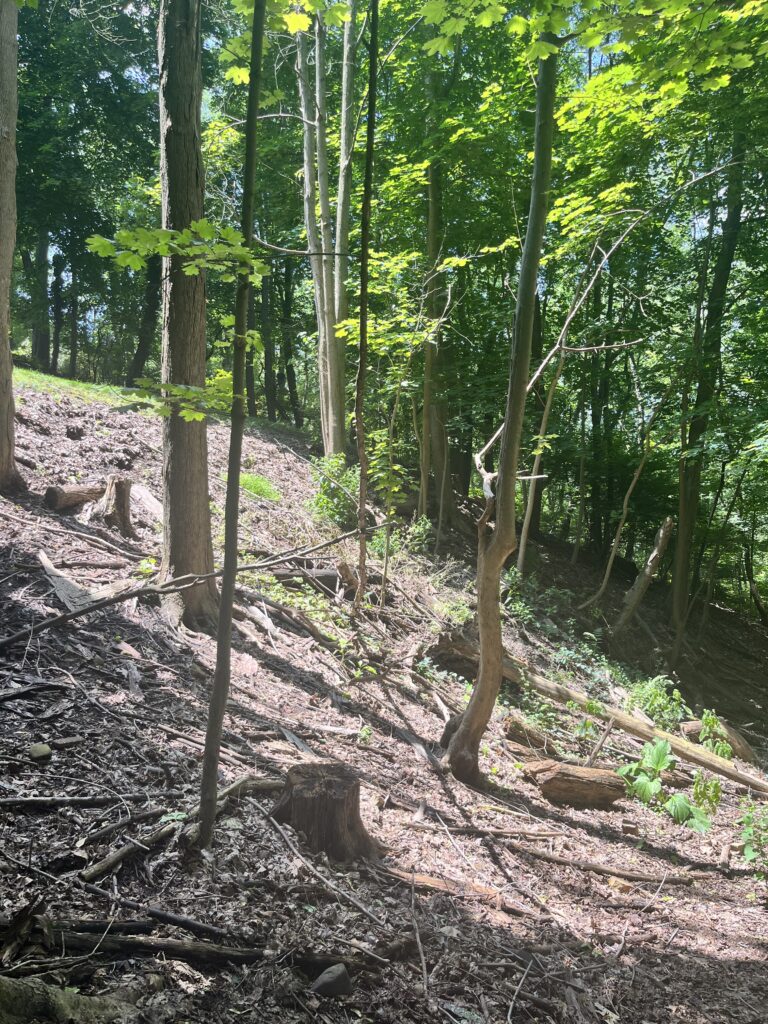
Tree stump – I chose this subject because I like what it represents. Even though the trees life may be over and it has been chopped down, it can still provide. I could tell many little creatures take refuge in the deep hole at the base of this stump.

Part 5:

I enjoyed the experience of taking photos of my site. It made me search for new perspectives of the same area I’ve seen for years. It made me realize what parts have been touched by man, and what parts have not. I enjoyed it more than the sketching experience. With sketching, I felt I was not accurately portraying what I saw in front of me. But with photography, it was about finding the best angle for each given area. I took many and went through to choose the best ones at the end. Overall, this intro to wildlife photography helped me to realize how detailed the natural world is, and that if you want someone to see something in the same way you do in the moment, lighting and framing are key.

Wonder Blog Assignment #2

Part 1:

Wednesday, 6/27/23, 5:00 PM

Falling Springs Run Park, Oakmont, PA, 15139

Weather: The weather is not great today, not a day I want to be outside. the Air quality Index is at 172, making it extremely smokey everywhere outside. Probably not safe for me to be out here.

Part 2:

When I got to the site today, right away my focus was on this large log that has fallen over many years ago. I went to turn it over, to see what plants and insects might be living underneath. What I found was extremely interesting, an entire micro ecosystem. There were two different species of fungi that I could see, although I am not sure what either of them were. One was an orange color and seemed to have vein-like roots that ran all over the underside of the log. The other was a more traditional umbrella mushroom, with an off-white color. There was also a myriad of insects under this log. This included pill bugs, worms, and two different sizes of ant.

Part 3:

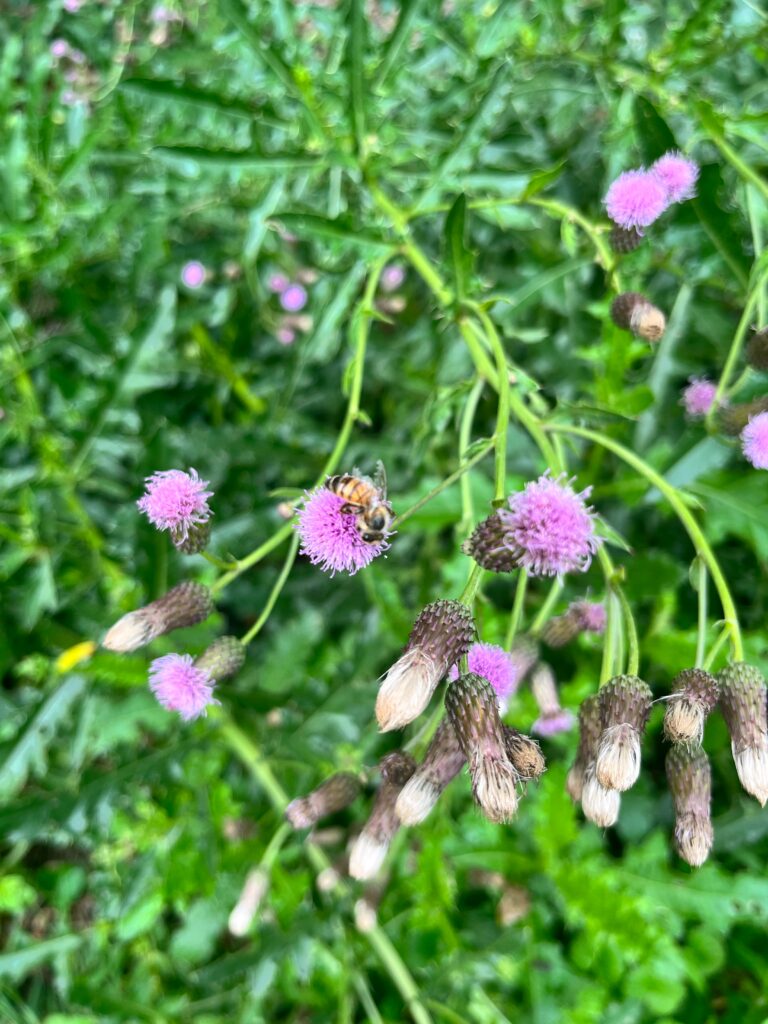
While in the woods, I was most interested to find a common species, the Honey Bee (Anthophila). I was interested to find this species because I had not before known bees to inhabit this area of the woods. I only saw the bee when went up close to examine a flower, and then saw it pollinating. It was an easy process to identify it, as it was obviously a honey bee, and not a bumble bee or wasp. A fascinating fact I learned about honey bees is that each one will only produce up to a 1/12 teaspoon of honey in their life. This shows how it really is up to the entire hive in order to make a substantial amount of honey.

Honey Bee pollinating a small purple flower

Part 4: Sketches

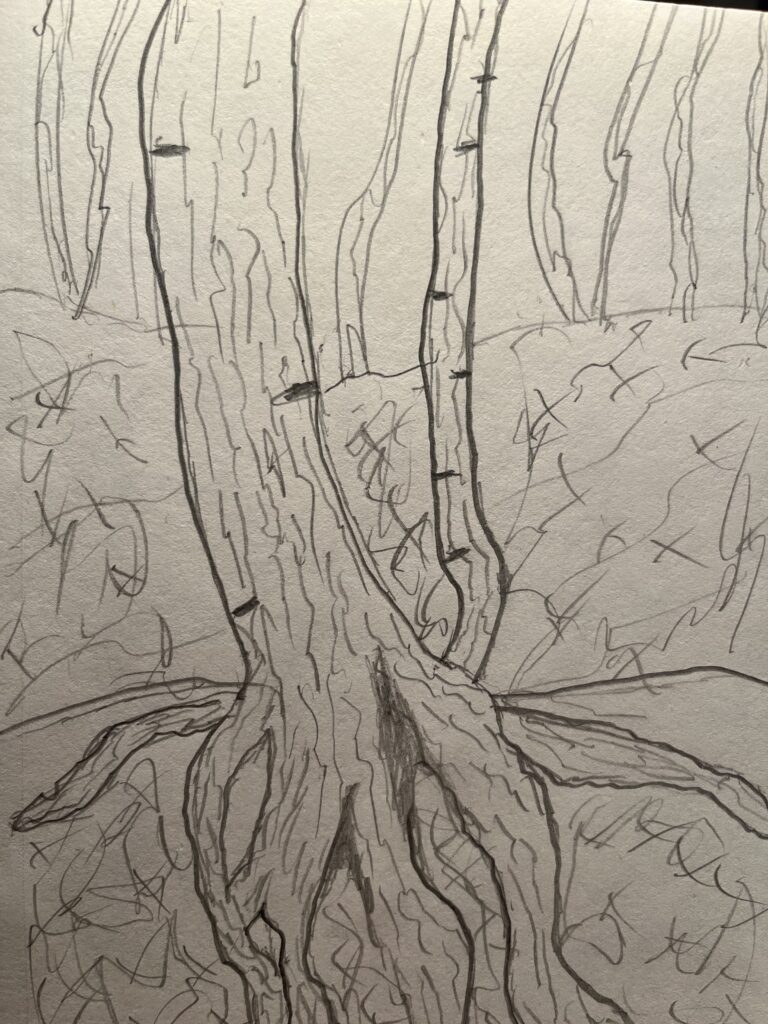
Tree with second tree growing out of the side, I sketched this because the natural growth greatly interested me.
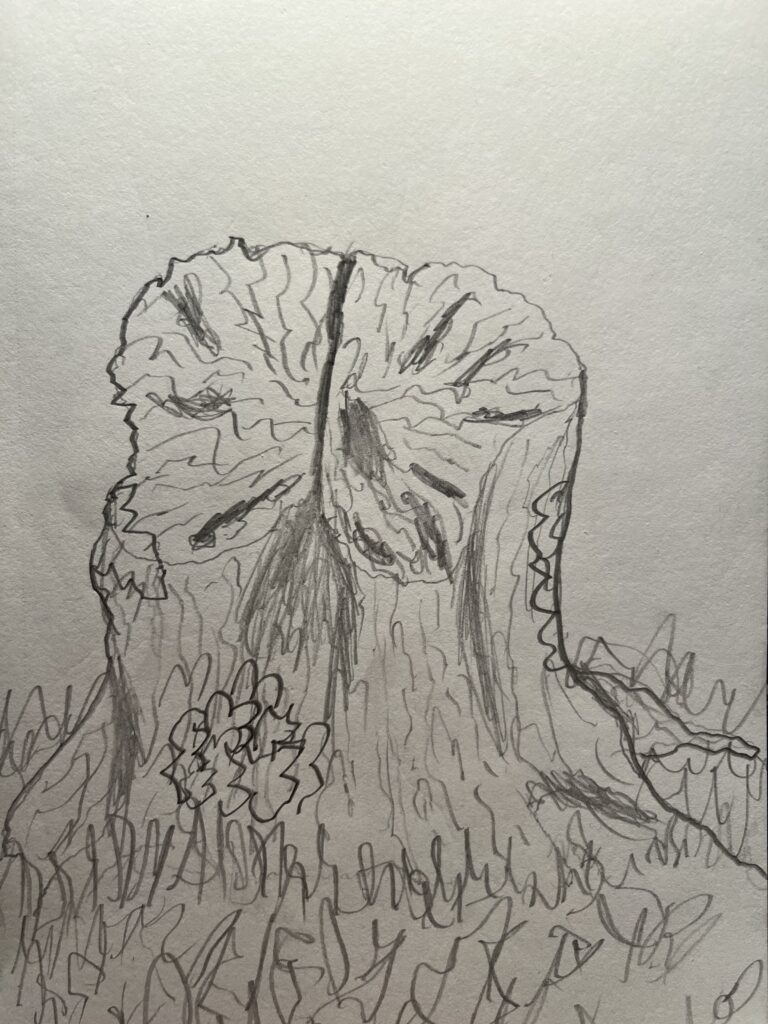
Stump with lichen growing on the side of it, I chose to sketch this because I was unsure why this one tree was chopped down in an otherwise untouched forest.
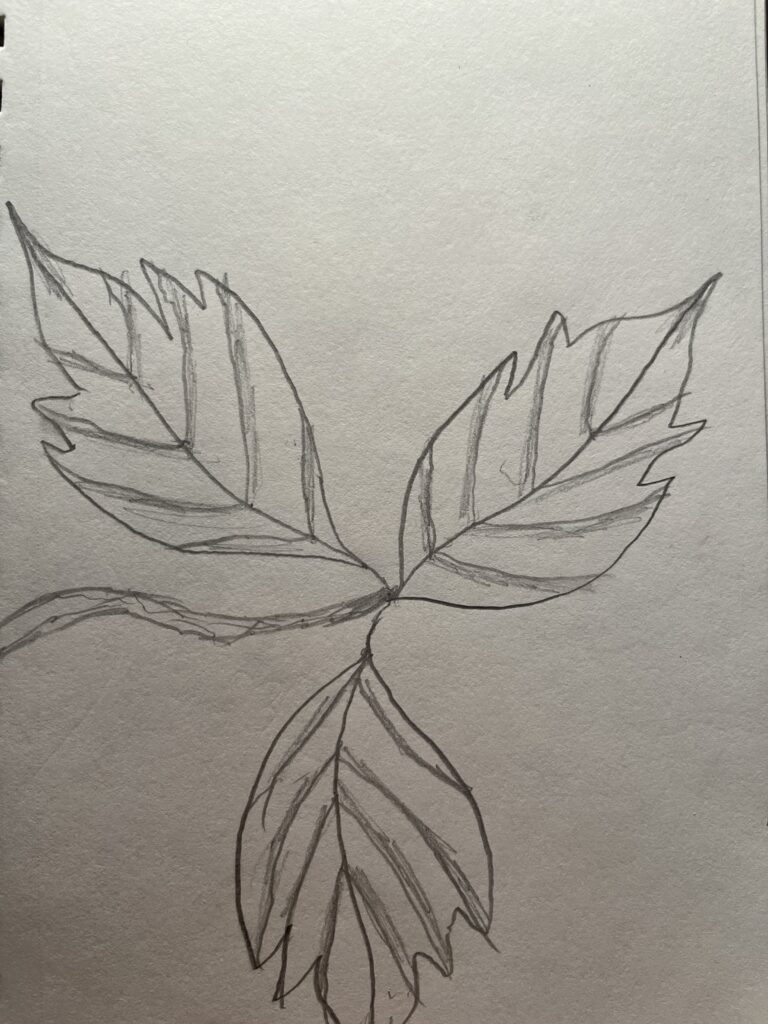
Cluster of leaves, I sketched this because the shape of the leaf reminded me of a flame.
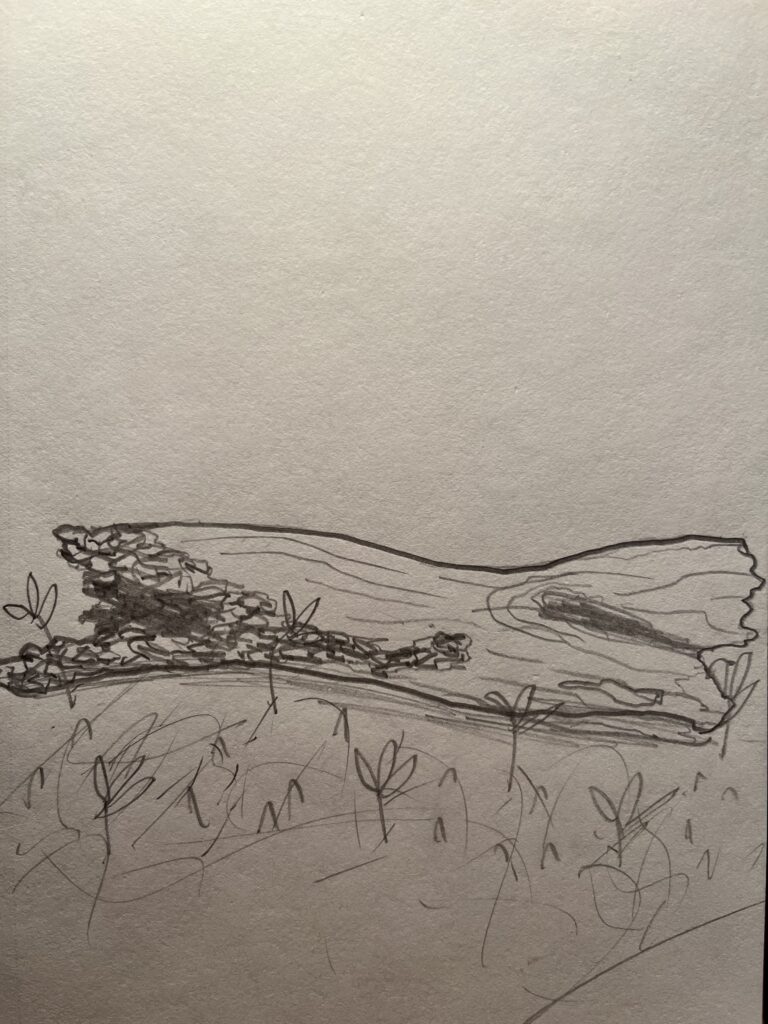
A fallen log, I chose to sketch this because this was the log beneath which I found a micro ecosystem.

Part 5: Conclusion

It was interesting adding sketching to my time spent in nature. I will say that it probably was not the best day for it. It was humid the whole time, and many gnats were surrounding me. Also, I wanted to spend as little time outdoors as possible due to how bad the air quality was. However, it did feel calming to be sketching in the woods. it was not too challenging, I just had to stay in the same place while sketching an object as to not lose the view of it I was drawing. I would not say it affected my attention, if anything it made me pay more attention to the specific things I was looking at. Next time I go, I would like to follow up with the ecosystem I found under the log, and see how everything is doing down there.

Wonder Blog Assignment #1

Part 1:

Thursday, 6/22/23, 4:00 PM

Falling Springs Run Park, Oakmont, PA, 15139

Weather: The weather is fair, cool without being cold. Partly cloudy, as if it could rain later tonight.

Part 2:

The area I have chosen is the woods that directly connects to my neighborhood. It is only a 2 minute walk from my front door. I have walked through and played in these woods my entire life, so I am very familiar with the area. It smells earthy, earthier then most areas in town. I can hear the birds chirping in the branches above me, and the sounds of the leaves crunching under my feet. the O horizon soil level is very prominent in these woods, with inches of decomposing plant matter visible. There are many vines hanging off of tall branches in this area, and when I was younger we would swing on those vines like Tarzan. I can also see the remnants of a fort we built in this area, probably a decade ago at this point. further down in the woods there is a grassier area with a strangely placed picnic bench. There are also many trails through these woods, that have always been fun to explore. Further in, there is a ravine with a creek running through the middle of it. If I was to follow the creek the whole way up, I would eventually reach a golf course.

Part 3:

Part 4:

  1. How did the vines form like that?
  2. What geologic event created this ravine?
  3. If the creek ends at a golf course, what is the true source of the water?
  4. I wonder how thick each soil horizon is in this area?
  5. I wonder what minerals exist in this soil?
  6. What animals all exist in these woods?
  7. How many types of trees are in these woods?
  8. When I was younger there was no development in these woods, when did they come through and make the trails?
  9. What birds am I hearing above me?
  10. How long will this little worm live?
  11. How long has his family been in this area?
  12. What caused this one area to be more grassy than soil?
  13. How long will it take this fallen tree to fully decompose?
  14. If I go back to the same spot, will the deer skeleton from years ago still be there?
  15. What life forms can exist in a small, shallow creek like this?
  16. How much moisture is contained in this soil?
  17. Why are some areas so much muddier than others?
  18. Do the trails they put in here at all negatively affect the forest life?
  19. If I stay here long enough, would I see a brown bear?
  20. Could those vines still support me like they did when I was 8?
  21. How many different people have sat exactly where I am sitting? Has anyone?
  22. How many squirrels inhabit these woods?
  23. Is there a way to tell how the slope of each side of this ravine affects the vegetation that grows on it?
  24. Which tree here is the oldest?
  25. How long does it take for a layer of leaves to decompose?

Part 5:

“I wonder what minerals exist in this soil?”

There have been many studies of the soil in the Allegheny Plateau since 1967. Based on these studies, the main minerals found are Calcium, Magnesium, and Aluminum. However, between 1967 and 1997, Ca & Mg concentrations experienced significant depletion. However, Aluminum increased in these areas at all depths. The loss of Ca and Mg was more significant than what would come from biomass accumulation, suggesting leeching of nutrients off-site.

Part 6:

Overall, my first journaling experience in these woods I know so well was a very pleasant one. One thing that was on my mind was the elevation change throughout these woods. There are so many high points and steep slopes down, much more random than it seems in the rest of my town. I want to try to learn about why this area has such a difference in elevation change, and if maybe that is why it was never developed like the rest of my small town.

Skip to toolbar