Posts

Thursday, May 9

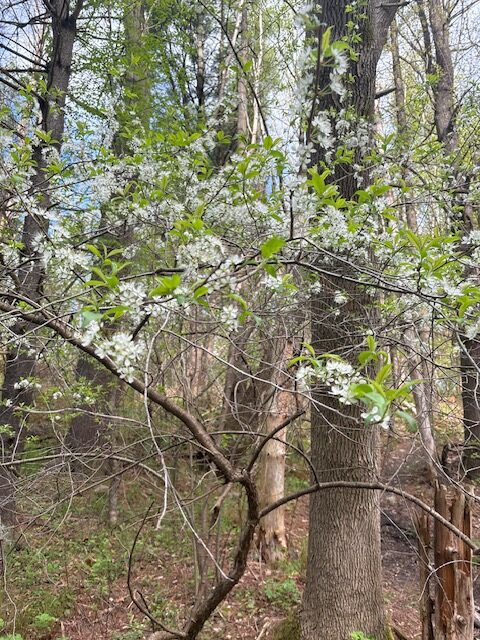
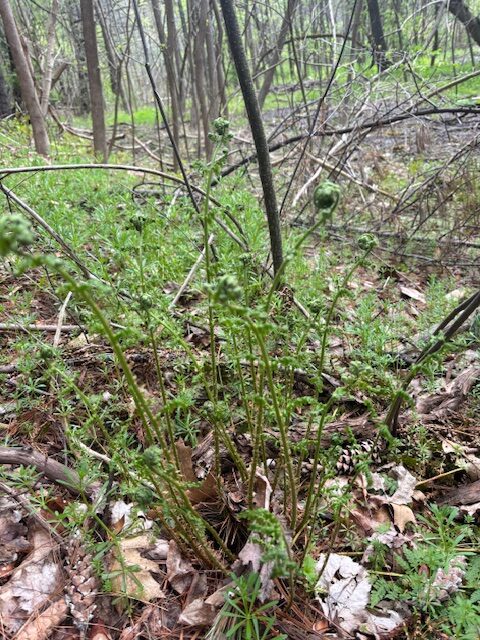
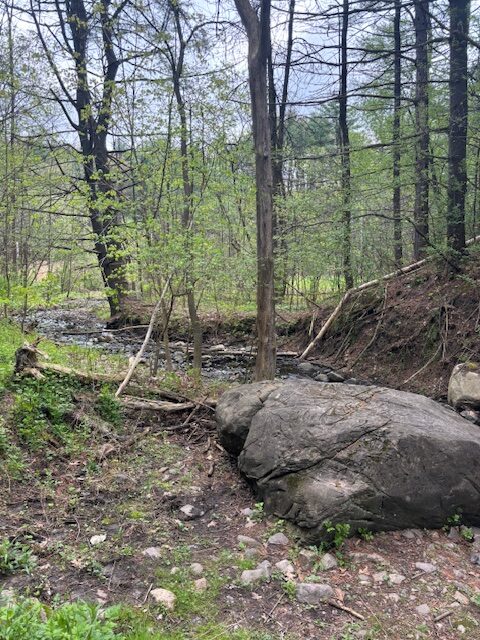
Today I set out to visit my little spot in Centennial Woods for the last time this semester. I have become quite attached to that place, and it was emotional being there as the year comes to a close. My site has undergone significant phenological changes over the course of my time there. Now at my site, there were two American plums in bloom, fiddleheads dotting the trail, scattered dandelions and wildflowers and a lot of new green growth. Spring is fully underway. This flourishing of biodiverse life comes after a dormant winter season. At my site, the most major landmarks are a boulder that I have made into my sitting and sketching spot and the creek that snakes along its edge. There are some notable young sugar maples and older conifers lining my site. Nature and culture intertwine in a beautiful way in Centennial. The trails hold the knowledge of the many footsteps of the people passing through. It is a reminder of Vermont’s natural history, and proof that people and nature can coexist, and more, be apart of each other. There is an inherent connection between humans and the earth. I understand that so much more now. In the past, I probably would have thought of myself as separate from my place. Yet walking there today, I felt like I belonged in that place. I do not have to change the landscape to be apart of it. Having passed hours there, I now feel like a piece of me is in that place. I am grateful for what it has given me.
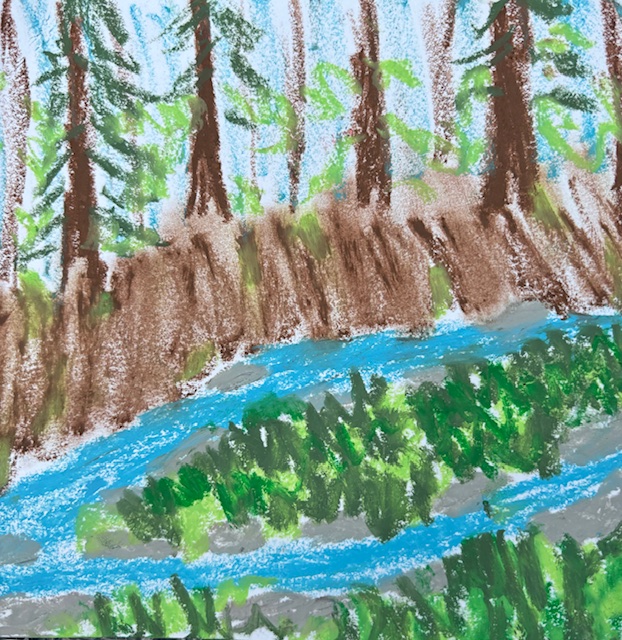
My fifteen minute sketch of my site using oil pastels.
Monday, April 29

Today I set out to document some of the plant and wildlife species I encountered surrounding my dorm at University Heights.

  • What areas of Greater Burlington did you explore during this four-day urban BioBlitz?

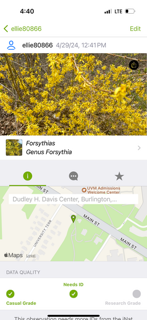
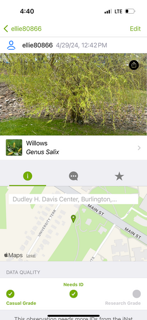
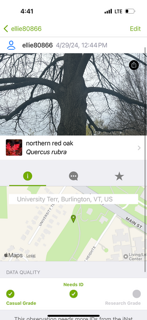
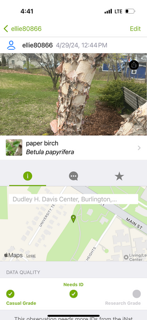
I explored the area surrounding my dorm, specifically documenting some plant species near the entrance to the tunnel to the Davis Center.

  • How was your experience using iNaturalist?

I found iNaturalist to be user friendly. I really enjoyed being able to use it in the area surrounding my dorm because it allowed me to notice and appreciate some of the plant species I did not know were present in my proximity.

  • How many species did you encounter?

I documented five plant species. I noticed a forsythias, some species of willow that I was unable to identify specifically, a northern red oak, a paper birch, and common box.

  • What did you find interesting about reports coming in from other cities participating globally?

I found it really interesting to look at the species that exist in other cities and how much they differ in different regions and to be able to appreciate the biodiversity that is present on this planet. I looked at a candlenut tree sent in from the University of Hawaii at Manoa, which was my second choice for college, a moss sprintale from Magdalen College in England, and a European starling from Italy. It made me feel apart of a larger community and relates to the interconnectedness I have been learning about and feeling a lot of gratitude towards this semester.

Semester 2 Entry 3: April 9, 2024

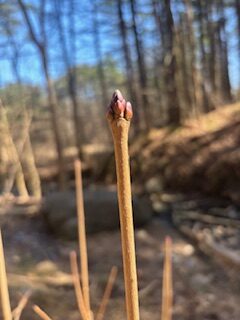
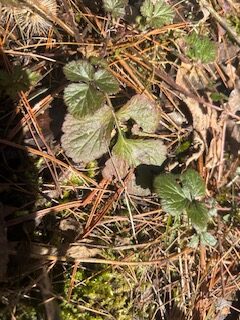
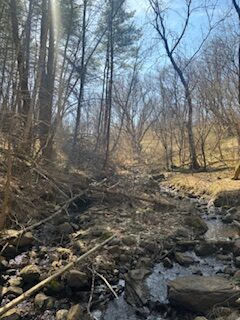
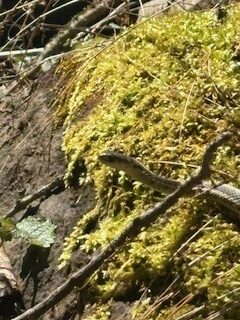
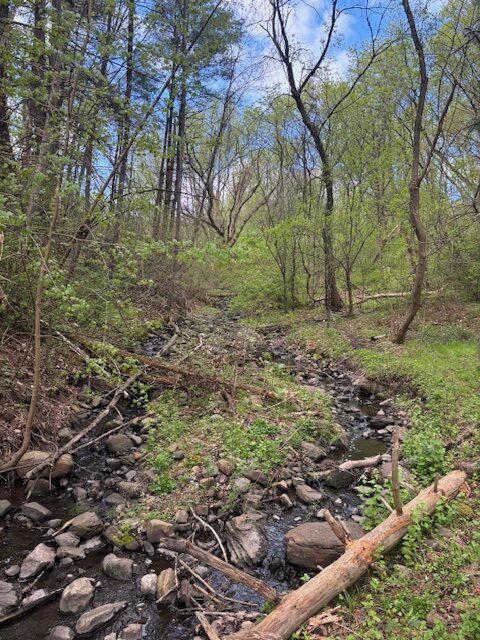
I set out for my March 25 entry a couple weeks late, and was able to witness a lot of new spring growth and activity at my site. There were a few plants beginning to sprout, the first sign of green other than some wilted ostrich ferns that remained through the winter. I identified a plant as being in the avens tribe using iNaturalist, and notice some of the trees at my site were beginning to bud. The buds were tight and not open yet, and more obvious on the younger trees. I documented the buds of a maple tree. This semester I have been learning about different ways of knowing and have decided to try to incorporate a new one into my understanding of my phenology site. I practiced mindfulness on the boulder at my site for about ten minutes today, which made me feel connected with the activity happening there. I did not notice any tracks in the mud by the water, but I observed a significant increase to the bird activity at my site since the winter. I watched a few crows fly overhead and immersed myself in the bird song while I practiced mindfulness. I want to learn some of the common bird calls. By spending time in stillness at my site, I noticed a lot more. I saw a fish flitting by in the water that was about two inches and length. I noted how fast it was able to move through the water and how reactive it was to external stimuli while navigating the creek. I also encountered a garter snake and was able to get some pictures which was an exciting observation. I could feel the renewal of rich plant and animal activity at my site with the incoming of spring. I am excited to see how it changes when the weather gets warmer.

maple bud

new plant growth from the avens tribe

view of my site as seasons change

my garter snake friend!

Semester 2 Entry 2: February 19, 2024

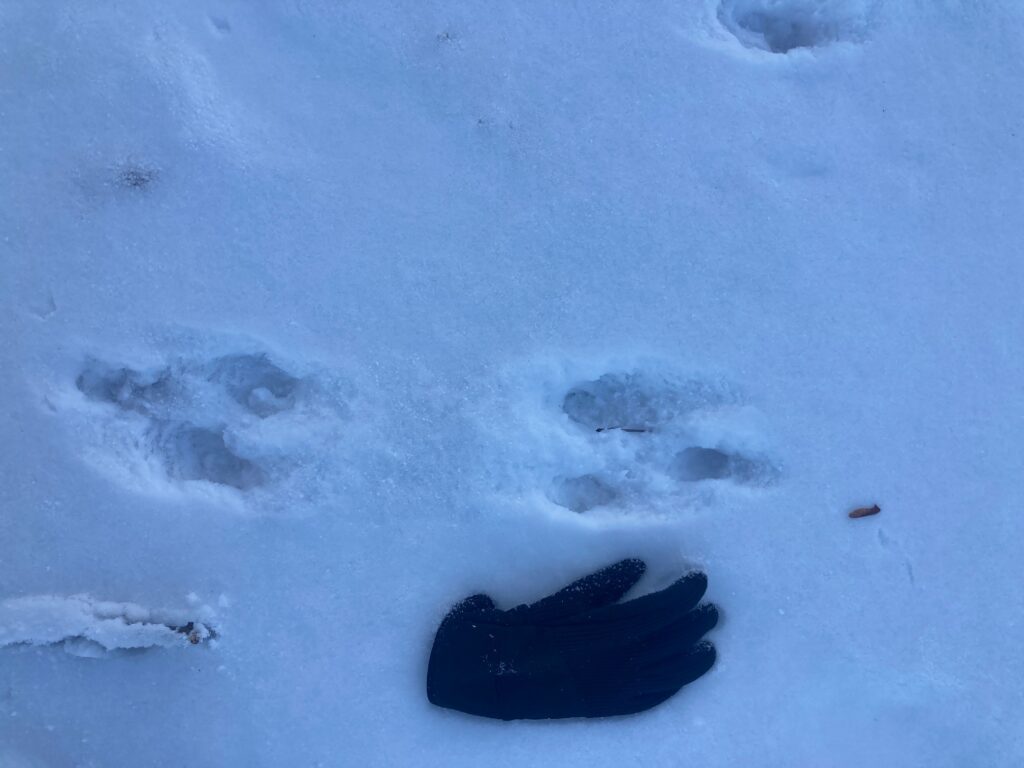
Today I set out to a cropping of trees near my dorm building, University Heights North. I encountered a set of small prints where the hind legs landed before the front legs, which made me narrow it down to a galloper. I used the context of pattern to observe the tracks led to a tree and then away from it, making me realize it was likely a squirrel. I then deduced it was an eastern gray squirrel due to the place. I also observed some diagonal walker prints following along the outside of a fence and found these to be interesting because there were no human prints in proximity. Still, based on the location and appearance of the prints I deduced them to be from a dog, likely exploring off leash. I found that adding the eastern gray squirrel pictures that I observed to iNaturalist app was a very user friendly and positive experience.

Squirrel prints I reported to iNaturalist.

Dog prints I also observed.

Semester 2 Entry 1: Jan 29, 2024

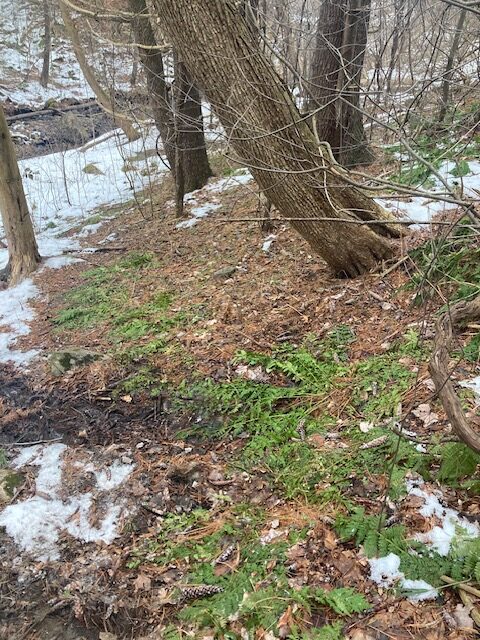
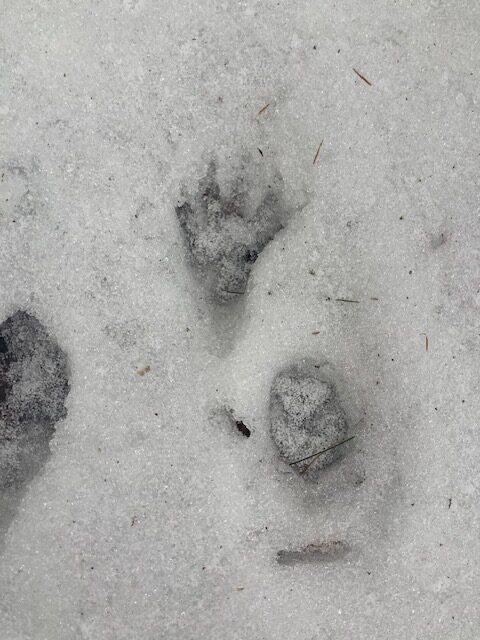
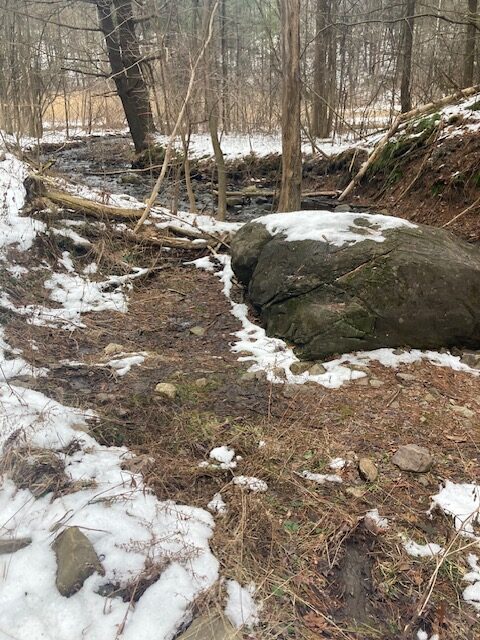
For this semester, I am changing my blog organization a bit so that all of the content will be within the posts instead of having to navigate to separate pages. I set out today down the icy, well beaten trails of Centennial Woods until I reached my site. The first thing I noticed was that although the water level of the stream appeared relatively the same as previous visits, the ground surrounding the boulder at the center of my site was far muddier and carved out in some places. I infer that the water level rose at some point in the past few months and shifted the stream morphology. The trees were barren, no dead leaves lingering unlike past visits, although I was surprised that there was still some green vegetation like wilted but alive ferns surrounding the stream, likely due to having a consistent nearby water source. I did notice some animal tracks that could have been dog tracks, but there was one clearer one that appeared more raccoon shaped even. I listened to try to hear any birdcalls, but did not observe any evidence of recent bird activity. As the winter continues, it appears that the site will stay mostly consistent and dormant before any significant changes to the weather arrive.

The remaining vegetation at my site.

Evidence of animal behavior.

Where the ground is ridged and muddy surrounding the boulder.

Entry 4: December 8, 2023

As I set out today, I noticed I had to bundle up more than I did a month ago. The air has a consistent coldness to it now, and the first piece of information I observed upon making it to Centennial Woods was how much more I could see through the trees with the lack of foliage. There were still some dead leaves hanging onto a couple of the maples and a boxwood in my area, but none with color. The vegetation appeared to all be dying back after seeding last month. There were signs that the decomposition of leaves had begun to occur, as closer to the brook with the water the leaves were breaking down a bit. I noticed no remaining traces of animals in the spot, which was a change since I had first been to the location and seen a squirrel and some birds. The overall feeling I had at my blog site was that it is now adjusted to the winter, and will remain mostly dormant over the coming months in the bitter cold. Having been to this spot several times now, the aspects about this place that I enjoy the most are observing how one small site can undergo pretty significant change in a short amount of time. I also really liked being present and being able to sit outside and reflect about a unique place that is separate from campus.

Entry 3: November 27, 2023

The spot I chose for this entry is one of my favorite places in my hometown of Westwood, Massachusetts. It is a simple place, just two eroding planks over a brook a bit off trail at a reservation. I discovered it last year, and chose this place because I had actually taken photos of the trees above the planks at different times last year to appreciate the change in phenology. The ecology and phenology were strikingly similar to my location in Burlington, as both places are forest growths surrounding a brook. I noticed the ground was slightly more spongy and less hardened at the spot in Westwood, likely due to the weather there being warmer. Therefore, I presume the phenology is slightly different as winter takes more hold in Burlington because it is enough farther north. I noticed that there were less large pine trees in the forest back home, although still a strong mix of evergreens and deciduous trees. I noticed the planks were drier than they had often been in the past due to the winter weather. Visit “Westwood Location” on the drop down menu for images at the spot.

Entry 2: Nov 17, 2023

Today I found myself in Centennial Woods for lab, and went to my phenology blog location afterwards. The skies were clear and it was warmer than most of the past couple weeks had been. I sat on the boulder in the center of my spot and tried to take in everything that surrounded me. Within those fifteen minutes, I observed how the wind created a slight rustling of leaves colliding with the sound of the brook wandering past me. I noticed how the vegetation had changed since my last visit, with almost all woody plants being devoid of leaves and the few leaves left on branches being completely brown. When I got up to leave, I noticed how the soil beneath my feet felt slightly more compact in the cold weather. I found that sitting for fifteen minutes was an effective mindfulness practice that helped me take in my surroundings. Visit the drop-down menu to view the bird’s eye map of the site.

Entry 1: October 16, 2023

Today I ventured out into Centennial Woods to choose my exact location of research and to begin my first round observations. It was drizzling out and a chilly walk from campus. I wandered through the woods for about half an hour before discovering a place I absolutely loved. A simple boulder by a stream, off the main path on a small trail just beyond the entrance. Perfectly secluded and a great spot to sit and be present in the nature surrounding me. A cardinal flew past as I made it to the entrance, and a squirrel wandered by me as I was taking notes. It appeared to be a spot largely untouched by human influence. It was a cloudy autumn day, and the landscape that surrounded me made the fall change of season even more prominent. It was a perfect day to spend outdoors. Look at the dropdown menu for specific information on what I observed.

Skip to toolbar