Posts

Wonder Blog Mini Project-Patrick Finnegan

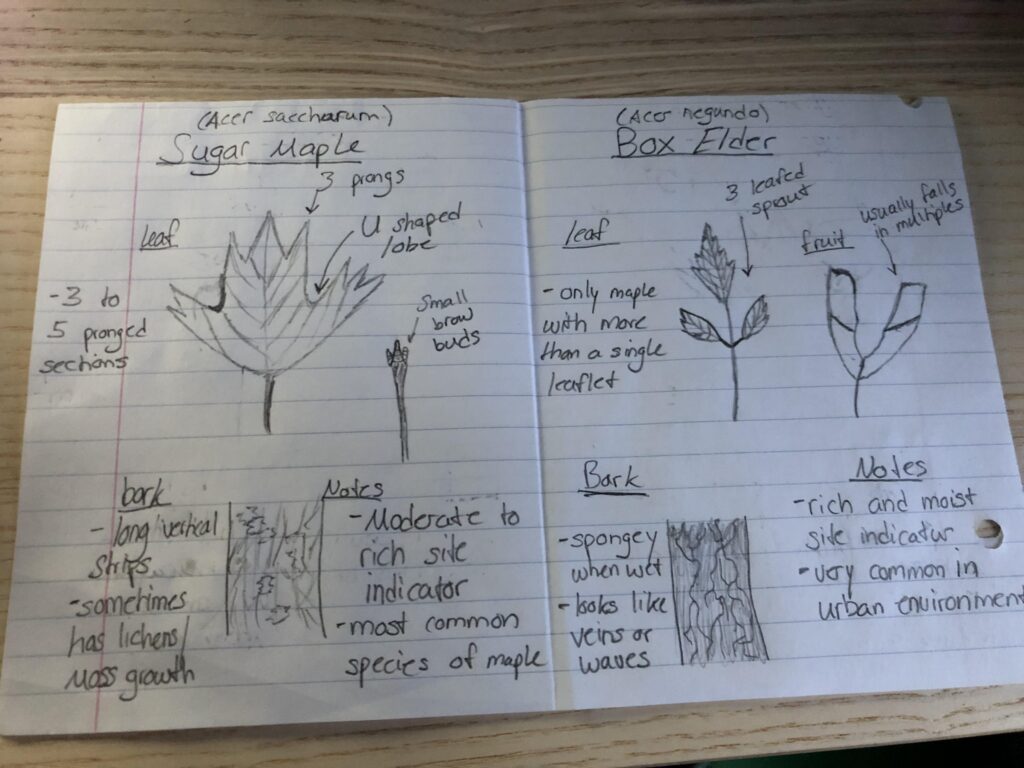
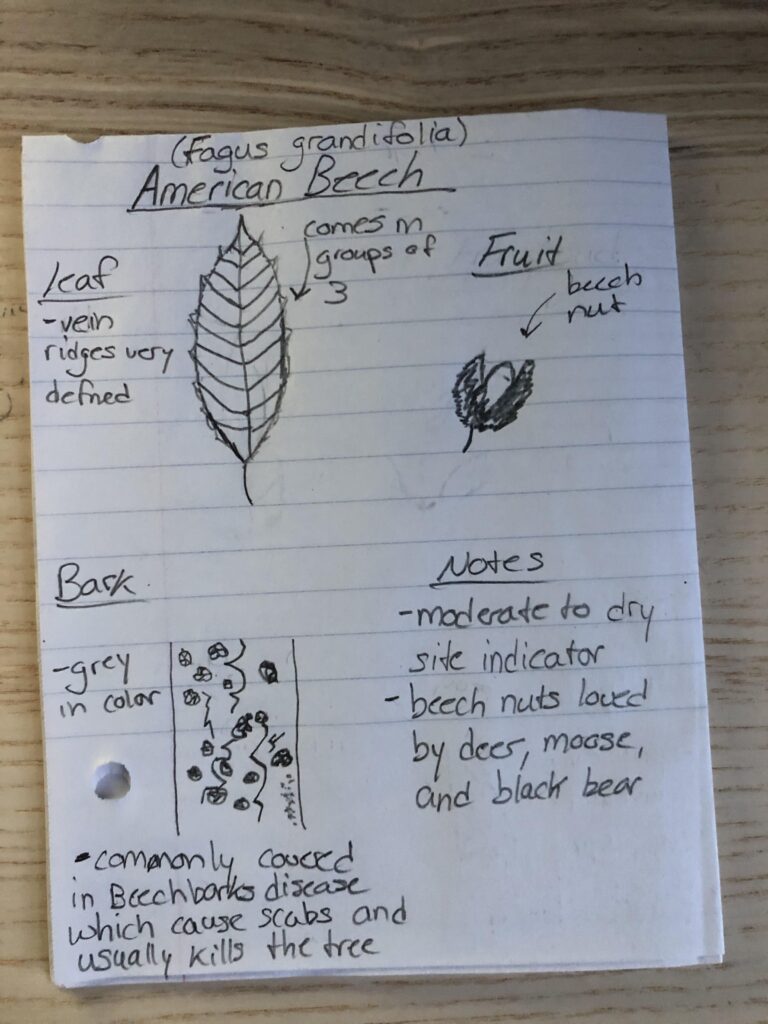
So for my final Wonder Blog post I chose to make a little tree field guide for if someone wanted to look at all the overstory trees in the general vicinity of my friend’s backyard in Burlington. Now I chose trees specifically because I am a forestry major and trees are kind of my thing even if my dendrology isn’t that great yet. I also love to share my knowledge of trees with people I’m close to and this will come in handy for that. I also have a close connection to field guides as my grandmother loved to use them to identify birds and non woody plants. She would always show me pictures of the bright birds that were apparently very rare or the bright flower that I would see driving around my town. This is connected to my site in particular because these are the trees that make up the overstory in that particular area. They provide the shade during the summer months and an easy way for the local wildlife to avoid humans at all cost. This project really expanded my comfort zone by forcing me to really narrow down the information I thought was the most relevant in terms of how to identify a certain tree because those sections or pages are only so big. For it to be for people that aren’t into tree id I had to make sure the information was general enough while still being able to help them identify the right tree.
Wonder Blog #3: Photography-Patrick Finnegan

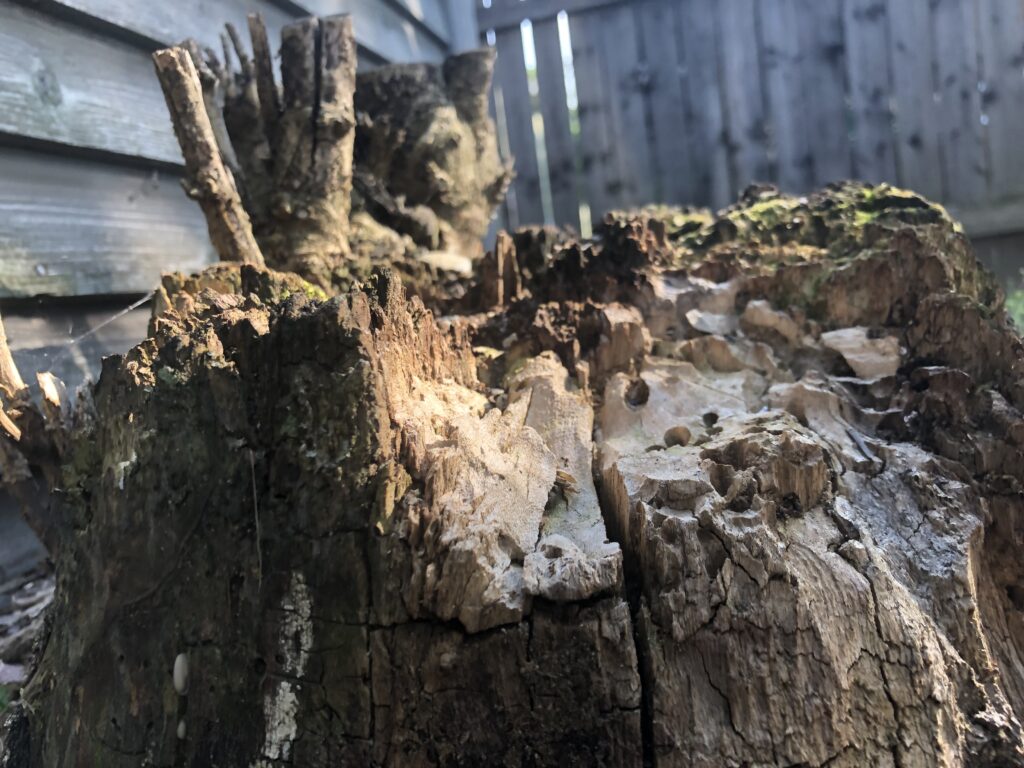
Today is Tuesday, July 5th at 11:30 in the morning. It is currently cloudy out at the moment but is sun on forecast for later today. In my first 15 at my spot there was something definitely new there. A piece of the rotten log had been removed by the rain last week to reveal a whole bunch of insect wholes that had been eating away at the inside of this tree. The holes look familiar to the kind EAB make when they first find ash trees to nest in. The stump however belonged to a box elder tree, which is common in Burlington, which mean EAB wouldn’t touch it. Thats when I pulled a little carpenter ant out of the whole. Luckily the tree had been removed a while ago but the little ants were still going to town on the leftover stump. My natural history mystery this week is when do squirrels start storing food for the winter? I’ve noticed over my spot that there are lots of little holes that are filled with old acorns or beach nuts and I wondered if squirrels use the same spots to store food and when do they start/stop foraging. The answer is that squirrels use the length of daytimes and the general temperature to decide when its time to store food or time to bulk. They also don’t generally use the same store sights for more than one year as most get raided by other squirrels anyway.

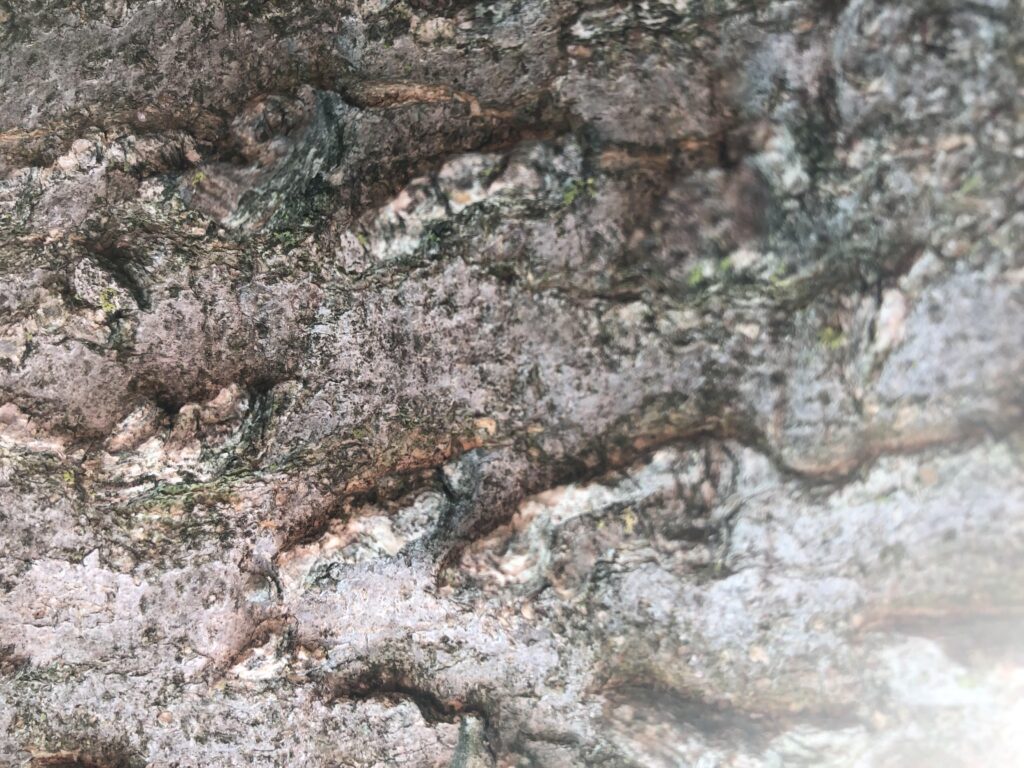
This is box elder bark. I really like trees and this bark looked very unique, even compared to the other box elders.
This tree root has a pretty large knot growing out of the ground. How knots grow like this is so amazing.
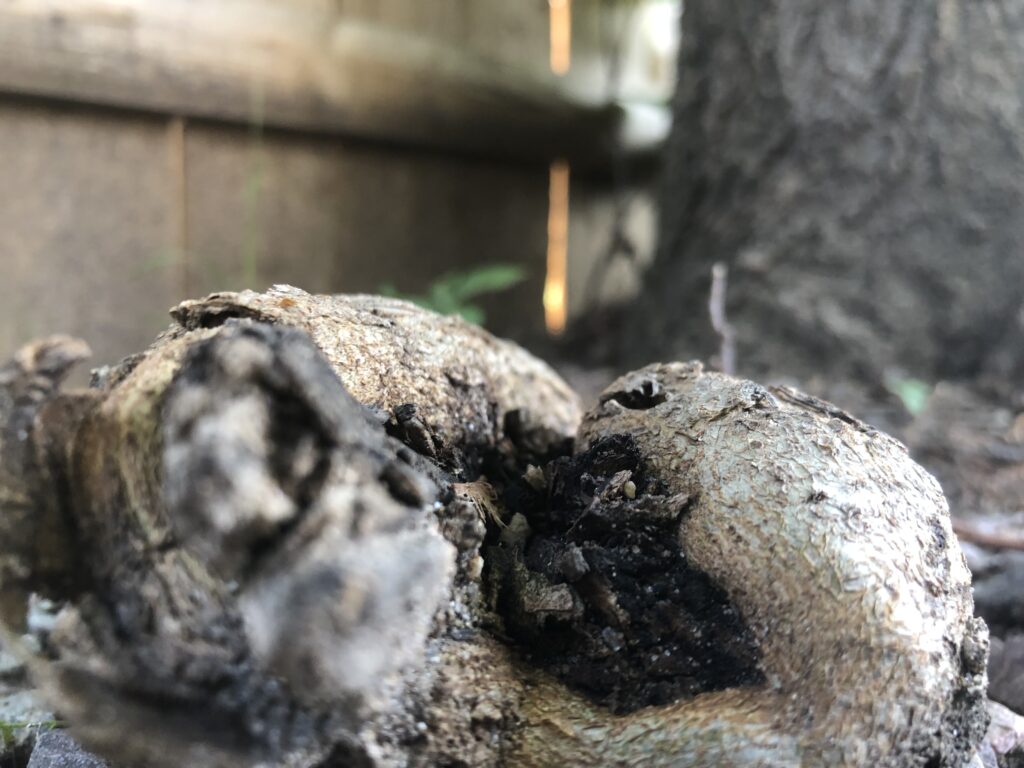
This is the old stump with carpenter ant holes. The tree has been gone for a while but the ants are still here,
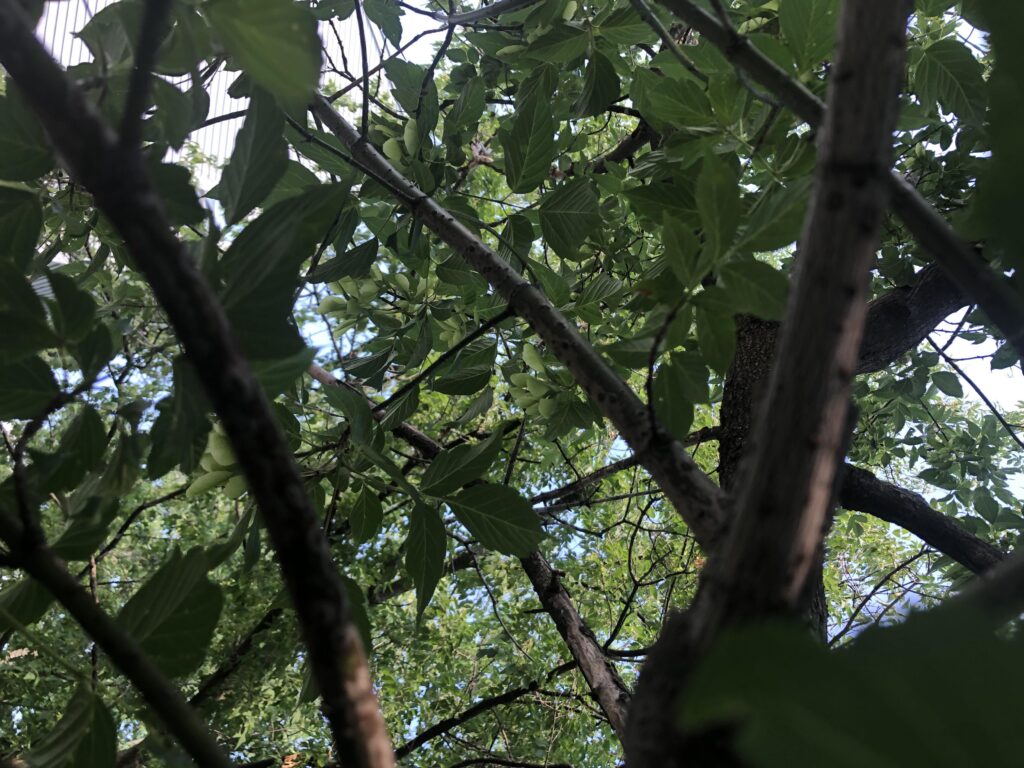
This is the canopy of an American Beach. Probably one of the most annoying trees when walking through the woods.
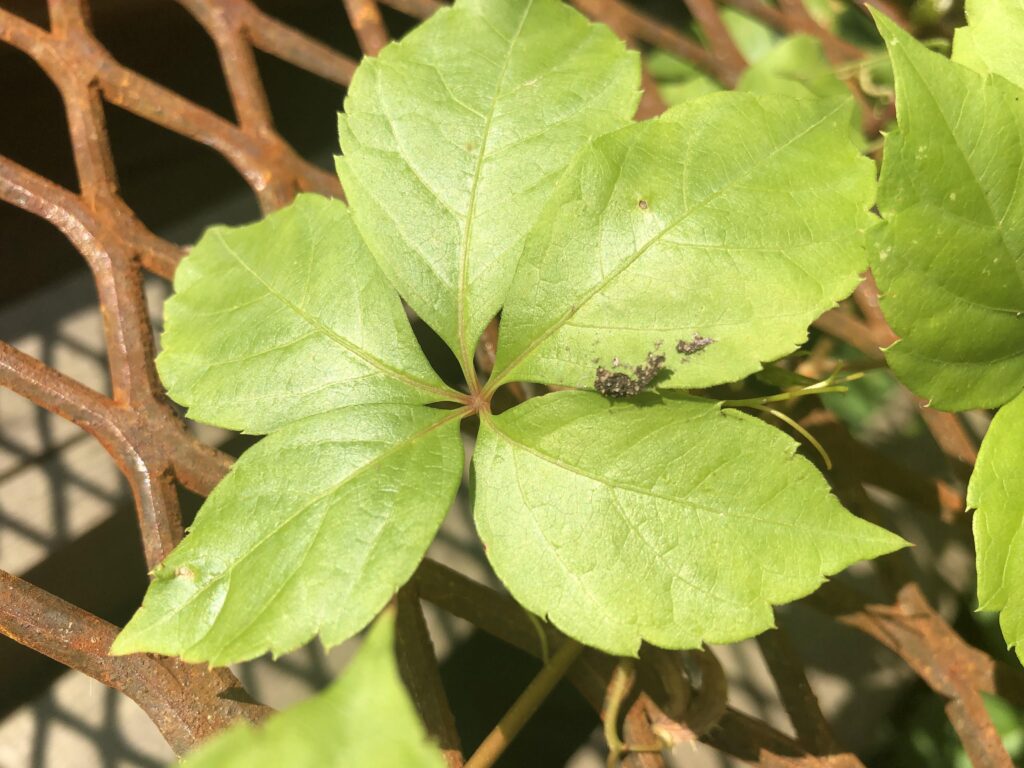
There are some old metal pieces at my spot and this was the leaves from a vine growing up and down an old grate.

This was my first real time going out into the woods with the intention of taking photos. I’ve always had other reasons to be in the woods and would just photograph anything I though was cool or interesting. It also definitely changed how I viewed and looked at the sight. I was forced to get two perspectives on my surroundings, one through my eyes and the other through the camera which is hard to position sometimes to get the right shot. It was similar to sketching in the sense that you really had to focus but different in that you were way more flexible on what the finished product could be. In closing I definitely need to do some more just sitting in the woods and just observing. Every time I go to my site I am just amazed at how much can happen is such a small area.

Wonder Blog #2 Burlington, VT: Patrick Finnegan

The day is Friday July 2 at 12:00 and the weather is not good, its raining slightly so I hope I can get all these sketches down without any of them getting ruined. For the first 15 minutes of this trip I began looking at the features of the spot I had chosen and discovered a very nice looking while still somewhat intact. As I picked up the log and began to move it I observed in to be in decay class 3-4 with a diameter of 7-12 inches. It looked to be a hard wood as well as part of a blow down. There were also various insects living within and underneath. There was also an unknown fungus growing near the larger end. It was partially hollow and made an excellent winter hiding spot for squirrels and chipmunks. One species of plant that I was unfamiliar with was wild sassafras also known as sassafras Albidum. I used an app called seek which uses picture of leaves to identify them. One interesting fact about this plant is that it is banned by the FDA for being in food or drink due to a chemical called safrole which is also a carcinogen.

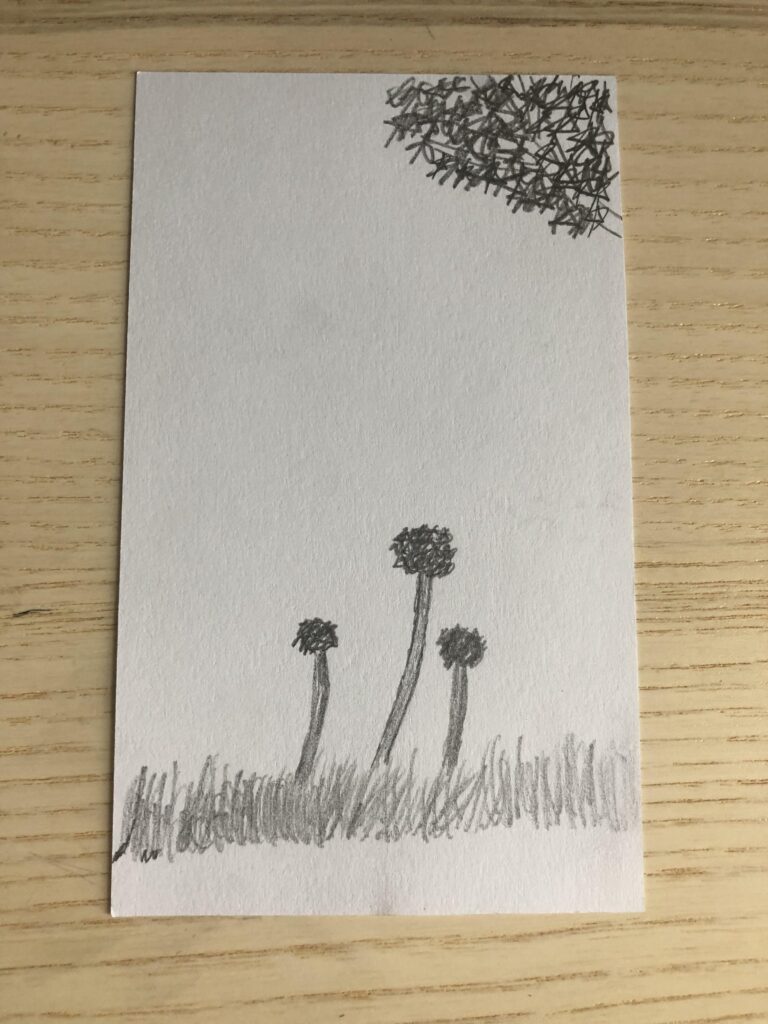
I saw theses two dandelions that looked like they were the last alive and I wanted honor them I guess
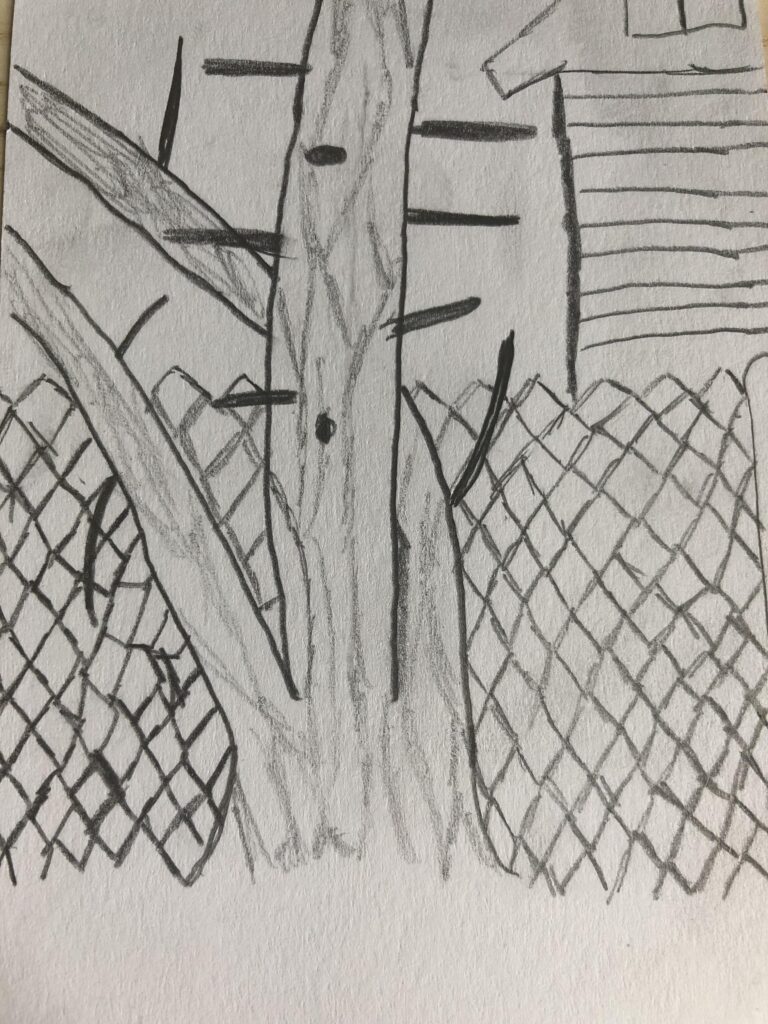
Interesting hemlock cluster with the 3rd tree reaching behind the main trunk. It was weird to see a tree grow at that angel so I drew it
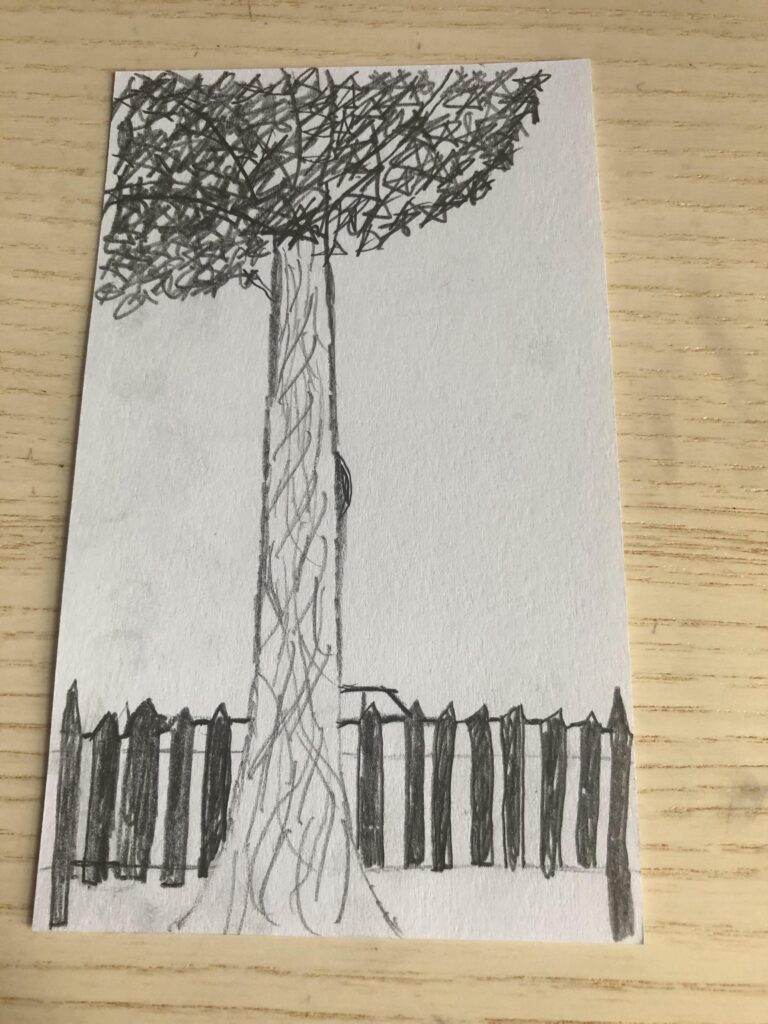
huge sugar maple that provides excellent shade cover. Sugar maples are the tree of VT so I drew it.
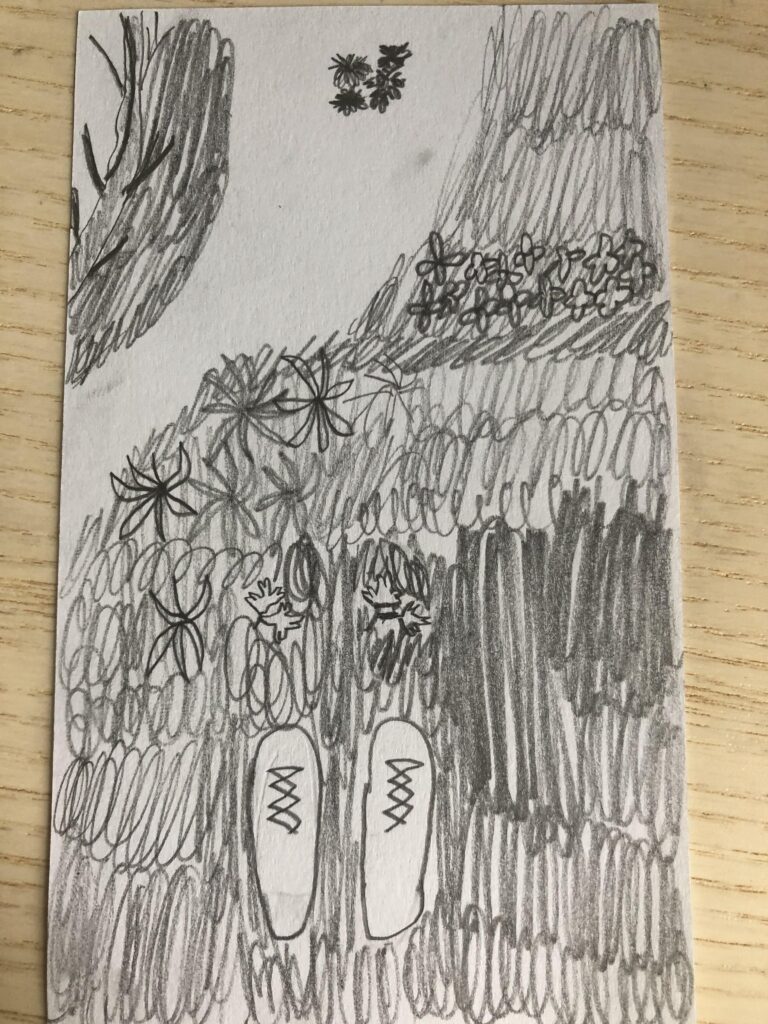
This literally what the immediate ground around my feet looks like. It was hard to draw grass from a top view so i tried my best.

The process of sketching was definitely something that was new to me. I had never really dabbled in drawing or even art really since elementary school and art class. Sketching in the woods was also a new experience for me due to the fact that as a hunter I am constantly looking around and observing everything without much detail and sketching really forces you to focus on one thing for a longer period of time. It was challenging for because I was very easily distracted when drawing by either a noise or a movement. For next time I do want to work on focus more on one thing at a time, as well as that hemlock cluster growing in my friends backyard. I also didn’t have solid white paper so I sketched on the backs of notecards if thats okay.

Wonder Journal #1: Burlington VT, 06/25/2021

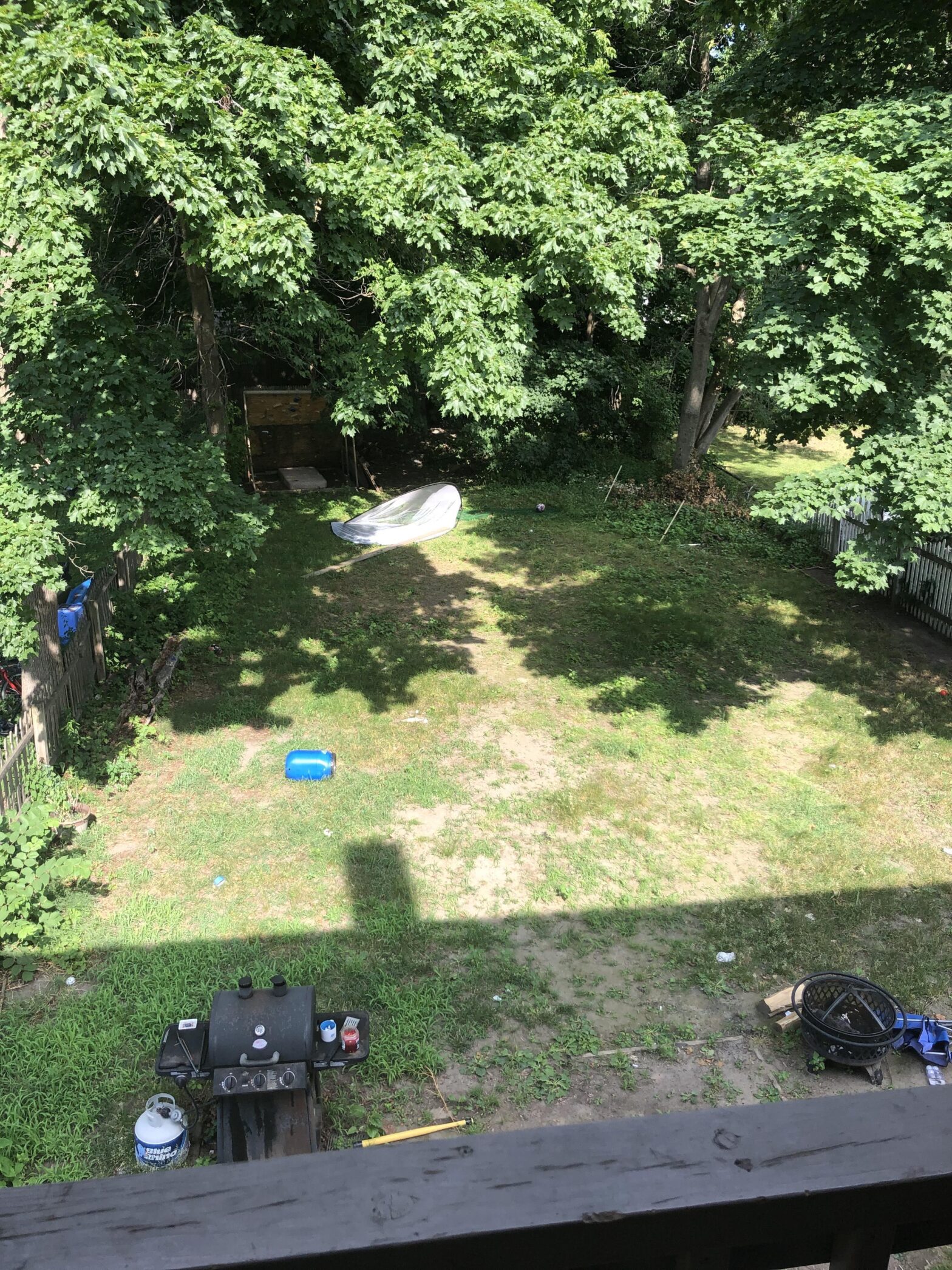
Today is Friday, June 6th, at 2:30 in the afternoon and it is a sunny and warm day here in the old north end. My site for this journal is a backyard on South Willard St. in Burlington. There are various insects crawling on the ground, from ants to ladybugs and various types of caterpillars. There are two co-dominant sugar maples that provide excellent shade cover for the yard as well as a group of smaller striped maples closer to the back. Several species of non-wood plants also litter the ground closer to the back. For animals various song birds visit the surrounding bird feeders, including chickadees, tufted tit mouses, and hermit thrush. There is also track evidence of raccoons and squirrels who also like to use fences as sort of highways in between yards. Some questions that I came up with while in the yard are: What trees did these fallen logs come from? Why are the squirrels so fat here compared to other places? How acidic or basic is the soil which causes spotty growing? How well have the various plants observed adapted to growing in more urban areas? Why do squirrels here choose to mover along fence lines rather than through trees? Where do the trees get the water it needs? When do the animals in urban settings feed? How does being in close proximity to humans affect certain animals? How much have the diets of these animals changed? What is the rate of regeneration in certain urban areas? Why does it look like some species of plants are thriving while others aren’t found? The question: why are the squirrels in urban areas larger than ones in rural settings? The answer, simply more resources. In an urban setting, in close proximity to humans who throw away ungodly amounts of food, the eastern grey squirrel has moved into cities very recently. But when that move came the diets of these animals changed too to include the food waste that gets thrown out at the end of everyday. Over time, even as the numbers of a given population may vary, the average size of the grey squirrel did increase as they became more used to the urban settings. (Etienne, Benson: Urbanization of Eastern Grey Squirrel in the US)

To wrap up the first entry, this spot is a welcomed escape from the woods which has now become my office and my apartment.It always amazes me to see how much life can exist in such a small area, even if it is relatively close to other people. Something that caught my attention from when I was there was how the squirrels were moving from one place to another. Back where I’m from the squirrels used the tree tops whenever possible to move across the forest and now these fences are almost acting like highways that allow them to move in a straight line. Next time I think a closer watch as to what their end destination actually is will provide some more answers.

Skip to toolbar