Posts

City Nature Challenge

During the City Nature Challenge iNaturalist BioBlitze, I chose to visit both Beeken Rivrshore Preserve and my phenology place in Centennial Woods. I chose these areas because they are very different habitats; expanding the amount of species that I could look for. I have been using iNaturalist for some time now, be it in labs or on personal outings. For this reason, I am very in tune with the app. I enjoyed the process and had no trouble with iNaturalist. I encountered four bird species, three mamal species, as well as identified six plant species.
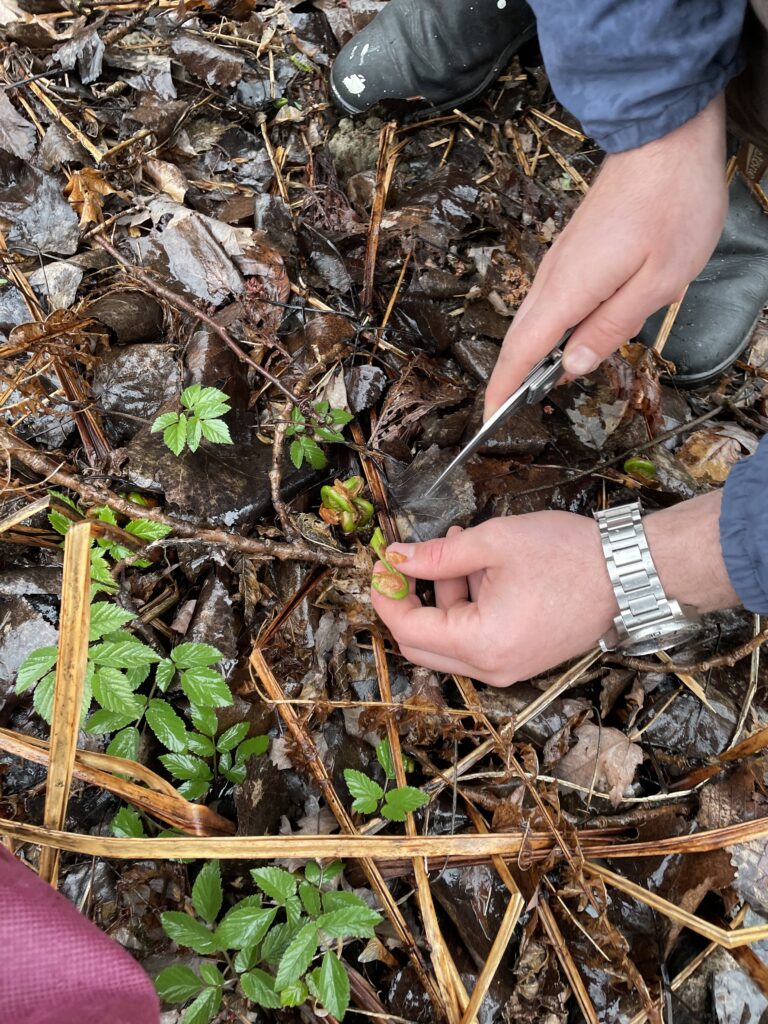
Harvesting a fiddle head with Goutweed (Beeken Rivershore Preserve)
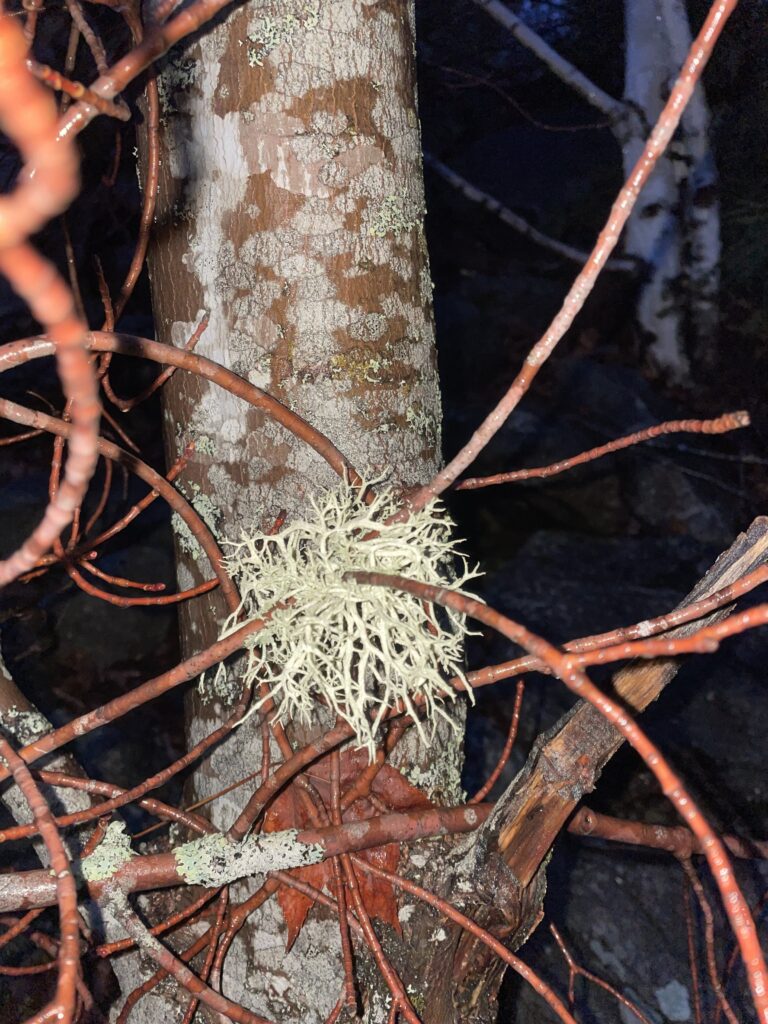
Spanish moss (Centenial woods)

The plant species that I identified also included, cotton wood, boxelder, and hemlock; the dominant tree in my phenology spot. In terms of bird species, I identified my states bird; the Chikadee (Beeken and Centenial). As well as Robin, (on campus, Pheobe (Centenial), and Turkey Vulture (Centenial).
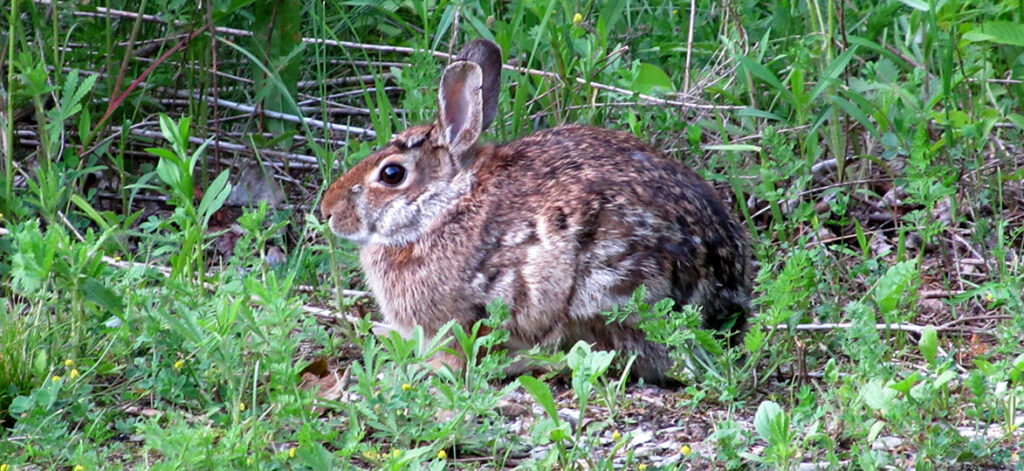
(https://vtfishandwildlife.com/learn-more/vermont-critters/mammals/eastern-cottontail)

The mamal species that I found consisted of Grey Squirls, Chipmunks, and Eastern Cottontail Rabbit; in Centenial. I also found evidence of Beaver in the Beeken Rivershore Preserve.

In terms of other citie’s participation; I am in awe of the amount of citizen science that is happening. I think that this project shows the power of technology and how it can be instrumental in documenting species. This has made me reflect on how important citizen science like this is to making the Half Earth project happen. It not only allows for habitat recognition and categorization but also spreads awareness. I was very glad to see so many people interested in Biodiveristy; it shows that there is hope for conservation.
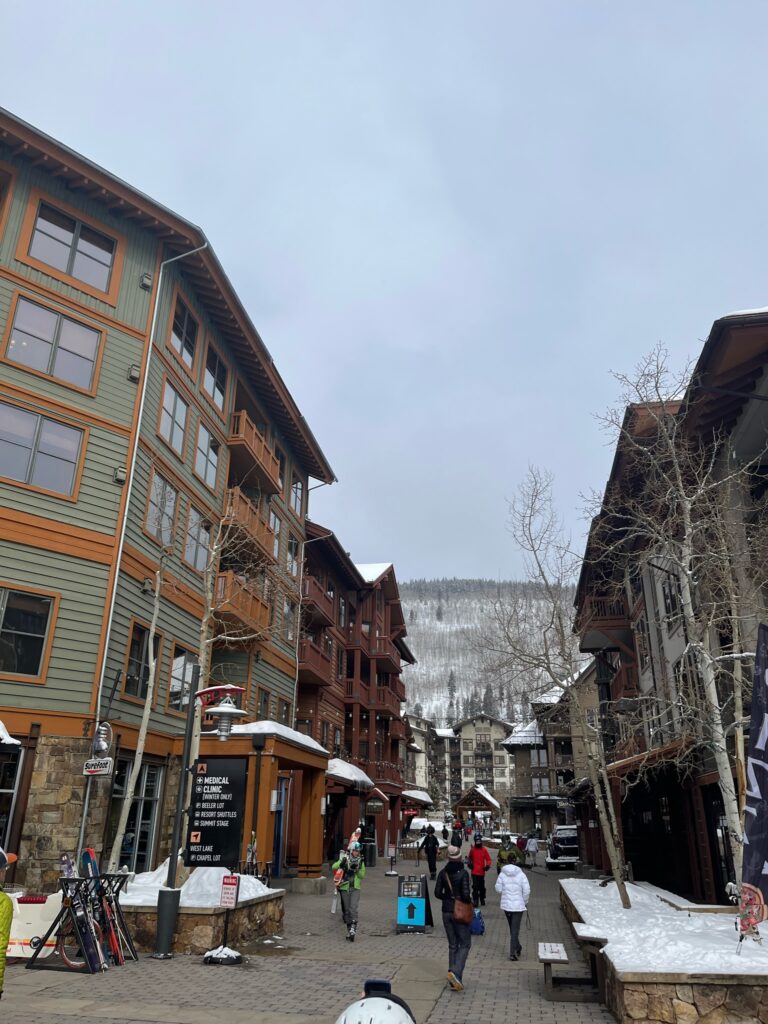
Frisco, Colorado Phenology

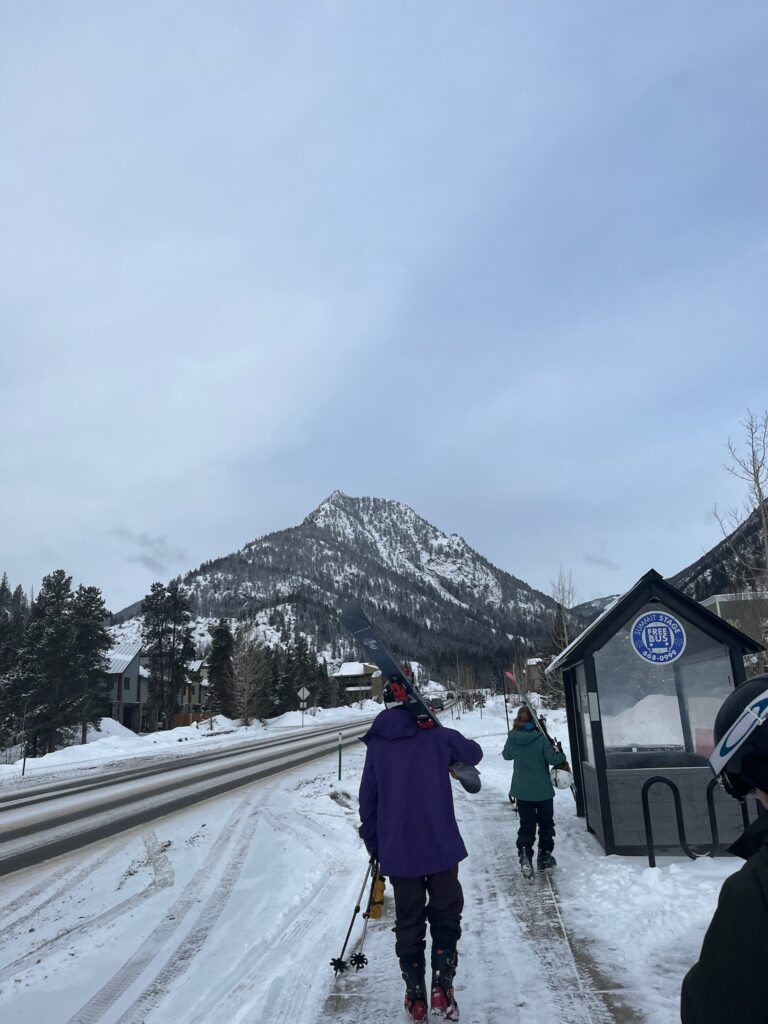
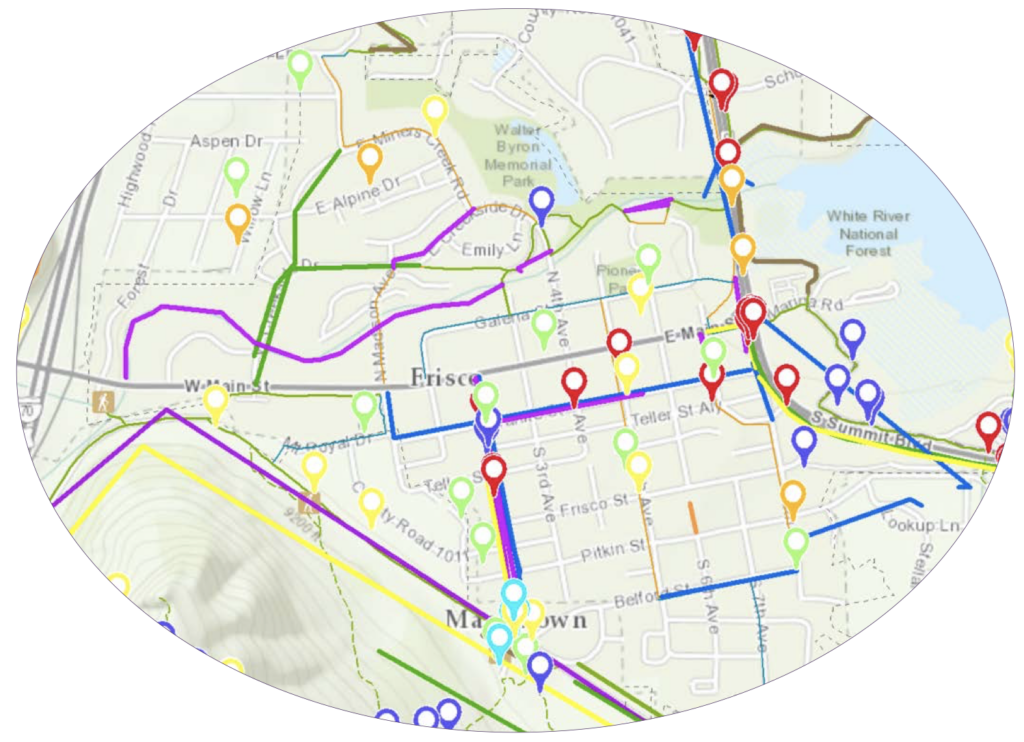
Exploring phenology in Frisco was interesting due to the rapid expansion that the town has undergone. Frisco, like many other towns in Colorado, started out as a small local town. With the expansion of ski resorts and rising popularity of skiing these towns have begun to get a lot of visitation, for example, Frisco’s neighbor Breckenridge goes from a population of 4,000 locals to 50,000 during spring break. With visitation on this scale these towns, including Frisco, have had to spread out and have consumed many of the mountain valleys. This has destroyed habitat, ski resorts themselves are also quite bad for the local habitat. Another part of the natural history in this area is the presence of cows. Cows are known to degrade prairie landscapes because the natural area has not evolved to support them.

In comparison to Frisco, Centennial Woods in Burlington, Vermont experienced a similar land-use history. From what I can tell, Vermont is a generation or two ahead of Colorado. This is in terms of conservation and green planning/development. Just as Vermont experienced massive deforestation and habitat loss during the 17 and 18th centuries Colorado experienced this population boom a century later. Ski resorts and government officials alike are beginning to realize the ecological drawbacks that have occurred. Although it is hard to compare these areas ecologically, the aforementioned common theme of land use that was a comparison that stuck out to me.

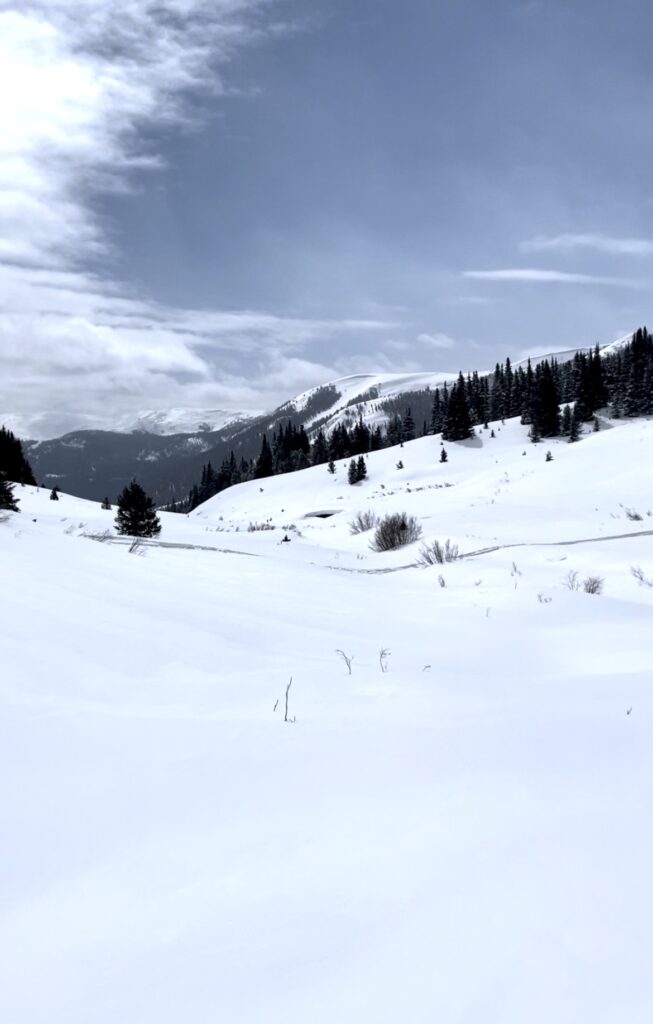
Copper Mountain resort area (many square miles in size)

Due to the natural history of the area, I did not see many bird species. I was able to notice the Black-capped Chickadee by its sound. It is my state’s bird so I am used to hearing it. I was also lucky to see a downy woodpecker while skiing in the backcountry near Leadville, Colorado.

Backcountry near Leadville, CO

Throughout my entire time in the mountains, I was only able to recognize a massive abundance of fir and spruce trees. After doing research on the Colorado State Forest Service Website I was not able to narrow down any species. The trees seemed to be in good condition with full needles and few dead ones.

Frisco

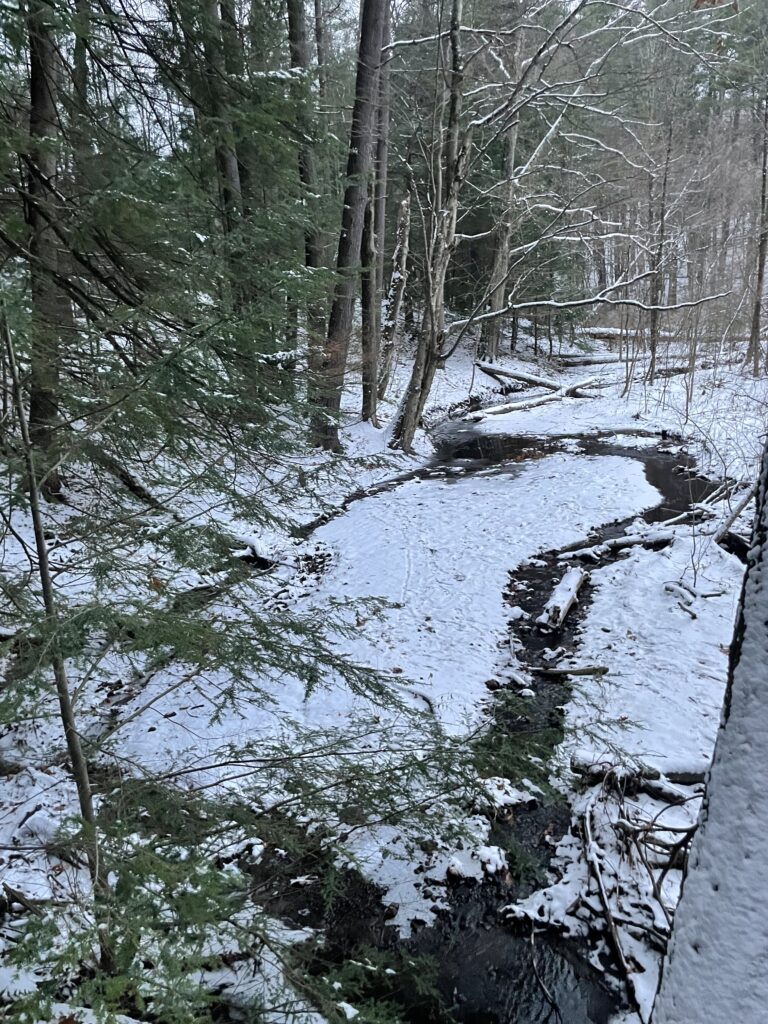
Centennial Brook

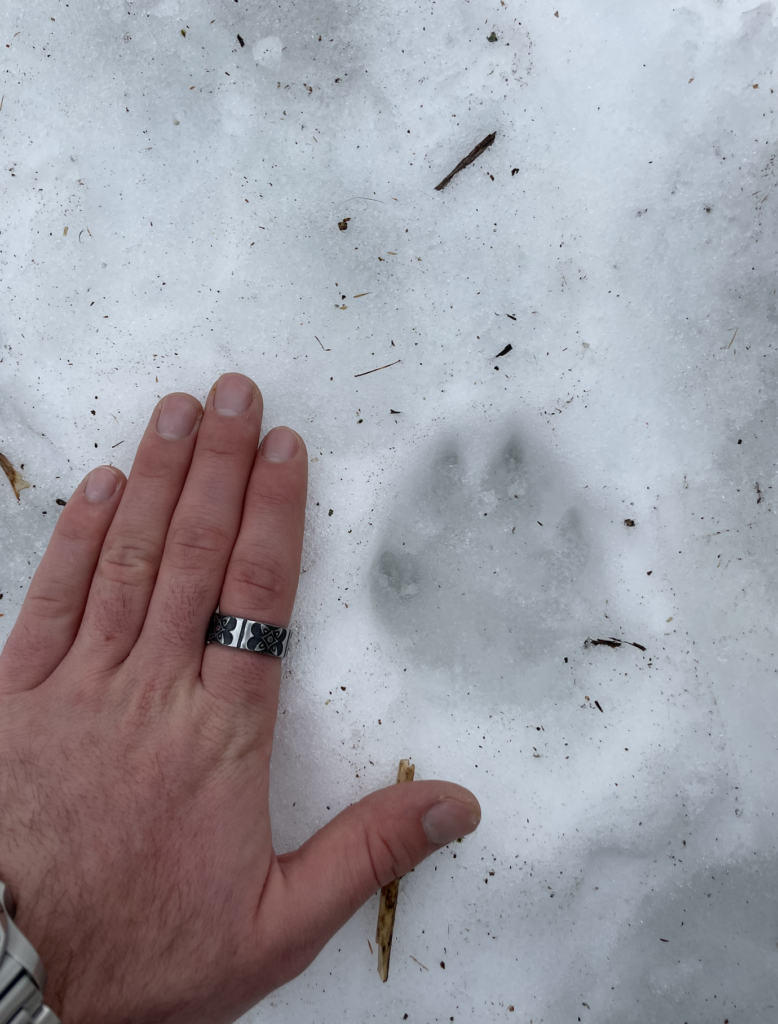
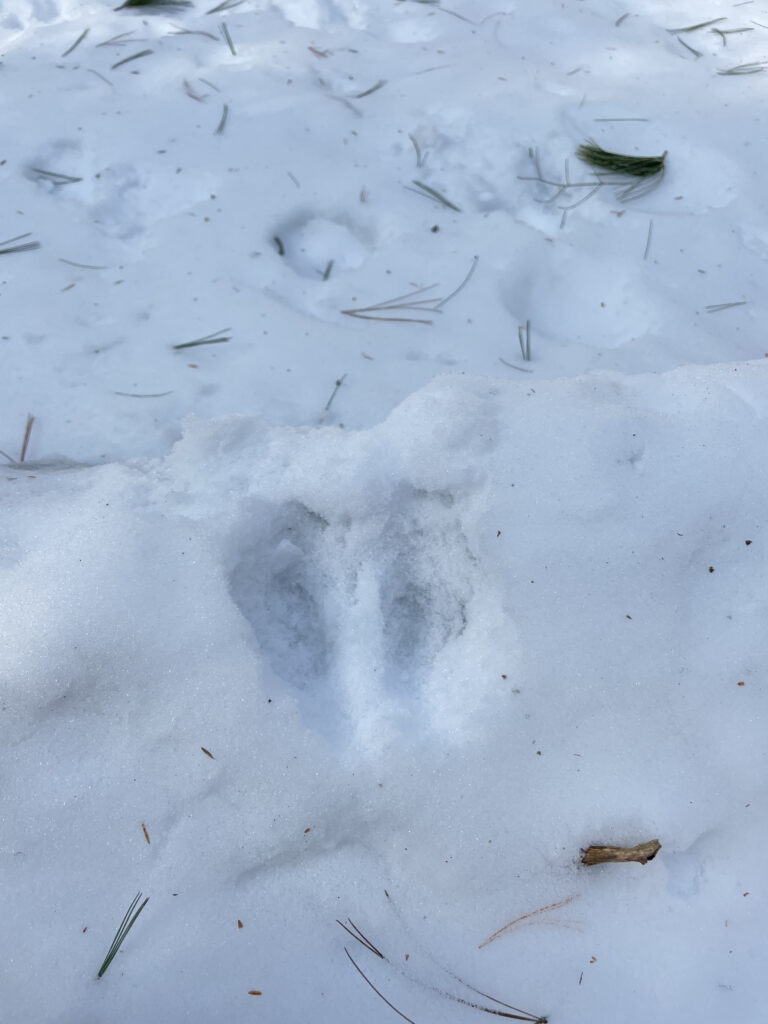
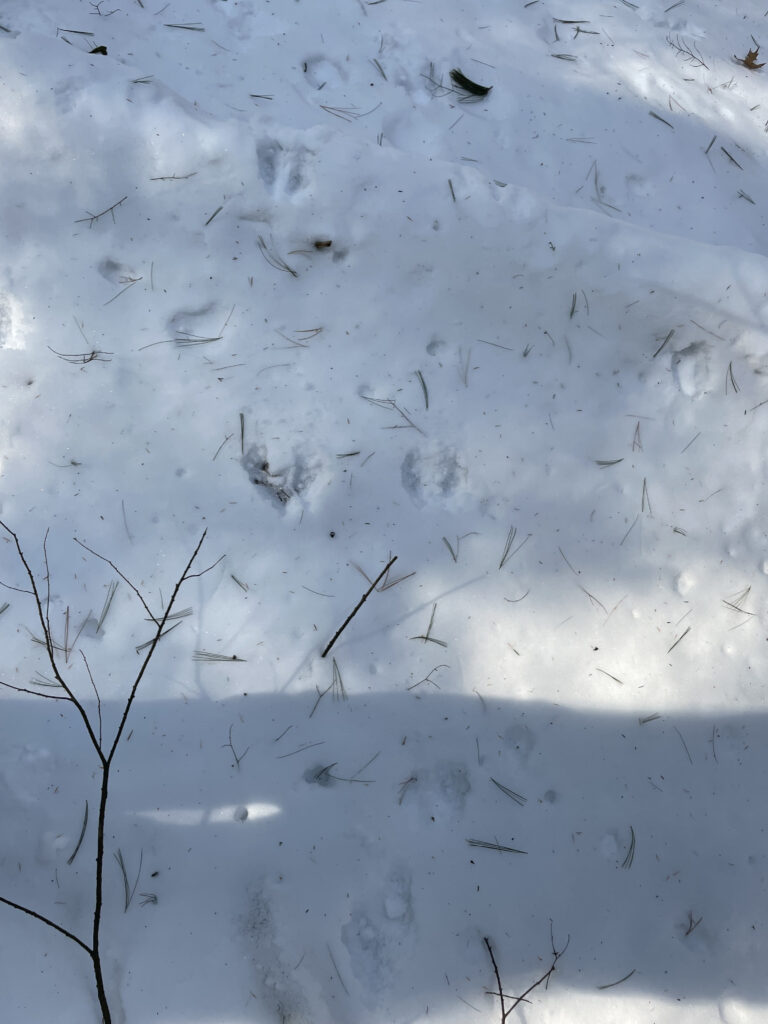
Last Thursday, February 17, I went to Centennial woods in search of tracks. Right, when I entered the woods I found fisher tracks.

I backtracked the fisher from the entrance (near the campus police station) of the woods to the shore of Centennial Brook. In doing this I was able to see part of the woods that I had never been to before. This part of the brook was more marshy; I ended up getting my foot wet breaking through ice that I thought was solid ground. After tracking the fisher to a dead tree that I believe it ran up, I encountered new tracks. They looked like a fisher but smaller. Using iNaturalist I was able to determine it was an American Marten. I was excited about this because I learned in my Environmental Studies class that they require at least 2 square miles of viable habitat. I am glad Centennial woods could provide this.

(American Marten)

True Winter

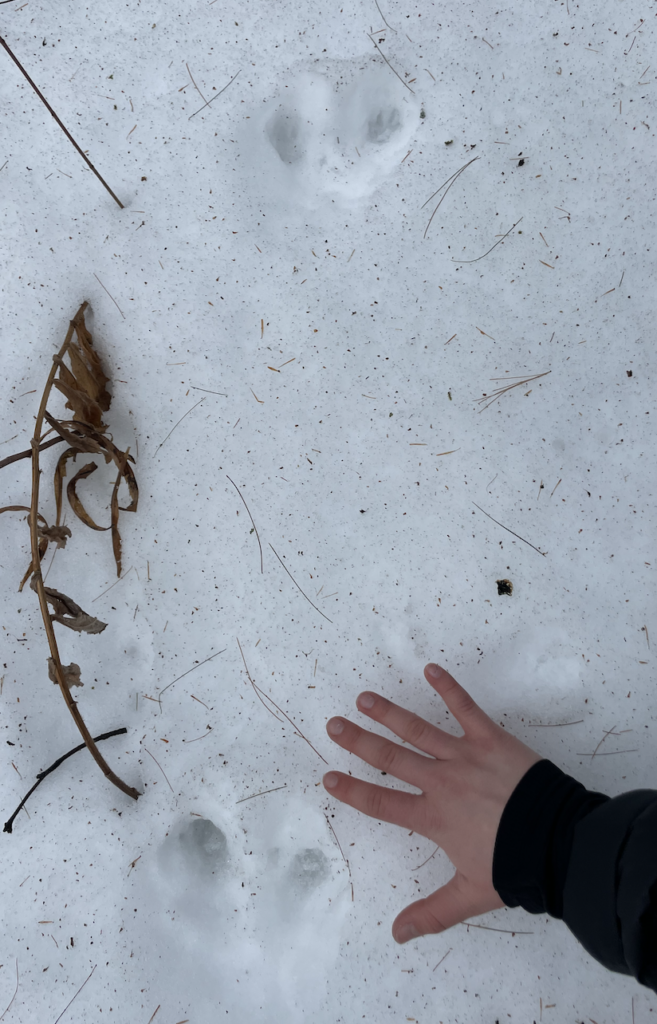
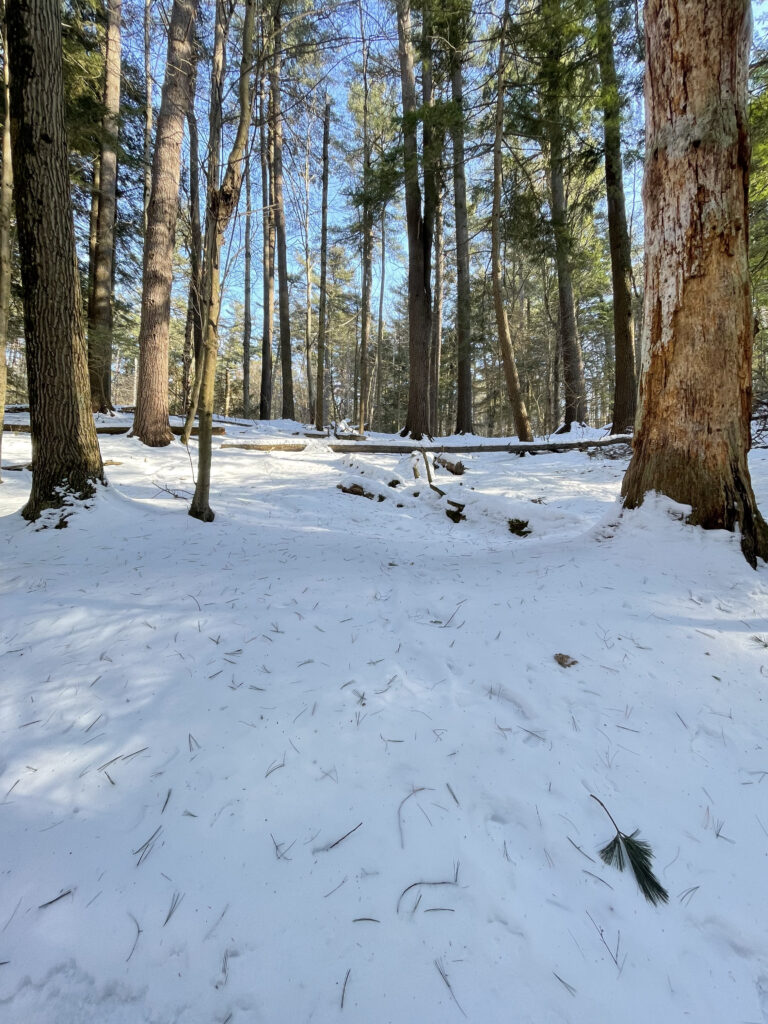
My trip into Centennial Woods was quite enjoyable. The cold snap Burlington has been going through has come to an end; the sun was out and the temperature was a comfortable 25 degrees. The rise and temperature and the sun lead the snowpack to firm up a little bit, making the trail quite slippery. When I got to my place I found it very challenging to find animal tracks due to the dominant presence of human footsteps. As I was examining my area a dog walker passed, causing me to further doubt the presence of wild animal tracks. Despite this, I do believe I did find a set of tracks although I do not know what from.

In terms of other animal presence in my place, I could hear woodpeckers hard at work. I could also hear chickadees, this was nice because they are Maine’s (my home’s) state bird. There were also two other calls that I read repeatedly, both I suspect to be from birds although I did not see them for confirmation.

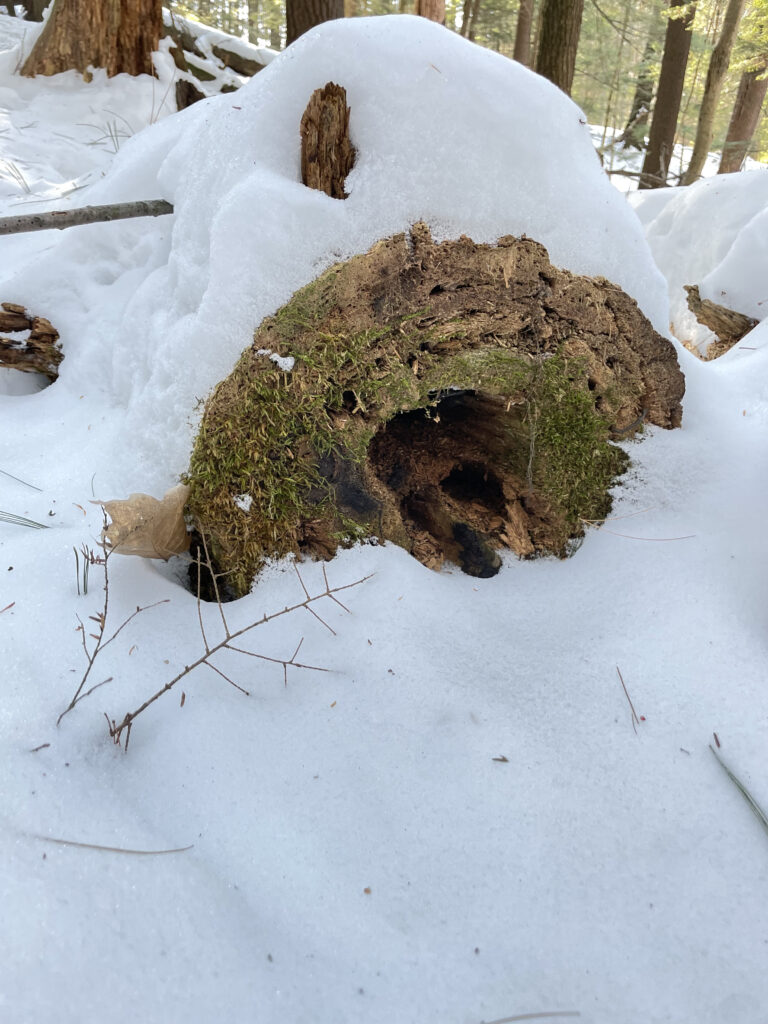
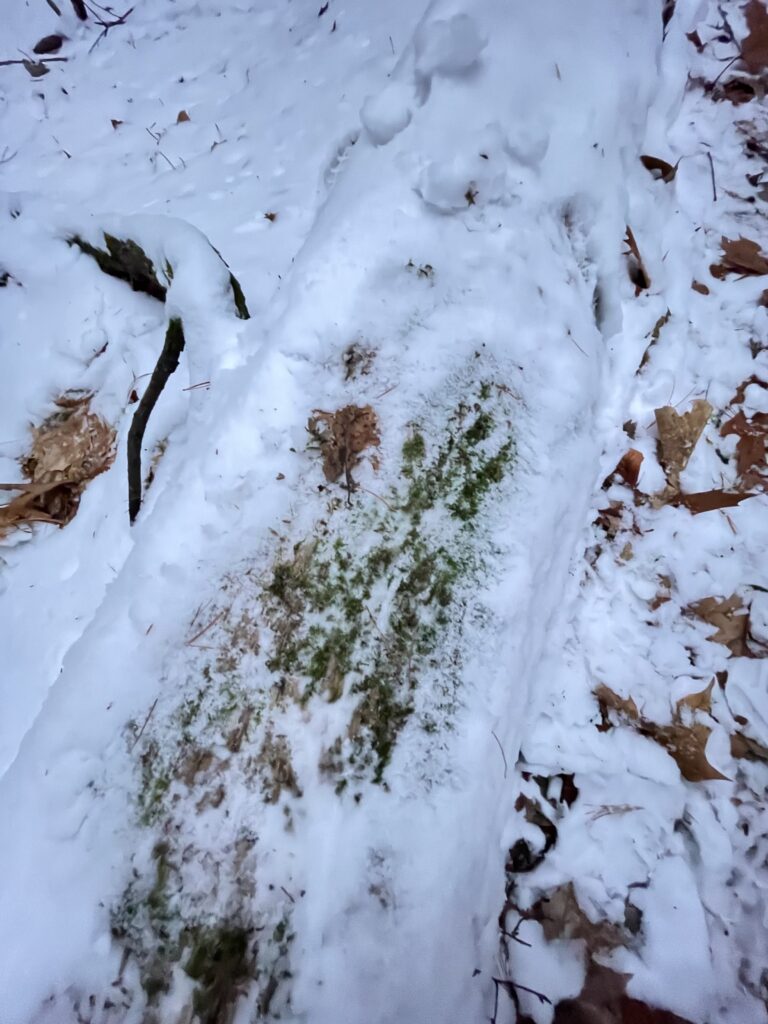
A change that I noticed since winter trully set in is the complete burrial of the ferns I had posted about previosly, they are either dead or just completely covered in snow. Dispite this, there i still green moss poking out from snow covered logs. This fascinates me given the sub zero temperatures that were prominant earlier this month.

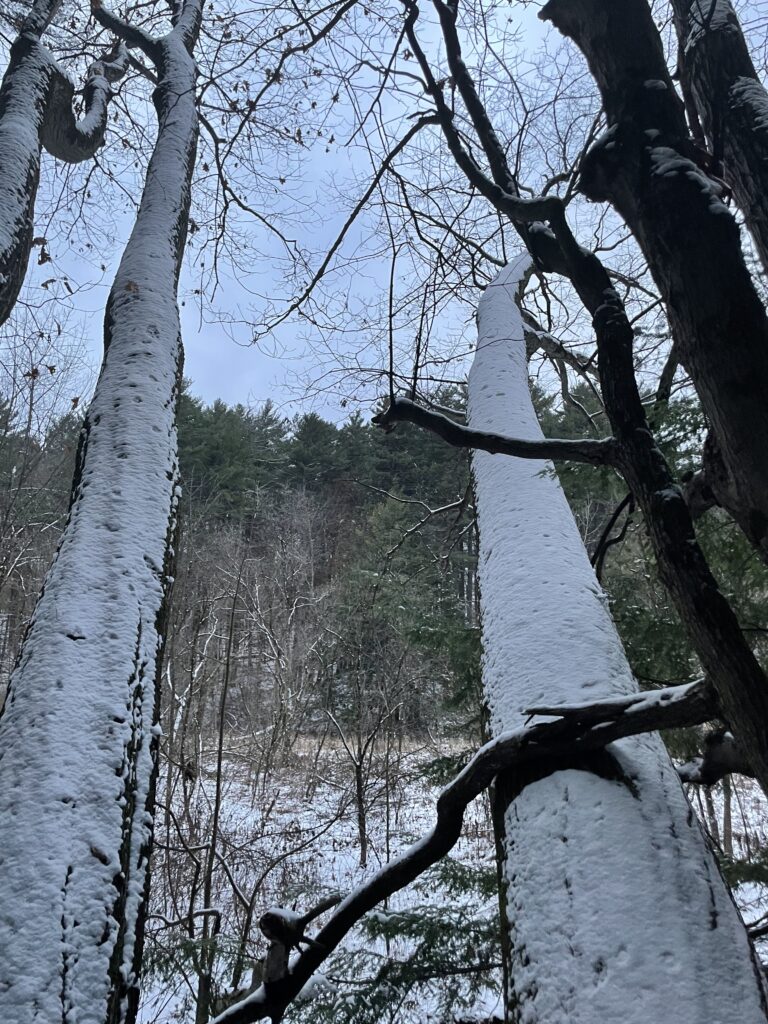
I wonder if this tree will fall by the end of the year.
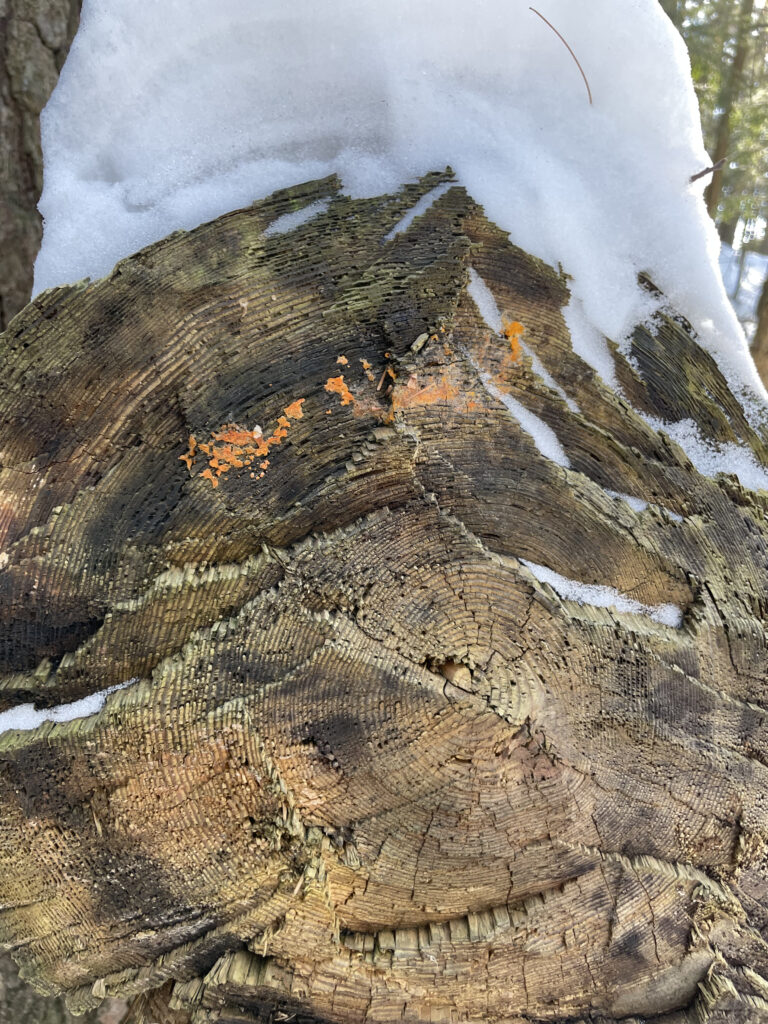
What is this organism?

Winter!

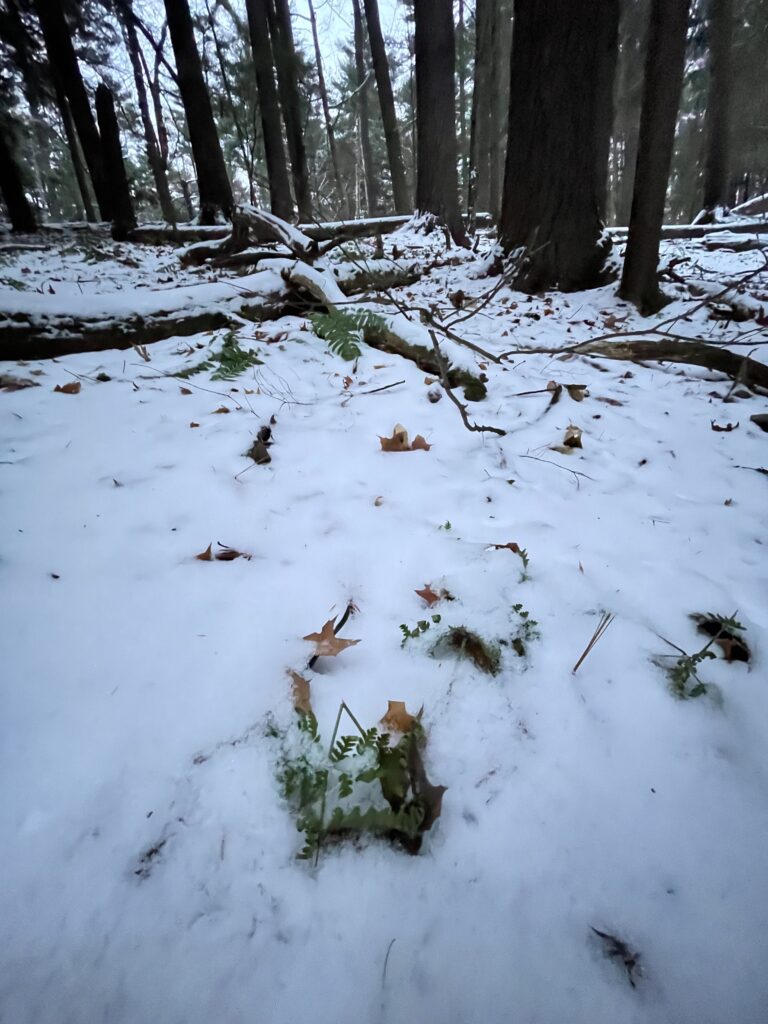
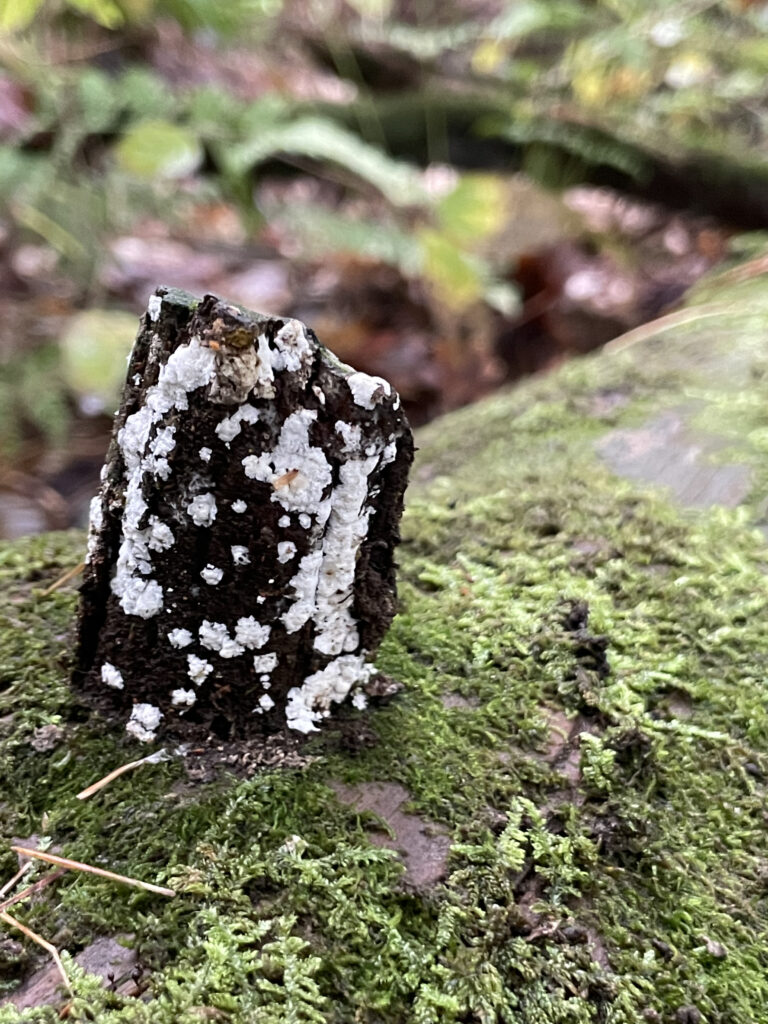
December has brought with it a silence. With this silence comes opportunity for predators such as Grey and Red foxes. They can move across the snow with silence. This also brings an opportunity for ecologists to track animals with much more ease. I was hoping to find animal tracks at or around my site but I was unable to. This being said I did notice other interesting phenology surrounding my site. Although there was snow cover, the ground was still above freezing leading to mud on the trail. Ferns and moss were still green, pictured below one can see Wood Ferns poking through the snow. Also pictured below is white moss on a fallen log exposed by what appeared to be a human disturbance in the snow.

Phenology Walk in Burlington

Phenology Walk in Burlington

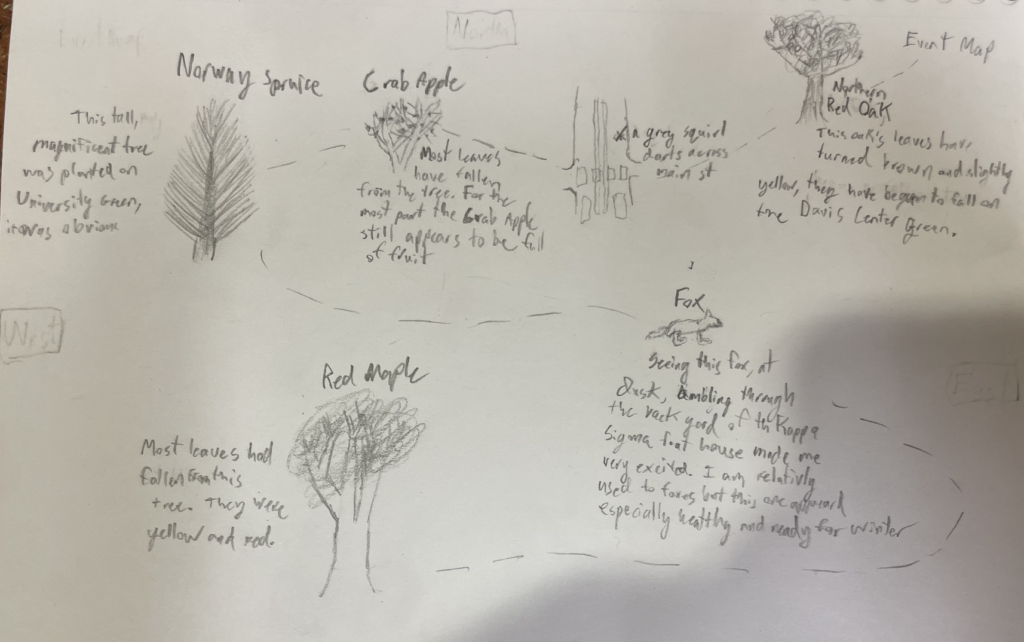
On my phenology walk, I chose to stay in town. After the lecture today, 11/11/21, I wanted to spend time in Burlington paying attention to its biodiversity and natural systems. I had yet to spend time paying attention to nature in the non-wild areas of Burlington. I found that our guest speakers were right, there is rich biodiversity in Burlington. I found this fascinating because although there is great wilderness and biodiversity in Maine, there is much more of a contrast between wildlife and city. I started on campus, near the Davis Center, and headed East down Main Street into Burlington.

Phenology Observations For November 1st, 2021

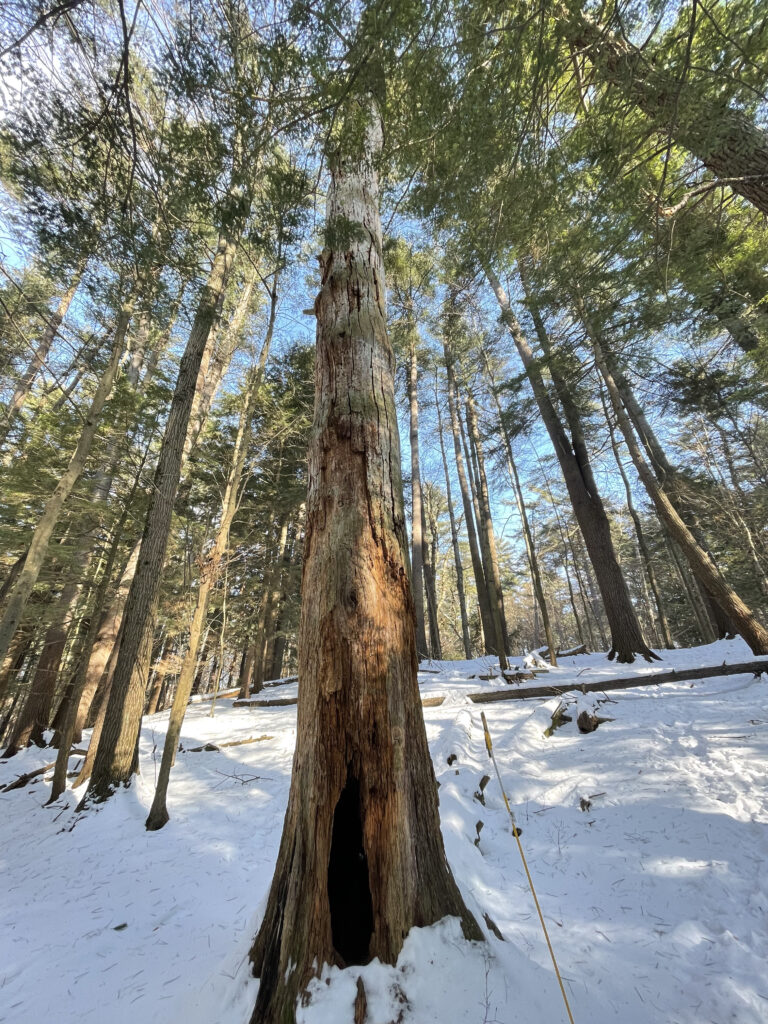
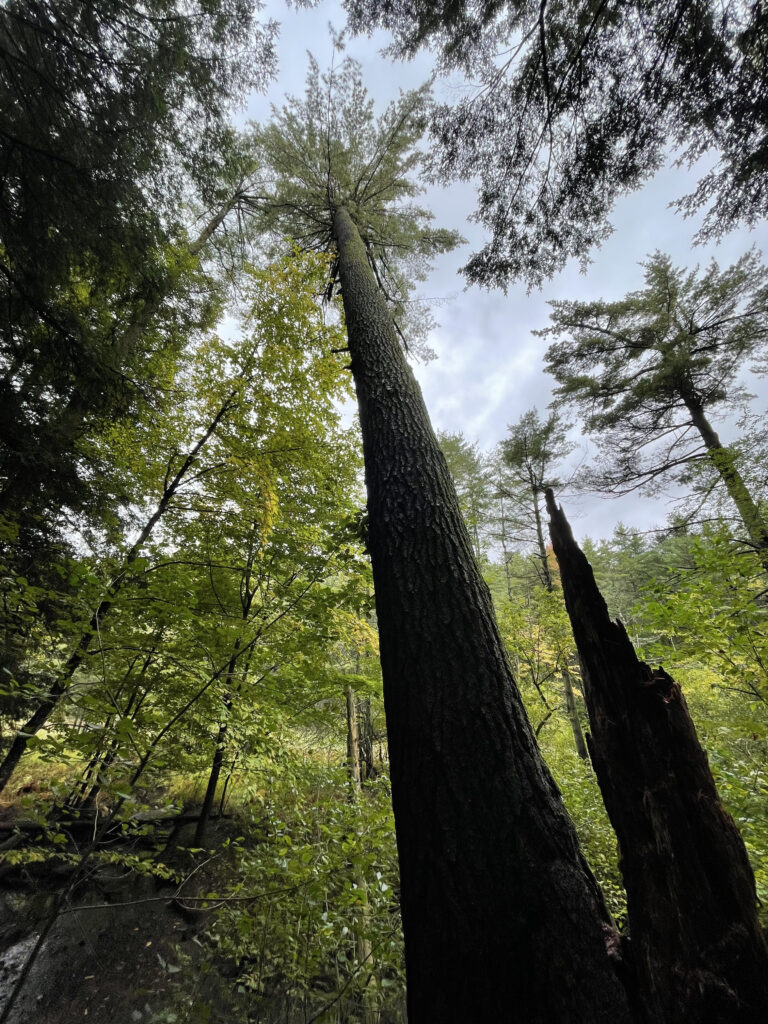
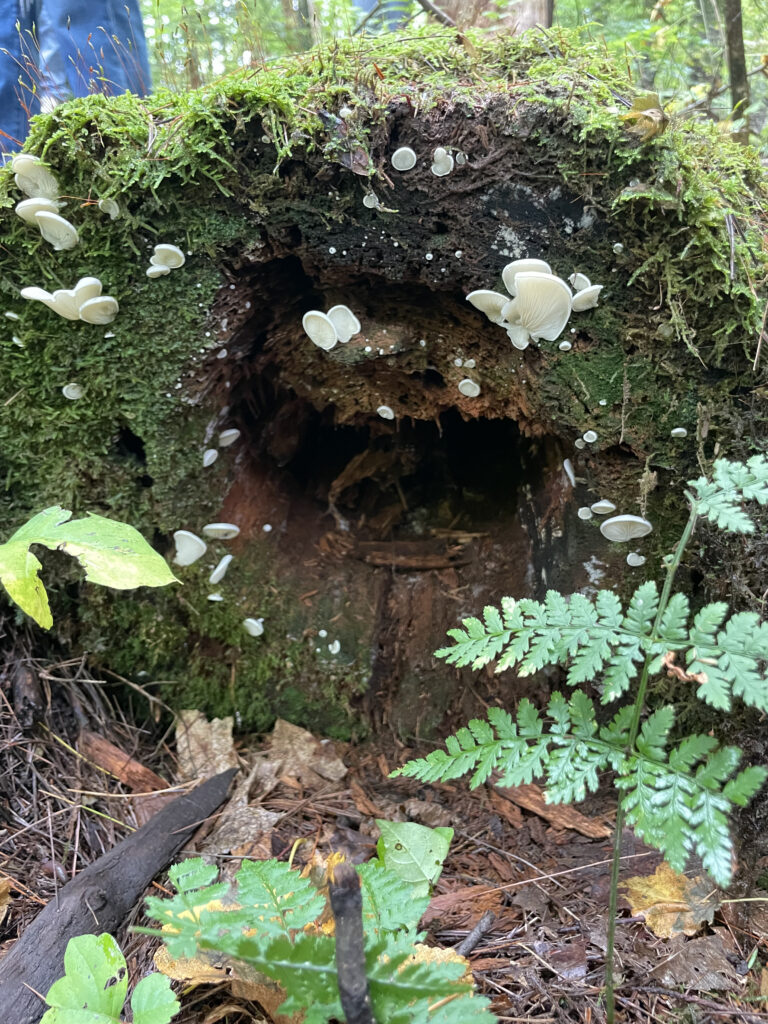
Thursday, October 28, 2021: Sitting on the slightly moist forest floor, I felt very peaceful. The crisp air hindered my observation of smell, but felt great on my face. I was calmed by the sounds of Centennial Brook and stimulated by the rustling of the evergreen trees around me. The tree species in Centennial woods is diverse, but my area of observation is located in the oldest part of the forest. This part is home to, almost exclusively, Hemlock and Eastern White Pine. Up the hill, there is remnance of a stone fence, bordering what used to be a pasture. On this land above Centennial Brook’s flood plain there are deciduous trees. In the understory one finds ferns and a lot of mushrooms, and moss on the first floor. The mushrooms are found growing from eye level to the forest floor, often growing on the dead, fallen trees that are decomposing on the ground. They are quite beautiful. Since my first visit, the cold weather has caused most of these to disapear.

Introduction My Area in Centennial Woods

This area in Centennial can be found with a short walk from the trailhead. At the trailhead follow the trail to the first small clearing, there will be an option to go left or stay right. Stay right. After crossing Centennial Stream you will go up a hill where you will find another crossroads. Here you must stay left and you will dip down towards the stream’s floodplain. Now you are in the hemlock forest. This is the oldest part of Centennial. It is also damp and home to many types of mushrooms photographed below. Other than the mushrooms, which are fungi, there are barely any herbaceous plants on the forest floor. The floor consists mostly of pine needles and dirt. The woody plants include Japanese Barberry, Hemlock, Eastern White Pine, and Yellow Birch.

Skip to toolbar