One Last Time

This is most definitely the most lush I have ever seen with my eyes, and yet the trees are not even fully bloomed yet. The understory, as of right now, is much greener when compared to the overstory. The major landmark that this place holds for me is the log, along with the chair that is always right by it. A minor one would be the second chair, which now appears to be living behind the log. I wonder if the two chairs had beef, and that is why they got separated. The ways that nature and culture intertwine are most definitely found in the litter that is present. Ever since the beginning of the first semester, there has been a jar toward the entrance of the trail for cigarette buds, called “Cigarette Soup”.

I believe that just this small example shows the way that culture specifically college culture and nature have become intertwined. I do consider myself a part of this place, the reason for that is I made some amazing memories with friends that will last a lifetime there.
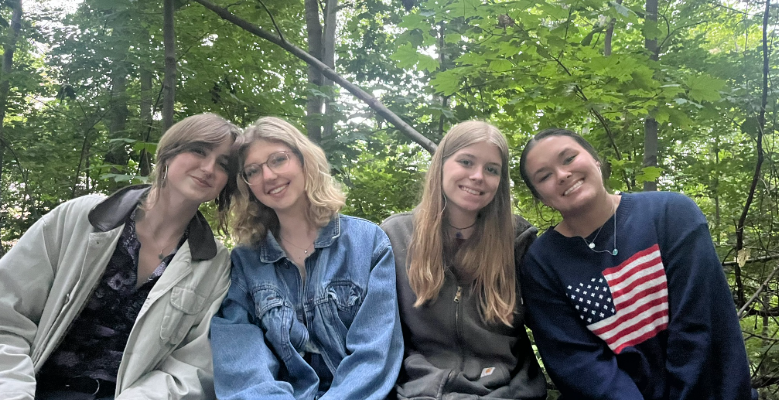
This picture was taken by Zoe Kessner on September 9th, 2024. Maddie Cook, Maddie Taylor (me), Sage Fiander, Payton Holm, going from left to right. We all met on the first day of being on campus. Next year all of us will be living right across the hall from each other 🙂
City Nature Challenge

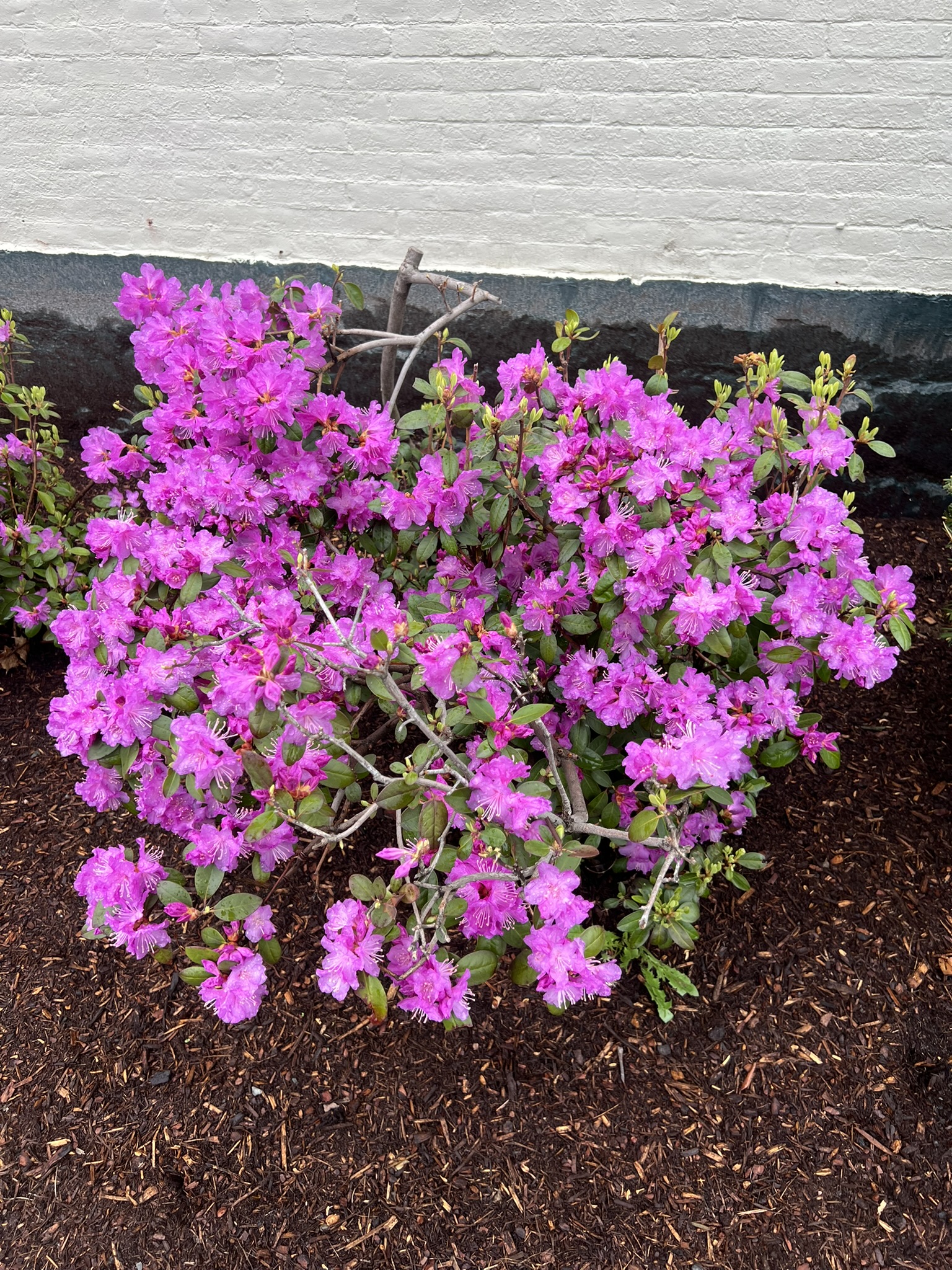
This challenge allowed me to explore areas that I had not explored before. The area that I primarily focused on was the waterfront, surprisingly. I also took this opportunity to look closer at the living organisms around my dorm, Trinity Campus. My experience with iNaturalist was really good, besides the fact that it decided to continuously drain my phone battery. I encountered a large number of species, yet I did not catalog all of them, because after a certain point, I wanted it to just be me and nature. I found it interesting that the vast organisms could be found in a relatively small area.

Phenology Walk

The date on which my phenology walk occurred was April 23rd, 2025. This day was beautiful, it was sunny with not a drop of rain. When I went out on my walk I was able to observe that practically each of the trees were around the same point in their phenophase. There was budding on the tree, yet it was still minimal. Not much color to the trees and the leave are no where to be found.

It Has Been A While

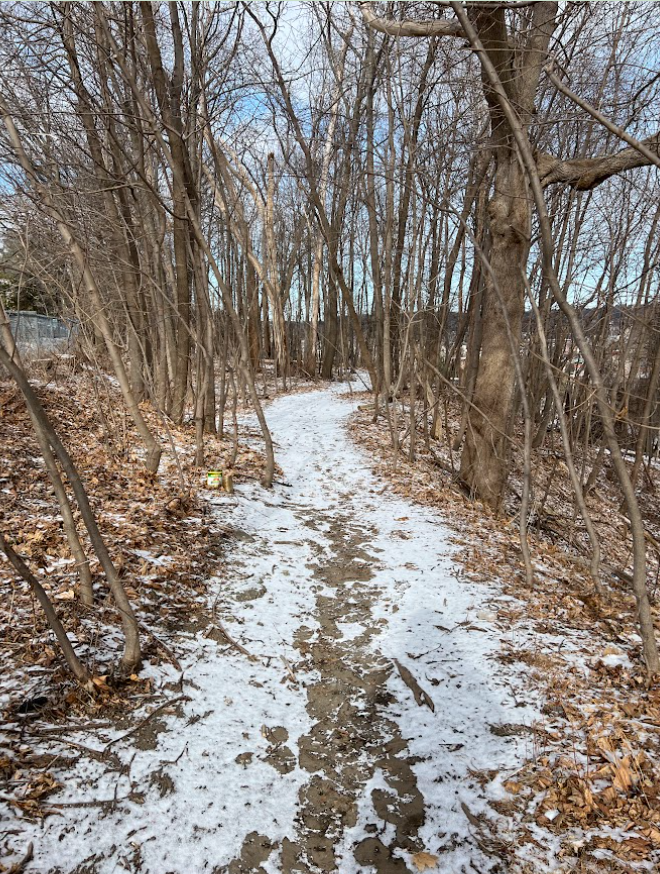
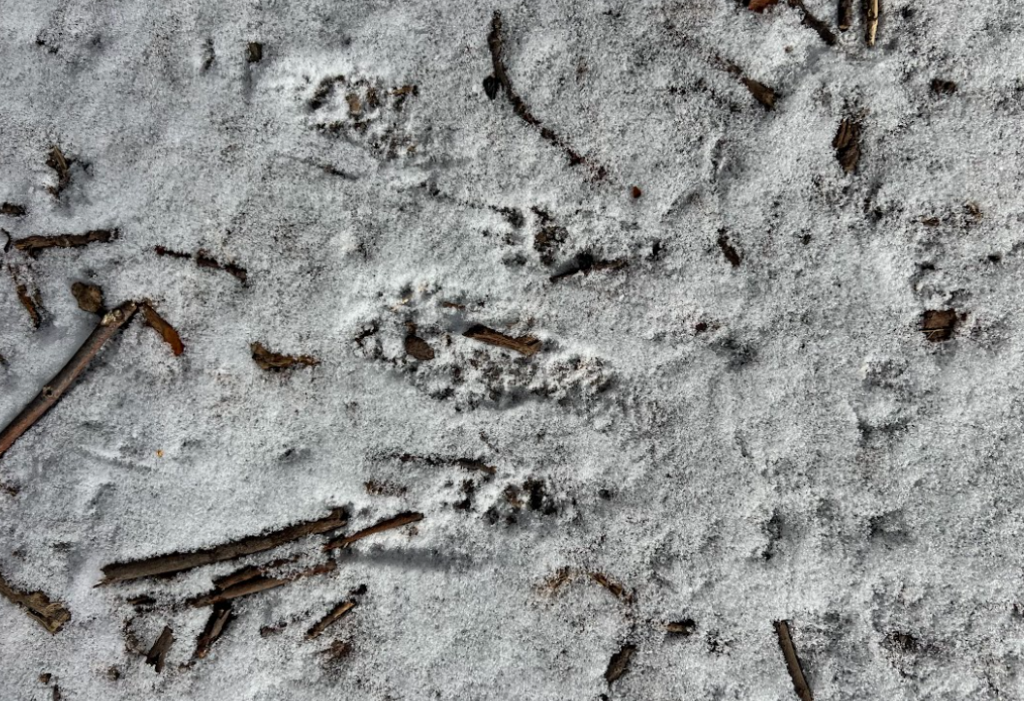
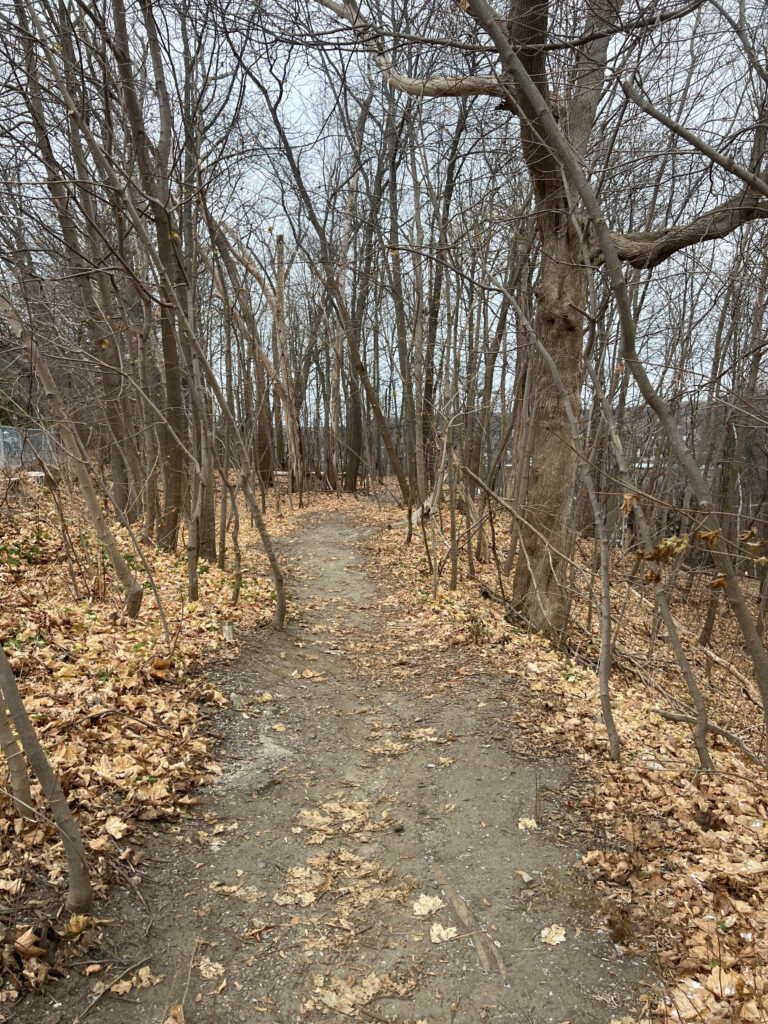
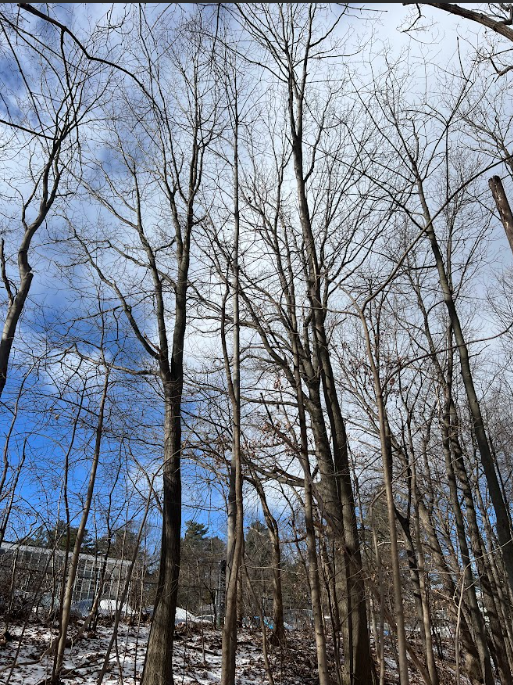
Once returning to my spot after winter break the differences were not extremely noticeable. The differences were only found if you were trying to look for them, which I obviously was. There are still a decent amount of leaves present on the floor of the woods, but definitely less than in December. When I went today to visit it was perfect because last night allowed for a dusting of snow to be there as well. That enabled me to find a set of tracks left from a critter. Shockingly there are still a few leaves sticking to their tree even after almost a month.

Back To Where It All Started

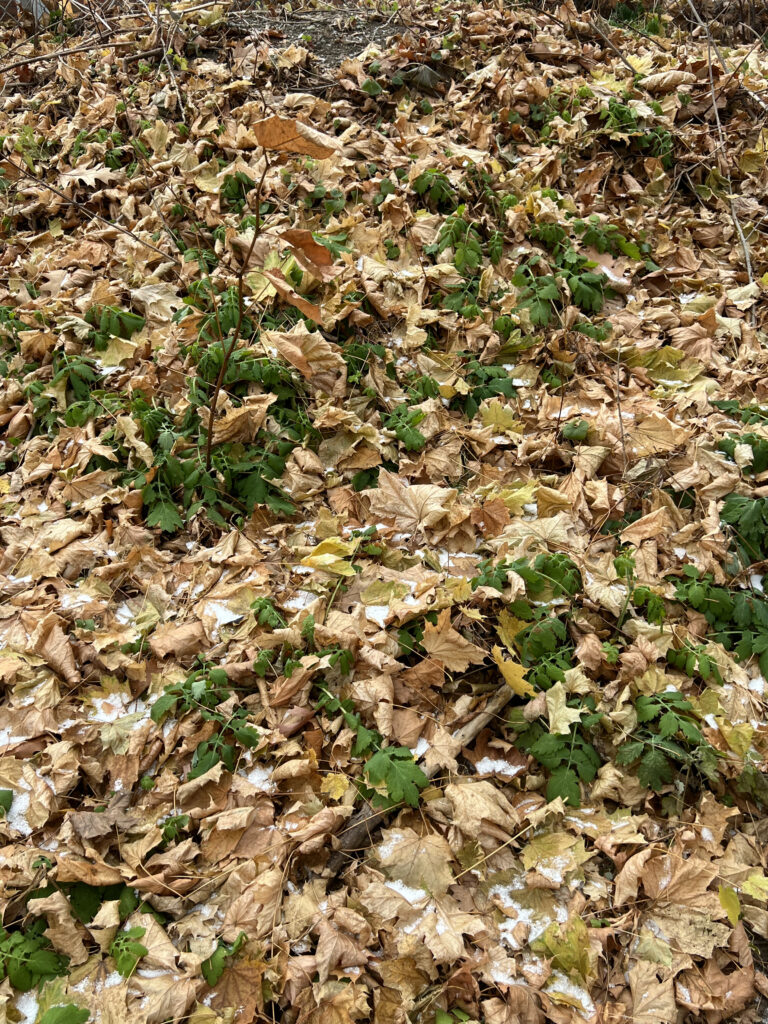
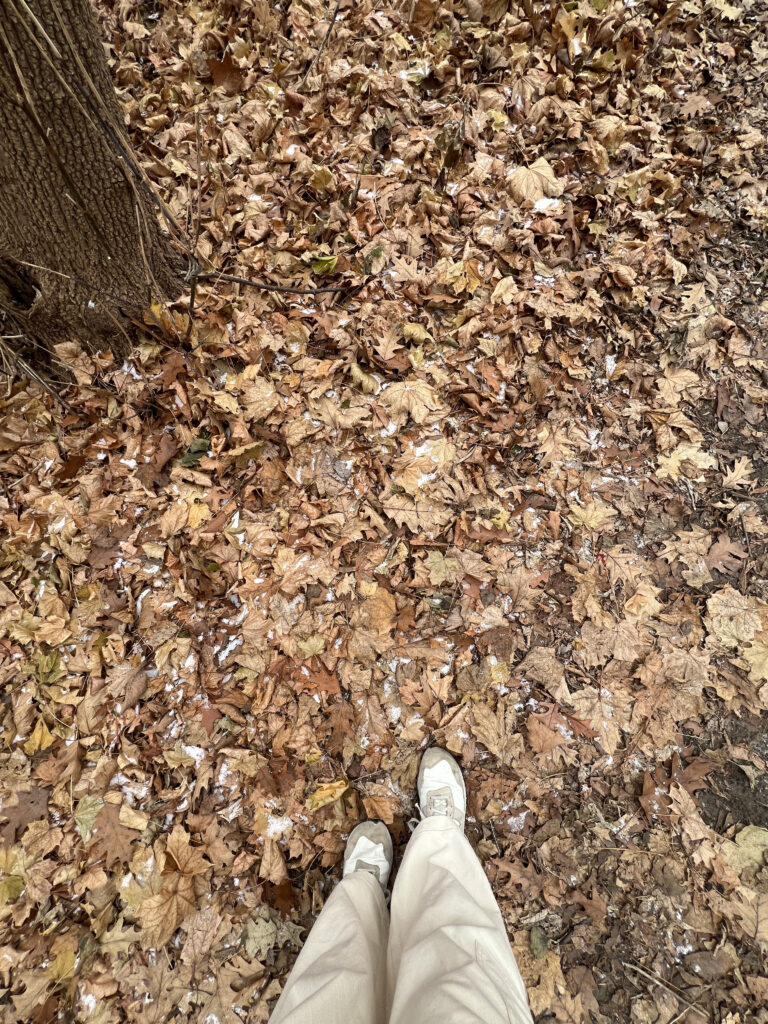
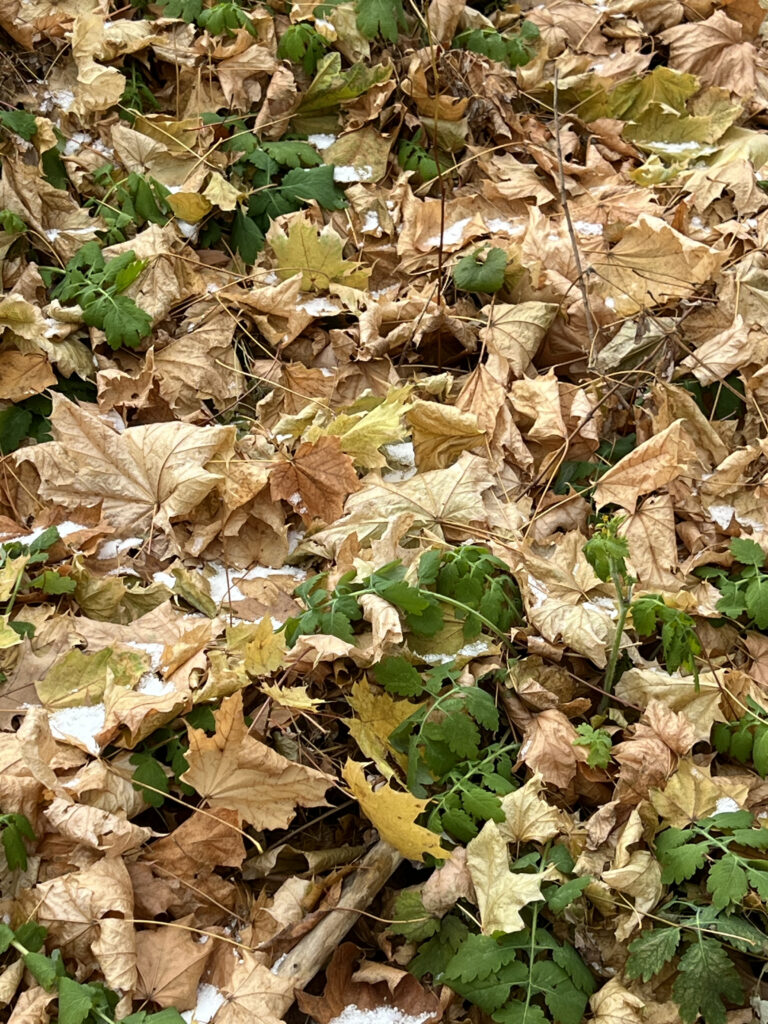
The majority of the area is blanketed with dead leaves, remnants of the autumn season. However, amidst this brown carpet, there are small patches of vibrant green, resilient against the harsh cold of winter. These hardy plants are identified as Garlic Mustard, a species known for its ability to thrive in less-than-ideal conditions. Despite the surrounding dormancy, these lively green spots stand out, showcasing the plant’s remarkable adaptability and persistence in surviving the winter chill.

How Has The Foliage Changed?

  • Are there any leaves still hanging on any trees, and if so, what species?
    • There are no leaves still hanging on the trees
  •   Is there persistent vegetation or fruit?
    • Yes, that would be the Garlic Mustard
  • How has the fall leaf litter changed—are there signs of decomposition and decomposers?
    • The fall leaf litter has most definitely increased since my first visit here. I see little to no presence of decomposition or decomposer.
  • Are there any animals to observe or traces of their presence, such as nests, tracks, scat, marks in tree bark?
    • During my visit today I saw no animal presence or any sign of animal activity.
  • How much has the animal activity decreased, if at all?
    • There typically are not too many critters in this area since there is a walking path that people typically go through.

What aspects of your phenology place do you enjoy the most?

I really enjoy that it’s just a few steps away from my dorm. I live on Trinity Campus, where there’s practically nothing nearby, so having a little place to go is great. I also appreciate that this spot allows my friends and me to hang out without the harsh fluorescent lighting found in nearly every building.

New Location

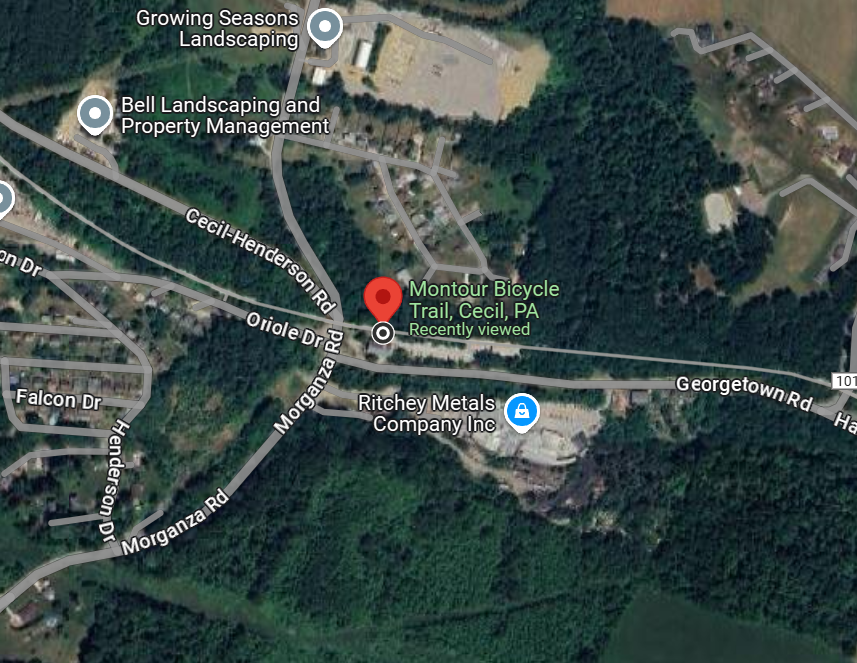
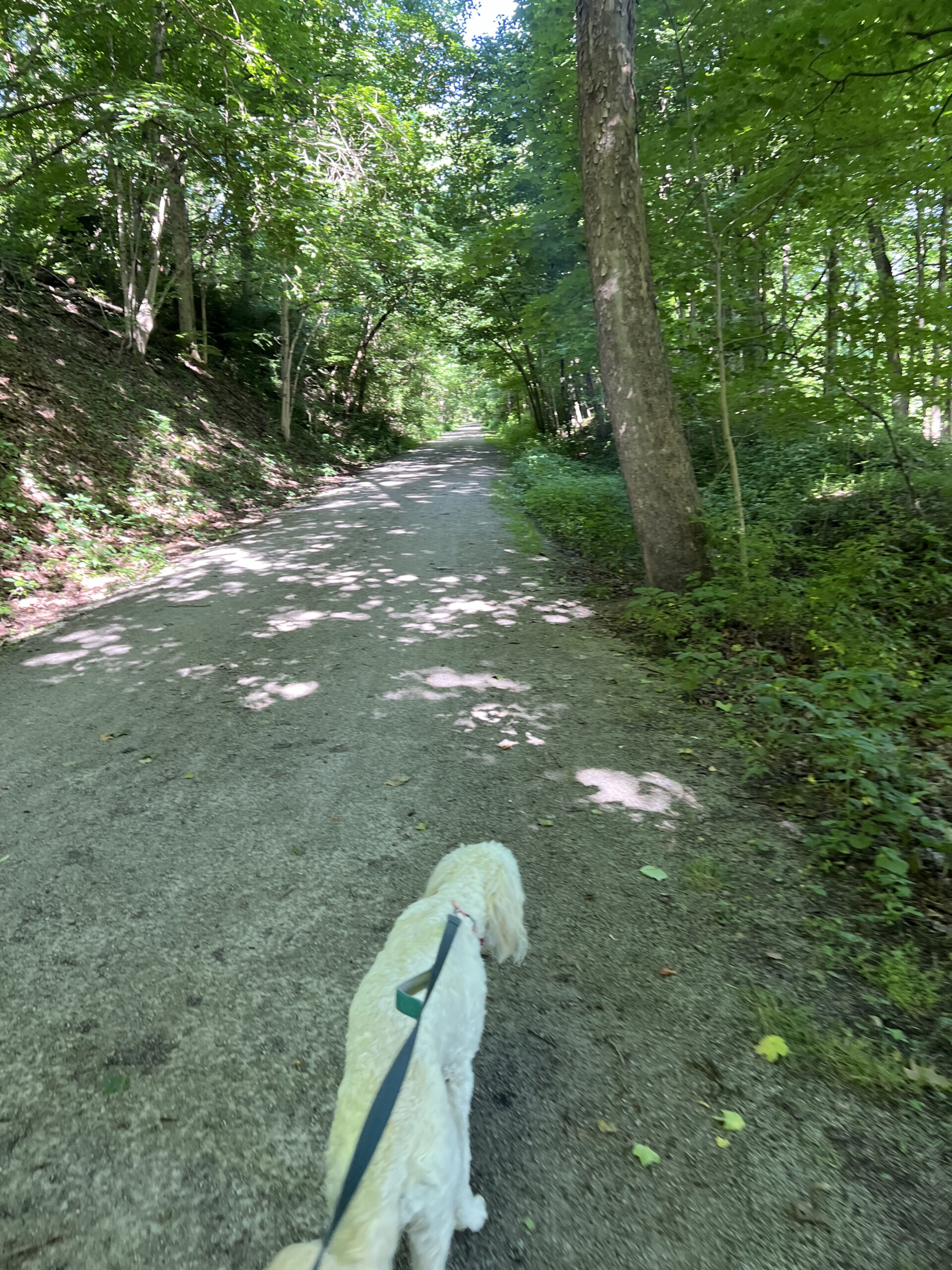
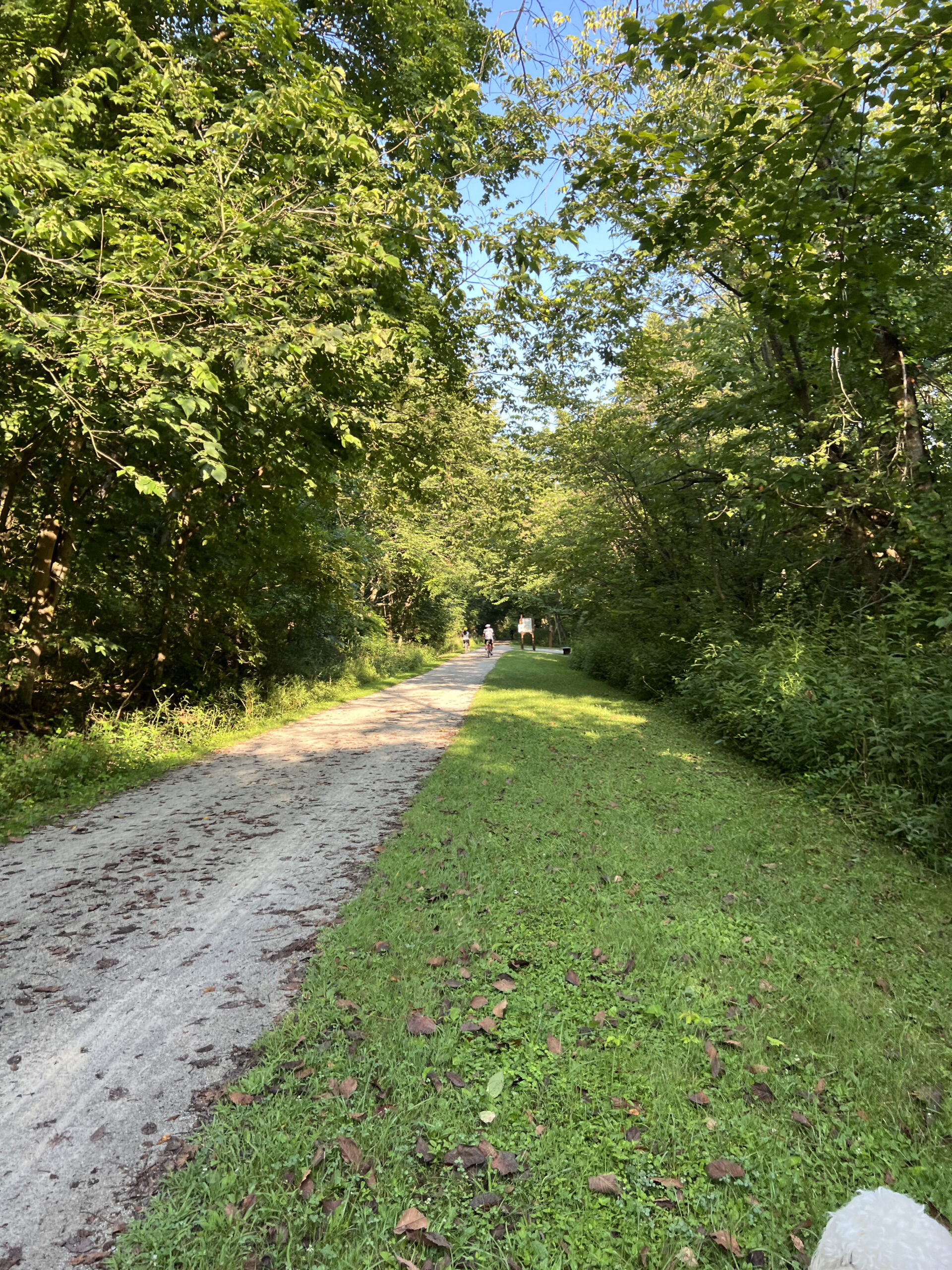
My New Location is Cecil Park, but specifically the Montour Trail Section of the park. In the summer I would take my dog for a walk there at least once a day. That is the primary reason why this location is so special to me.

Google Map

Why Is It So Special?

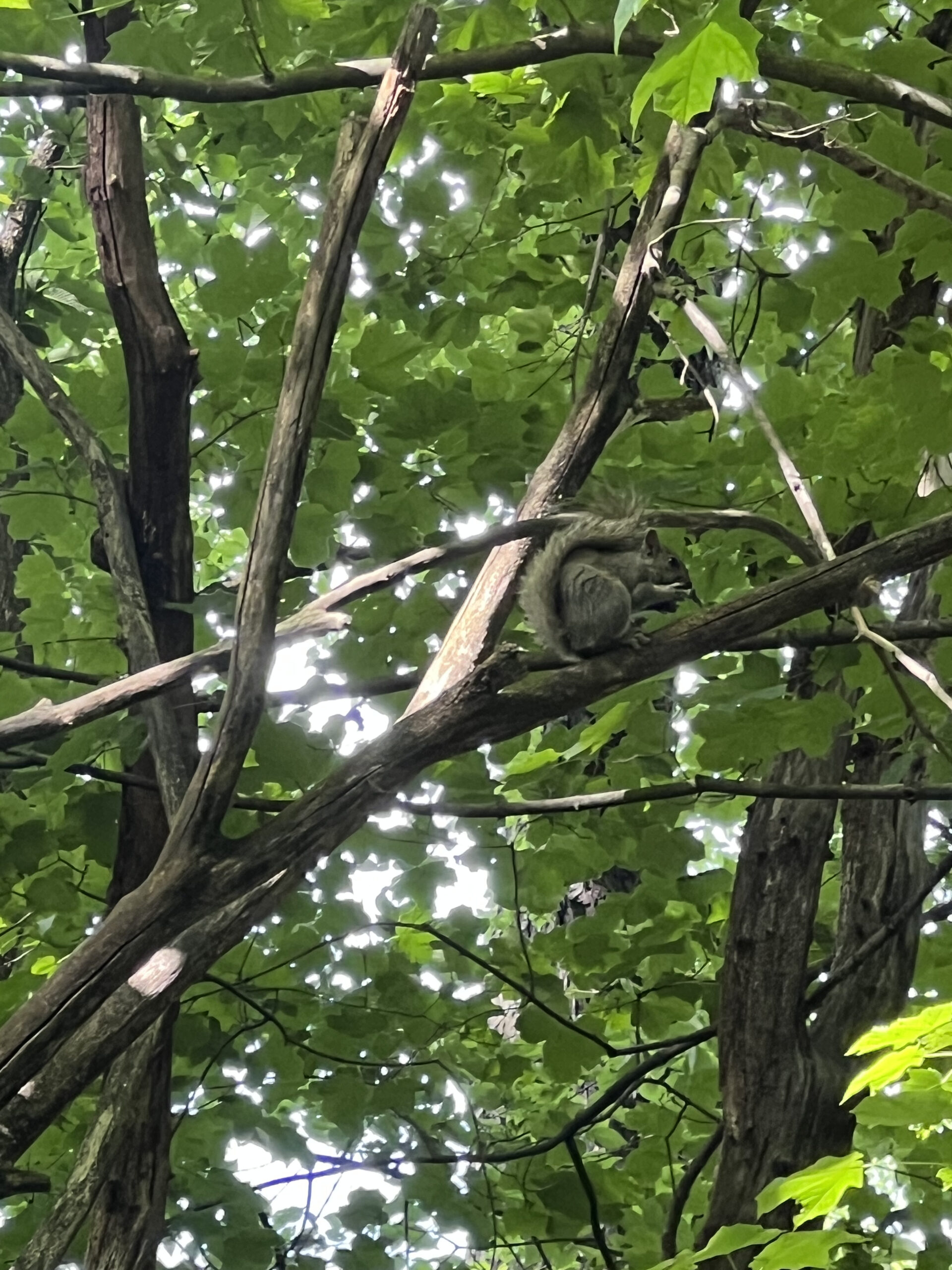
These pictures were taken this summer

Comparing Ecology and Phenology

When it comes to my location in Burlington, there little grass. The ground is most covered with woody plants, and shrubbery. While the Montour Trail has grass on both sides of the trail, along with shubbery when it comes to hill sides. The trees that are along the Montour trail are also far more lush than the ones in the Burlington location.

Centering Myself

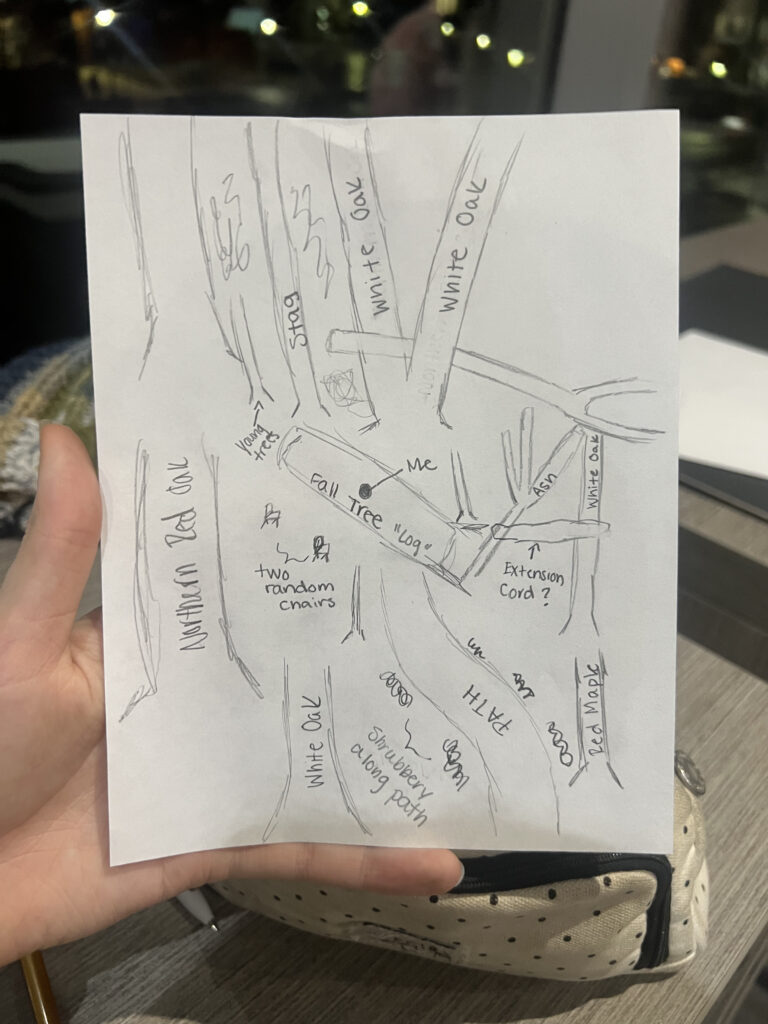
This is my bird’s eye drawing of my location. Specifically where I sat and reflected for 15 minutes. Also, the only difference that I noticed from visiting in October is that now a majority of the leaves have dropped from the trees. The leaves that have yet to drop have changed colors drastically, and are now bright orange to a more palish yellow.

My Experience While Being Centered

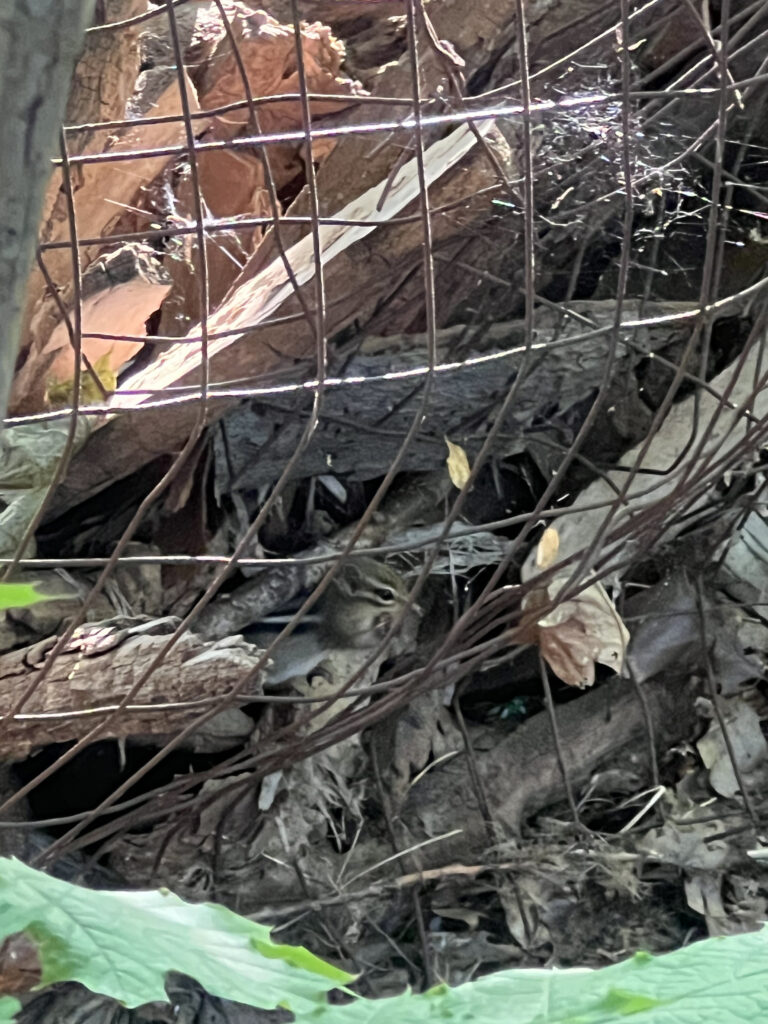
This is an experience I wish I could relive for the first time. While attending college, I have come to realize how difficult it is to find a truly quiet place that also makes you feel connected to home. However, this particular spot checked both of those boxes. At home, we have a wooded area in our backyard, and I often go out on my deck to look at the trees and listen to the birds. This place felt just like my backyard again. The sounds of chirping filled the air, and today, I was fortunate enough to see a chipmunk. I really enjoy watching chipmunks; back home, there is one that lives under the steps at the front of our house. His name is Bernard, and my family and I have been feeding him for the past three years

Below is a picture of the chipmunk that visited me today

Introduction To My Area

Introduction

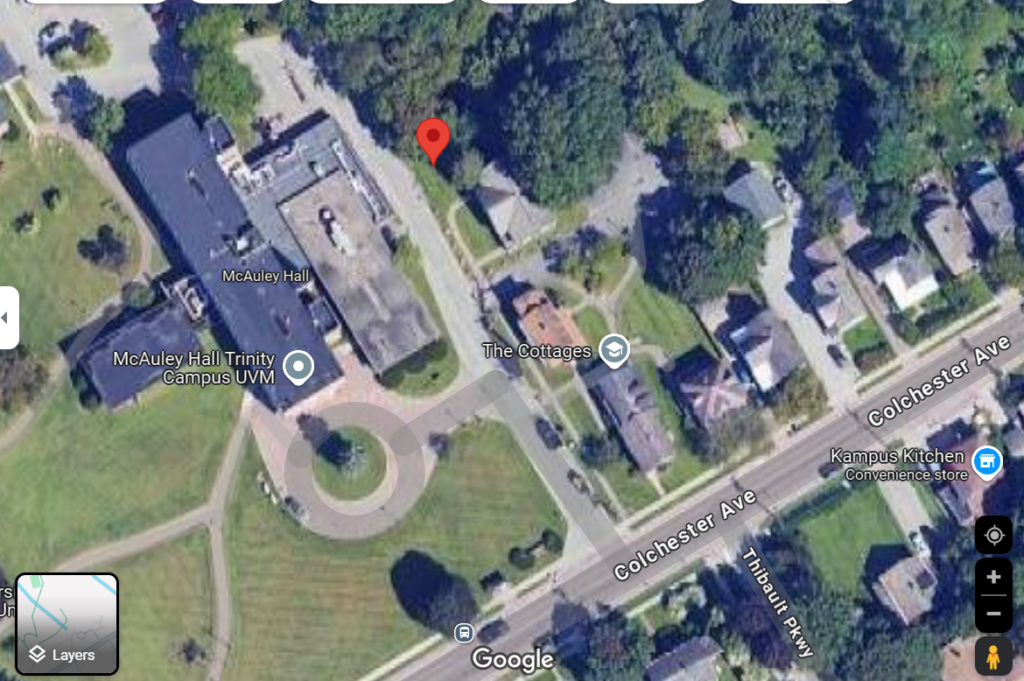
I chose this path, which is located directly beside McAuley Hall. That is the dorm hall that I reside in. A few of my friends and I found this place within the first week of being here. It is nice because it does not take long to reach a decent-sized log. We call this place the log, and it allows us all to get some fresh air very easily. This area also permits us to be out in nature without being too far away from our dorm, which is very convenient. Since there is a log on the path, that also provides us a space where we can all sit and talk to each other while still being present with nature. 

My Area

Google Map Location:

Description of Vegetation

In my area, the vegetation is a mix of shrubs and trees of various sizes. There are also quite a few stags present in the plot. As of October 2024, most of the trees still had most of their leaves, but they were beginning to lose them. The leaves that remained on the trees were green, while those starting to fall displayed shades of orange and yellow.

Closer to the forest floor, you’ll notice numerous ferns, sticky shrubs, vine plants, and very young trees. When you look up, the larger trees dominate the sky, although some sunlight still filters through the canopy.an orange to yellow color. When you get close to the floor of this woody area, you notice that there are many ferns, sticky shrubs, vine plants, and very young trees. When you look up you notice the much larger trees cover most of the sky, but you can still see the sunlight peaking its way through just a little bit.

List of Most Common Woody Plants

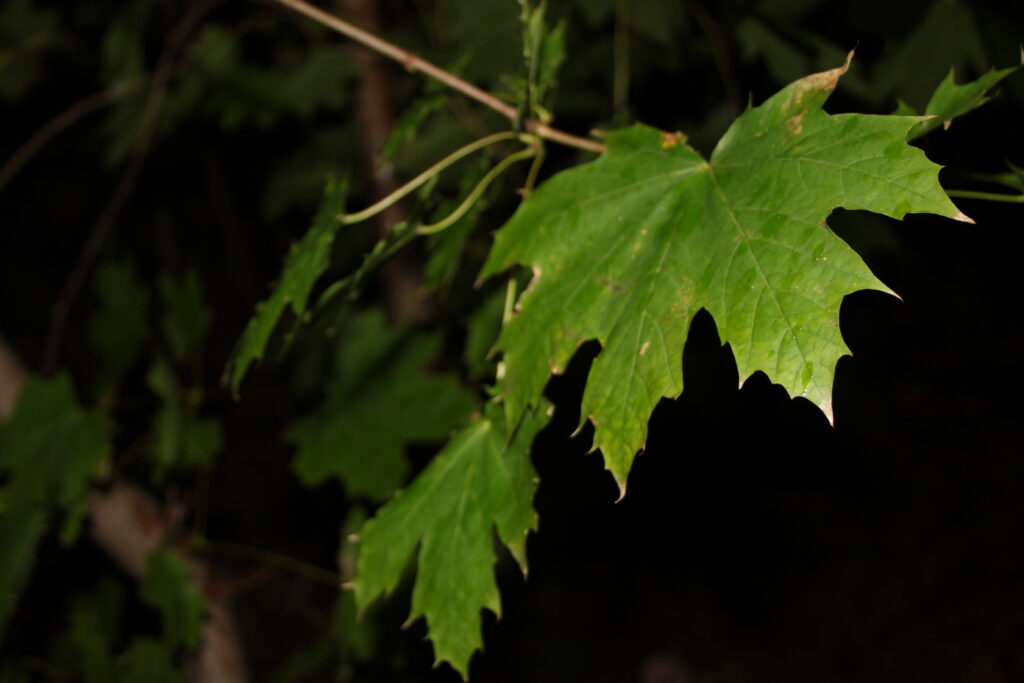
  • Norway Maple
  • Northern Red Oak
  • White Pine
  • Red Maple

iNaturalist Link —-> https://www.inaturalist.org/people/mtaylo23

Skip to toolbar