
City Nature Challenge – April 28th, 2025
During the City Nature Challenge, I decided to explore deep into the woods behind my residence hall. There are a few trails behind it, but the one trail I focused on goes down a hill and leads to a creek. I have never explored that trail before, so I decided to pick it for the BioBlitz.
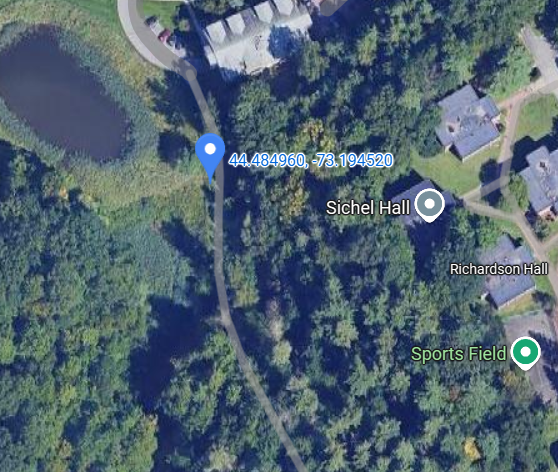
Using iNaturalist, I identified 16 different species of plants, and 15 different bird species in Burlington. For plants: an Elder bush, a Black Cherry tree, an American Aster, a Box Elder tree, Burdocks, Solomon’s Plume, a Chokecherry bush, Spindles, Canada Mayflower, Valerian, Lady Ferns, Maple trees, Royal Ferns, a Honeysuckle bush, Goldenrods, Celandines. For birds: a Red-bellied Woodpecker, a Chipping Sparrow, a Pine Warbler, an American Robin, a Northern Cardinal, a Tufted Titmouse, a Black-capped Chickadee, an American Goldfinch, a Red-winged Blackbird, an Eastern Phoebe, a Downy Woodpecker, a Song Sparrow, a Northern Flicker, a White-throated Sparrow, and a Dark-eyed Junco. I was surprised to hear so many birds, especially so close to campus and busy roads, but they seemed to like the small wetland area and tall trees of the forest. As for the whole world, I was surprised about how many different species lived in highly populated cities. San Antonio has the most observations, currently sitting at 100,890. When in cities, I never stopped and noticed the biodiversity around me because I always assumed there was little to none. After coming to Burlington (a more city-like area compared to my rural town), I realized that there is wildlife living here, you just have to seek it out. I think it is so important that these places still have so many plant and animal species as urbanization threatens these populations. Seeing these numbers is relieving to me. It makes me hopeful for the conservation of wildlife in areas that it might not seem possible!
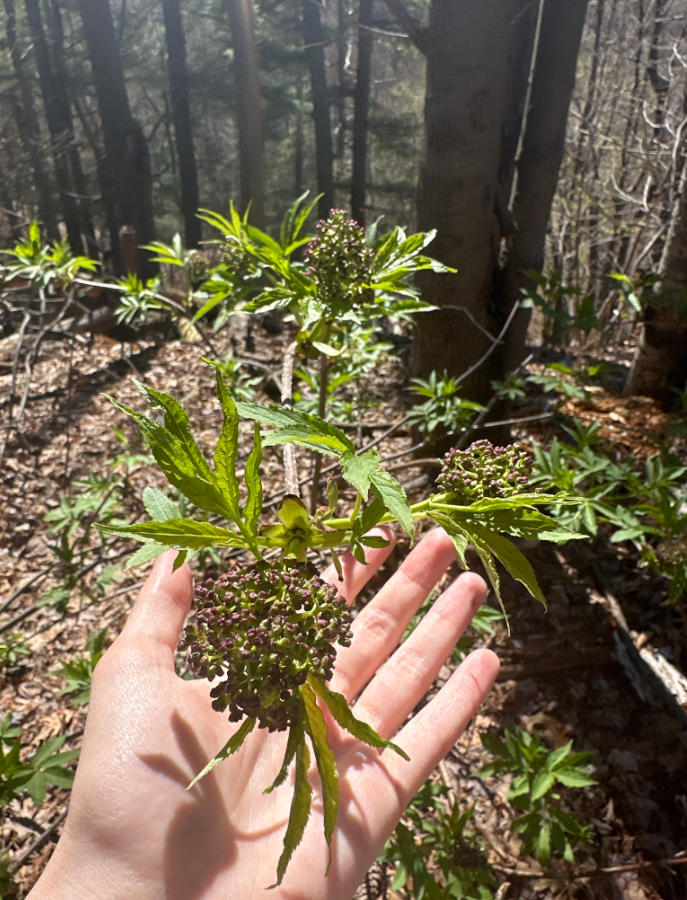
Elder bush starting to gain its color!
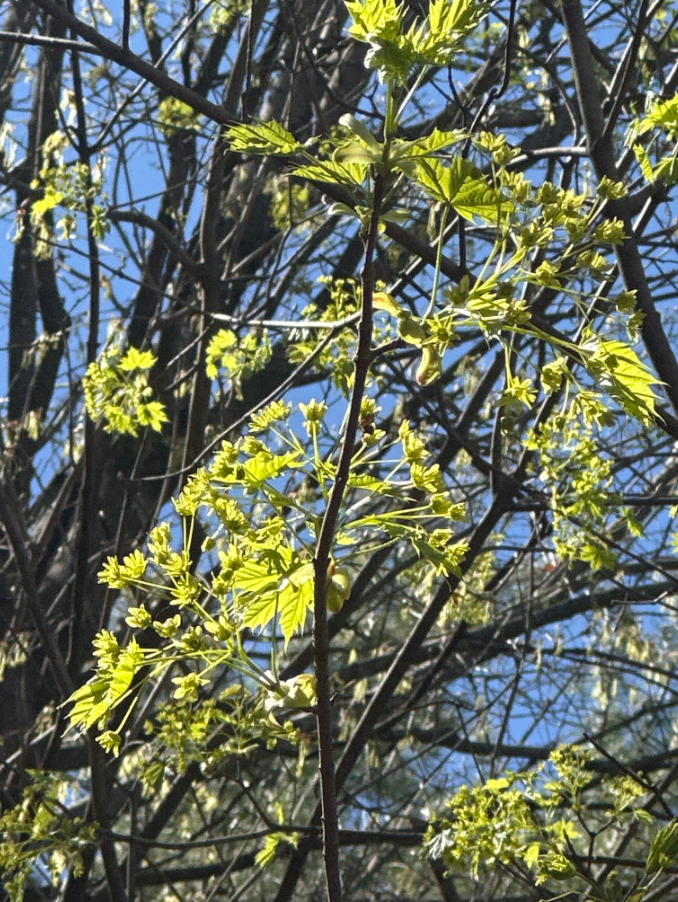
Maple tree breaking its buds and growing leaves!
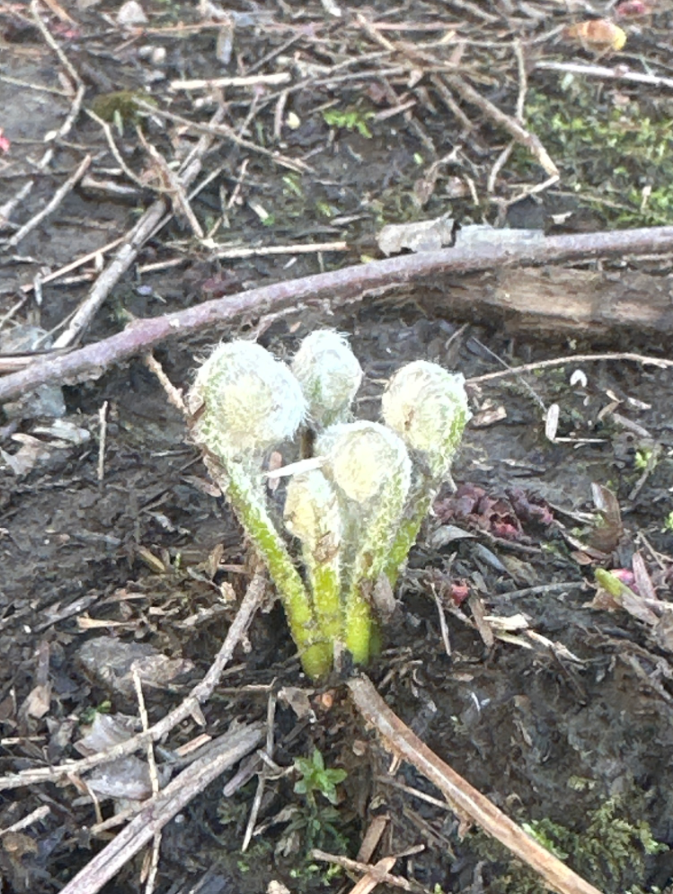
Super cool Royal Ferns I encountered in the woods!
Tufted Titmouse, Downy Woodpecker, Red-winged Blackbird, and Eastern Phoebe! (A little hard to hear…)