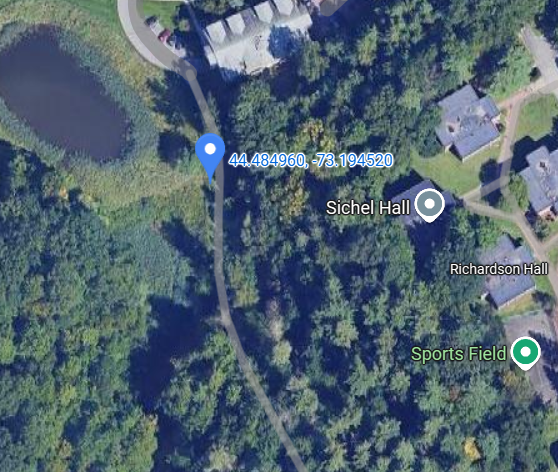
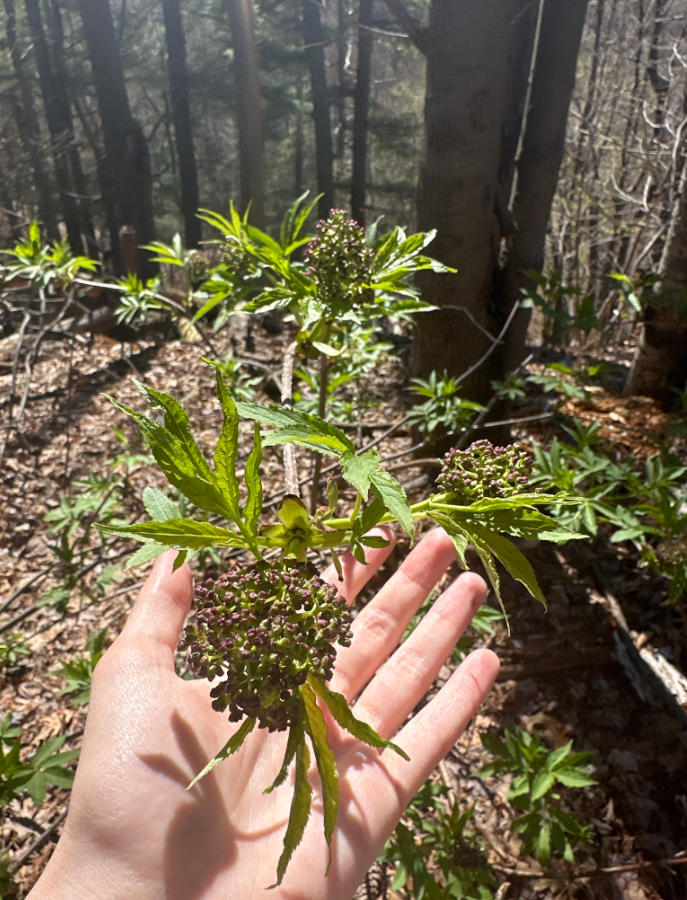
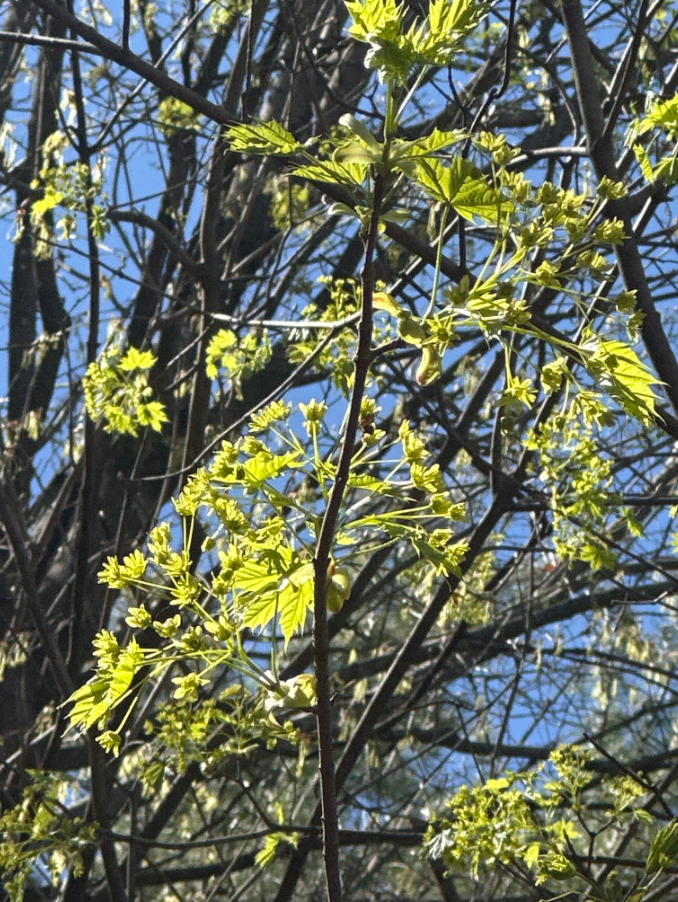
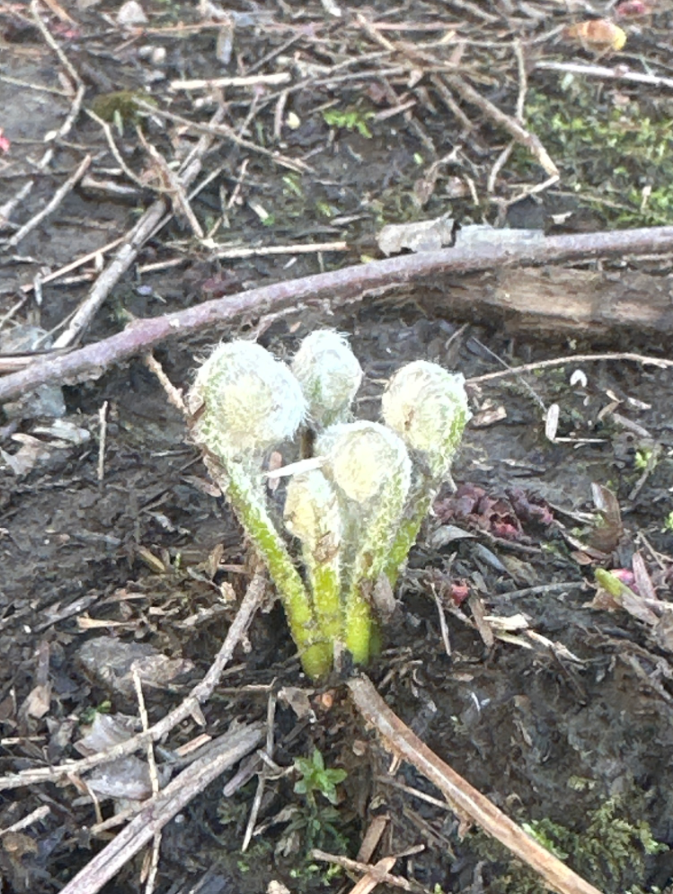
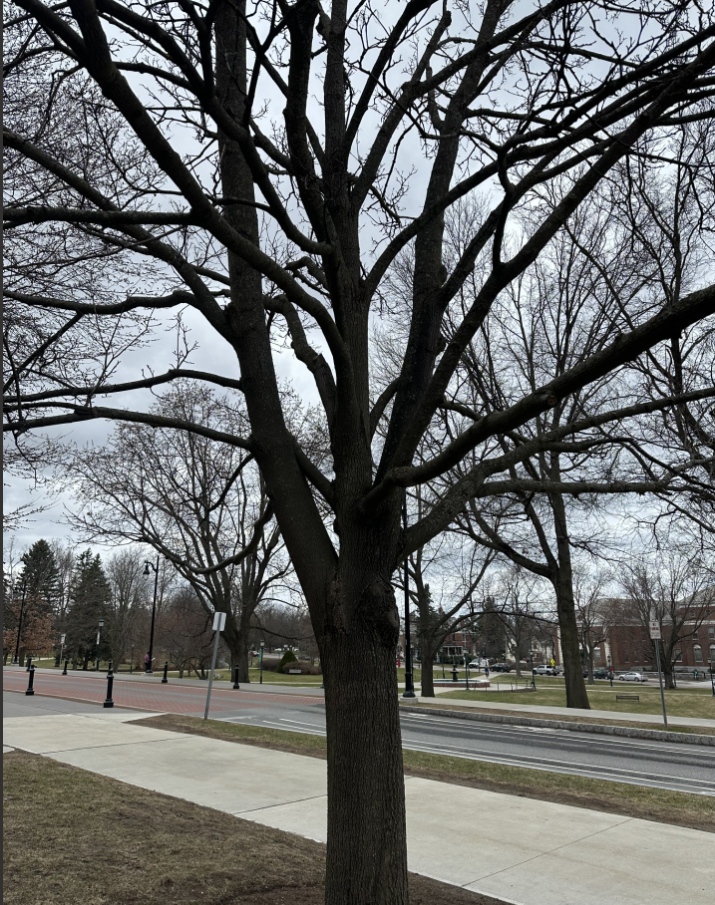
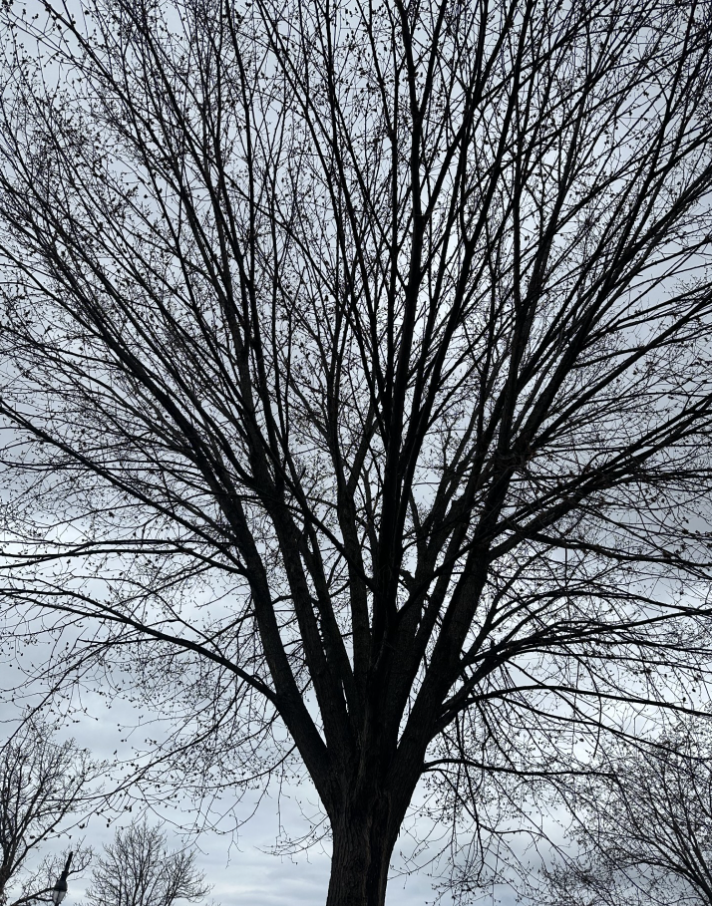
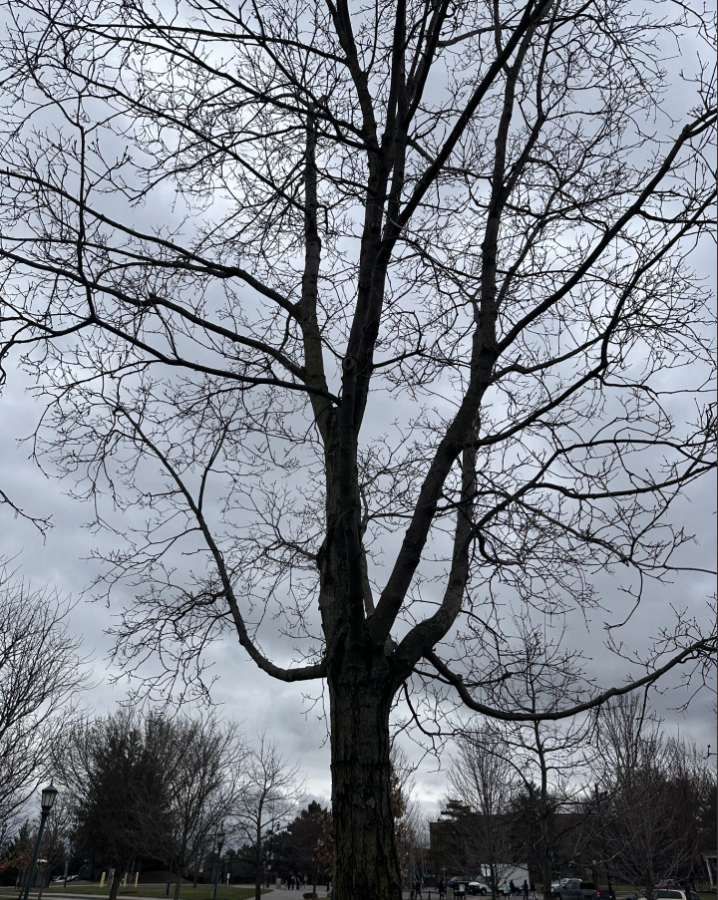
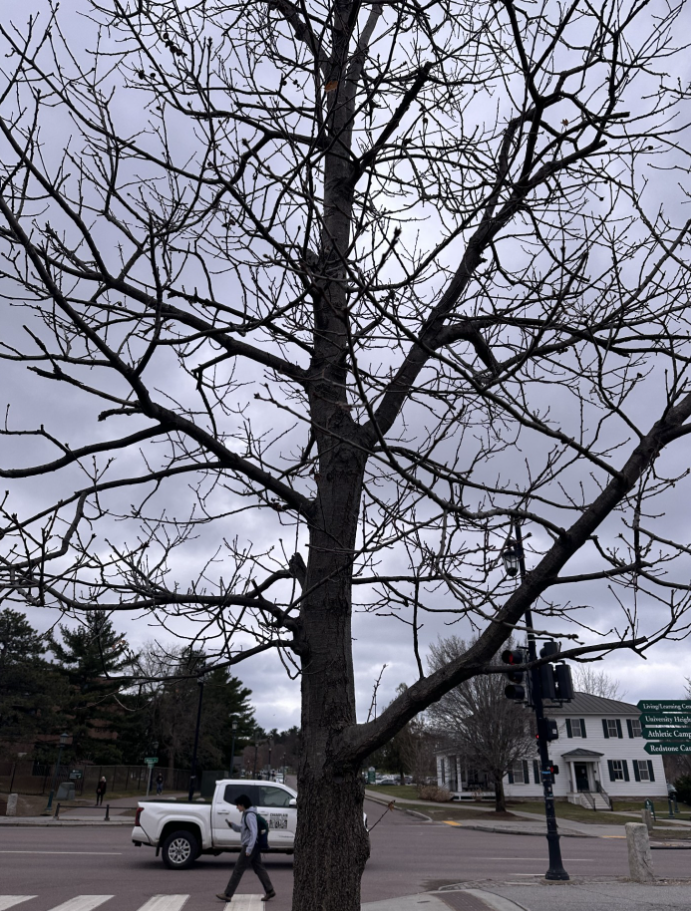
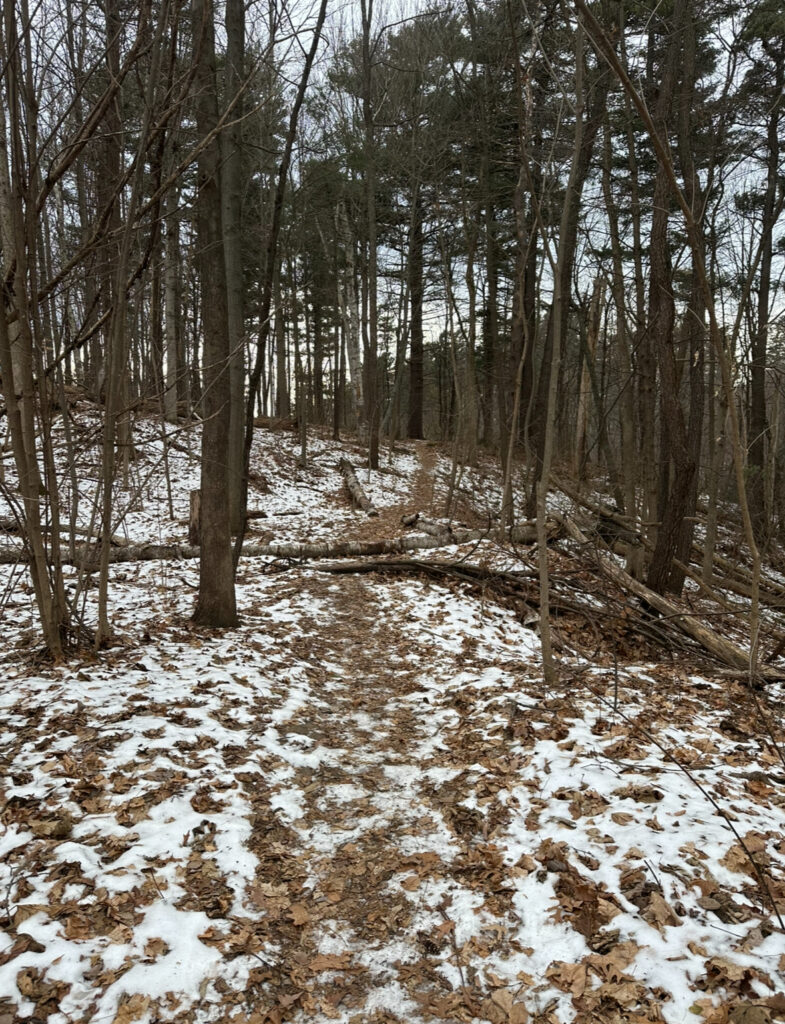
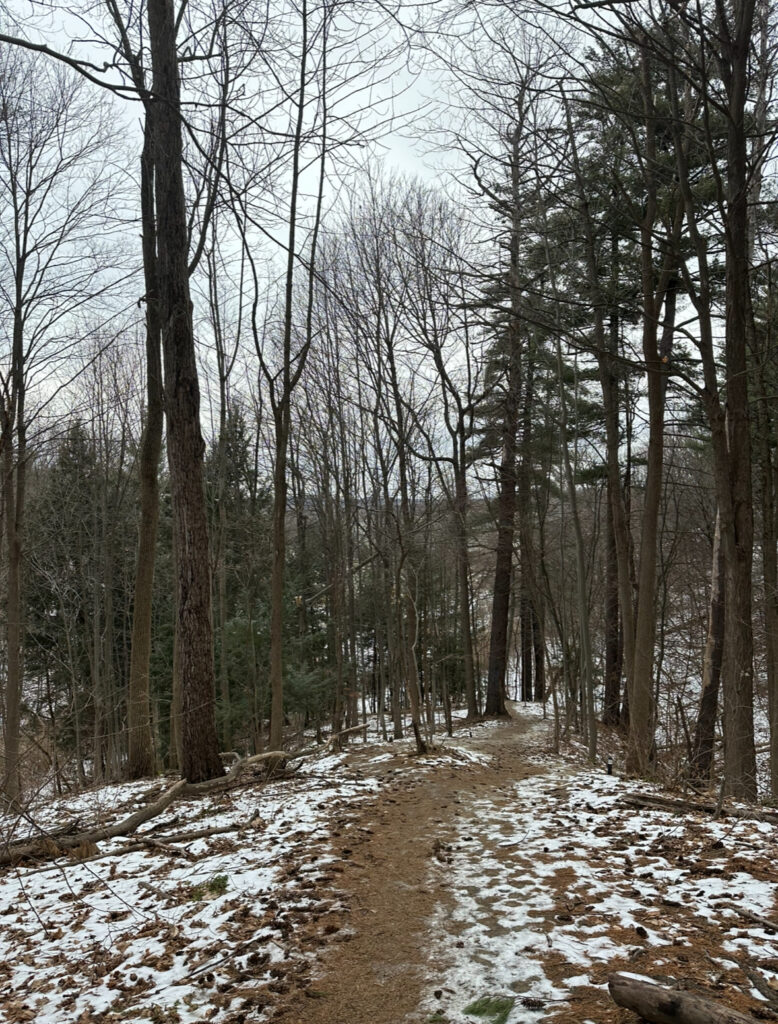
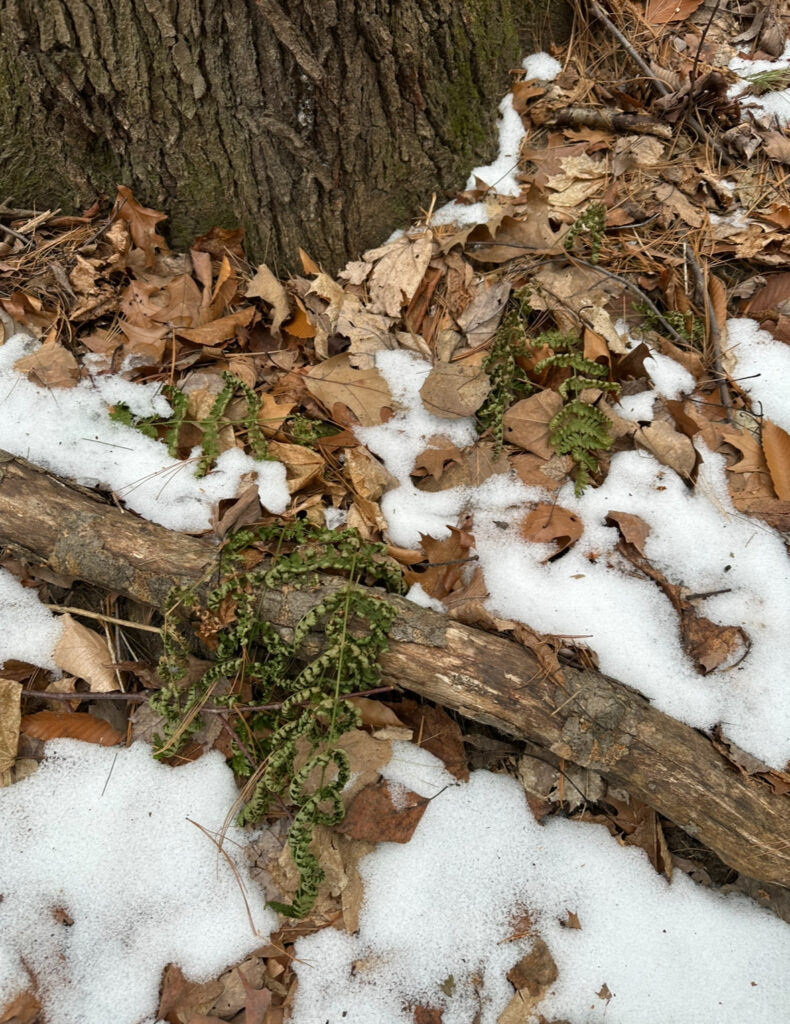
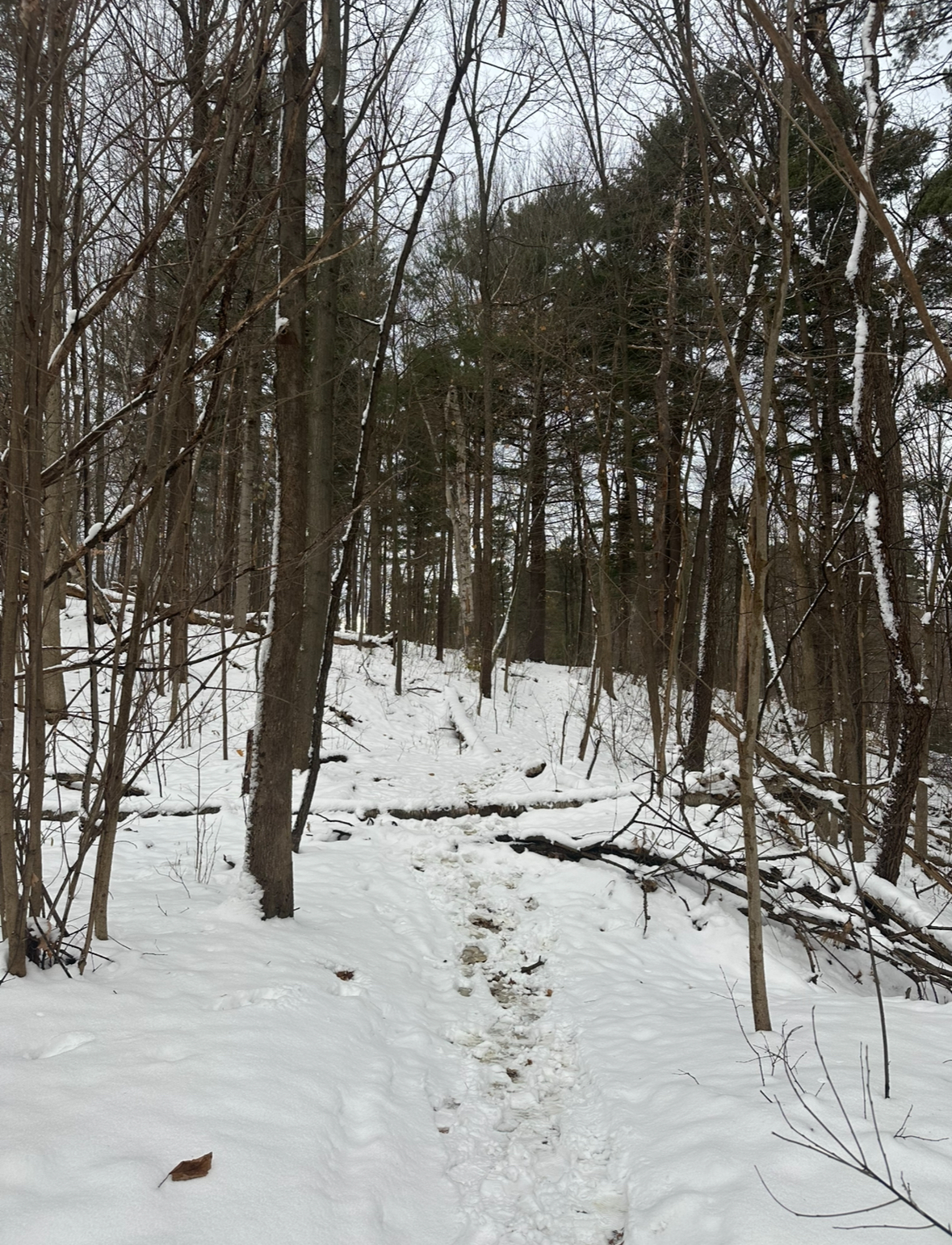
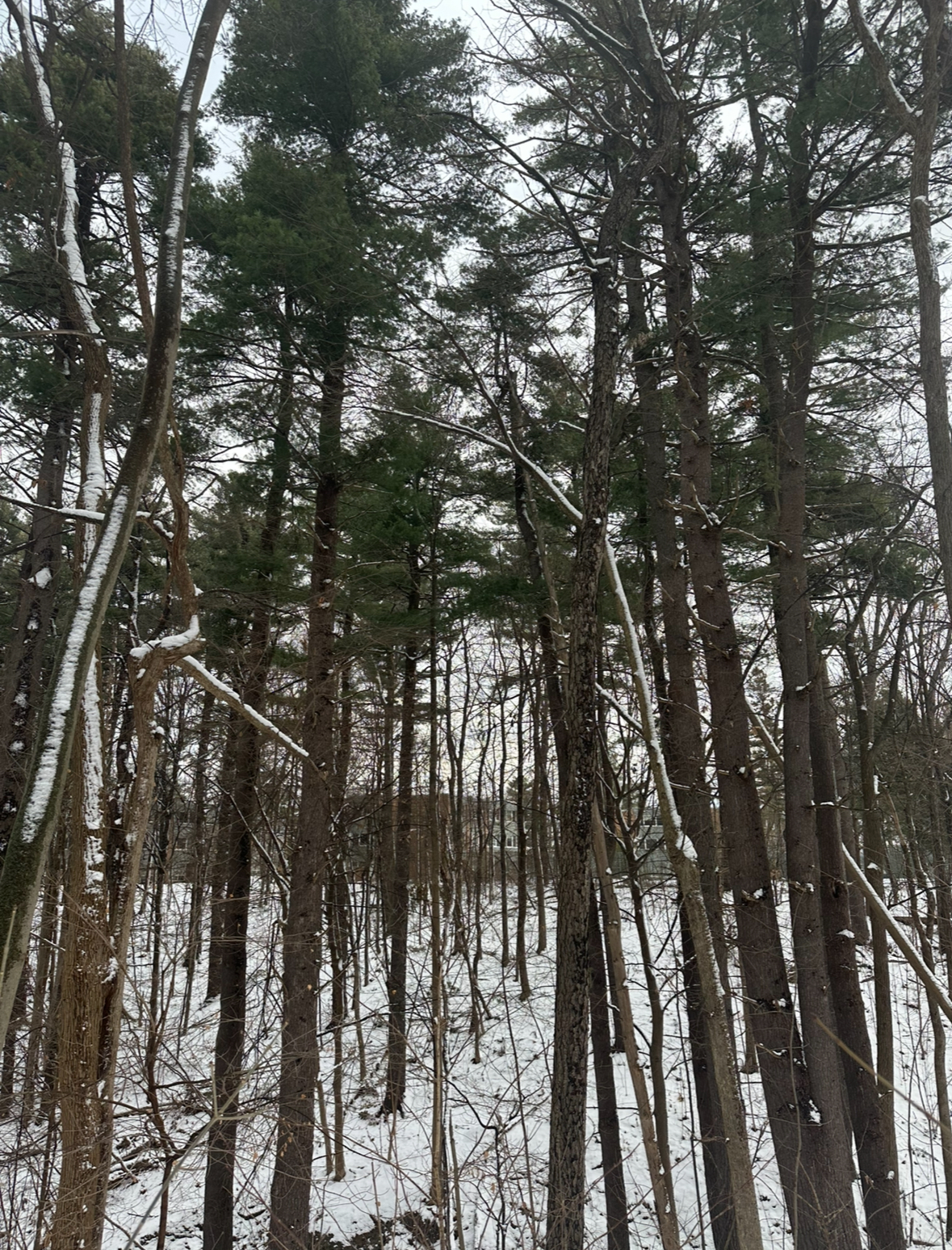
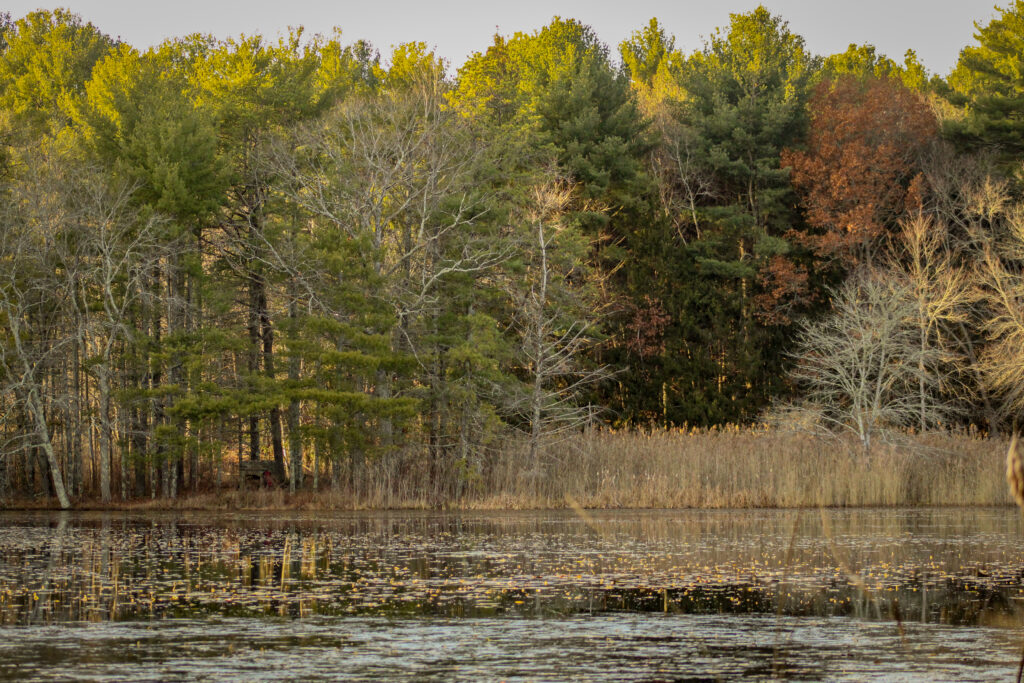
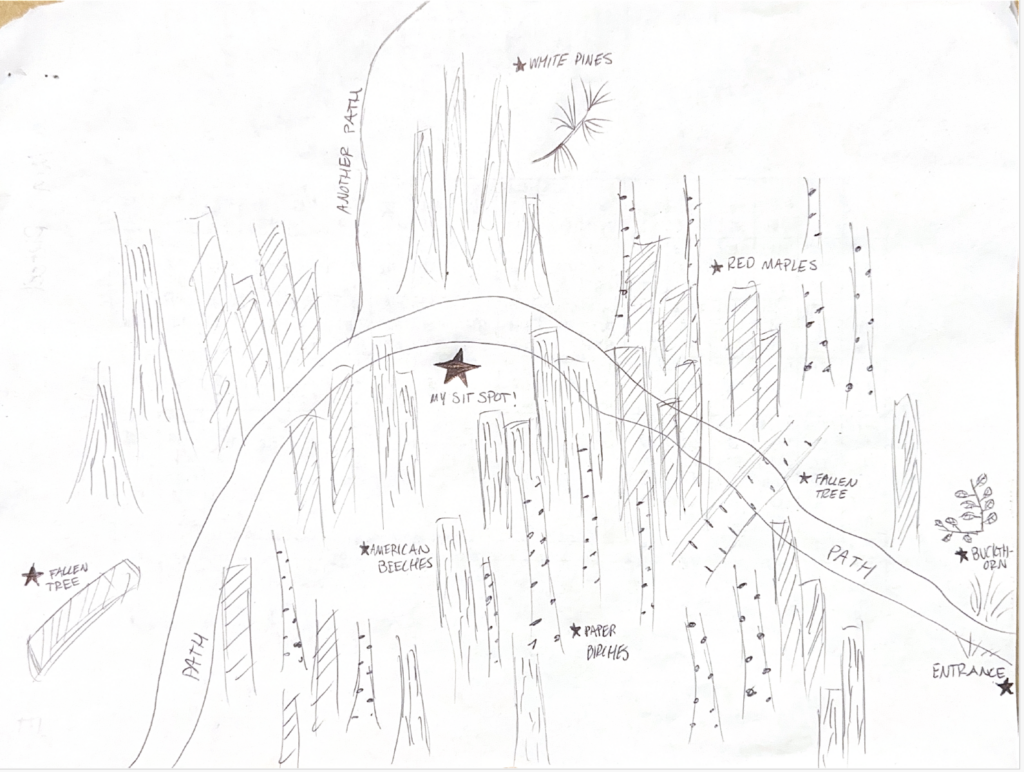
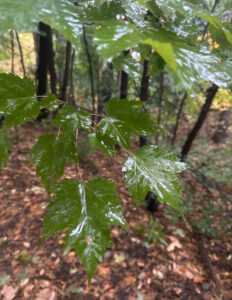
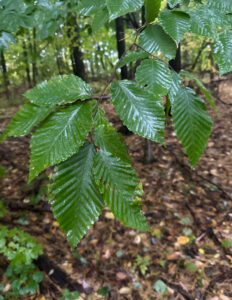
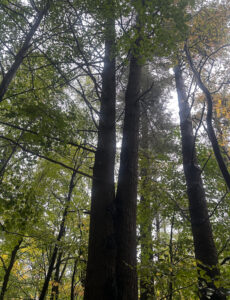
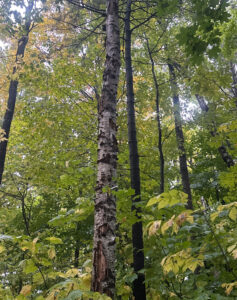
Visiting my phenology spot for the last time was bittersweet because I often visit this spot outside of class. Being able to see all of the changes in this forest behind my dorm was very meaningful for me because I was able to see how an environment different than my one back home has changed alongside me this entire school year. At the beginning of the fall semester, my spot was very overgrown, the trees had their full canopies of leaves and some were even starting to turn to their fall colors. I identified a majority of common Vermont trees, including Eastern White Pines, Red Maples, American Beeches, and Paper Birches. I remember hearing a couple of birds like Blue Jays and Chickadees. Now when I returned to my spot, a lot of the trees only had buds or their buds had just begun to break! Ferns were starting to pop up from the ground and unfurl, red maples were starting to grow their leaves, and a majority of young trees had an abundance of small leaves poking out. New growth was starting, something I had not been able to see at the beginning of the school year.
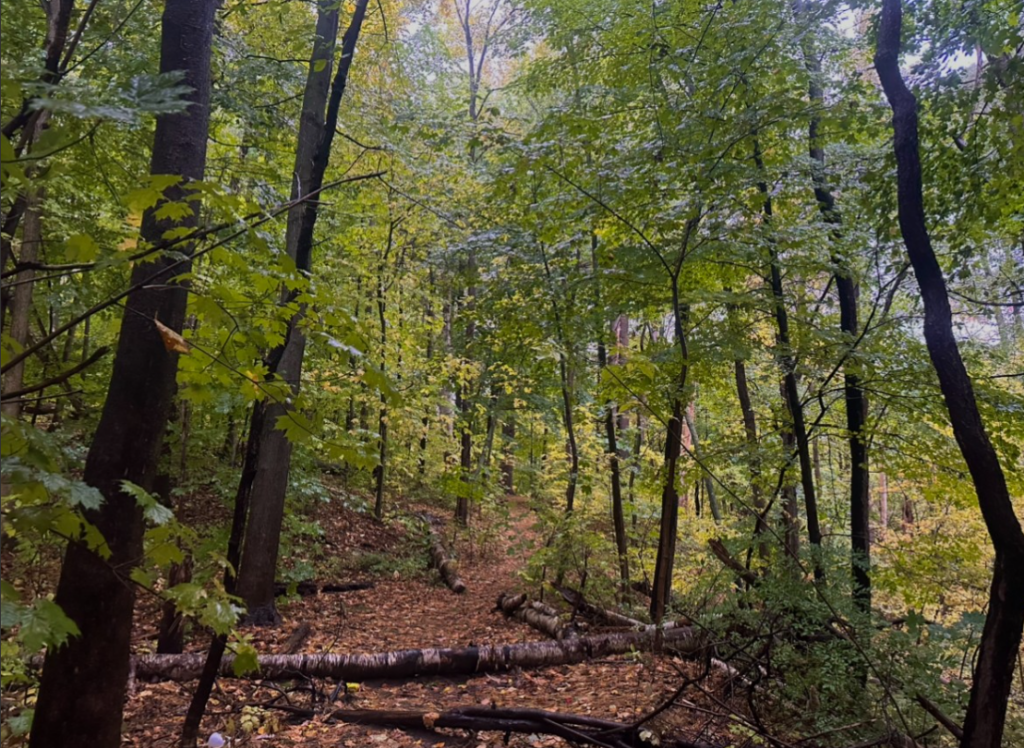
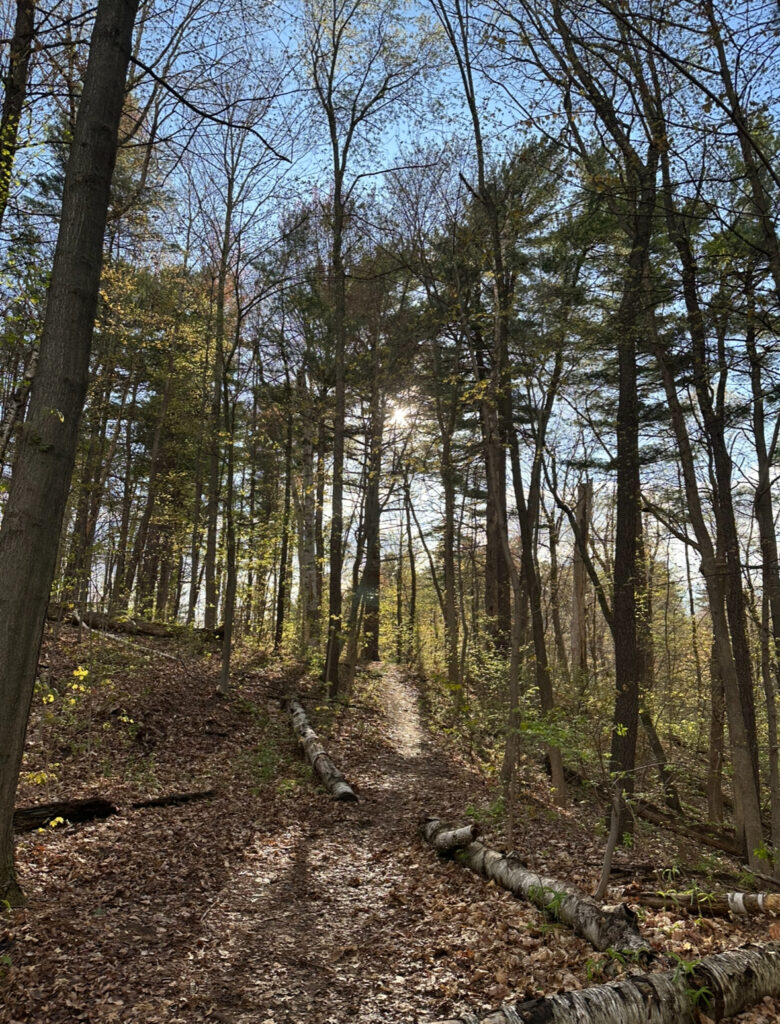
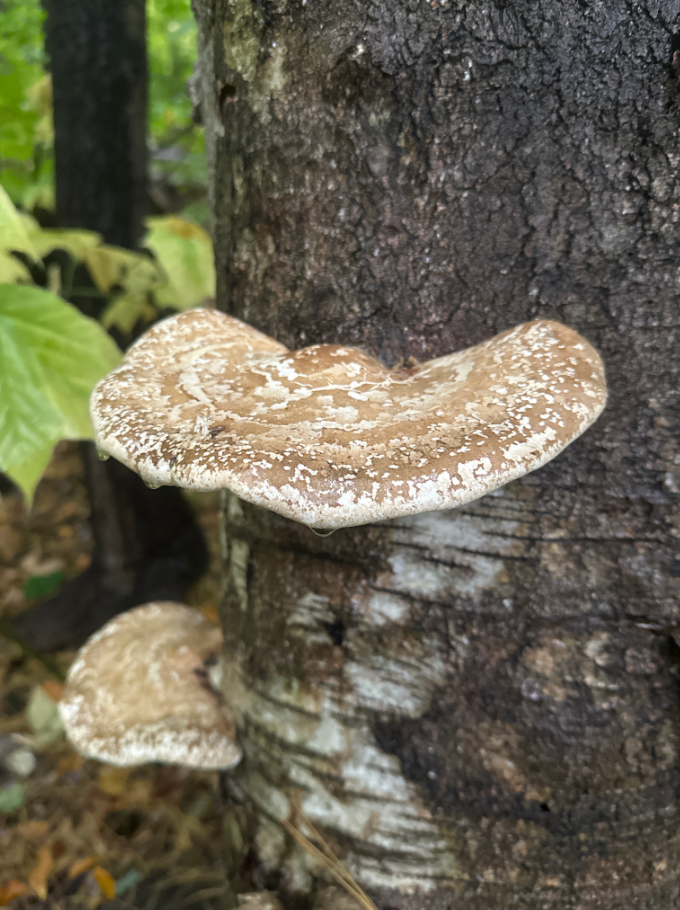
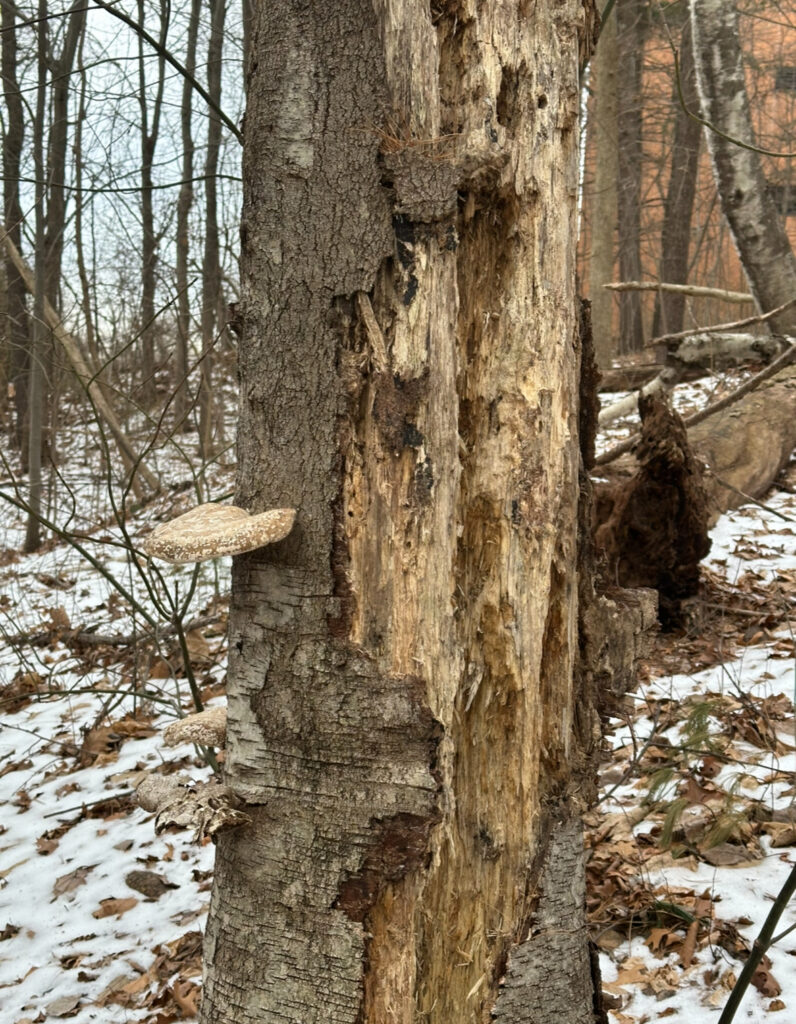
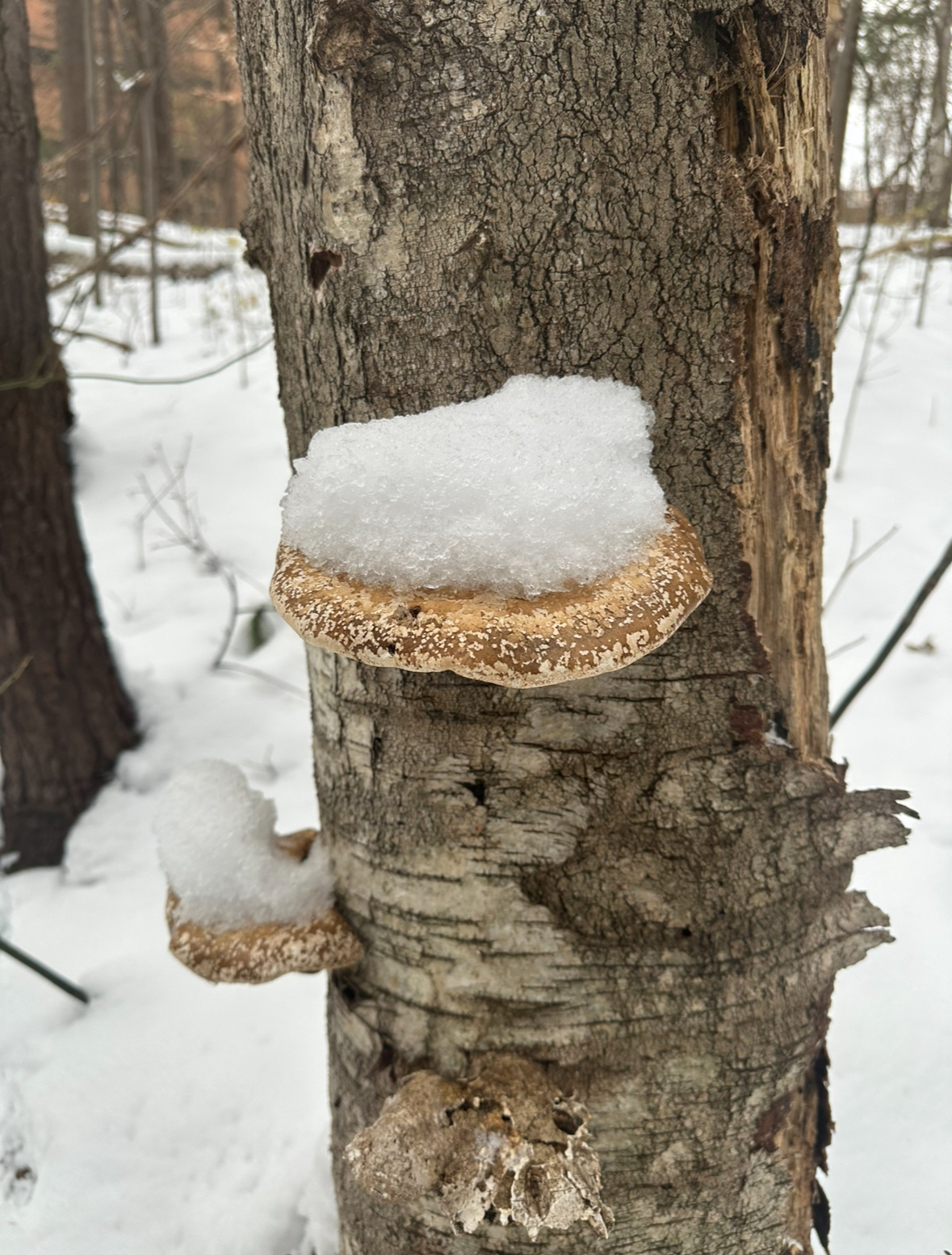
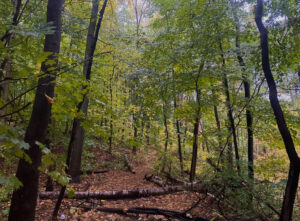
One landmark I have become familiar with is the fallen tree at the beginning of the path (pictured above). This tree has been here since before I have, and it has not moved the entire time. Another landmark I am familiar with is the Birch Polypore fungus (pictured left) that has been on one of the birch trees throughout all the seasons in which I have visited my spot. Every time I come to my spot I notice it and I still find it a super cool part of my place.
Nature and culture intertwine a lot at my place. Not only me, but a lot of other students use the trails on the woods for recreation and often hammock or read in the woods! It is a perfect natural spot on campus where we don’t have to walk far for access. Being able to value these woods as a place of comfort and serenity is so important to my relationship with the environment. Also learning about what different vegetation and animals live here has connected me to it in a way I wouldn’t have been if I didn’t choose this place as my phenology spot. Seeing how the growth of this forest has changed throughout the seasons has given me knowledge about natural ecosystems and functions of forests in Vermont. I would consider myself a part of my spot since I do visit it quite often, but I also understand its language and its functions as a whole! I am going to miss having a natural area that I can walk to over the summer, but I am excited to see what the forest will look like when I return in the fall!
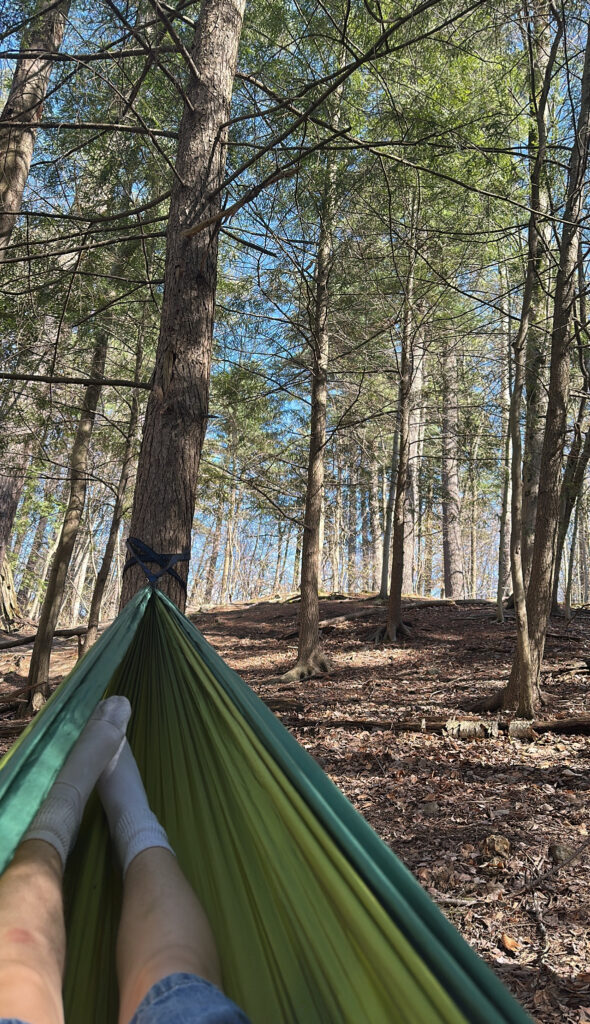
Enjoying the warm weather at my spot one last time before going home for the summer!