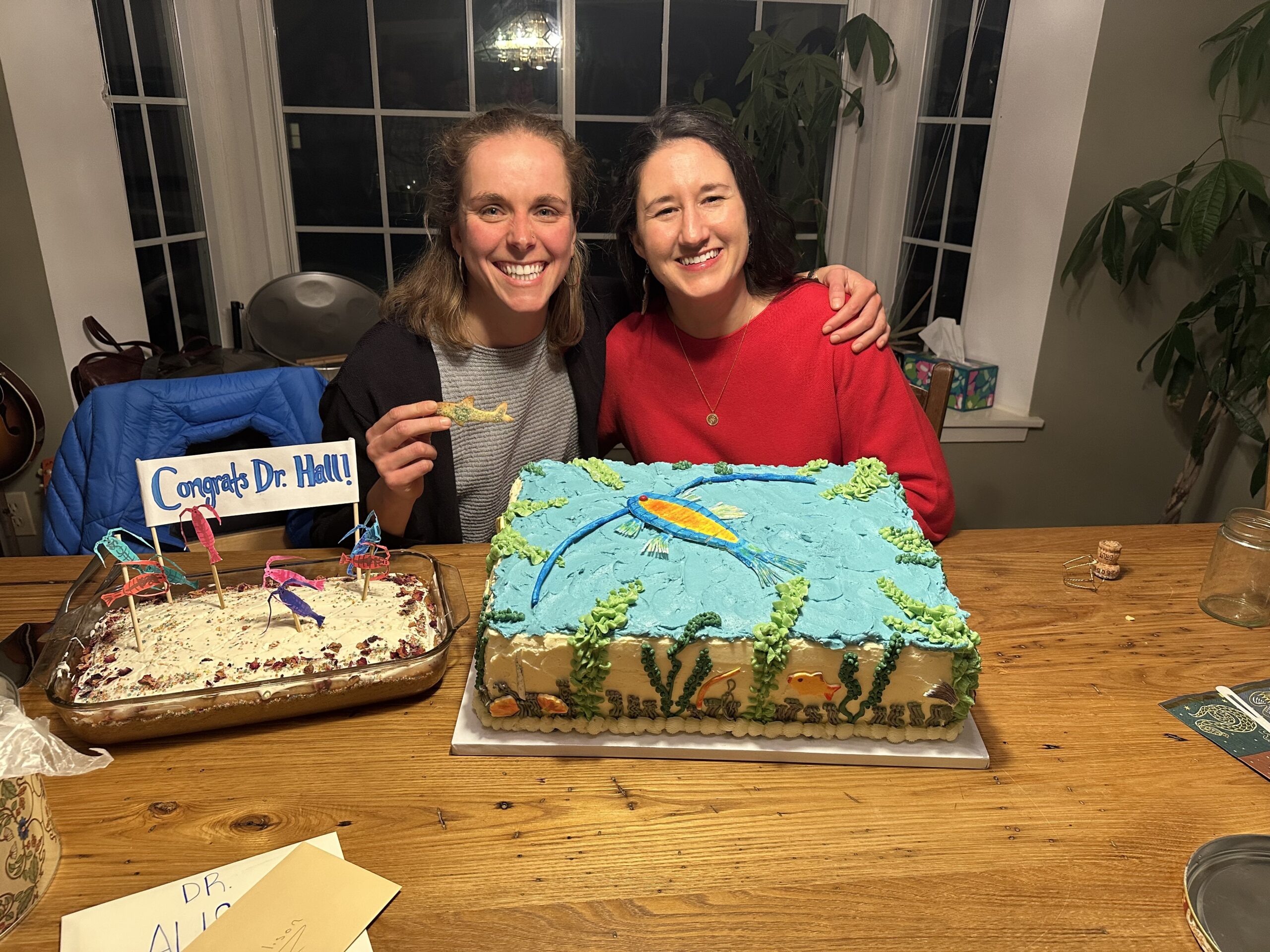
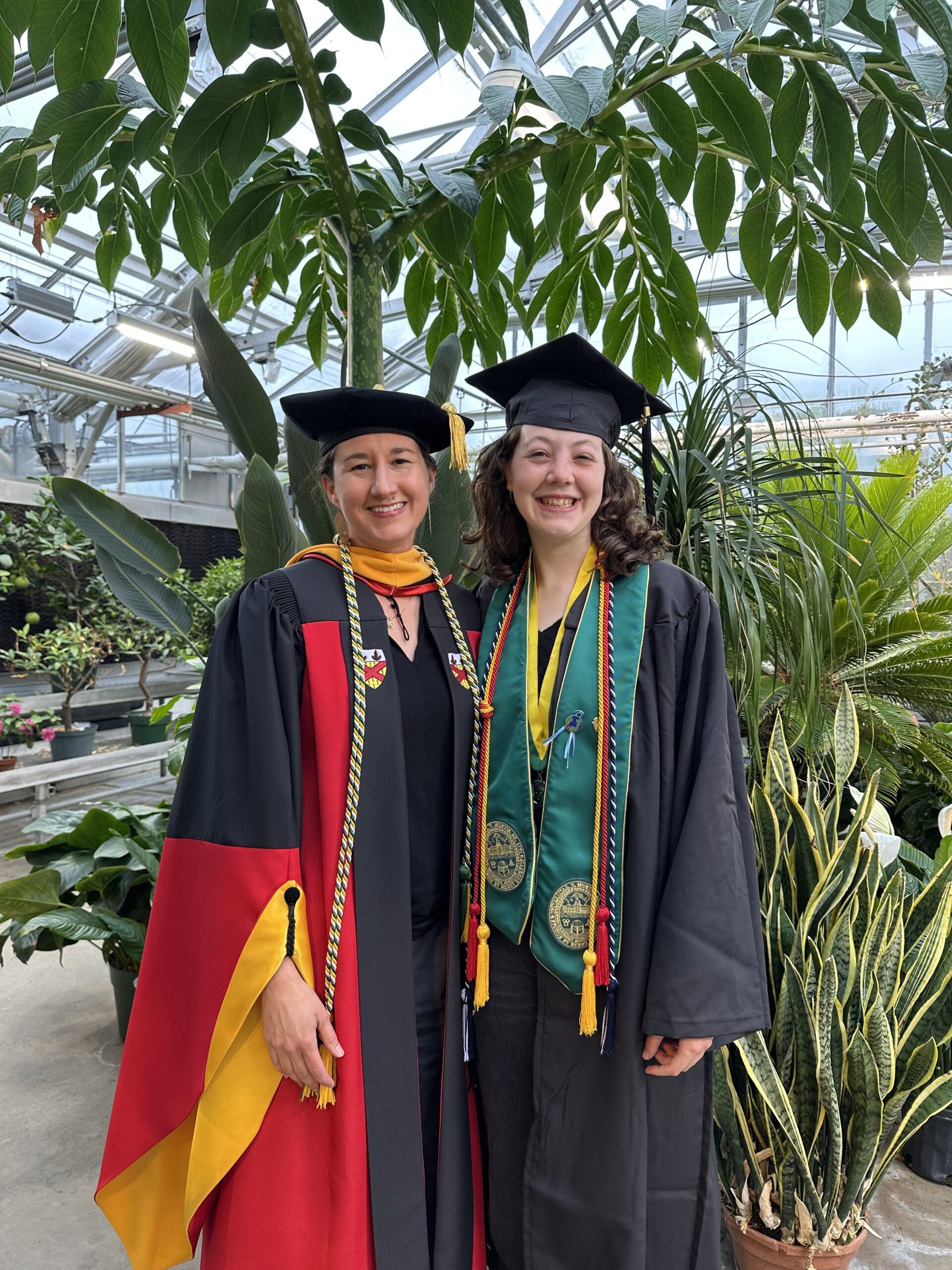
Alison Hall successfully defended her dissertation! Congratulations, Dr. Hall!
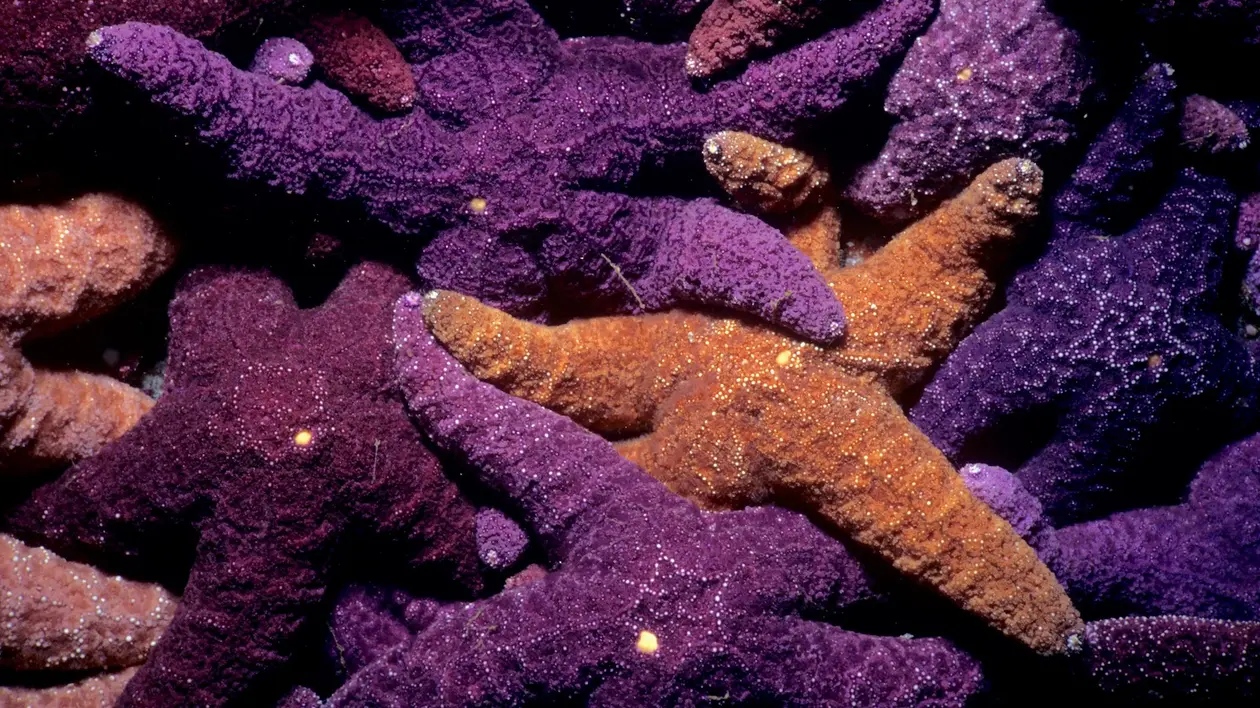
Melissa sat down with journalist Nicola Jones for her Yale Environment 360 for her piece on the latest research on Sea Star Wasting Disease. We discussed the recent publication led by Dr. Alyssa Gehman of the Hakai Institute to which PhD candidate in the lab, Andrew McCracken, contributed during his QuEST internship! Nice work, Andrew!
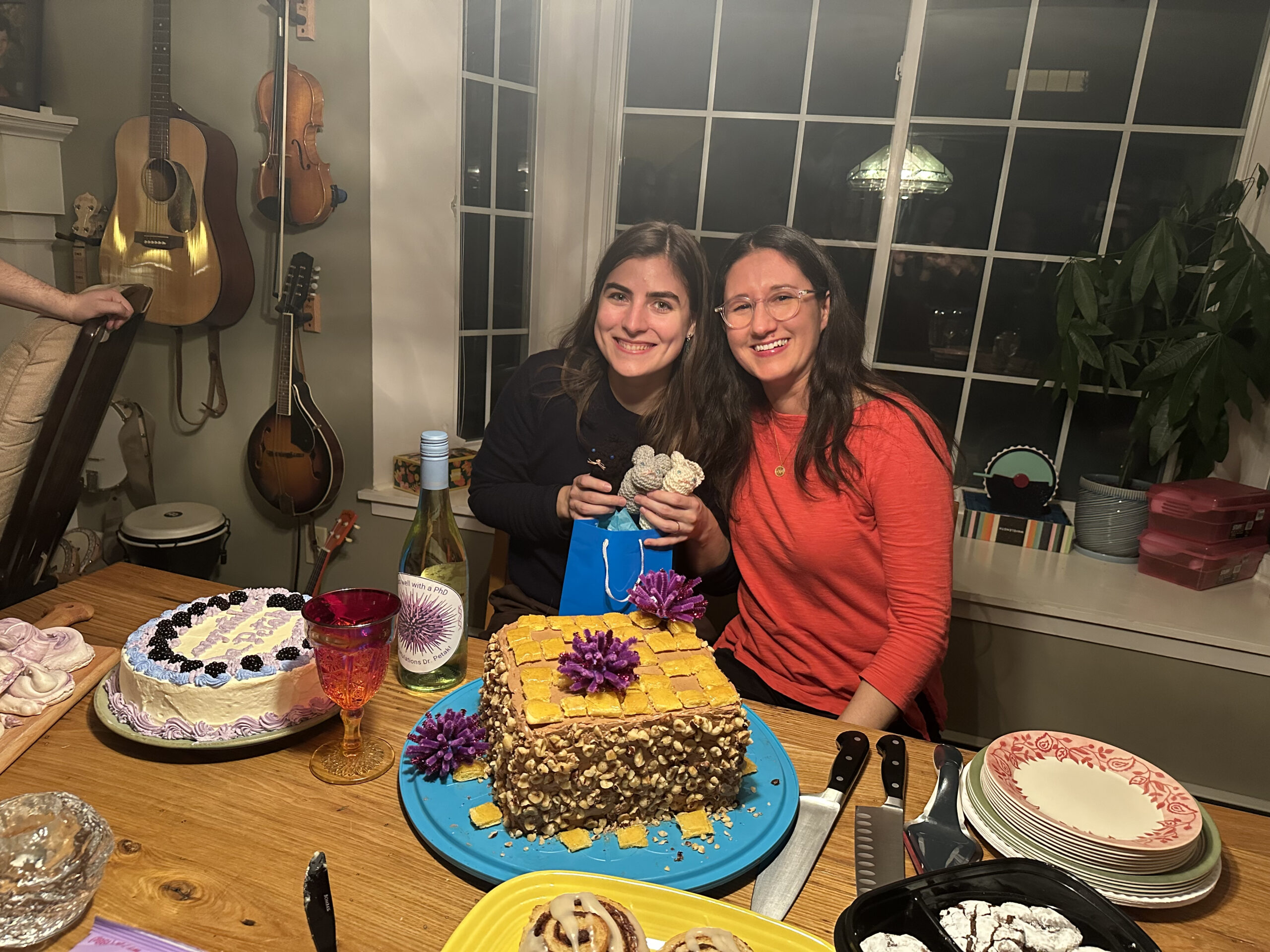
Dr. Petak is now a postdoc at Max Planck Institute in Tübingen, Germany working with Luisa Pallares studying the evolutionary genomics of complex traits! One of Csenge’s dissertation chapters was just published in PNAS! Check out the press release! Another is published in The American Naturalist!
We had an amazing time representing at the 3rd Joint Congress on Evolutionary Biology summer 2024!
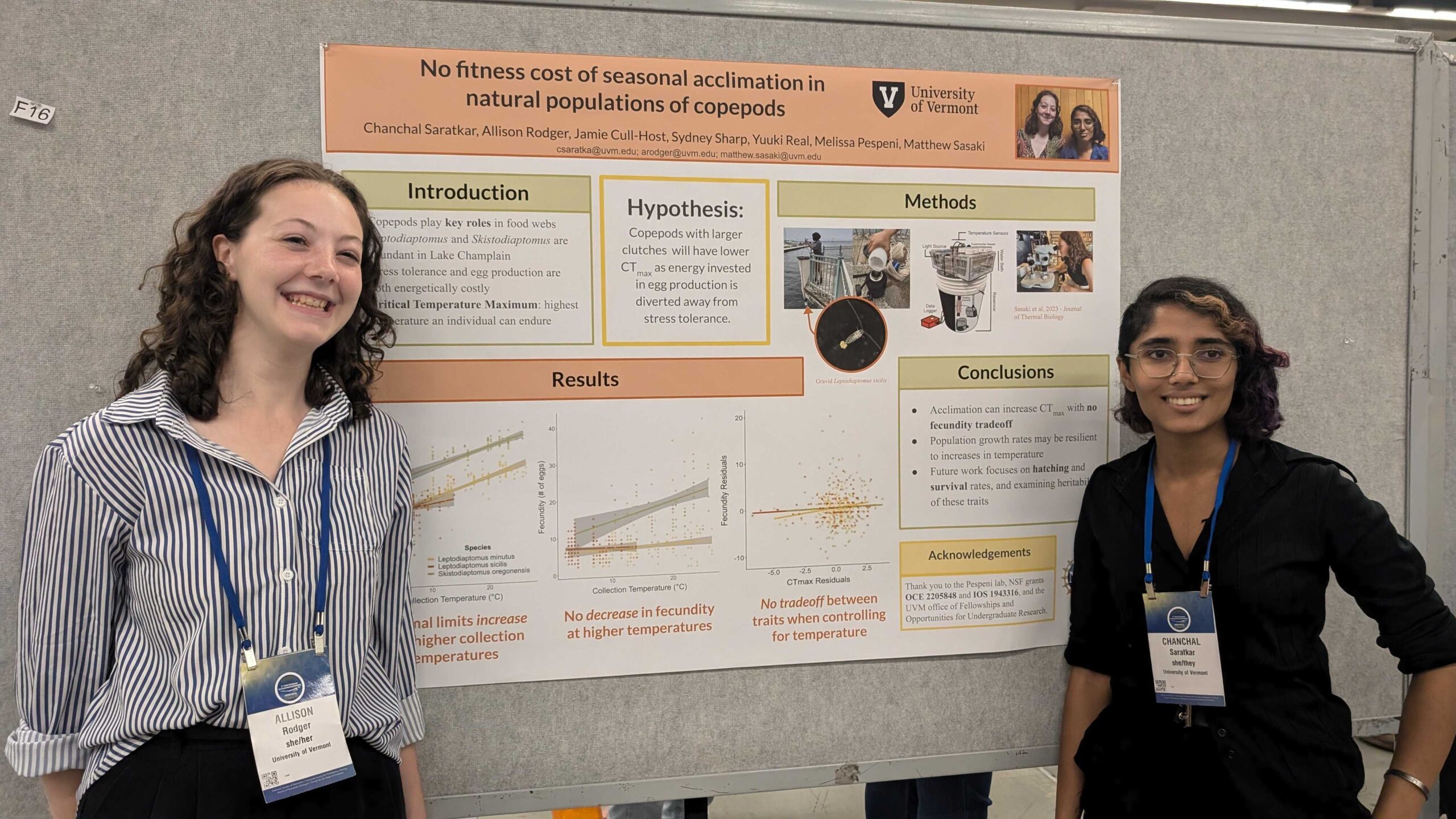
Chanchal and Aly presented a poster on their research on thermal tolerance of Lake Champlain copepods!
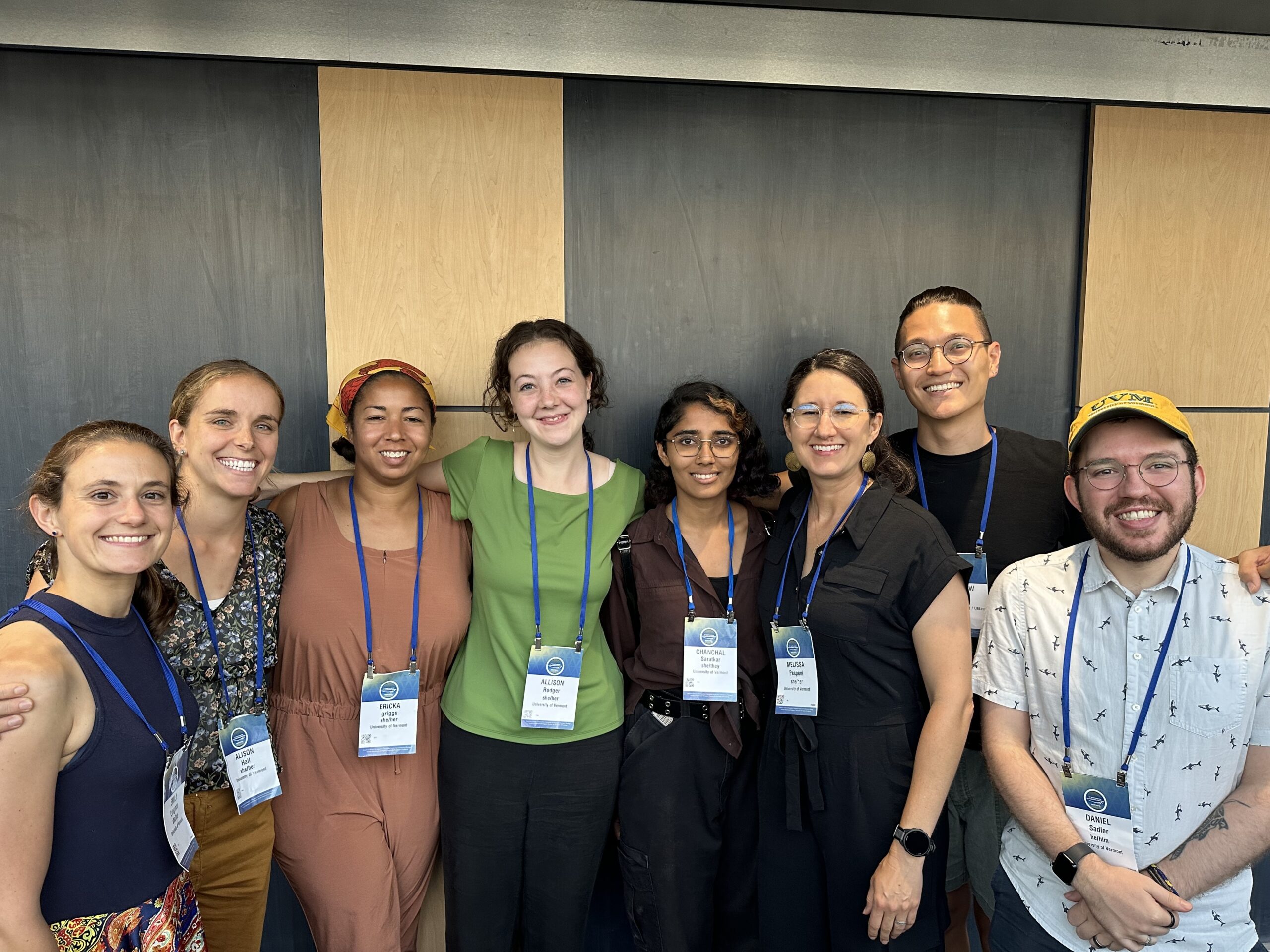
From left to right: Postdoc Emily Longman gave a talk on the eco-evolutionary dynamics in the rocky intertidal; PhD candidate Alison Hall gave a talk on the mechanisms underlying copepod developmental thermal plasticity; PhD student Ericka Griggs gave a poster on host-parasite dynamics in migratory raptors; Honors Thesis students Aly Rodger and Chanchal Saratkar presented a poster on seasonal dynamics in copepod thermal tolerance; PI Melissa Pespeni gave a talk on evolved vs. plastic differences in responding to warming and acidification in copepods; Postdoc Matt Sasaki gave a talk integrating three massive copepod thermal tolerance datasets to reveal patterns across space and time; Postdoc Danny Sadler gave a poster on identifying genome-environment associations across 140 purple urchin genomes and 1700 kilometers. It was an amazing meeting and so fun to have such a strong Pespeni lab showing! Huge thank you to the National Science Foundation for making this work and sharing our science possible!

And the conference inspired us to finally make a lab logo! How many creatures do you see?
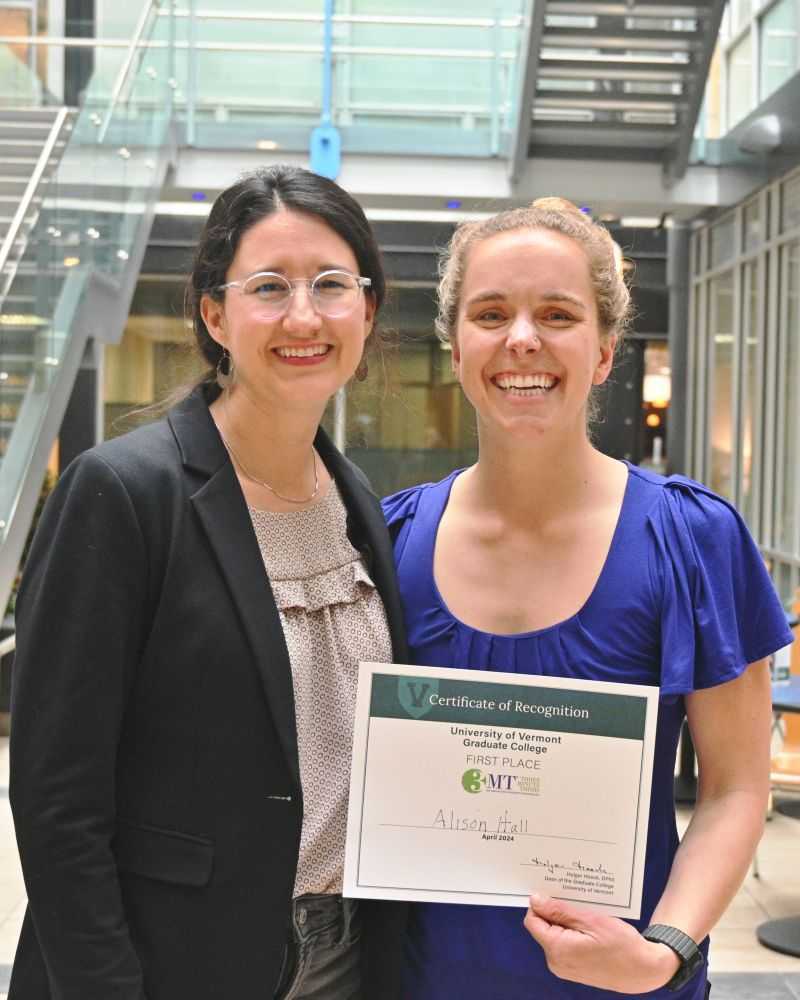
Congratulations Alison for winning UVM’s first Three Minute Thesis Competition! Yuhuu!
After wrapping up his postdoc, Matt will be starting as an assistant professor at UMass Lowell! His lab will focus on zooplankton ecology and adaptation, building on some of his fellowship projects.
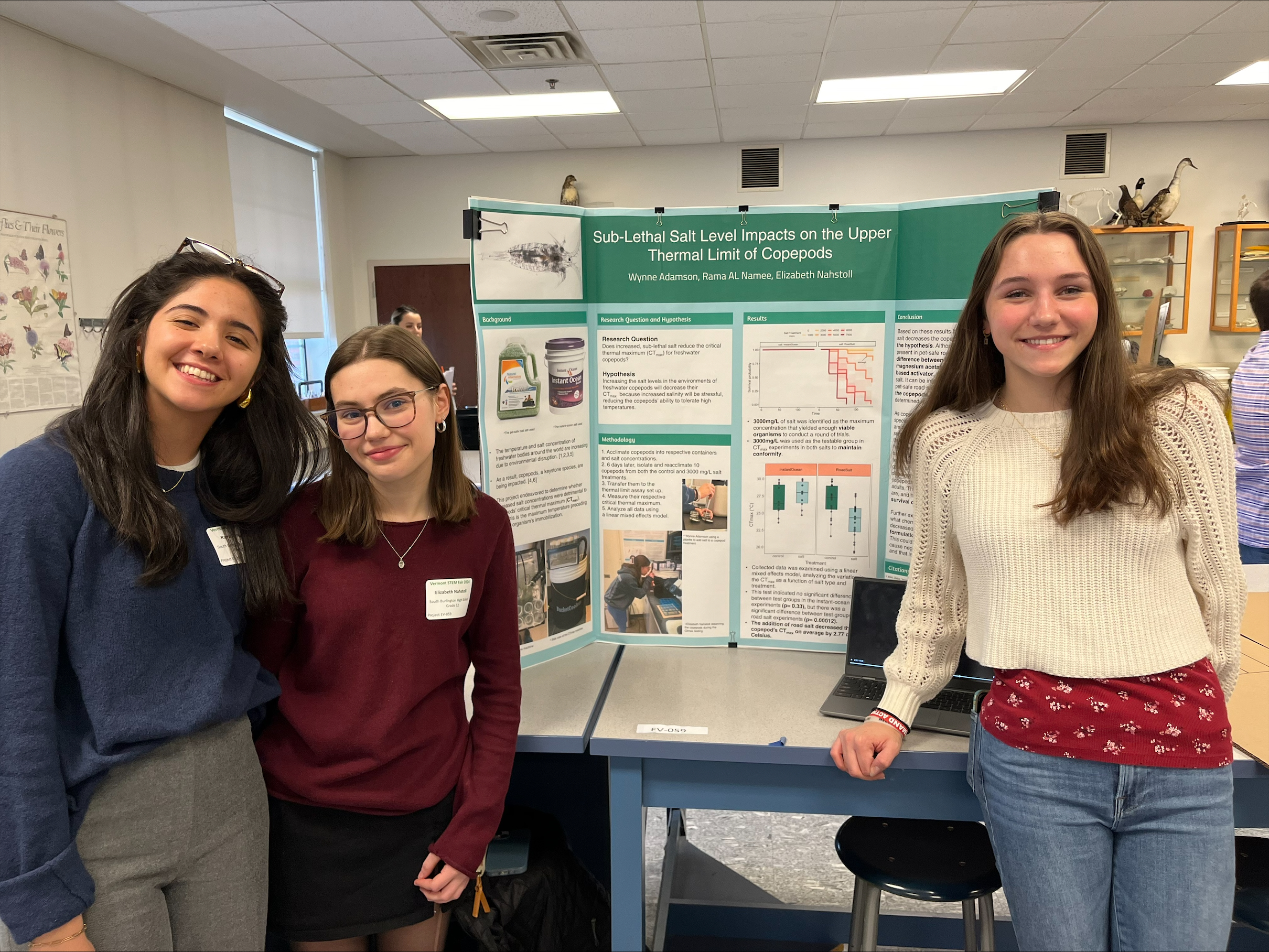
After several months of hard work in the lab, Rama, Elizabeth and Wynne, seniors at South Burlington High School, won the top prize at the Vermont STEM Fair! Their project examined how increased salinity affects copepod thermal limits. They’ll go on to compete at the International Science and Engineering Fair (ISEF) in Los Angeles in May.
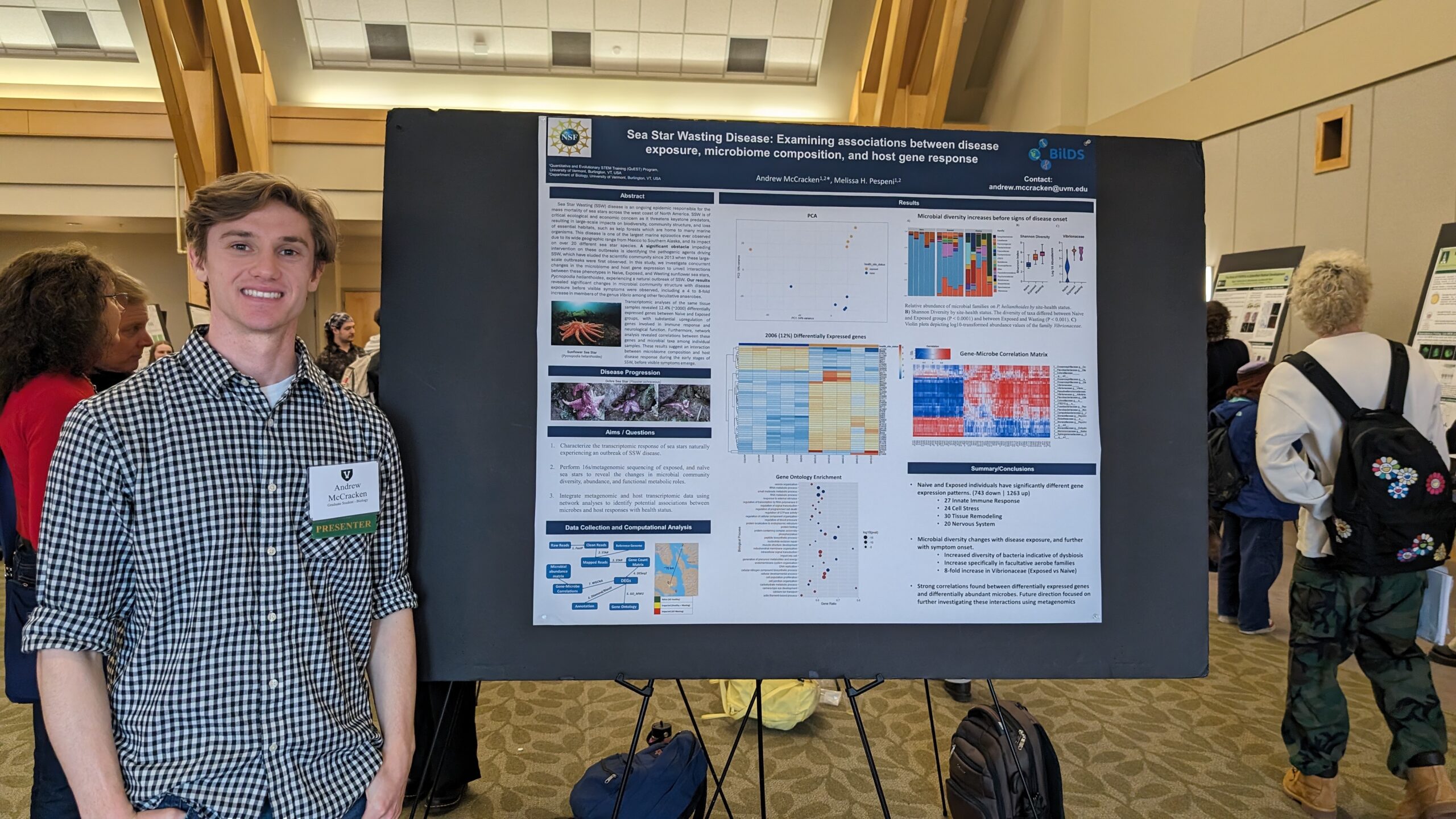
Alison, Andrew, and Csenge shared posters and Chanchal gave a talk at the UVM student research conference.
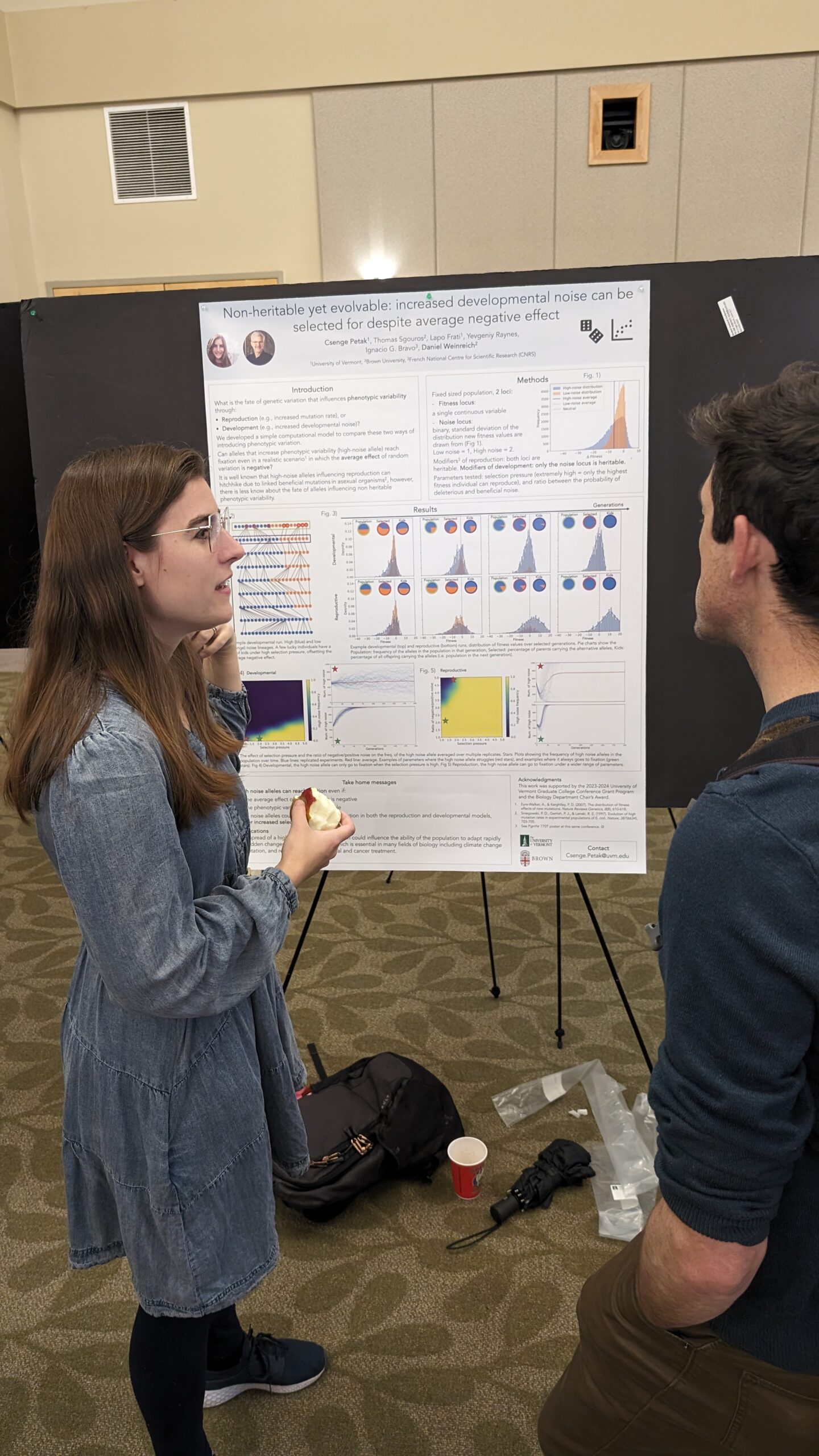
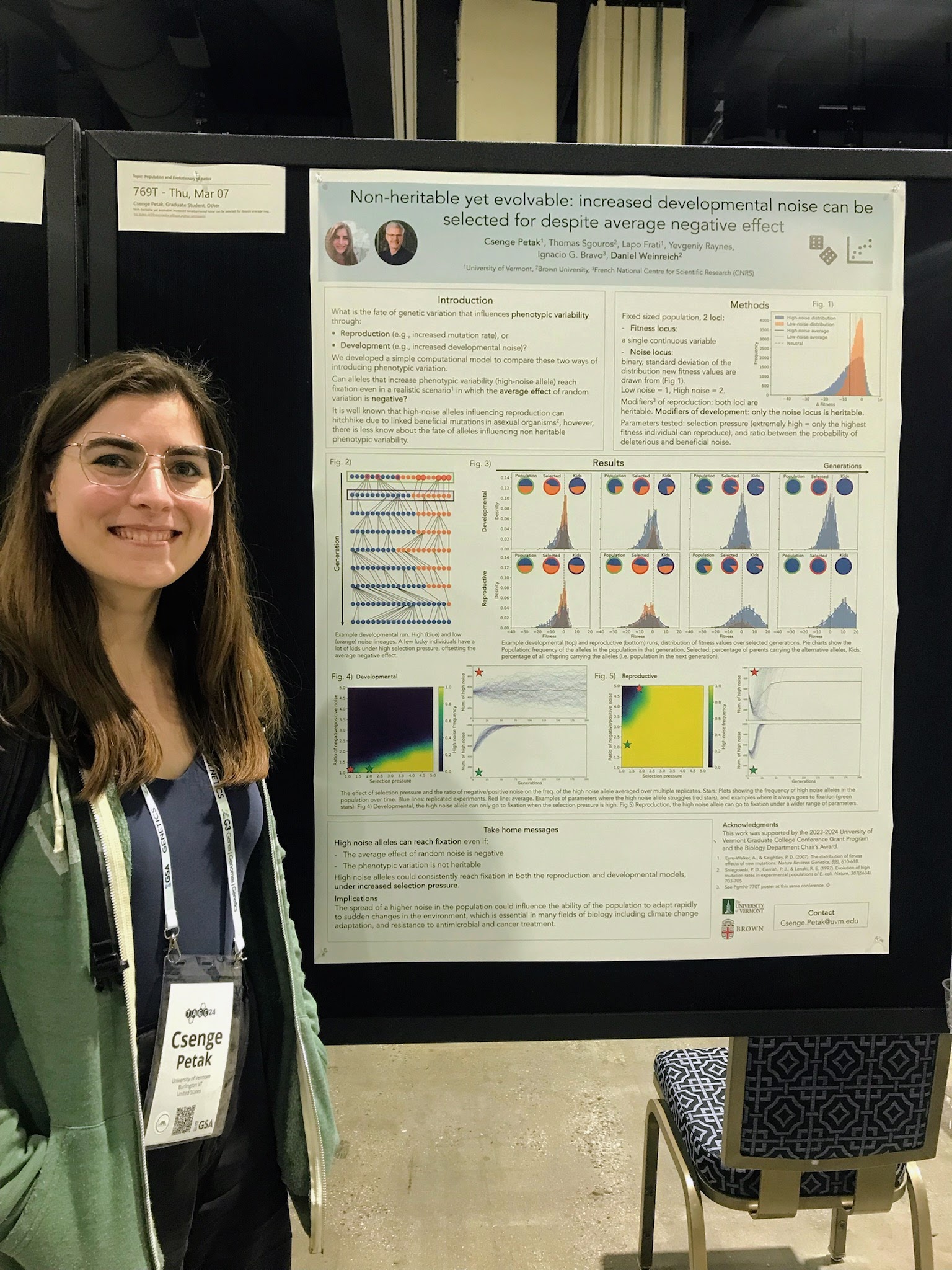
Csenge had a great time presenting her research at The Allied Genetics Conference (TAGC) in Washington, D.C.! The poster was presenting results of a computational population genetics model that was developed to investigate the fate of an allele that increases the phenotypic variation among the carriers or the offspring of the carriers in the population under different parameter settings.