
Welcome to UVM Blogs. This is your first post. Edit or delete it, then start blogging!
Battery Park Phenology
Why Battery Park
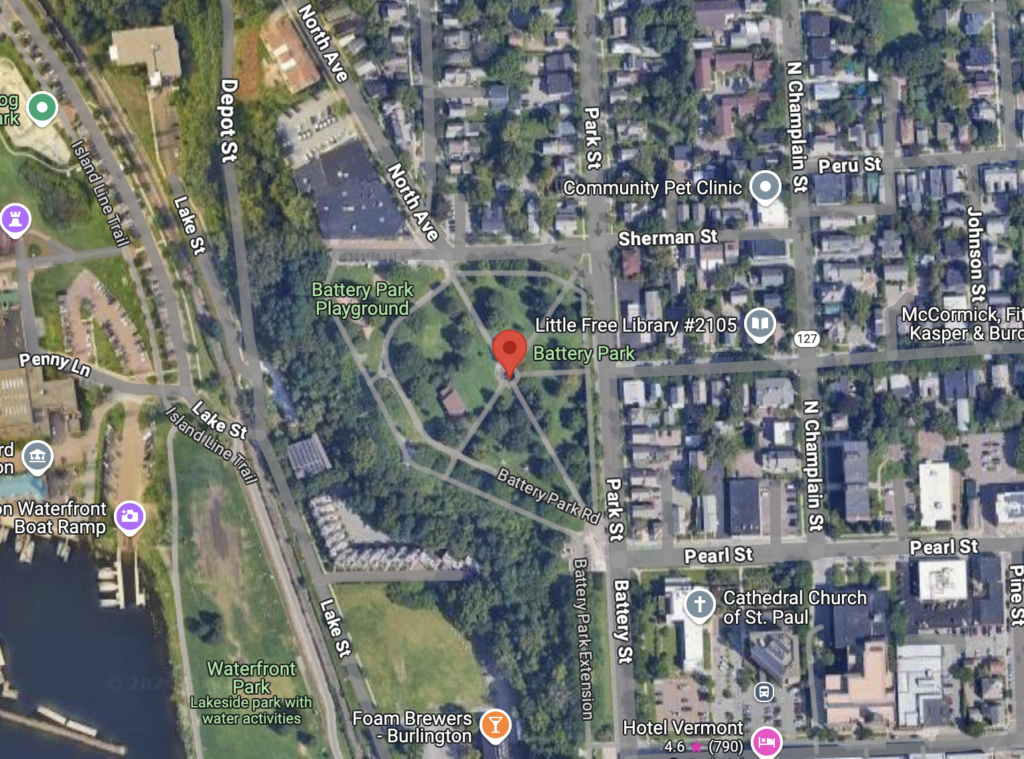
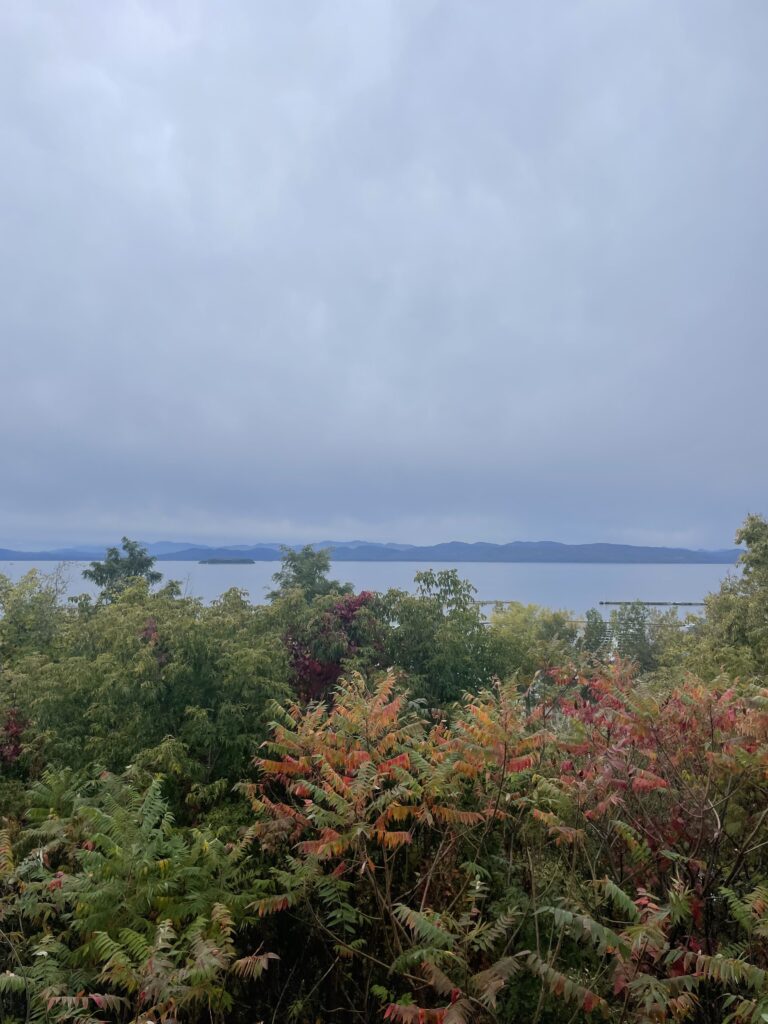
Battery Park is a little park on the water front in downtown Burlington, VT. It’s accessible from campus if you walk all the way down Pearl St. I chose this place as my site for the phenology assignment because I loved the lake views accessible from the park. I also found it interesting to see how many of our focal species could be found in such an urban setting.
Vegetation
Battery Park looks like most modern urban parks, grassy patches broken up by a few trees and fragmented by asphalt walking paths. It contains many trees of different species and age, as well as a few shrubs, and a few flowering bushes.
I was able to find a few of our focal tree species and some others new to me: Green Ash, Crabapple, Elm, Eastern White Pine, Honey Locust, Norway Spruce , Striped Maple, Sugar Maple, and Sweet Gum
Update
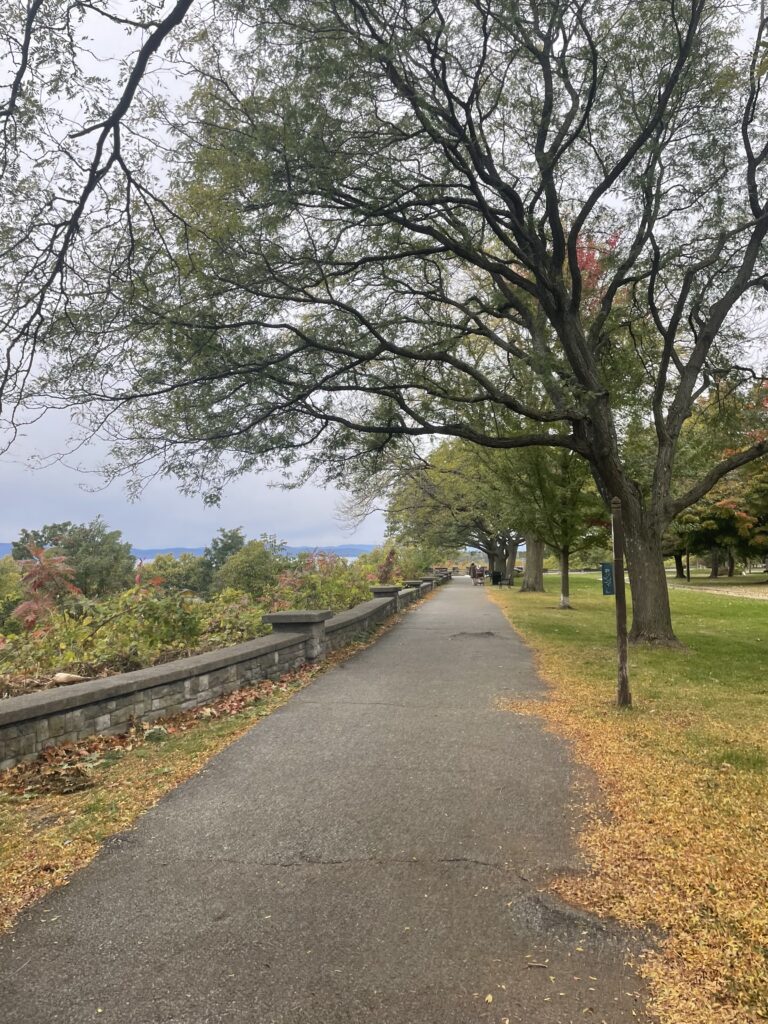
I’ve come back to my phenology spot 3 weeks later to observe the changes as we get further into the fall season. Looking back at my past photos I can really seen the changes. The most obvious and notable change is the bare trees and shrubs. I noticed the Honey Locust were all completely bare, as well as some of the maple trees (but not all of them). The sweet gum tree and the crabapple have both shed about half their leaves. I noticed the Ash and Elm trees still had a majority of their leaves, the ash tree still being mainly green and only a little yellow. I also noticed the evergreens, Eastern White Pine and Norway spruce, were as green as ever. The other thing I really took in was how much the shrubbery around the park had lost its leaves. That was probably the most drastic change. The other observation I found, was that it seemed in this colder weather that the park was more full of squirrels than people.
Birds-eye-view map (I’m not an artist)

I really like this picture because it perfectly shows how this time is transitionally between tree’s leaves changing color to being completely bare.
Break Update

For my break site for my phenology post I decided to visit one of my favorite local parks, Twining Valley Park.
Compare and Contrast:
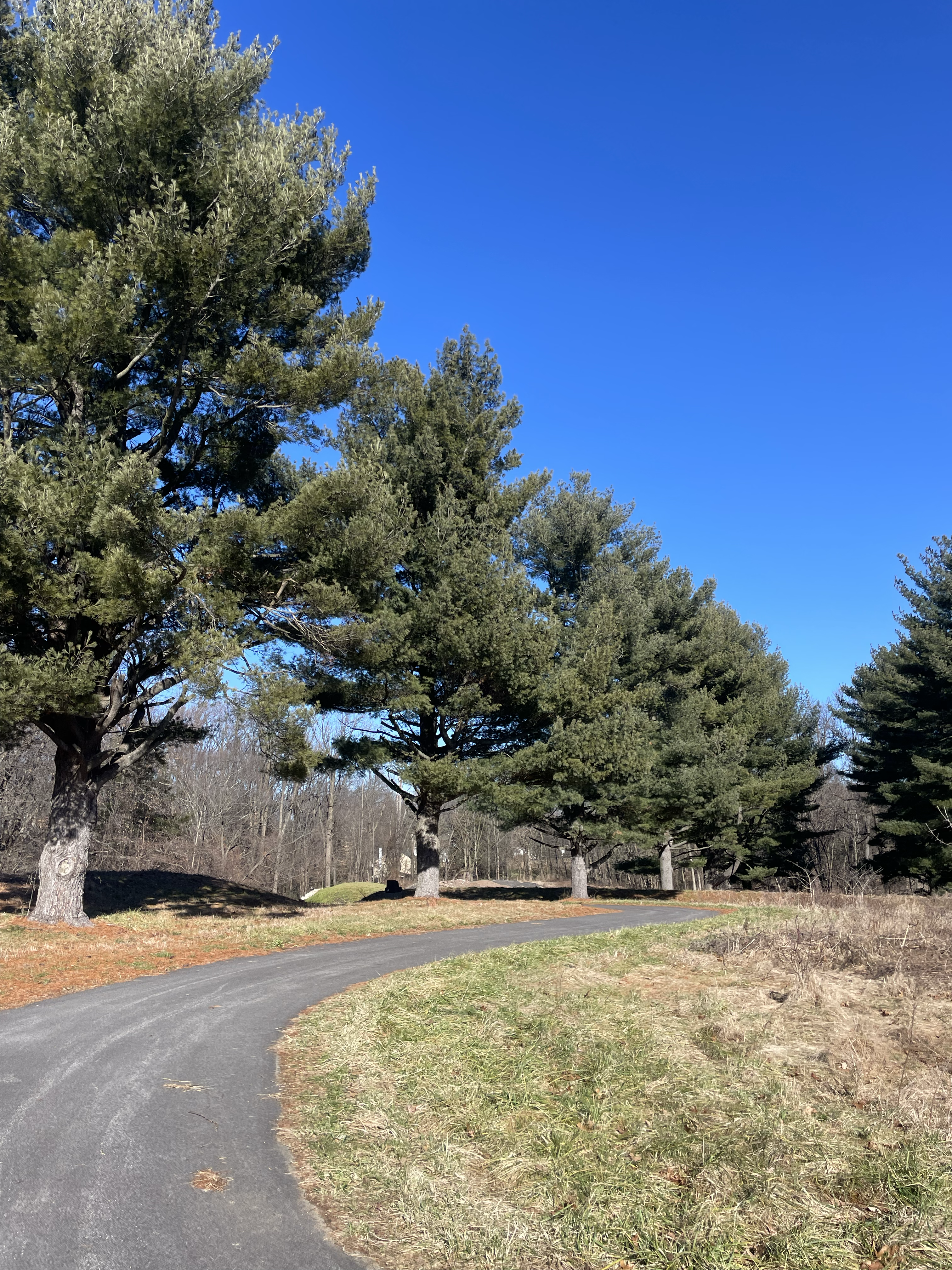
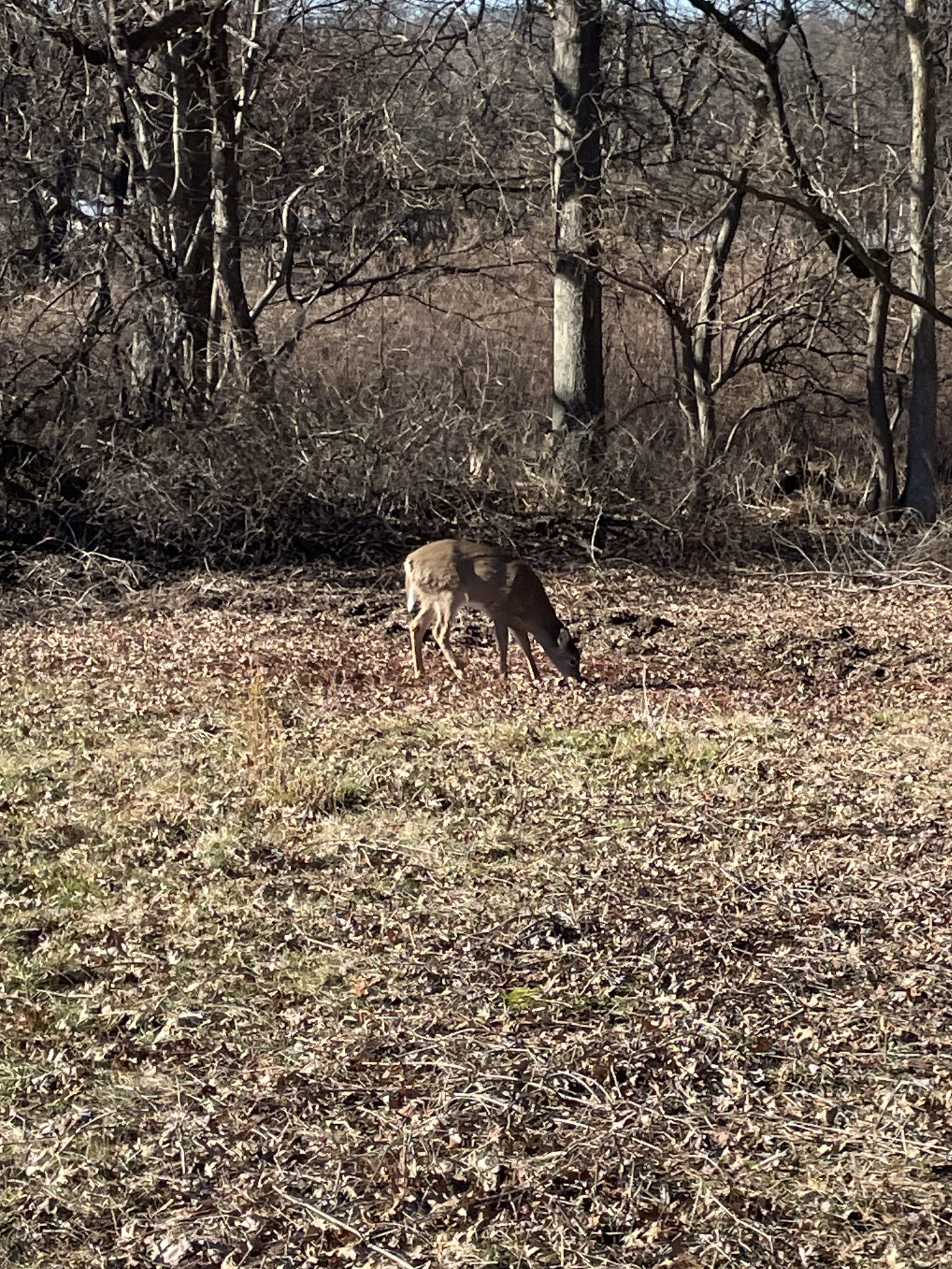
I really love this park it has a really nice paved path on a long loop, it makes being outside and enjoying nature really accessible for my community. Being in Pennsylvania, you can find a lot of the same focal species we see in Vermont. Below are some photos from the park featuring Eastern White Pine trees. I’ve also found some Norway Maples, Japanese Maples, and various oak trees like White, Northern Red, and Pin. I’ve also found Norway Spruce trees and Beech trees.
Final Fall Semester Update
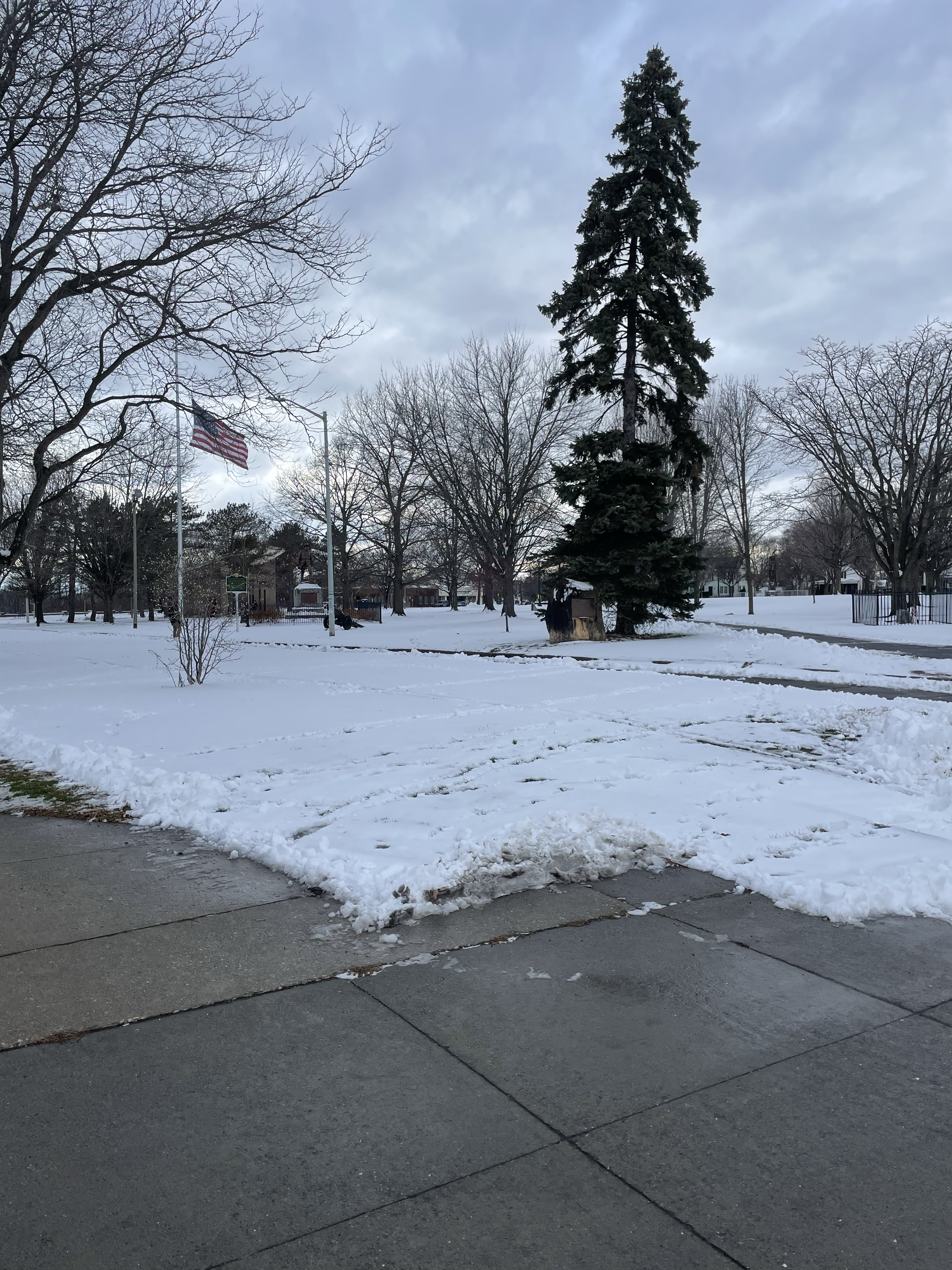
The most notable change to my phenology site is obviously the snow. The park honestly looks so pretty covered in a little blanket of snow. I did not observe any animal tracks yet, only footprints from humans and dogs, this makes sense as battery park is very urban and gets frequent visitors.
Same spot ~2 months apart
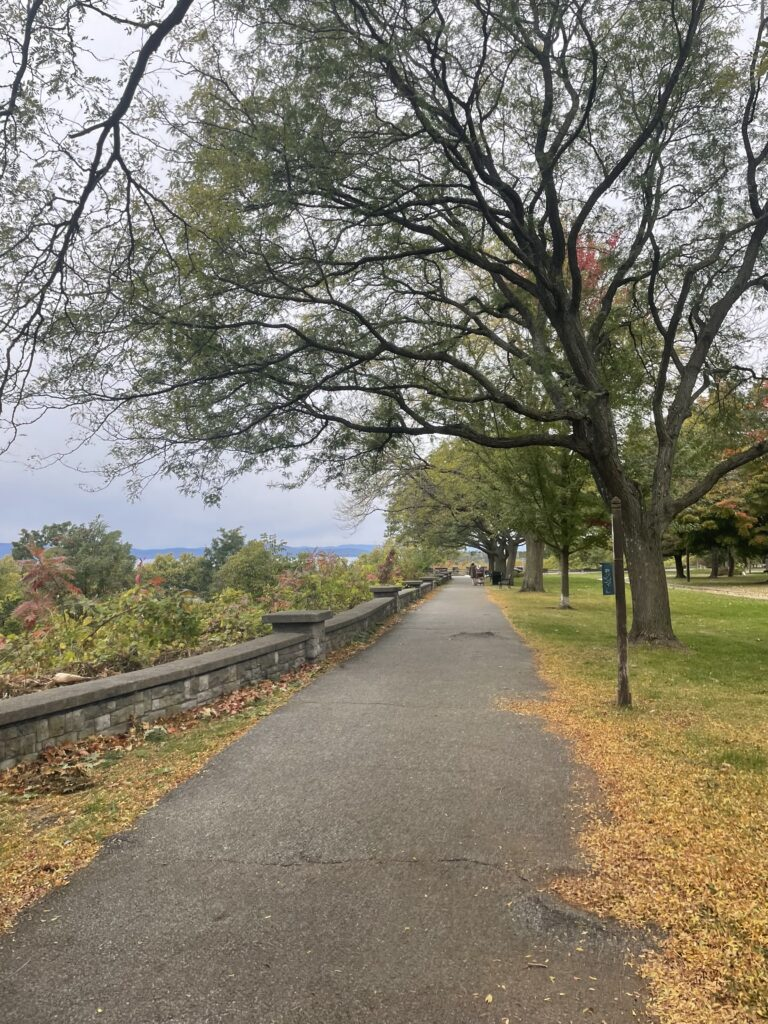

The foliage on the trees has changed completely. Obviously the Evergreen trees (Eastern White Pine and Norway Spruce) look the same as normal, but they definitely stand out against the bare hardwood trees (maple, oak, ash, etc). However some of the Oak and Maple trees had a few leafs still left on the branches. Because of the snow cover I couldn’t see any decomposing leafs and as I mentioned above there are not any signs of animal activity yet.
Below on the left are some of the last maple leaves and the last of the oak leaves are on the right.
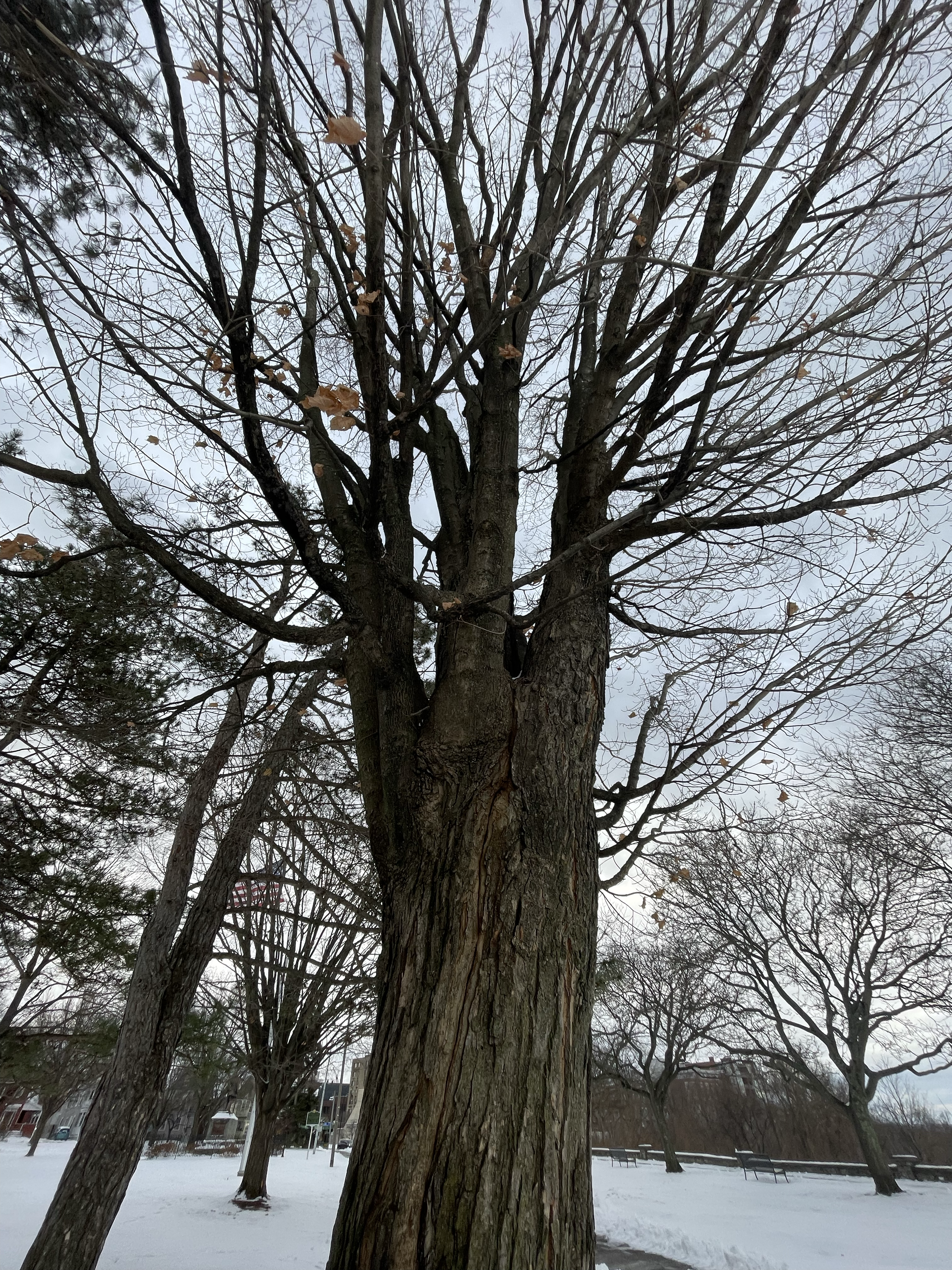

If you were to ask me “What aspects of your phenology place do you enjoy the most?” I would probably say that getting to be so close to a place I had never been before. I got to closer observe the same location over time. If it wasn’t for this assignment I probably wouldn’t have come back to Battery Park so many times. Honestly, I really do think it is a very cool park, and probably one of the best lake views in all of Burlington.
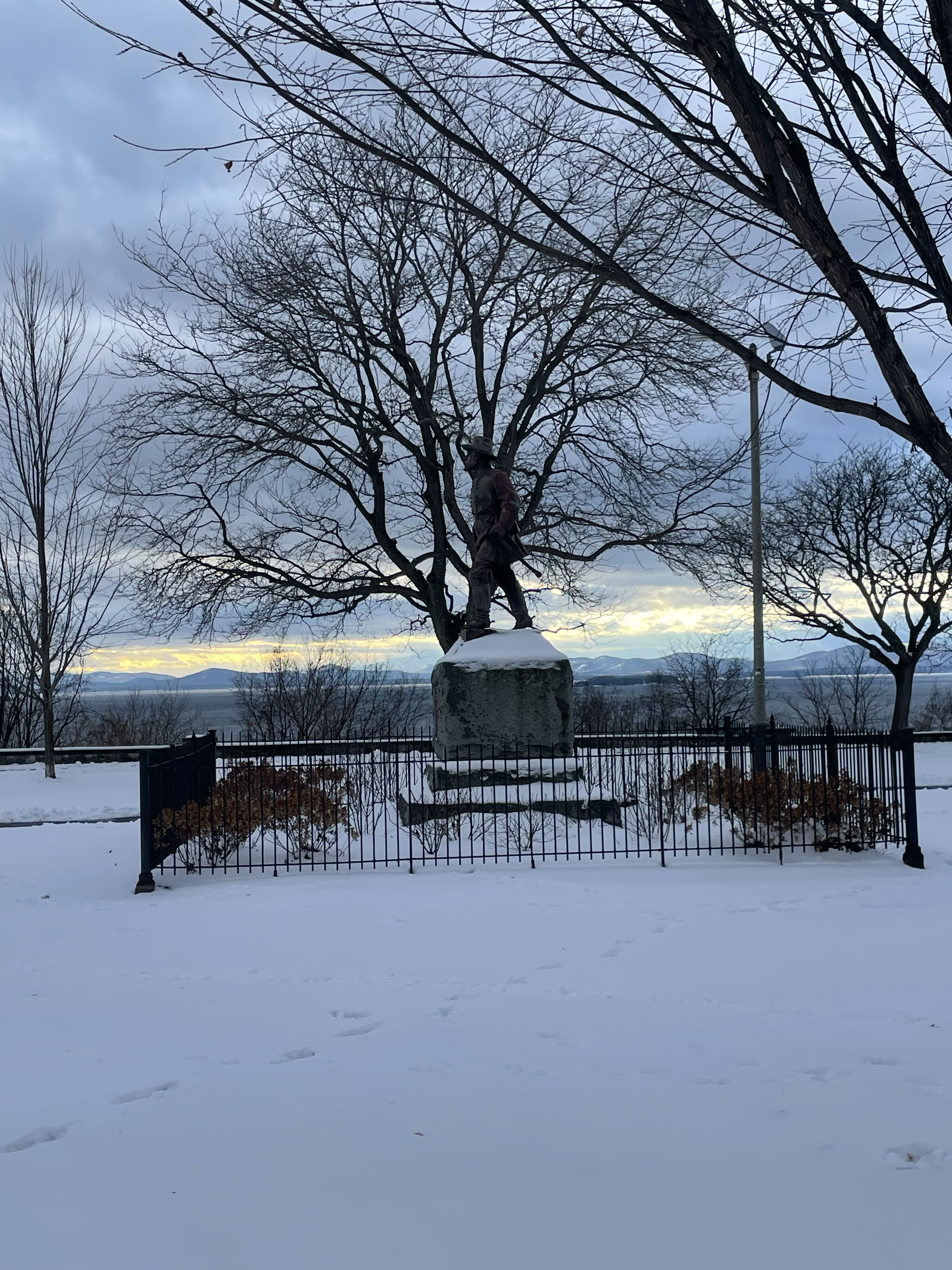
Happy 2nd Semester!
It’s good to be back on campus, and it was very cool to get to revisit my phenology site. I did not see many signs of wildlife. A lot of the snow had melted so it was not the best time to look for animal tracks. However, I did hear a bird as I made my way around the park. I am also going to attribute the lack of wildlife to close proximity to busy roads. In terms of phenological changes, I did not see a big difference from the last time I was there before break. Any tree that still had a leaf on it last time I visited is definitely bare now. Otherwise all looks normal.


Wildlife in Burlington!
I took the last week to look for some signs of wildlife around Burlington, and I was able to find a few cool things around campus and the greater area of Burlington:

Earlier this week I went over to Howe to get some work done, and I encountered this little guy. An Eastern Grey Squirrel just sat on the outside window sills on the 3rd floor of Howe having his breakfast. I love this picture because I’ve never been able to be so close to a squirrel. I would assume this is an Eastern Grey Squirrel because of the coloring. I also think its important to highlight the squirrel activity on campus when considering Burlington wildlife.

I also found this birds nest as I was walking down college street this week. I did not see nor hear any birds, but non the less this is still a sign of wildlife activity in Burlington. It could even highlight how migration is a common winter activity for most birds, as even humans seek out the warmer temperatures down south! However I am not entirely sure what exact species would have built this nest.

This week during Lab at the Intervale Center we did some tracking along the Winooski River Trail, and we encountered many tracks. In my limited tracking experience I would assume these are mouse tracks given the small nature and the trail drag. I can not be entirely sure on which type of mouse species, but likely a mouse.
Penology Walk Assignment
I went on the Phenology walk on April 10, around 3:30. I noticed most of the trees were in a similar phase were they all had buds, but not every tree had broken them yet. None of the trees had progressed beyond that phase, I saw no flowering, leaves, or pollen. The Red Oak and the Red Maple had seemed like the furthest along, and had broken their buds. However neither tree seemed close to having flowers yet.
I think the NPN website is very interesting, I read a of summery of a study showing a more complete picture of the timing of spring ( Linked Here ). They discussed in the article how they were able to utilize citizen science to accurately track phenological changes over the last 15 years. I think this is incredible work because not only is there a long record of phenological changes that can be used to support the study of climate change, but we can also get communities engaged in their green spaces. When more people are involved in activities out of doors they foster a better relationship with place, creating a better connection to protecting it, which is also vital in the fight against climate change.
Bio Blitz: iNaturalist City Nature Challenge
For the City Nature Challenge I explored a few areas around Burlington. I initially thought to explore my phenology site, but I realized most of the plants there had been planted since my site is an urban park. I instead decided to explore centennial further. I found a lot of exciting things there. I think exploring centennial for the CNC was the most I have ever looked at the forest floor.
Overall I had an ok experience with iNaturalist. Honestly I am not entirely sure everything was logged properly but I posted all of my observations. I encountered 5 new species. I mainly wanted to look for species I did not know very well. I found a Star Magnolia at battery Park but that had been planted there. I also found a common lilac bush that I believe grew from growth on the edge of the park, meaning it was not planted there initially and is just maintained. In centennial I found a Wild Cherry tree, Sensitive fern, Wood fern, and Honeysuckle.
I am surprised to find that La Paz, Bolivia is in the lead. Again I am not confident in my iNaturalist abilities and I don’t know if I’m reading the charts wrong, but it seems like they are leading. I guess I am not necessarily surprised they are leading. I did some further research and it seems like they have the biodiversity of the amazonian foothills and an alpine zone. It seems like this city sits in a very biodiverse region, therefore they would lead in biodiversity.
OBSERVATIONS:


Wild Cherry ^


Wood Fern (L) Sensitive Fern (R) ^


Honeysuckle (L) Lilac Bush (R) ^
Final Blog Update
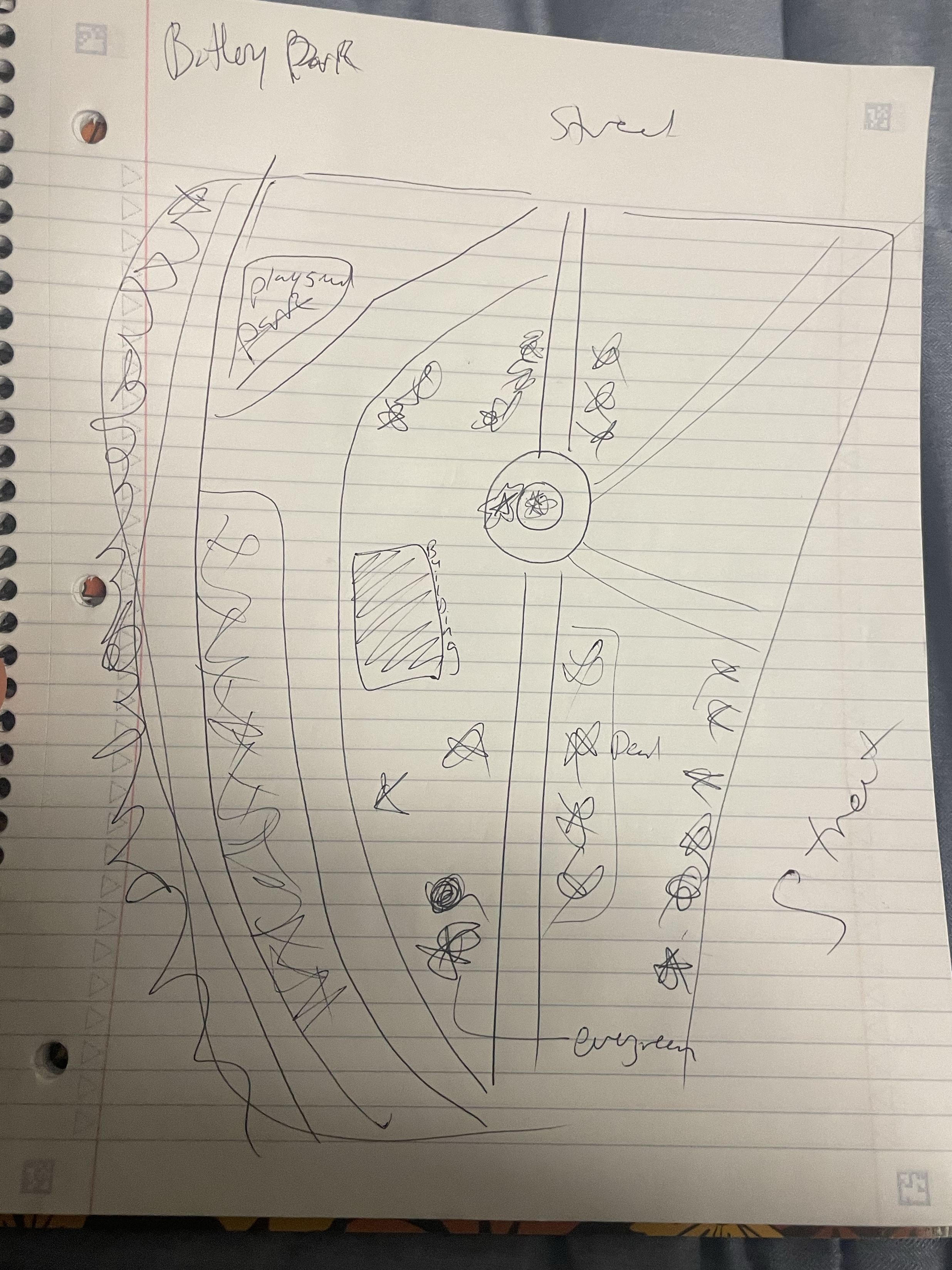
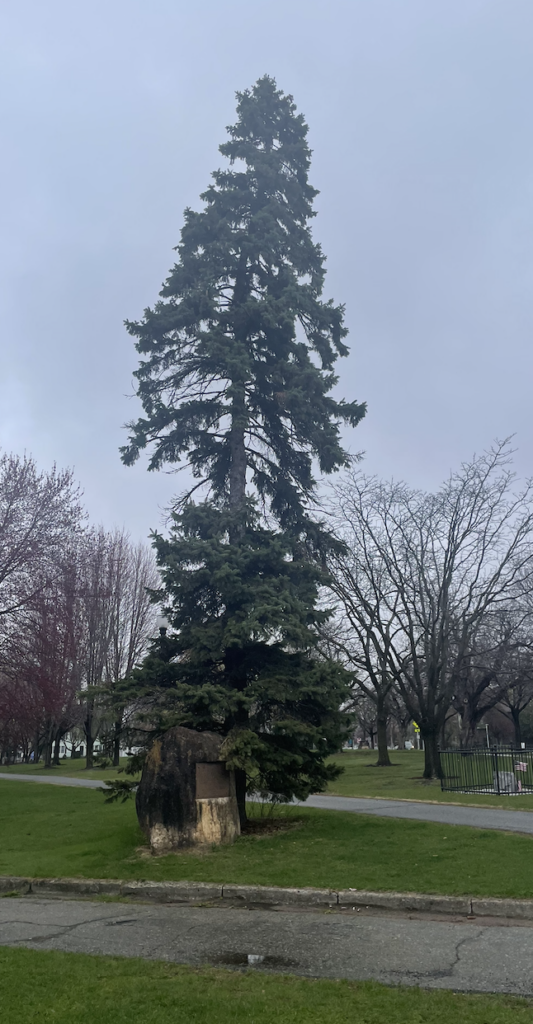
I have become very familiar with the landmarks of Battery Park. If you com from pearl street you are initially greeted by a very tall Norway Spruce, and behind that a war memorial and US flag. These familiar landmarks greet you into the park. I also loved in the early fall the line of Honey Locust covering the path along the edge of the park overlooking Lake Champlain.
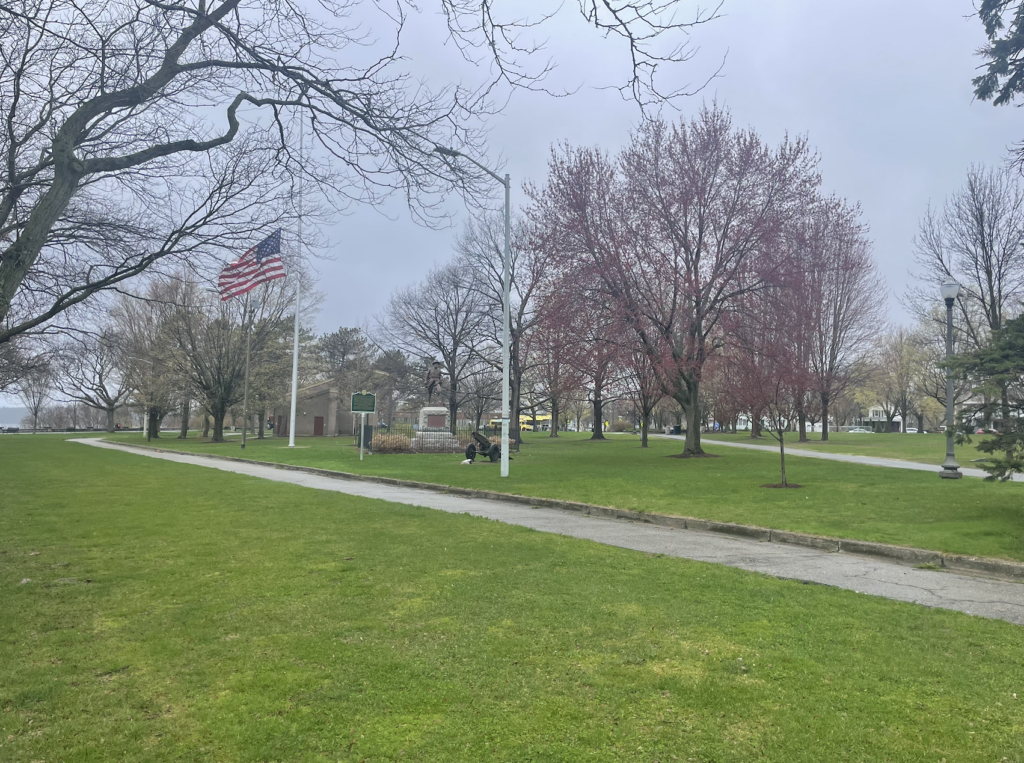
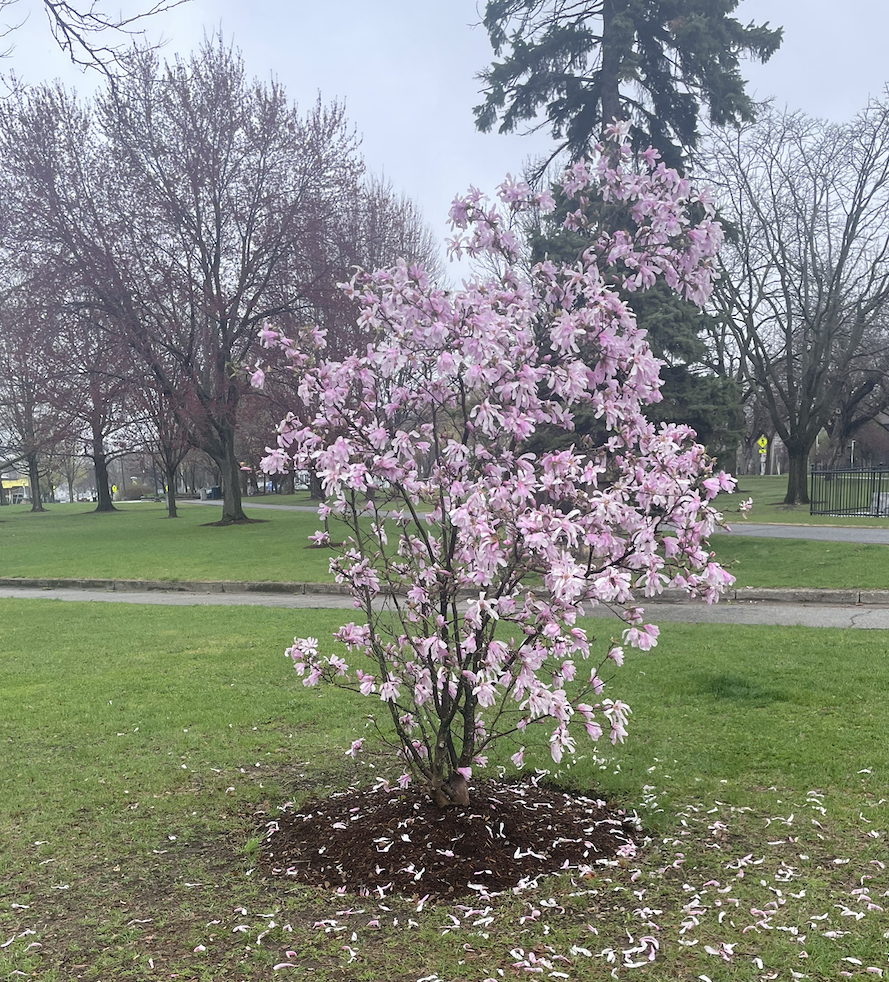
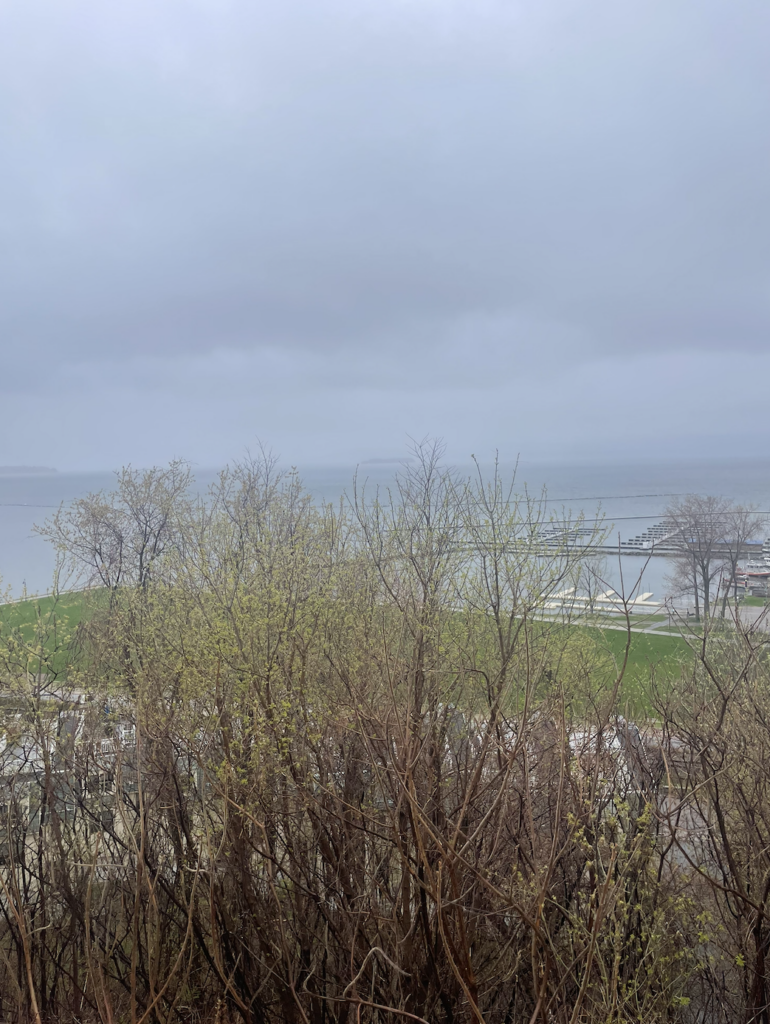
Over time my site at Battery Park has changed a lot. It went from full growth in the early fall, everything being very busy and green. Eventually over time the trees turned yellow, orange, red, and eventually brown as we got further into the fall season. As we moved into the late fall the trees lost their leaves, and others remained brown. Eventually my site was covered in a blanket of snow and the park was transformed into winter. I mainly found domestic dog tracks and human prints, but that makes sense for an urban park. Later Battery Park was transformed to wet grass and puddles as mud season took over. Now Today my site is showing early signs of spring. The most of the trees are forming buds, some have even grown flowers.
I think nature and culture have come to be heavily intertwined at Battery Park. Battery Park serves as one of the few places in Downtown Burlington featuring a wide open green spaces. I think this has become really popular with local residents, especially dog owners. There is also a building in the center of battery park which has become a shelter for the homeless residents of Burlington. I think that goes to show how parks serve as so much more than a green space.
I do not necessarily consider myself a part of Battery Park. I think I feel a connection to it because I have visited so many times. I think overall I do not really feel apart of Burlington, I still feel like a guest in the community. I have only lived up here for 8 months or so. I think I would have to live in Burlington for a few years before I truly feel apart of the community. I’ve been reflecting on this recently and I have been looking for more ways to feel involved in the Burlington. Although I am sure as I spend more time here in the coming years it will really begin to feel like home. I think overall this project is a great way for freshman to learn more about the Burlington Community and feel involved.
