Posts

A Transnational Corporation in Costa Rica

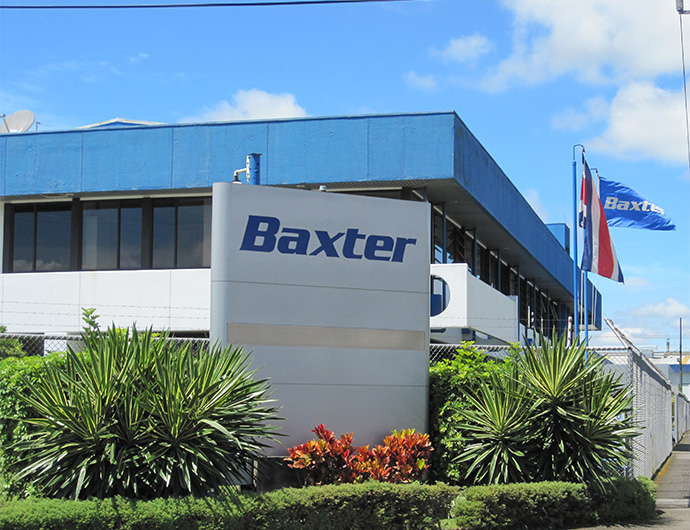
The Baxter plant in Cartago
source: https://siteselection.com/LifeSciences/2014/nov/baxter.cfm

Baxter Medical is a transnational corporation based in the United States that has factory and office locations in 40 countries, including Costa Rica. Baxter Medical produces a variety of medical tools and services for healthcare professionals. The company focuses on three sectors: renal products (including dialysis machines), medication delivery, and bioscience.

The Cartago plant produces IV’s like this one
source: https://www.pharmaceutical-technology.com/projects/baxter-cartago/

The Costa Rica manufacturing plant is located in the city of Cartago, which is in the central region of the country southeast of San José. The plant was established in 1987, and is still going strong today. Baxter Cartago is involved with medication delivery, specifically the production of IV administration sets. The plant is Costa Rica’s fourth largest exporter. Products from the plant are shipped off to 60 countries around the world, although the majority of production goes back to the United States. The facility is 152,000 square feet, and currently employs around 1,200 people.

I wasn’t able to find any articles that documented the impacts of Baxter’s Cartago plant in Costa Rica, but I think that the plant has both positive and negative impacts on Costa Rica. Some positive social and economic impacts that the facility have may include creating job opportunities within the country, providing local people with a stable source of income, accelerating the Costa Rican economy, and prompting an improvement in infrastructure in order to transport products. Some negative social and economic impacts include the fact that much of the profits of the company will be sent overseas instead of staying in the local economy, and that the plant may outcompete local businesses. I was surprised to learn that Baxter’s Cartago plant became completely carbon neutral in 2007, and the first Costa Rican manufacturing facility to do so. For this reason, it does not have a detrimental environmental impact and sets a good example for other manufacturing facilities in Costa Rica.

I think that neo-liberalism best represents the presence of this transnational corporation in Costa Rica because Baxter has built a facility in Cartago in order to make a profit, not to exercise control over the area. Labor costs are lower in Costa Rica, and the country is entered into free trade zones that provide several tax incentives to foreign companies so it makes sense for Baxter to manufacture their products here for cheaper than they can in the United States.

Citations

Baxter Healthcare Cartago Facility. Pharmaceutical Technology. (2009, August 16). Retrieved February 7, 2022, from https://www.pharmaceutical-technology.com/projects/baxter-cartago/

Colantuoni, S. (2020, October 23). Seven reasons for companies to be manufacturing in Costa Rica. The Central American Group. Retrieved February 7, 2022, from https://www.thecentralamericangroup.com/companies-should-consider-manufacturing-in-costa-rica/
Colonial Legacy in Singapore

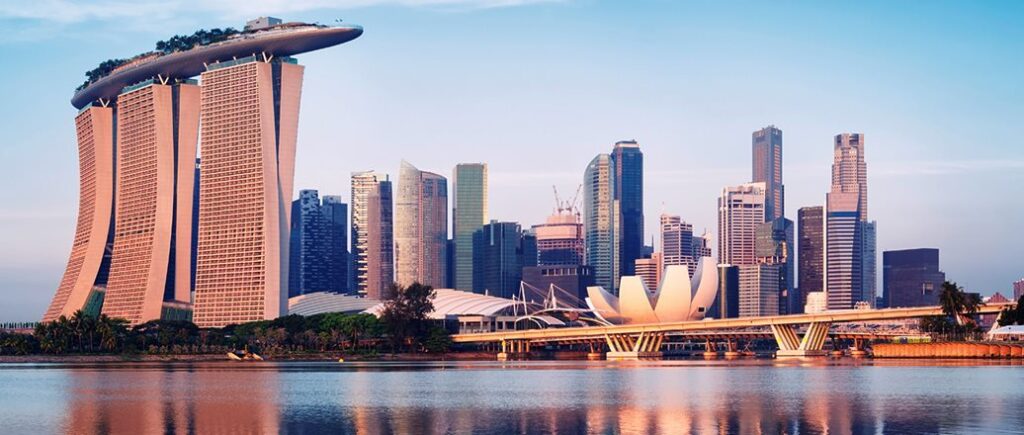
The skyline of Singapore
source: https://www.hydro.com/en-US/about-hydro/hydro-worldwide/asia/singapore/

Prior to its colonization, Singapore was an important seaport for traders from China, the Middle East, and Southeast Asia since it was located at natural meeting point of trade routes at the tip of the Malay Peninsula. After British colonization, the colonial economy was based again on Singapore’s strategic position for trade. Singapore was established as a trading hub under British control. The primary source of labor in the economy was composed of visiting merchants and businesses run by local residents. The resident population of Singapore was incredibly diverse as people from all over the world would settle there.

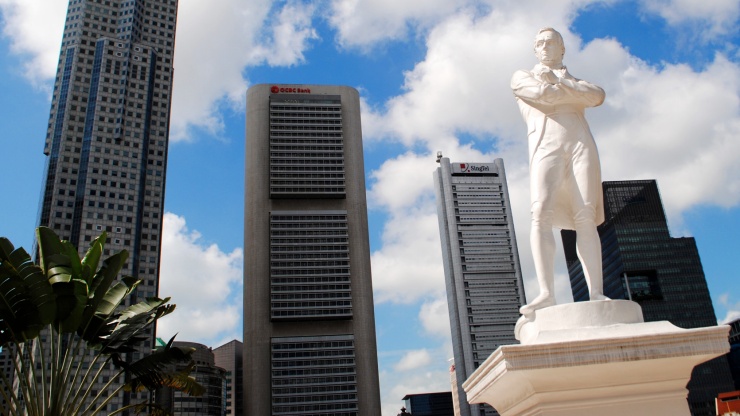
A statue of Sir Raffles in Singapore
source: https://www.visitsingapore.com/see-do-singapore/history/memorials/sir-raffles-statue-landing-site/
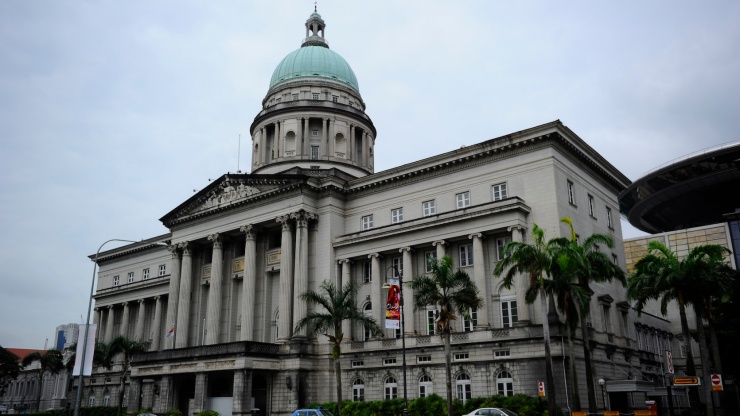
Old Supreme Court
source: https://www.visitsingapore.com/see-do-singapore/architecture/historical/old-supreme-court/

The colonization of Singapore was relatively peaceful. Sir Thomas Stamford Raffles, the British lieutenant-governor in Sumatra, arranged a treaty with local Malay officials to establish a trading post on the island in 1819. The colony was lead by British military leaders, who enforced their laws with their military presence. The Jackson Plan of 1822 was an example of a British rule that was enforced upon the residents of Singapore. The Jackson Plan segregated European, Chinese, Indian, and Muslim residents into four areas of the city based on their ethnicity, in order to combat ‘disorderliness’ in the city.

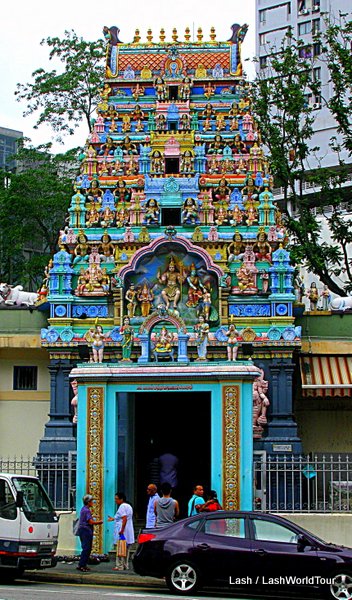
A Hindu temple in Singapore’s Chinatown
source: https://lashworldtour.com/2013/02/10-free-things-singapore-chinatown.html

Britain’s motive to colonize Singapore was primarily for their own economic benefit. They wanted to establish a strong trading port in Southeast Asia before the Dutch did. They likely thought that establishing a trading port on the island would put the land ‘to use’ and bring order and prosperity to the people in the region.

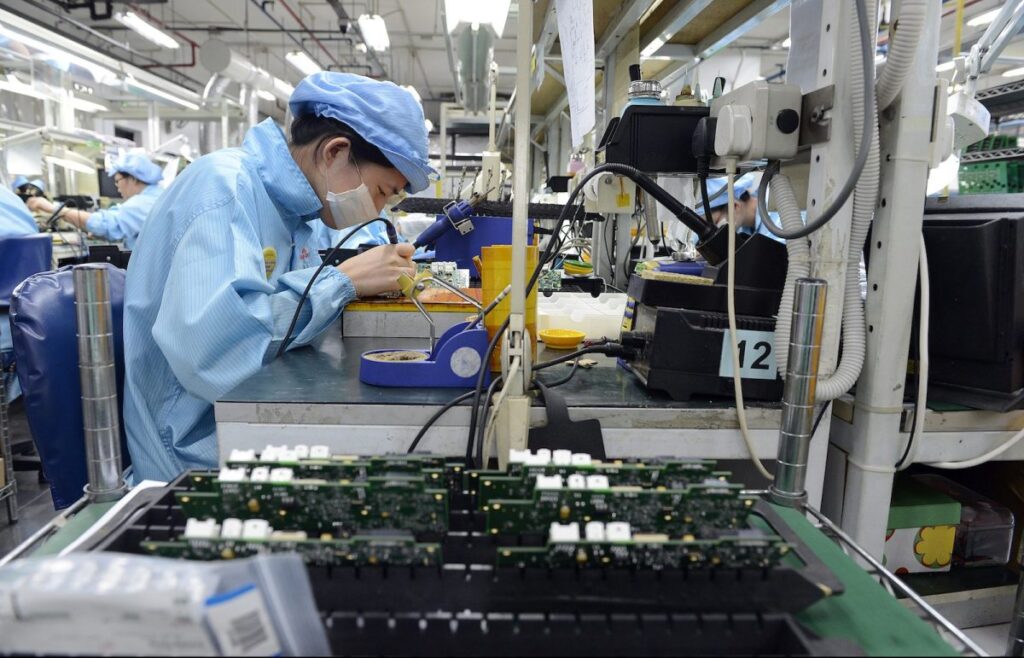
A worker building circuits in Singapore factory
source: https://asiatimes.com/2019/08/trade-war-salvos-singe-singapores-chipmakers/

Today Singapore is an extremely high tech and developed country that is still a center for trade. Its largest industries include electronic manufacturing and the financial services industry. The trading hub that the British established on the island in the 1800’s likely helped Singapore along in becoming the bustling and wealthy city that it is today.

Citations

Kästle, K. (n.d.). History of Singapore. History of Singapore – Nations Online Project. Retrieved January 28, 2022, from https://www.nationsonline.org/oneworld/History/Singapore-history.htm

Singapore Tourism Board. (n.d.). About Singapore. Brief History of Singapore – Visit Singapore Official Site. Retrieved January 28, 2022, from https://www.visitsingapore.com/travel-guide-tips/about-singapore/

What makes the Singapore Economy Tick? GuideMeSingapore. (n.d.). Retrieved January 28, 2022, from https://www.guidemesingapore.com/business-guides/incorporation/why-singapore/singapore-economy—a-brief-introduction

The Economy of the Osa Peninsula

Five commodities produced on the Osa Peninsula include chocolate, coffee, palm oil, pineapples, and bananas.

Chocolate is produced from cacao beans. Cacao beans are found within fruit grown on the cacao tree. The production of chocolate from cacao beans is fairly complicated. First, the fruit must be harvested from the trees. Then, the fruit must be split open to remove the beans. Next, the beans must ferment for 2-8 days and be left to dry for 1-2 weeks. Once the beans are completely dry, they are roasted, remaining shells are removed, and then ground up. Lastly, the ground cocoa is mixed with other ingredients like sugar, milk, and vanilla, and heat tempered to form chocolate. Chocolate and cocoa powder produced in Costa Rica is sold locally and exported. Finca Kobo is an example of a chocolate producer on the Osa Peninsula.

https://www.scienceofcooking.com/chocolate/how-is-chocolate-made.htm

http://www.fincakobo.com/tours_choco.html

Coffee beans grow on trees on farms on the Osa Peninsula and are encased in a cherry-like fruit. There are several steps required to process coffee beans. The coffee fruits are either hand or machine-picked from the trees. They are then dried in the sun, and milled to remove any remnants of the dried fruit. Finally, the coffee beans are sorted by size through filters, roasted, and packaged for sale. Coffee grown in Costa Rica is both sold locally and exported. Rancho Raices de Osa is a farm on the Osa Peninsula that grows coffee beans.

https://www.ncausa.org/about-coffee/10-steps-from-seed-to-cup

https://www.tripadvisor.com/Attraction_Review-g309284-d3174761-Reviews-Rancho_Raices_de_Osa-Puerto_Jimenez_Osa_Peninsula_Province_of_Puntarenas.html

Palm oil is derived from kernels of the oil palm. Kernels are harvested, and then transported to factories where they are processed. Processing involves extracting and cleaning the oil from the kernels. Much of the palm oil produced in Costa Rica is likely exported to foreign factories. Palm oil is the most widely used oil in the world and is found in everything from candy bars to shampoo. Palm oil plantations are scattered across the Osa Peninsula, and because oil palm can grow in extremely acidic soil, they are being used as a way to reclaim farmland that was damaged by intensive banana farming in years past.

uvmheadwaters.org/redefining-an-industry-costa-ricas-alternative-model-for-palm-production/

https://www.foodunfolded.com/article/palm-oil-how-its-made

https://inogo.stanford.edu/sites/default/files/African%20palm%20social%20landscape%20INOGO%20June%202013.pdf

Pineapples grow on shrubs and are harvested by cutting the fruit out of the mass of whorled leaves which they grow from. After harvest, there is no other processing required to make pineapples suitable for sale. Pineapples are grown on many small farms on the Osa Peninsula, and are both sold locally and exported. Some of these small farms may sell their harvest to large fruit companies like Del Monte to be shipped to grocery stores around the world. An example of a small farm on the Osa Peninsula that grows pineapples is Rancho Raices de Osa.

https://www.tripadvisor.com/Attraction_Review-g309284-d3174761-Reviews-Rancho_Raices_de_Osa-Puerto_Jimenez_Osa_Peninsula_Province_of_Puntarenas.html

www.freshdelmonte.com/our-products/whole-produce/pineapples/

Bananas are an important fruit grown on the Osa Peninsula. Bananas are grown in bunches in trees and are harvested by cutting the fruit from trees. After harvest, bananas do not require any further processing to be ready to eat and sell. Bananas grown on the Osa Peninsula are likely mostly sold locally but some farmers may sell their crop to large fruit companies like Del Monte. Finca Kobo is an example of a farm on the Osa Peninsula that grows bananas.

www.freshdelmonte.com/our-products/whole-produce/bananas/

http://www.fincakobo.com/finca_agri.html

Skip to toolbar