
Map of Rock Point
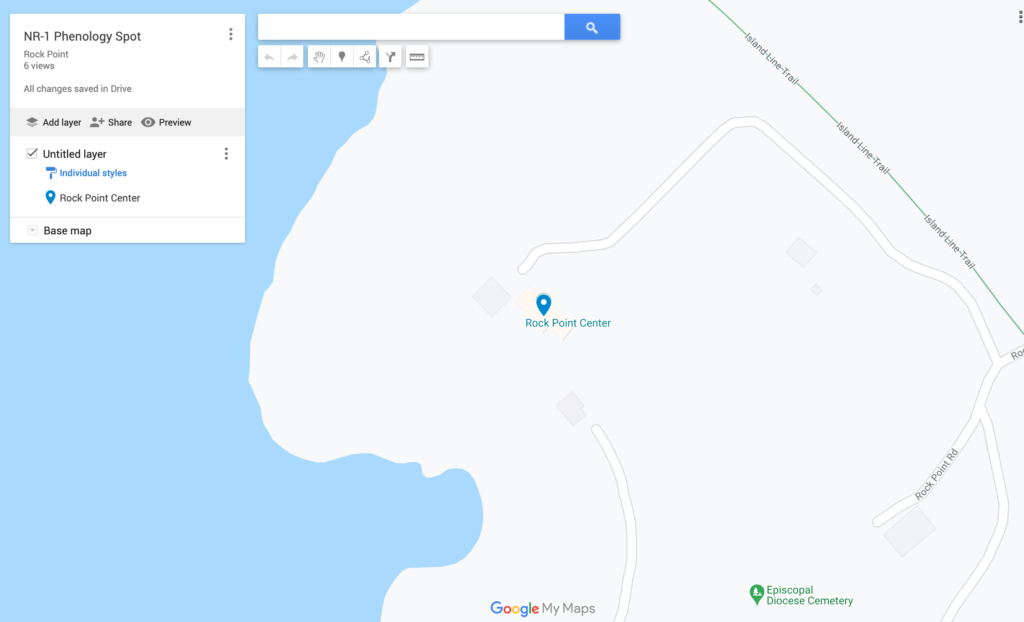
October 11, 2020
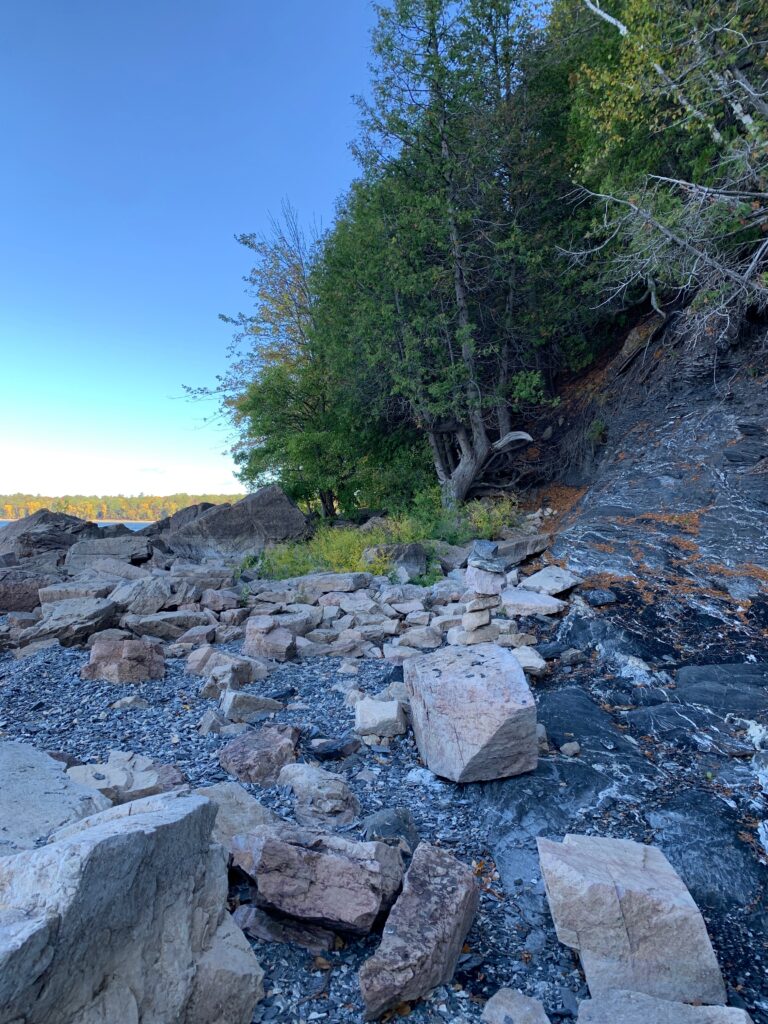
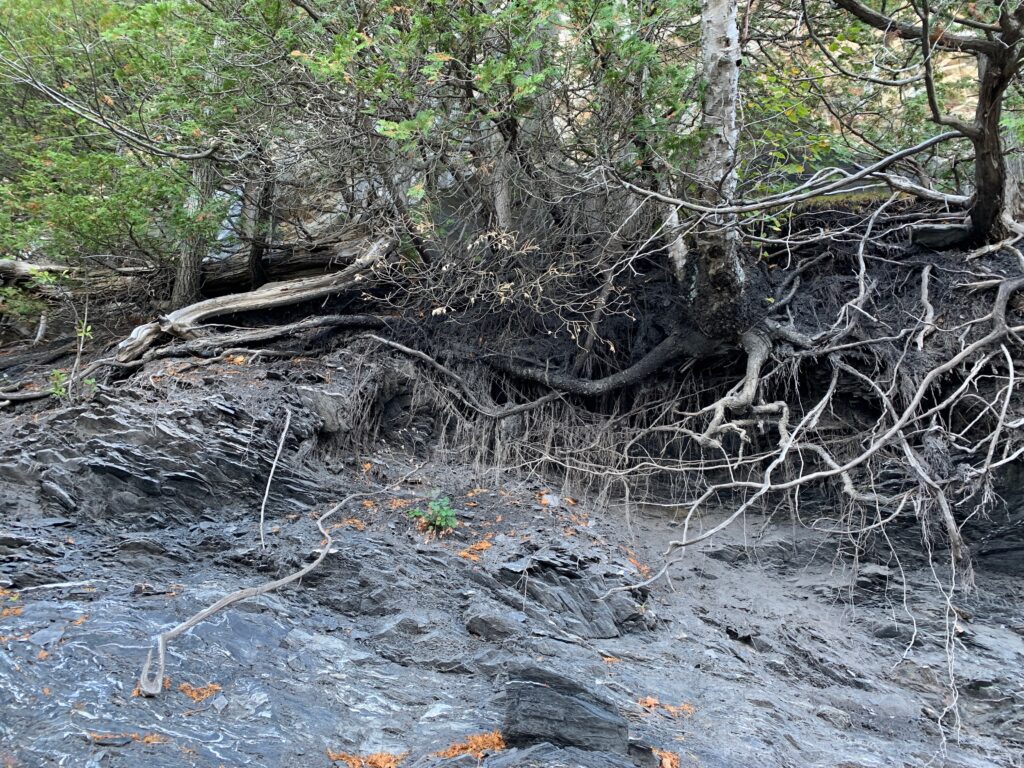
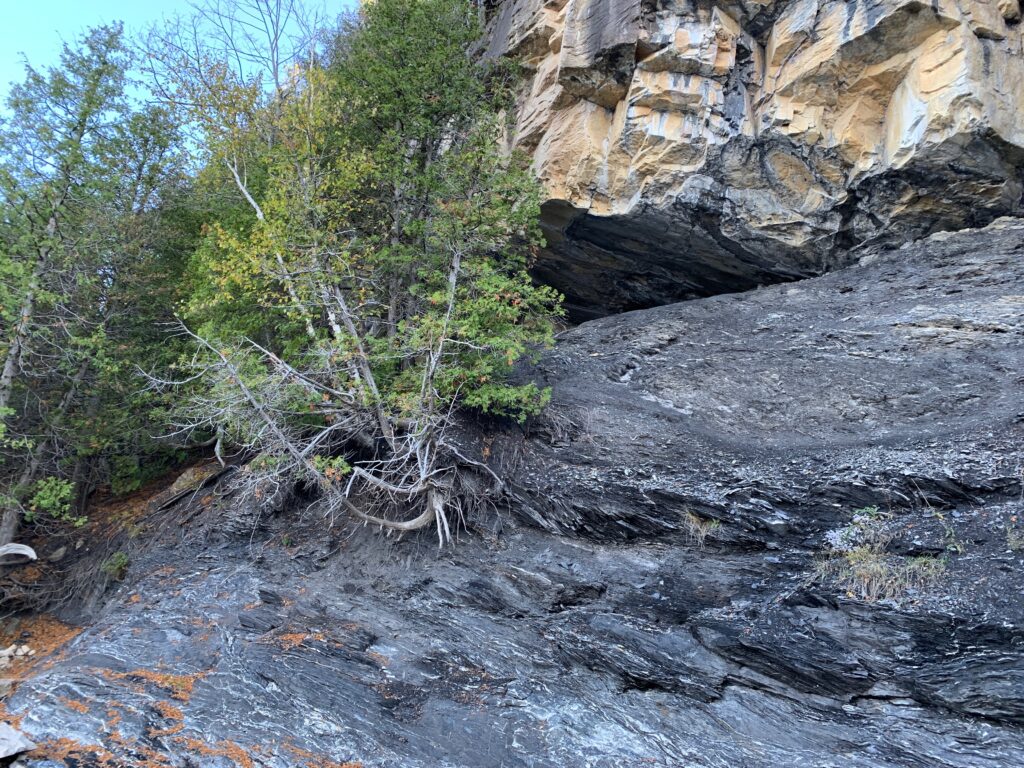
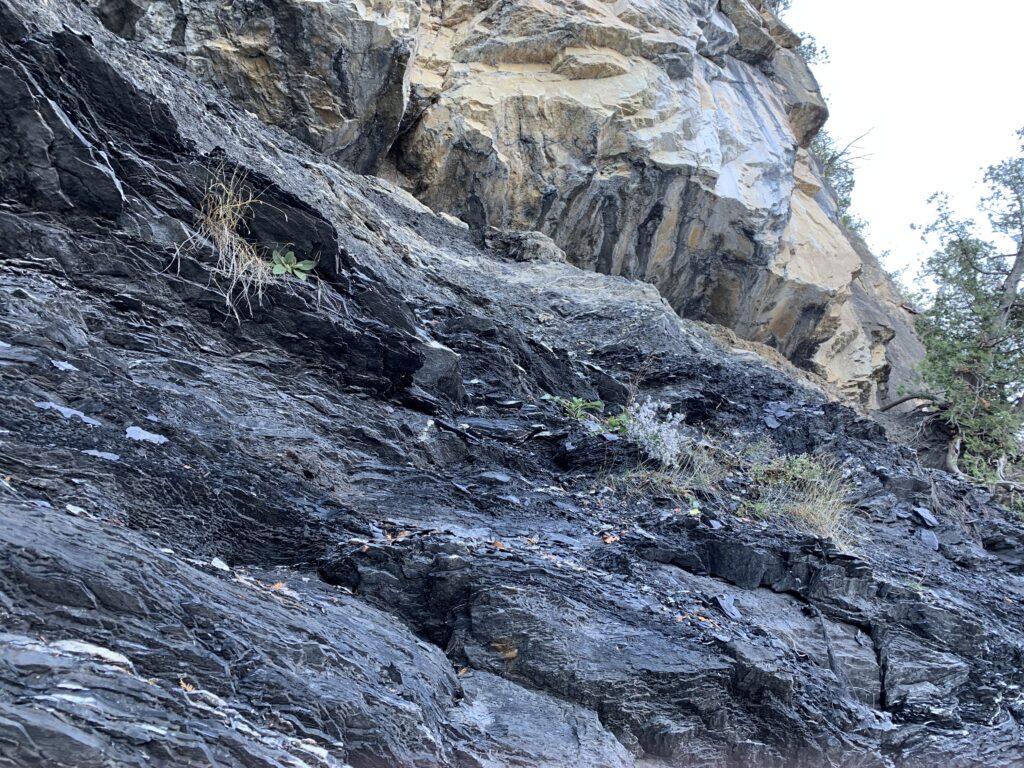
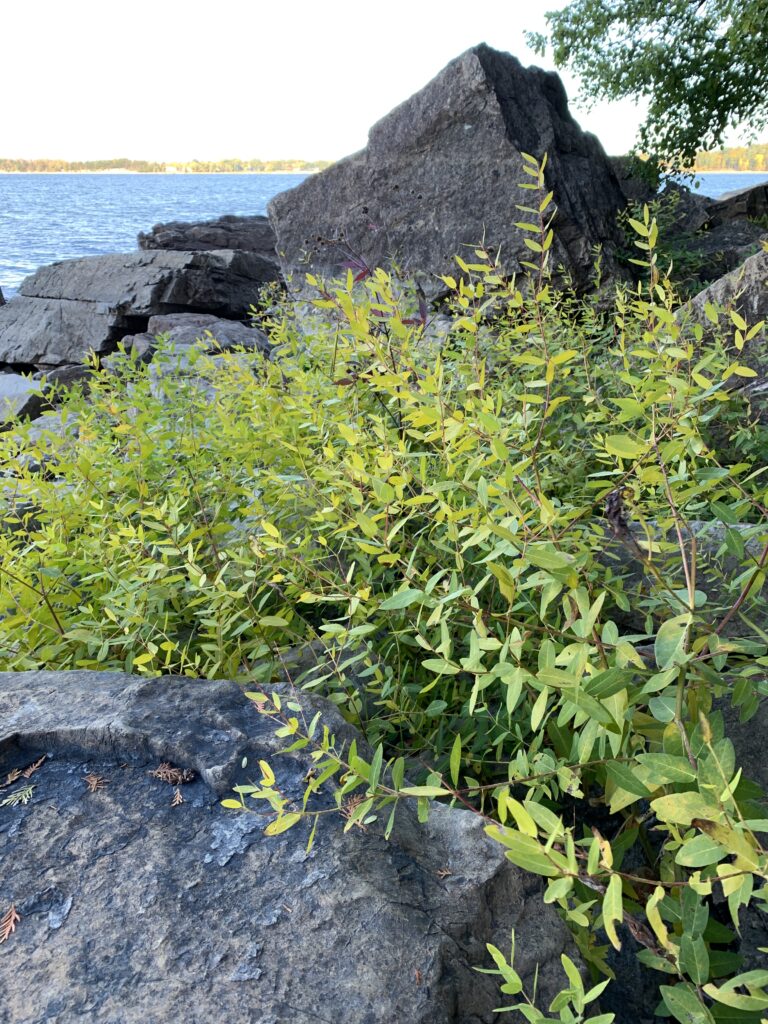
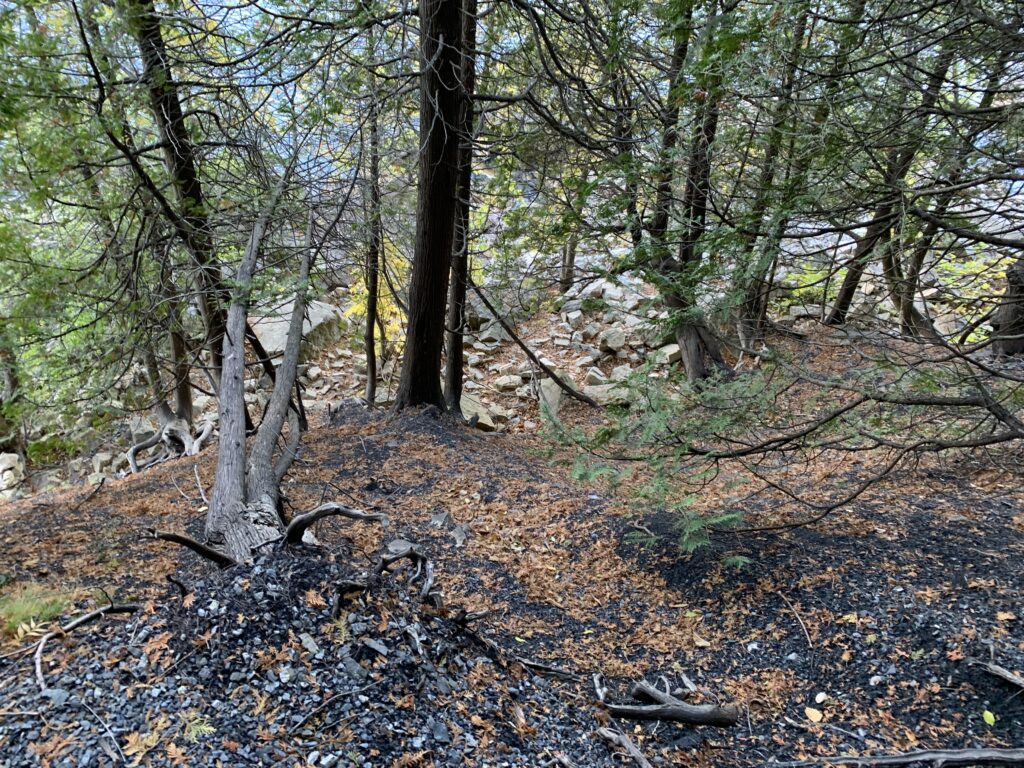
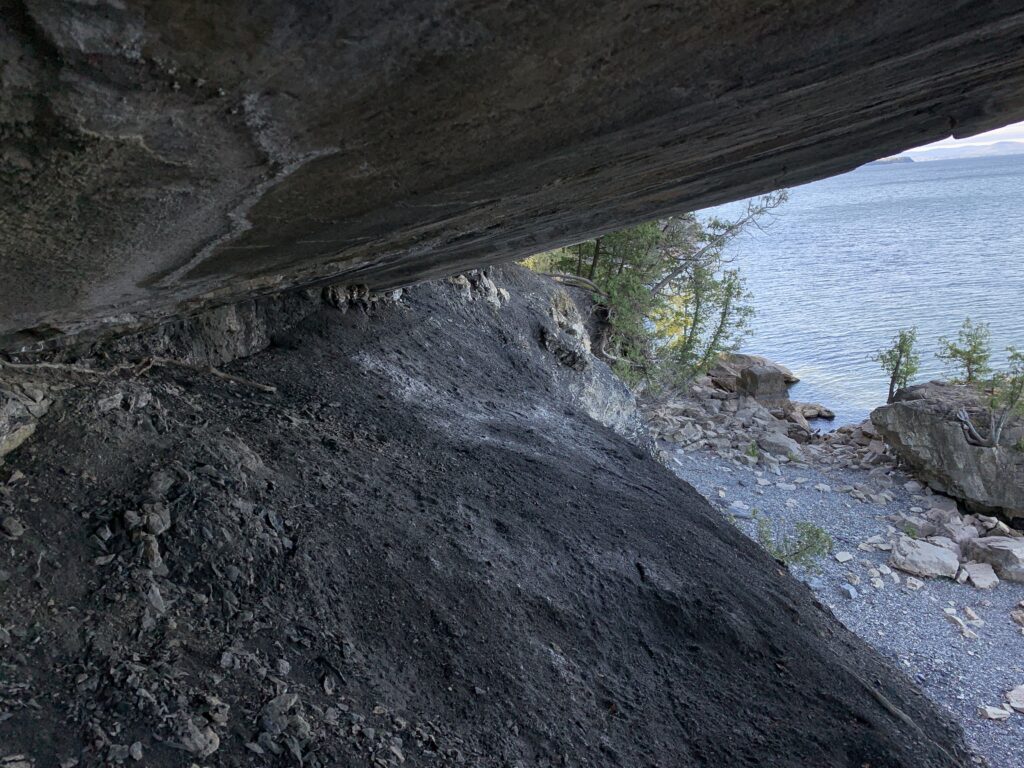
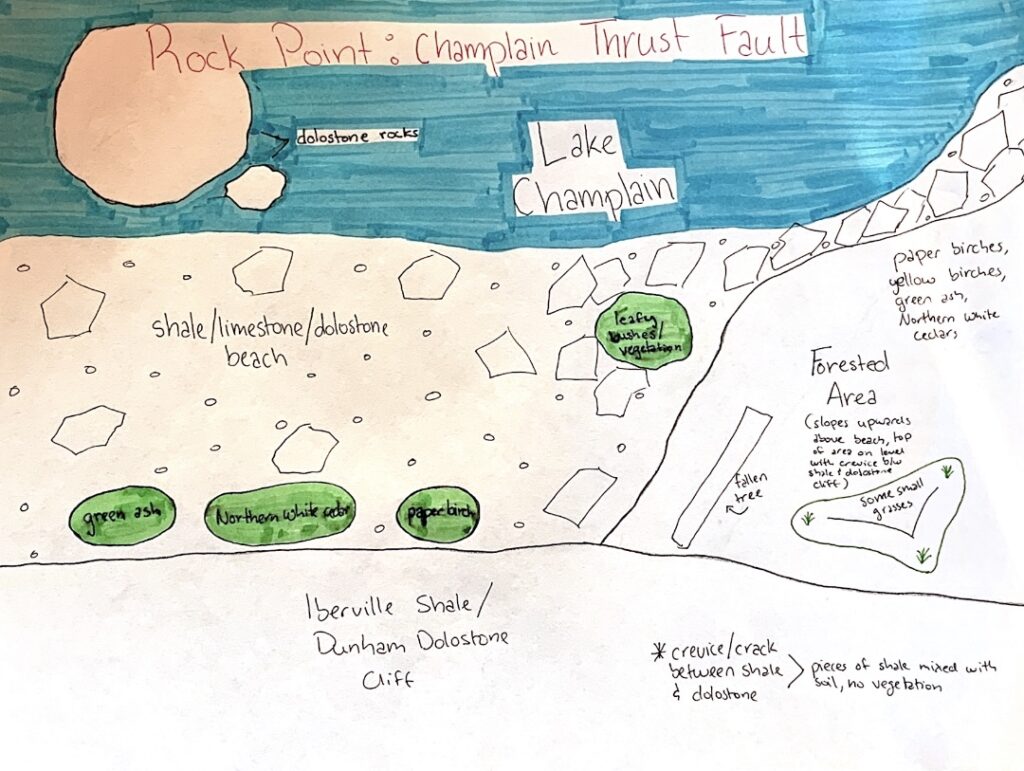
Bird’s-Eye View Map of Rock Point
October 23, 2020
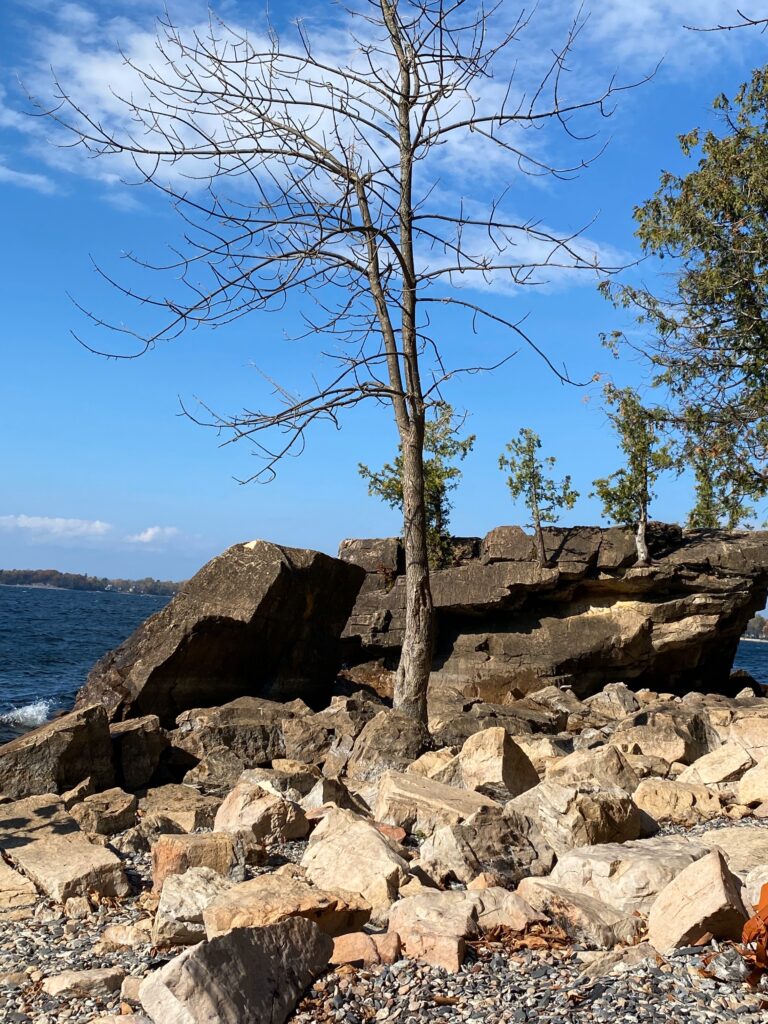
Rock Point Event Map
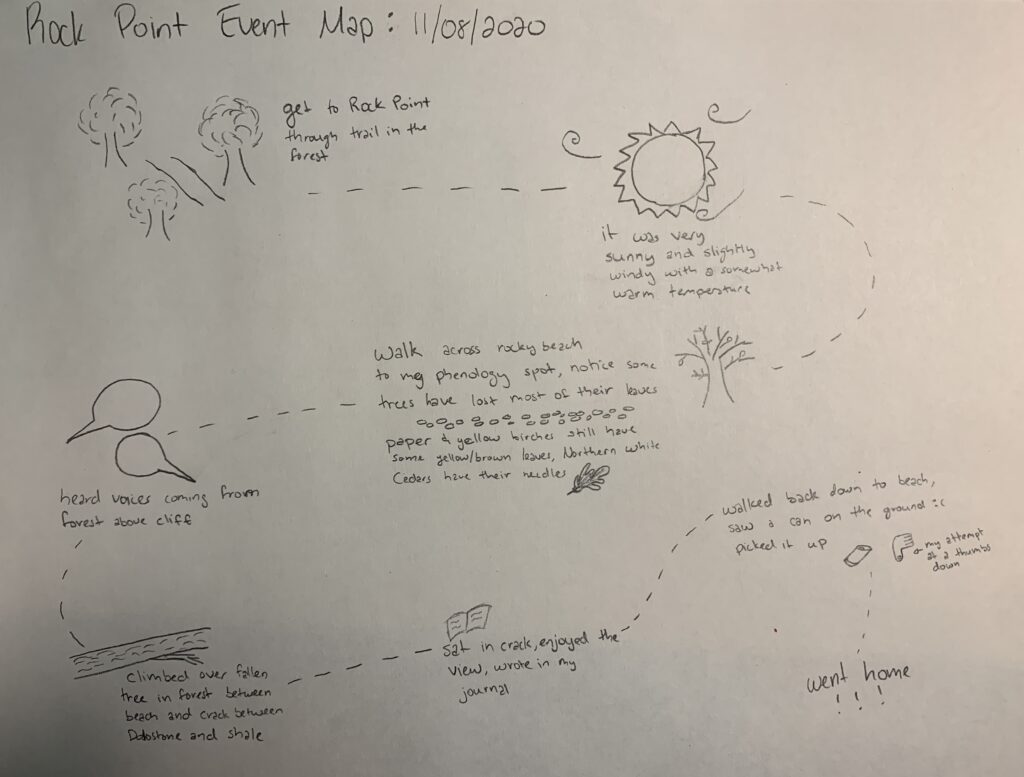
November 8, 2020
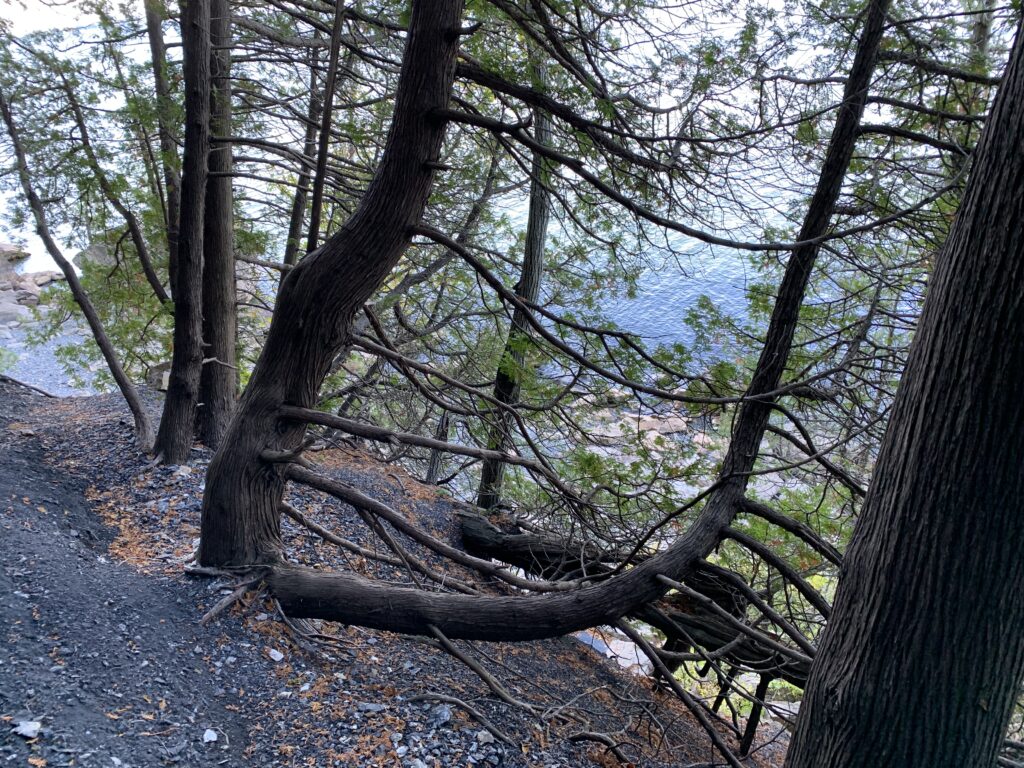
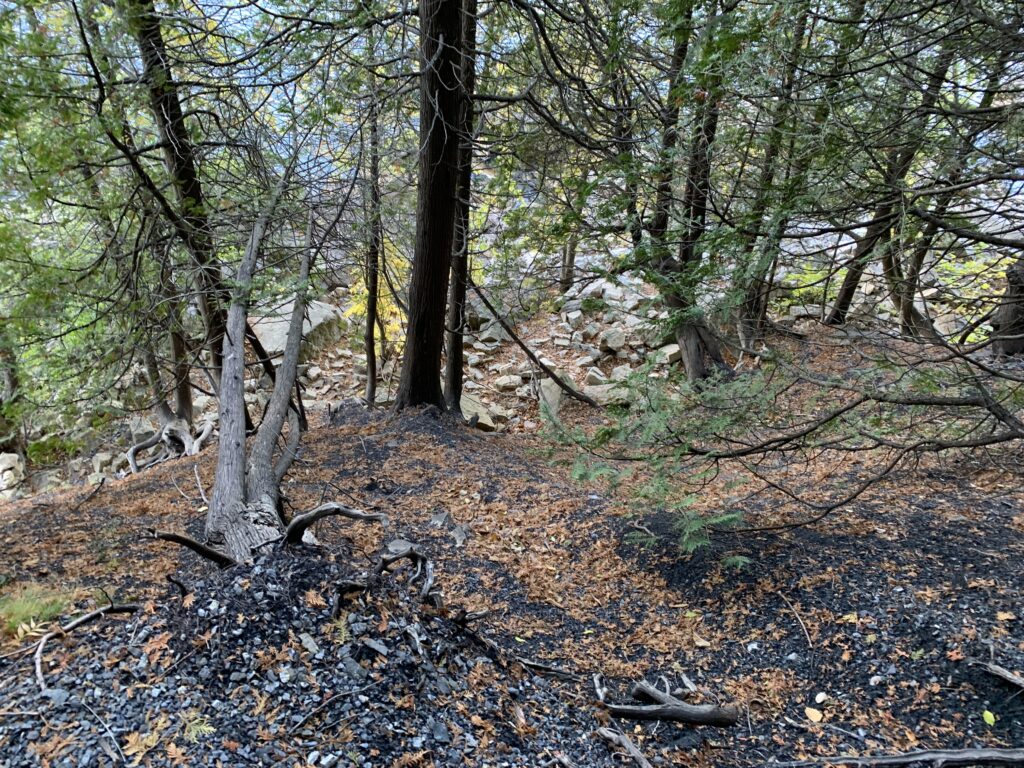
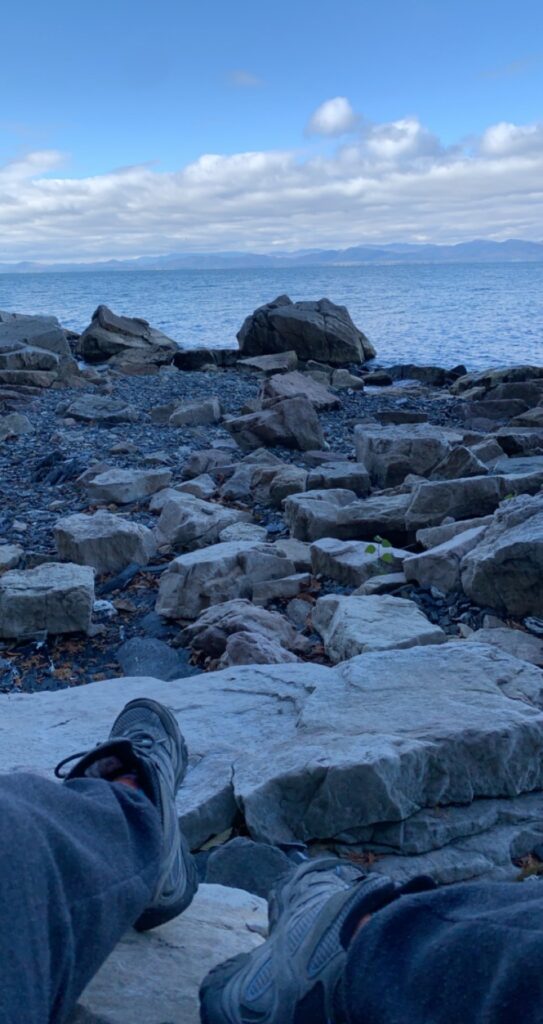
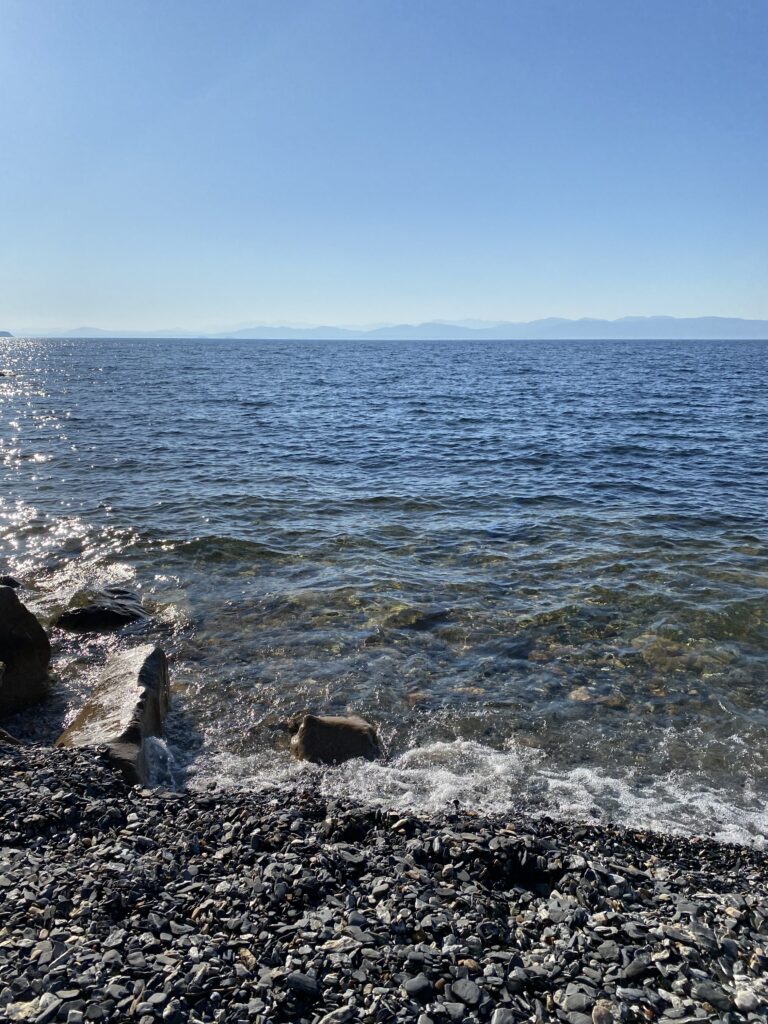
The weather started out cloudy and a little windy, and then cleared up and became very warm and sunny!
Stony Brook
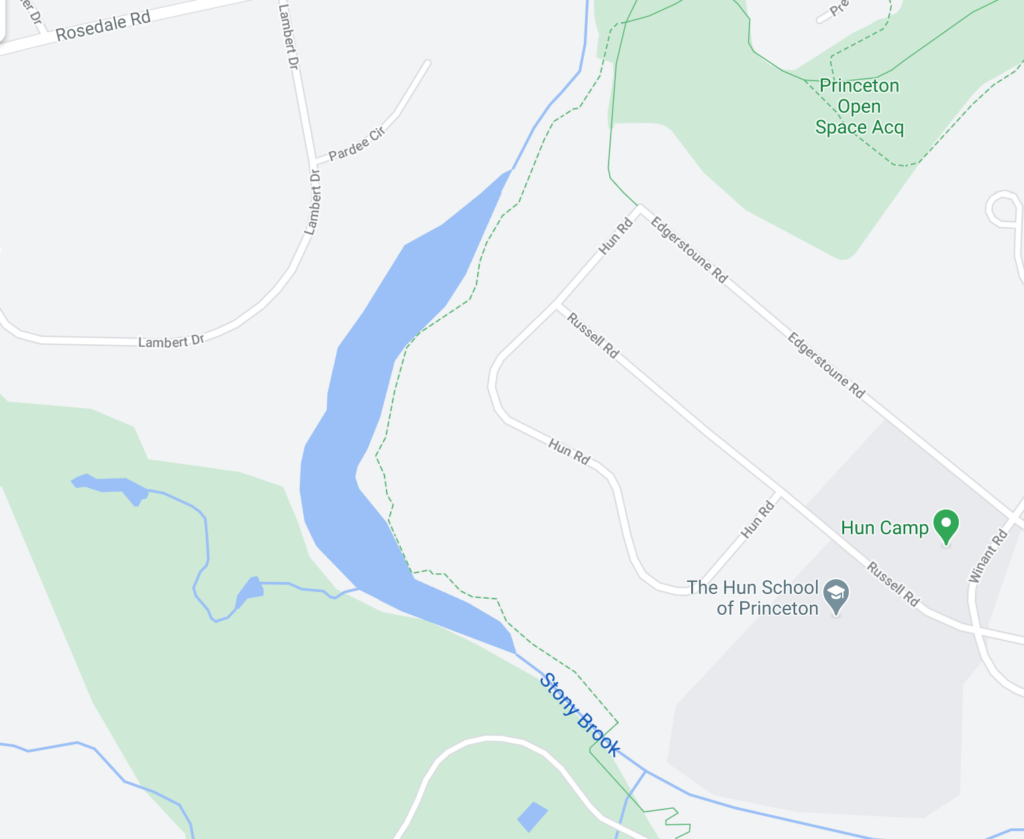
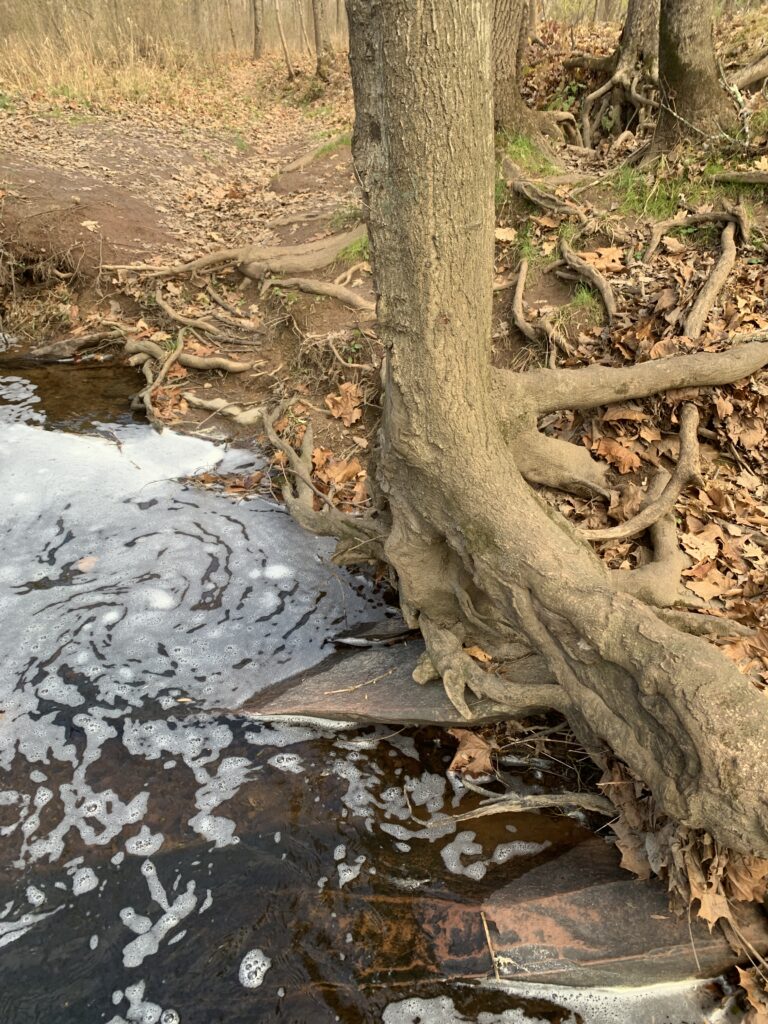
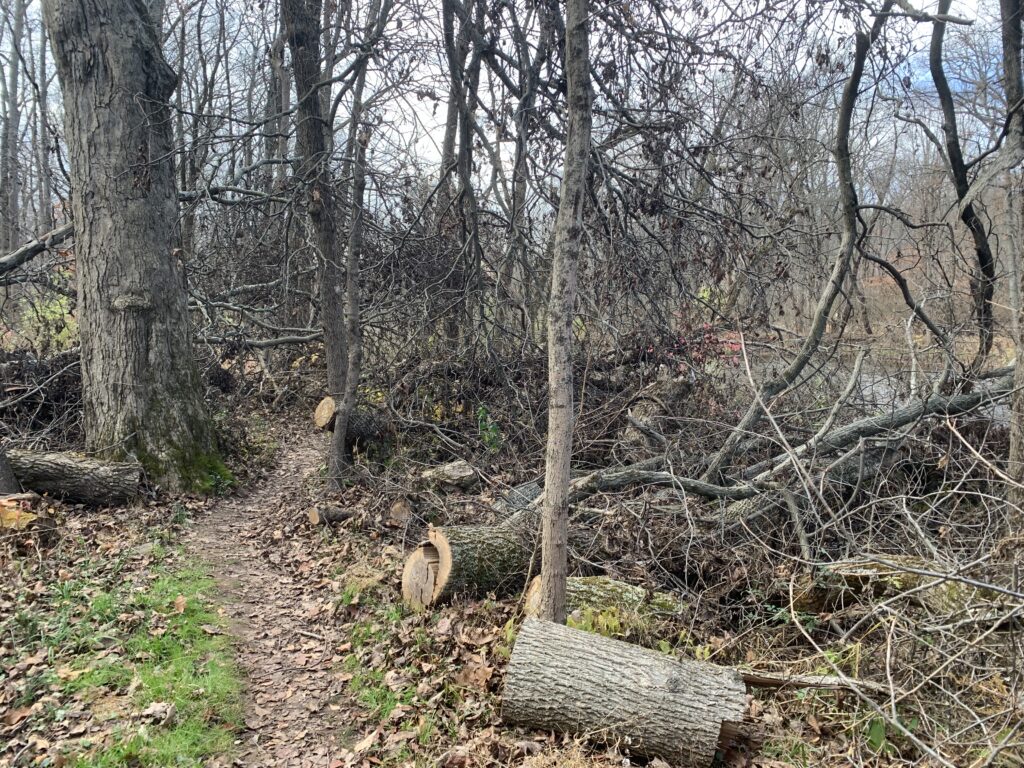
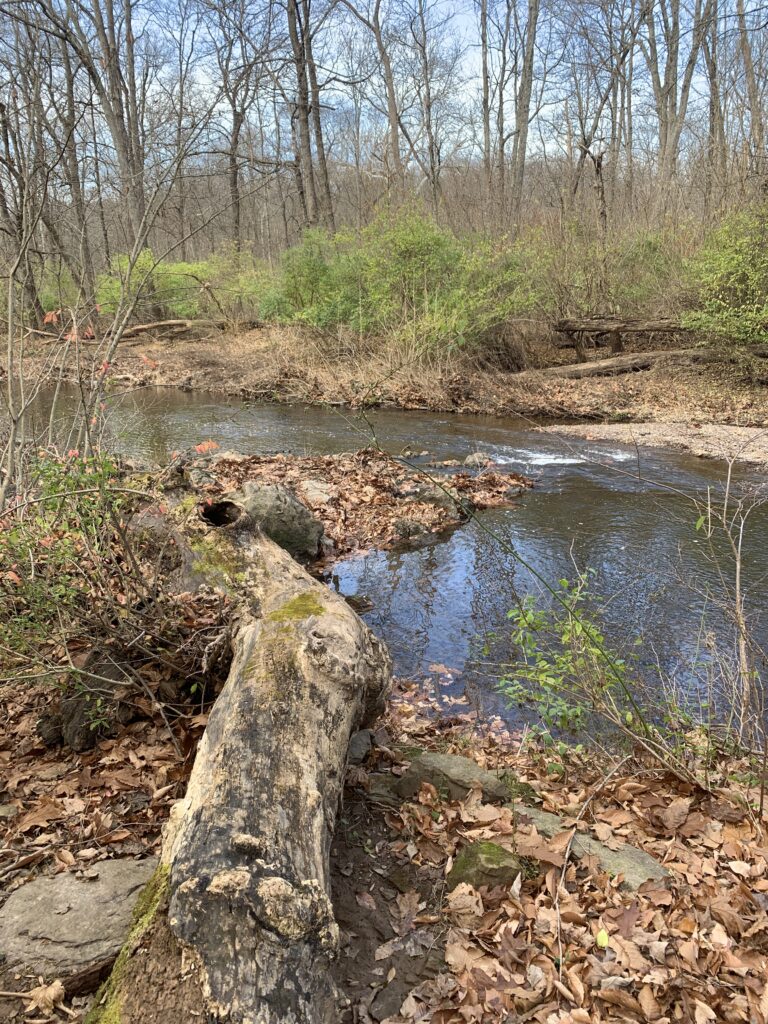
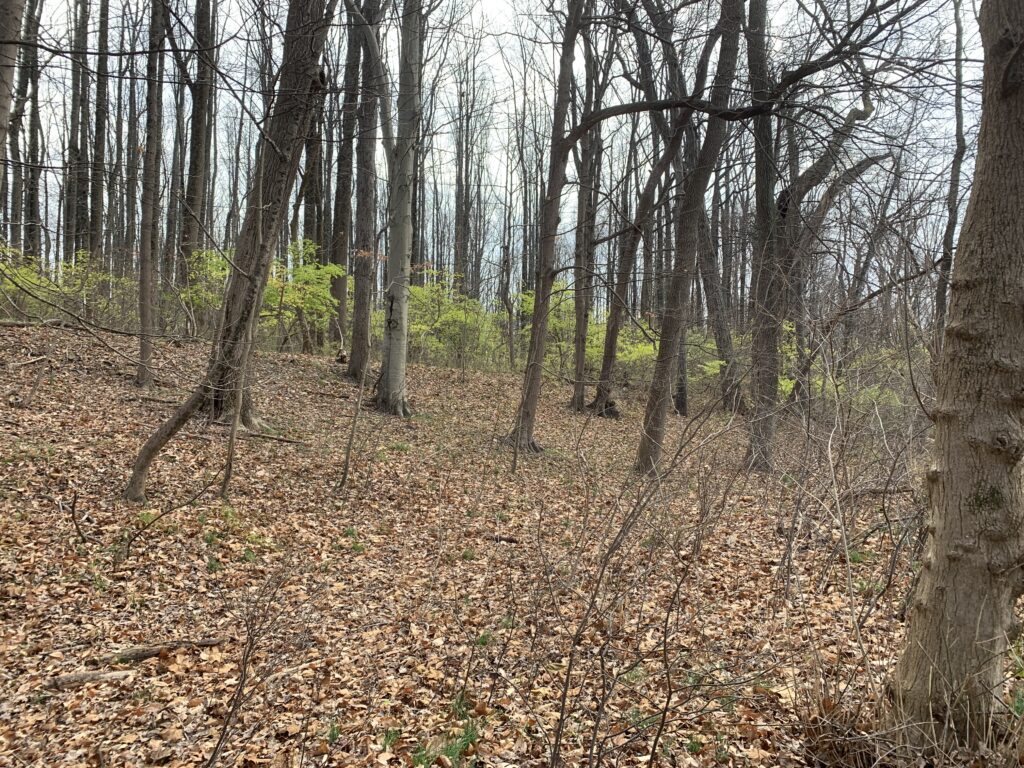
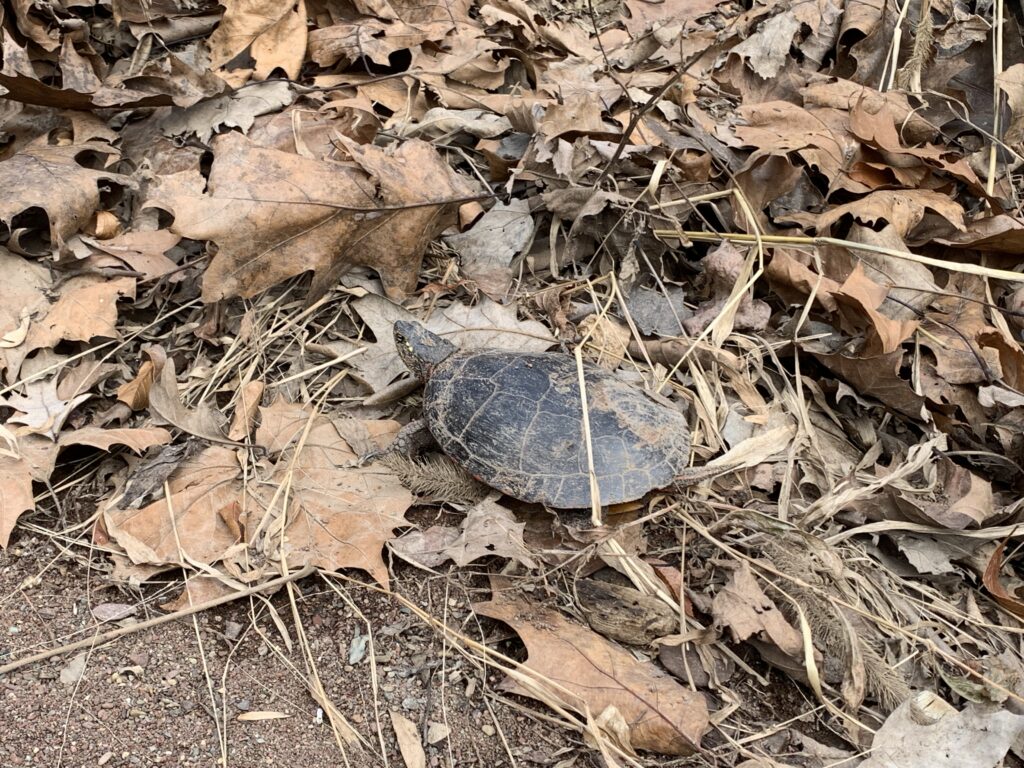
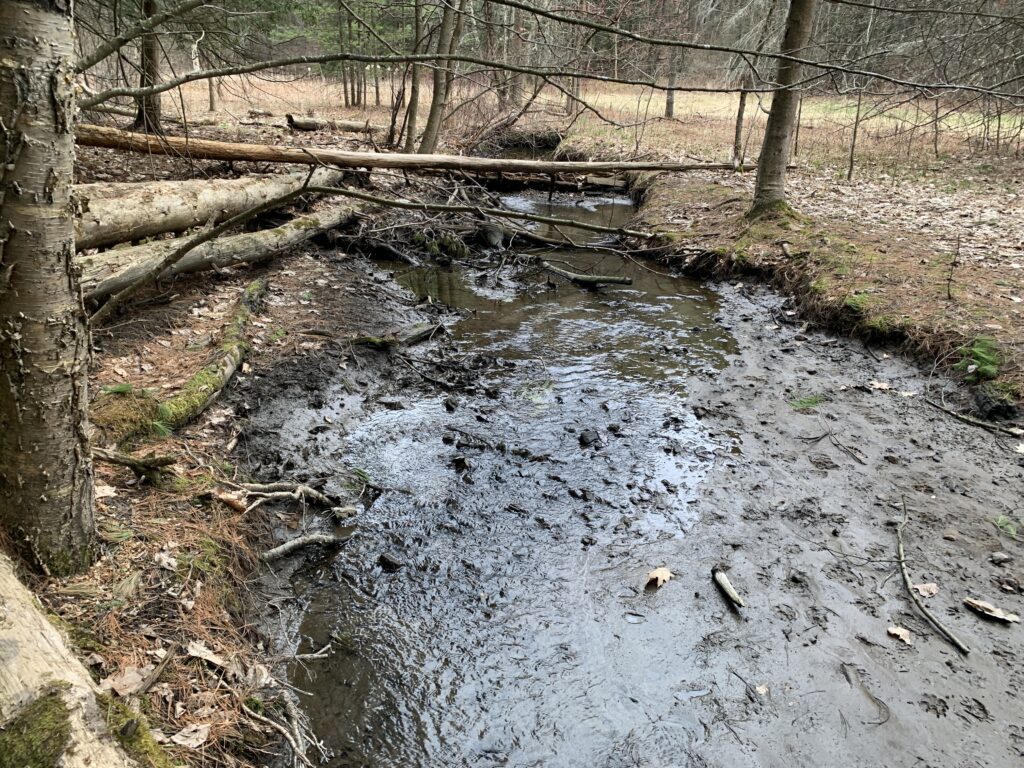
The Stony Brook forest area is similar to Rock Point in that they are both bodies of water surrounded by forest. However, Stony Brook is a small stream rather than a large lake and the forest is immediately around it rather than separated by a beach and cliff. Stony Brook has a herbaceous layer with grasses, shrubs, and small plants, as well as an understory with young trees. Rock Point doesn’t have much in terms of shrubbery or grasses in the beach area, and in the forested area, it has slightly more, but still not much due to the high winds coming off the lake. While the trees in Rock Point and the Stony Brook forest are different, I saw some trees such as the Sugar Maple and Black Cherry which we can also find in Vermont. The trees have almost completely dropped their leaves here, so the ground is covered in brown leaves. The stream level was somewhat high compared to how I usually see it, but it had rained here a couple days before so that made sense. Beyond the sound of the stream water running, I could hear the sound of bird calls and cars on a nearby road. I saw a lot of birds, a few squirrels, and a painted turtle! I was surprised to see the turtle because painted turtles tend to go into hibernation in October, but because the weather has been of above-average warmth I guess the turtles may not all have gone into hibernation yet. I named him Vincent (because he’s a painted turtle)!
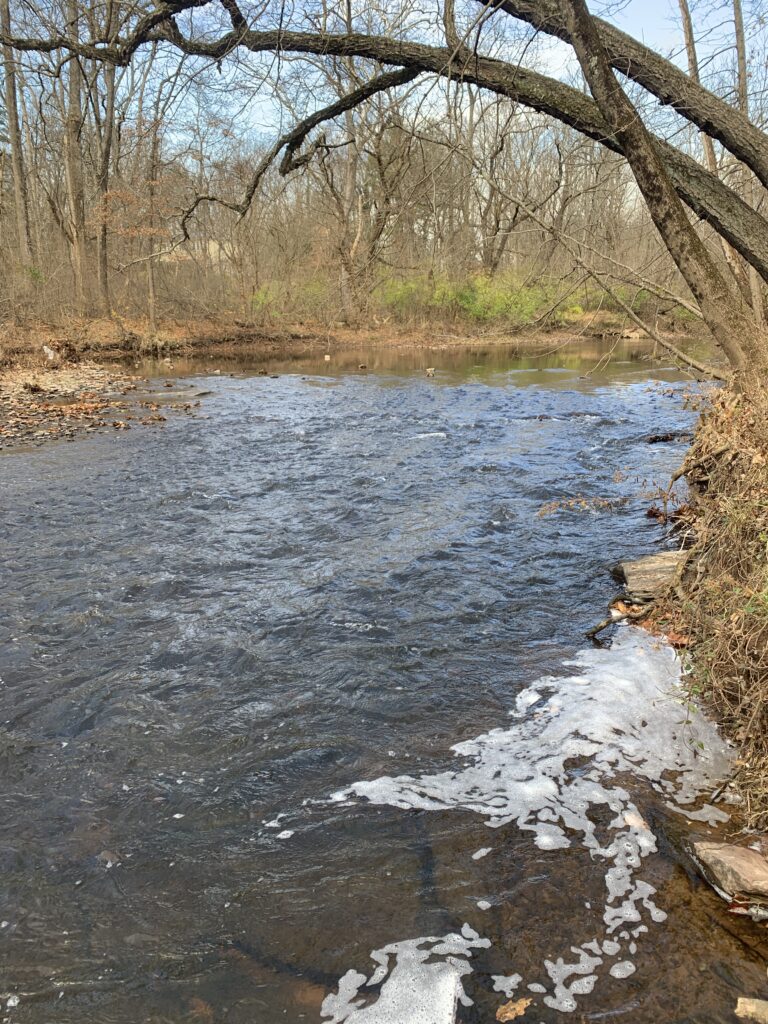
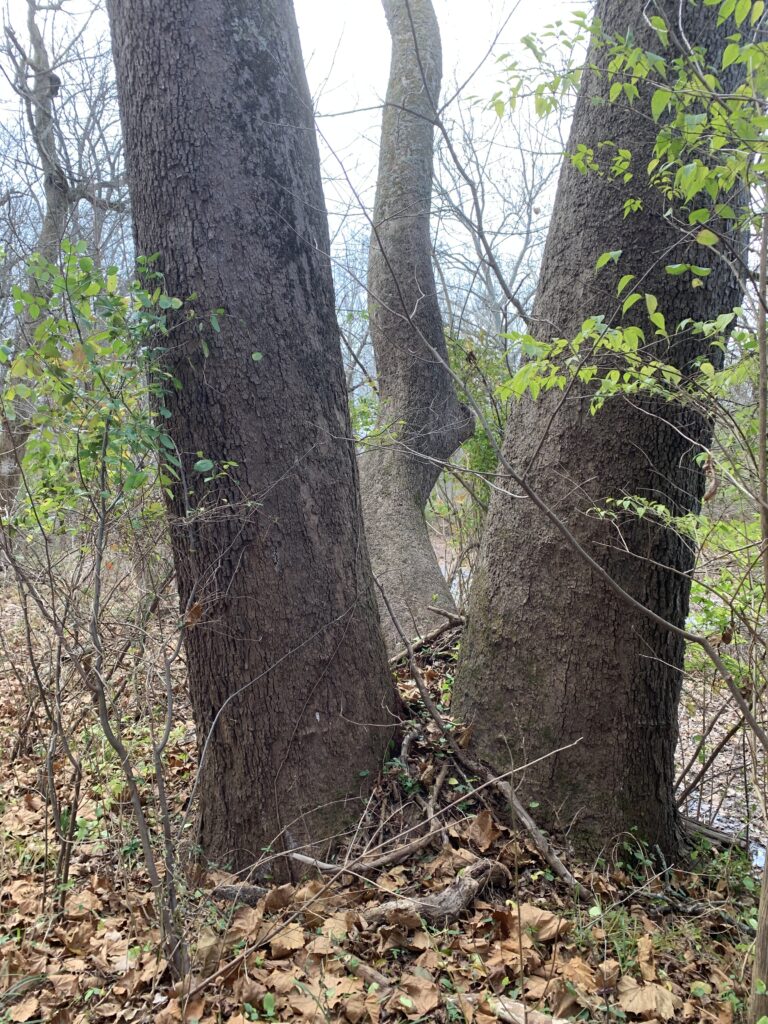
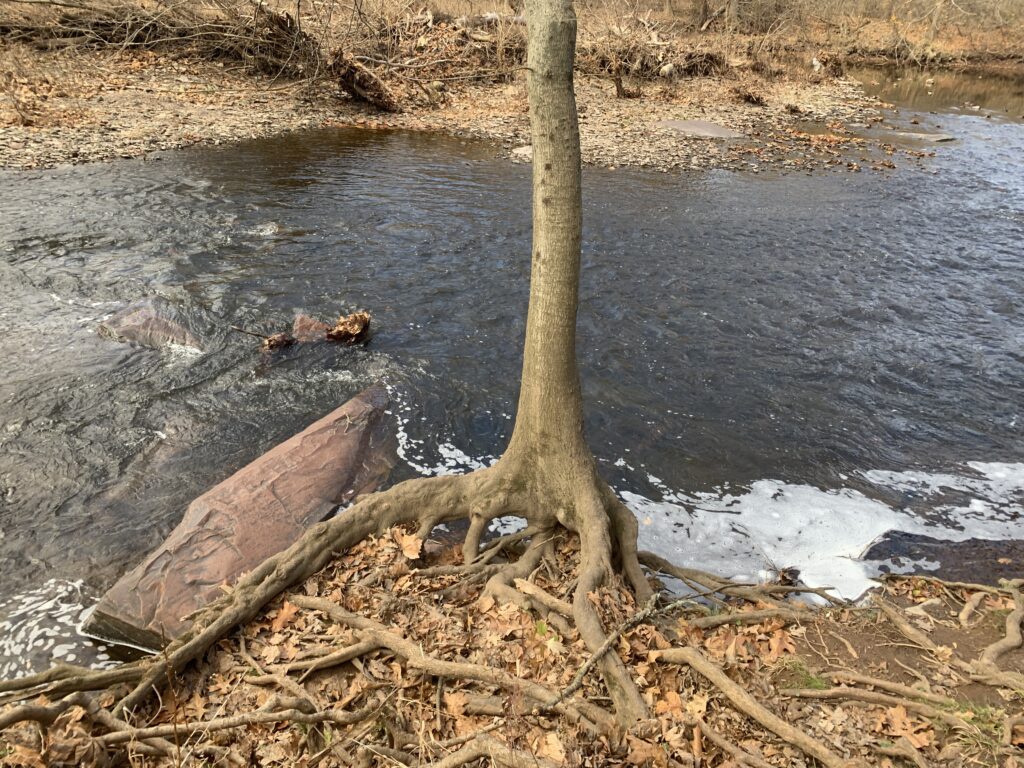
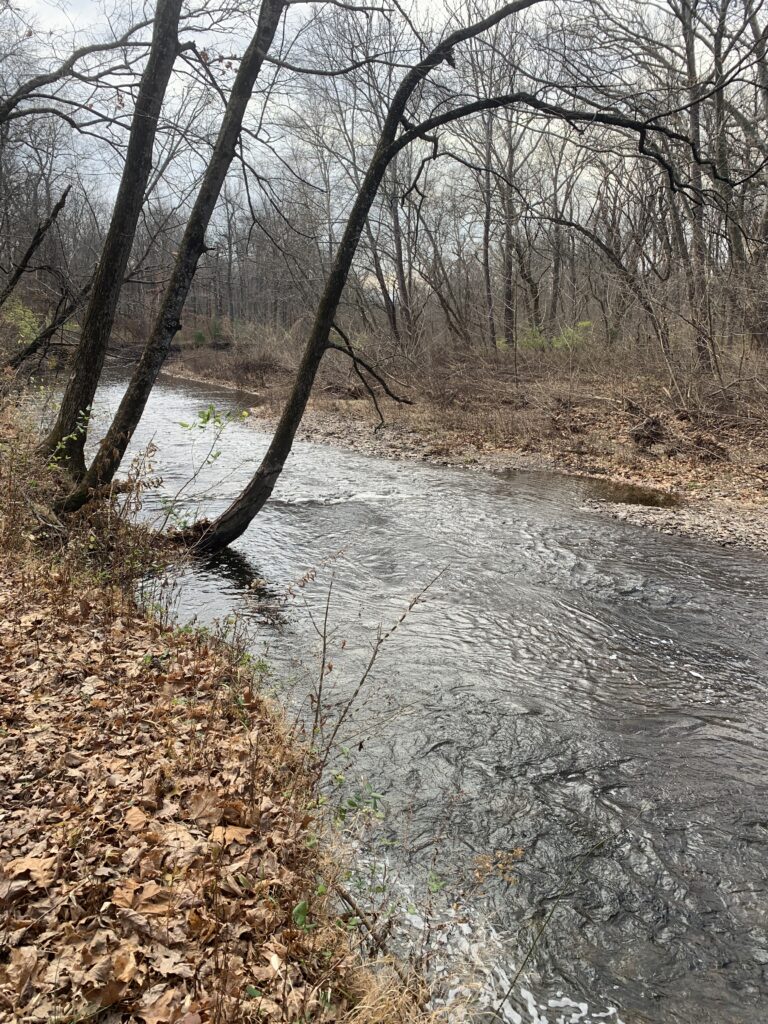
Stony Brook Trails Human History
The Stony Brook Trail connects three different preserved areas: The J. Seward Johnson Preserve, Greenway Meadows, and the Stony Brook Trail Corridor. It also connects to the Woodfield Reservation, another preserved area, via another connecting trail. The trail is about two miles long and runs along the Stony Brook stream. It also has a pedestrian bridge that was built using federal, state, county, and local funds. The trail was made by the Princeton Township Engineering Department and the Friends of Princeton Open Space. The trail was planned in 1995 as a way to make a loop trail around Princeton. It took multiple years of planning and negotiating to bring the plan to life, and the trail was finally finished and dedicated in October of 2010, although it had already been constructed in part in prior years.
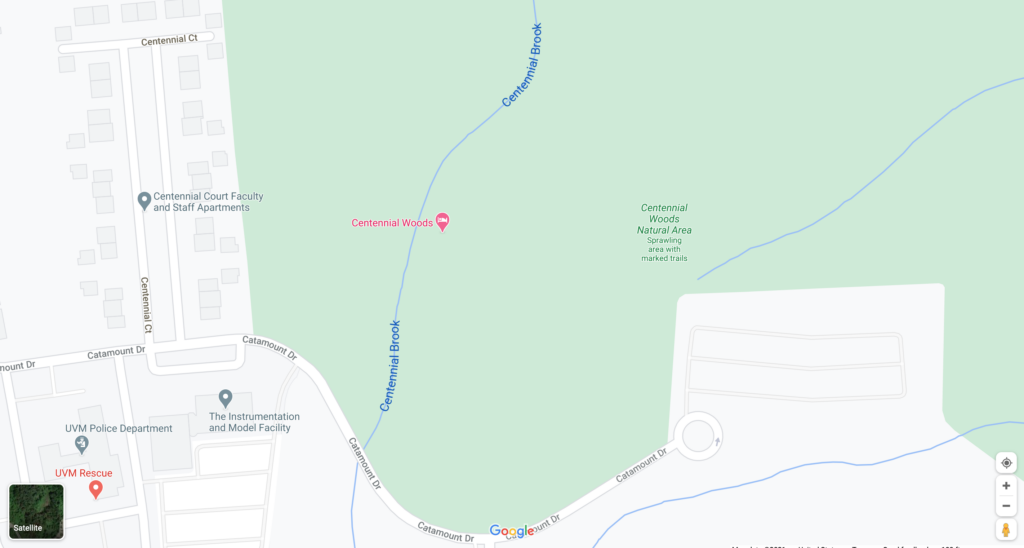
Map of Centennial Woods
How To Get There
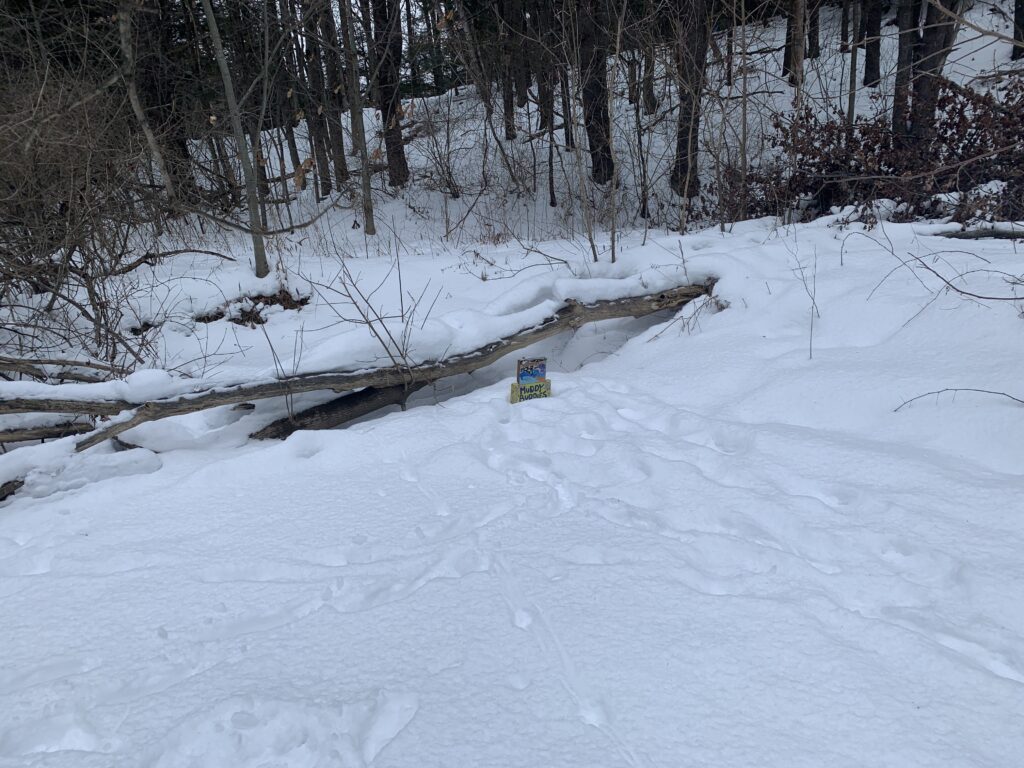
To get to Centennial Woods from my dorm in Harris I walked towards UVM Rescue and passed it to get to the site’s entrance. I went left at the first two forks in the main path and then went down the lower path after the evergreen clearing. I continued on this path alongside the stream and picked a spot with a couple fallen trees to sit on.
Tracks
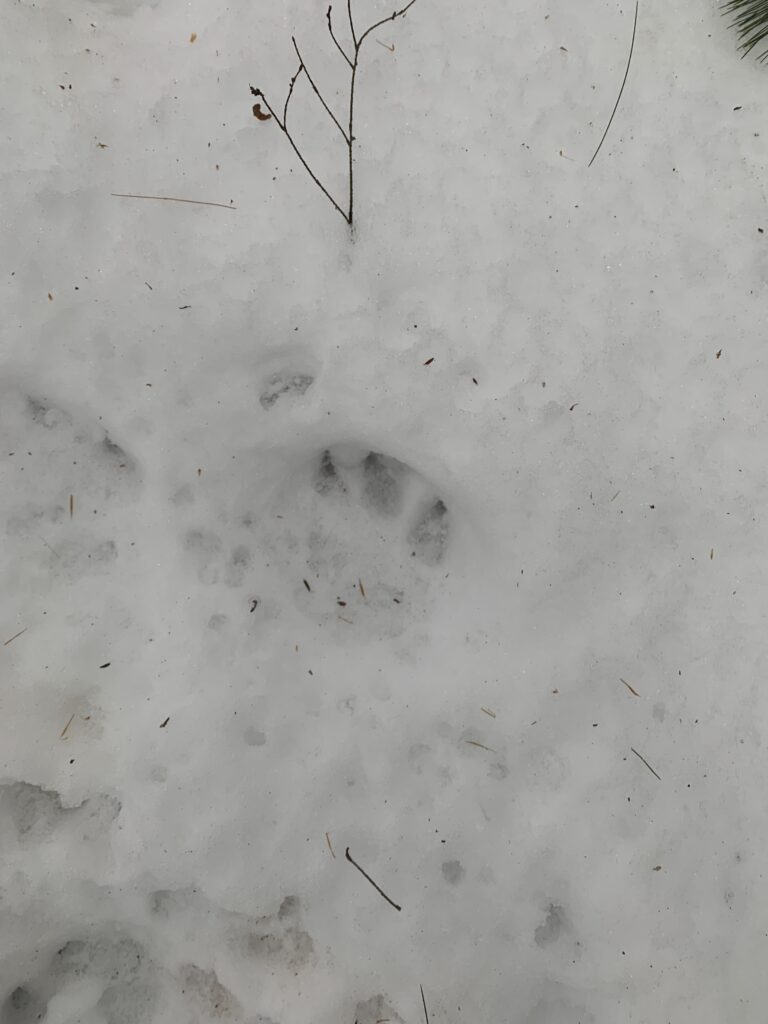
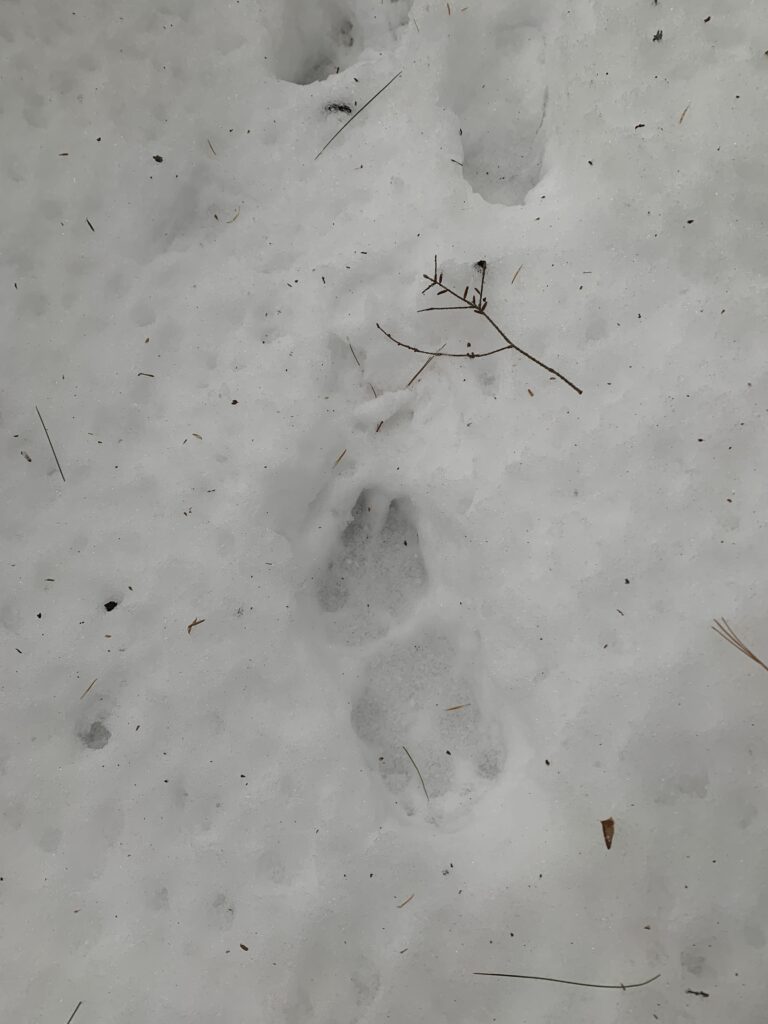
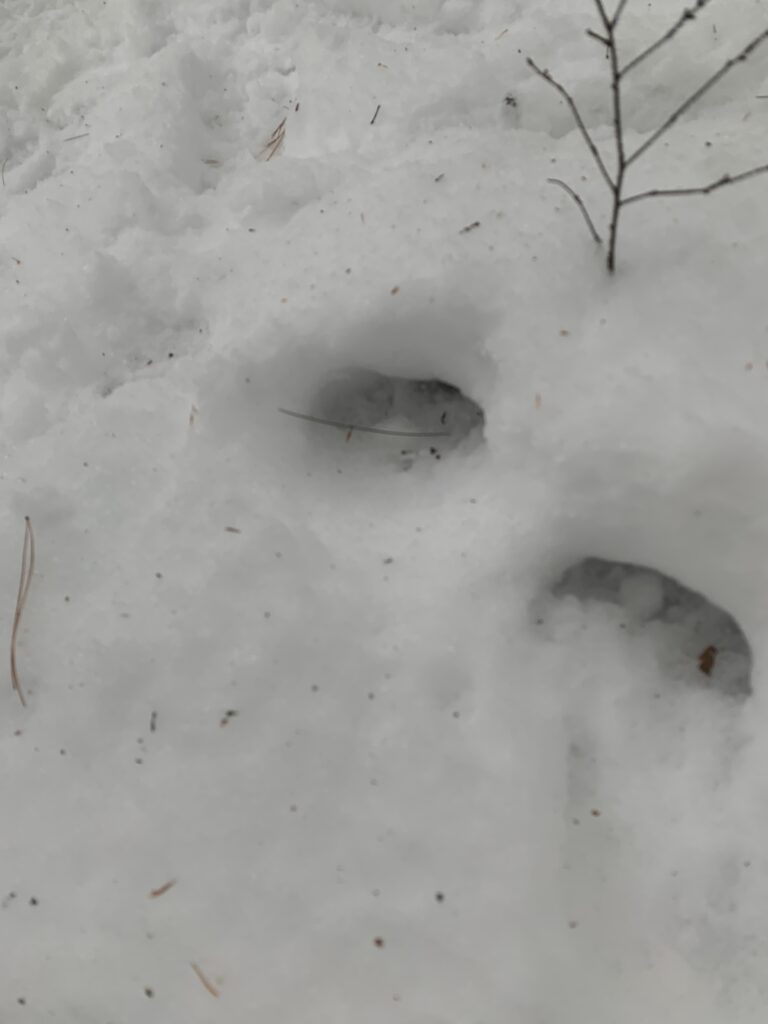
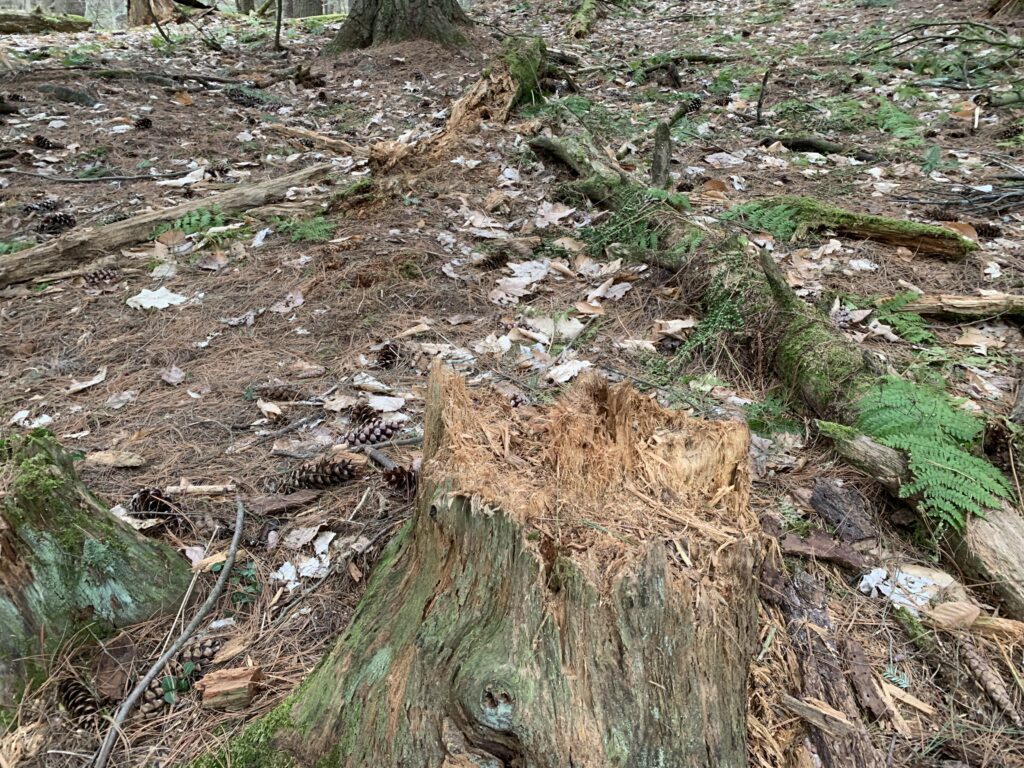
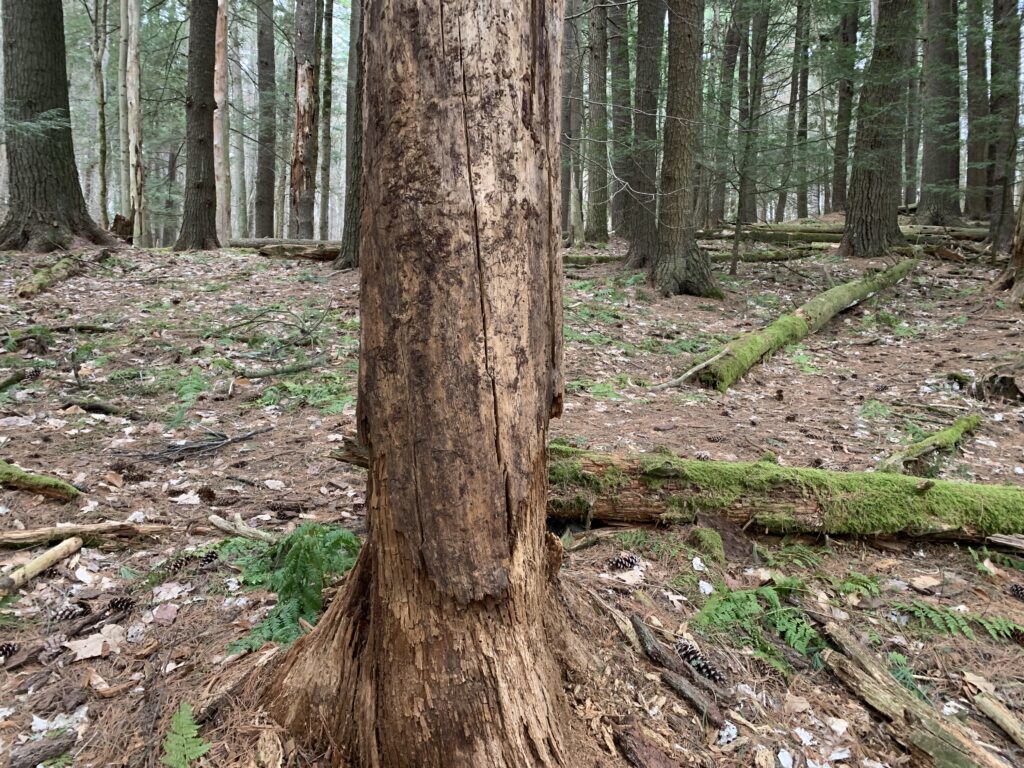
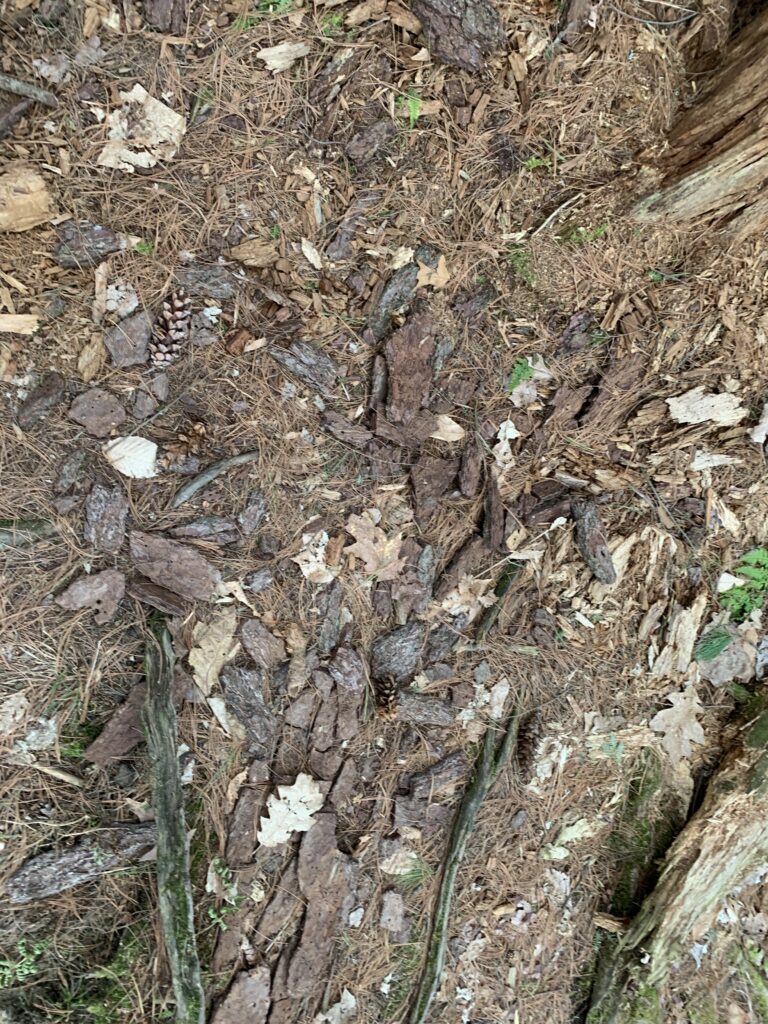
The most prominent tracks throughout my phenology spot and the path that led to it were human tracks. Countless shoe prints were embedded in the snow, even some smaller prints from children. There were tire tracks along the path from a bike as well. I could hear the calls from the remaining smaller birds that didn’t migrate south for the winter in the trees above and even heard a bird that sounded like it was beeping. There was also a lot of urine in the snow that was a clear sign that animals were present recently. I didn’t see any signs of amphibians due to the time of year and I didn’t see any scat that I could’ve used to help determine species. I saw a few trees with their outer layer of bark stripped, which leads me to believe there are porcupines living in the area because they eat the tree bark. Many of the animal tracks were hard to make out, and I couldn’t decipher what the clearest one was! The track was by the path alongside the packed down snow so that was the only one I was clearly able to make out. It only had three clear toes but I quickly realized it was probably a four-toed animal and a slightly messed up track. This track was likely from a dog because it was so close to the path and resembles other dog tracks I’ve seen. I noticed what I assume were deer tracks, but I’m not completely sure. I also saw some other tracks that could’ve been cottontail rabbit tracks and deer tracks. I’m unsure whether or not I saw porcupine tracks. There was a long line of tracks in the snow that seemed to have drag marks from the porcupine’s tail, although it also could’ve been from a person dragging their feet through the snow as they were walking.
March 7: Changing Seasons
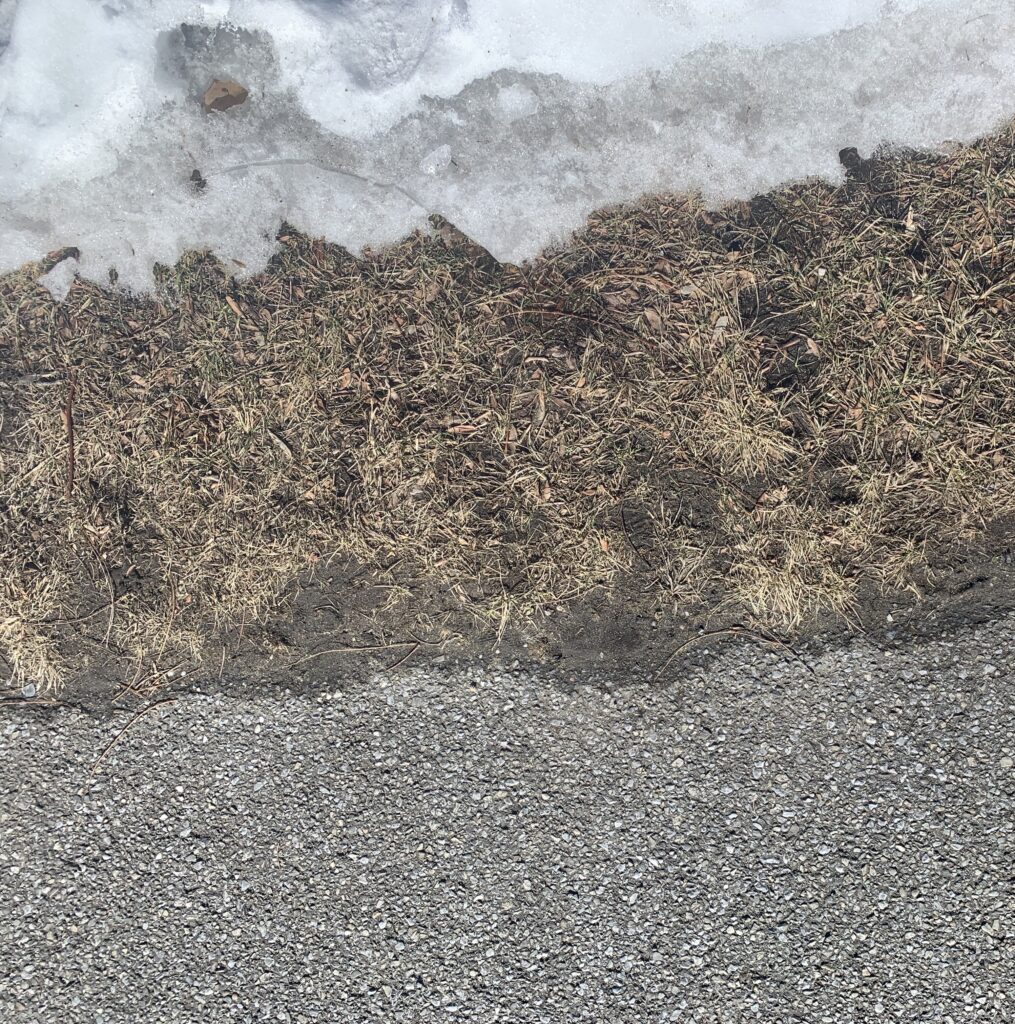
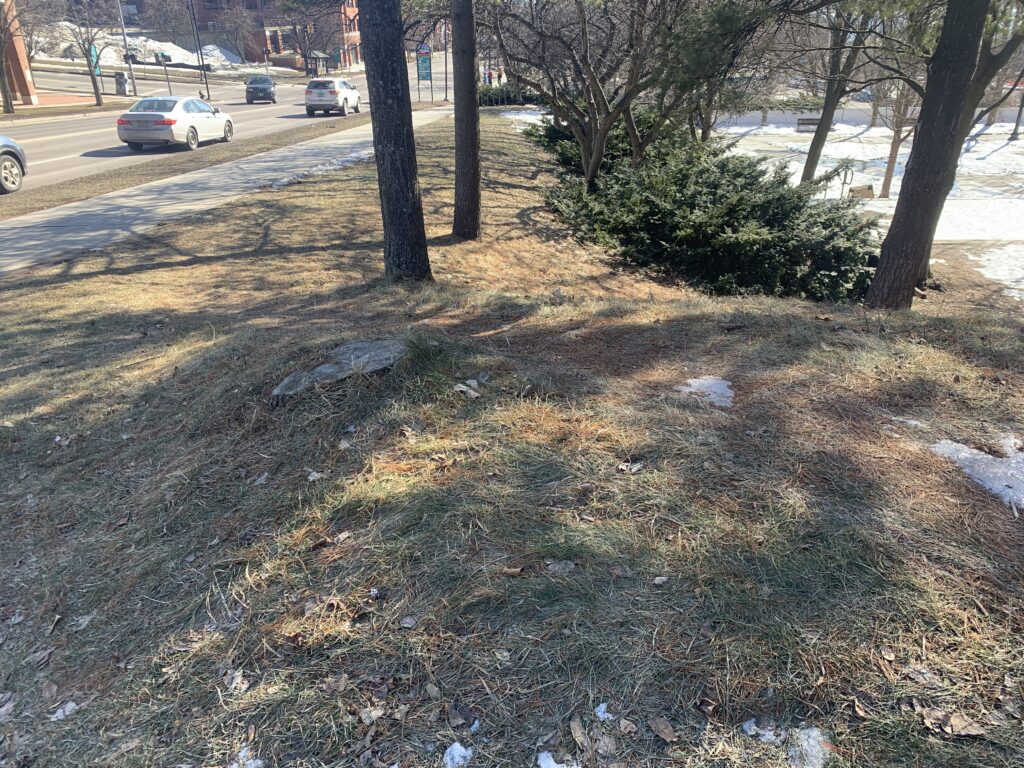
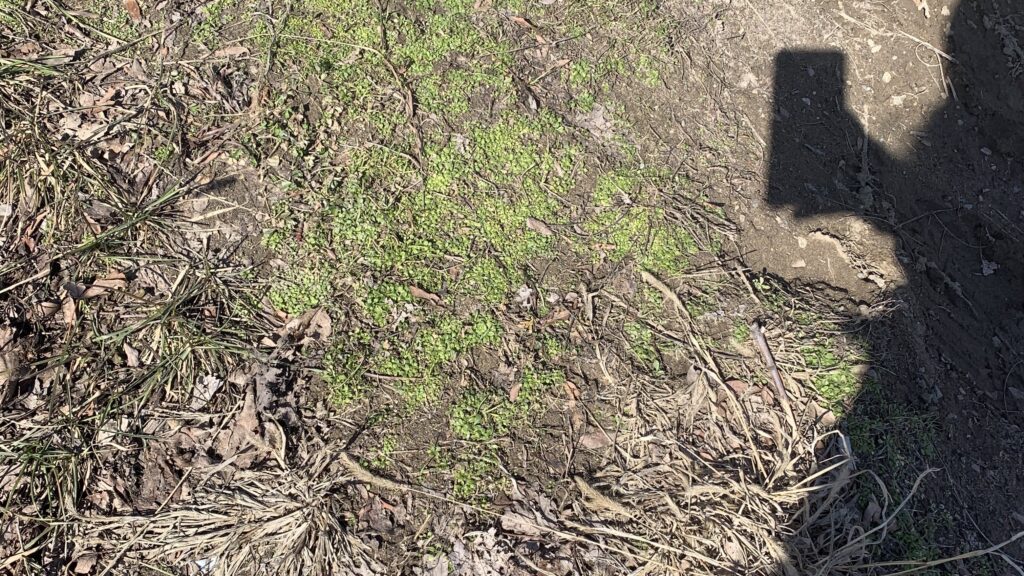
An obvious sign of the changing seasons I saw on my walk around Burlington was mud and brown grass where the snow had melted away. There were lots of patches of ground that were completely brown with mud and/or dead grass, and there were other areas that had green grass that is growing or survived the winter under the snow. Some areas have weeds and small herbaceous plants growing back already! The three pictures below show examples of these descriptions.
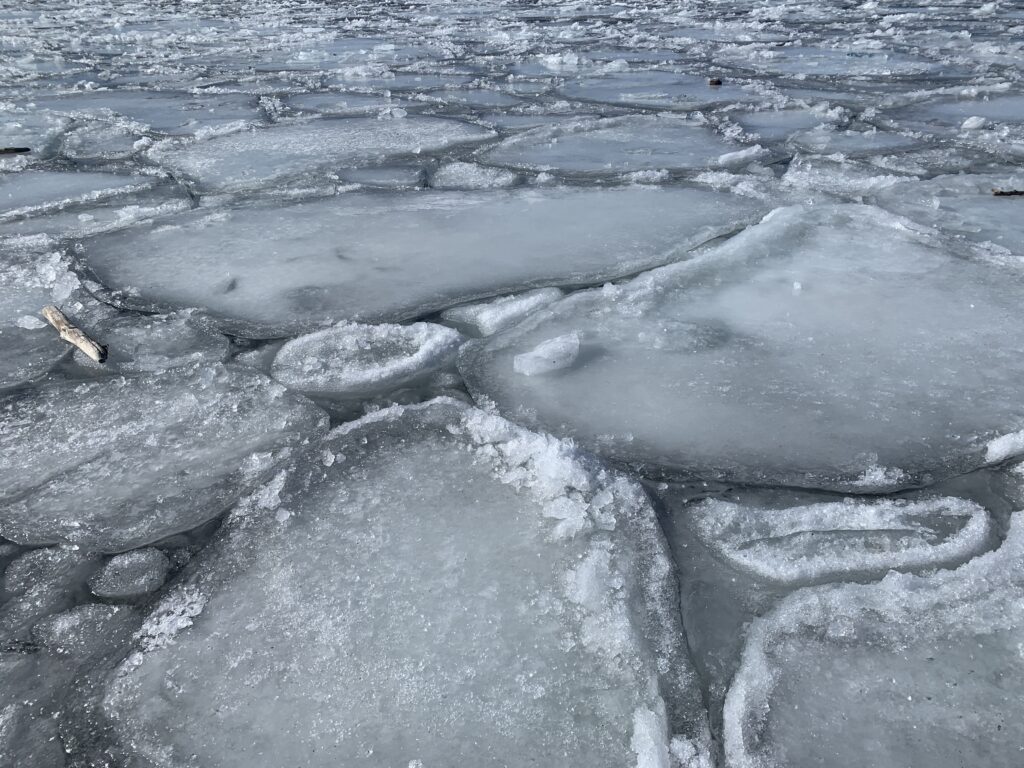
Another phenological sign of early March is that Lake Champlain is thawing; ice around some areas of the shore are partially melted and split into chunks, while other areas still have solid, continuous ice. I also noticed very thin, glass-like sheets of ice on other parts of the lake surrounded by completely unfrozen water. There is still a barrier of ice at the edge of the lake in pretty much every area I saw.


While I was down by the lake, I was lucky enough to see a baby otter! I overheard people talking about it as I was walking by and there it was! This was definitely the most exciting part of my phenology walk. Here are a few videos of the little guy (or girl).
I heard a lot of bird calls in Burlington, especially at Battery Park. I saw a few birds flying around too, like a seagull that flew above me. There were tons of people at the park and the waterfront enjoying the good weather and rare sun, so there might be peoples’ voices in the video of the bird calls below as well.
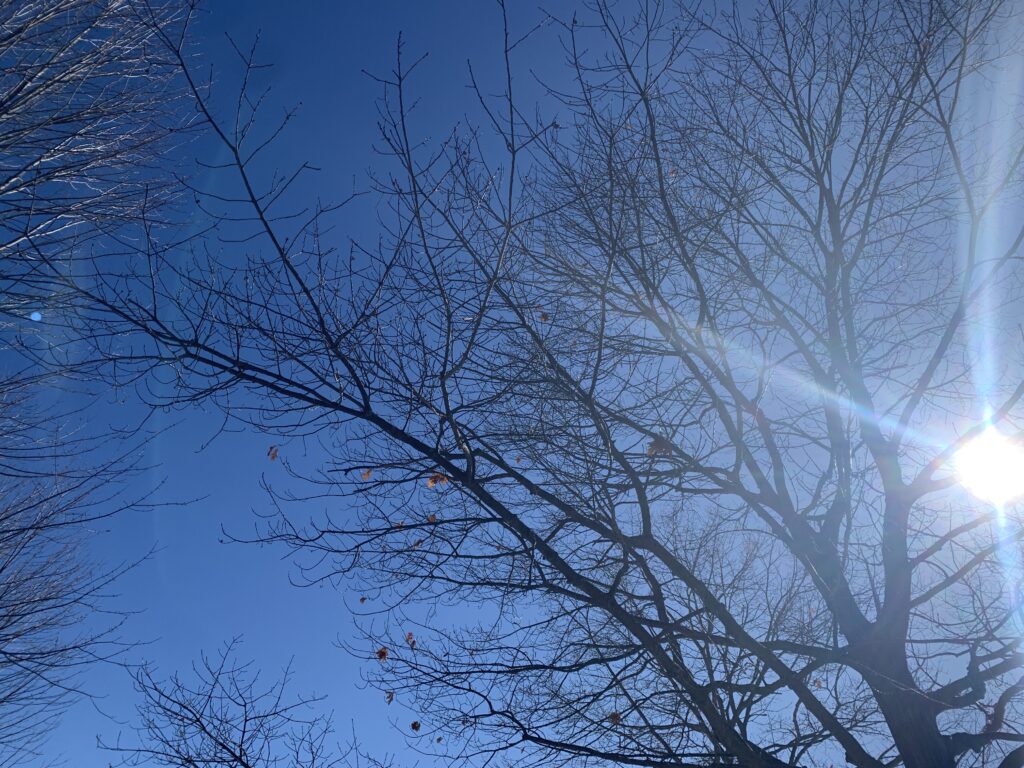
There were a lot of trees that were still clinging to old leaves. Some trees had no leaves, some had a few brown leaves, and there were some that were almost covered in brown leaves that hadn’t fallen,
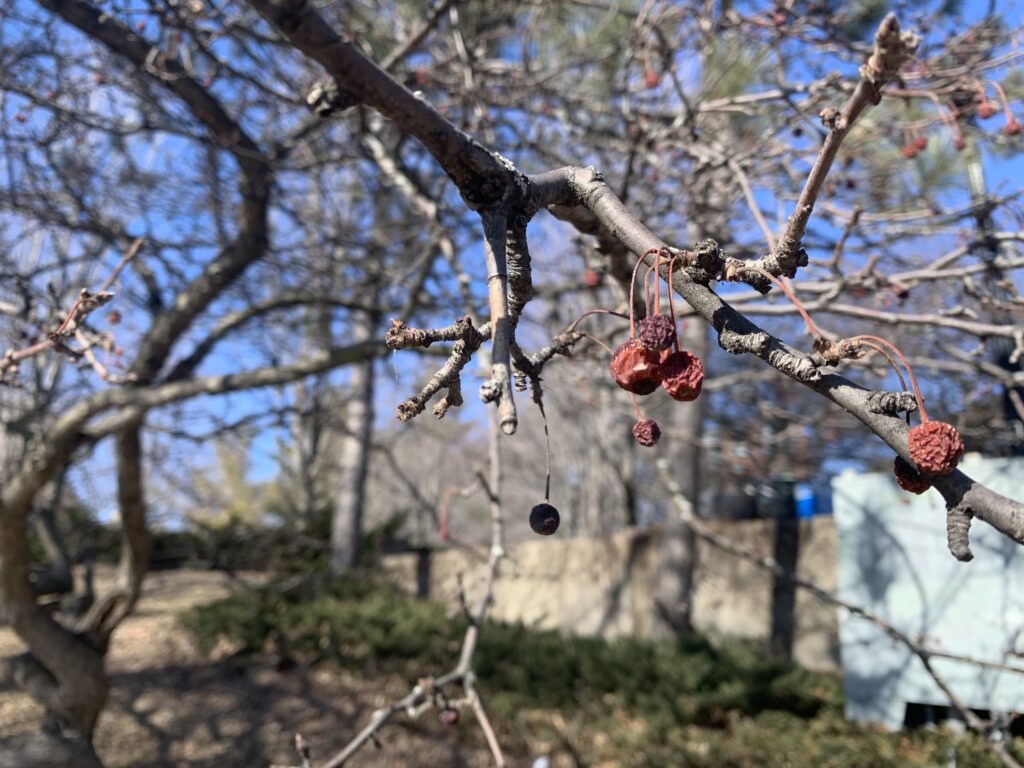
There were also trees that had berries and seed pods on them. Many of the pods and berries looked shriveled up or rotten, while there were others that looked fresh, which were probably able to last through the winter. I doubt any of these pods or berries were newly grown, but I thought it was important to mention them because they had all either survived healthily, rotted, or had been dropped to the ground below.
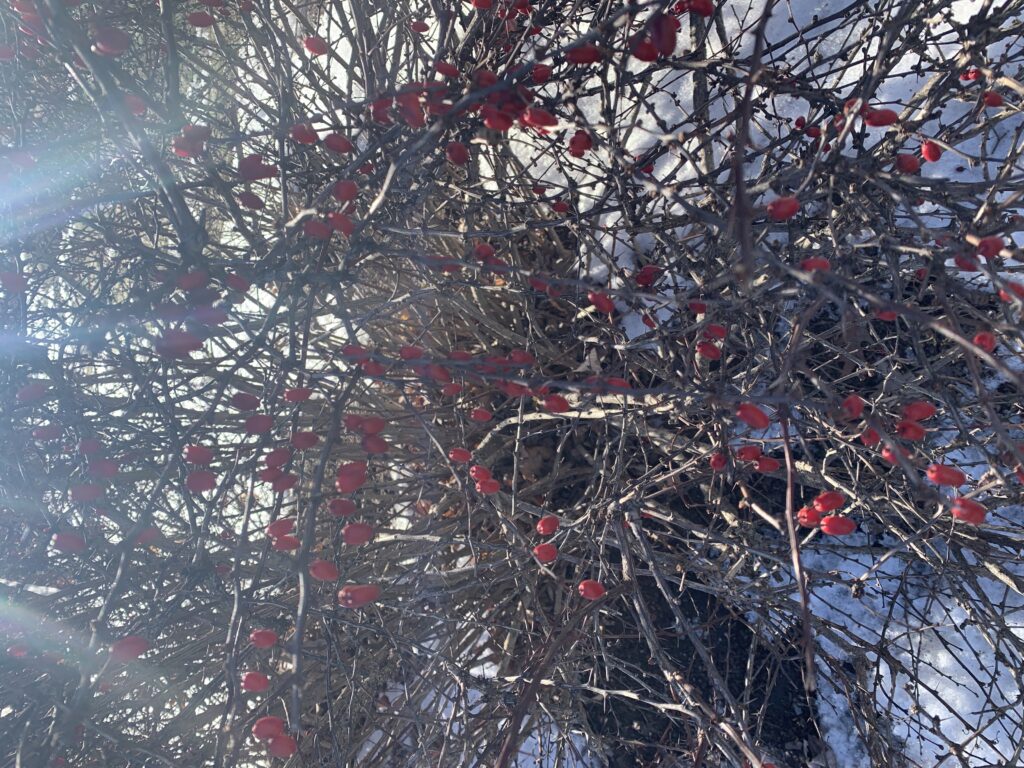
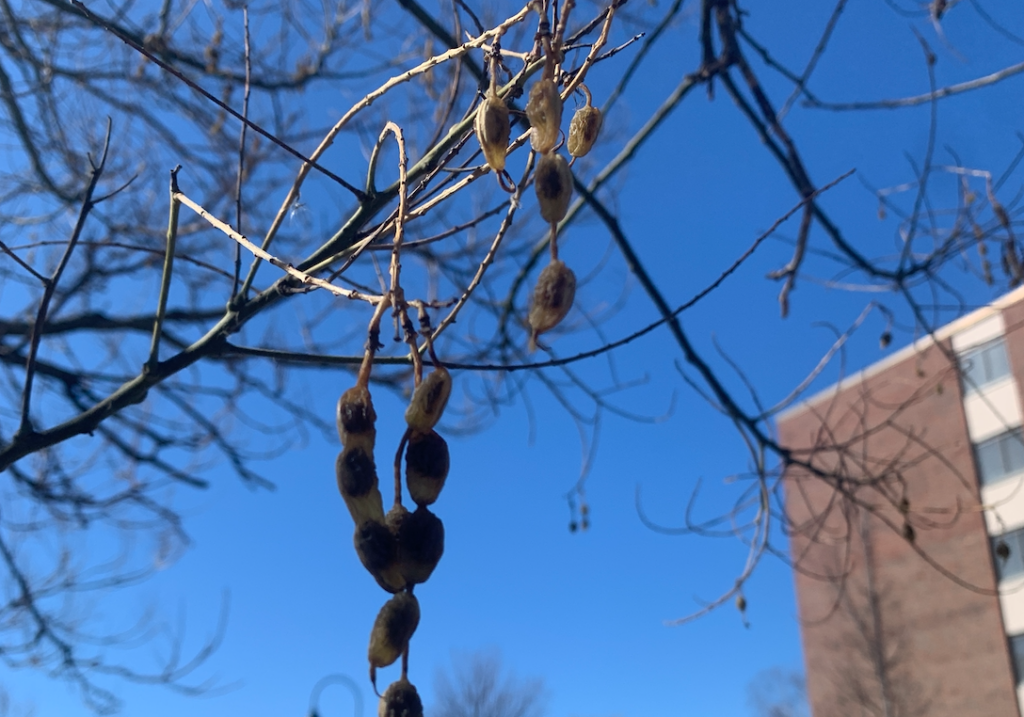
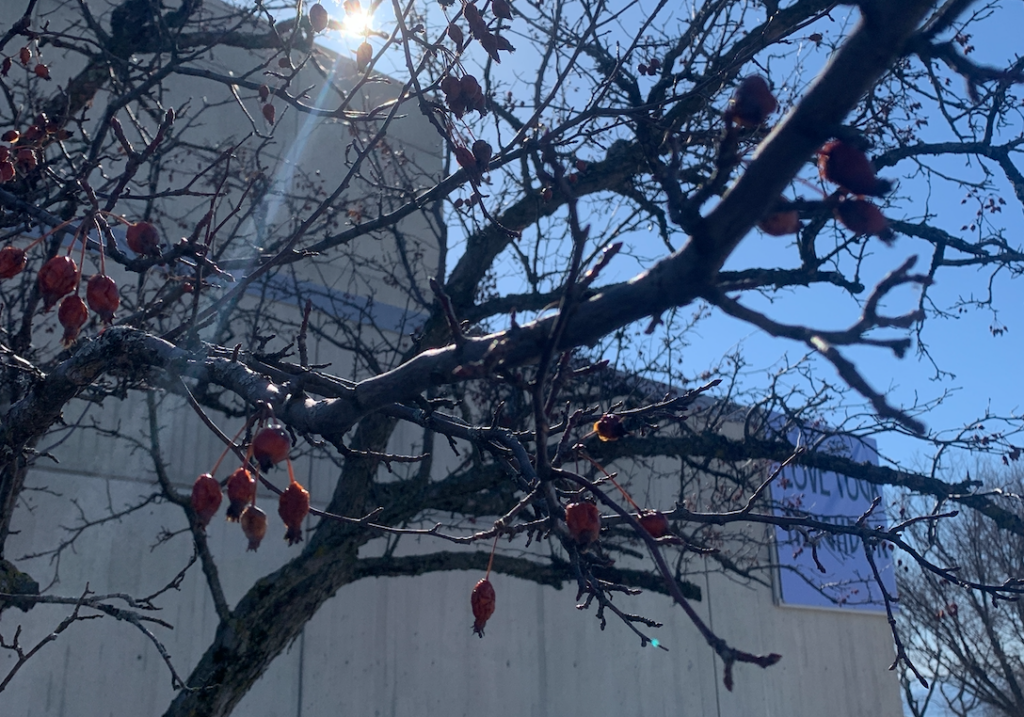
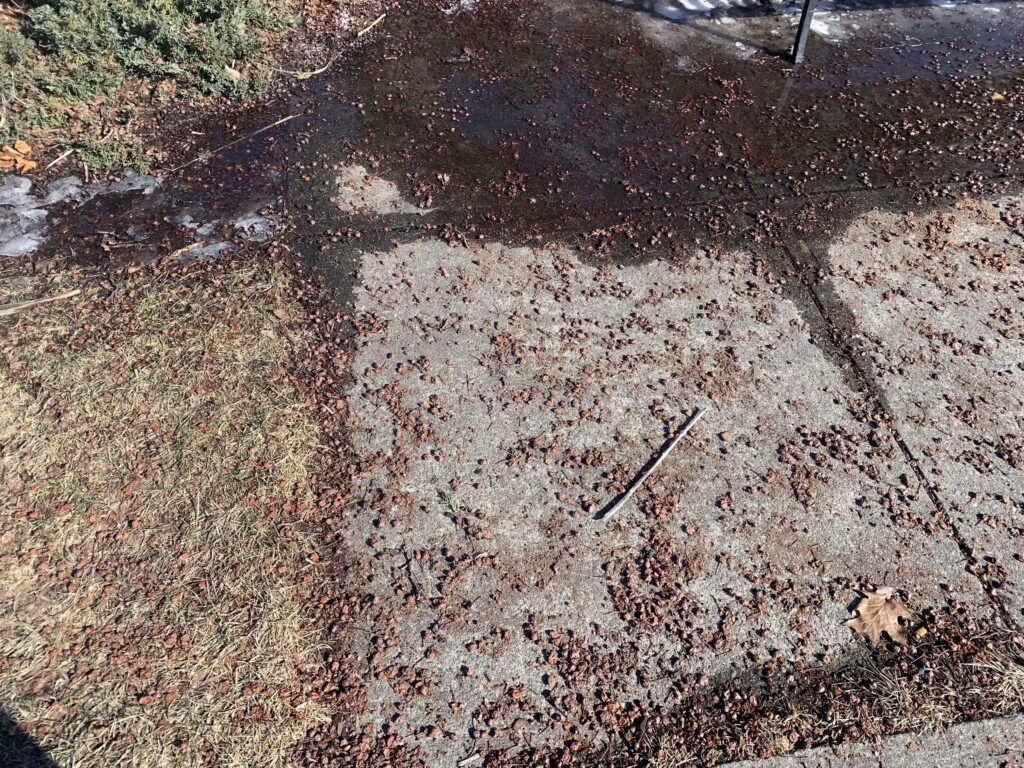
I saw tons of trees with buds growing at the ends of their branches, which was interesting to see because it is a sign that the phenological clock is turning!
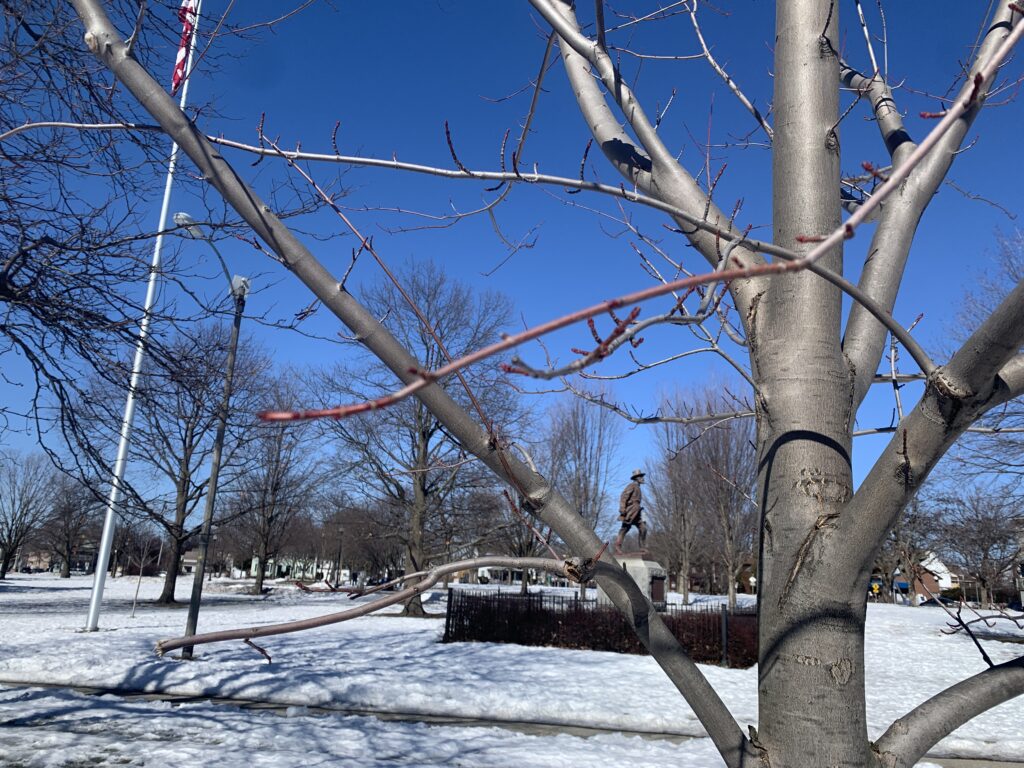
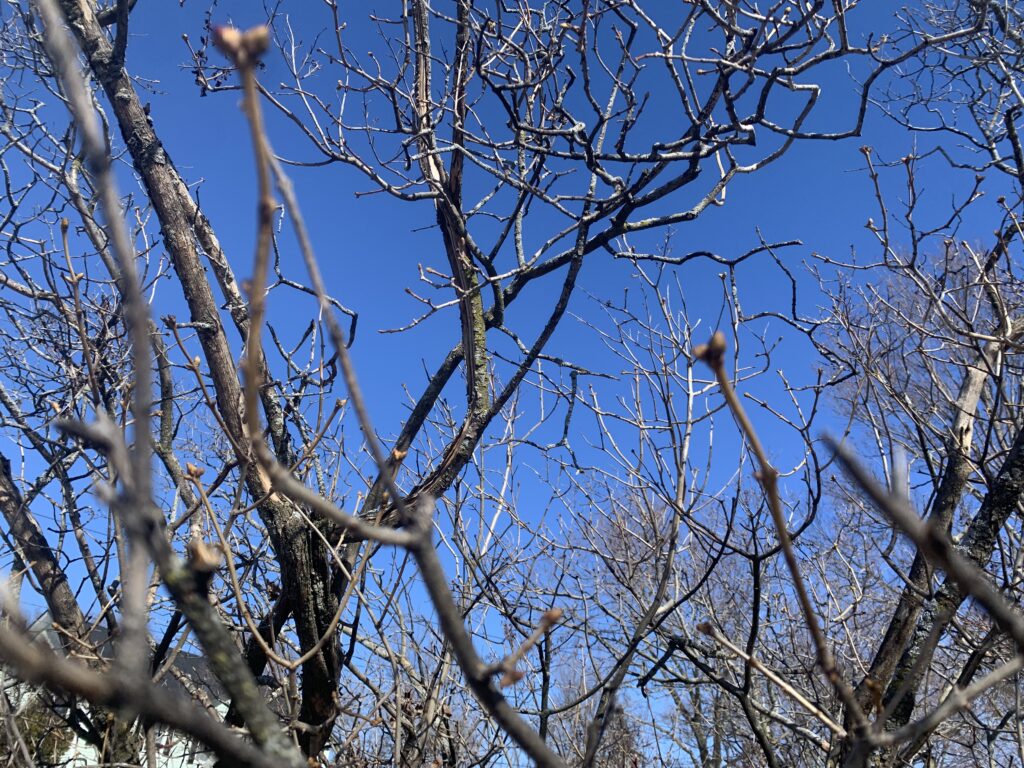
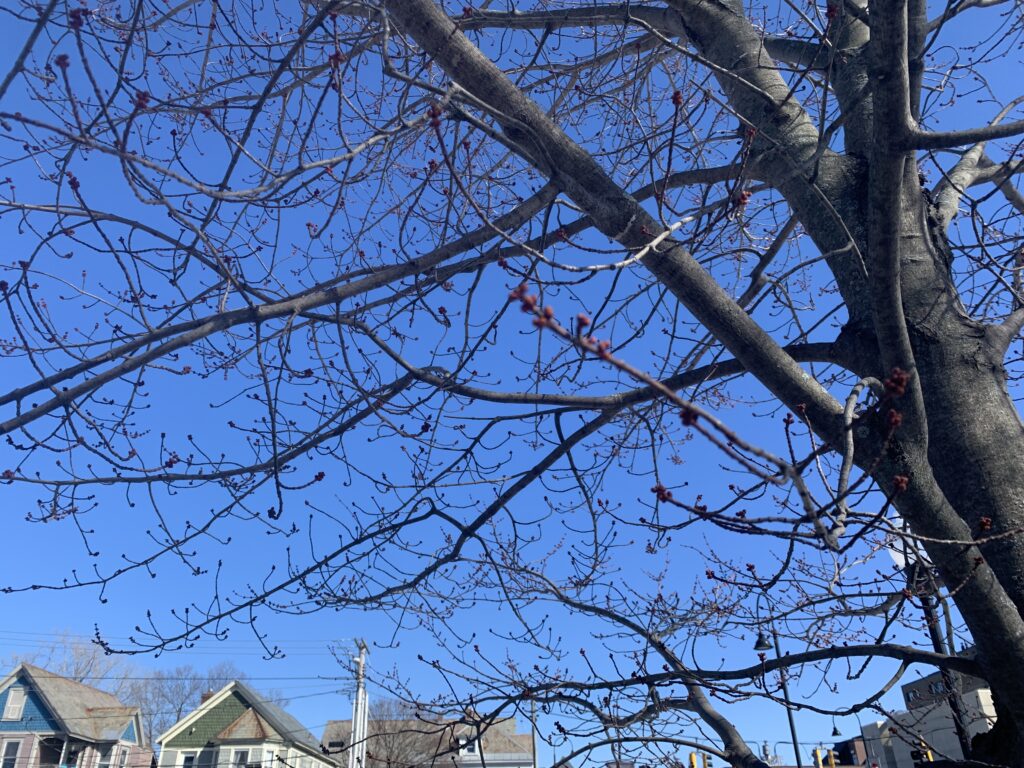
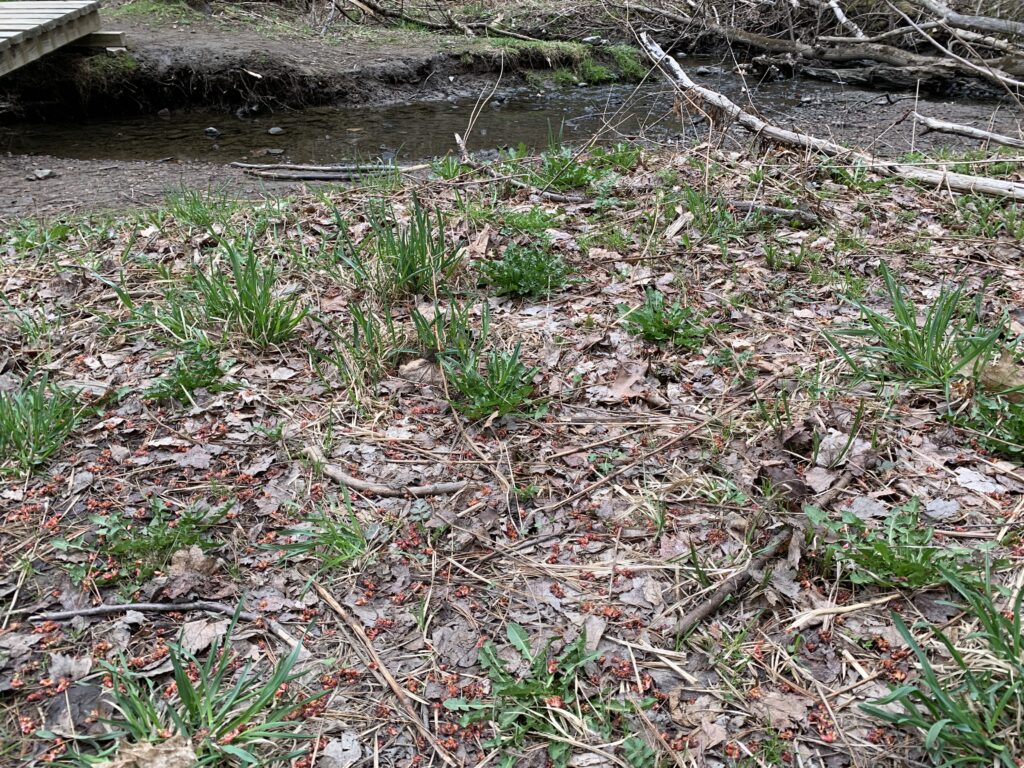
New Growth – 03/31/21 & 04/14/21
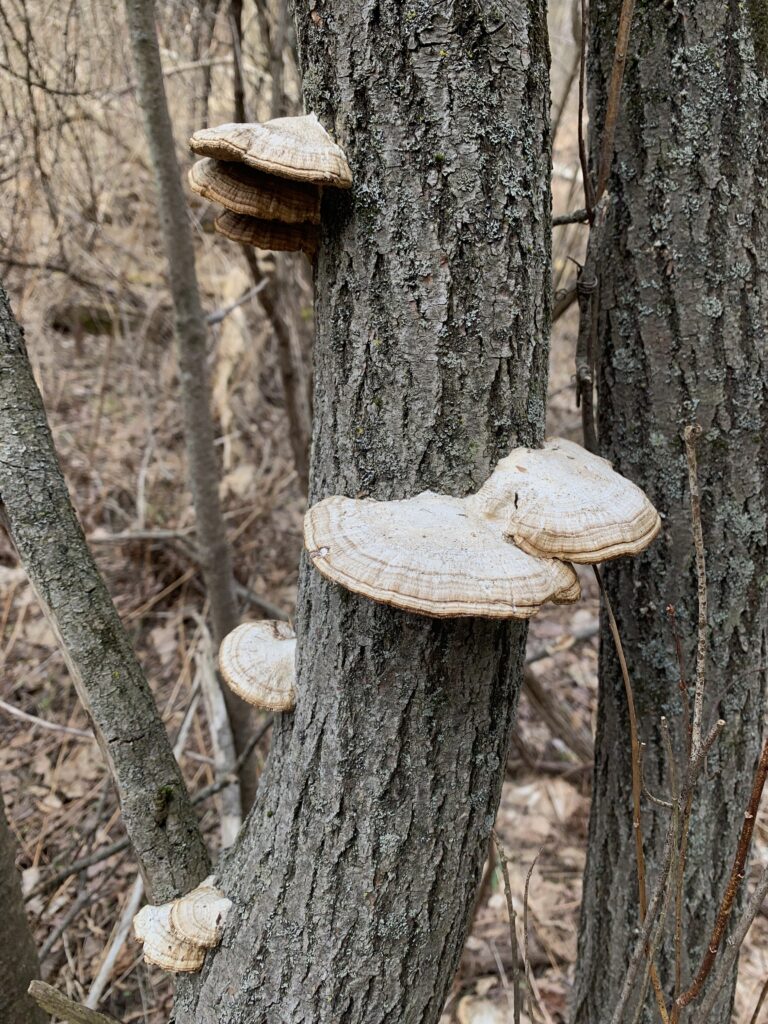
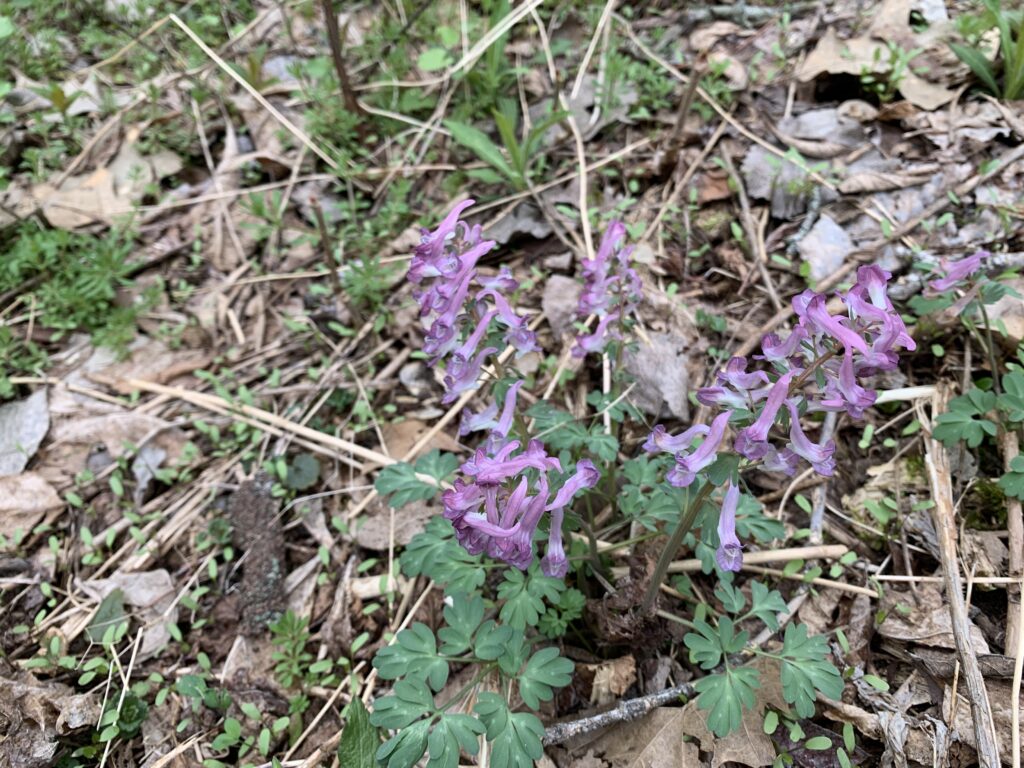
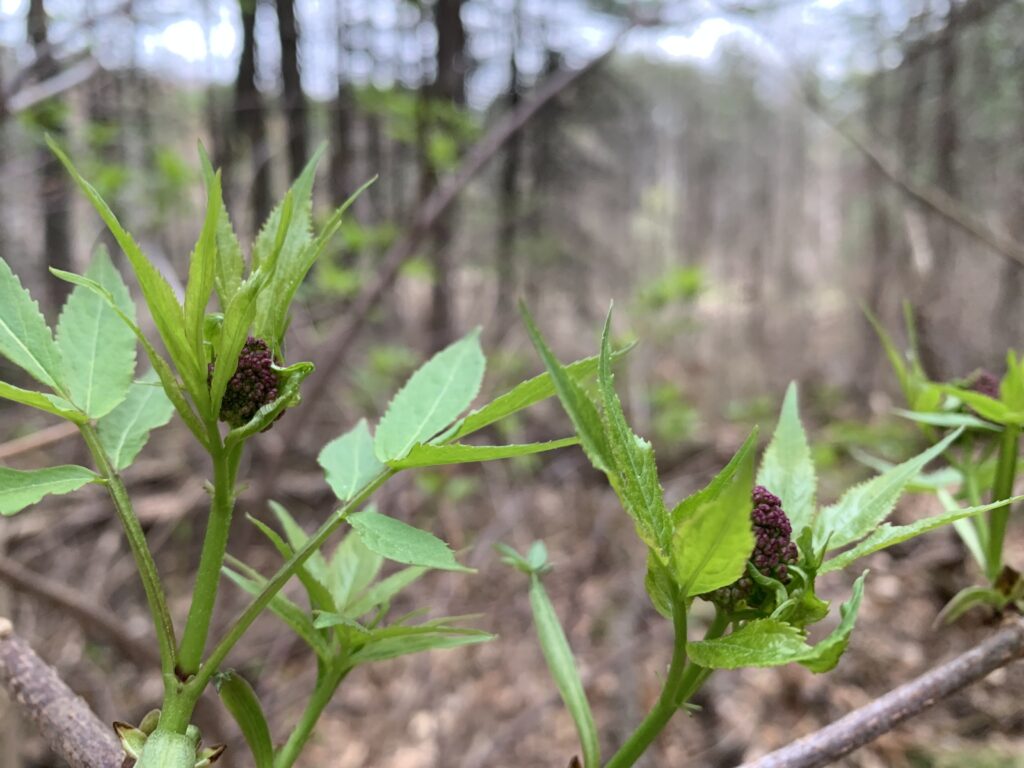
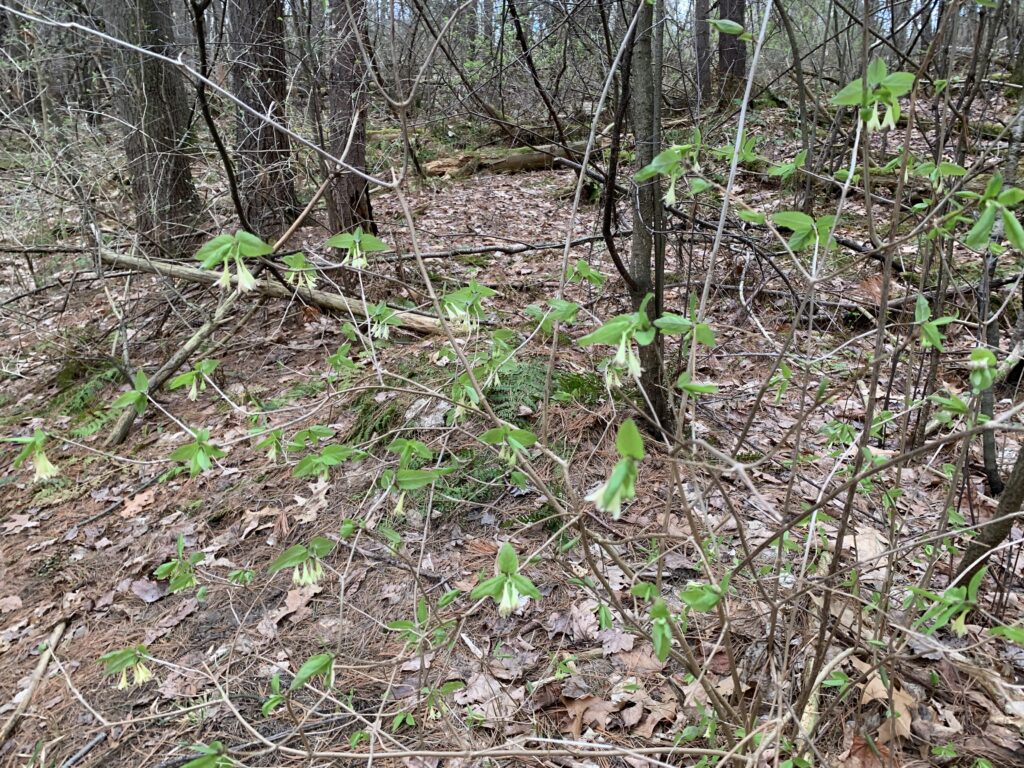
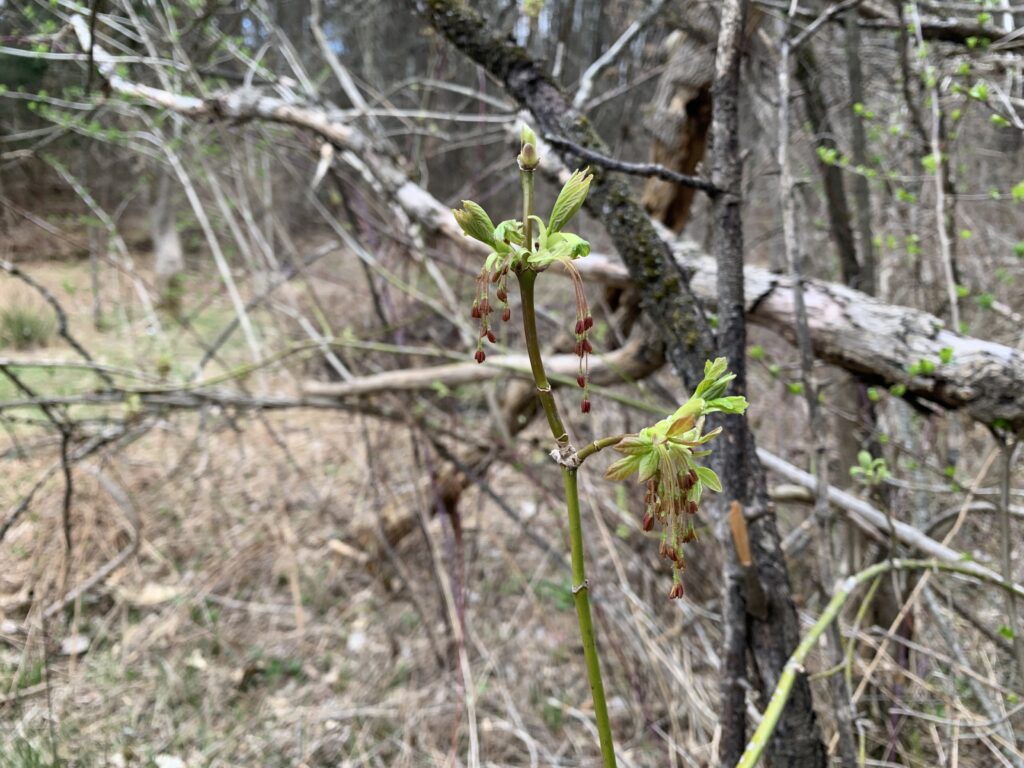
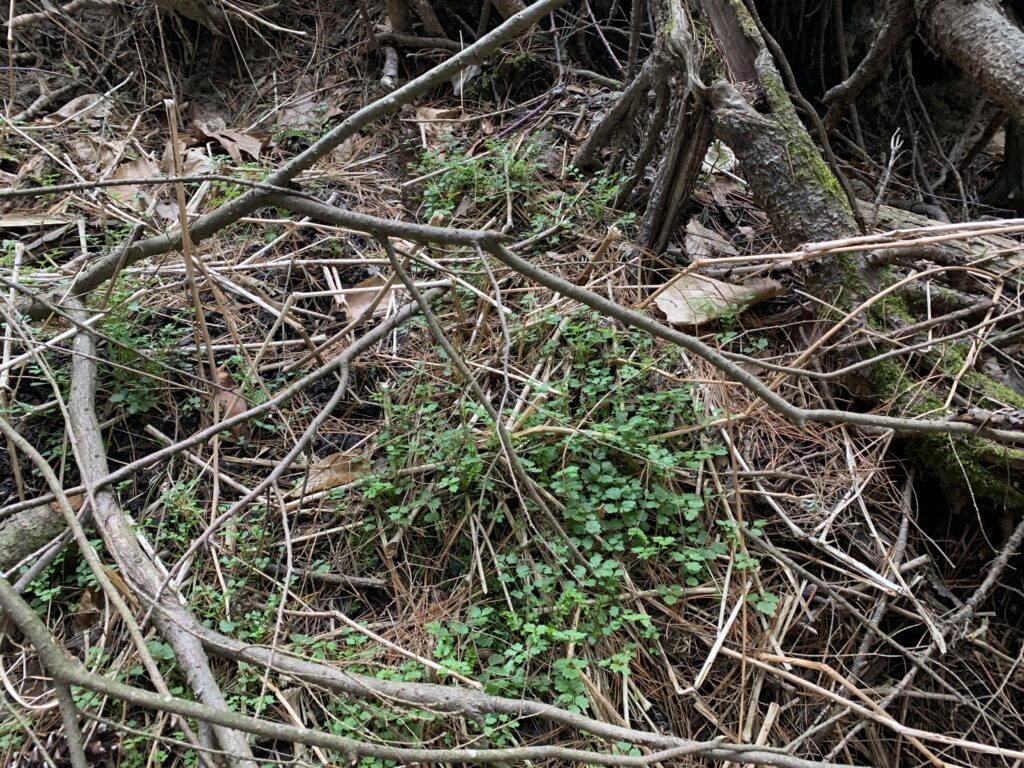
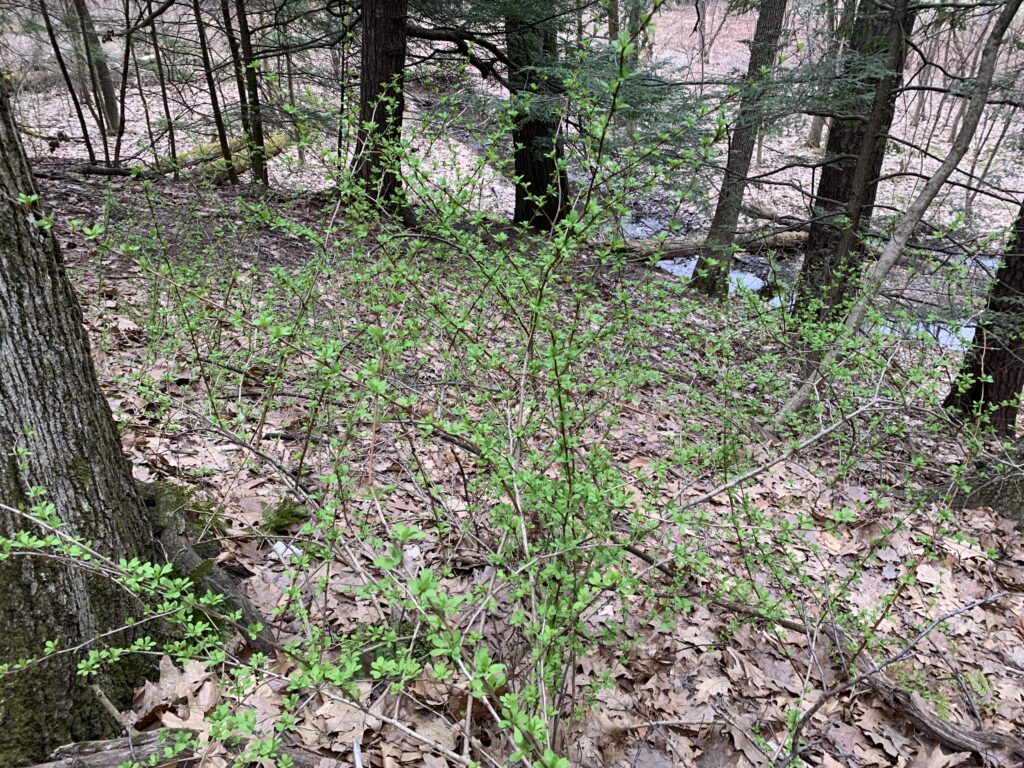
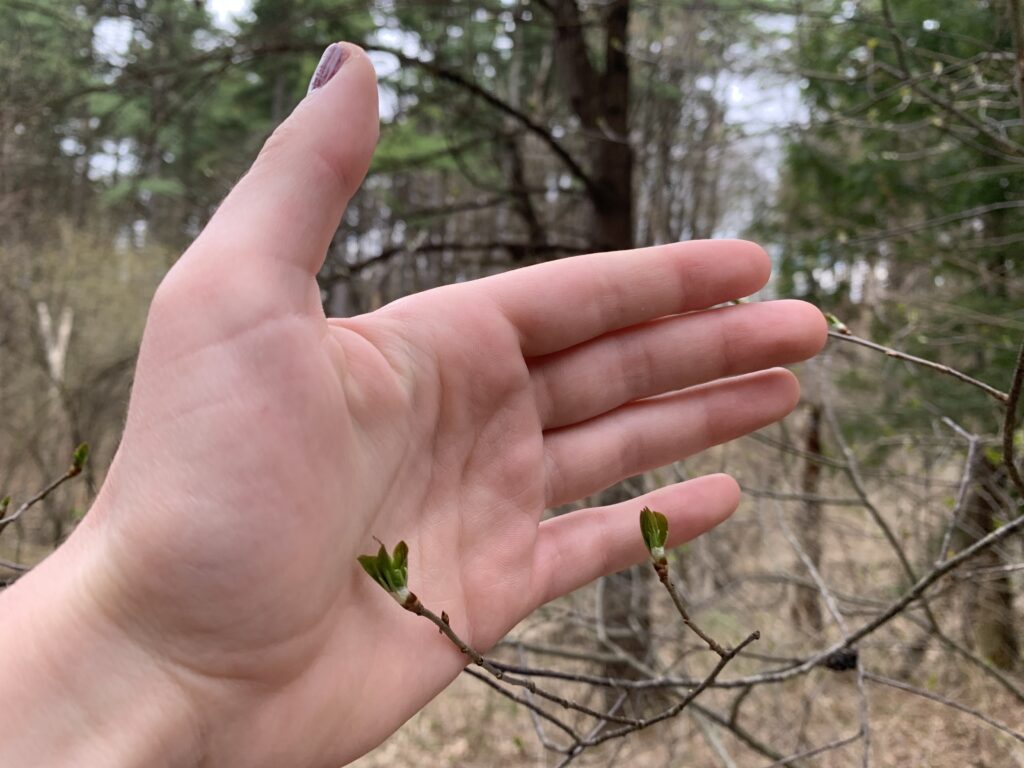
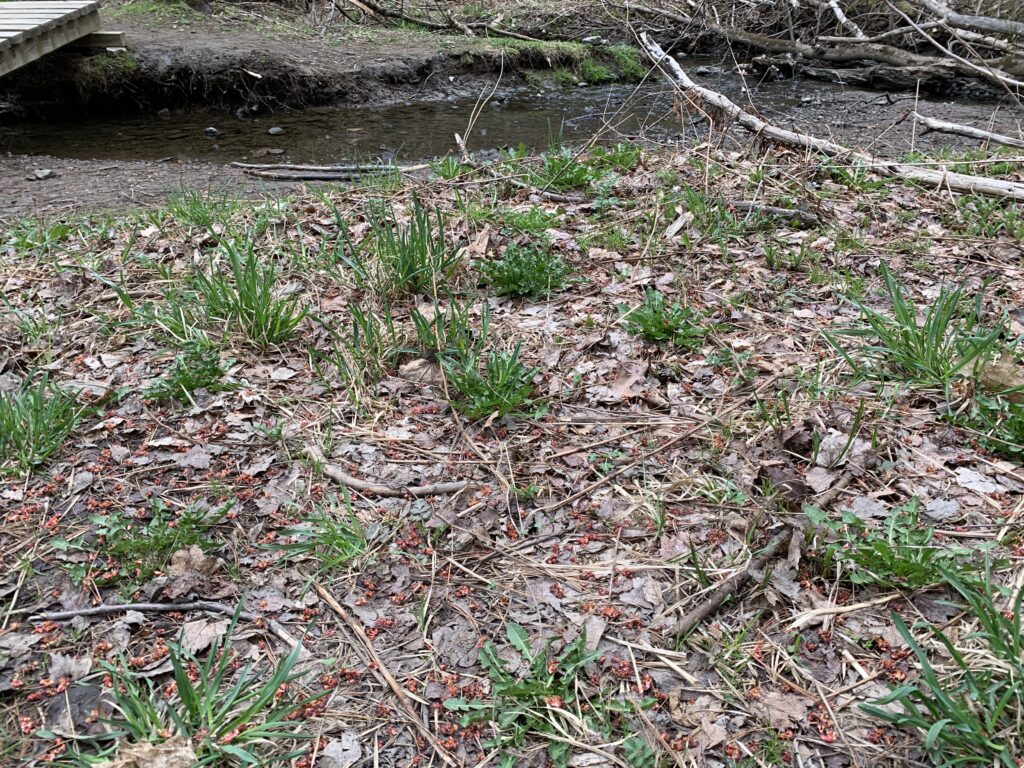
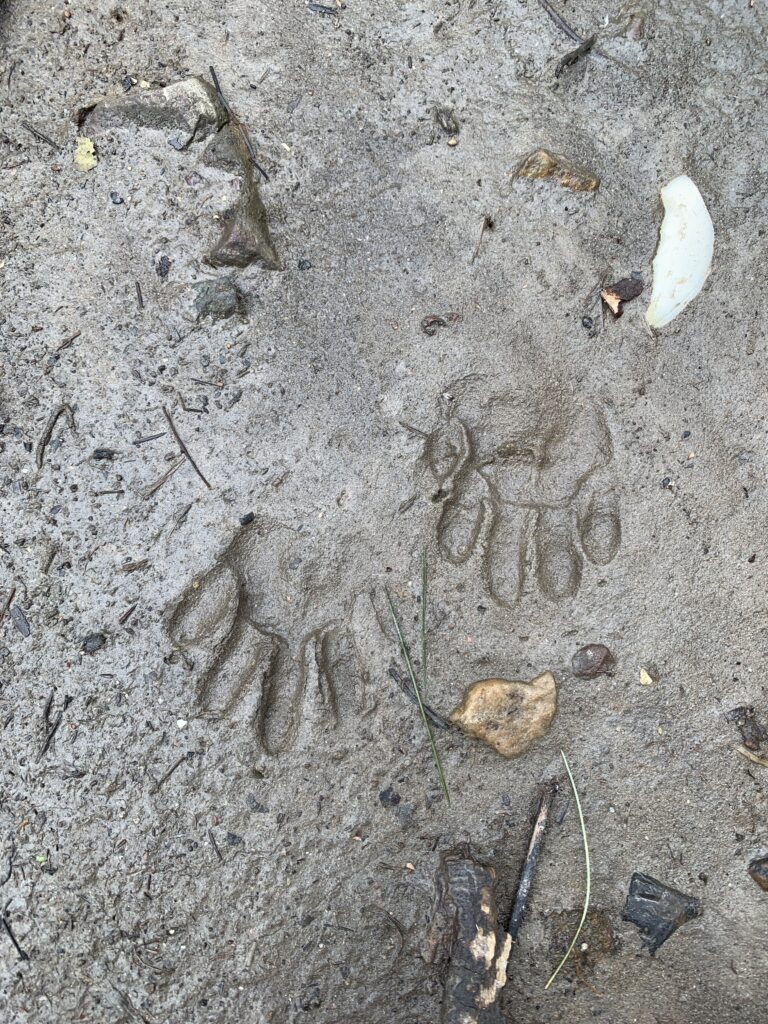
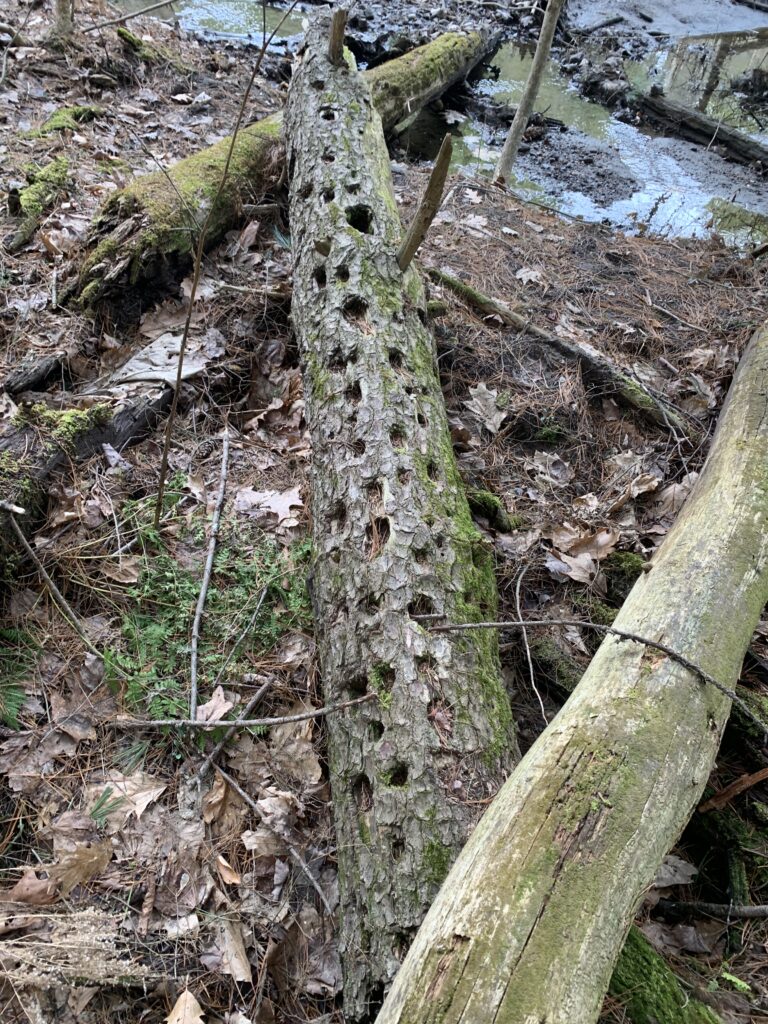
Signs of Animal Life – 03/31/21 & 04/14/21
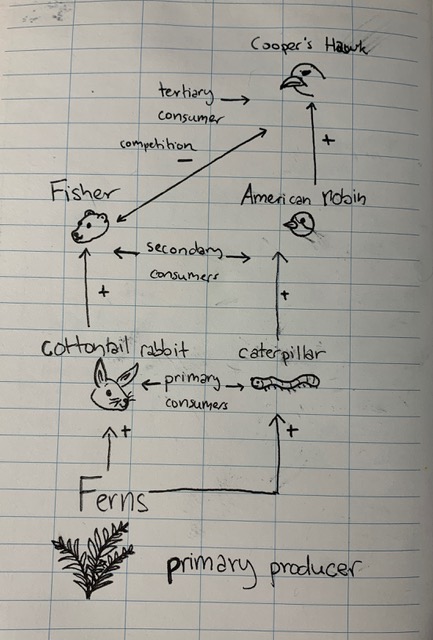
Species Interaction Diagram
City Nature Assignment
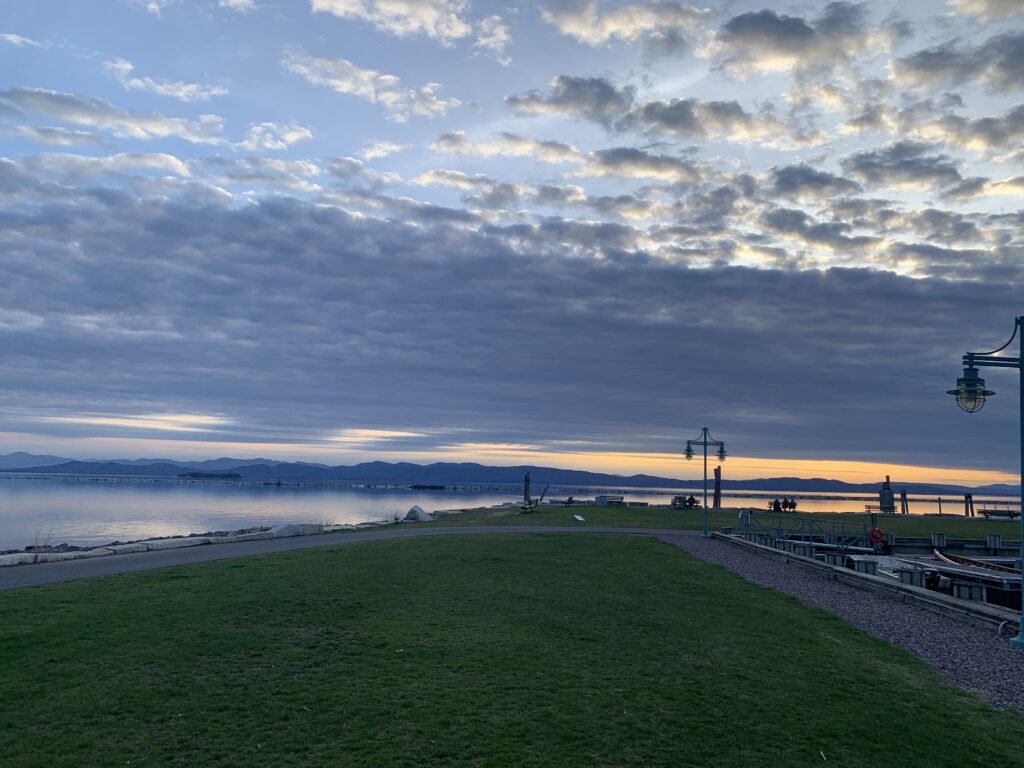
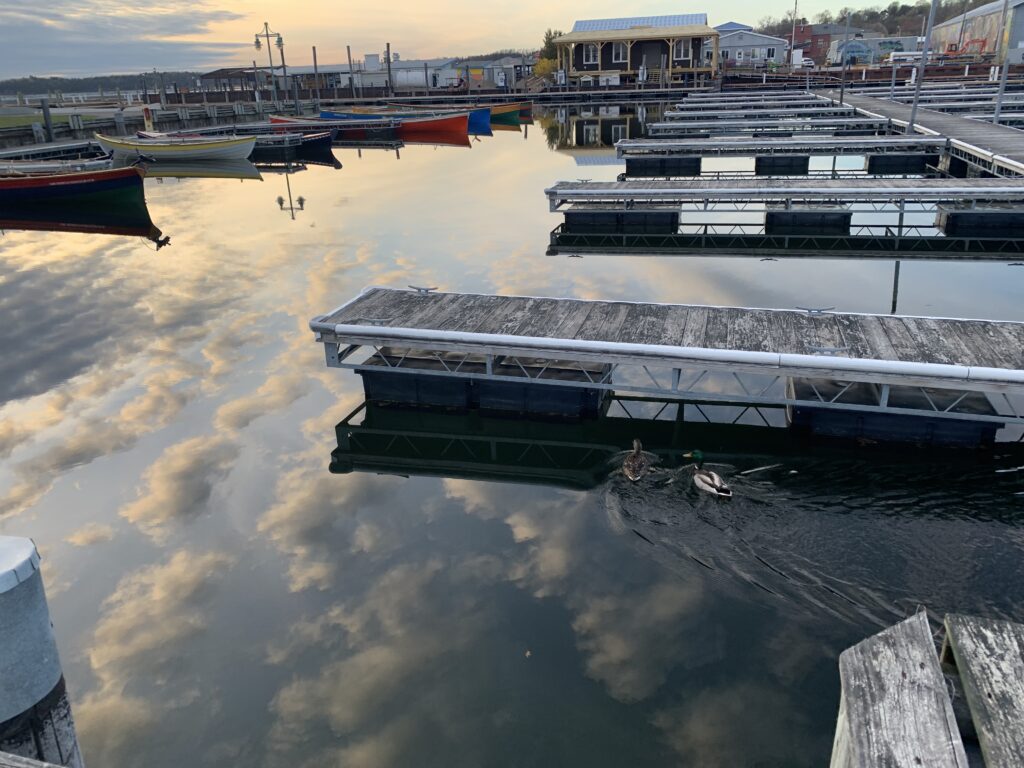
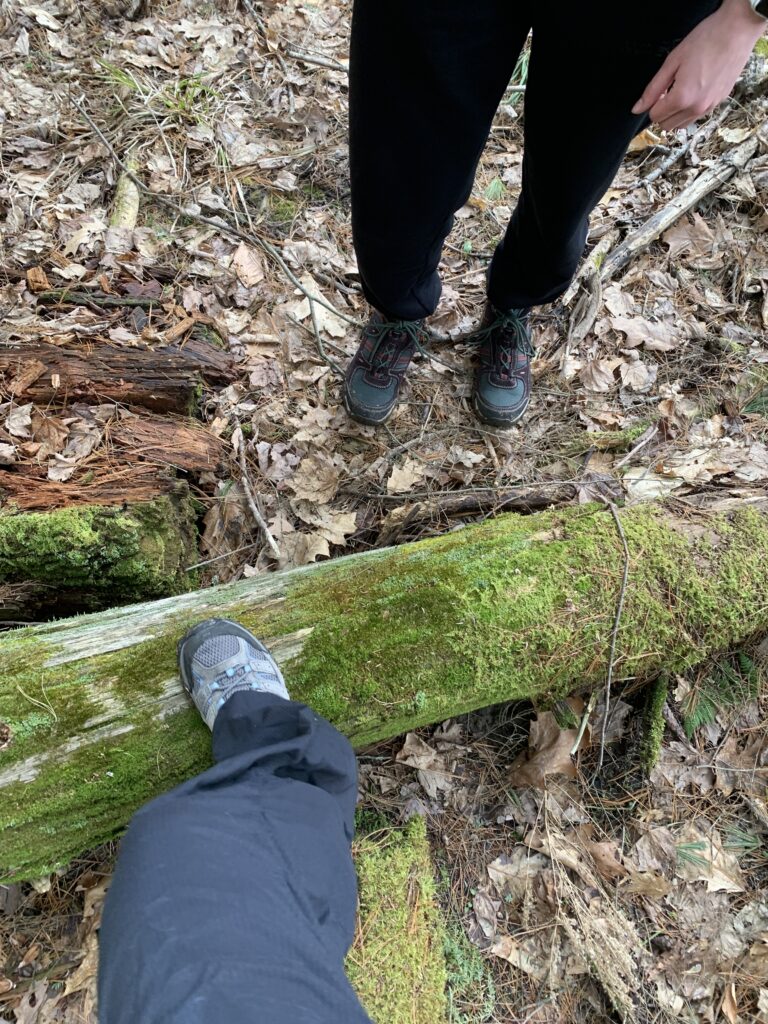
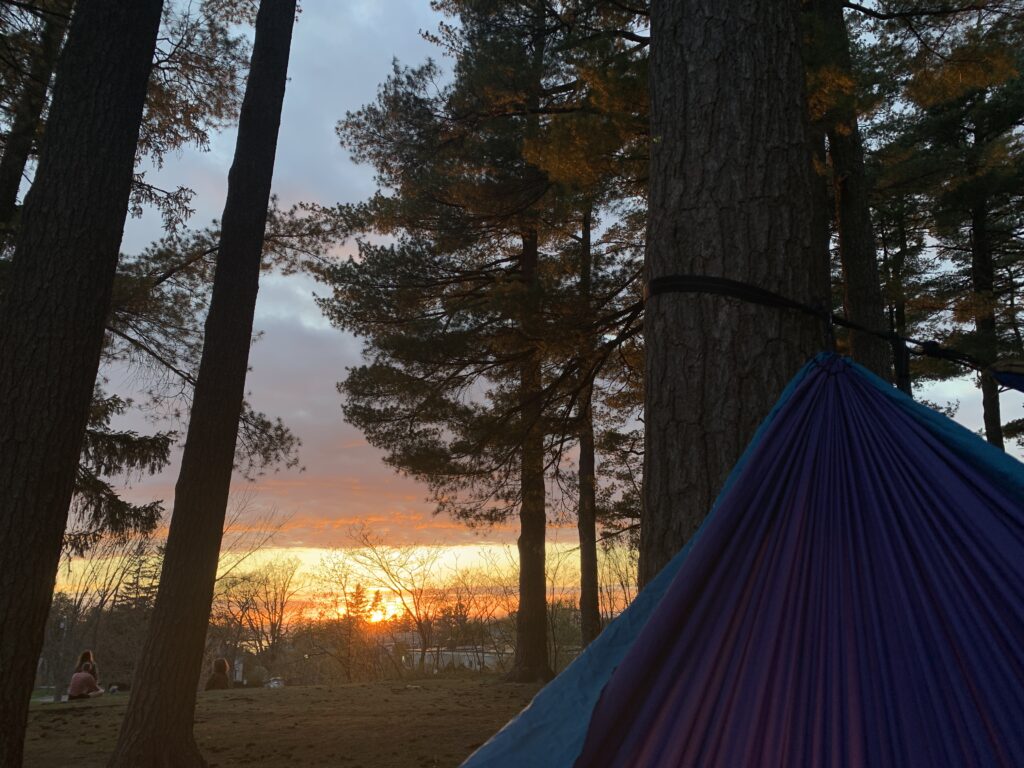
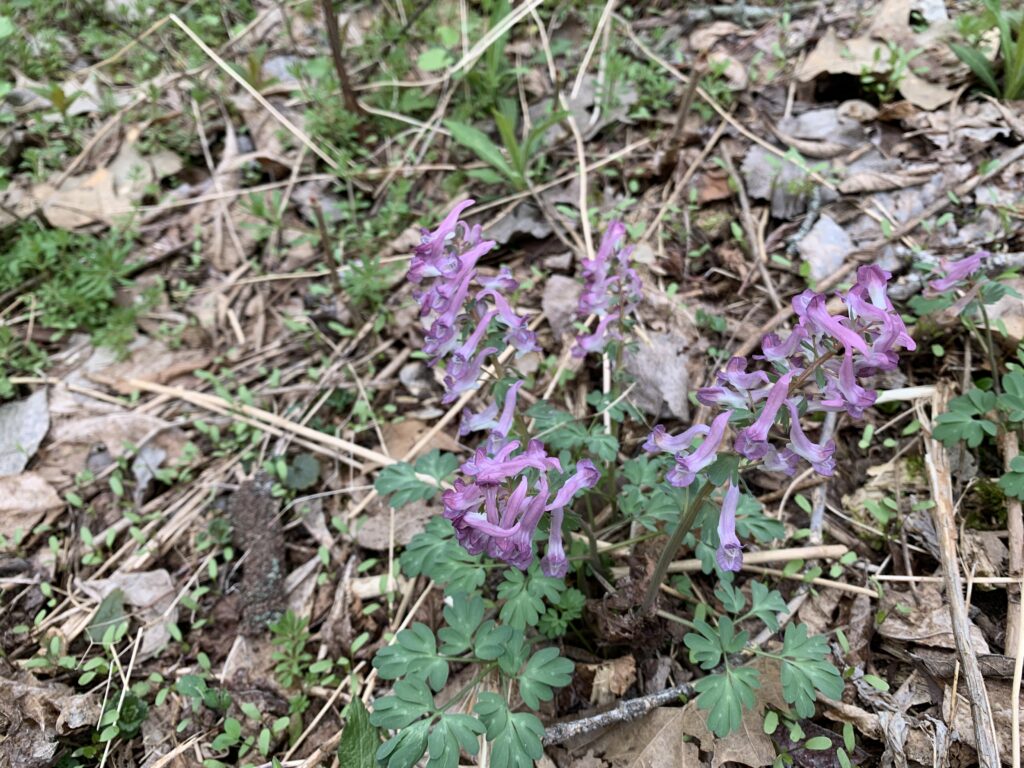
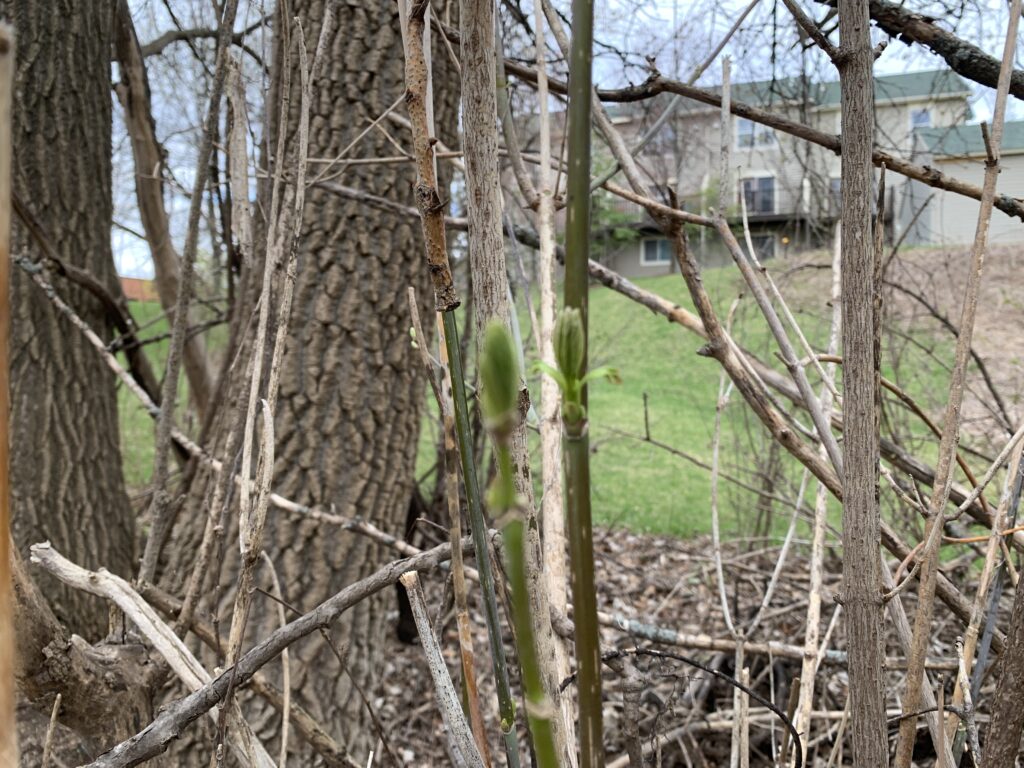
I chose to wander around UVM campus and Centennial Woods for the City Nature Project. I had a lot of fun walking around the area and observing the different species out and about. I thought using iNaturalist was really interesting, especially to see what other people have observed in the area, although I forgot to document the animals I saw when I was walking around, so I went back and documented a few of the animals I saw after.
Final Visit
I left prior to the week of May 10th, so I was unable to visit Centennial Woods for this last phenology blog post. Instead, I’ll describe the phenological culture shock I experienced when I got back home. I never really processed just how green and lush my area of New Jersey is. It’s gorgeous! I love Vermont, but I spent so much of the semester only seeing grays, browns, and a small range of dark greens that when I came back home I was astounded. I saw my home through new eyes. There are hundreds of different colors and shades, endless biodiversity, and beauty everywhere I look. I’ve never felt as much pride in where I live as I do now.
Final Reflection
Nature and culture intertwine at Centennial Woods through how the area is a part of UVM and Burlington life. The woods are well-walked and well-loved by students and community members alike. Centennial Woods creates a sense of community through the people you see in the woods going for hikes, hanging out in solitude or with friends, and observing nature. It serves as an easily accessible place for people to visit to immerse themselves in nature and appreciate the link we have to nature as a part of it.
I consider myself a part of Centennial Woods, and it a part of me, because of the time I’ve spent there and the memories I’ve made there both on my own and with the people I care about. Humans are part of nature, not separate from it, so to count myself as “other” from Centennial would be a lie and a disservice to myself and the world. It’s an important part of UVM culture, which is something I am now a part of as well, so I want to take full advantage of the beauty and importance Centennial Woods has to offer.
Works Cited
NEW JERSEY TRAILS ASSOCIATION. (2016, June 09). Retrieved December 05, 2020, from https://njtrails.org/trail/greenway-meadows-stony-brook-trails/
Egan, M. (2020) Rock Point Pictures. Rock Point, Vermont