Wonder Journal Mini-Project

Entry #4

Tuesday July 11, Lake Quannapowitt, Wakefield, MA

For this week’s mini-project instead of a typical entry, I decided to try and create a visual field guide with photos of different plant and animal species that exist at Lake Quannapowitt. I decided I wanted to go this route with project because I found that last weeks theme, taking photos, really made me feel connected to this place and made me realize truly how many different species exist here. I also found that by taking photos of different species, I was able to spend more time observing them as well. Before taking photos, and even sketching, I would mainly just look at things from a distance and not really focus in on one species or a scene. But learning to take photos for the previous entry really taught me the value that photo taking presents; I ended up feeling a much stronger connection of and appreciation for the subjects of each of my photos. I also wanted to identify the actual species of previous photos I took from other visits as well as new photos I took today during my final visit so I have included both. With that, I decided that creating a small field guide that included photos of some of the many species here would be a great way to connect with this place on a deeper level and to really get to know about each species. Some species that I photographed, such as some of the bird species here, were very difficult to photograph with their constant movement and the fact that if I get to close they would fly away. So please bear with me for my attempted bird photos and enjoy the field guide!

Lake Quannapowitt Field Guide
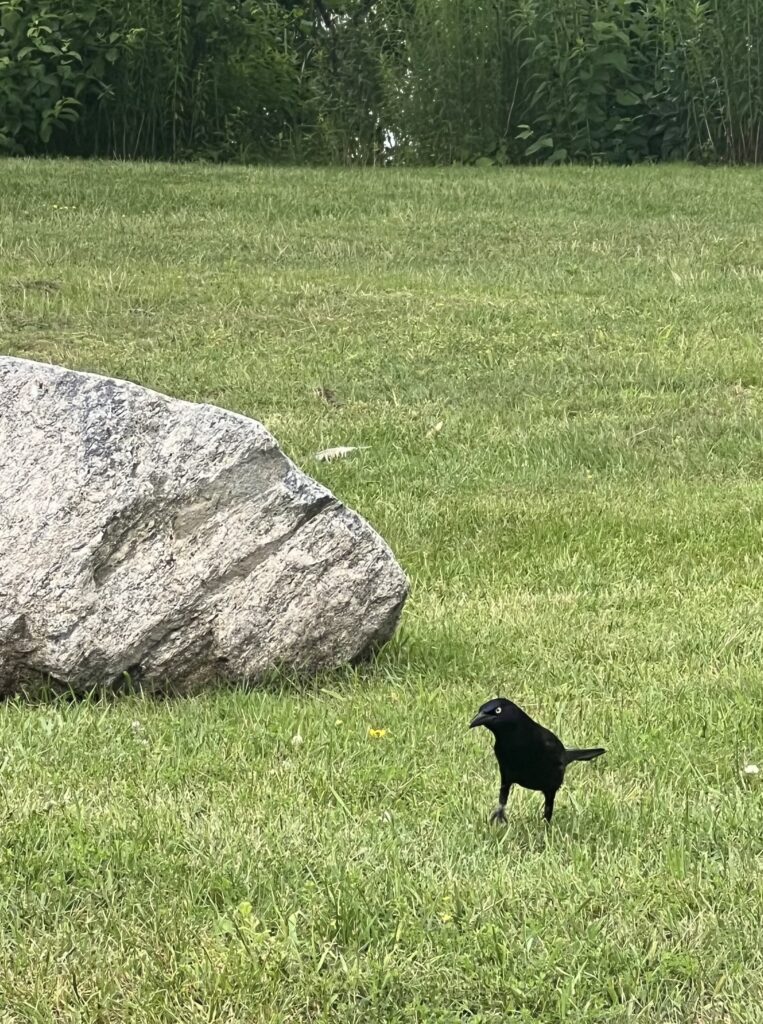
(1) Brewer’s Blackbird (Euphagus cyanocephalus)

  • Habitat: fields, prairies, farms, parks. Can be found in shrubby areas near water, open and semi-open areas, shores, and farmland. Often found around human settlements, foraging in parking lots and lawns.
  • Family: blackbirds and orioles.

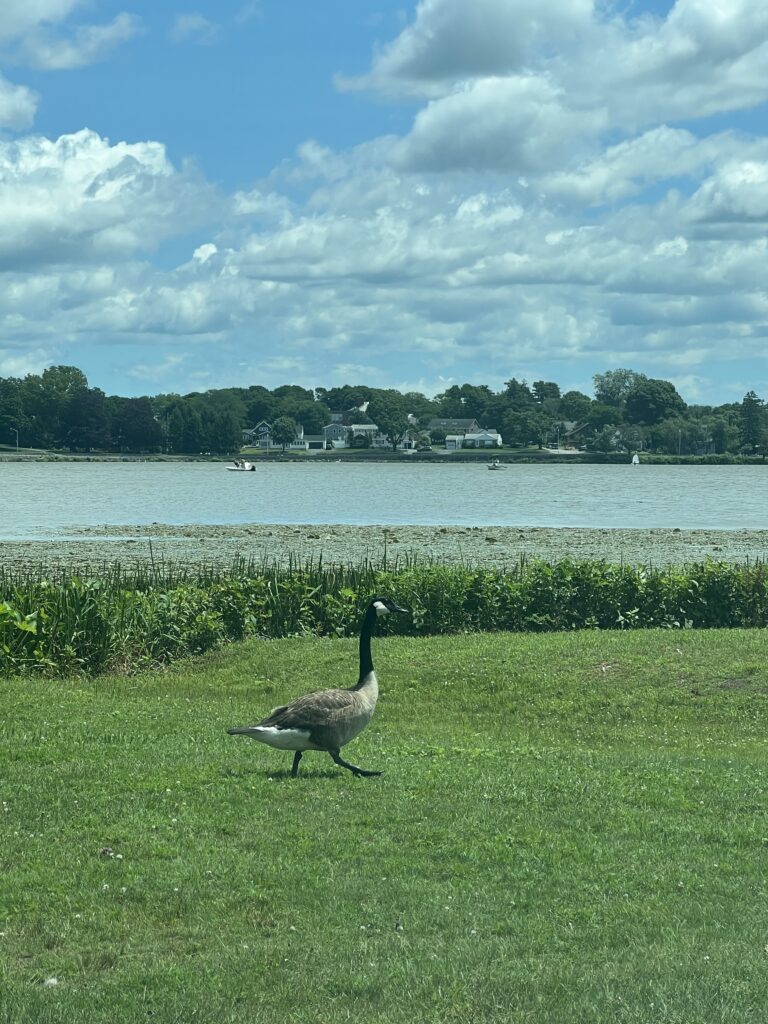
(2) Canada Goose (Branta canadensis)

  • Habitat: lakes, marshes, fields, bays, ponds. Uses different diverse habitats in various regions; almost always near water. Recently, they can increasingly be found in suburban ponds and city parks
  • Family: ducks and geese.

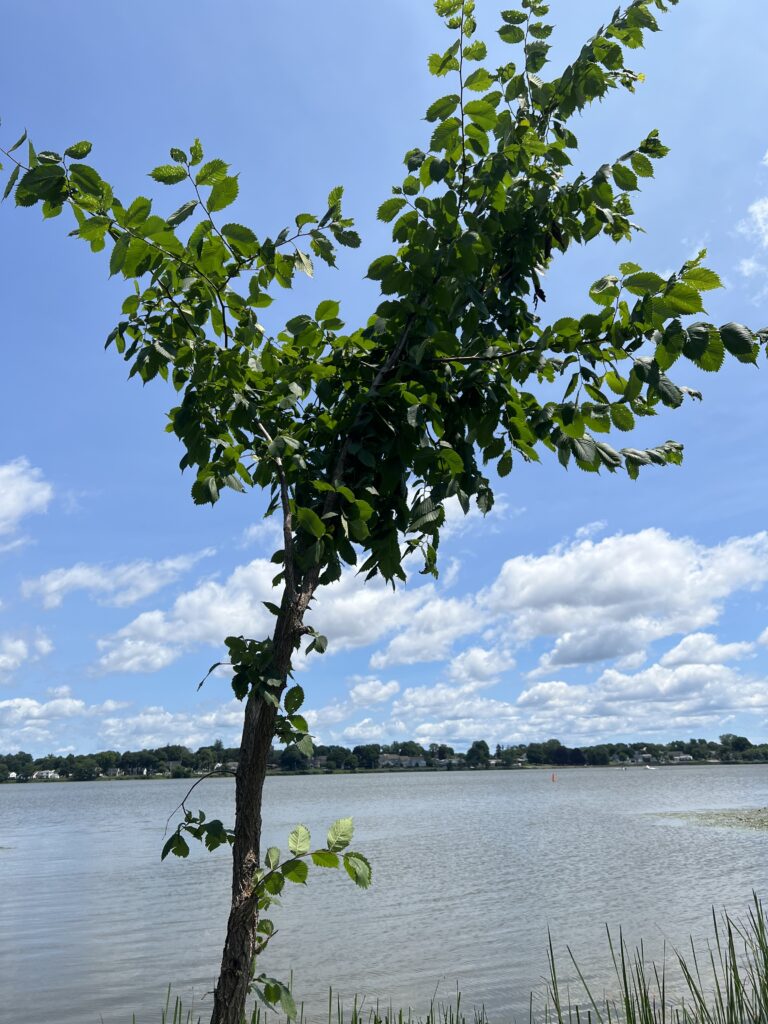
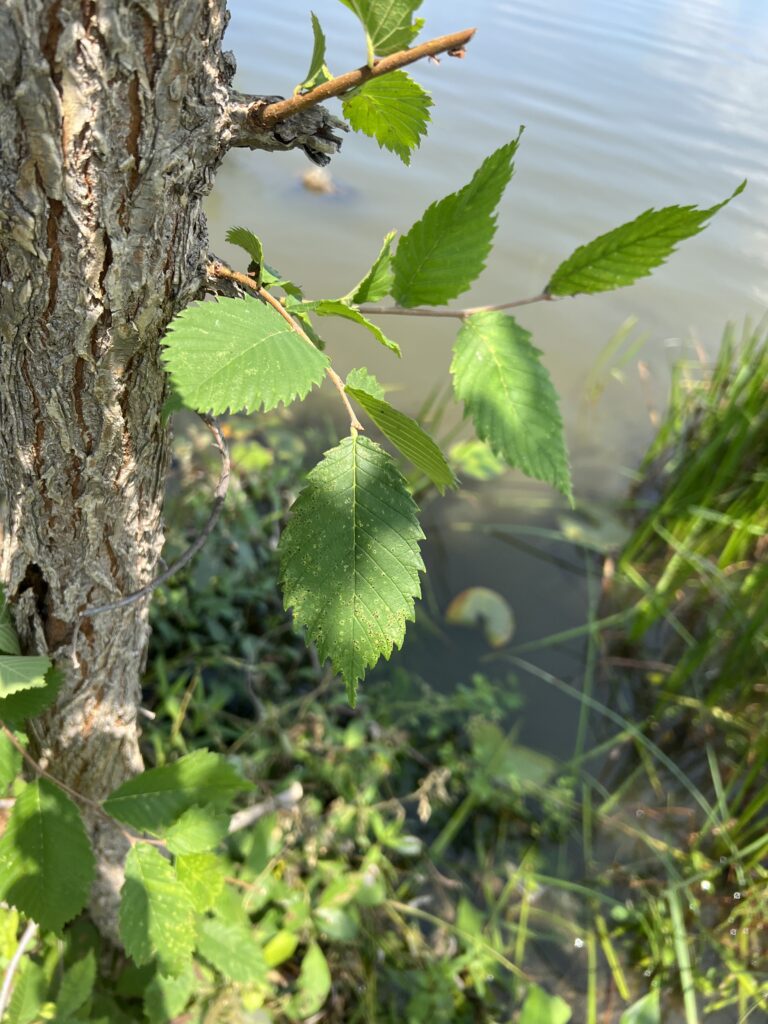
(3)(4) American Elm (Ulmus americana)

  • Habitat: found in a variety of habitats across Eastern North America today. Thrives in loamy soils and is very commonly found on ponds, lakes, swamps, and moist fertile uplands and slopes.
  • Family: elms.

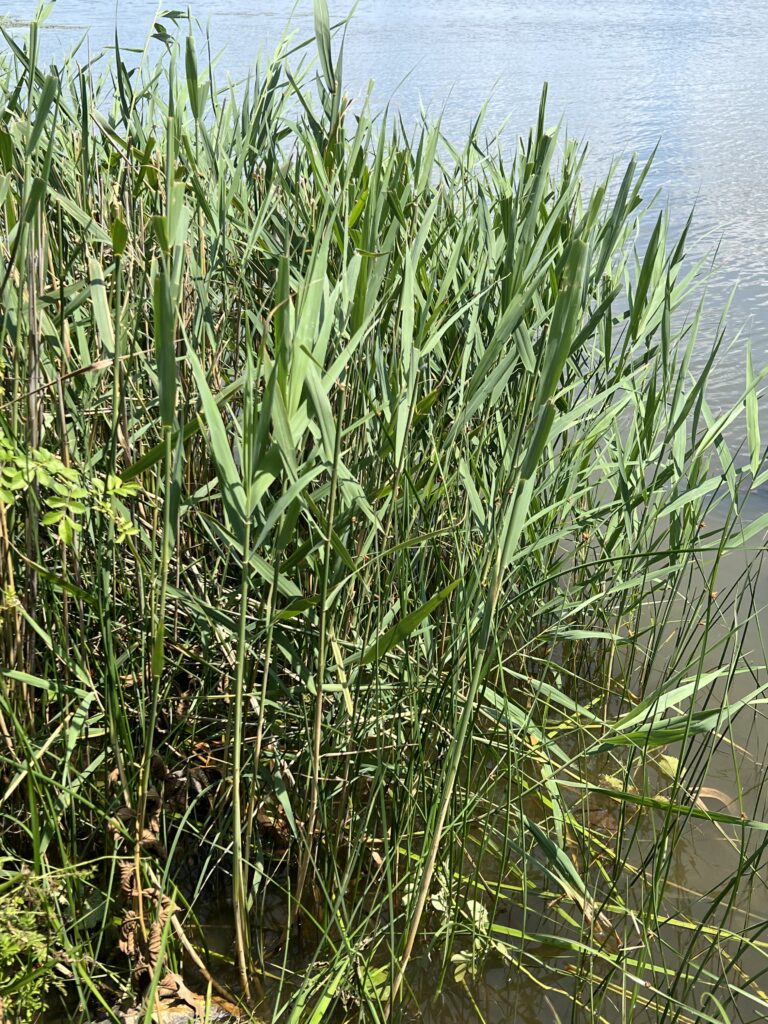
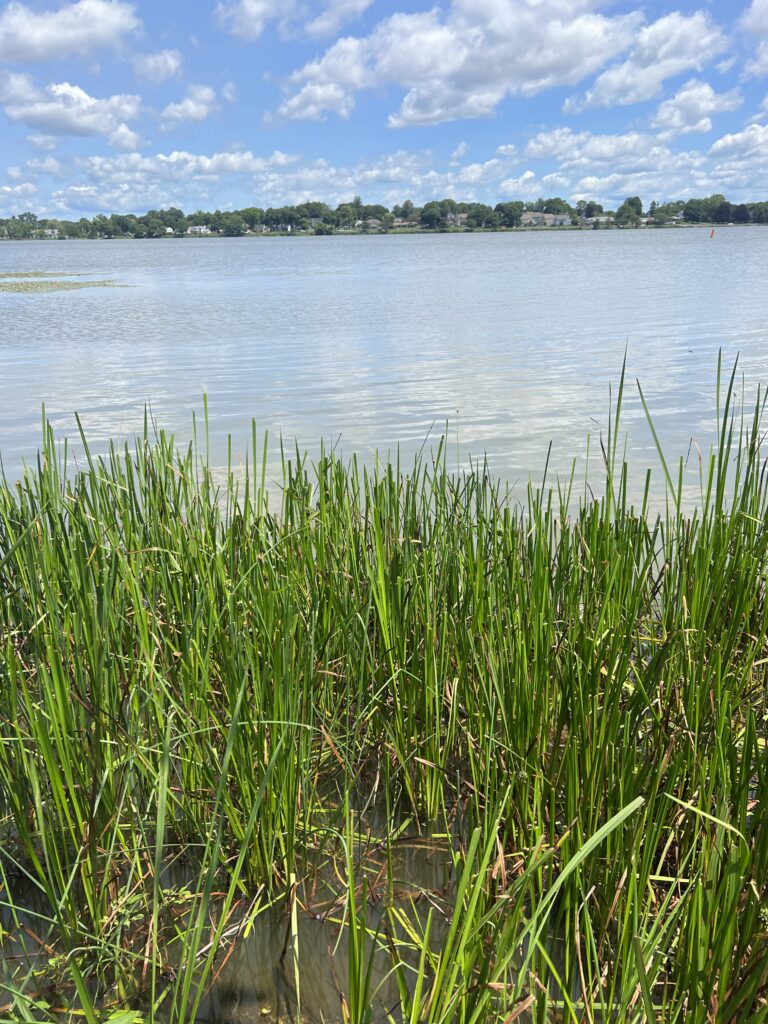
(5) Common Reed (Phragmites australis)

  • Habitat: distributed throughout the U.S.. Found in wet areas; known to grow along lakes, ponds, marshes, and streams.
  • Family: grasses.

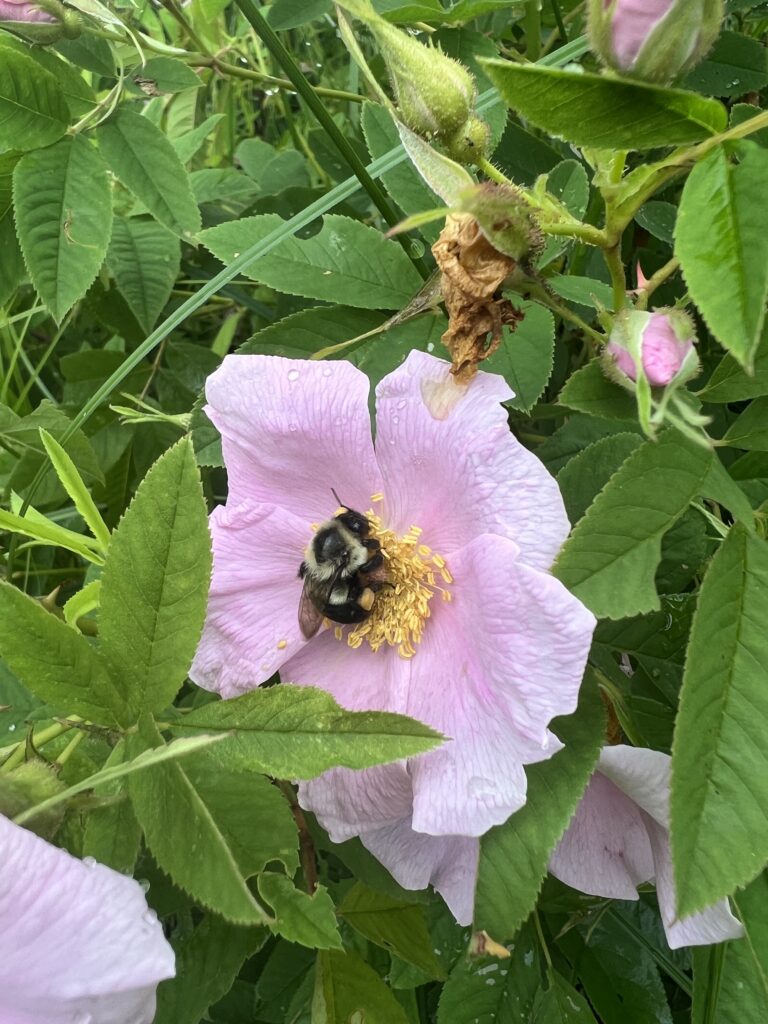
(6) Swamp Rose (Rosa palustris Marsh)

  • Habitat: native to the eastern U.S.. Occurs along stream banks and in swamps and marshes. Grows best in partial shade or full sunlight and wet to moist soils.
  • Family: roses.

(7) Common Bur-Reed (Sparganium americanum)

  • Habitat: aquatic species that grows best and is most successful in shallow water along the shorelines of muddy areas.
  • Family: bulrushes.

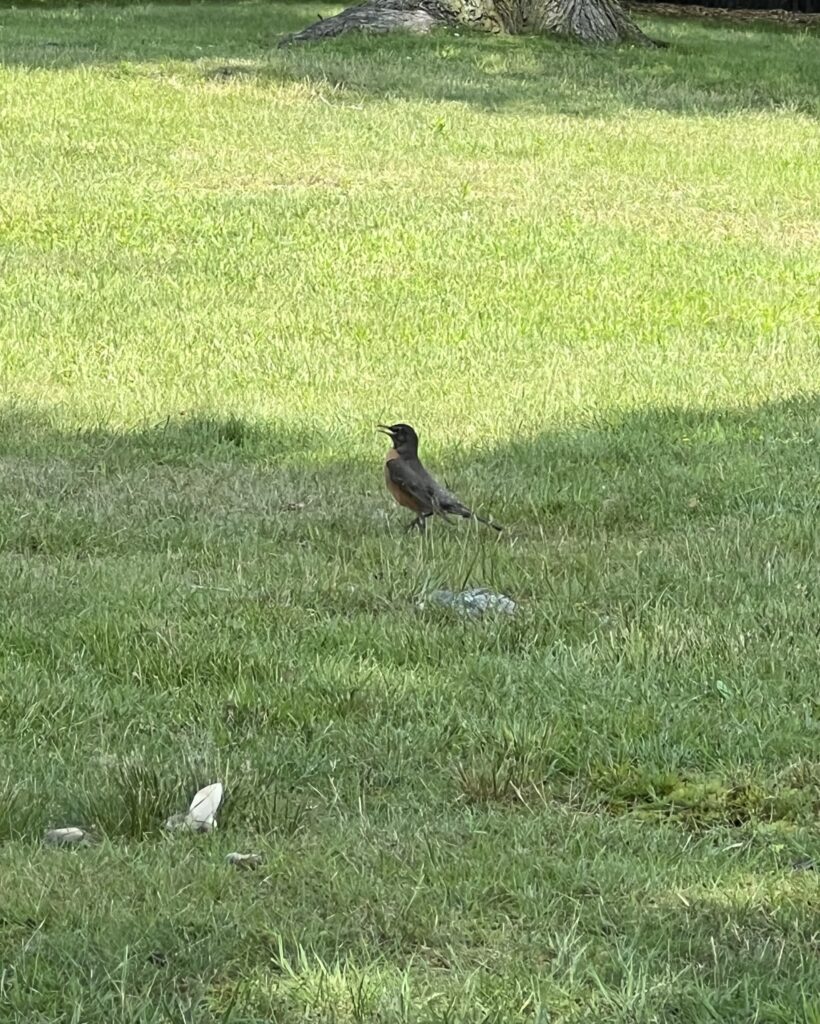
(8) American Robin (Turdus migratorius)

  • Habitat: lawns, cities, farmlands, towns. Very abundant and widespread as they most often live in areas mildly to heavily settled by humans.
  • Family: thrushes.

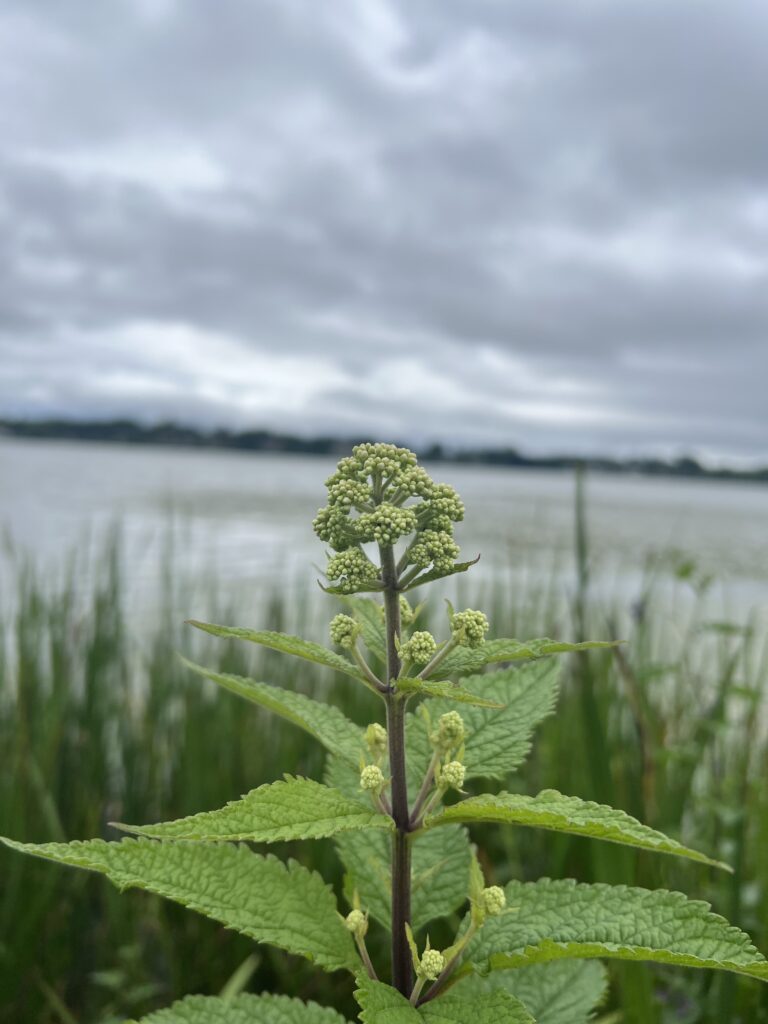
(9) Spotted Joe-Pye Weed (Eutrochium maculatum)

  • Habitate: grows best in direct sunlight or partial shade. Likes moist and wet soils for growing. Found in various places all across the U.S.
  • Family: daisy.

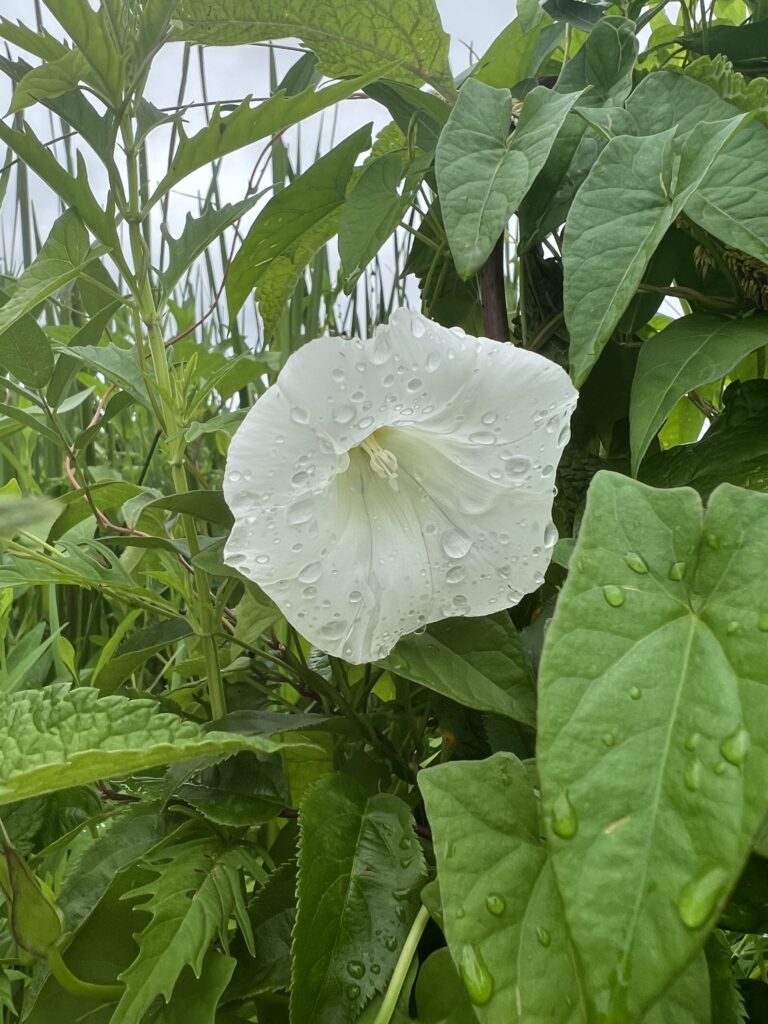
(10) Hedge Bindweed (Calystegia sepium)

  • Habitat: grows in sun, partial shade, or shade where there is moist soil conditions. Found throughout North America in the moist soil along streams, lakes, thickets, and roadsides.
  • Family: morning-glory.

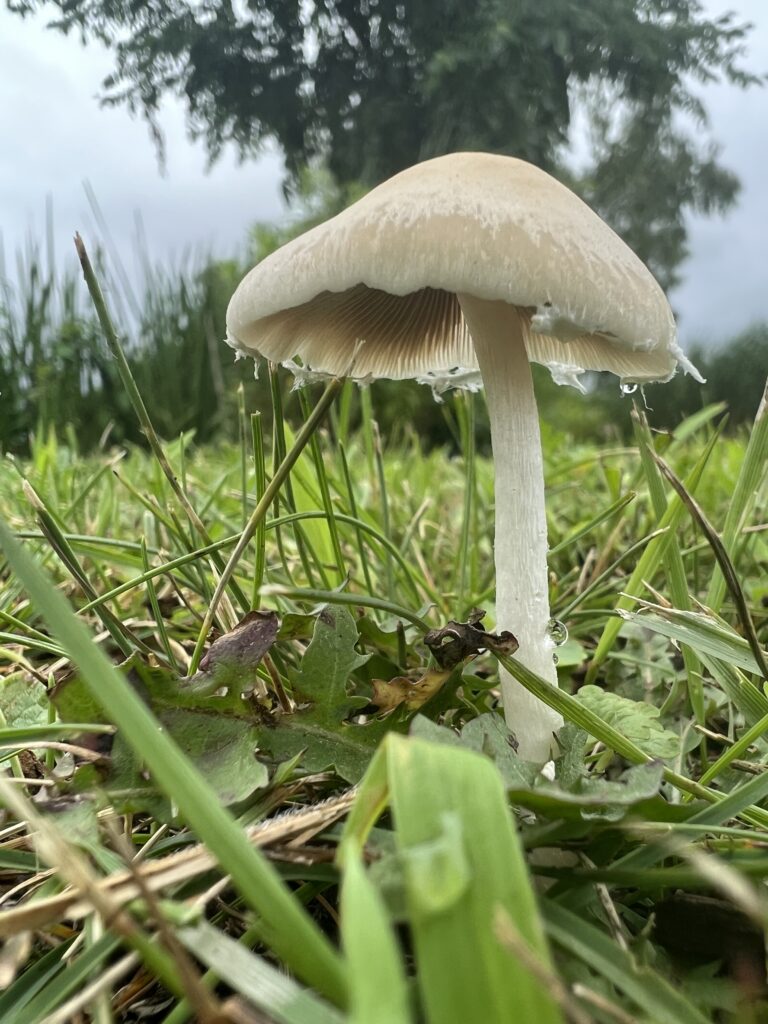
(11) Meadow Mushroom (Agaricus campestris)

  • Habitat: found scattered to abundant in meadows, urban lawns, and grassy areas in general. Sometimes they grow in arcs.
  • Family: Agaricaceae.

(12)(13) Pin Oak/Swamp Oak (Quercus palustris)

  • Habitat: grows in areas with very wet, moist soils and access to sun, partial shade, and full shade. Tolerates urban conditions and very wet areas.
  • Family: beech.

References:

Common reed fact sheet . Signs of the Seasons: A New England Phenology Program. (n.d.). https://extension.umaine.edu/signs-of-the-seasons/indicator-species/common-reed-fact-sheet/

Find Plants. Lady bird johnson wildflower center – the University of Texas at Austin. (n.d.). https://www.wildflower.org/plants/

Kaufman, K. (2023, March 7). Guide to north american birds. Audubon. https://www.audubon.org/bird-guide

Meadow mushroom. Missouri Department of Conservation. (n.d.). https://mdc.mo.gov/discover-nature/field-guide/meadow-mushroom

Stritch, L. (n.d.). Swamp Rose. Forest Service Shield. https://www.fs.usda.gov/wildflowers/plant-of-the-week/rosa_palustris.shtml

Yale University. American Elm | Yale Nature Walk. (2021, April 13). https://naturewalk.yale.edu/trees/ulmaceae/ulmus-americana/american-elm-134#:~:text=The%20American%20Elm%20is%20found,moist%20fertile%20slopes%20and%20upland.
Wonder Journal Entry #3

Entry #3

Lake Quannapowitt, Wakefield, MA

It is Tuesday, July 4th, 2023, at 13:00 and the weather is cloudy and warm at 75 degrees F.

Description:

At the shoreside site on the lake, the weather today is very cloudy and the air is moist and thick with humidity. Initially, when I first arrived, there didn’t seem to be any type of breeze but when I eventually moved closer to the water’s edge I noticed that there was a very slight breeze that picked up every few minutes before the air was somewhat still again. The weather throughout the last three or so days in this area as well as surrounding areas has been cloudy with off and on rain varying from a drizzle to a downpour. Upon looking closely at the ground, plants, and rocks at this site, it was clear it had been raining earlier this morning here and even during last night. Many leaves of plants and many flowers were covered with beads of water while the blades of grass on the ground and soil underneath were soggy and wet and for most steps I took there was an audible ‘squish’ and ‘squelch’ sound. I then turned my attention to the surface of the lake itself where I observed a small flock of geese swimming in the water adjacent to the shoreline. They swam up and down along the shore for a while and then eventually swam a bit further out where they ended up in a large surface area covered by lily pads. Eventually, a couple of geese swam ashore and ventured out of the water onto the shore through some thick brush. These two geese then walked further away to a larger open grassy area where they began grazing on the grass while the rest of their flock remained in the water. Later on, a third goose exited the water and joined the other two geese in their grazing for the remainder of the time I was at this site. I also noticed a small blackbird hopping around the open grassy area and initially though it was a common crow, but upon further inspection I was able to identify it as one of Brewer’s Blackbirds with its small, smooth, black feathers and body as well as distinct yellow eyes.

Natural History Mystery:

During this visit, and on previous visits, I always make note of the large amounts of Canada Geese that I observe at this site, but I had never previously thought about that might be until now. There are plenty of other birds that I observe while visiting the site, but none as consistently numerous as the Cana Geese are. Therefore, today while observing the flock of geese close to the shore of the lake, I wondered, ‘how is the population of Canada Geese here so large?’ After some minor research, I believe that the reason why Canada Geese may be so numerous in this area is because: 1)they tend to live longer lives in more urban areas (which is how I would classify this site’s surrounding) which would mean that because they are living longer, they are also getting more opportunities to reproduce more in their lifetimes. 2)they do not have any natural predators in the area which means there is very chance of their populations being affected by any predation and would therefore keep their populations more numerous.

Pictures:

(1) For this mushroom, I wanted to try and offer a unique and different perspective of viewing it. Usually we see mushrooms from above, but I thought it would be cool to capture the perspective of perhaps a bug or some small creature and how they might view the mushroom.

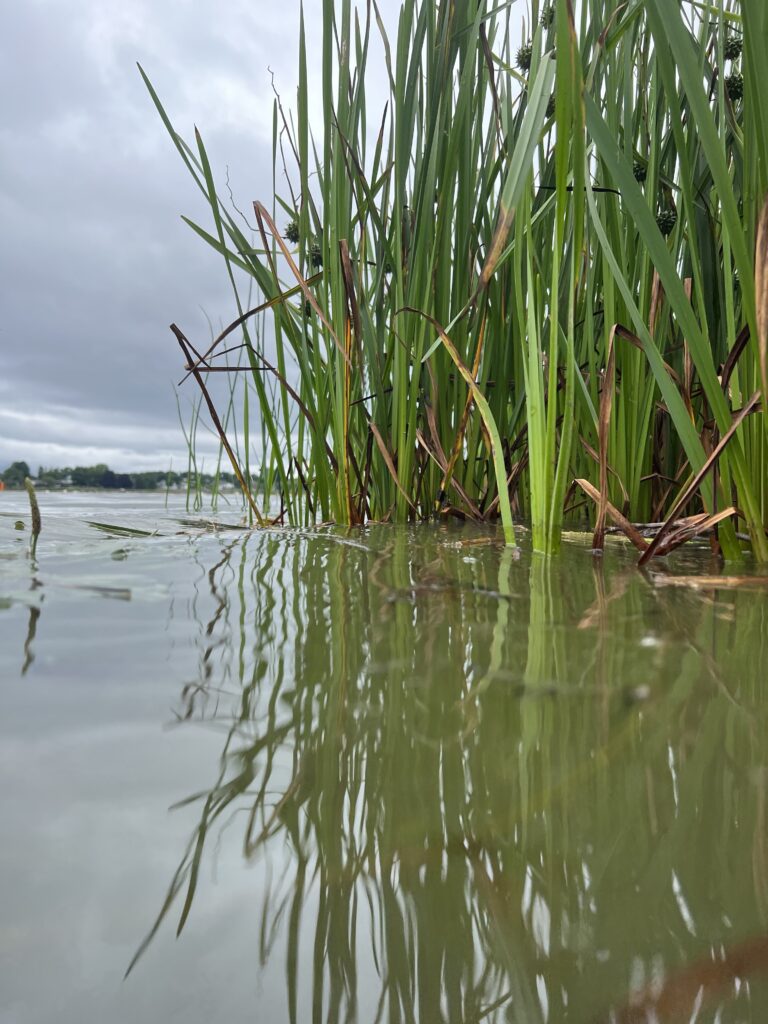
(2) There are many aquatic plants along the shore and in the water of this lake so I wanted to capture the prominence of the aquatic plants but from a new angle so I chose to position my phone at the surface of the water to capture the plants.

(3) This white flower really stuck out to me in an area where most everything else was green and did not have any flowers so I wanted to capture it. I also thought it looked especially beautiful with all the water droplets on it from a previous rain.

(4) The area where I found this budding plant mostly consisted of shorter, more brush-like plants so I thought it was pretty neat that this one, tall, budding plant existed here and almost looks to me like it is overlooking the lake.

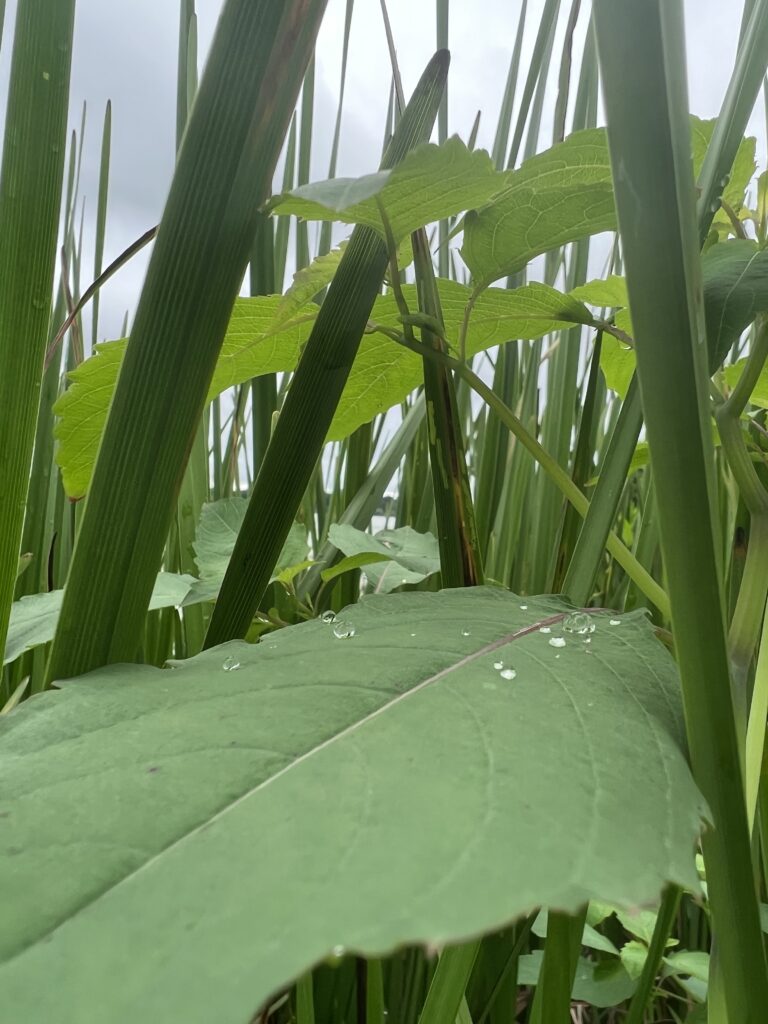
(5) For this final image, I wanted to capture something within all of the thick/dense green shoreline plants and found this flat leaf with a couple of water droplets on it. I found it really cool that these drops of water are still sitting on this leaf and are so clear.

Conclusion:

While I was taking these photos, I noticed how difficult it is to find the right angle and position of the phone (in my case) or camera. I found that I would take a picture and think I had it all right and then upon reviewing the picture, I realized what angle, lighting, and focus I needed to adjust and then I would take another photo to try again. This process definitely changed my understanding of this site because many of the subjects for me photos are things that I previously hadn’t really noticed or didn’t really ever stop to look at or observe. I found that taking these photos similar to sketching in the sense that there was lots of trial and error and figuring out what worked and what different. A difference between the two for me was that I felt like I was able to get up close and personal with the subjects of my photos more so than the subjects for my drawings. My entry for this week is probably my favorite so far because I am very impressed by how much of a difference taking these photos made on my comprehension and connection to this site. It was really great to experience trying to find good subjects, angles, and lighting; this entry definitely made me aware of how detailed and diverse this site truly is.

Wonder Journal Entry #2

Entry #2

Lake Quannapowitt, Wakefield, MA

It is Thursday, June 29th, 2023, at 18:20 and the weather is cloudy and warm and 80 degrees F.

Description:

Today at the lake, there is not much of a breeze at all. Every so often a mild breeze will last a few seconds but it is a subtle, warm breeze. Since it is cloudy today, the sun is not out and therefore there are no areas around that are shaded nor are there any sunny areas. The water is quite calm today as well, there is still movement to it but no waves at all, even along the shoreline. There is a somewhat large flock of geese about 50 feet away from where I sit at a picnic table 15 feet from the water’s edge. Some of the geese in this flock are on the larger side, probably close to 3 feet tall, whereas some of the other geese, presumably younger birds, are much smaller, maybe half the size of the larger ones. The geese seem to be wandering around in their flock either eating some grass, other plants growing from the ground, or something else. Most of them have their heads in the ground looking for food while a few larger ones seem more keen on watching their surroundings. About 20 feet away from where the flock of geese stand, is a small rabbit, probably an Eastern Cottontail. This rabbit is probably somewhat young since it looks to be no larger than one of my hands in length. I chose to observe this rabbit for a bit, as I did not see any rabbits the first time I visited here last week. Initially, the rabbit emerged from a densely covered area consisting of small plants, ferns, and brush. The rabbit then wandered around in the open clearing for a while, frequently stopping and standing still for a few minutes at a time. It then suddenly catches sight of the geese and flees quickly back into the brush. After the geese move past the area where the rabbit fled, it reemerges and runs closer to the shore where it wanders in and out of shoreline plants. Eventually, something unknown to me seems to startle the rabbit which then sprints into the cover of some nearby plants and I don’t see it again.

One Unfamiliar Species Identified:

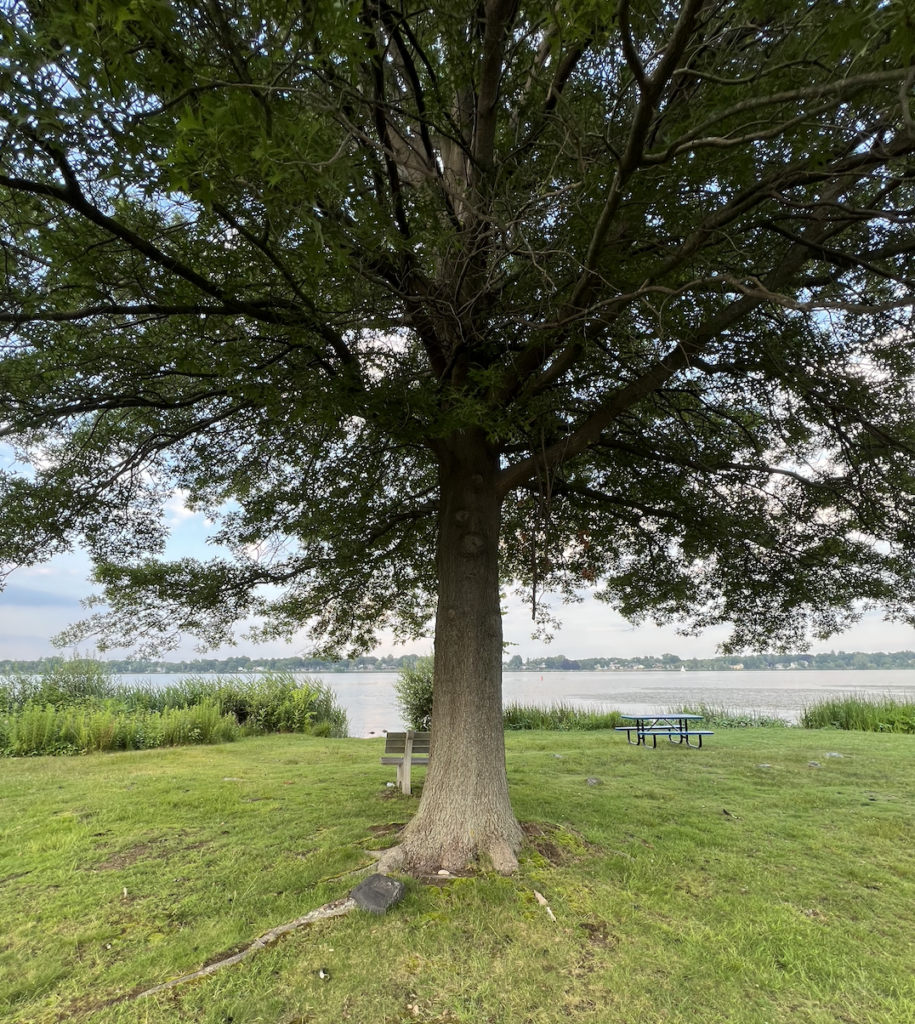
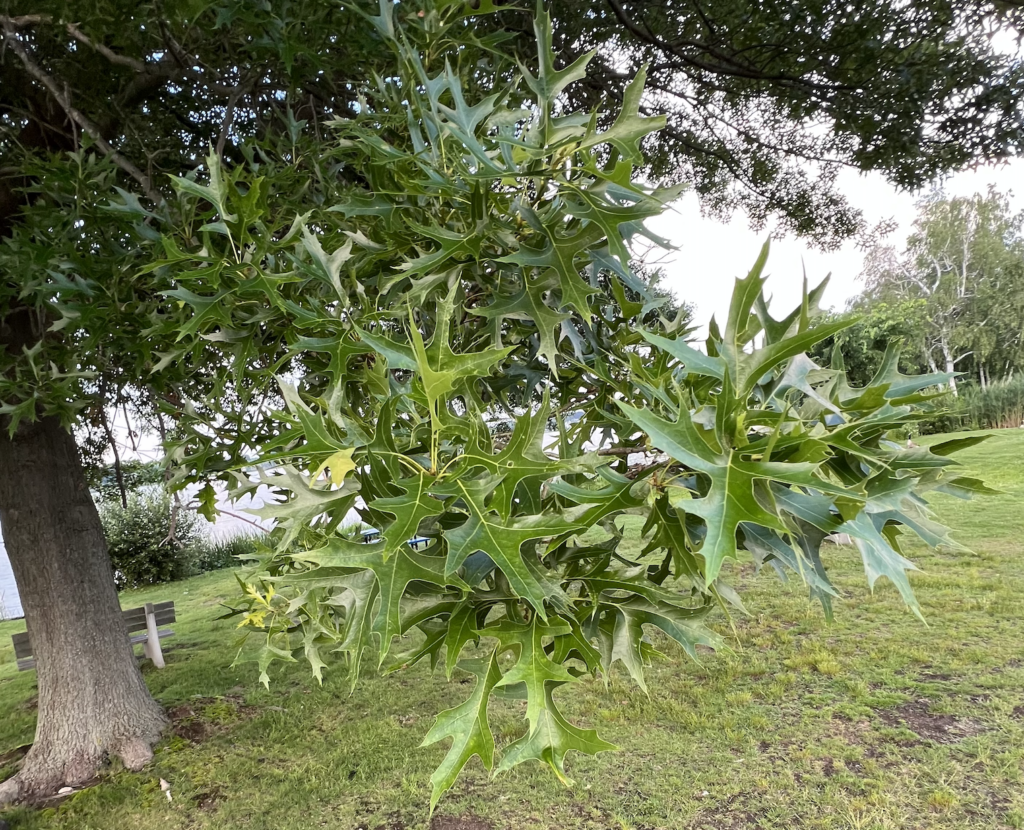
A species of tree that I was unfamiliar with and wanted to identify was that of the big tree right in the middle of the grassy area and off the shore. This tree provides lots of shade for the area, and is the biggest tree within the surrounding area; it also has a small bench beneath it, situated between the tree and the lake. After doing some research, I was able to identify this tree as most likely being a Pin Oak tree, also known as a Spanish Swamp Oak, or Spanish Oak (scientific name Quercus palustris). Other possible identifications are a Black Oak, or Scarlet Oak which both look similar. In order to identify it, I first knew it was some species of oak due to the type of leaves it had and because they are common to the area and looked like other species of oak I have seen. Then, I decided to focus in on the leaves because they looked distinctly different from other leaves I have seen before. I then looked up species of oak with 5 lobes and deep sinuses and few multiple species of oak with these types of leaves. After that, I compared and contrasted a the leaf of my tree in question and the examples of the different oak species and was able to identify the leaves and properties of a Pink Oak to be the most similar. An interesting fact about the Pin Oak is that it is often referred to as the Swamp Oak due to its tolerance for moist, wet conditions.

Pin Oak and the Leaves of the Pin Oak

Sketches:

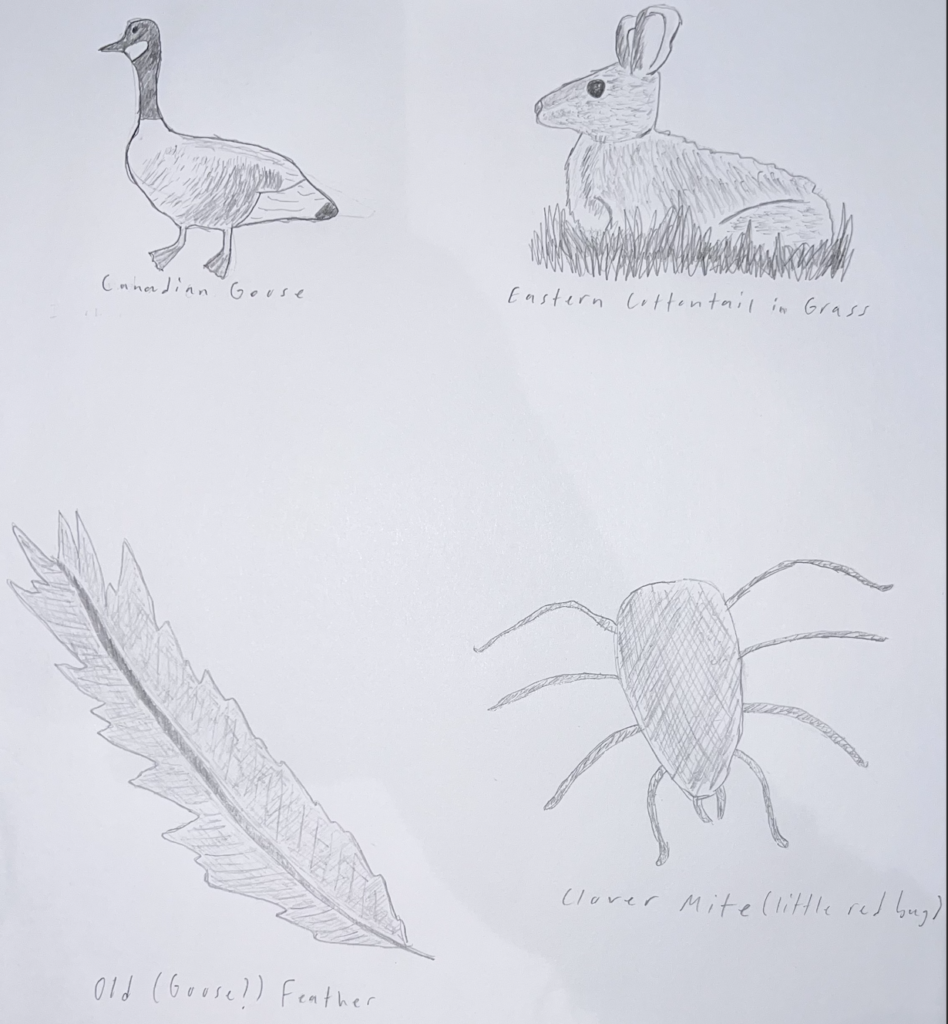
  1. Canadian Goose — I chose to draw a Canadian Goose because they are common to the area and there was a whole flock of them close to me the whole time I was visiting this site
  2. Eastern Cottontail — I chose to draw an Eastern Cottontail sitting in the grass because I was observing this rabbit for a while during my time at the site.
  3. Old Feather — I chose to draw an old feather (perhaps a goose feather) because I thought it would be challenging to sketch, which it was, and I had found it right by my feet.
  4. Clover Mite — I chose to draw a clover mite (those little tiny red bugs) because there were a bunch that kept crawling on my paper as I was sitting at the picnic table trying to sketch!

Conclusion:

Sketching these things for this week’s blog post was definitely interesting for me. I’m not very good at art, I really never have been, nor have I have ever really been interested in making art. However, after sketching for this week’s entry I will say that it is pretty cool to attempt to draw what you’re seeing with a sketch rather than trying to describe it with words. At the very least, sketching for this week’s entry has made me even more impressed by artwork as a whole, and people are able to do such insanely accurate drawings/depictions of the natural world. Next week, I would like to follow up on identifying other tree species in this area.

Wonder Journal Entry #1

Entry #1

Thursday June 22nd, 2023

Lake Quannapowitt

It is Tuesday, June 22nd, at 16:30 and the weather is sunny, warm, and breezy at 70 degrees F.

Description:

This site is a shoreline location on Lake Quannapowitt in Wakefield, Massachusetts. The area is defined by flat grassy open area/field until you come to the shoreline where there is a variety of plant life growing along the water’s edge. The water itself is a murky, brownish-green color is undulates with small waves from the wind. The plant life along the shore is mostly composed of what looks to be various ferns, trees (lots of birch), tall grasses, and other brush. On the surface of the water is many hundreds of lily pads, some with bloomed water lilies and many with buds that have not yet blossomed. These occupy large amounts of area on the surface of the lake. There is a large tree that shades much of the green space around this area of the shoreline. A bench is beneath the tree and there is also a small picnic table close to the shoreline. The area beneath the tree, where it is shady, is significantly cooler than the sunny places in this area and there is a subtly strong breeze coming off of the water which makes being in the shade chilly. The ground beneath the bench is worn away from being grassy to being a pile of muddy dirt, most likely from the frequent rainfall in the area. Different species of bird are seen frequently here as well, I could identify Robins, Geese, as well as House Sparrows but there were also other species I did not know. In the flat grassy areas, there are also many places on the ground where rock is visible. It could likely be large rocks that are stuck underneath the ground and only the top is showing.

Questions:

What species of tree shades the area? What brush species exist along the shoreline? What species of insects exist here? What species of bird exist here? How did this lake come to be? How old is this lake? Are there people that come here to maintain the grass? What species of fish live in this lake? Are any of these plant species invasive? Which of these plant species are native to the area? Where have the sediments under my feet come from? Has there ever been a glacier in this area? Is there any glacial till underneath the ground? What sediments could be found at the bottom of the lake? Was this area ever underwater in its history? What geological processes shaped this area? Are there any currents in the water? How deep is the deepest point of the lake? What is the elevation of this area in regards to sea level? Why are there so many geese at this lake/area? Do the geese migrate here every year? Why are there buoys in the lake? Is this are fertile for growing plants/crops? How was this lake created? Is there any type of conservation going on in this area?

How Was This Lake Created?

Lake Quannapowitt was created as a result of a large ice sheet, the Laurentide, that covered New England about 22,000 to 14,000 years ago[1]. As this glacial ice sheet retreated, it left a depression which then became Lake Quannapowitt. It is also thought that that around 8,000 years ago, after the retreat of the ice sheet, that Lake Quannapowitt was a part of a much larger lake system. This is also indicated by the presence of present day marsh lands in surrounding areas which were likely large, shallow lakes 8,000 years ago[2]. Depressions created by the retreat of the Laurentide ice sheet, which is how Lake Quannapowitt came to be, are known as kettle ponds[3]. These depressions were formed as a result of ice blocks detaching from the glacier creating a depression and then melting which fills the depression with water, often forming a lake or other body of water[4].

Sources:

[1]“Our Icy Past.” Mass Audubon – Your Great Outdoors, 7 Jan. 2014, blogs.massaudubon.org/yourgreatoutdoors/our-icy-past/#:~:text=The%20Time%20of%20the%20Glaciers&text=Continent%2Dwide%20glaciers%20are%20called,right%20down%20to%20the%20bedrock.

[2]Wakefieldhistory. “The First Settlers.” Wakefield Historical Society, 22 Sept. 2020, wakefieldhistory.org/2020/09/22/the-first-settlers/.

[3]Admin. “Glacial History of the North Shore / Northeastern Massachusetts.” North Shore Nature, 18 Apr. 2022, northshorenature.com/north-shore-shoreline-13000-to-12000-years-ago/#:~:text=Glacial%20Retreat&text=By%2016%2C000%20or%2017%2C000%20years,of%20Massachusetts%20was%20ice%2Dfree.

[4]“Kettles (U.S. National Park Service).” National Parks Service, 28 Feb. 2018, www.nps.gov/articles/kettles.htm#:~:text=Kettles%20form%20when%20a%20block,pond%20or%20lake%E2%80%94a%20kettle.

Conclusion:

Prior to visiting this shoreline spot on Lake Quannapowitt, I had been here before. However, before today, and writing this entry, I had never really thought about the area too much. Nor did I ever really look into specific questions in regards to the area, history, and surrounding wildlife. Doing this entry has definitely piqued my curiosity for this place and I hope I can continue to ask question and learn more with future entries. The variety of wildlife, specifically plant species, caught my attention while visiting today and I definitely look forward to follow up with this next time during future visits.

Skip to toolbar