Posts

Nr2 Phenology post 6

Compared to the beginning of the semester, my site looks widely different. For starters it was the dead of winter when we started and the ground was covered by a thick blanket of snow. The trees were completely barren as well. Now the trees and other plants are full of buds that will soon become new leaves, filling the forest with green. Looking and listening around my site I noticed a massive increase in animal life as well. The winter season changed the topography of the ground due to the massive amounts of snow that we received. This snow eventually melts and when it does the water has to go somewhere. Some of it is absorbed by the ground with the rest running towards the retention pond, forming deep ruts along its way.

The most relevant major landmark would be the large retention pond right outside the red stone woods. It is the most relevant in my opinion due to its implications within the larger Burlington and lake Champlain environments. The most noticeable minor landmark would be the large fallen log (appears to be a large oak) right in the middle of my site.

Nature and culture interact quite often here with the UVM students and Burlington locals who walk, hammock, and hang out within the woods. It also is a literal and metaphorical border between the culture of broke UVM college students and the high echelon country club on the other side.

I absolutely consider myself a part of my place as I am one of the very people I am describing. We use the woods to hike, hammock, build forts, and in general just escape from the academic world that exists beyond the trees. Without me these woods would continue to thrive, but without them I am not so sure I would.
Nr2 Phenology Post 5

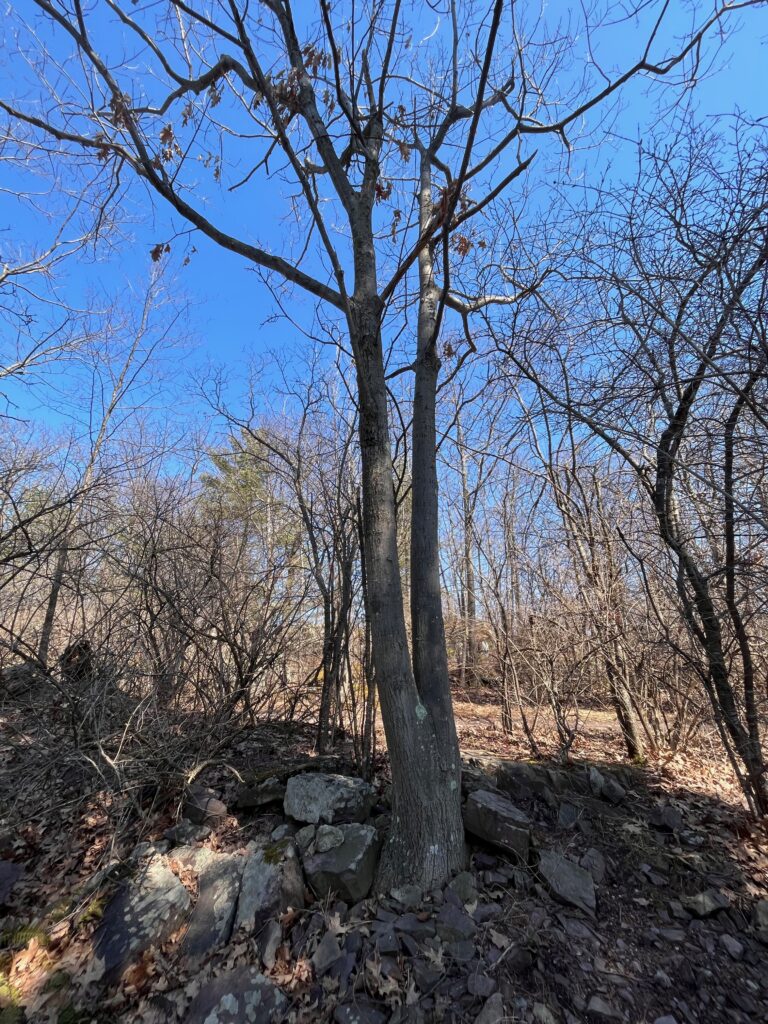
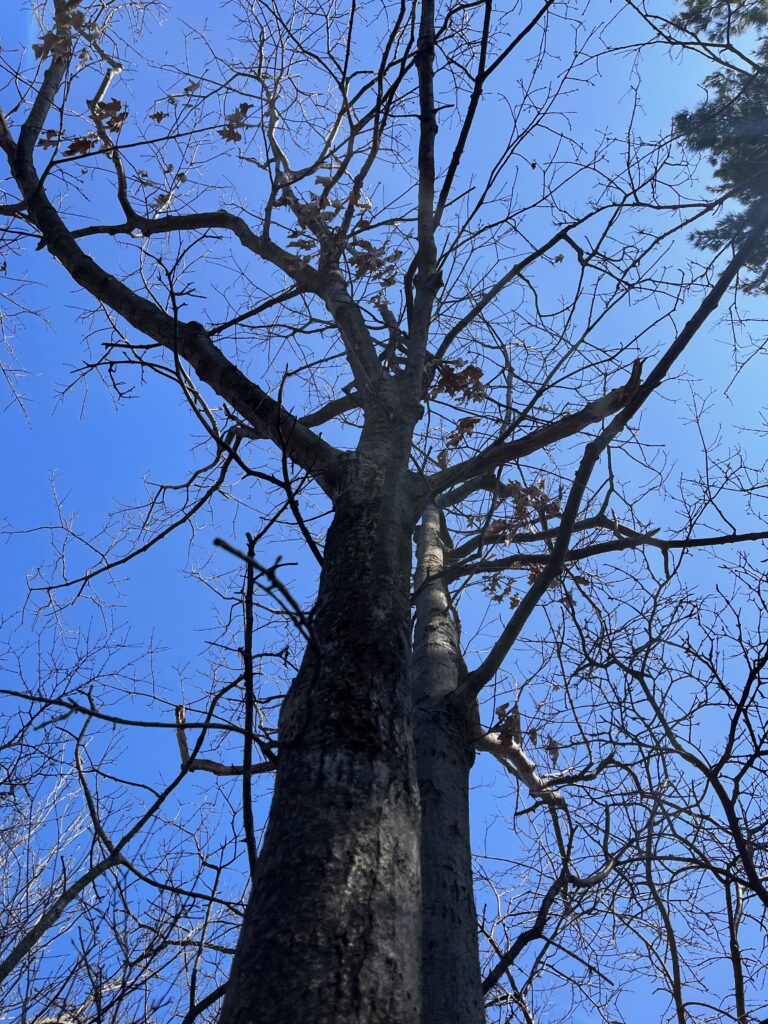
There is no snow left at my site and the entire forest floor is now visible again. The ground is extremely muddy and wet with the newly melted ice and snow. My tree still is hanging on to a few dried out leaves left over from the fall. There is in general a lot more sun now that the seasons have changed and the days are longer.

Nr2 Phenology Post 4

There haven’t been many changes to my red oak or my site. The snow has melted a lot more but not entirely yet. Around the base of tree there is almost no snow. I don’t have any photos from this visit unfortunately.

NR2 Phenology post 3

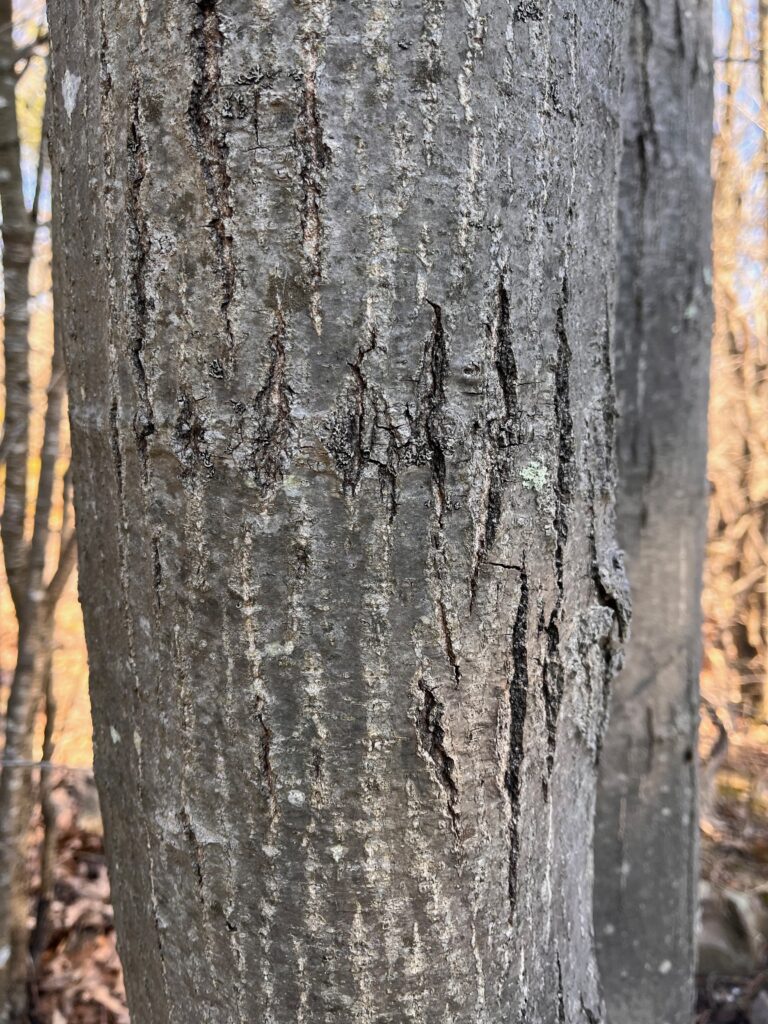
At my site in red stone woods I found a Northern Red Oak. I identified it based on its dark reddish gray brown bark with defined ridges running down it. Other oak trees look very similar in the winter, however white oaks have very different bark. Their bark has ridges, however it does not have the reddish coloring that the red oaks have. Red oaks and oaks in general have much rougher and gnarled bark with deep ridges. Maple trees on the other hand have much smoother bark with longer ridges that aren’t as deep.

Nr2 Phenology Post #2

As per the instructions I ventured else where in Burlington to explore for this post. I decided to visit north beach for a little walk along the beach and into the woods towards the cliff jumping point. I went the morning of Friday February 17th, arriving at the beach right 11 am. The beach was covered in snow and many tracks, though once I looked further I concluded that most were human and canine tracks, rather than wild animals. I saw some squirrel, hare, deer, and what I believe to be fox tracks. As I left the beach and entered the woods, the human traffic faded and I was able observe more various wild animal tracks. I wasn’t entirely sure of what everything I saw was as the snow was not fresh due to warm weather and my phone was dead so I could not use inaturalist or take photos. I used my red tracking notebook to help but like I said since most of the snow was melted down, it was very hard to identify the tracks.

Even though I was not able to 100% identify everything I was comparing the characteristics of the tracks to try and narrow it down. I was observing the shape of the track, the distance between tracks, how many feet/limbs the animal has, etc. I really hope that on future phenology posts we have enough snow to see detailed fresh tracks!!

Nr2 Phenology post #1

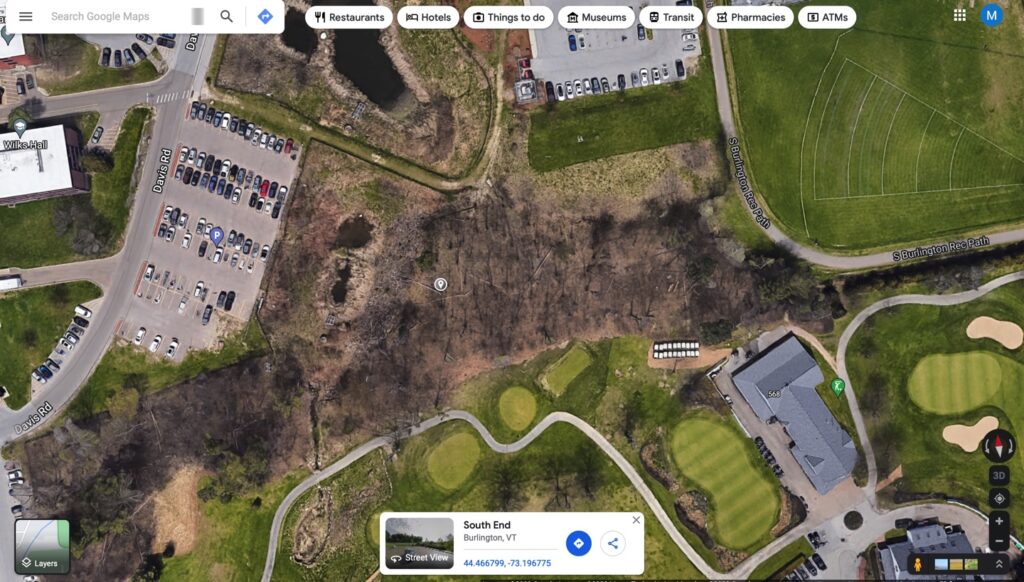
My new site is inside the small section of woods between the edge of Redstone campus and the golf course behind it. To get there I walk out the front of the www complex and then to the right, walking straight until I reach the woods. Upon reaching the woods I go to the right about 100 feet to my site.

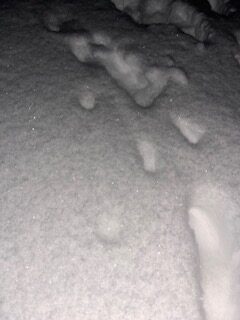
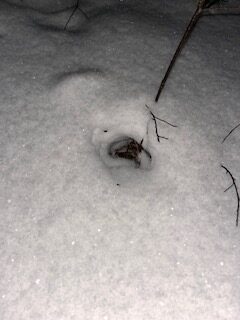
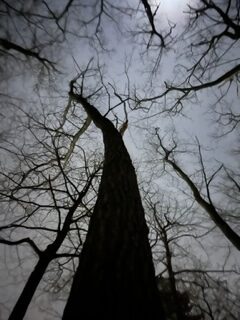
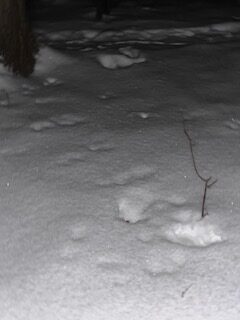
This is not the same site as last semester but just looking around I see a huge difference in general as now 100% of the leaves are down, the ground is frozen, and lastly there is a thick snow pack around a foot. There are a noticeable amount of animal tracks but many of them lack detail due to the fresh snow we have been getting all day. I unfortunately was only able to get photos at night for this post but it allows you to focus on the tracks more. It was around 15 degrees and lightly snowing when these photos were taken.

November 7th

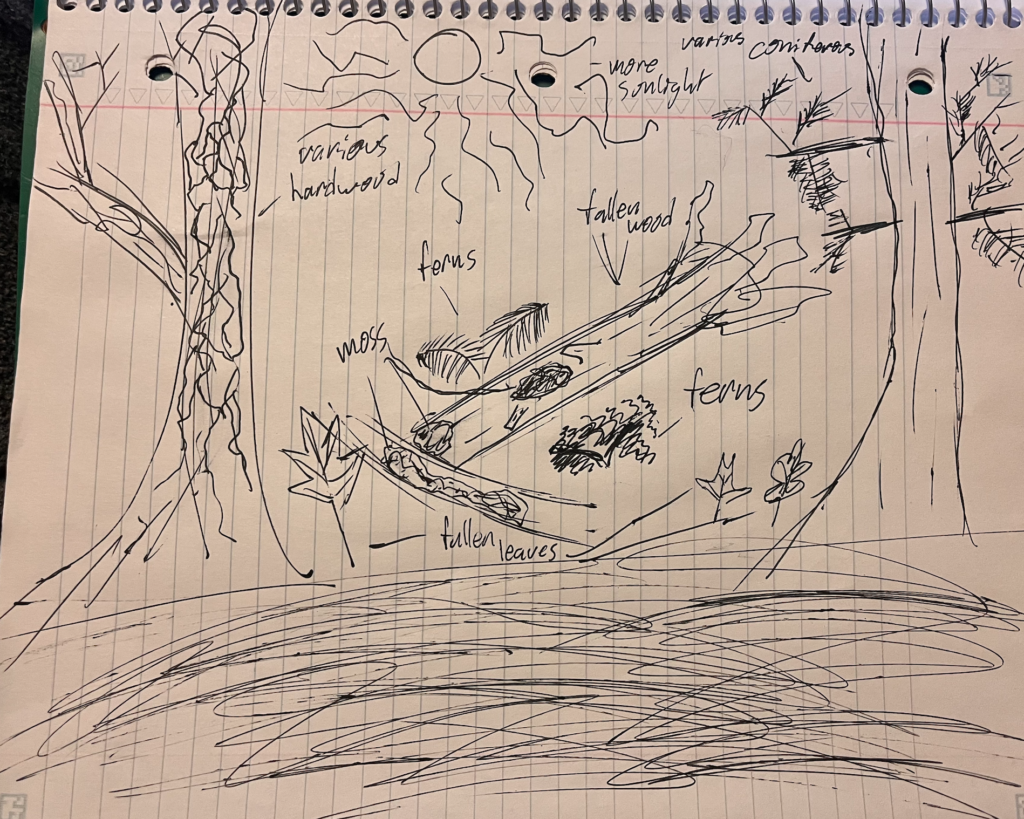
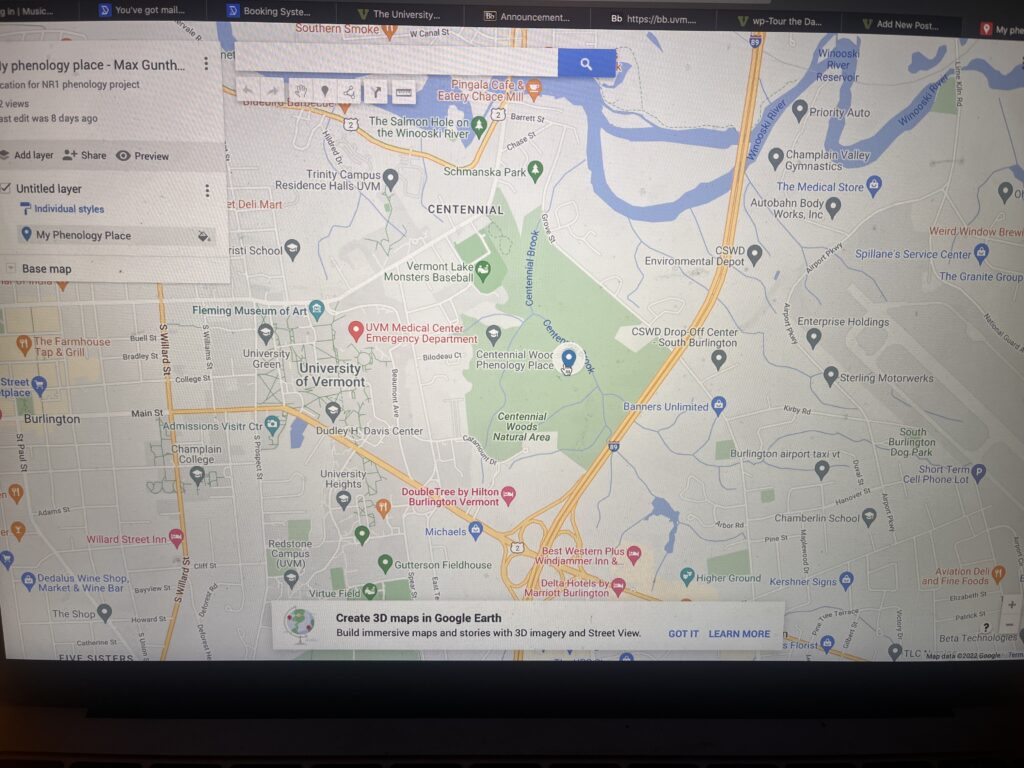
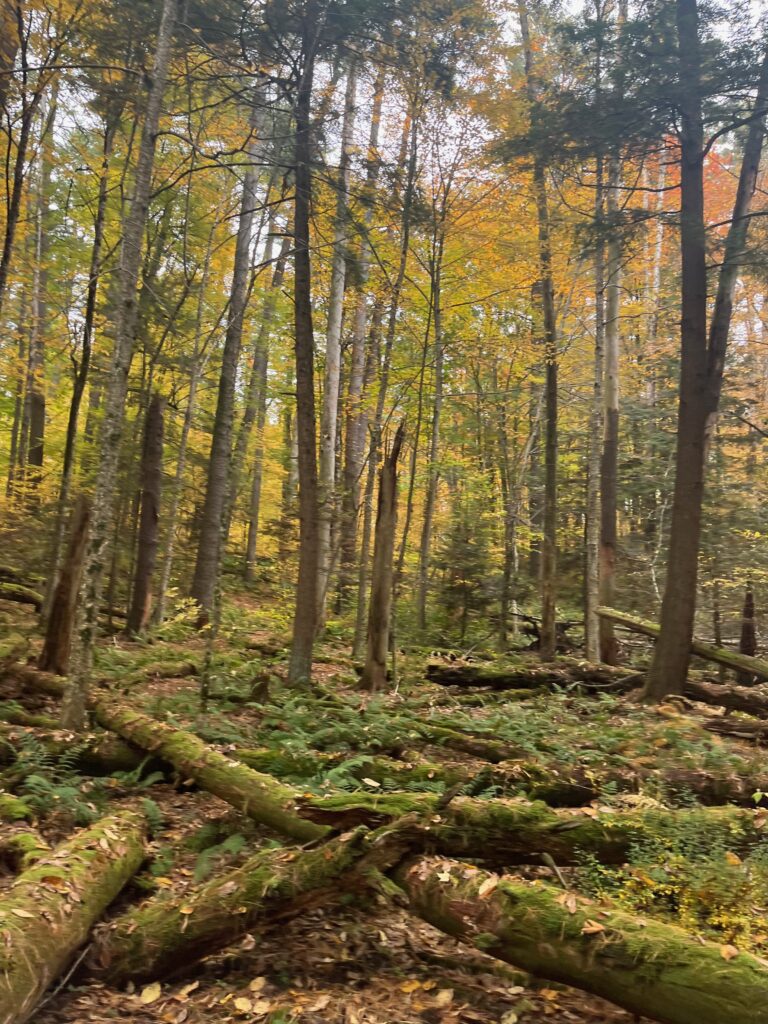
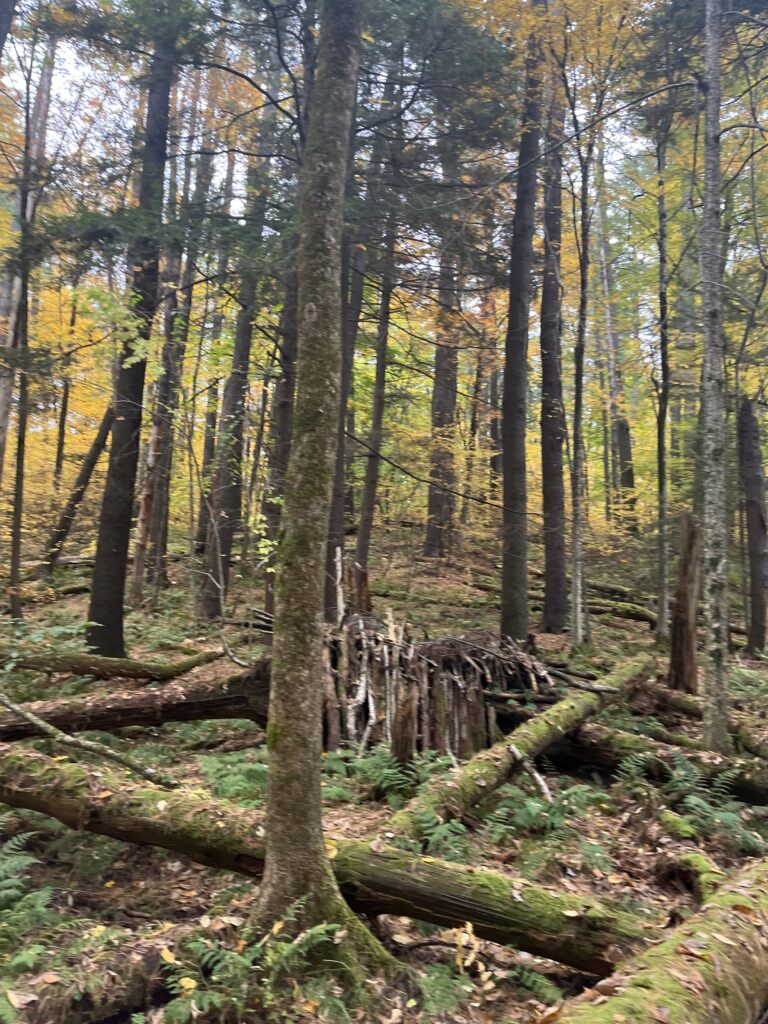
Yesterday, November 6th, I visited my site in Centennial Woods. Unlike the beautiful weather we had on Saturday, Sunday was dark, windy, and rapidly cooling off. After following the marked pin on google maps to my site, I found a spot that I feel marked the center close enough. I sat on a large fallen hardwood log that had been covered in moss. I looked around the under and over story, noticing many different smaller plants, hardwoods, and coniferous trees. The wind was quite strong and made for a very calming sound going through the trees. I also noticed the extreme flexibility of the larger trees as they swayed. Even though the weather was not great and it started to rain while I was walking back, it was an extremely relaxing experience.

Since the last time I visited my site, there has been a dramatic difference in the vegetation. On the ground, the ferns and other leafy small plants have started to brown out a little, but are still there. Higher up, almost all of the leaves have fallen off the trees. Some trees still were hanging on to a couple, but overall most leaves had fallen. There was significantly more light in my site because the leaves are not there to block it out.

Phenology post #1

Max Gunthert

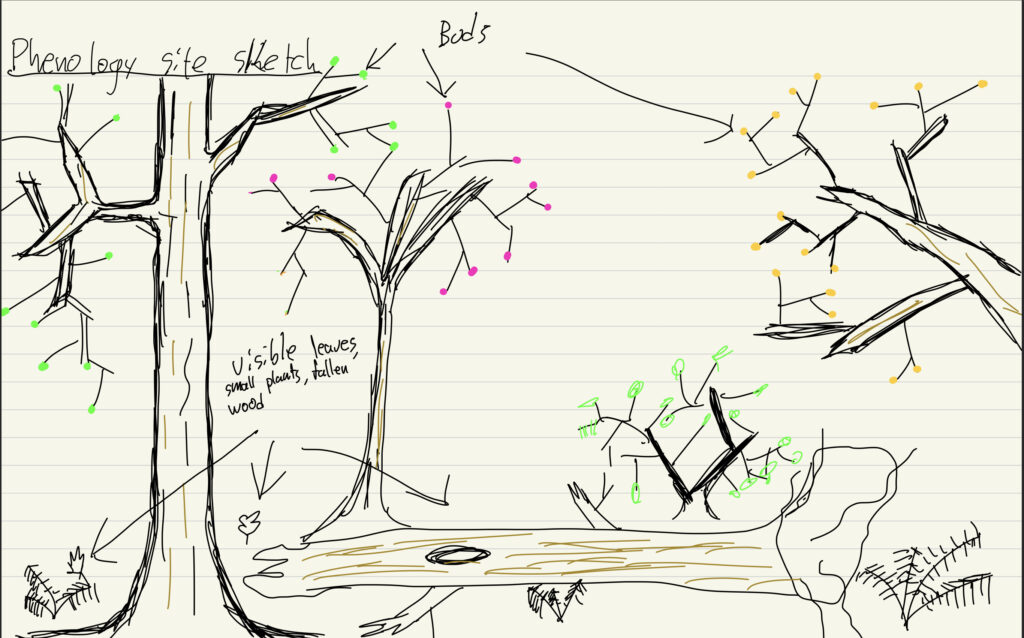
My site is within Centennial woods somewhat in the center off of the main trail. To get there, I first I walk to the side of the woods closest to red stone campus. Once I arrive at the trail head I put in walking directions to my pin in google maps and walk to it. I choose Centennial woods due to its close proximity to campus, as there are not many natural areas this size with this level of plant variety nearby. This variety was nonetheless very apparent in my site. The overstory was comprised of mostly eastern hemlocks with some northern white pine and a few sugar maple. The understory was comprised of sugar maple, red maple, American beech, and yellow birch. The most common plant on the forest floor are ferns as well as moss and mushrooms. On the floor there is also a large amount of fallen dead wood (indicates that the soil may be shallow causing more trees to fall). These dead logs are the perfect spot for moss and mushrooms to grow. We are well into fall, which was apparent by the carpet of leaves building up on the floor.

Skip to toolbar