Posts

4/25 Centennial Woods: Final Post

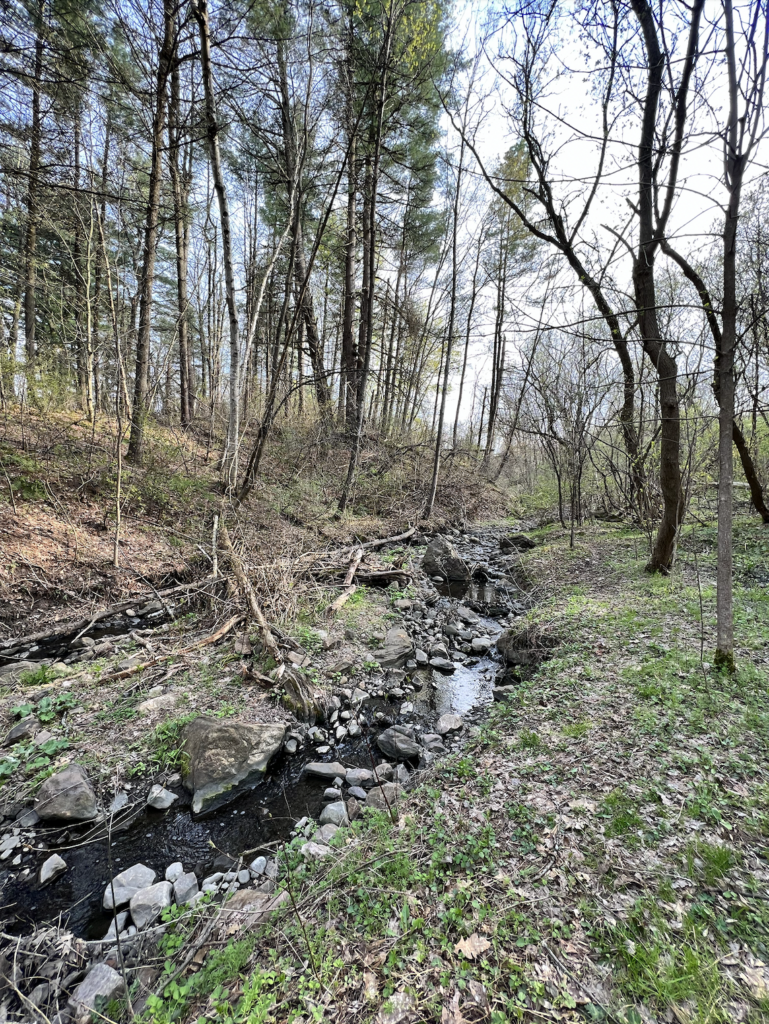
Over time, I’ve seen this spot change from being a snow-covered landscape with nothing but thick ice covering the stream, to a flourish understory with flowing water. I haven’t notice any major changes to the area, but was shocked to see how fast the foliage had changed once spring arrived. It was as if a switch was flipped and greenery appeared as soon as the weather had reached 50°F. I also noticed that many trees have fallen in this area, mostly young deciduous trees. I believe it is because of all the rain we got this past week, leaving the soil muddy and young tree roots revealed.
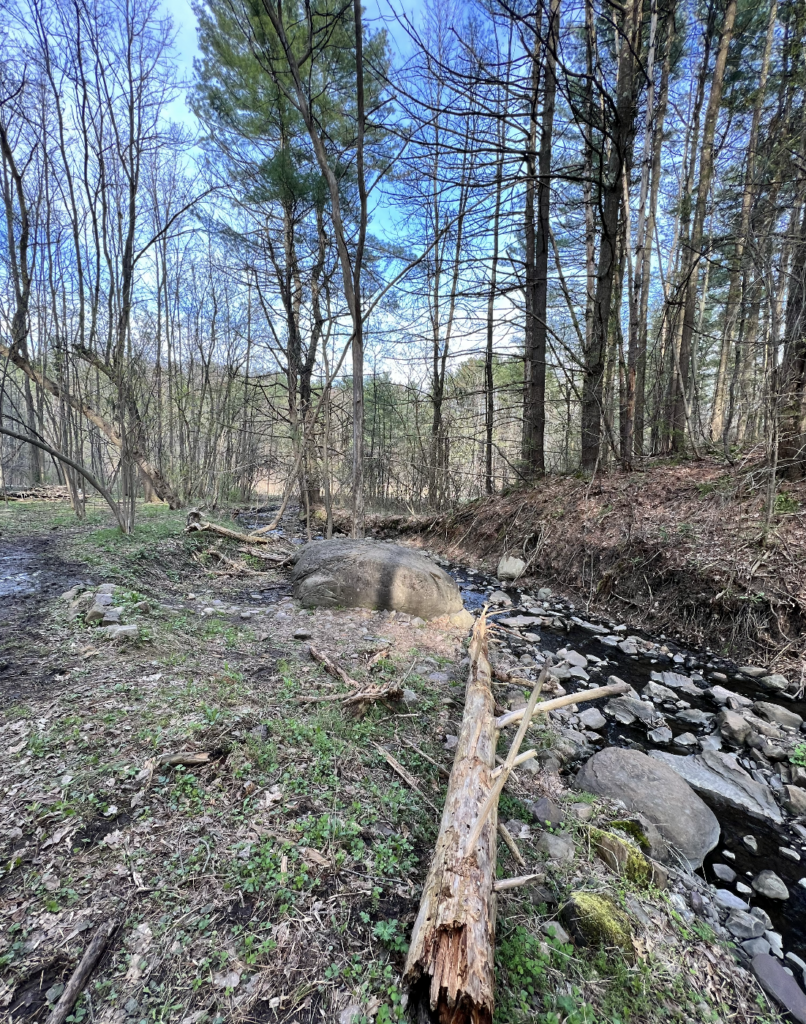
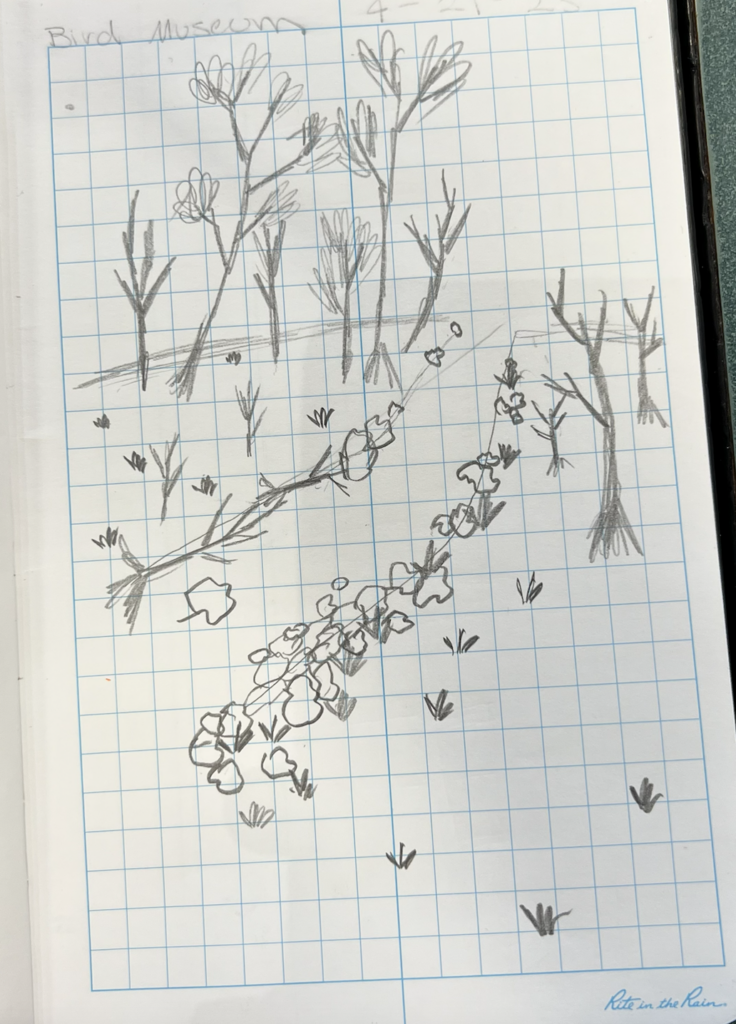
After my time here, I’ve come particularly familiarly with this spot, near the large rock in picture. I have spent my time sitting on the rock and sketching my surroundings and listening for any signs of wildlife. It has turned into a perfect sanctuary for me to escape to and enjoy the natural area. Because of this spot, I now consider myself a part of this place and seem to have a connection to it. I think the biggest factor that has led me to this connection is the fact that this spot is off the trail and that I found it on my own. Even after completing my phenology series, I will continue to come to Centennial Brook.
4/20 Northern Red Oak on Campus

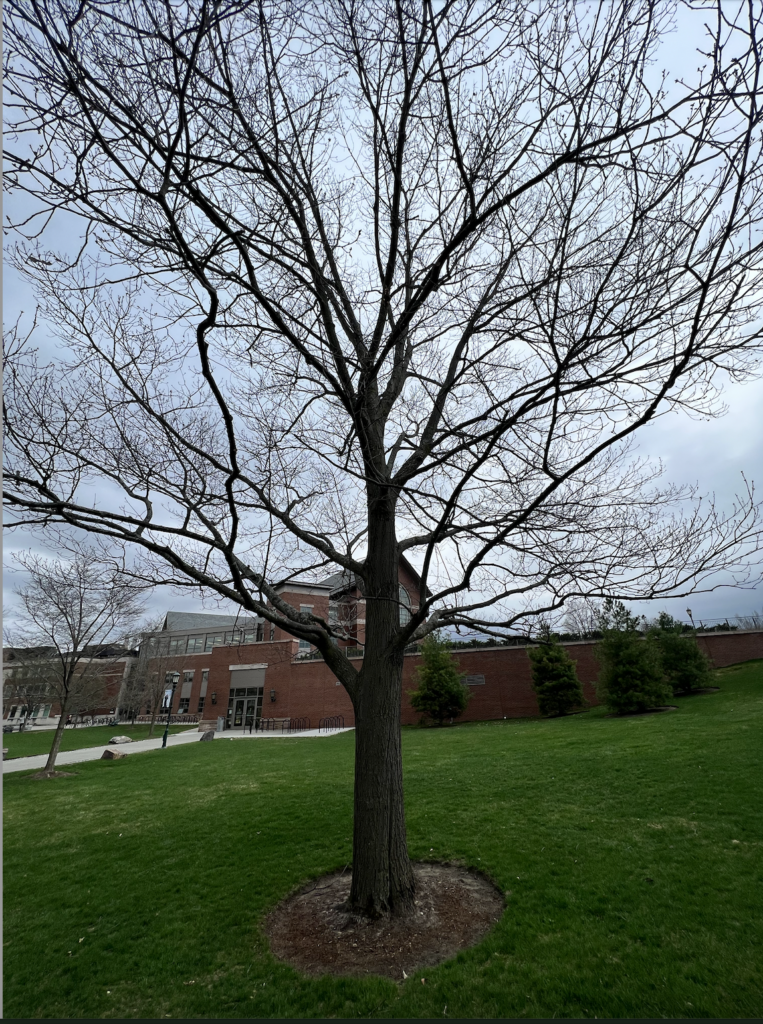
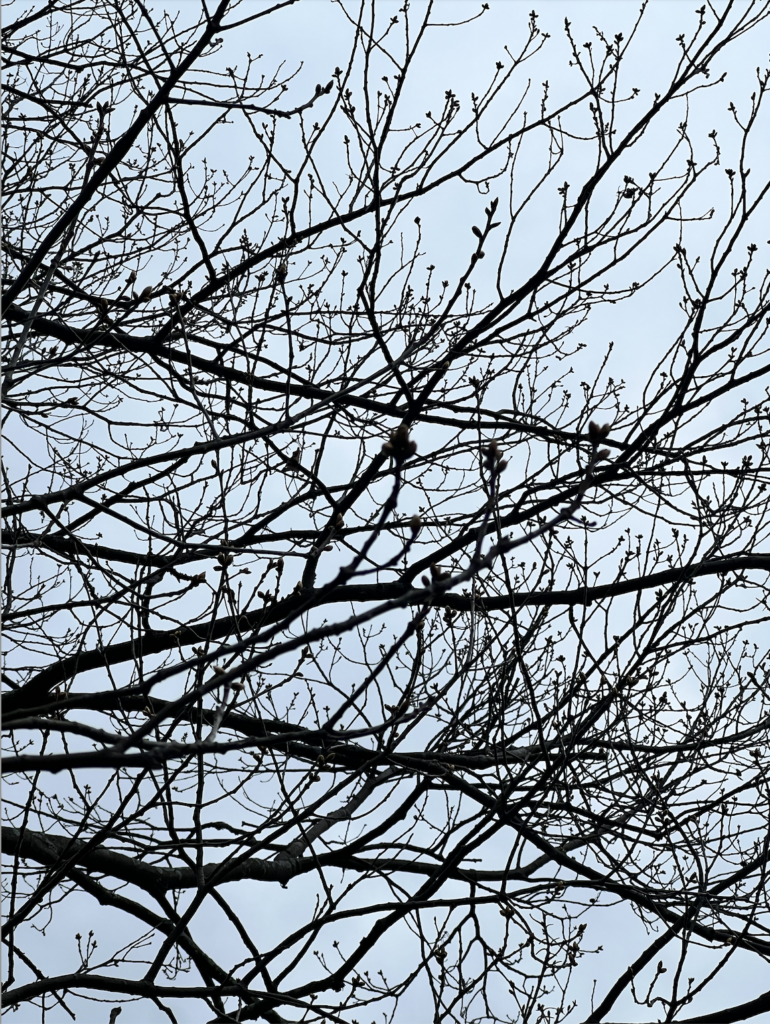
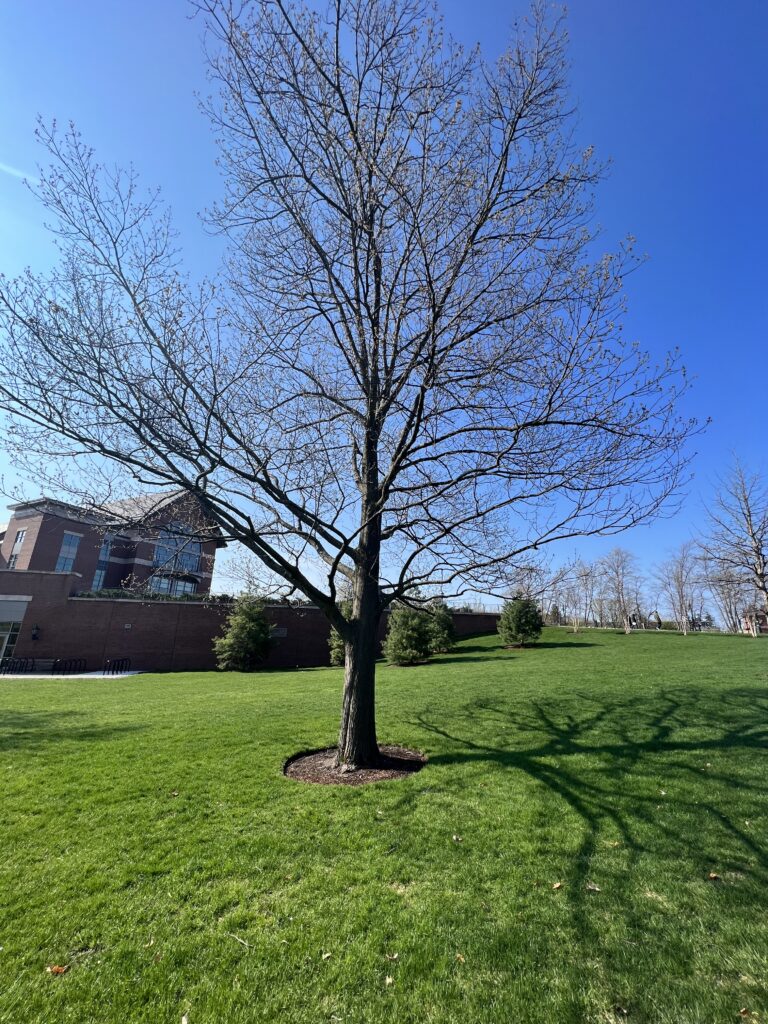
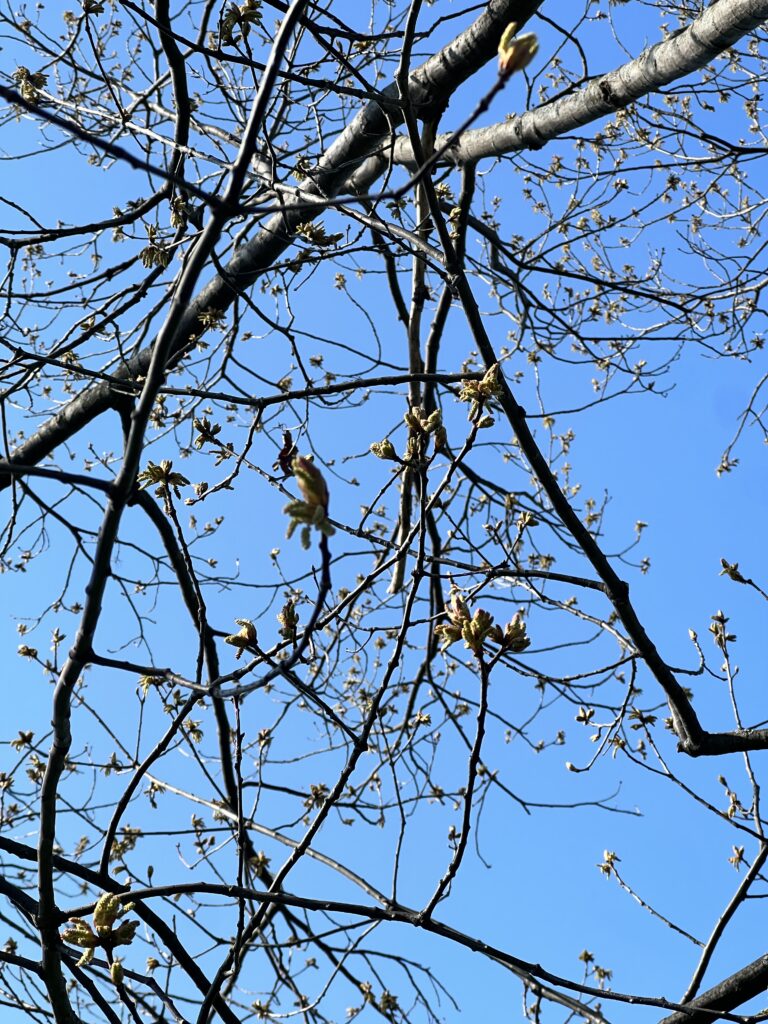
During this week’s visit, I noticed that the tree is experiencing a bud-break. The colors of the soon-to-be flowering can finally be visible: a bright, light green with vibrant red tones. From afar, the tree still does not have much color to it, but the budding flowers are visible up close. If you look closely at the buds in the photo, you can see the small, spiral-like shape of the budding flower that will soon grow in the length and then fall when the time comes. It will be exciting to continue visiting this tree until the end of the semester to see the end of its spring changes.

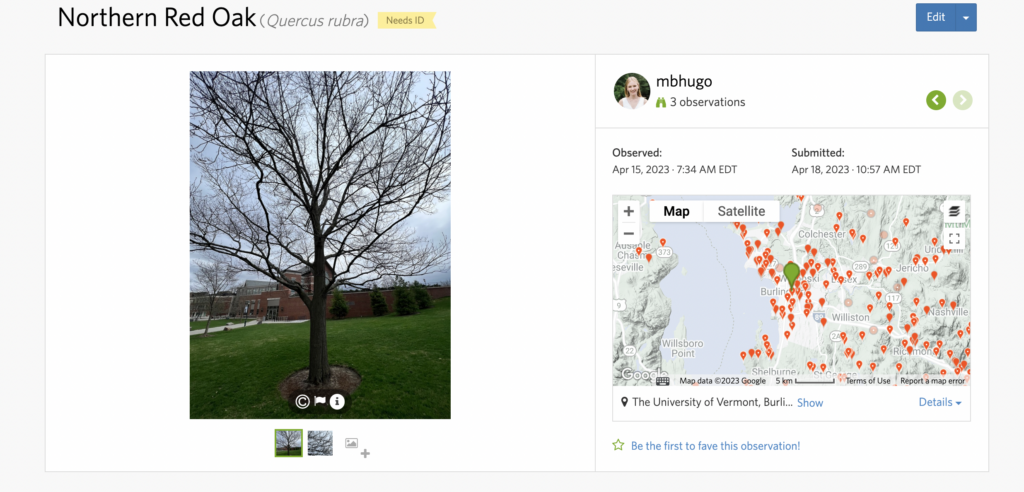
4/15 Northern Red Oak on Campus

During my second visit, I noticed that the northern red oak on the Davis green has started to bud out more than it had during my first visit. You can see the alternate budding along the twigs, and then the three slightly larger buds on the end of the twigs. I could not see much coloring on these twigs from where I was standing, but It appears to be slightly red.

It was also great to go out and revisit this tree earlier in the morning with no one on campus yet. There were quite a few robins surrounding the tree and other birds could be heard around, which is not usual during the day on campus.

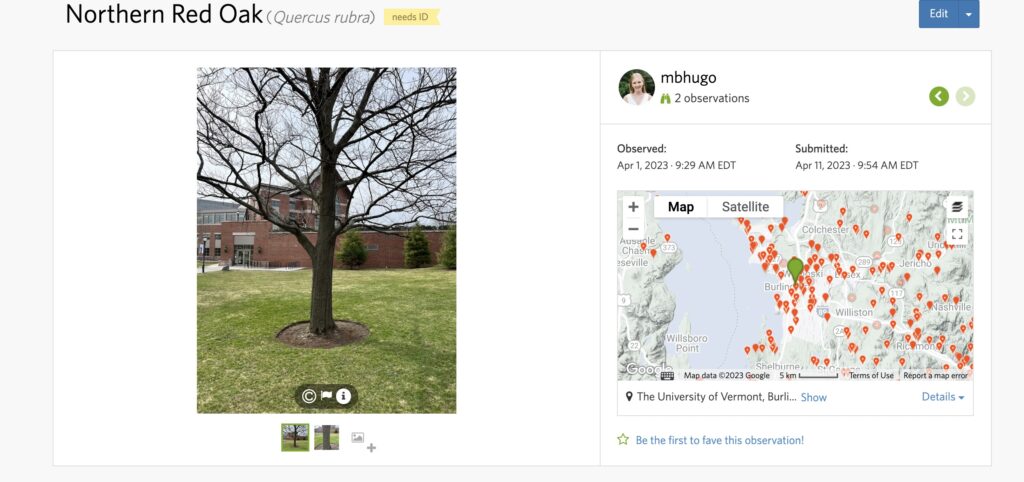
4/1 Northern Red Oak on Campus

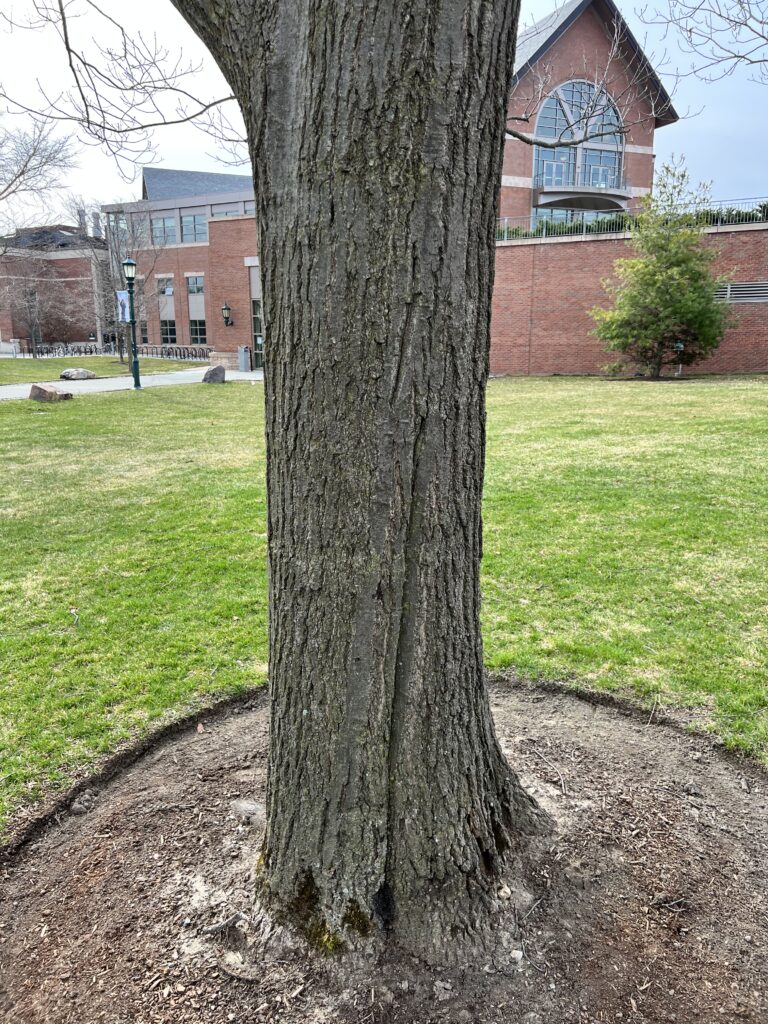
At the end of March, I walked through Centennial Woods trying to find a Northern Red Oak, Red Maple, Paper Birch, or and American Beech, but was having some trouble identifying any. I was able to identify this northern red oak when walking through campus instead by its bark and shape. Its bark has the scaly, rounded ridges of a northern red oak along with the brownish gray color. The tree also seems to have a bit of green within its bark, which I am assuming is a bit of moss.

2/10 Wildlife Signs in Centennial Woods

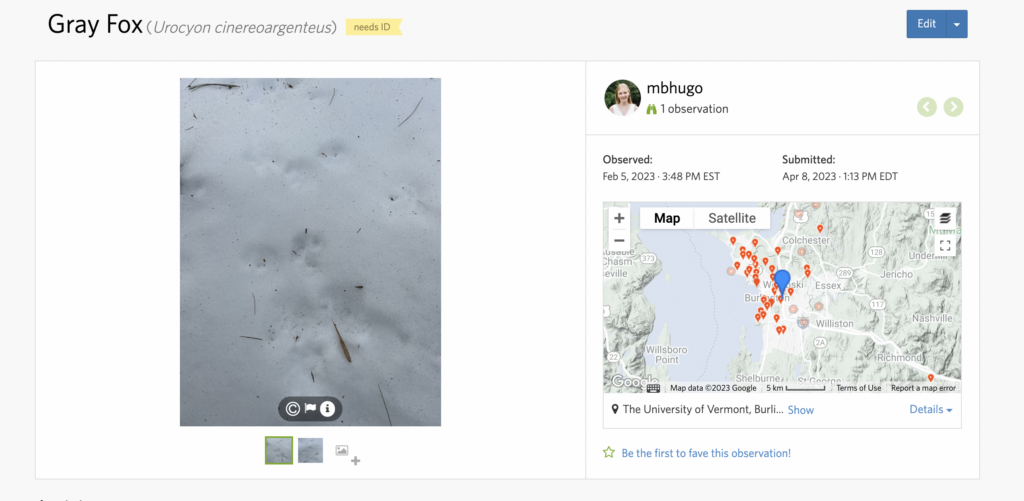
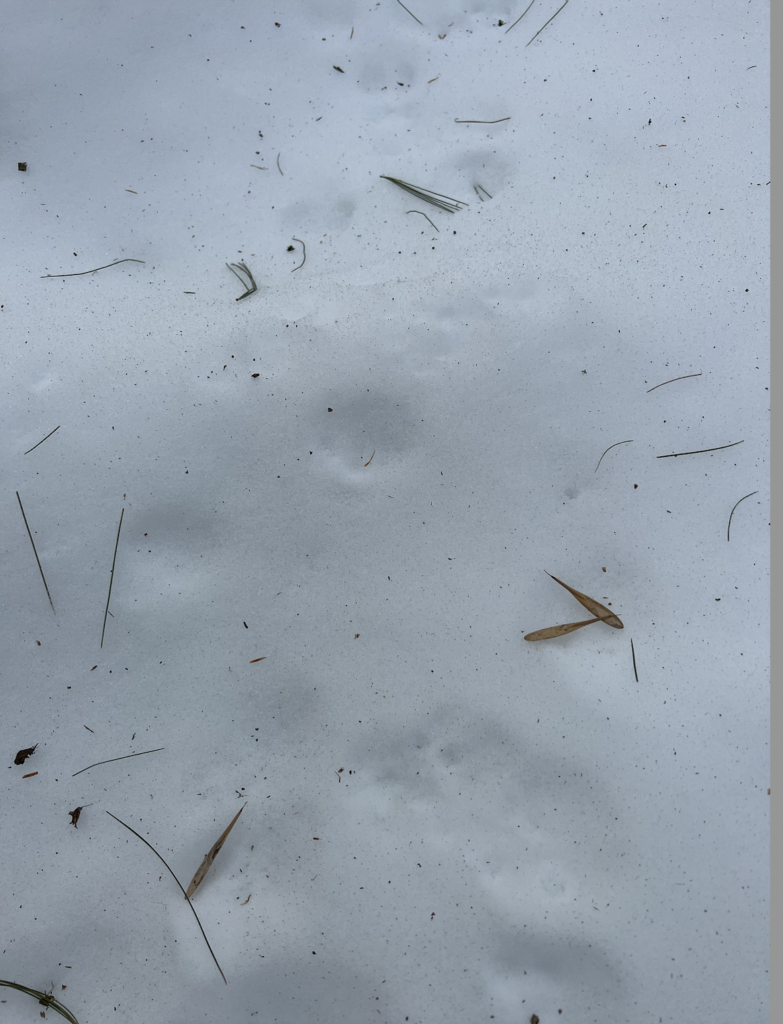
While observing new parts of Centennial Woods, I found these tracks deep into the natural area. It was incredibly tricky trying to identify these tracks, but I came to the conclusion that they could possibly be from a gray fox. What made it most difficult to identify the tracks was that there was no pattern to the tracks, leading me to think that the mammal they belong to was either hunting down on prey, possibly encountering another mammal, or simply enjoying the snow. At first I thought it was a mammal much smaller than a gray fox due to the paw pads being so small, but then did some research and saw that gray foxes also have such tiny paws. I was really thrown off by what appears to be only 3 toes in the tracks, which made my identification process more difficult. I concluded that it was possibly a gray fox when I took into consideration how icy the snow was when I had found the tracks and that these icy conditions could have lead to only 3 toes being visible in the tracks.

At first I thought these tracks belonged to a rabbit, but these tracks would have been much smaller, and would have had a pattern to them. I then thought about how it could have been a fisher, but there would a visible fourth toe to the track.

2/5 Centennial Brook

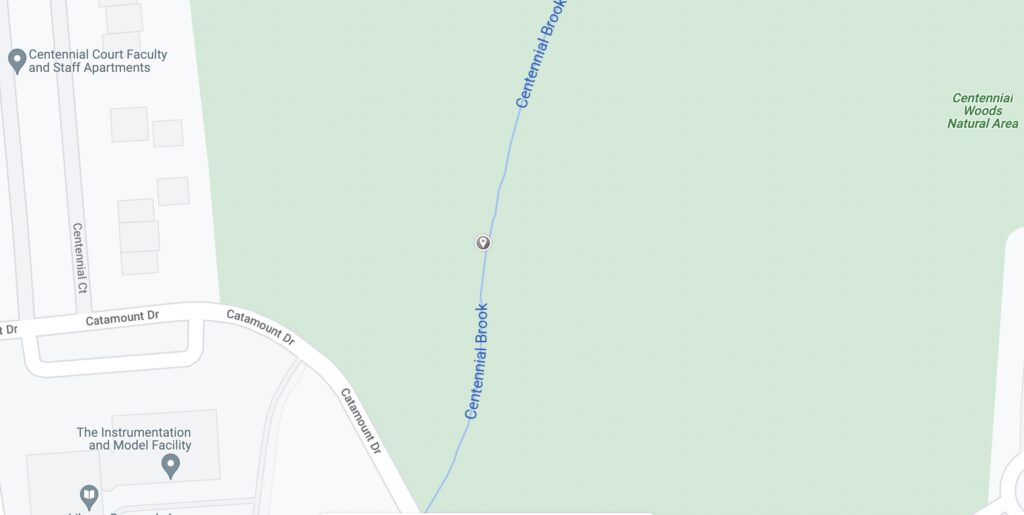
This semester, I’ve decided to start anew and discover another phenology spot. This new spot is located within Centennial Woods, and can be found by taking the beaten-down path off to the right of the “Caution Poison Ivy” sign. If you keep falling that path, you will eventually stop along the Centennial Brook, my phenology spot.

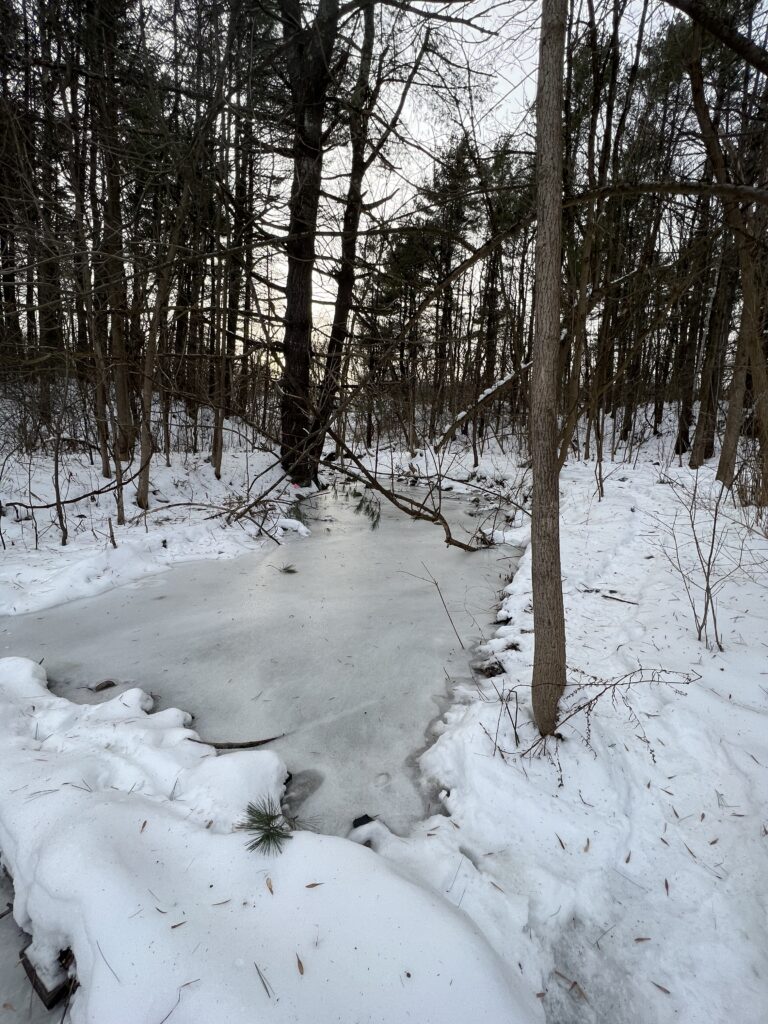
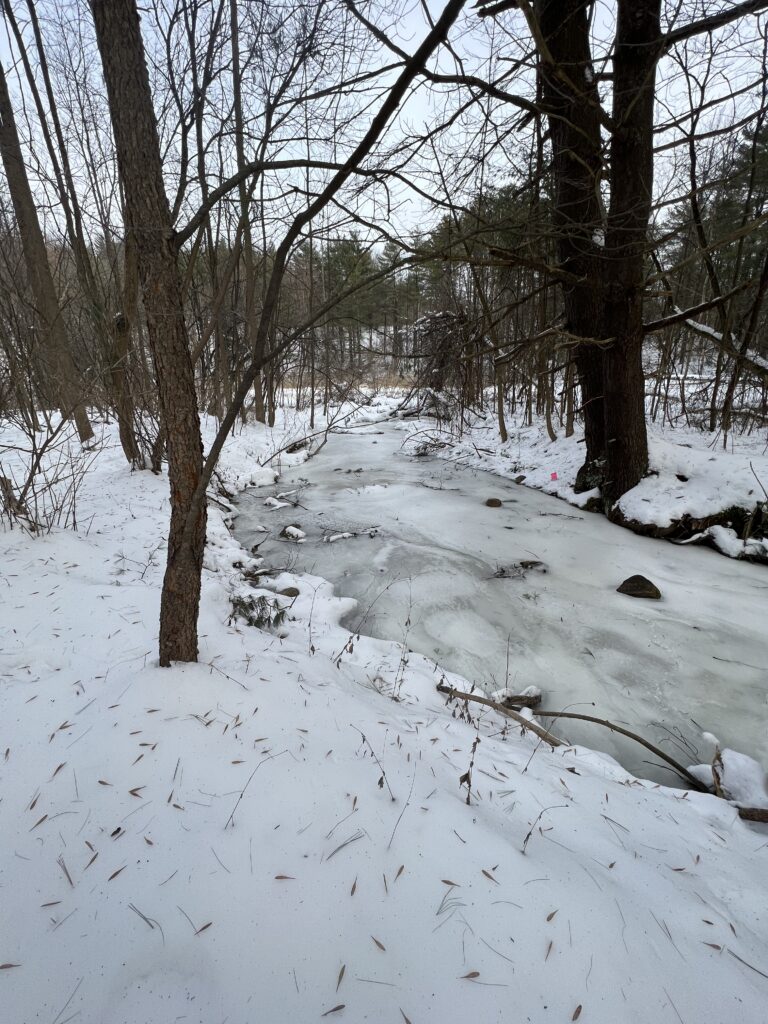
After the past few freezing days we’ve had, I was not shocked to see the brook frozen over. Although water still rushes underneath in some parts, I was able to carefully walk across the inch or two of ice on the surface. I realized in this location that one side of the brook primarily consists of deciduous trees, while the other primarily has coniferous trees. I assume that this is because of the terrain on either side of the brook – the one with deciduous trees being more flat and less rocky, and the coniferous side being more rocky and being at a steady inclined slope. Considering the time of year, I was unable to identify any of the shrubs/bushes nearby.

Skip to toolbar