Posts

Post #4: My Final Salmon Hole Post

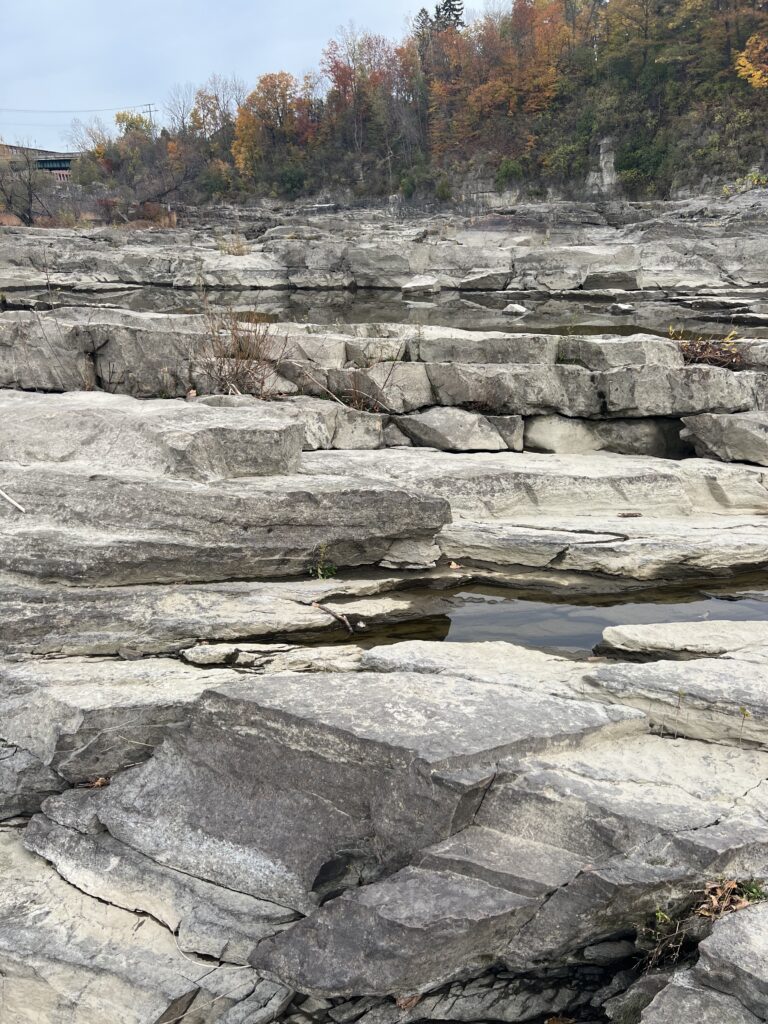
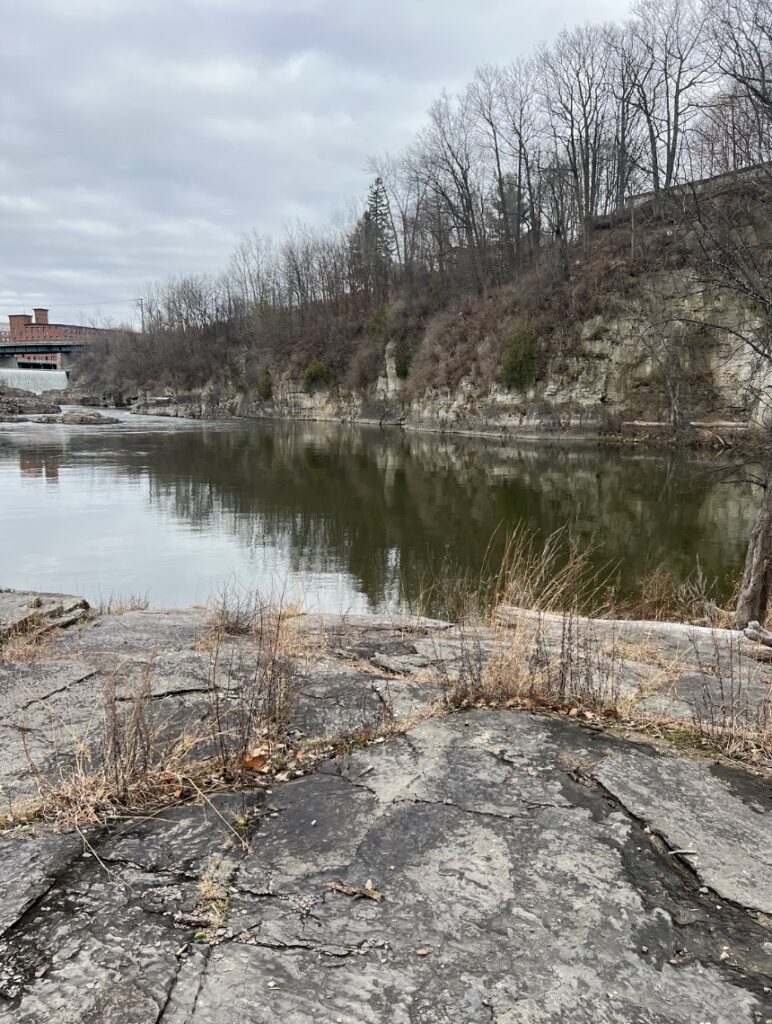
When visiting Salmon Hole this week, I noticed that not much has changed from my last visit. Majority of the trees are bare (with the only remaining leaves being dead), with the exception of a couple coniferous trees that grow from the shallow soil above the rocks or deep along the trails. There is also little to no sign of any vegetation in the understory, with there only being occasional ferns and dying shrubs among the maze of fallen tree branches and sticks. There is an abundance of moss that can be found when walking on the rocks near the water. There appears to be two different types of moss on the rocks, a yellow/brown colored moss that feels much less soft than the brighter green moss that grows around the other.
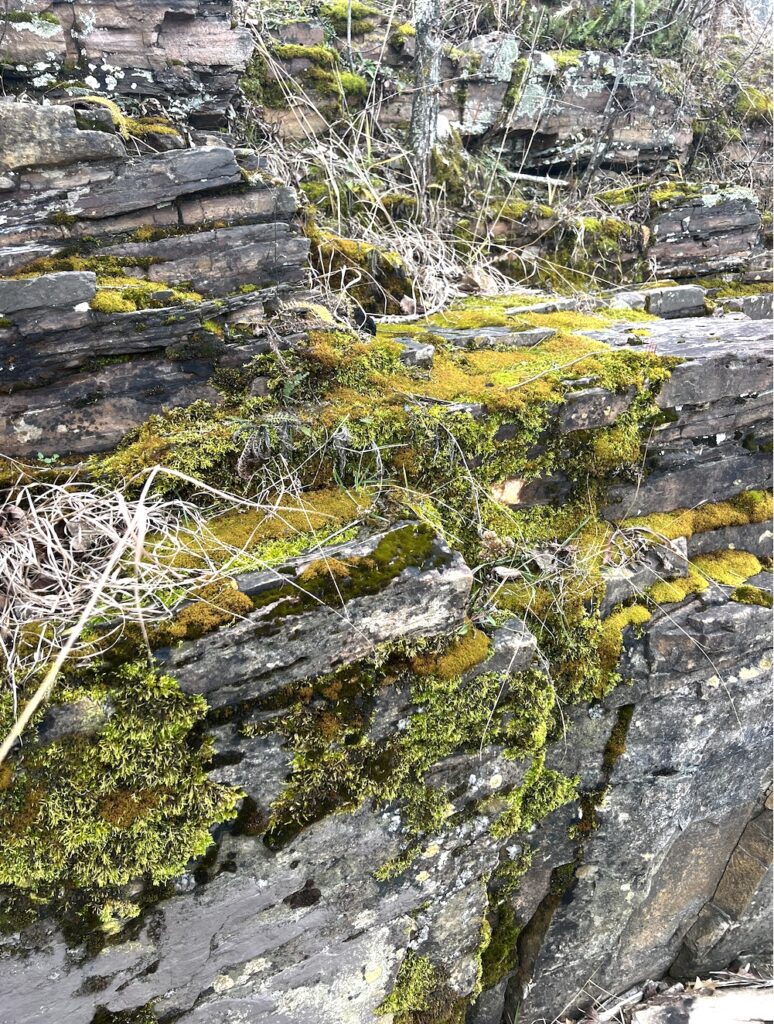
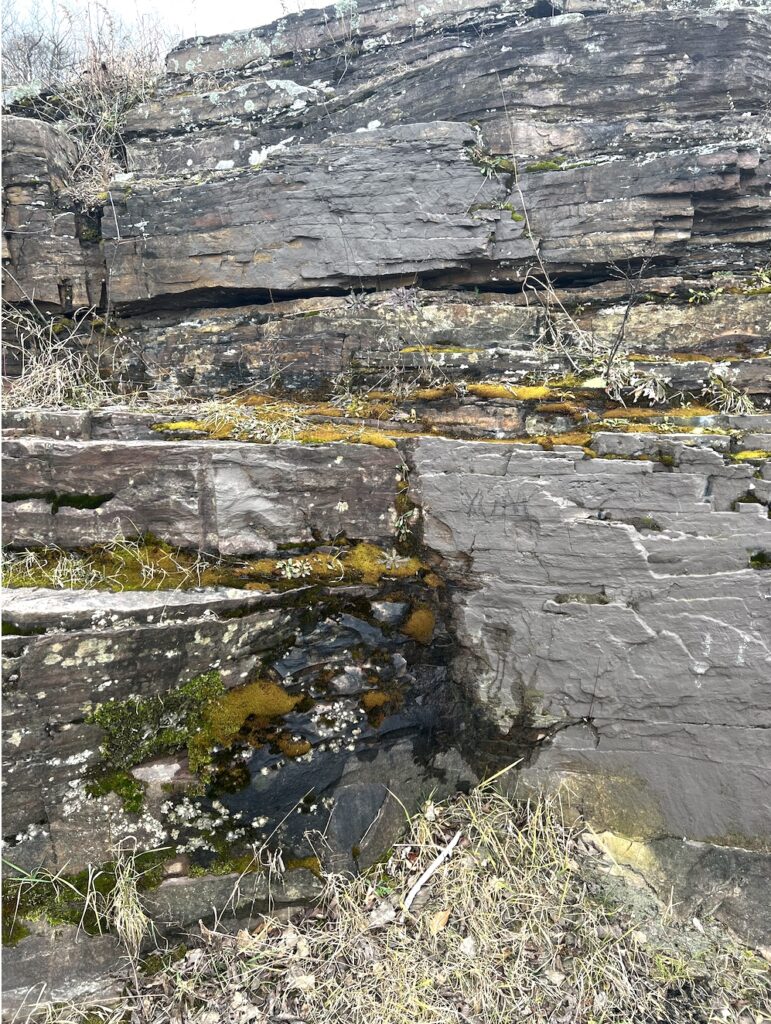
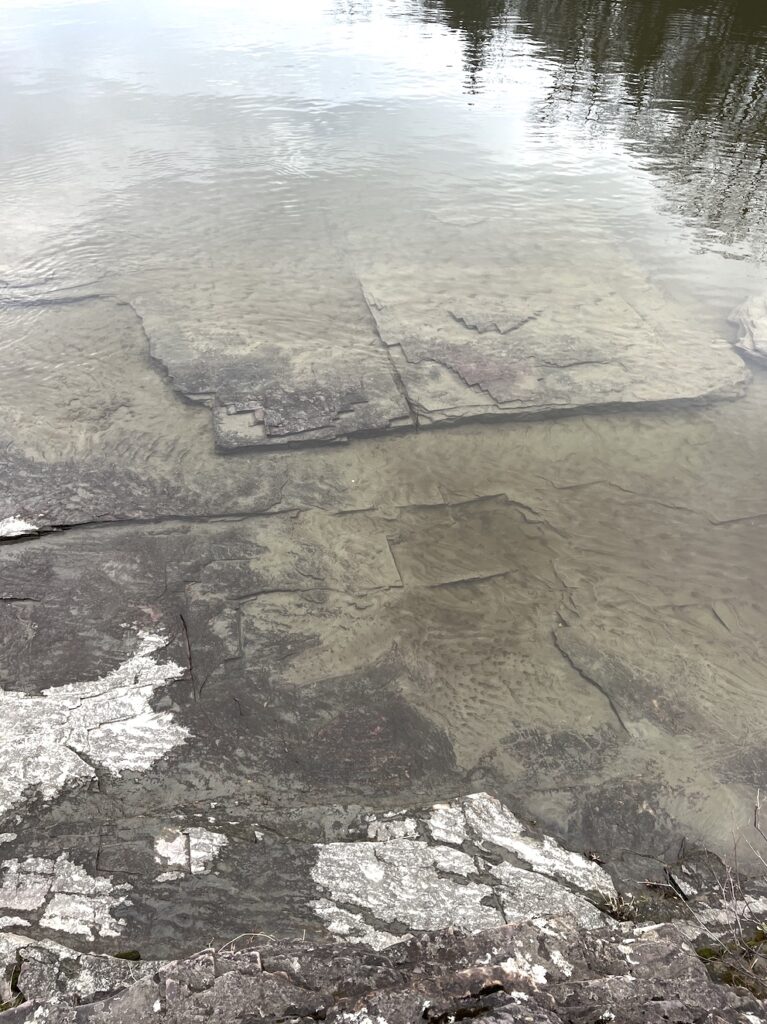
In contrast to my first visit, there were no signs of wildlife or wildlife tracks. When I first visited this area, there were animal tracks in the sand under the shallow water and I the mud along the rocks. I was able to identify some heron and raccoon tracks, and even saw a few small fish back in October, but with the colder temperatures, no animals or fish were in sight.
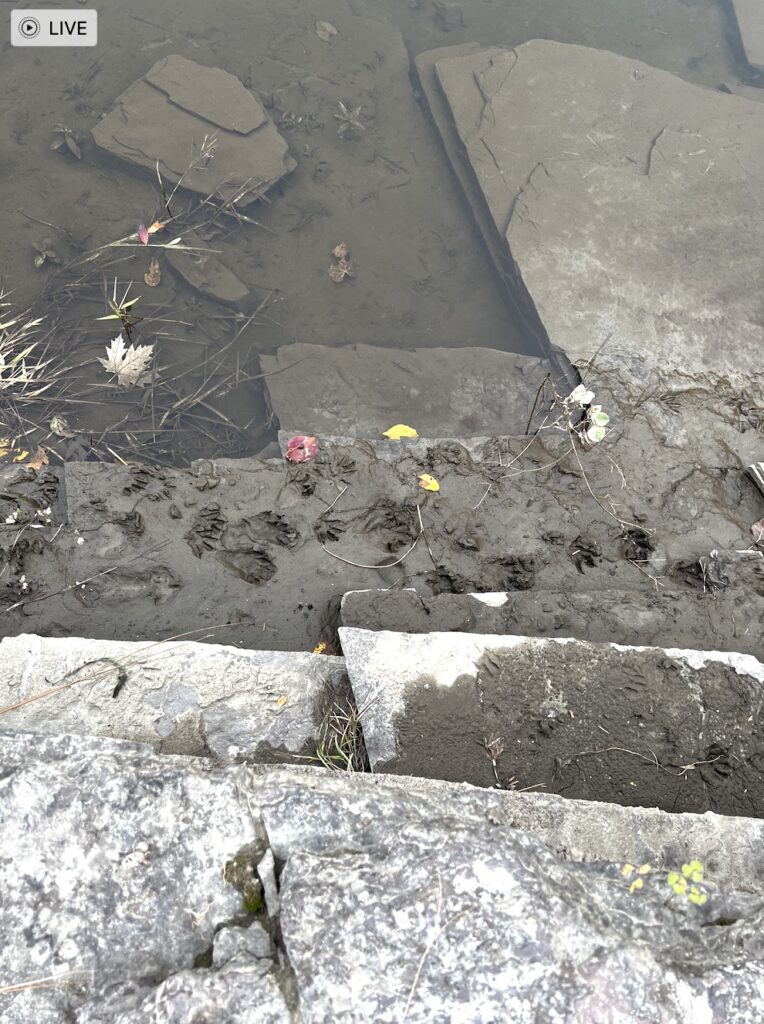
Animal tracks from my October post
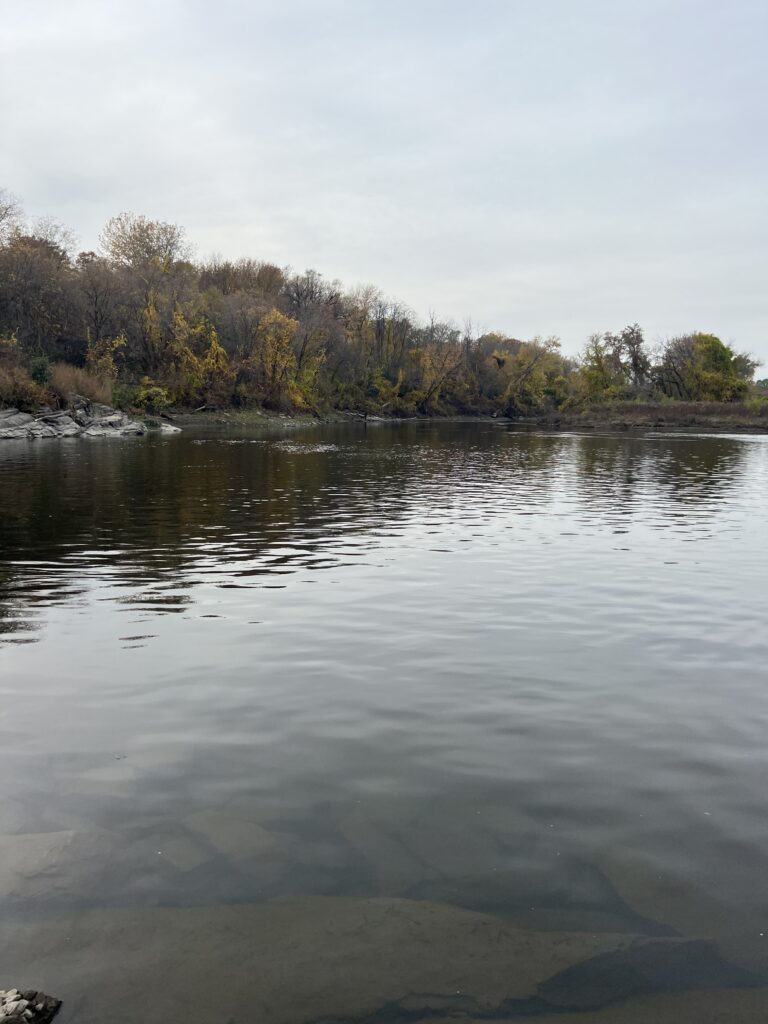
Same location of October tracks photo now

I also noticed on my visit this week that Salmon Hole is listed under the Burlington Wildways as a “wild place”, and if you go to the Burlington Wildways website, you can view a layout of the Salmon Hole trails. It is also protected by the Winooski Valley Park District (WVPD) which opens its parks to the public while also protecting and conserving the area.
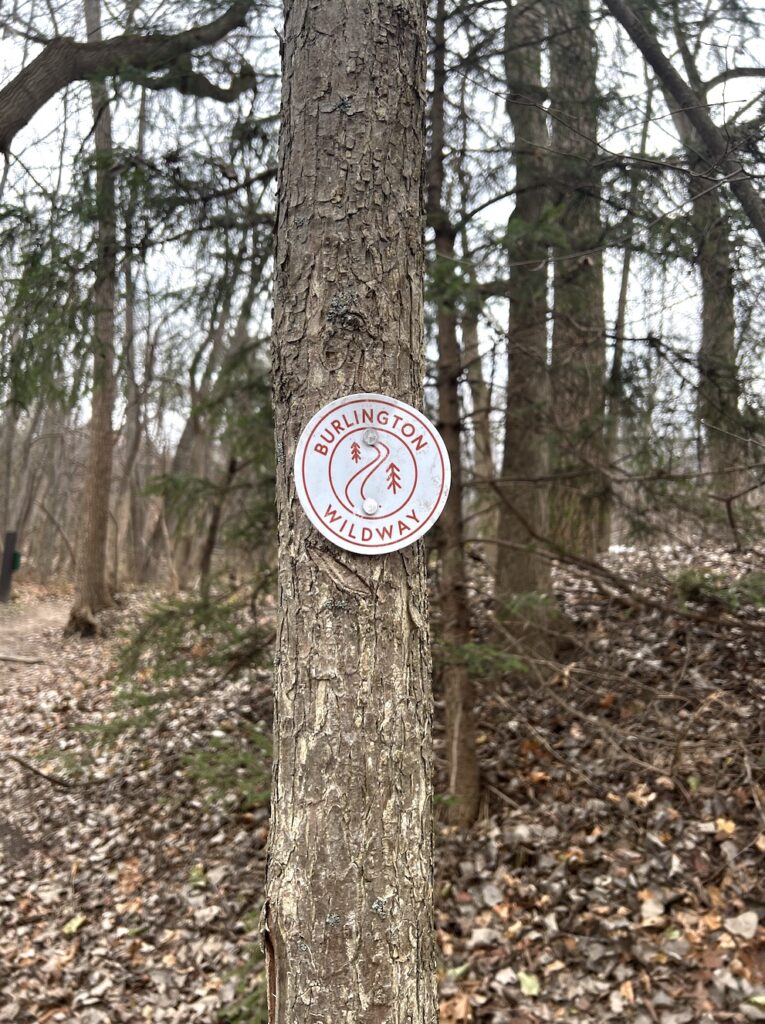
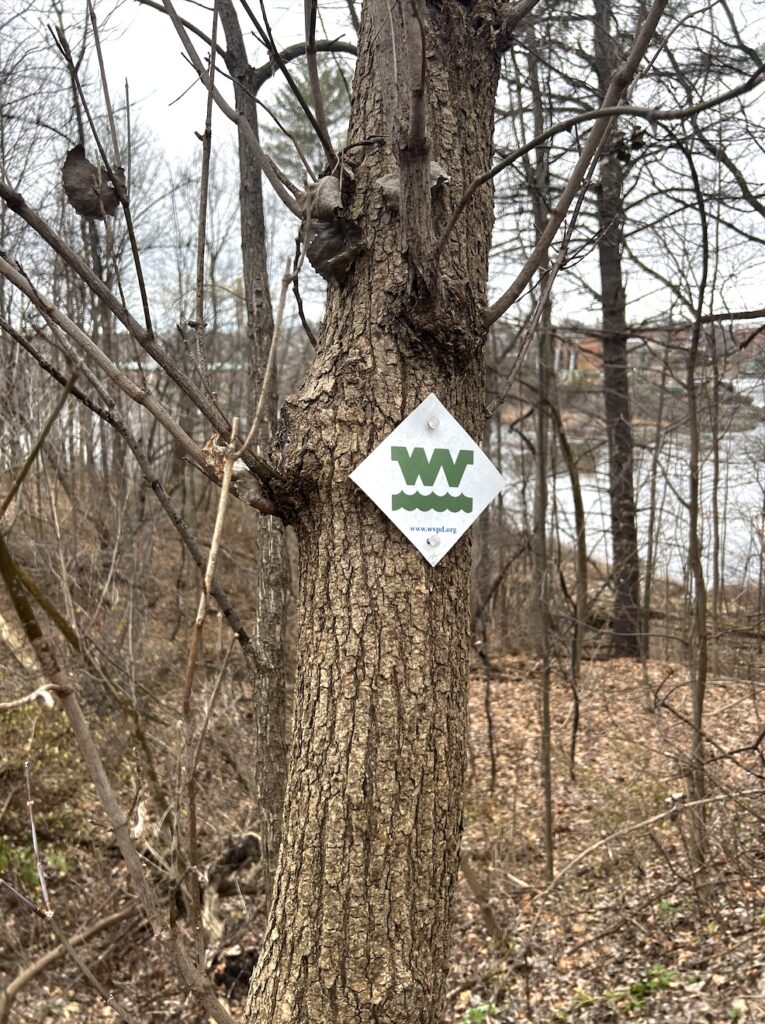
After many visits to Salmon Hole, I’ve come to enjoy certain aspects to the area, like the waterfall, the rocky area right before the water, and the beach-like peninsula. These aspects are what I believe make Salmon Hole so unique and peaceful. For anyone looking to go for a hike, go fishing, or just need to see some nice scenery, I highly recommend checking out Salmon Hole.
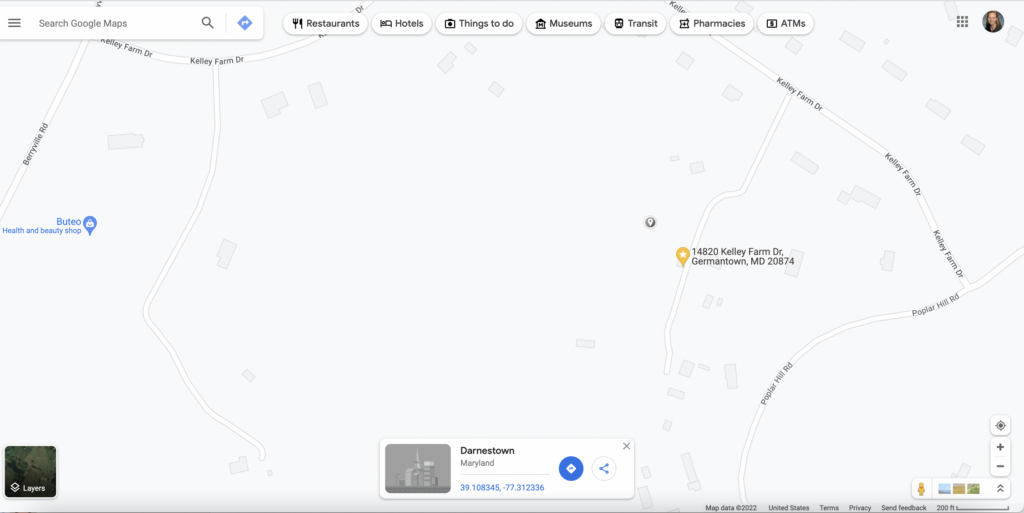
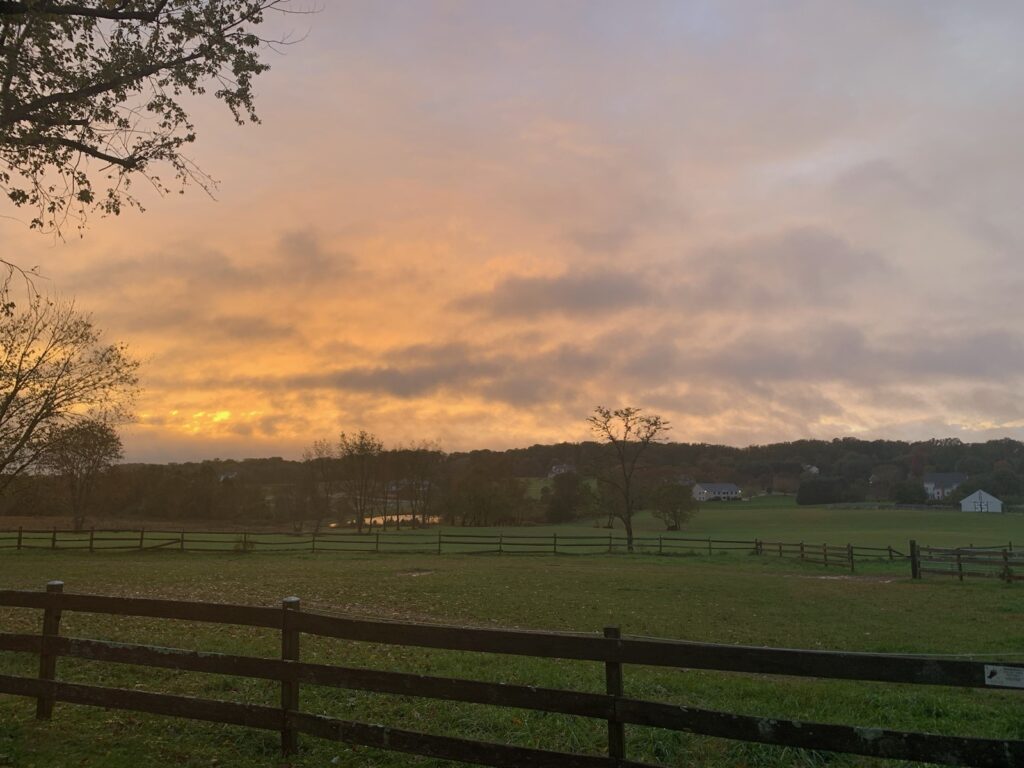
Post #3: My Phenology Site in Darnestown, MD

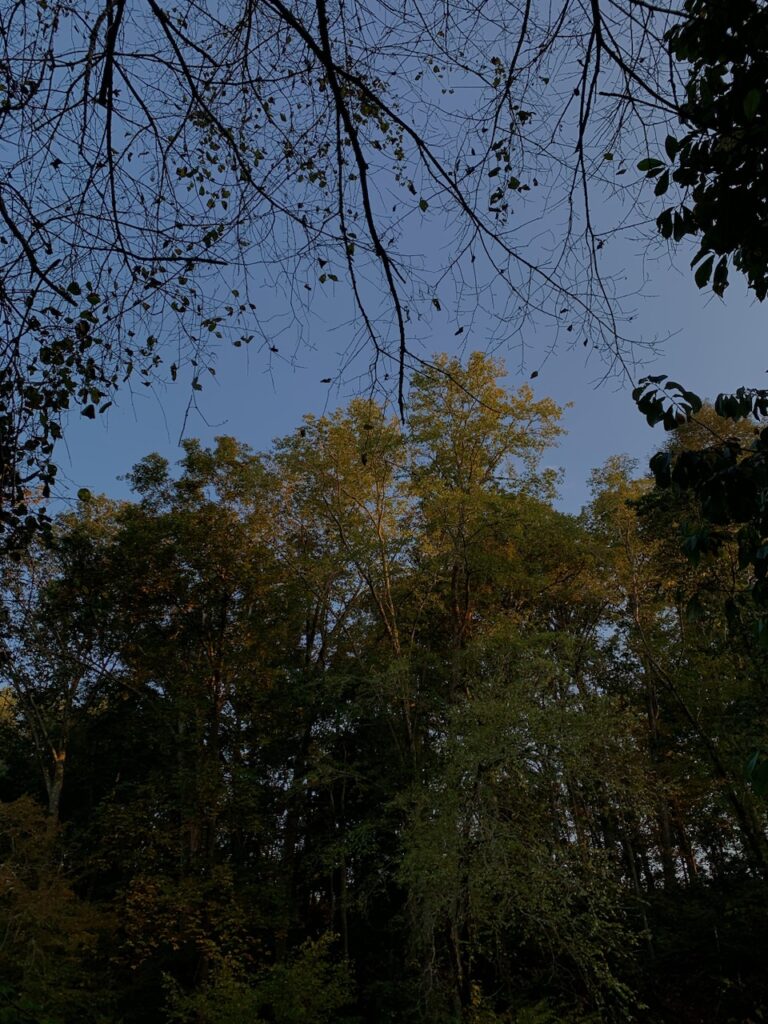
Over break, I chose a heavily wooded area behind my house as my phenology spot. I frequently hike in this area on trails made by my neighbors, but besides the trials, the rest of the area is mostly untouched and respected by people. I encountered many deer and a couple foxes on my hike in the area over break. The area consisted of mostly young birches and extremely tall, mature hardwoods, and little to no evergreens in sight. What’s also interesting about this area is that it is surrounded by farms with chickens, horses, sheep, and ducks, which I’ve noticed throughout the years leads to this wooded area being home to many farm animal predators. Unfortunately, I’ve come across the remains of farm animals from time to time, and I always hear coyotes and foxes coming from these woods during the nights.

Unlike the vegetation in Vermont, I noticed that the vegetation in this location tends to be more green for longer due to the slightly higher temperatures Maryland experiences during the days in the fall/winter. I saw more wildlife in this location than at Salmon Hole, which was interesting because I would have expected otherwise.

Post #2: 15 Minutes in Salmon Hole

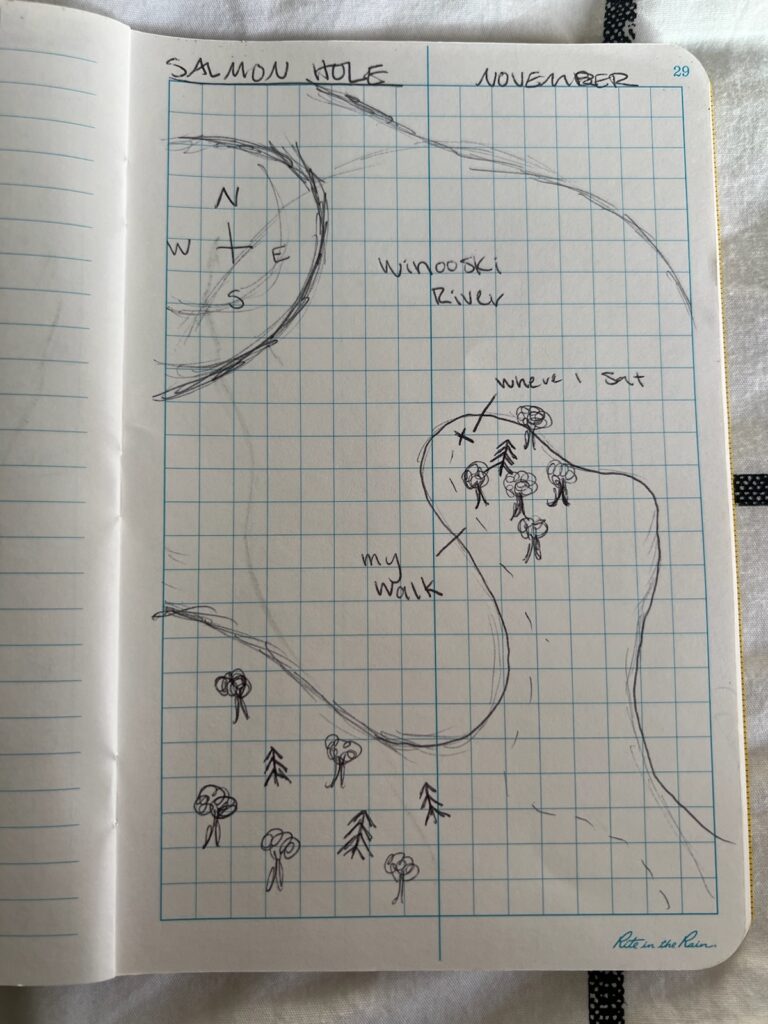
Today I sat down and spent 15 minutes at Salmon Hole observing the area. It was somewhat peaceful, but the area tends to always have people hiking, fishing, or just observing which causes some commotion, especially with being along the side of Riverside Avenue. After awhile, the sound of the water eventually drowned out any other sounds and all there was was the rush from the waterfall and the occasional passing of birds overhead. I didn’t get to see much wildlife due to the amount of people present at Salmon Hole today, and the temperature was too cold to try to see any fish passing through. In comparison to my last visit to Salmon Hole, the area appeared to be completed vacated of wildlife because of the absence of any animal tracks. In October, I was able to spot heron, raccoon, deer, and other animal tracks. In terms of changes in vegetation to my site, I noticed that the trees are now all completely bare, except for the evergreens, and the only vegetation making up the undergrowth of the area are bare shrubs, ferns, and occasional moss on the rocks near the water. I hope to see more wildlife and vegetation once again in the spring once the weather finally starts to get better. Here’s a birds-eye map that I drew during these 15 minutes:

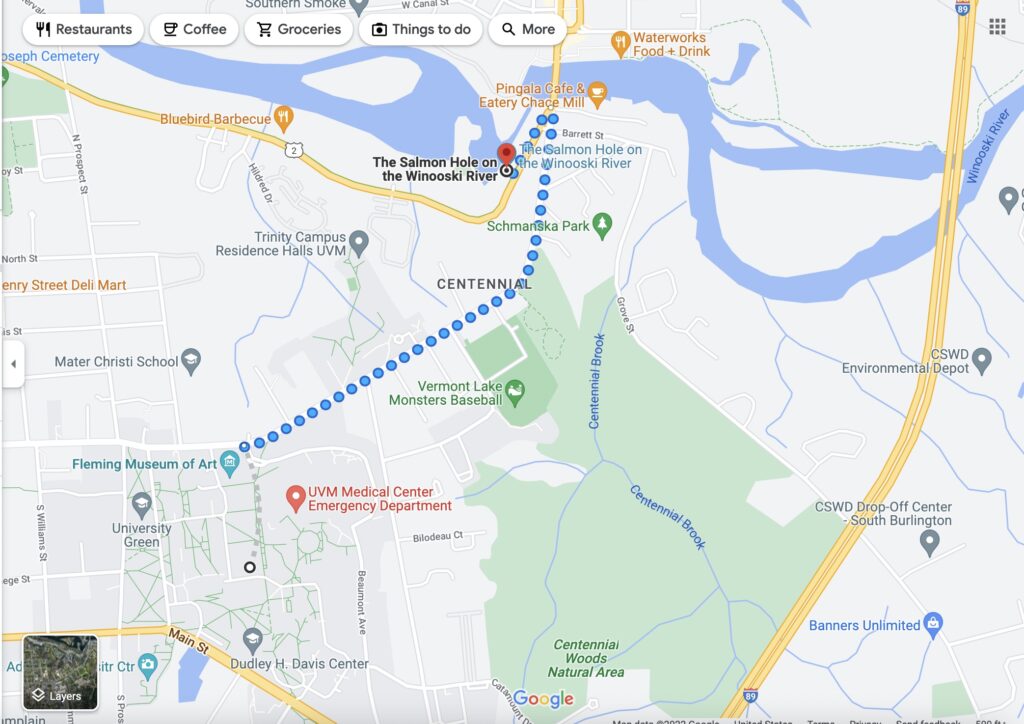
The Salmon Hole on The Winooski River

Welcome to UVM Blogs. This is your first post. Edit or delete it, then start blogging!

Mia Hugo

Post #1: Introduction to Salmon Hole

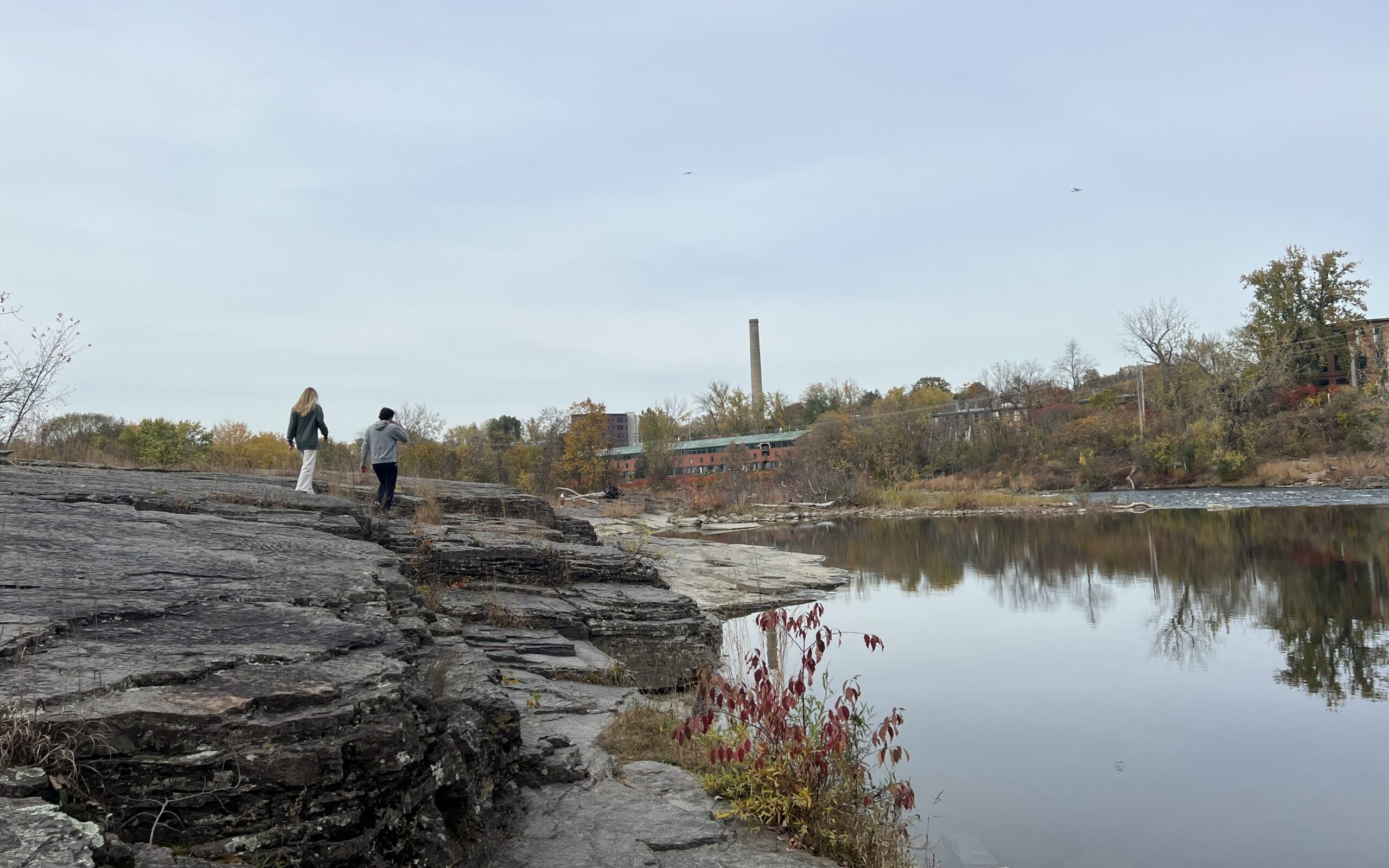
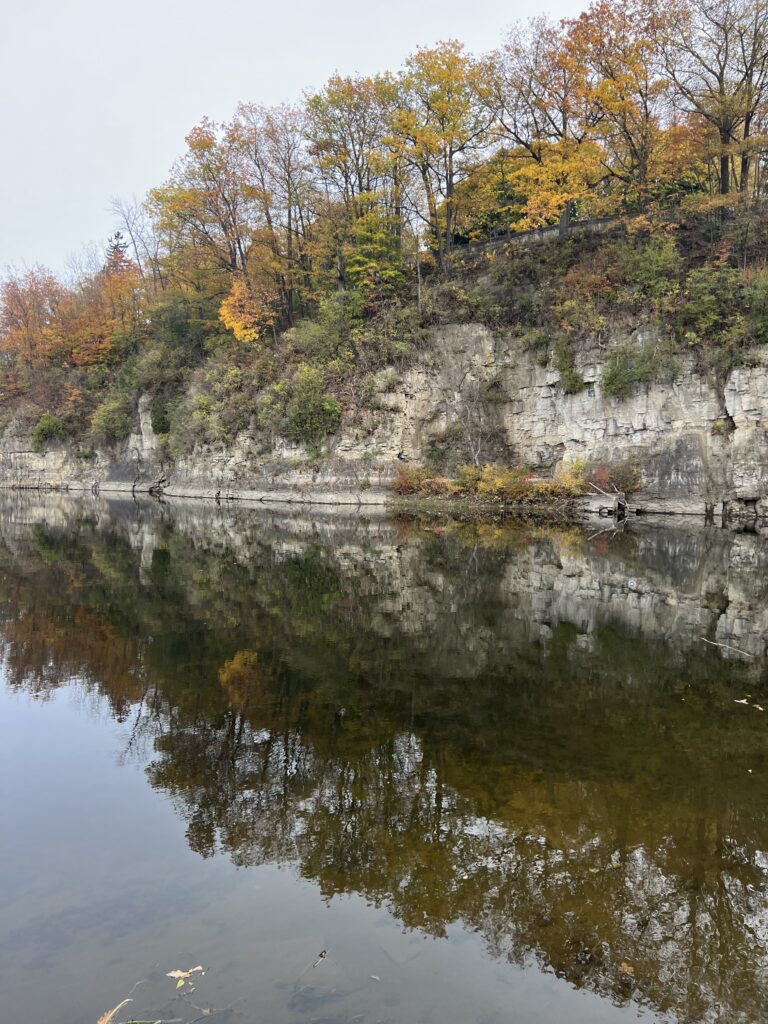
I chose Salmon Hole for my site which is located right off of Riverside Avenue in the Winooski River. What interested me most about this location was how it is affected by being within a close proximity to a fairly busy area. After visiting this site, I noticed that as a result of its location it appears to be slightly polluted and can be quite busy at times. The location is about a 20 minute walk from central campus, and you can get down to the water by following the trail heads. Down by the water, the area is quite rocky with occasional sandy spots and no trees except on the small peninsula shaped area. The trees up above on the cliff are primarily deciduous with few coniferous species, and small shrubs grow from some of the rocks along the cliff.

Skip to toolbar