Wonder Blog Post #4 Mini Project

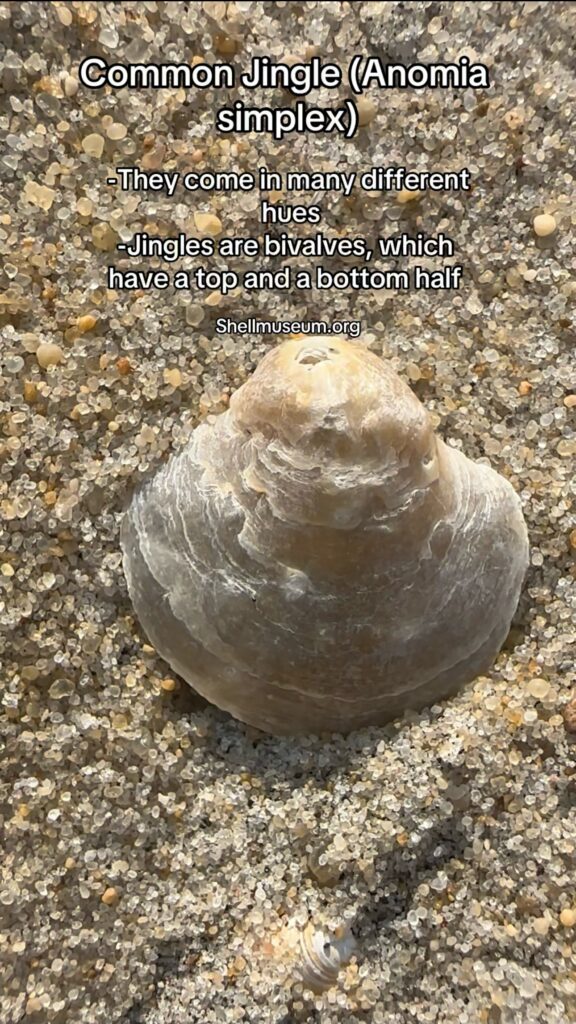
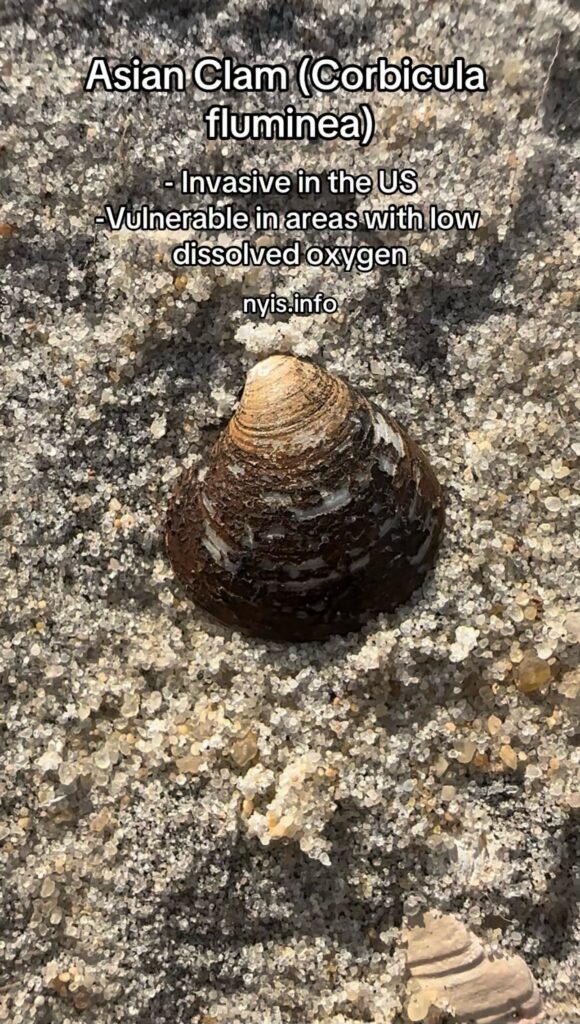
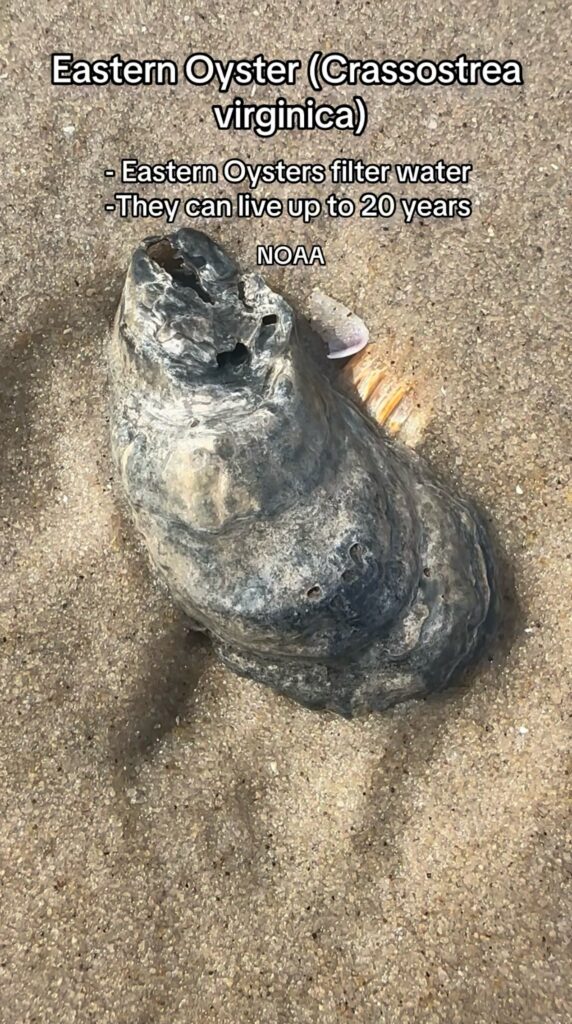
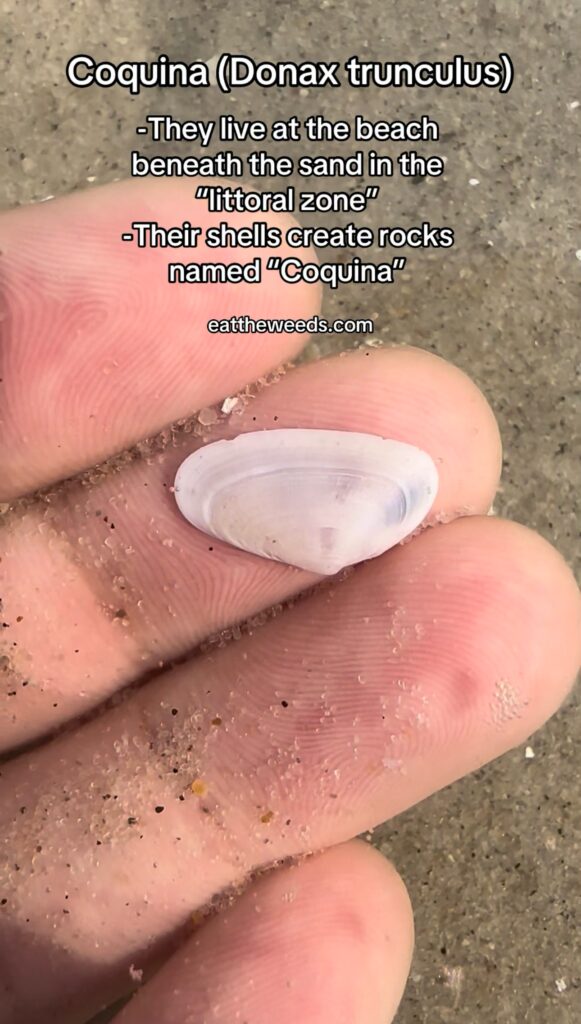
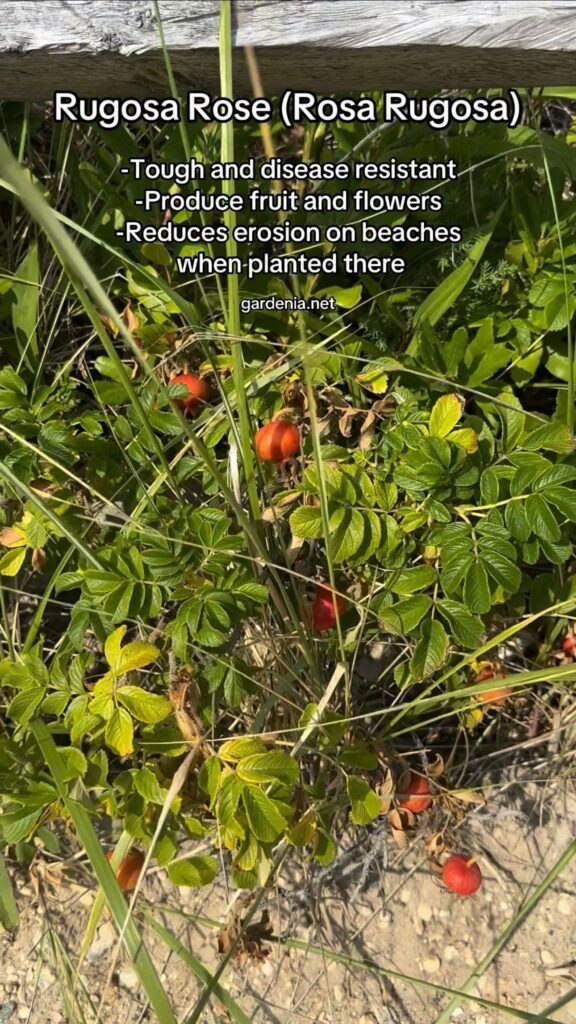
Disclaimer: My project was a video over 60 MB so it could not upload to this site, it is uploaded on Brightspace under. the Wonder Blog #4 tab. Here are all of the species from my video.

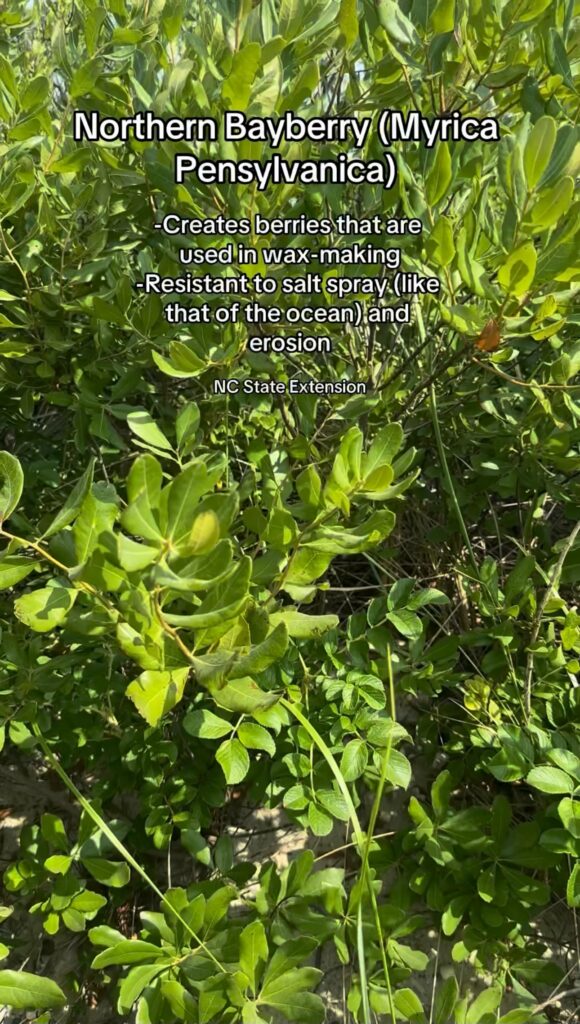
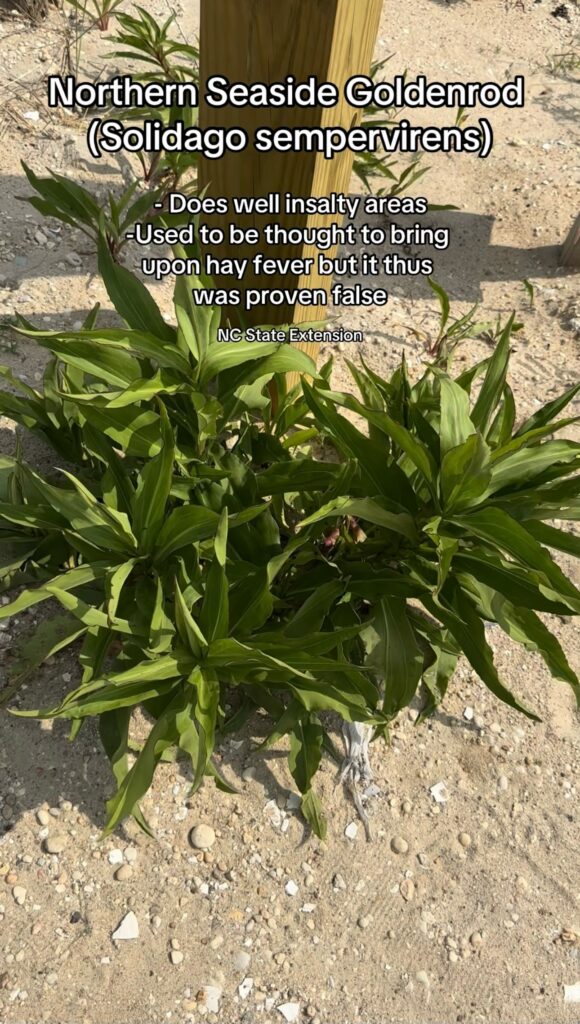
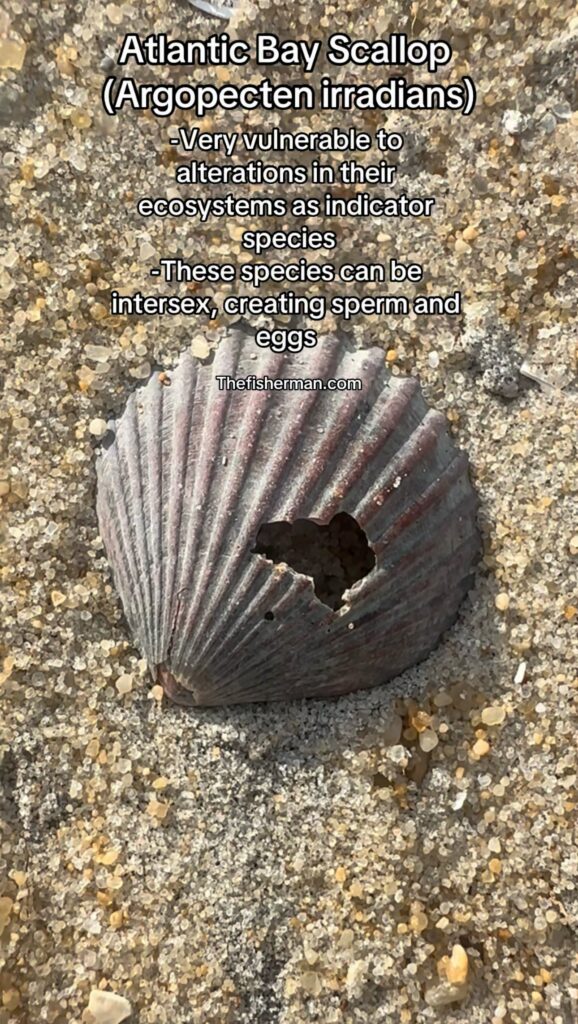
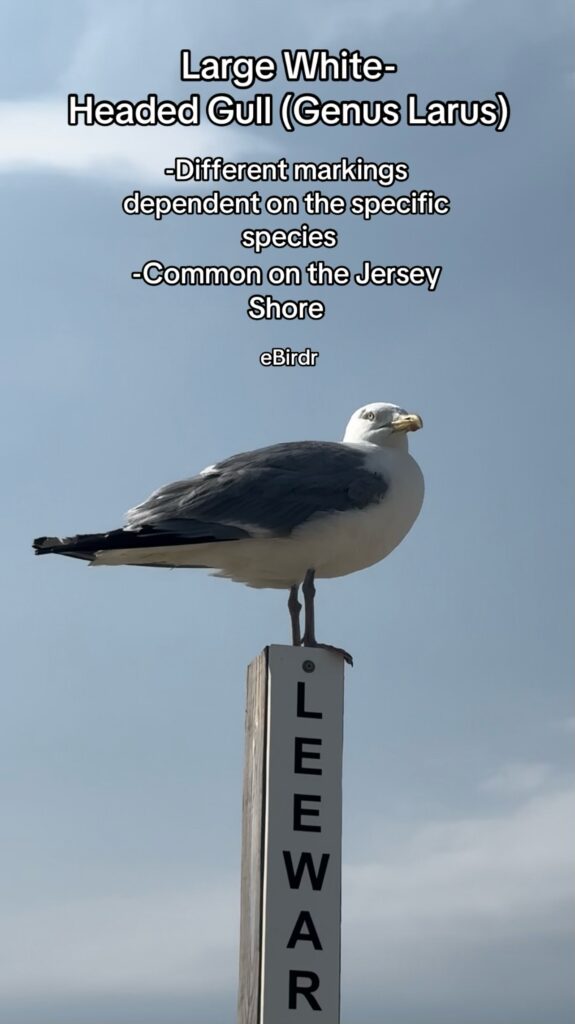
For my fourth and final Wonder Blog project, I chose to create a video to educate viewers about the variety of species that inhabit LBI’s beaches, specifically at my site, Beach Haven’s Leeward St. Beach. I chose ten species which I identified with the Seek app (for precision) to showcase in my video, including Rugosa Rose, Northern Bayberry, American Marram Grass, Atlantic Bay Scallop, Common Jingle, Large White-Headed Gull, Asian Clam, Eastern Oyster, and Coquina. For each of these species, I did a bit of background research and implemented a couple bullet points to give viewers some general information about the species. This project connects to my site because the purpose of my video was to show the diversity and beauty of my home’s beach ecosystem. Making this video and creating my Wonder Blog posts in general allowed me to slow down and look at the beaches individual species, helping me to see plants on the dunes that I never even noticed before or knew the names of prior. This project expanded by comfort zone as well, because I have always been super interested in videography and combining this passion with a science element was definitely something new to me, as I have never done an informative video like this before. The process was definitely different than making a video strictly for fun and creative purposes, as I made sure to be much more meticulous with the information I used. However, I enjoyed the challenge, and I really like my end result. 


References

Ammophila breviligulata (American beachgrass) | Native Plants of North America. (2022, November 9). Lady Bird Johnson Wildflower Center. Retrieved July 8, 2024, from https://www.wildflower.org/plants/result.php?id_plant=ambr 

Asian Clam – New York Invasive Species Information. (n.d.). New York Invasive Species Information. Retrieved July 8, 2024, from https://nyis.info/invasive_species/asian-clam/ 

Deane, G. (n.d.). Coquina: Tasty Tiny Clam – Eat The Weeds and other things, too. Eat the Weeds. Retrieved July 8, 2024, from https://www.eattheweeds.com/coquina-tasty-tiny-clam/ 

Eastern Oyster | NOAA Fisheries. (n.d.). NOAA Fisheries. Retrieved July 8, 2024, from https://www.fisheries.noaa.gov/species/eastern-oyster 

Genus: Larus. (n.d.). eBirdr. Retrieved July 8, 2024, from https://ebirdr.com/tree/genus/larus 

Go Fret. Landslide Instrumental. Accessed July 7, 2024.

Leal, J. H. (2014, May 23). The Common Jingle. Bailey-Matthews National Shell Museum. Retrieved July 8, 2024, from https://www.shellmuseum.org/post/2014/05/23/the-common-jingle 

Michelson, B. (2023, May 15). Species Profile: Atlantic Bay Scallops. The Fisherman. Retrieved July 8, 2024, from https://www.thefisherman.com/article/species-profile-atlantic-bay-scallops/ 

Rosa rugosa (Rugosa Rose). (n.d.). Gardenia.net. Retrieved July 8, 2024, from https://www.gardenia.net/plant/rosa-rugosa-rugosa-rose 

Solidago sempervirens (Goldenrod, Northern Seaside Goldenrod, Seaside Goldenrod) | North Carolina Extension Gardener Plant Toolbox. (n.d.). North Carolina Extension Gardener Plant Toolbox. Retrieved July 8, 2024, from https://plants.ces.ncsu.edu/plants/solidago-sempervirens/ 

Myrica pensylvanica (Bayberry, Candleberry, Northern Bayberry, Swamp Candleberry) | North Carolina Extension Gardener Plant Toolbox. North Carolina Extension Gardener Plant Toolbox. Retrieved July 8, 2024, from https://plants.ces.ncsu.edu/plants/myrica-pensylvanica/ too

Wonder Blog #3 Beach Haven, NJ: Leeward Beach

Part 1: Monday, July 1st, 6:37pm. The weather is 75 degrees Fahrenheit currently and very breezy by the ocean. 

Part 2: It is my first time exploring this area for my Wonder Blog. This beach is right by my house, so it is somewhere that I spend a lot of time, but not somewhere that I have really studied in great detail ecologically before. I notice at this time there are very few people on the beach. There also does not appear to be as many shells in the shallow ocean water as there are when I go earlier in the day, and I wonder why that is. I notice certain species that are dried up in the sand, such as green and red seaweed, and skate eggs. There also appears to be many human footprints in the sand, as well as drawings in it, which I found super wholesome. I did notice an older man fishing by the end of the water, which was confusing to me, because is there really much to catch that shallow in the water? Another thing I noticed was the amount of seabirds on the beach. I like seeing all of the different colored birds.

Part 3: As I walk up the dunes onto the beach, I realize there are many clumps of tall grass-like plants. These plants are rich on the dunes, and may be used to protect the dunes from the ocean in event of possible flooding. This species looked purposefully planted there, and was interspersed with some kind of tall grass. I look and wonder, are these plants native to the area? How do they survive here during high tide without being washed away? Why are there so many of them here? I used the Seek app to identify them and found out they were Northern Seaside Goldenrod. I learned from Coastal Point that this plant has a coating that protects it from saltwater, which helps it to thrive in a beach ecosystem (Nalle, 2020). The article also states that they help hold down the sand, protecting the dune from eroding away. So it turns out this plant is actually super beneficial to the area where it resides. 

Part 4: Five Photos

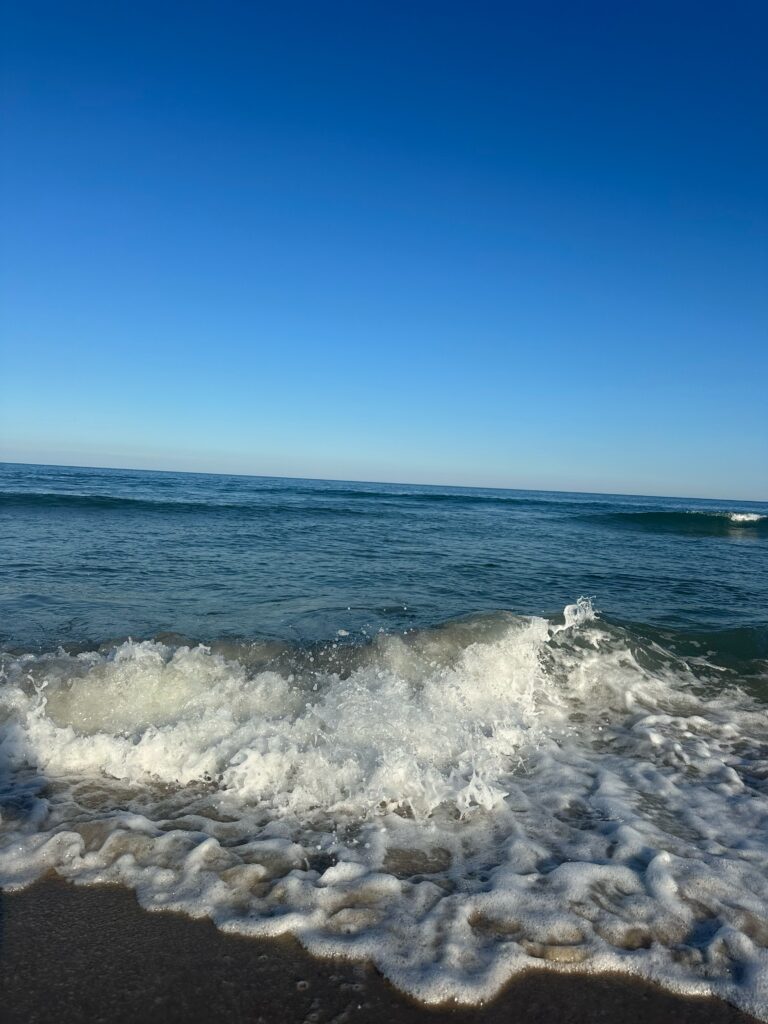
This is a picture of a wave crashing on the shore, which I chose because it shows how calm the ocean is in the background, but also its vibrancy and wild motion while it crashes onto the sand.

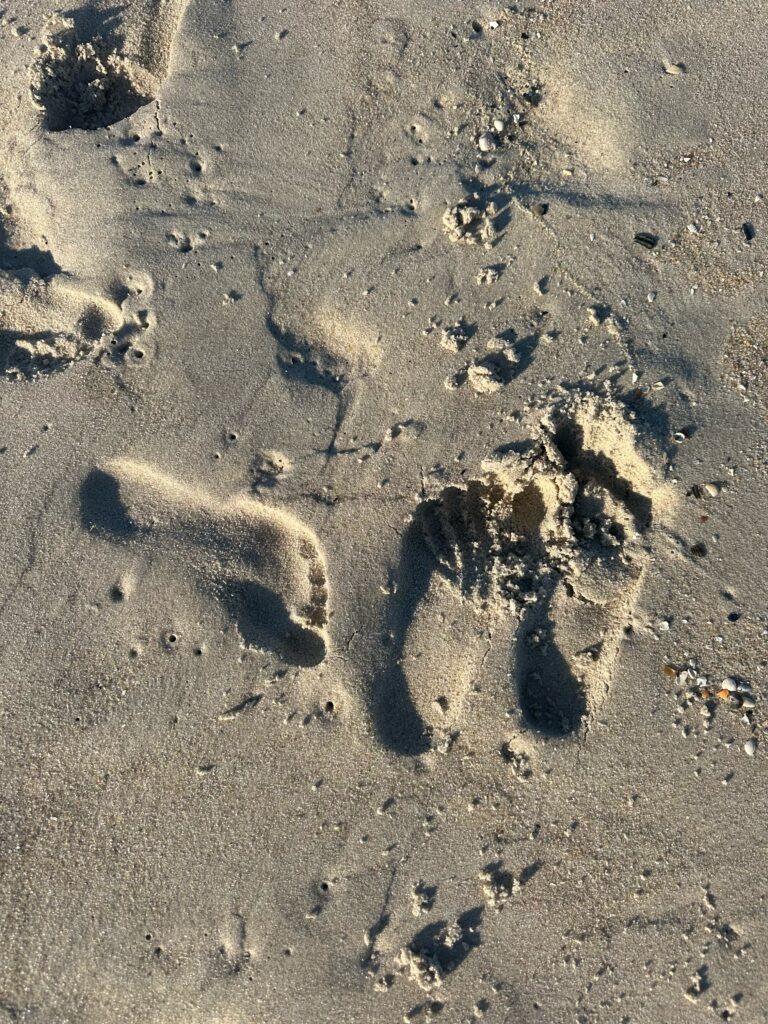
This photo features footprints on the sand, and I chose it because it is a beautiful representation of this ecological area being used and loved by humans. This use ties into the topics we are learning right now about human-land interactions.

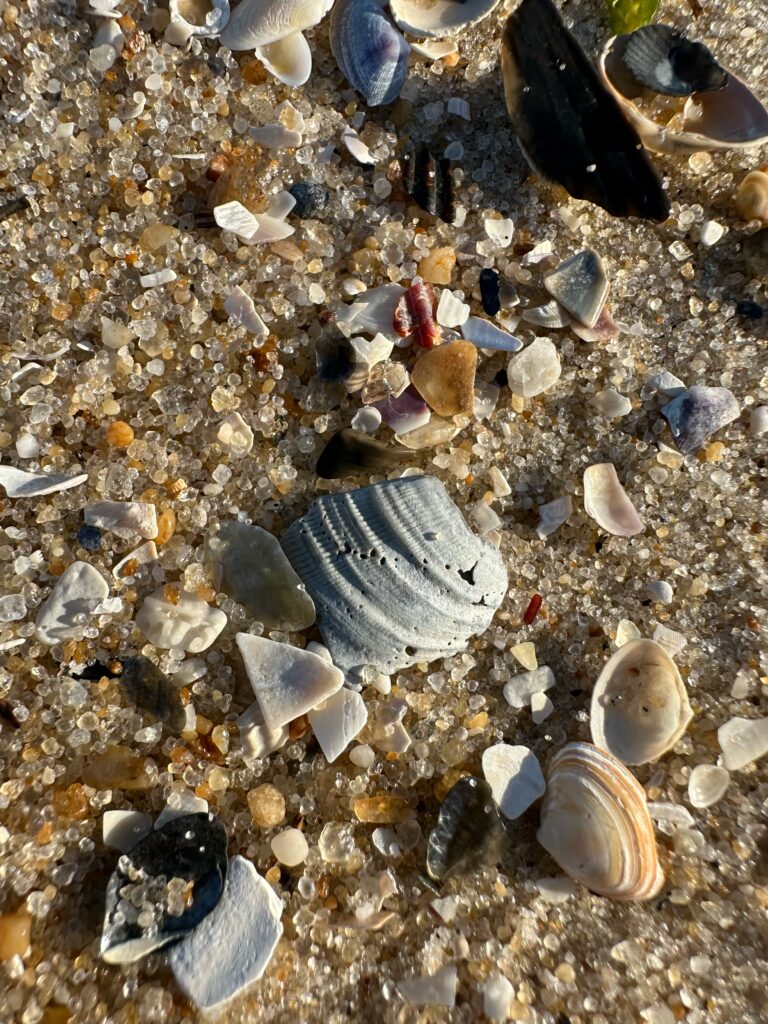
This photo features a plethora of broken shells, and grains of sand. I chose it because it was so fascinating to look at the grains of sand in such detail, seeing the material we step over through a closer lens.

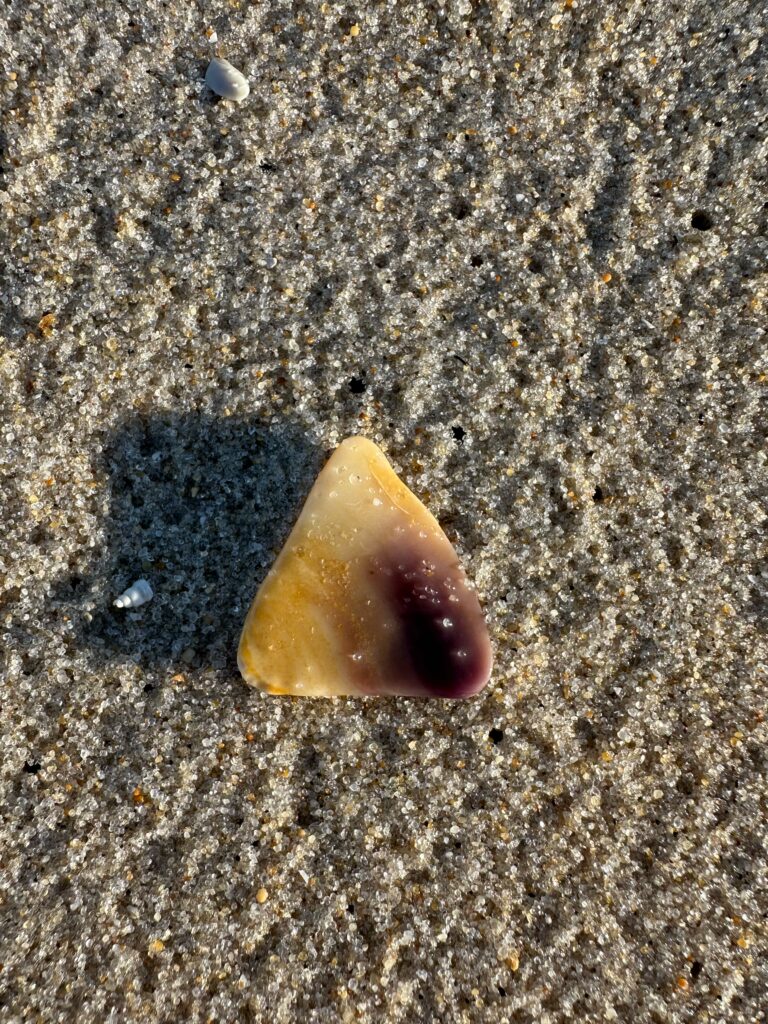
This picture features a smoothed piece of shell by itself, which I chose partly because of the contrasting colors in the shell, and partly because it is such a statement piece in the sand with only one tiny shell near it.

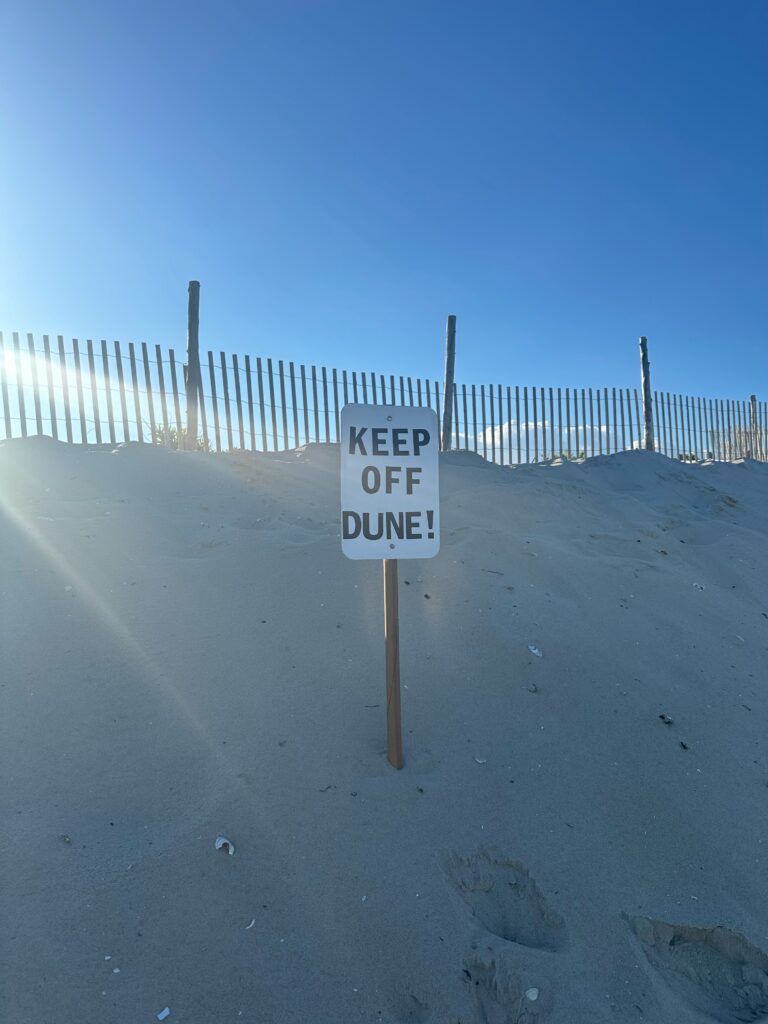
This is a picture of a sign that says “keep off dune!” which I wanted to capture, because the dunes are present to protect peoples homes from the ocean, and this shows how the environment can have detrimental effects on peoples livelihoods if the dunes are destroyed. I also like how the light shows up across this picture.

Part 5: When taking the photos, I noticed how many smaller pieces of shell and rock I saw in the sand. I usually look at the sand as a whole, but looking so closely made me appreciate all of the individual grains which look so different if you view them in detail. I didn’t really grasp before how grains of sand are similar to snowflakes in the sense that each one is a little different. It was a bit similar to sketching, because I still had to capture a certain angle of the ecosystem I was in, but also different, because my photos do a better job of conveying the beauty of nature than my sketches did. I really enjoy taking pictures and capturing moments, so it was awesome to have an assignment where I could do this! I think my pictures came out nicely, and they gave me a great idea of the makeup of the beach on a smaller scale. 

Works cited:

Nalle, L. (2020). Seaside Goldenrod: Sunshine on the Dunes. Coastal point. Seaside goldenrod: Sunshine on the dunes | Lifestyle | coastalpoint.com

.

Wonder Journal Entry #2 Anderson Park

Part 1:

Tuesday, June 25th 2024 at 11:28 pm. The weather is 84 degrees Fahrenheit and sunny at the moment. It is fairly humid with a very light, occasional breeze.

Part 2:

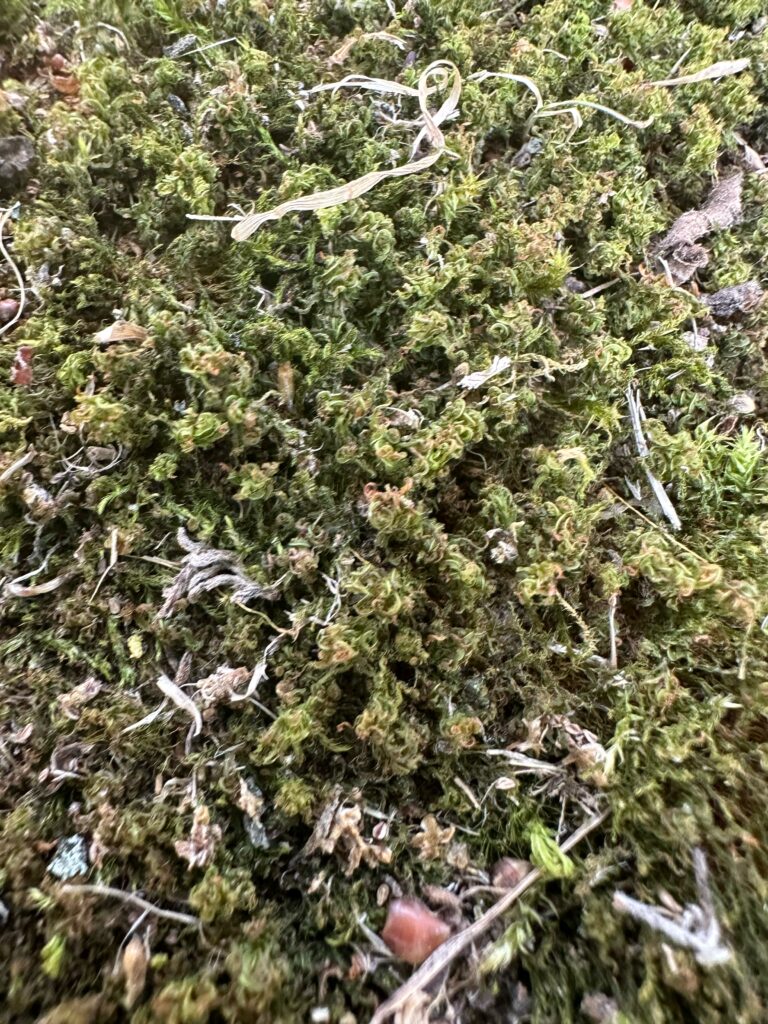
For this portion, I identified a patch of moss which I believe to be Smoothcap dry moss (naturalist.org, 2024), looking at inaturalist.org’s “NJ Moss notes”. This moss patch was growing underneath a tree, and must’ve been about less than a foot long. The moss was a dark shade of green with some bits of yellow in it as well. It was very dry to the touch, almost resembling the texture of artificial turf grass on a sports field. It also appeared to grow in small twisted strands that seemed to cluster together at their base. Some parts grew in more straight and it made me wonder why that could be. As I studied the area longer, I thought it was interesting that the grass nearby was growing in at full force and very thick up until where the base of the tree was emerging from the ground. Where the tree base started, the grass became sparse, and in this thin, dead patch of limp grass right by the tree base, the moss patch sat. The moss seemed to be a sort of barrier between the fuller grass and the dead grass by the tree base. I noticed small black insects occasionally flying or crawling over the patch of moss. A part of this moss cluster was growing over a rock fragment, which I found fascinating.

Part 3:

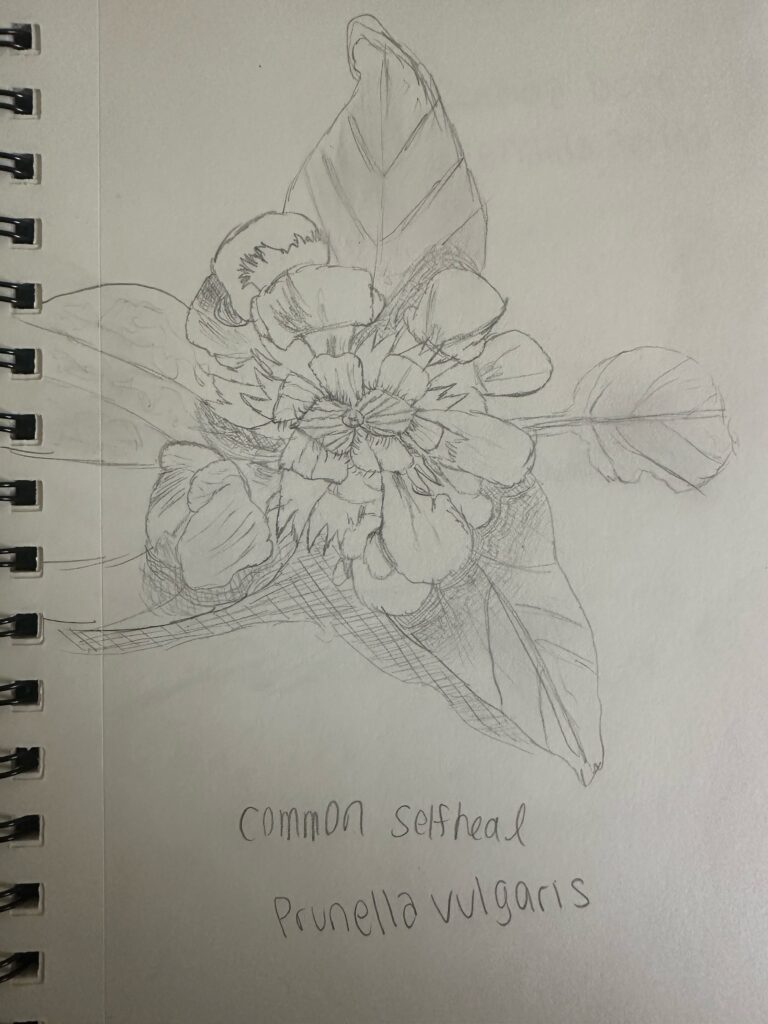
One species I identified that I had not otherwise been familiar with was the Common Selfheal. I noticed a small purple flower in the grass that I had not seen during my previous trip, so I decided to check it out more closely. I used the Seek app to identify the plant, which turned out to be a Common Selfheal, or Prunella vulgaris. I took a close-up picture to help me see the details better, and I sketched it. This was a very intricate flower with several different colored layers. It had a green inner layer, a maroon middle layer, and purple outer petals. A fascinating fact that I researched about the Common Selfheal was that it is a medicinal herb, and has the ability to lower blood pressure and combat tumors (USDA, 2011).

Part 4: Sketches

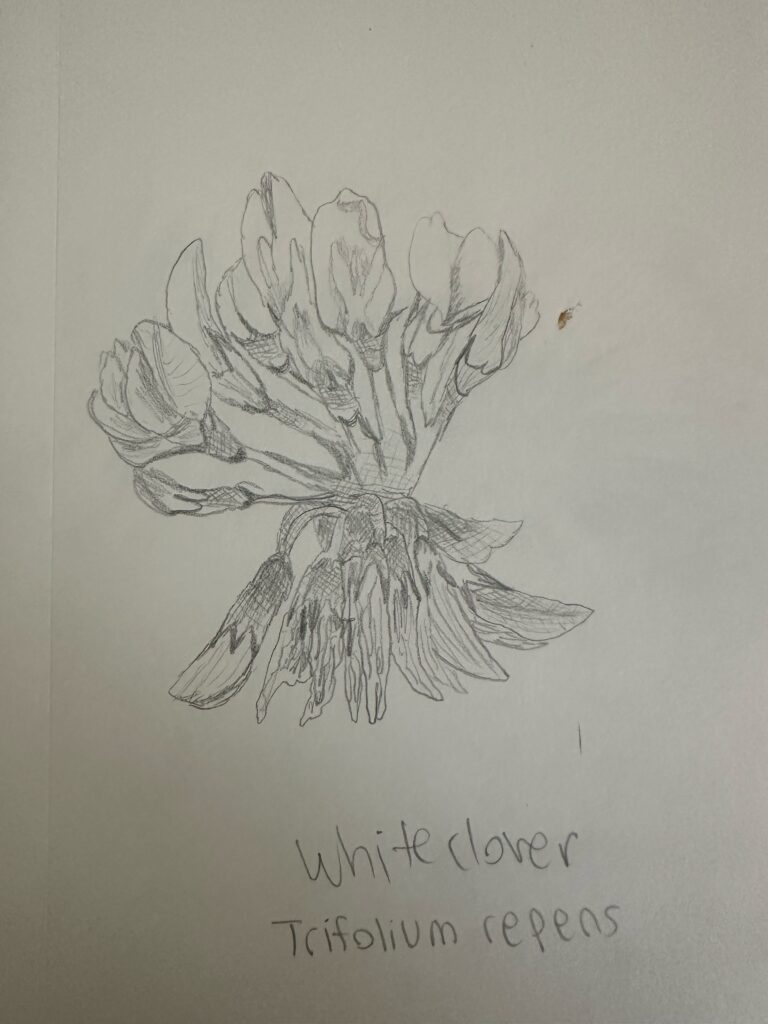
White Clover (Trifolium Repens): I chose to sketch this plant because it is very common at Anderson Park, and always attracts bees, which I enjoyed. While I sketched this object I got to watch pollination, so that was part of the reason I chose it. It is also one of the first plants that I learned about in Herbalism club, so it is special to me in that way.

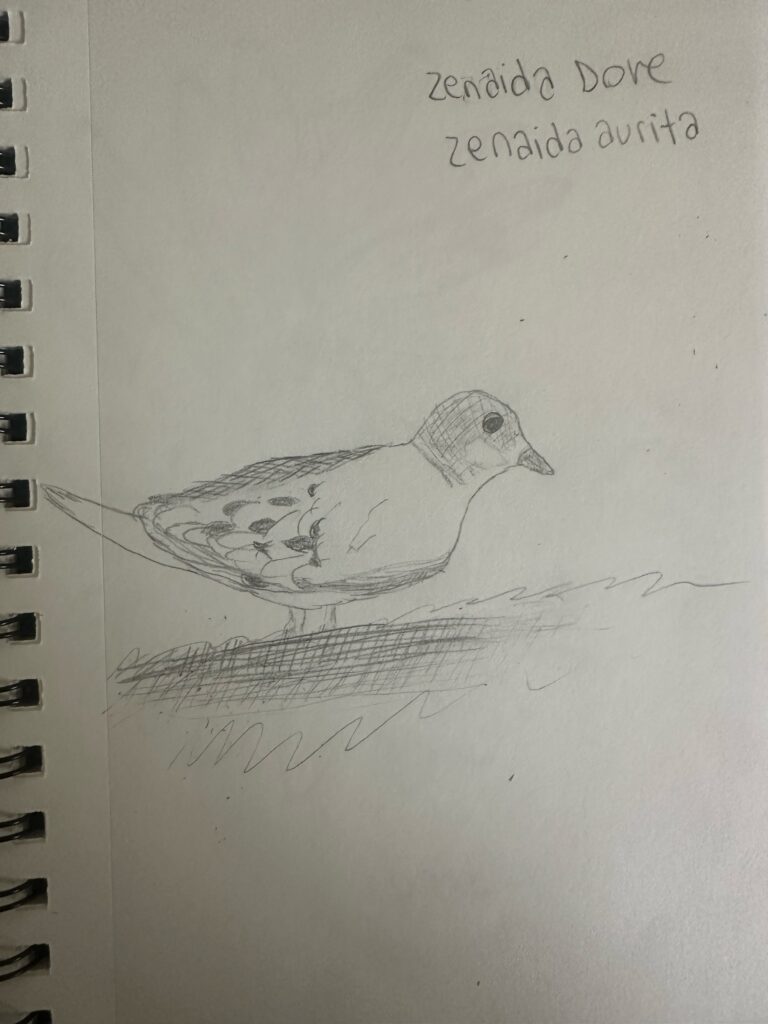
Zenaida Dove (Zenaida aurita): I chose to sketch this bird, because I thought it was a mourning dove and I was very excited since I love their song. I also wanted to sketch a variety of wildlife, and thought it would be nice to include an animal in my sketches as well as plant species.

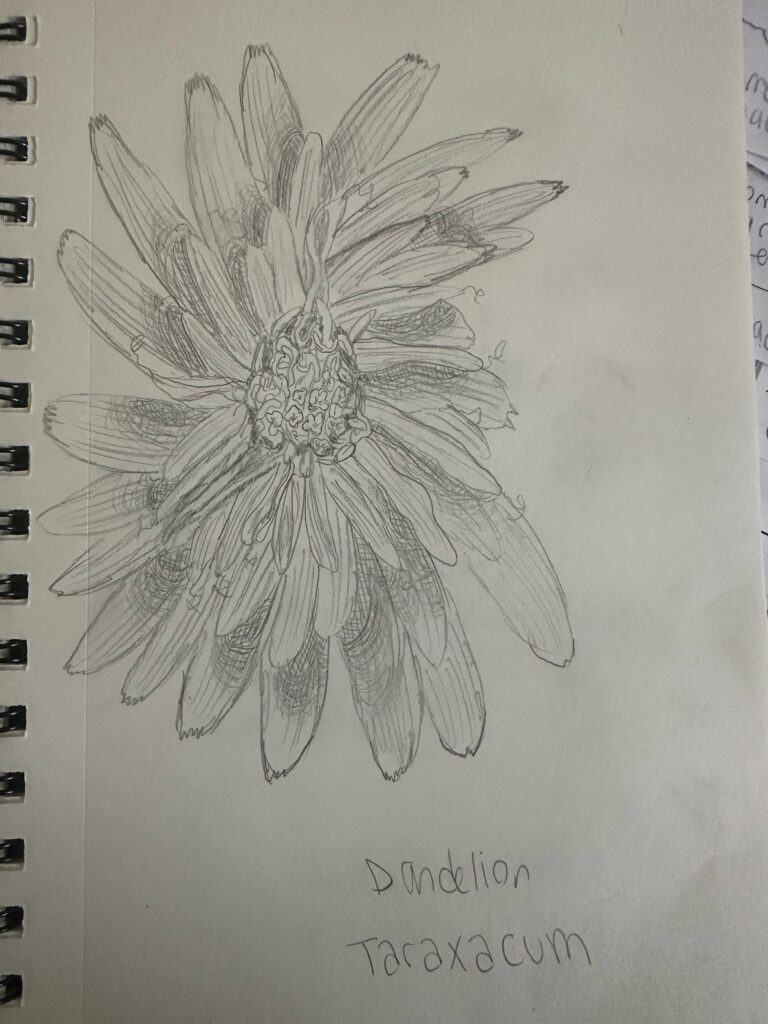
Dandelion (Taraxacum): I chose to sketch this plant because when I see dandelions, I always think of how they are seen as weeds and pests, but they are medicinal and so useful to pollinators. I think that dandelions should be more appreciated so I wanted to choose a dandelion that I found to sketch.

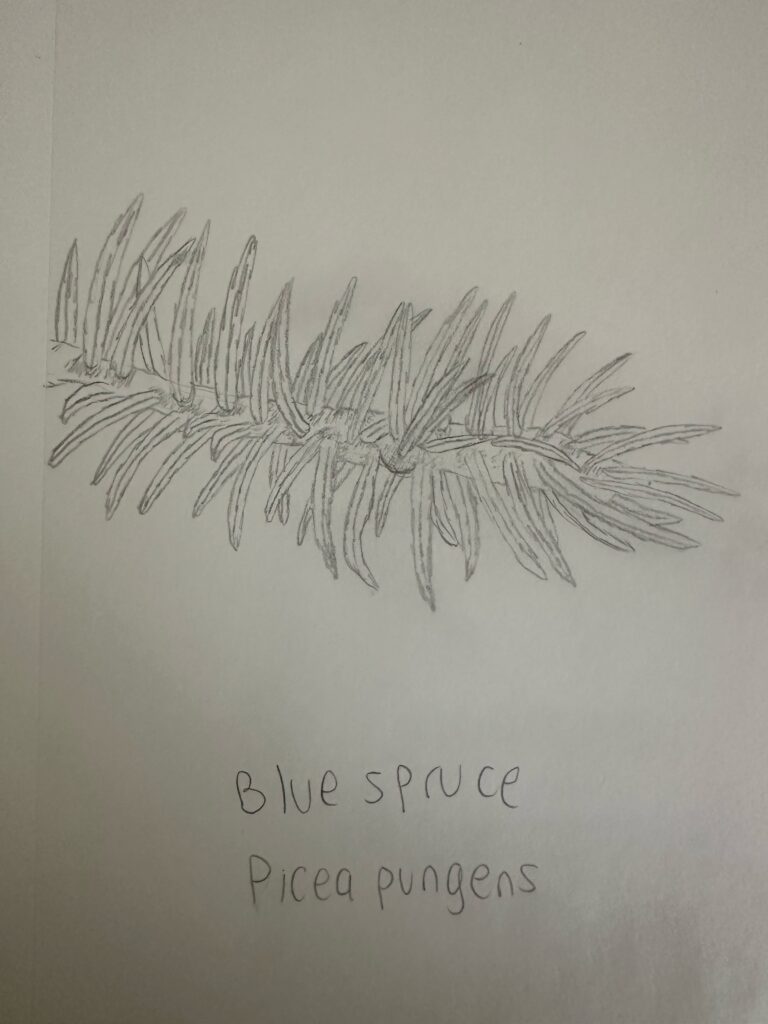
Blue Spruce (Picea pungens): I chose to sketch a part of this tree, because Blue Spruce is a plant that has always fascinated me, due to it’s color (which ironically is not shown here). I think the concept of a blue tree is extremely cool and I thought it would be fun to try and sketch all of it’s needles in detail.

Part 5: Conclusion

Sketching for my blog entry was a really fun experience. I very much enjoy science and also art, so this was the perfect activity for me, and I was so fascinated at how much detail all species have when you look up close. I took art classes when I was younger, so the sketching wasn’t too hard. I did find it a bit challenging to mark where the light hit plants, and it was a tad difficult to make shadows look like shadows instead of just awkward patches of darkness. Once I began a sketch I was super focused, and devoted all of my attention to that sketch. This being said, I definitely had to take breaks between each sketch so that I wouldn’t get burnt out too fast, since I put so much time and energy into each one. During my next visit I will be in Long Beach Island, but I am curious to see if there are any of the same species there that reside in Anderson Park.

Works cited:

Young-Mathews, A. 2012. Plant fact sheet for lance selfheal (Prunella vulgaris ssp. lanceolata). USDA- Natural Resources Conservation Service, Corvallis Plant Materials Center, Corvallis, OR. https://plants.usda.gov/DocumentLibrary/factsheet/pdf/fs_prvul2.pdf

Rall, Sara. (2024). NJ Moss Notes. New Jersey. inaturalist.org. https://www.inaturalist.org/posts/88688-nj-moss-notes

Wonder Blog Assignment #1: Anderson Park, June 17th 2024 at 1:02pm

Part 1: The temperature outside in Anderson Park, Montclair New Jersey is 85 degrees Fahrenheit, and the weather is sunny, with some light winds. I am currently in the shade underneath a tree canopy.

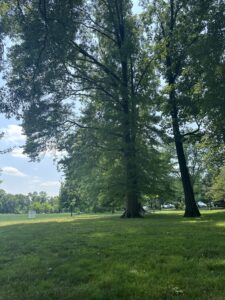
Part 2: I am in Anderson Park, a large park a block from my home in Montclair, New Jersey. This park is in a suburban area, and contains a large stretch of grassy field as well as trees interspersed along the perimeter, and an asphalt walking path with benches situated beyond those trees. I see grass that is shaded, and some that is in the sun. I also see trees of many different species, including Red Oak, Eastern White Pine, Kentucky Coffeetree, Blackhead, American Holly, and Maple. I also noticed flower such as China Rose and White Clover, as well as insects like a Wilke’s Mining Bee. I identified these species using the Seek app. I was also able to see an elderly man sitting on a bench, a couple walking their dog on the path, a spiderweb on the railing of my bench, pesticide signs, sticks and acorns scattered around by the trees, and a few squirrels. I heard bird calls from different species, such as the American Robin, House Sparrow, and Northern Cardinal, which were identified using the Merlin Bird apps sound ID.  I also heard the leaves on trees rustling as the wind cam, people chatting as they waked by, bugs buzzing past my head, and cars driving on the adjacent road.  I smelled the sweet, thick, humid air, which was so fresh compared to the cold and filtered air my home produces. I smelled the sunscreen I was wearing and breathed in the same natural, sun-touched air that everyone around me was breathing. I went around investigating, and took the time to look at different individual species that I had never observed with such intent before.

Part 3: Photo of Anderson Park which I took:
 

Part 4: Question Marathon:

1.) When was the area that is now Anderson park clear cut? 

2.) Was there native people living on this land historically who had to deal with the consequences of the creation of Anderson Park?

3.) How do the pesticides that are administered in parts of this park affect the parks wildlife? 

4.) How many native verses nonnative species planted in this park? 

5.) What person or organization decides what trees and flowers are added into the park? 

6.) How does the noise pollution from people talking and going on phone calls on speaker mode affect the species in the park? 

7.) How would this area be different if there were more native pollinator plants and wildflowers incorporated?

8.) Where does the trash thrown onto the ground of this park end up in the environment as time goes on? 

9.) Why do some of the trees here have pink bands tied around them?

10.) How many types of Oak trees are in this park? 

11.) What does the food chain look like in this area?

12.) Are animals in this vicinity getting as much nutrients as animals living in a more secluded forest area, since the park is likely less biodiverse? 

13.) How does the CO2 pollution of nearby roads affect the species of Anderson park?

14.) How have spotted lantern flies affected the health of Anderson Parks ecosystem? 

15.) What aspects of nearby residential areas have the biggest effect on Anderson Parks species? 

16.) How many bird species reside in Anderson Park? 

17.) Where does the domestic animal waste in Anderson park go, and does it cause detriment to any local species? 

18.) What effect, if any, does walking on the grass have on the microorganisms that reside there?

19.) What invasive species cause the biggest problem to Anderson park, and what are the issues?

20.) How many species deaths occur near Anderson Park per year, and is this correlated to the surrounding roads? 

21.) Are the decorative flowers planted here helpful to pollinators? (And if not, why isn’t there any that pollinators would benefit from?) 

22.) Do pet dogs frequently walked here ever contribute to deaths of Anderson Parks wildlife?  

23.) What human-built appliance in the park most affects the species wellbeing? 

24.) How greatly does the light from the lampposts in the park affect the animals circadian rhythm? 

25.) What has been the biggest environmental change to Anderson park historically? 

26.) What effect has the train adjacent to the park had on species health? 

27.) Does tree climbing here harm trees? 

28.) Why were some of the trees cut down, and why are there tree stumps here? 

29.) How have the sewers in the middle of the grass on the slim strip of grass and trees affected animals species? 

30.) Why are there 2 huge boulders placed by the parks entrance? 

31.) Where the recycling in the park actually go? Does it get recycled, or do too many people throw trash in it? 

32.) Why is there a small revine in between the park trail and the train tracks on one end of the park? 

33.) Why do some trees have bubble-like growths on them? 

34.) How are some trees covered in lichens here and some are not?

35.) How did the paving of the parks trail affect the wildlife here? 

36.) What species resided in Anderson Park before it became a public park? 

37.) Do the team sports player here such as soccer and volleyball affect the species wellbeing’s?

38.) Where is the most frequently visited area of Anderson Park? 

39.) What plant species in Anderson Park would be considered safe for medicinal consumption? 

40.) How have the global changes in weather and temperature affected the species in Anderson park? 

Part 5: Question and research paragraph:

A big question that I had while in Anderson Park was “How would this area be different if there were more native pollinator plants and wildflowers incorporated?”. This question arose due to my observation that there seemed to be much more open grass area than area covered by flowers, aside from white clover which is prominent in the grass. However, one of the only planted flower species I found in the park were a few bushes of China Rose, which are not native to this area, but native to South West China (Yale Nature Walk). The National Park Service states, “By creating a pollinator-friendly garden full of native plants, you can help pollinators in your area” (National Park Service). This goes to show that adding more pollinator plants to the park would cause the area to have higher levels of biodiversity (USDA) which adds to an ecosystems resilience, and therefore helps to protect these areas. Anderson Park would be different with the incorporation of more native plants and flowers in its landscape, as local pollinators would greatly benefit from these actions, and the protection of the area is important in today’s current climate catastrophe. 

Works cited: 

National Park Service. (2023). I Didn’t Know That!: Planting for Pollinators. National Park Service U.S. Department of the Interior. https://www.nps.gov/articles/000/idkt-planting-for-pollinators.htm

Yale University. (2024). China Rose. Yale Nature Walk. https://naturewalk.yale.edu/trees/rosaceae/rosa-chinensis/china-rose-146#:~:text=Rosa%20Chinensis%20is%20native%20to,in%20hedges%20or%20form%20thickets.

US Department of Agriculture. (2024). The Importance of Pollinators. US Department of Agriculture. https://www.usda.gov/peoples-garden/pollinators#:~:text=Pollinator%20habitat%20can%20beautify%20your,community%20engagement%20and%20learning%20opportunities.

Part 6:

To sum up my first Wonder Blog, I would like to recap that I found so many different tree species, and had no idea that Anderson Park was so biodiverse. I would also like to reiterate the importance of native pollinator plant species. Though Anderson Park is a beautiful place with many species, the area could be improved by adding more of these beneficial pollinating native species, which would help to increase the parks resilience, and support the biodiversity of the area and its local pollinators. Something I found special that caught my attention was the plants growing up out of cracks in the pavement trail, such as plantain. I was puzzled by how they managed to survive in those areas, and would like to research this phenomenon further. This assignment allowed me to take a closer look into a space that I am in frequently, and has made me more appreciative of the beings who live in that space.

Skip to toolbar