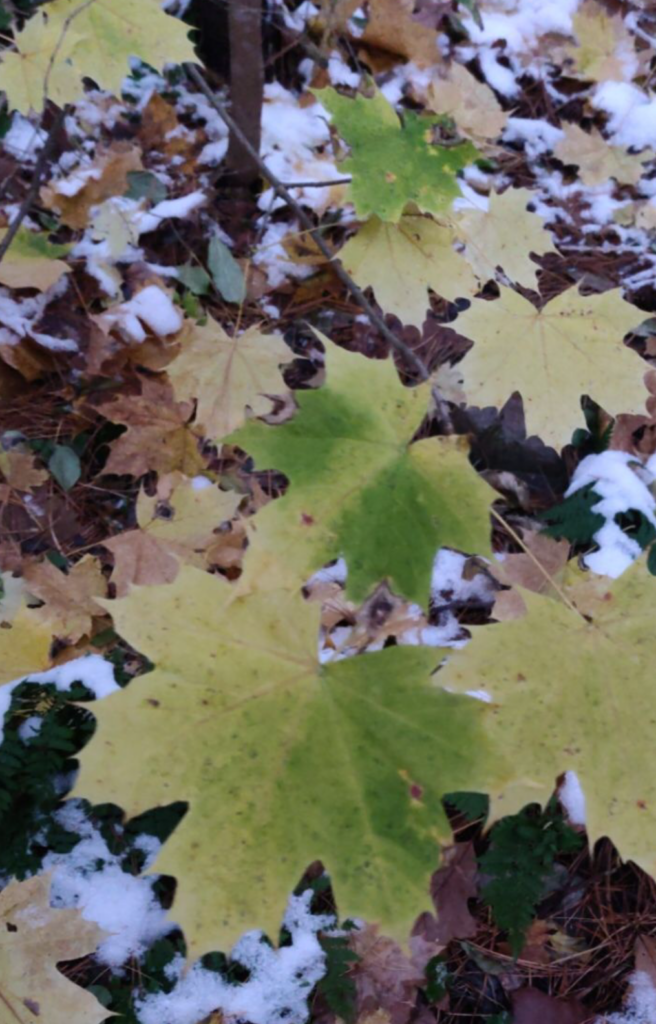
Changing sugar maple leaf
A UVM blog
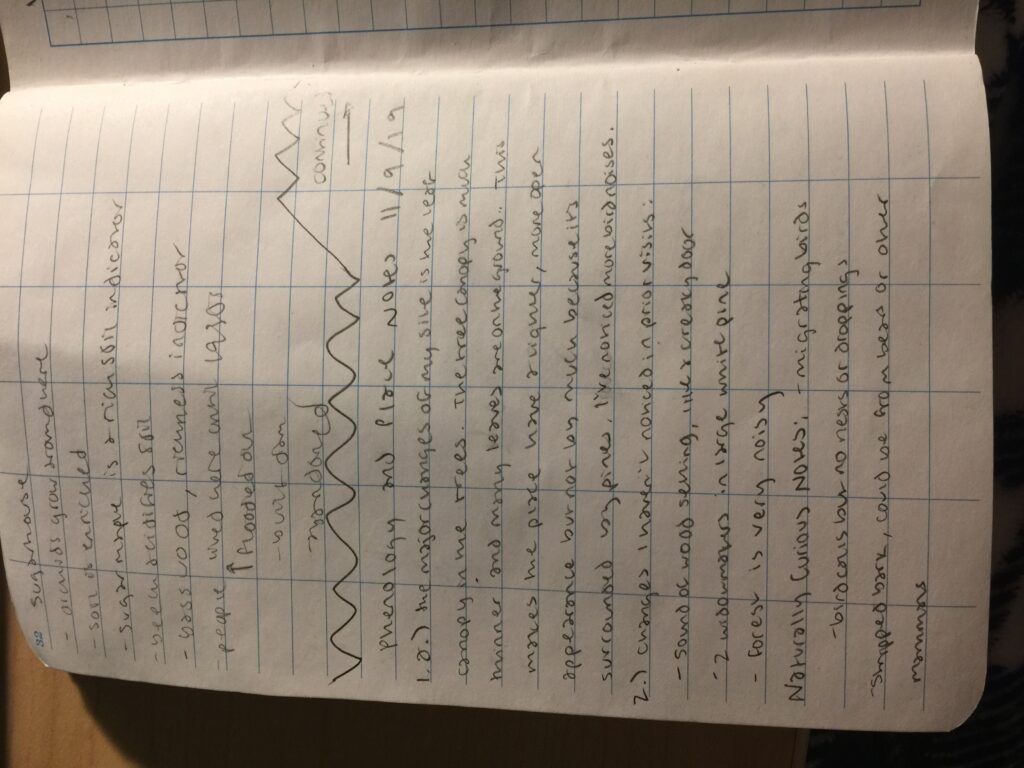
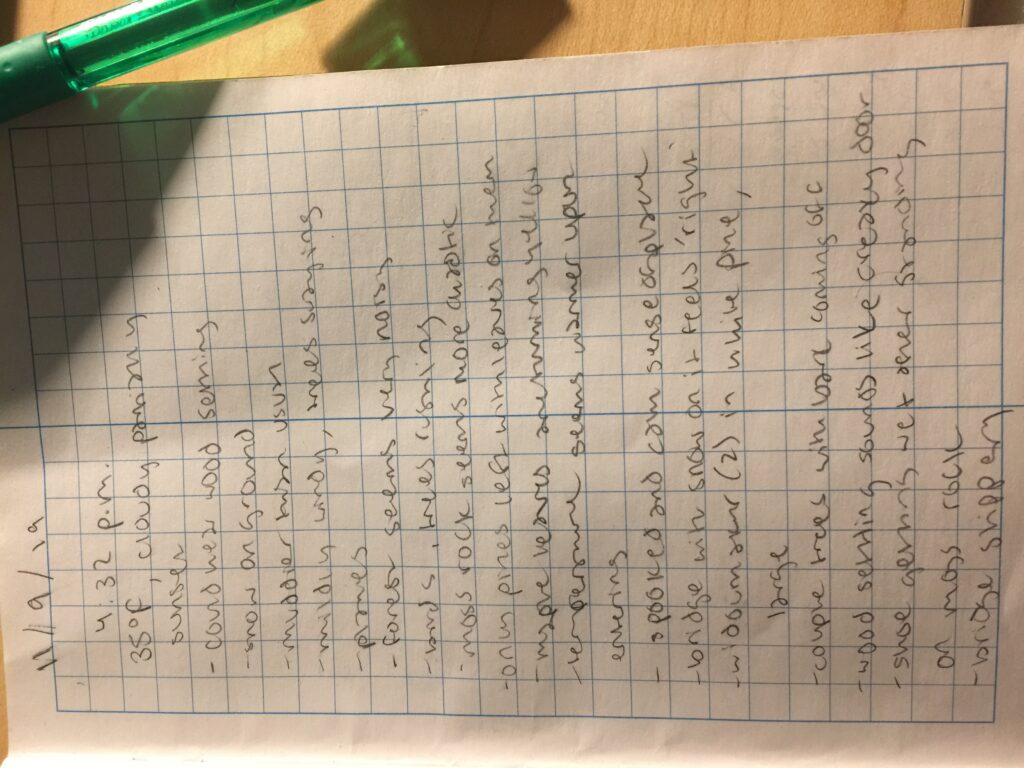
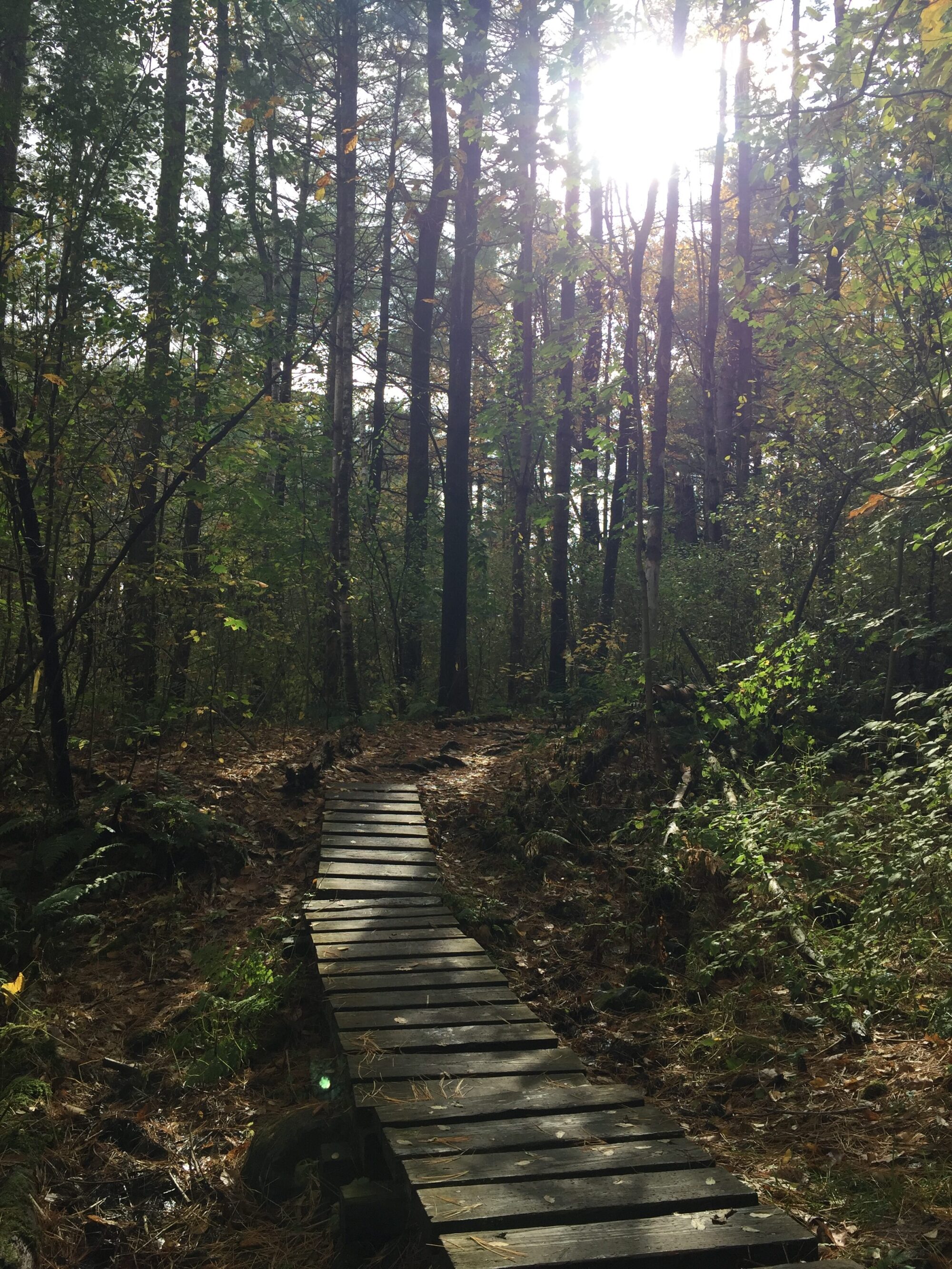
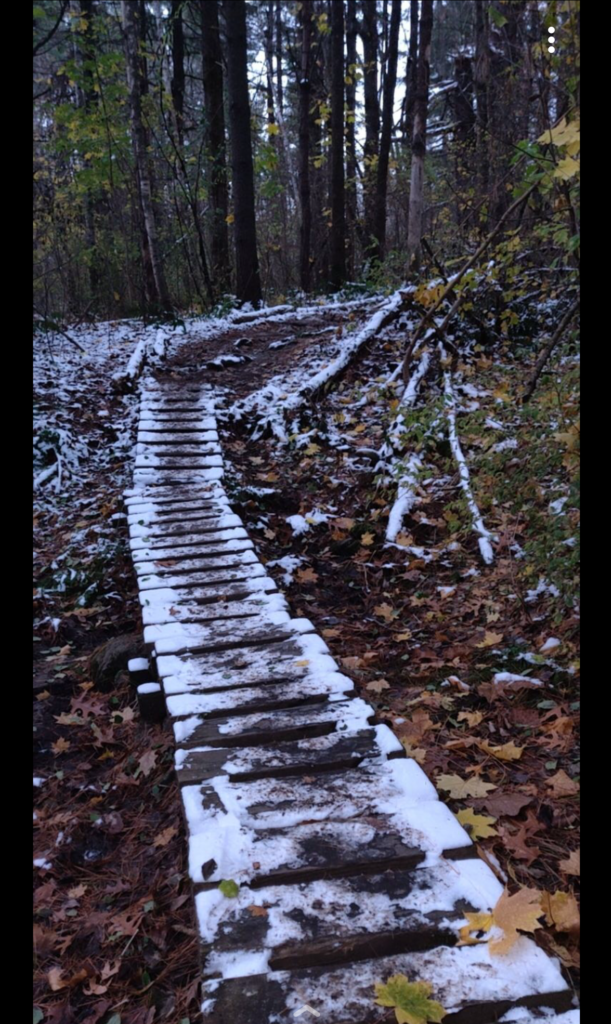
My experience with my site at Centennial Woods is one of dual-nature. Ironically, to me nothing is quite as freeing as being surrounded by trees. There’s something about evergreens in specific that make me feel at peace. I prefer darker tones so forest green and dark brown is comforting to see as I sit on the wooden planks and gaze at the mossy rock I’ve been examining for the past couple of weeks. When I sit in my spot I feel both a little bit nervous and comforted. My mother has warned me not to enter a forest alone and each time I do her voice rings in my head. So as I sit, although I realize there are dangers to the woods like wild animals, I am also aware of the atmosphere. The large white pine in front of me emits a powerful energy and there’s something about the snow-covered wooden bridge that makes me feel at peace. This past experience at my spot the wind caused the trees to creak like old doors which was unnerving at times but I learned to respect the sound. The forest felt more alive to me than usual most likely because of this factor combined with the sounds of migrating birds and the last of the leaves falling from the branches.
When compared with Burlington as a whole, my spot in Centennial makes me feel small again, but in a good way. You need somewhere to come home to after exploring and that’s what my spot feels like to me. In terms of all of New England, I feel the same smallness at Centennial but I see many characteristics of my spot scattered throughout the states. I’m sure if I spent the time at any one area i’d develop the same feelings as I have for my spot. Moreover, when I compare Centennial to a specific river across from my house in Connecticut, I feel the same feelings. One is not better than the other as they are both familiar and comfortable. I do believe that a sense of place doesn’t have to be an actual place though. I feel most connected and at home with certain people, but this is a different calm than I would have sitting in the woods alone.
Aside from that, thinking about the evolution of my spot makes me curious. I wonder how it might have looked, if any trees I see there now were there long ago or will be there well into the future. My own history with Centennial has grown as well. The more I visit, the more familiar it becomes to me. However, I believe I felt more at home when I visited during the late summer, early fall months. The warmth added to the comfort of the place which is something winter takes away.
Perhaps my site is a sense of place in Burlington to someone else. Throughout history my site has most likely evolved from forested, to heavily messed with, to recognized. What I mean by this is that it wasn’t really noticed, and the first time it was by settlers it may not have been appreciated as it might have by indigenous people. As time went on, perhaps it was looked at in a more respectful way which leads it to what it is today, as people care for the bridge in the area, they respect what surrounds it. I’m not sure what this place may hold for those in the future or what may happen to it. Perhaps it will become overgrown and the bridge will be swallowed by a sea of green. I feel as though if I were to not go back to my spot for years I would still feel the familiarity when I returned. Such is the power of a sense of place.
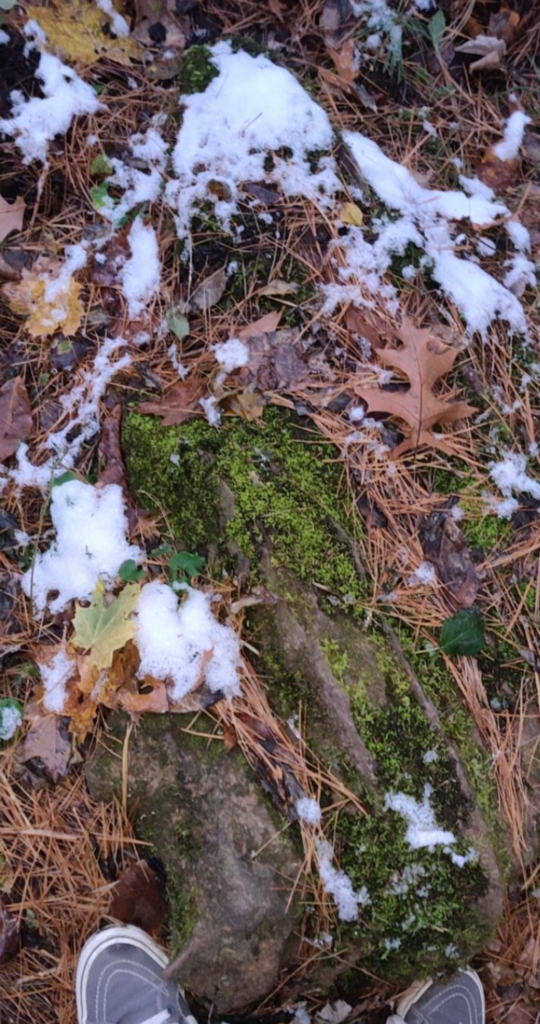
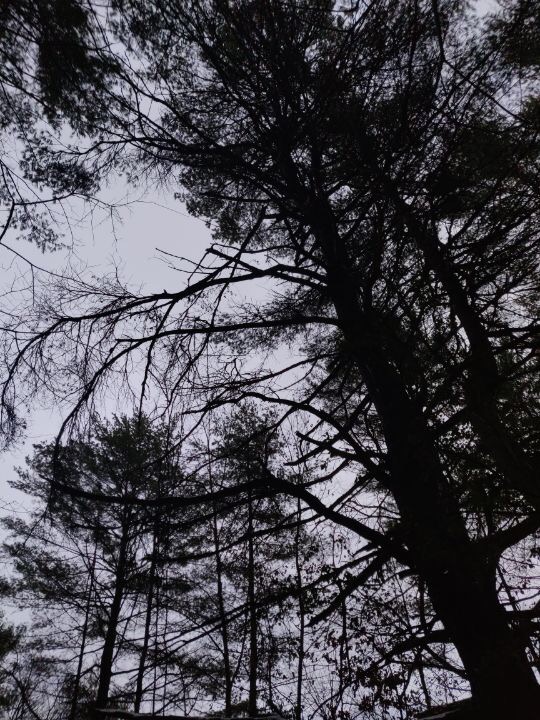
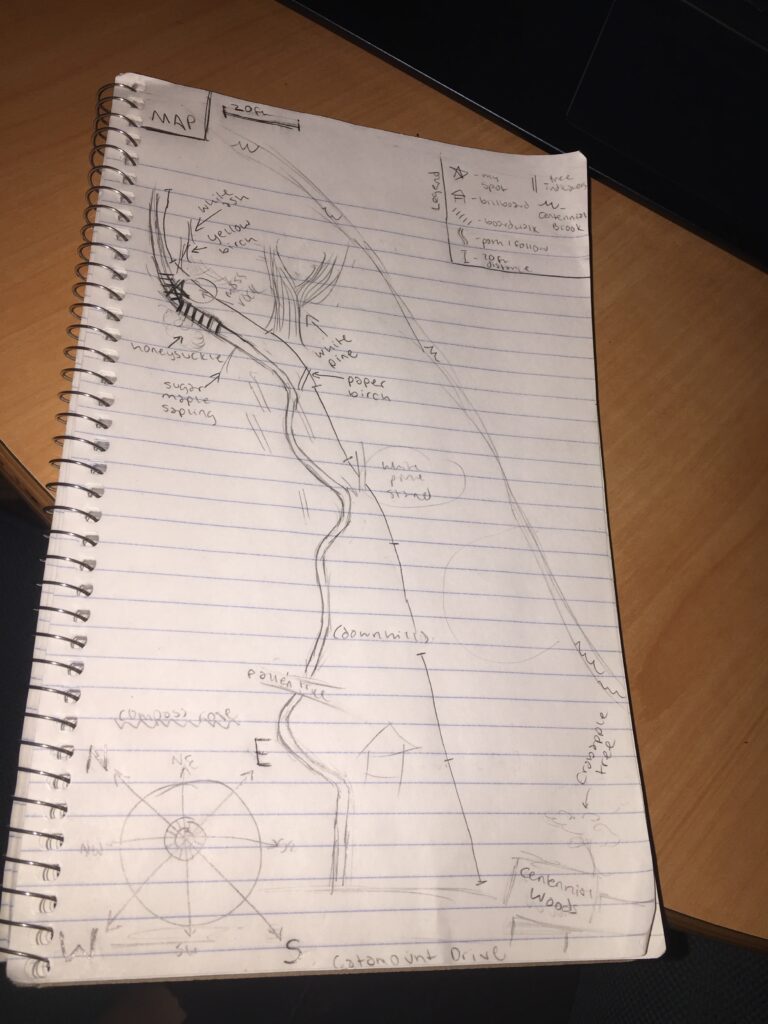
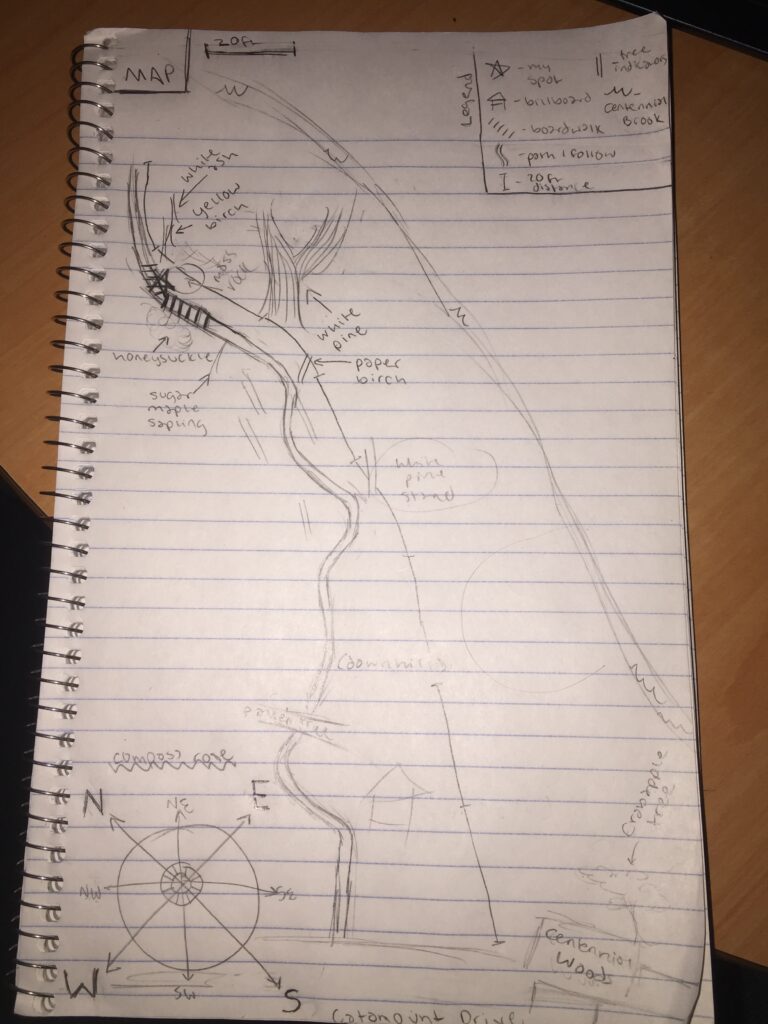
The six organisms I recognized were eastern white pine, yellow birch, white ash, paper birch, and sugar maple trees as well as honeysuckle. I viewed a squirrel within my area and could hear birds but wasn’t able to see them very well. I believe one organism stands out the most to me with characterizing my site and that is the large eastern white pine tree to my northeast when sitting and facing the moss rock. It has a powerful presence that does not go unrecognized. When you see the tree, you know you are in the right area. The rest of the organisms do well to characterize the area as the honeysuckle and sugar maple are behind the sitter. The paper birch tree is on the outskirts of the site and is a marker that you are entering the site. Looking up from the rock you see the yellow birch and white ash tree.
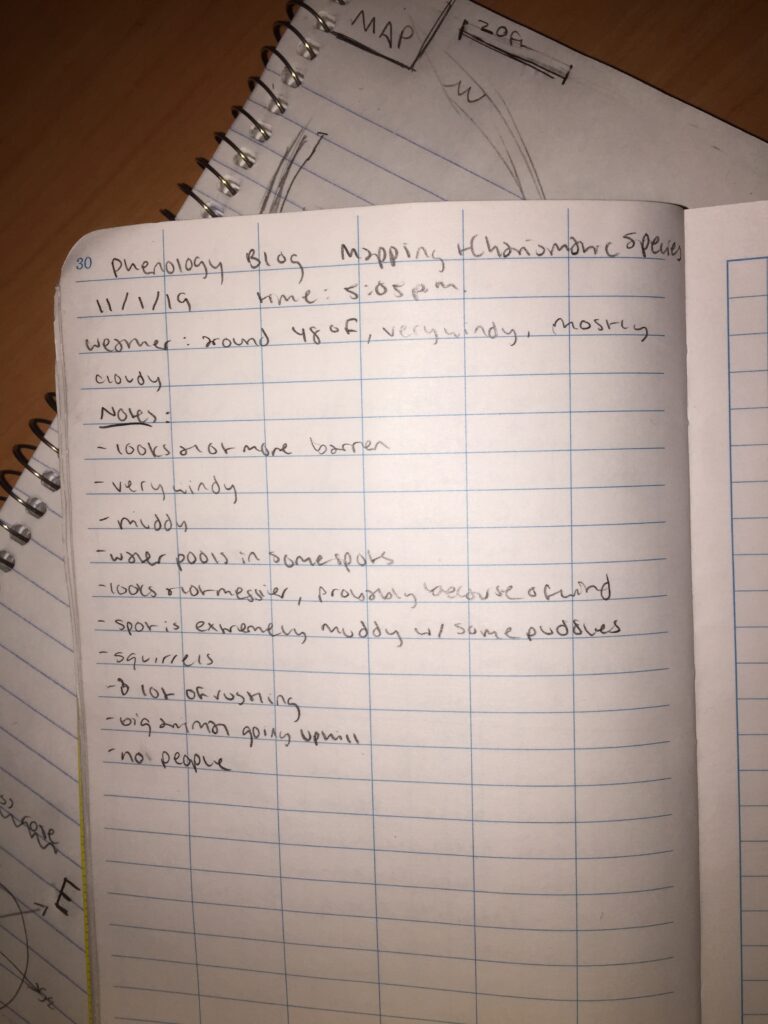
The vegetation was fuller during my last trip. As fall continues, there are less leaves in the trees and the bushes I see are sparser. There is a noticeable amount of pine needles mixed with the muddy soil underneath the boardwalk. Similarly, the trees other than the eastern white pine, such as paper birch, yellow birch, white ash, and sugar maple, have less leaves on them. This leads to the tree canopy looking less dense and letting more light in.
In previous visits, my spot in Centennial Woods was not as muddy or wet. Due to Halloween night’s flooding, the soil was pooling underneath the boardwalk. This means the color was darker, the texture wasn’t uniform, and the smell was stronger. The rest of the path coming to and from the boardwalk spot had wet soil that was mixed with more pine needles.
The act of mapping allowed me to view my spot with a deeper perspective. This was true for the trail leading to my spot as well. Marking specific figures along the way to help guide the reader was informative in the sense that I understood which figures were important enough to mark. Similarly, I took a slower walk to my spot and spent more time at my spot looking for landmarks as well. My sense of place at my spot was heightened through this experience as I took myself with more patience and allowed myself to view the different species.