A UVM blog Blogpost

Posts

Blog Assignment #3 (Globalization)

Abbott manufacturing facility in Costa Rica. Coyol Free Zone Alajuela, Provincia de Alajuela, Costa Rica.

1. The Abbott manufacturing facility in Costa Rica produces technology that treats various diseases and medical diagnoses worldwide. Abbott has manufacturing facilities in addition to their Costa Rica location across the world in countries such as Columbia, Singapore, and Spain. The plant makes and exports catheters; diagnostic products; nutritional supplements; generic pharmaceuticals; and devices for coronary, vascular, and artery diseases. The facility is around 152,094 sq. ft. and employs over 1000 people.

“Costa Rica Free Trade Zone Regime – Coyol Free Zone.” Coyol Free Zone – Costa Rica | Central América, coyolfz.com/medical-manufacturing-companies-directory-copy/. Accessed 14 Sept. 2023.

2. The Abbot facility is both environmentally and socially conscious. In 2015, 100 percent of the plant’s waste was transformed into compost and 35 percent of water consumption was reduced. On the Dow Jones Sustainability Index, Abbott has been leading the industry sector for strong environmental, social, and governance performance for the past ten years. Additionally, Abbott has been called a Top Company for Executive Women and Best Company for Multicultural Women as well as a “100 Best Company” for the past 22 years.

Cinde.org. “Abbott Grows in Costa Rica – Celebrates 5th Anniversary of Its Medical Devices Plant in the Country.” Cinde.Org, www.cinde.org/en/essential-news/abbott-grows-in-costa-rica-celebrates-5th-anniversary-of-its-medical-devices-plant-in-the-country. Accessed 14 Sept. 2023.

“Home: Abbott U.S.” Home | Abbott U.S., www.abbott.com/. Accessed 14 Sept. 2023.

3. I would say that neo-liberalism is a more accurate way to describe Abbott’s existence in Costa Rica than neo-colonialism. Although Abbott is owned by The Vanguard Group Inc., an investment company funded by stakeholders such as Bank of America and Wells Fargo, both U.S. companies, it does not seem to have neo-colonial objectives. The company itself is pretty transparent in its efforts to support workers of their facilities in and outside of the U.S. Abbott has sections on the website dedicated to showing their sustainable and social intentions which provide evidence that the presence in Costa Rica is providing over 1000 jobs and putting efforts into their employees wellbeing. 

Menon, Rahul. “Neoliberalism or Neocolonialism? Evaluating Neoliberalism as a Policy Prescription for Convergence.” Developing Economics, 10 Jan. 2019, developingeconomics.org/2019/01/11/neoliberalism-or-neocolonialism-evaluating-neoliberalism-as-a-policy-prescription-for-convergence/. 

Abbott Costa Rica Intern Experience in Manufacturing Engineering 

“Abbott Costa Rica Intern Experience in Manufacturing Engineering.” YouTube, YouTube, 4 Oct. 2021, www.youtube.com/watch?v=MLD85rHP6Mo.

Sources:

“Abbott Costa Rica Intern Experience in Manufacturing Engineering.” YouTube, YouTube, 4 Oct. 2021, www.youtube.com/watch?v=MLD85rHP6Mo.

Cinde.org. “Abbott Grows in Costa Rica – Celebrates 5th Anniversary of Its Medical Devices Plant in the Country.” Cinde.Org, www.cinde.org/en/essential-news/abbott-grows-in-costa-rica-celebrates-5th-anniversary-of-its-medical-devices-plant-in-the-country. Accessed 14 Sept. 2023.

“Costa Rica Free Trade Zone Regime – Coyol Free Zone.” Coyol Free Zone – Costa Rica | Central América, coyolfz.com/medical-manufacturing-companies-directory-copy/. Accessed 14 Sept. 2023.

“Home: Abbott U.S.” Home | Abbott U.S., www.abbott.com/. Accessed 14 Sept. 2023.

Menon, Rahul. “Neoliberalism or Neocolonialism? Evaluating Neoliberalism as a Policy Prescription for Convergence.” Developing Economics, 10 Jan. 2019, developingeconomics.org/2019/01/11/neoliberalism-or-neocolonialism-evaluating-neoliberalism-as-a-policy-prescription-for-convergence/. 
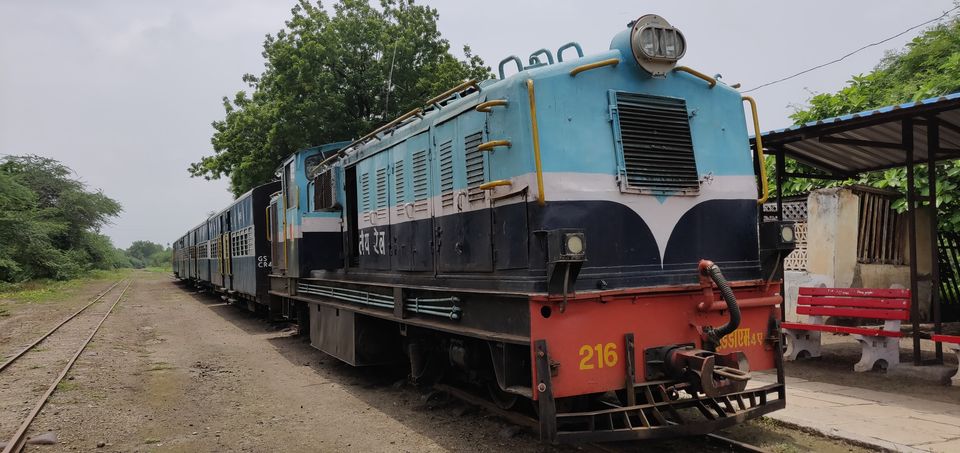
BLOGPOST #2

All Indian Railways were nationalized in 1951 except for the Shakuntala Railways. 

https://www.tripoto.com/mumbai/trips/shakuntala-railways-indias-only-railway-line-that-does-not-belong-to-india-5c512dff7c9a0

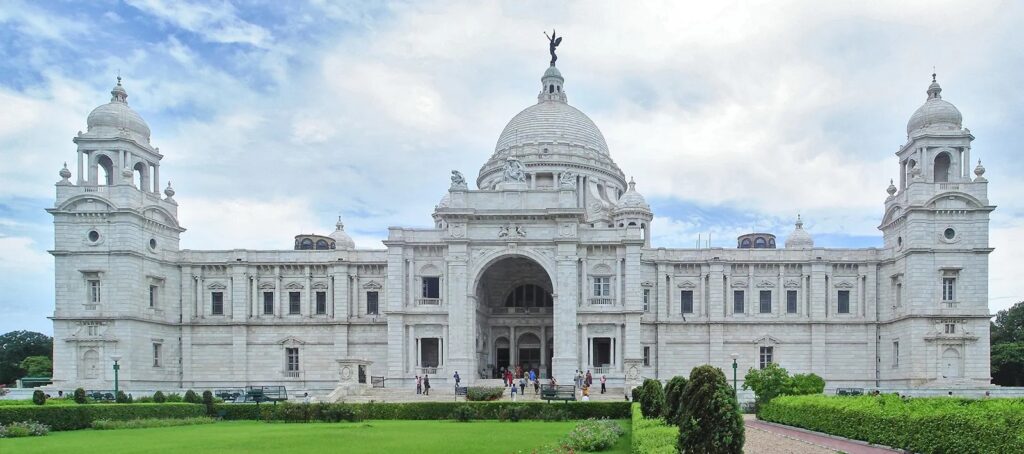
The Victoria Memorial was built in memory of Queen Victoria.

https://www.britannica.com/place/Victoria-Memorial-Kolkata

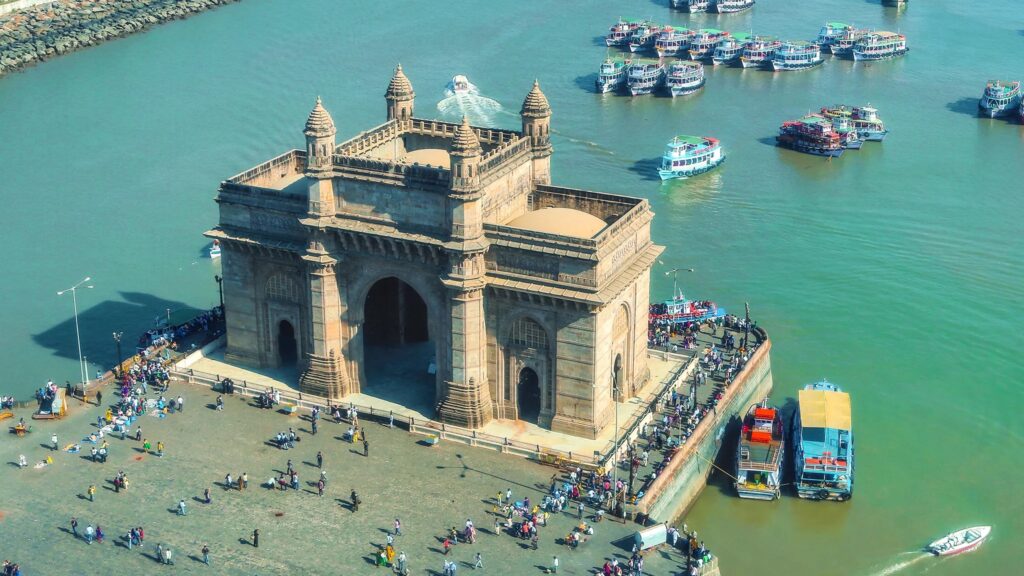
Opened in 1924, The Gateway of India is an arch monument that celebrates King George V and Queen Mary landing at Apollo Bunder during their trip to India.

https://www.cntraveler.com/activities/mumbai/the-gateway-of-india

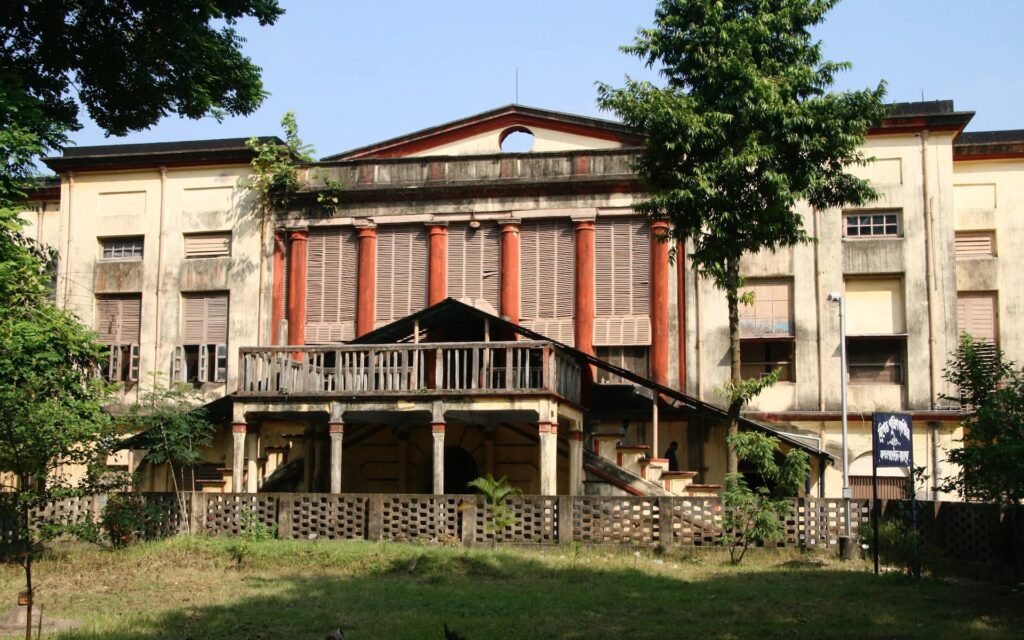
Old Governor Generals House was the oldest British cantonment set up in Barrackpore.

https://www.telegraph.co.uk/news/2016/04/24/britains-crumbling-colonial-heritage-laid-bare-in-shocking-pictu/

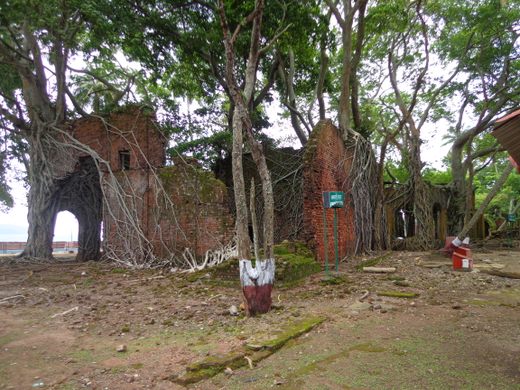
Netaji Subhash Chandra Bose Island is an abandoned settlement established by British colonists.

https://www.atlasobscura.com/places/ross-island

1. British colonization reduced India’s economy by supplying raw materials for Great Britain. Raw silk and cotton, sugar, tea, jute, and rubber were the main materials exported out of India and into Britain. Indian residents agreed to become Indentured laborers providing cheap labor for Britain in order to escape extreme poverty.

https://byjus.com/commerce/foreign-trade-in-india-during-the-colonial-rule/

https://www.nationalarchives.gov.uk/help-with-your-research/research-guides/indian-indentured-labourers/

2. Britain used military force and advanced technology to maintain power over India. At the beginning of the British Raj, the period of British Rule from 1858 to 1947, the rule was transferred to Queen Victoria. The crown was then passed to Edward VII, George V, Edward VII, and ended with George VI. 

https://www.britannica.com/event/British-raj

3. They believed they were benefitting India as a country through its presence by providing Christian influence, their legal system, economic benefits, and increased education. 

https://qmhistoryjournal.wixsite.com/qmhj/post/how-was-british-rule-in-india-maintained-and-justified-in-the-nineteenth-century#:~:text=The%20agents%20used%20to%20justify,rule%20in%20the%20nineteenth%20century.

Blogpost 1

  1. Palm oil has become a largely produced product in Costa Rica being introduced to the area in the 1940s. Palm oil plantations on the Osa Peninsula contain hectares of African oil palms. These trees produce pods of palm oil kernels that are harvested and then the palm oil is extracted. Palm oil is an efficient crop due to it being cheaper to produce than many other types of commonly used vegetable oils as well as it being a reliable and year-long crop. Palm oil is used in an abundance of different products varying from lipstick to laundry detergent to pizza dough. Much of the oil produced in the Osa Peninsula is exported to foreign countries such as Mexico, the Netherlands, and Nicaragua.

https://greenhawksmedia.net/2020/02/12/investigating-palm-oil-in-costa-rica-over-j-term/

  1. Vanilla orchards consist of vines that take three years to reach maturity. The vanilla flowers are pollinated by hand and take six to nine months until the vanilla beans are ready to be harvested. The green vanilla beans are cured and dried and turned into the brown vanilla beans that are widely known. The process from flower to vanilla beans takes about one year and is almost entirely done by hand. Dried vanilla beans are exported out of Costa Rica and distributed globally. Some main destinations for Costa Rica’s vanilla beans are El Salvador, the United States, and Nicaragua.

http://www.dessertolicious.com/blog/2011/01/growing-spices-in-costa-rica-part-1-%E2%80%93-vanilla-beans/#:~:text=It%20grows%20as%20a%20flower,gives%20one%20harvest%20a%20year.&text=Six%20to%20nine%20months%20after,are%20ready%20to%20be%20harvested.&text=Once%20harvested%2C%20the%20vanilla%20beans,we%20are%20accustomed%20to%20seeing.

  1.  Banana plants are herbs that can grow up to 30 meters tall. These plants produce bulbs which after six or seven months produce flowers. After a few more months, the banana fruit that grows from the flower is ready to be harvested. Bananas production takes around nine months are the fruits are harvested while they are still green. Bananas are grown in humid environments and need to be carefully packaged while transported. The main countries Costa Rica exports of bananas to are the United States and the European Union.

https://www.rainforest-alliance.org/species/banana/

  1.  Production of cacao begins on the cacao tree where pods full of beans are grown. These bitter pods have to be harvested at the correct time and cut open to reveal the beans. Cacao beans are then fermented for up to five days to transform the bitter taste into a flavorful sweetness. The beans are then dried for one to two weeks and roasted. Inside the beans are cacao nibs which are then ground up to paste and either left as cacao butter or mixed with other ingredients to produce chocolate. The main destinations for chocolate exported from Costa Rica are Guatemala, the United States, and Mexico.

https://www.scienceofcooking.com/chocolate/how-is-chocolate-made.htm#:~:text=The%20seeds%20of%20the%20cacao,chocolate%20in%20a%20rough%20form.

  1. Pineapples are produced year-long in Costa Rica with an increase during the rainy fall season. A pineapple plant produces many flowers that cluster together to produce a pineapple fruit. A pineapple plant takes about two to three years to reach maturity and produce a fruit that is ready to be harvested. They are harvested while still green to ensure ripeness after being commercially transported. The main countries Costa Rica exports its pineapples to is the United States, Netherlands, and Belgium.

https://www.earth.com/earthpedia-articles/how-do-pineapples-grow/

Skip to toolbar