Posts

Phenology Post 5: Final Visit – Hannah Daneau | 04/30

As this semester and my time in RESNR comes to a close, I re-visited my very favorite location in Centennial woods to reflect on my experiences in watching a place shift across phenological changes.

When this semester began, Centennial was covered in several blankets of snow, leading the wildlife to hide away, showing mere occasional tracks or scat markings. The Vermont climate remained unpredictable, yet eventually gave its blessing for warmer, springtime reclamations. The snow melted–leaving troughs of mud around the trails of Centennial. Buds poked through, and birdsong returned. When I visited this past weekend, I was treated with glorious, temperate clear air and sunny skies.
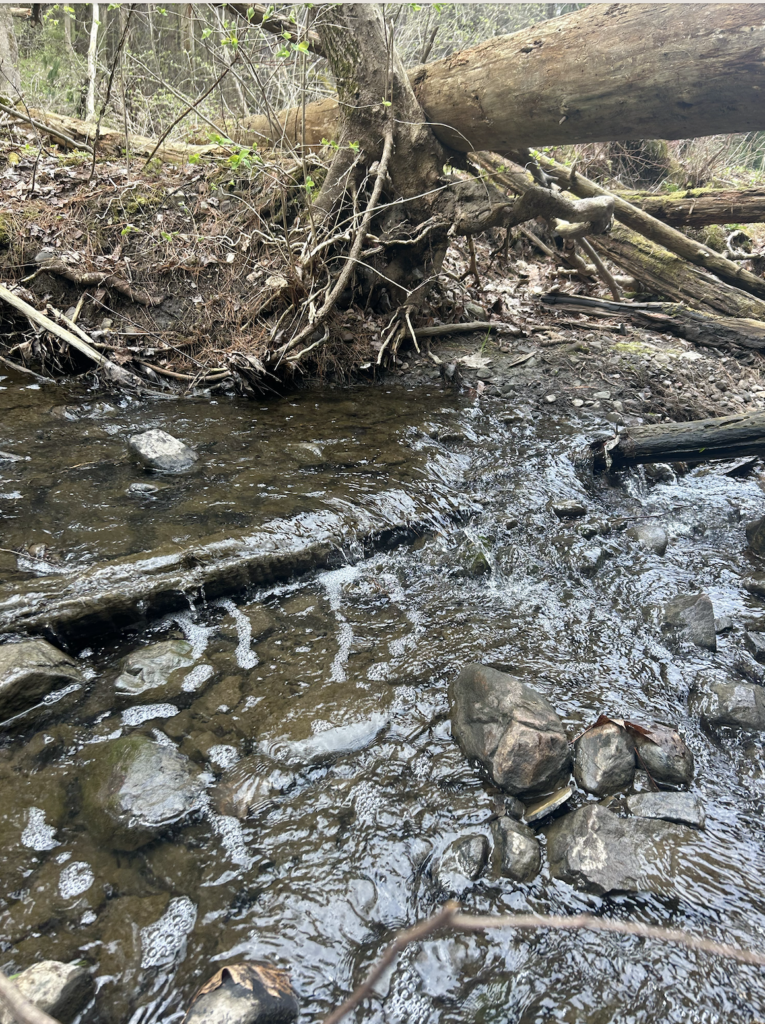
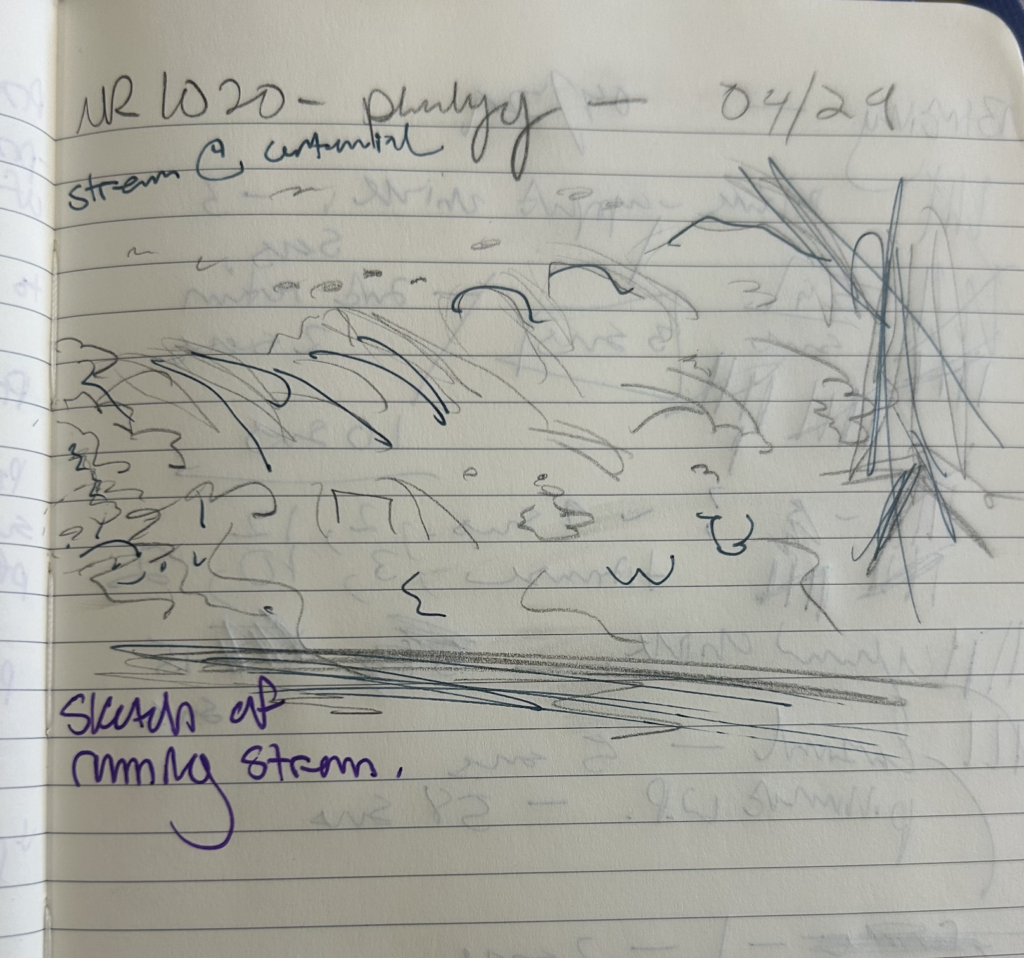
My favorite section of Centennial’s stream, and my sketch of it.

I’ve become accustomed to seeing landmarks as small as a bright green patch of grass just beyond the entrance to the trail, to the wooden bridges built along the muddiest sections of the path. The graffitied bunker, the felled trees lain across the river stream, and the trail maps pinned up on white oak trees are all apart of my mental map of this place.

During a birding lab for my Biology course, I was able to direct my lab-mate to a bird-observation-station relatively deep into the trail–just beyond the hill which leads to the bunker. I realized that as I used my hands to gesture for direction when she asked me where this spot was, my knowledge from my experiences of Centennial woods had forged a connection to the site. I’ve been influenced by Centennial woods and my time spent using the landscape as a vessel for ecological learning has made me a part of the place itself. This feeling about my phenology spot is not unique–with hundreds of RESNR students having spent an entire semester spending intimate time with their chosen places around Burlington informs a greater culture of environmental connection. Every time I speak about my phenology spot with another classmate I feel a connection with them for having a shared connection with a natural area–even if it’s not Centennial woods. Hiking through Centennial is guaranteed to bring forth some other friendly trail-goer for me to say “hi” to, and briefly connect to in the moment of enjoying our time individually at Centennial. It’s a really great feeling.
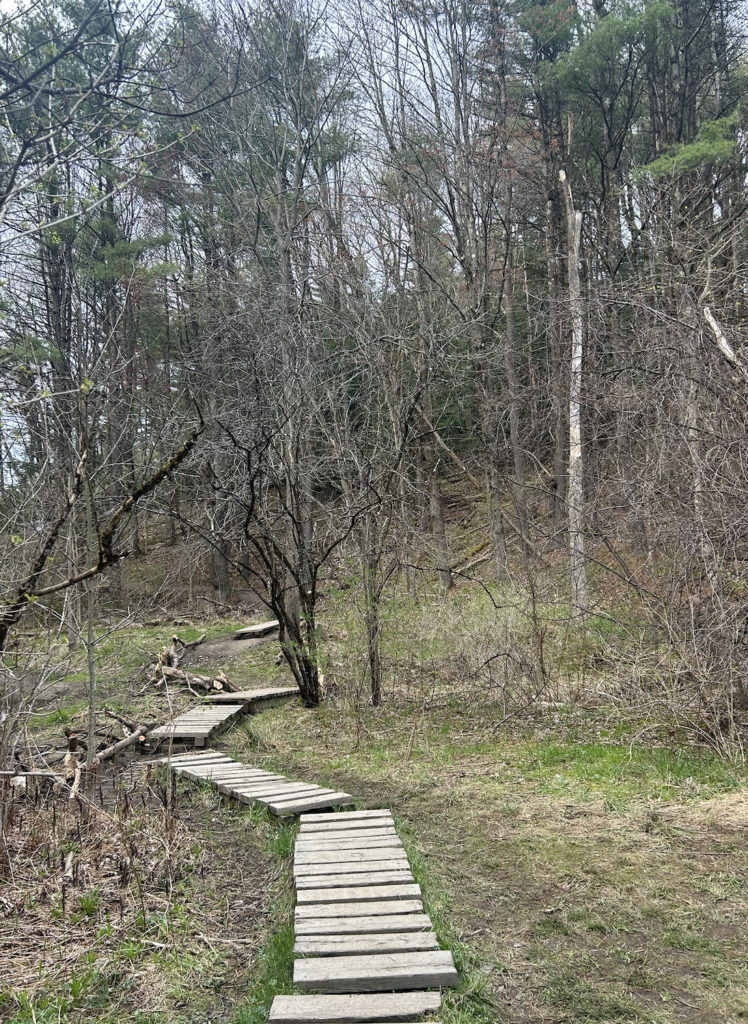
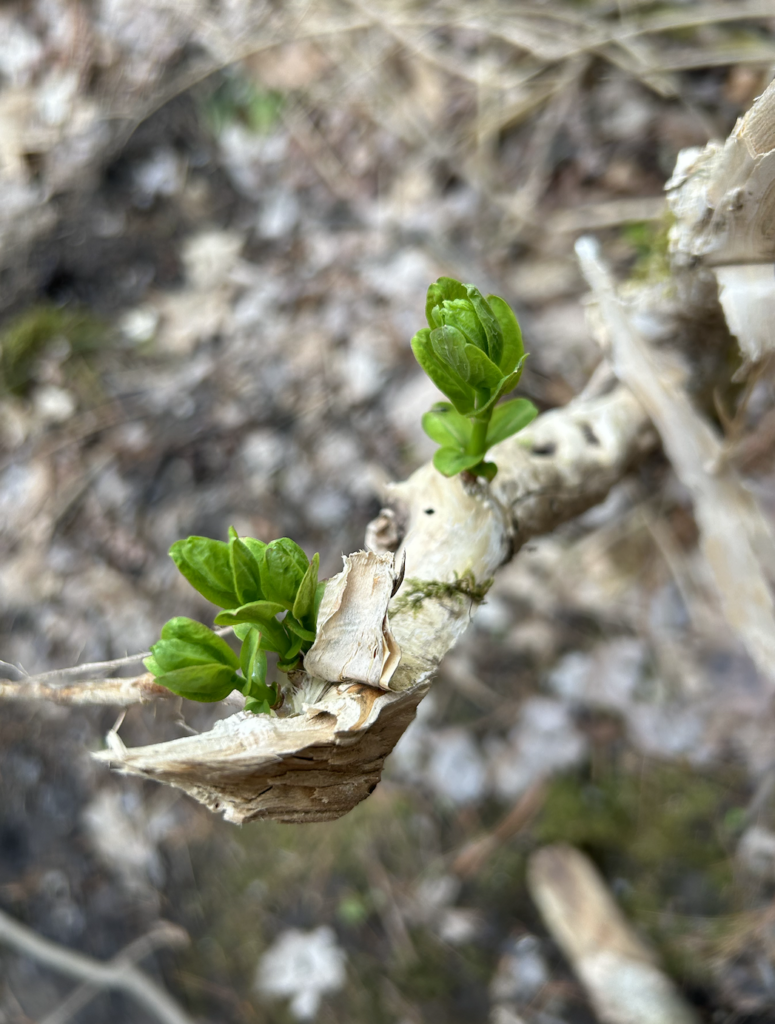
That’s about all for now. I’ve really valued my time spent at Centennial, and all the memories of digesting the landscape through getting outside and moving my body!
Phenology Blog 4: Burlington BioBlitz – 04/29


During the BioBlitz, I explored a patch of woods behind my dorm (“Trinity Woods”), along East Ave, and Centennial Woods. I’ve always found iNaturalist to be a little counterintuitive–as I find that when I try to use it as an identification resource, there are not a lot of options that immediately appear as identification suggestions on species I’m unfamiliar with. I do understand that often identification suggestions are made after a posting–but I often forget to check-up on my past identifications. I also found it rather impossible to link my personal iNaturalist account to the NR 1020 city nature challenge project page on iNaturalist. Maybe I’m just lacking in basic app-literacy, but I have gotten stuck in numerous fruitless loops of re-setting my iNaturalist password to try to access the BioBlitz participation page. Other than my aforementioned frustrations, I generally enjoyed using the app to log my observations. I find that taking pictures and then uploading them to iNaturalist after my hike is very convenient. 

For my observations, I ended up logging 7 different species that I found notable during my outings. Looking at the global city nature challenge page–the mallard duck being the most observed species was kind of shocking. I had expected a common weed, woody plant, or even fungi to be the most commonly observed species, not a North-American centric duck. I also enjoyed exploring the “Top observations” tab. It was pretty incredible to see an image of a striking beetle online and have it be traced to Italy, or Oceania. 

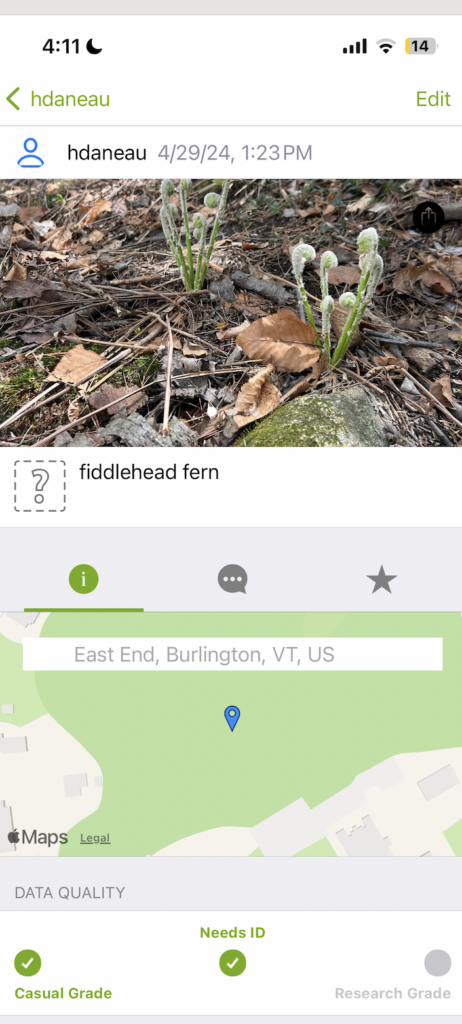
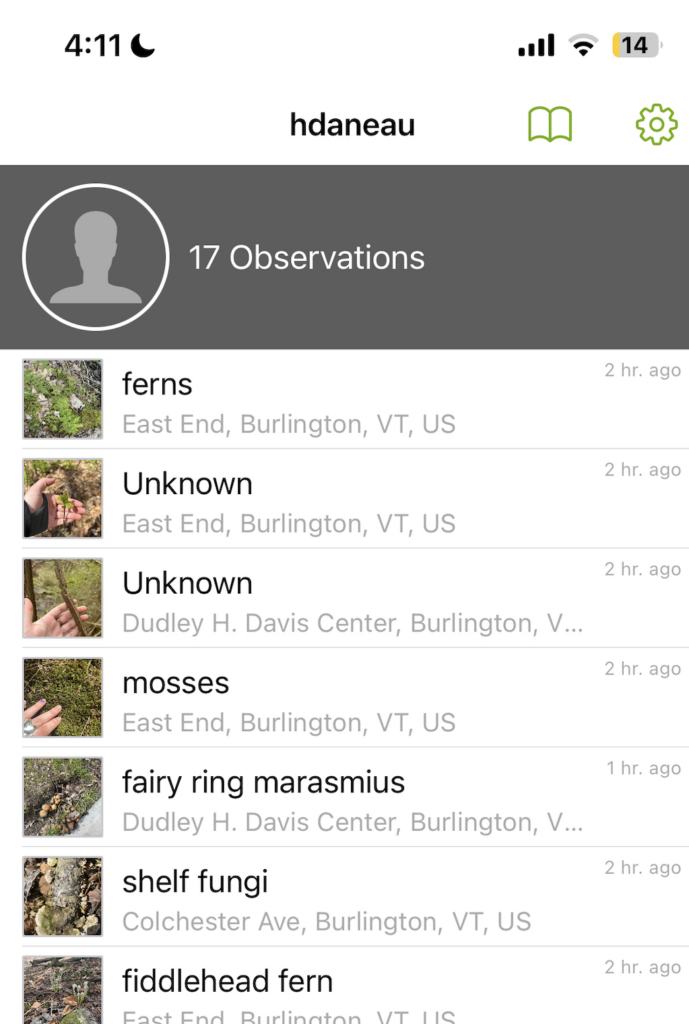
Here are some pictures of my observations:

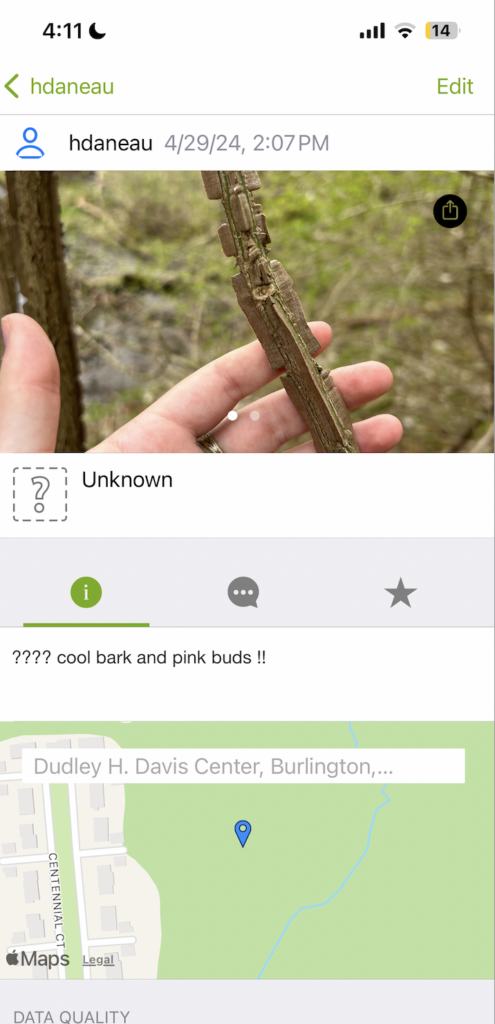
Here are a couple of my favorite entries:

See you next time!

Original Phenology Spot Visit – Hannah Daneau for Centennial Woods

Note: I visited my phenology spot on March 24th, so these pictures are less relevant to the time of this posting

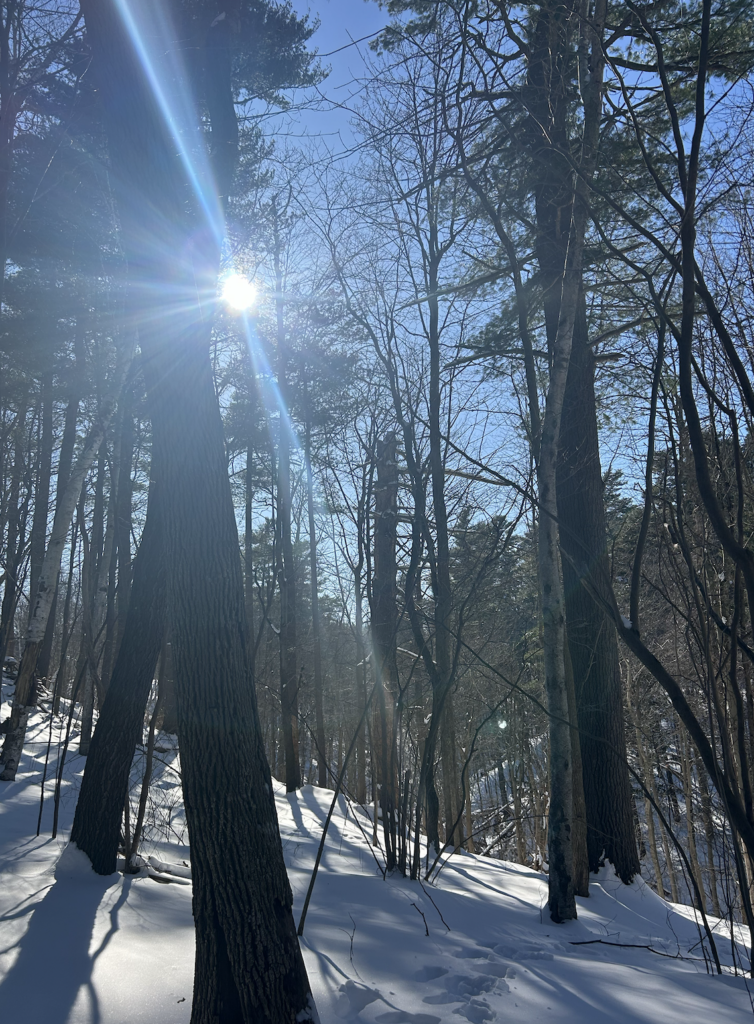
Hello NR1020-er’s! For my third installment of this semester’s phenology, I returned to my initial spot of Centennial Woods. After a fresh blanket of snow late in the season–there were virtually no spring-like showings during this visit. Even mud was covered by the weekend’s powder!

As you can probably see, spring has not exactly sprung at the time of my visit. I did my best to really squint my eyes and ears for signs of springtime phenological changes, and found a few:

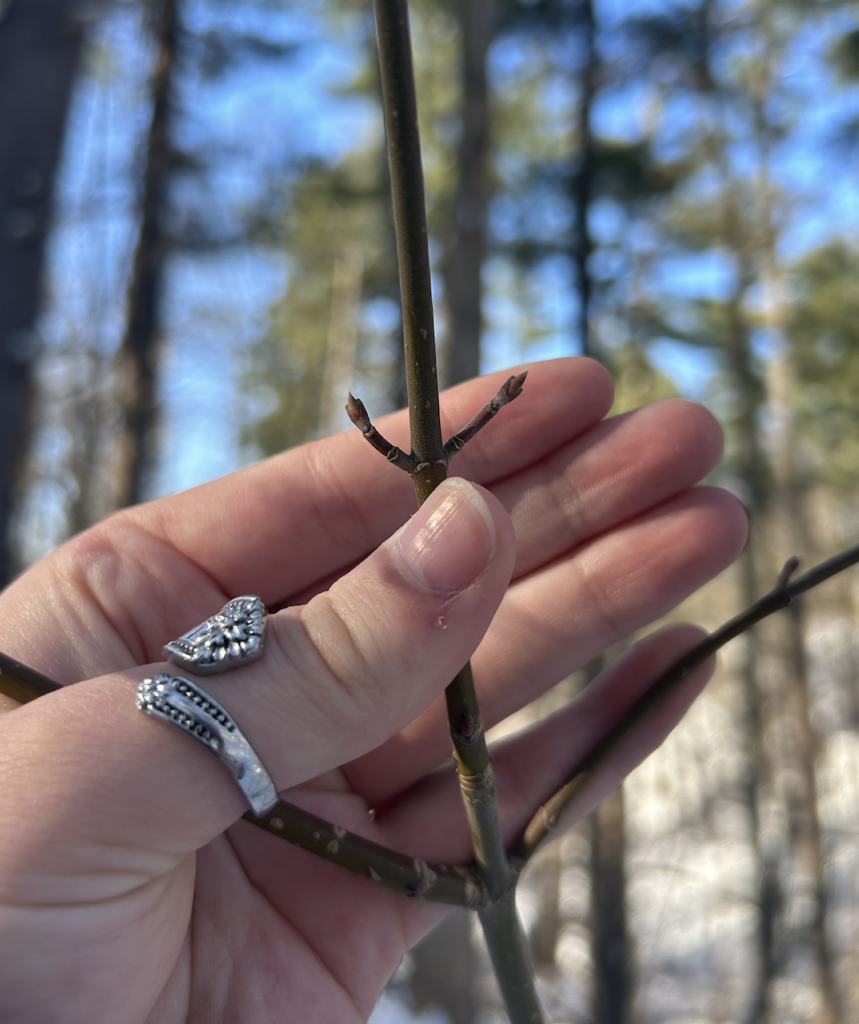
This ID I’m not super certain on–but I determined this to be the buds of a sugar maple, mostly based off the the three distinct points. This woody stem was slightly taller than me.

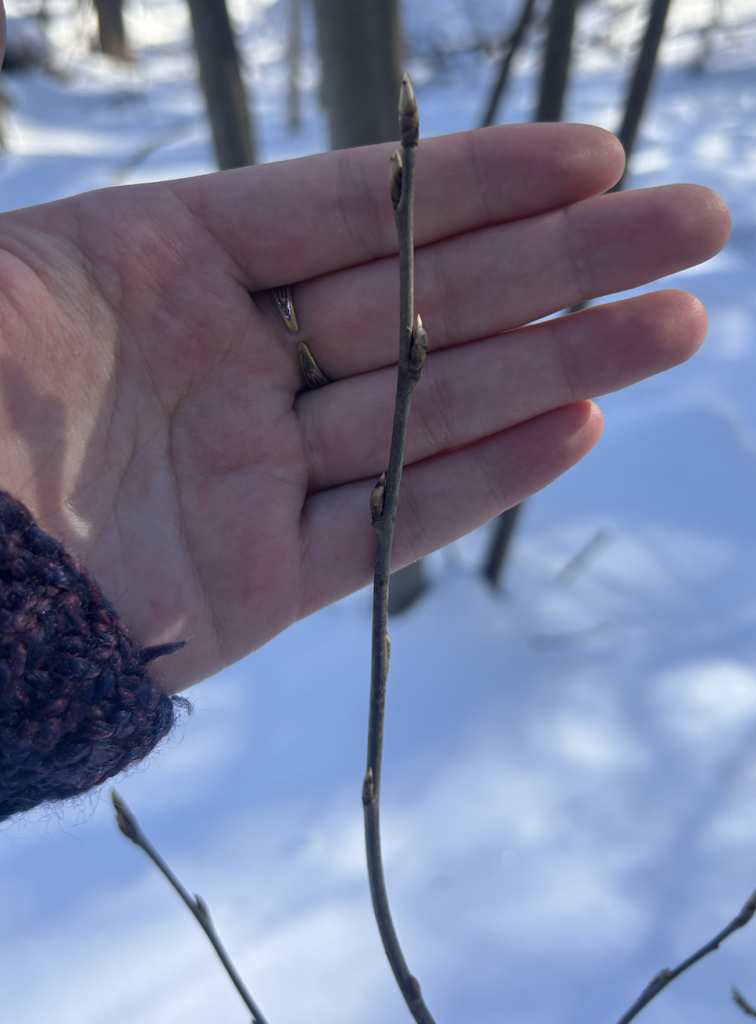
At about hip level, I found the buddings of an American Beech!

Besides these two types of buds, I didn’t find much else that was beginning to arc towards the typical springtime phonological characteristics, which made this visit to Centennial woods quite brief. I did hear some brief birdsong, but not continuous enough for me to get even a 2-second long recording to ID after my visit. I suppose I picked a poor time to visit.

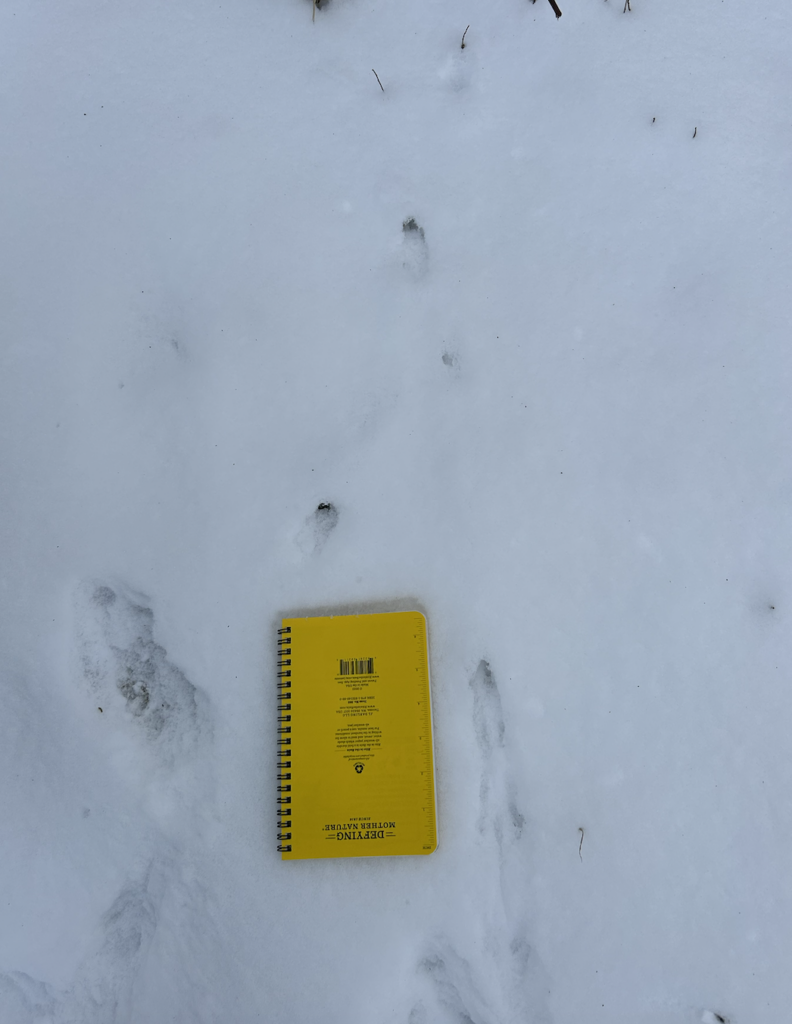
To compound the uneventful nature of my visit, the only traces of mammal activity I found were human tracks in the snow, and tracks so distinctly-domestic-dog that I did not even question that idea that they could have been a type of fox or otherwise. All dog tracks were kept close to the human tracks, irregular and non-direct register.

Visit to Salmon Hole – 02/18

For this Phenology installment, I traveled to Salmon Hole with my NR friends Zoe and Mairin to find some critter tracks.

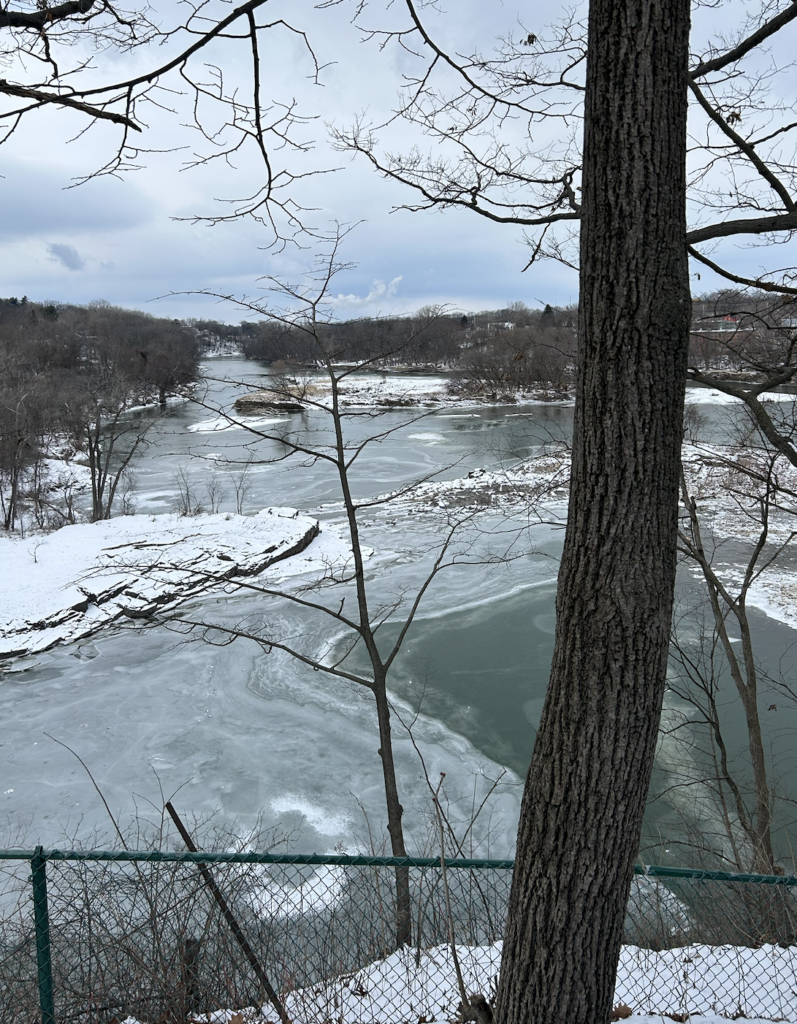
Salmon Hole on 02/18/24

Arriving to the site, we were greeted with a large sheet of ice across the water of Salmon Hole. The shoreside was completely covered, even freezing over a stream and covering it with a pillowing of snow. Tracks and signs of life were scarce until we were long past the steppes and stream-bridges.

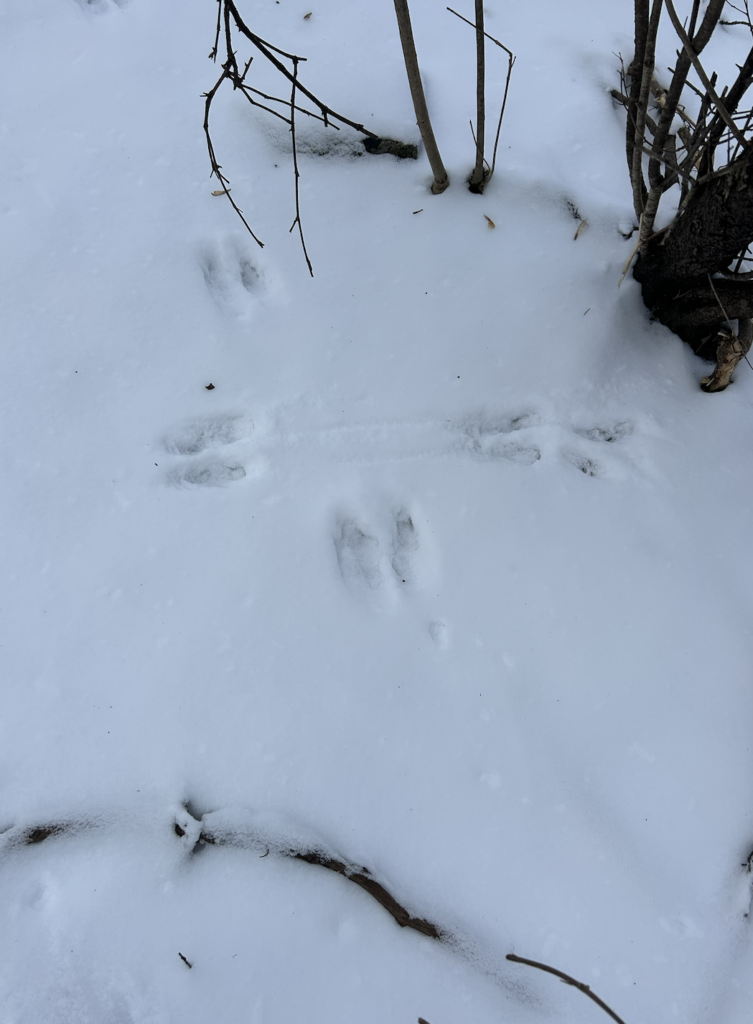
I found this patch of cottontail rabbit tracks. Cottontail is an ID that I’m always 100% sure of because of the unmistakable positioning of the hind and front feet. The loped prints always come in 4’s. You can also see an indent in the snow from where the rabbit leaped(or bounded) from the leftmost print to the rightmost. I made a note of this, and decided to log it on iNaturalist after our outing–mostly due to my cold fingers and lack of service down in Salmon Hole.

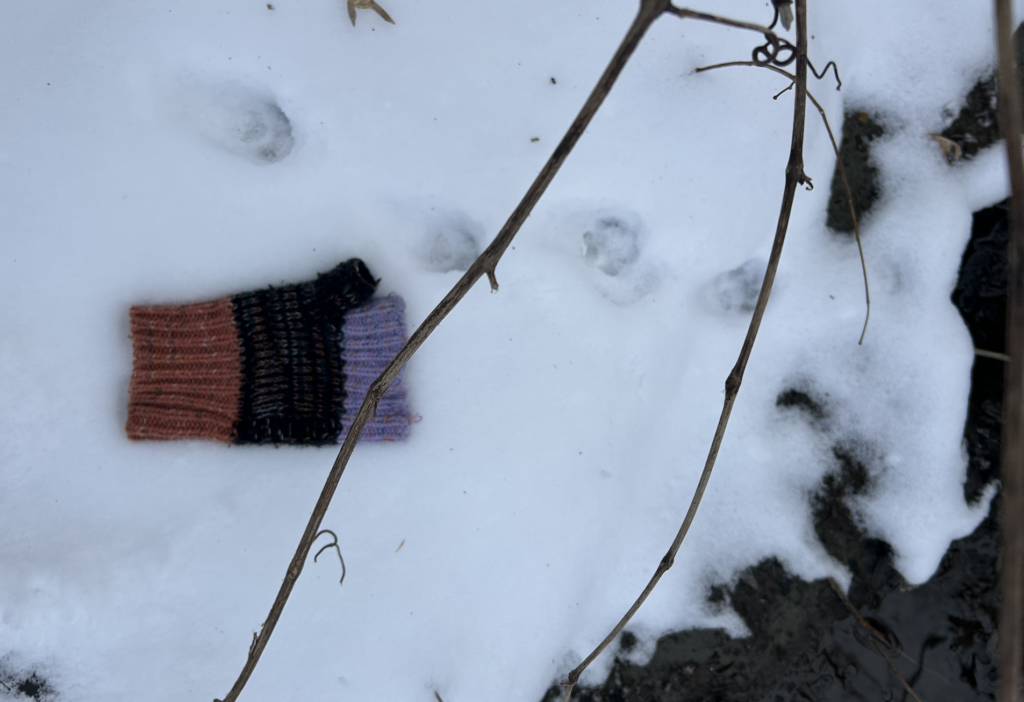
These prints I’m more unsure of. They appear to be in a diagonal walker pattern–which limits me to 4-toed mammals. Based on the approximate size of the prints(~1.5-2”), my best guesses are gray fox, bobcat, or domestic cat. I’m leaning most towards bobcat, as nails/claws are not clearly visible in the prints. I’m also hoping this isn’t a lame housecat(sorry to well-loved cats everywhere).

This find was exciting–you can make out an entire body print of a mouse or vole in the snow! Zoe, Mairin and I were also able to make out the critter’s entrance and and exit from its subnivean burrow. Because there’s no actual prints to use to identify this animal, we can’t really make a definite case for either vole or mouse, so we dubbed this creature our “Subnivean Teenie”.

That’s all of our findings from this visit–can’t wait to revisit Centennial for phonological changes as we begin to move towards spring. 🙂

Skip to toolbar