A look at Centennial Woods, October through December Phenology Project for NR1010

Posts

Dec 8, 2024- Final Updates!

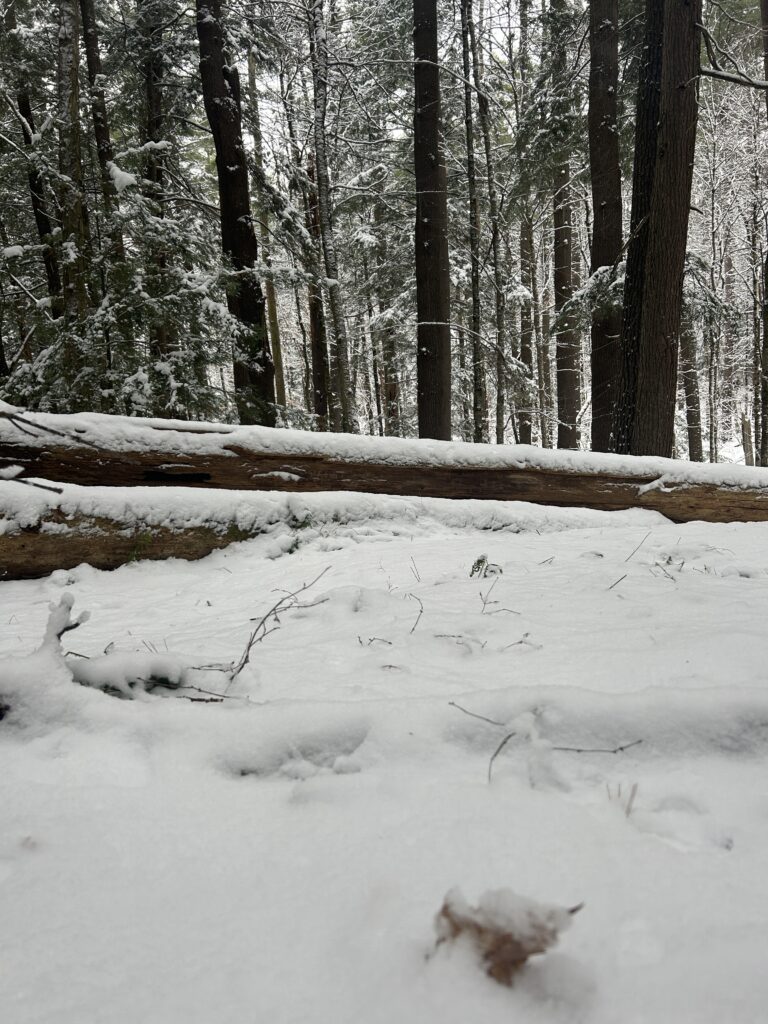
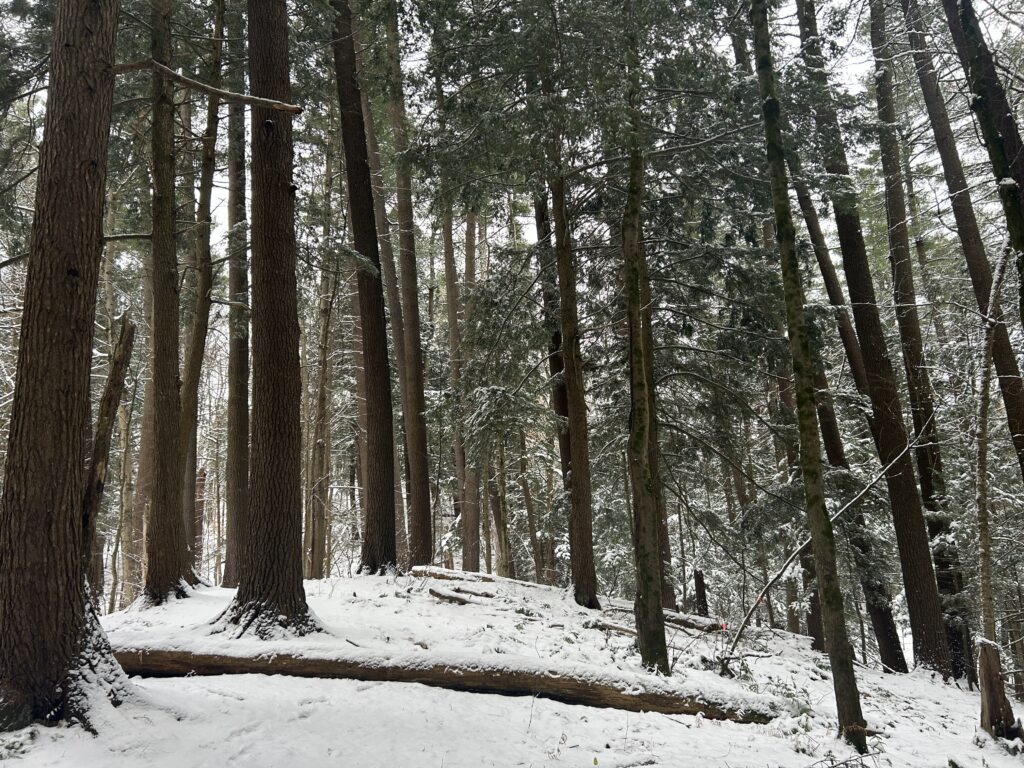
Snow is here! And just in time, too. With winter break fast approaching, I took one last trip out to my site- and the scene that greeted me was a very different one than I had seen previously. All deciduous trees in sight were barren of leaves, save the few dead ones that clung to the yellow birch and beech, and the hemlocks and pines were all snow covered. Periodic showers of snowflakes on me as I walked. The forest itself was silent, all noise dampened by the snow cover, but overhead, the chirping of winter birds could be heard. I think there must have been about half a dozen chickadees really going at it- they were the only ones I could make out. There weren’t an signs of forest activity other than them though- I looked for tracks, scratch marks, as well as any middens or drays(squirrel food piles and nests)- but I couldn’t find anything. Similarly, all evidence of the copious fungi I’d seen previously were gone- either frozen or buried in snow. Leaf litter and cones aren’t visible, and frost has stuck them into solidly wet-yet- thawing clumps. Buckthorn berries still hang on, and ferns still lie green beneath the blanket of snow- but for the most part, its as if half the forest has gone to sleep, ready to awaken again when the temperature raises(though knowing Vermont, that could be as soon as later this week).

As this project comes to a close, I hope to come back to this spot sometime soon. I enjoyed the small moments of peace and solitude it gave me, as both things are hard to come by in a crowded college campus- the chance to interact with nature was also quite nice, and I will miss the reminders to get outside every once in a while. I will have to find the time to visit next semester- maybe I will find some items to forage and study come next spring. I’ll look forward to it. 🙂
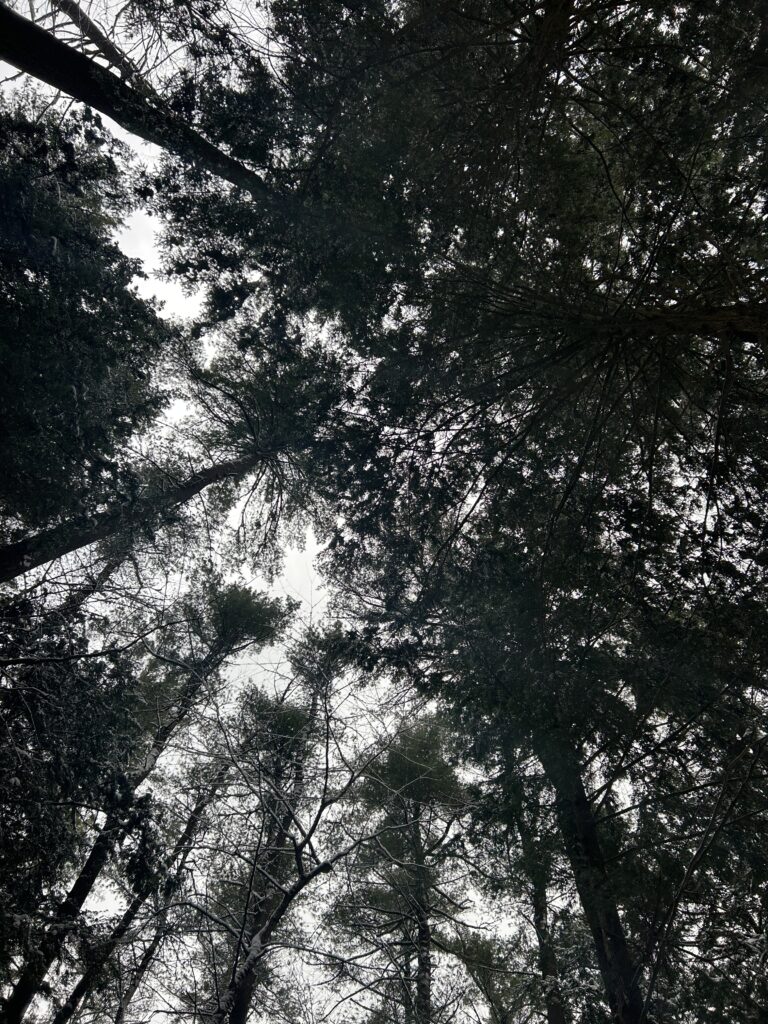
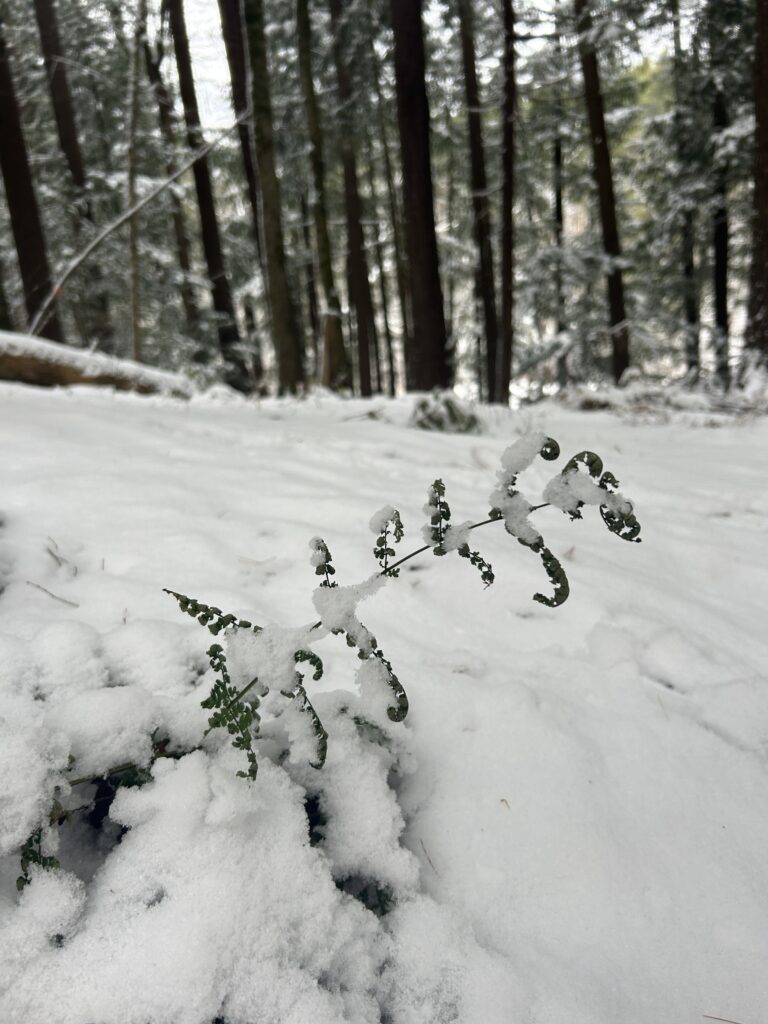
Pictured top left: A shot of the white pine and hemlocks at my location. Snow covers their branches, blocking out more light than usual. Top right: a fern peaks through the snow cover.

Pictured right: snow covers the ground and nearby fallen logs of the forest. It can also be seen drifting down off of branches as wind knocks it loose.
November 23- Second Phenology Site

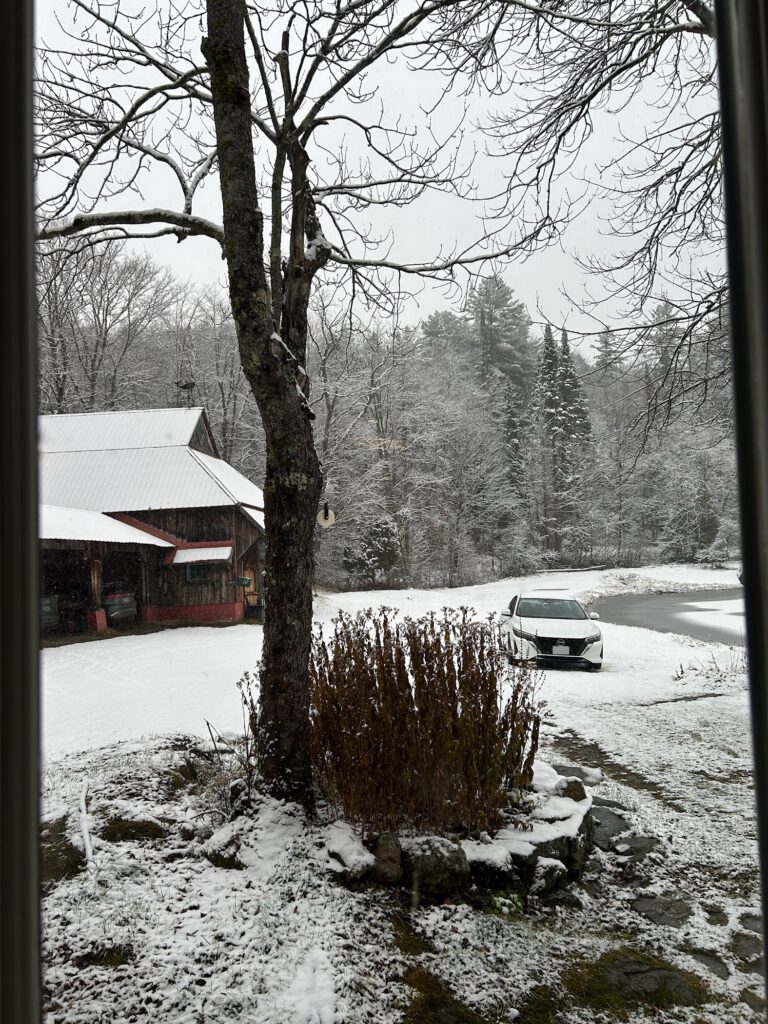
Over break, I spent a lot of time in the woods by my grandma’s old house in Elmore, Vermont(pictured left and below).

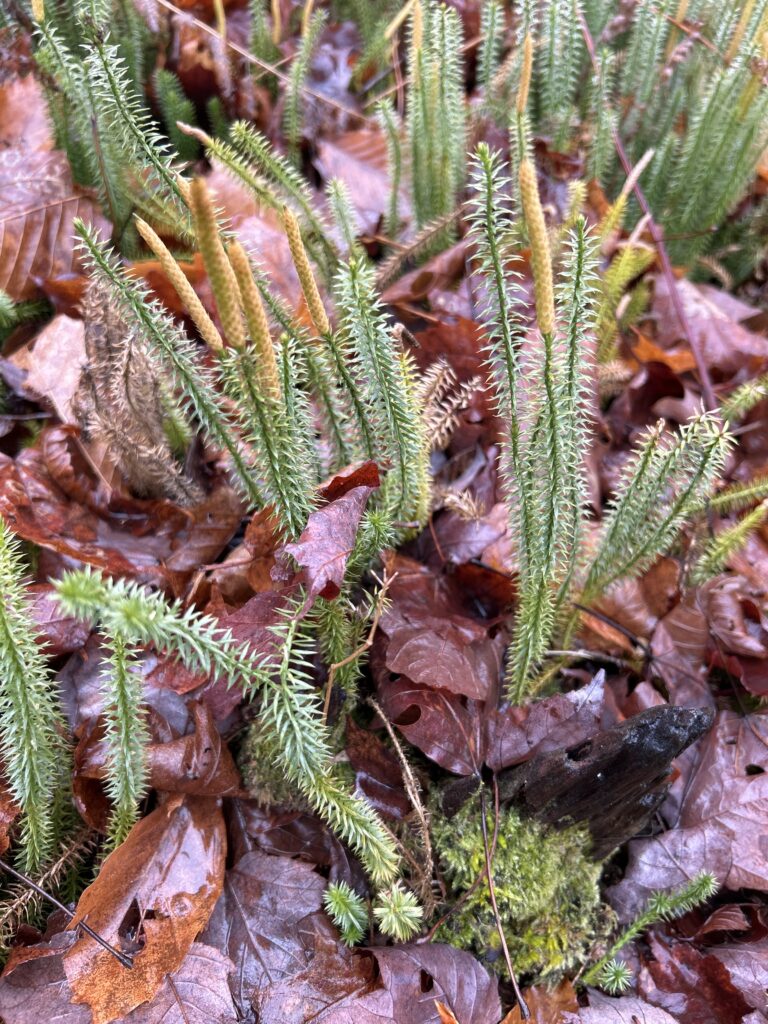
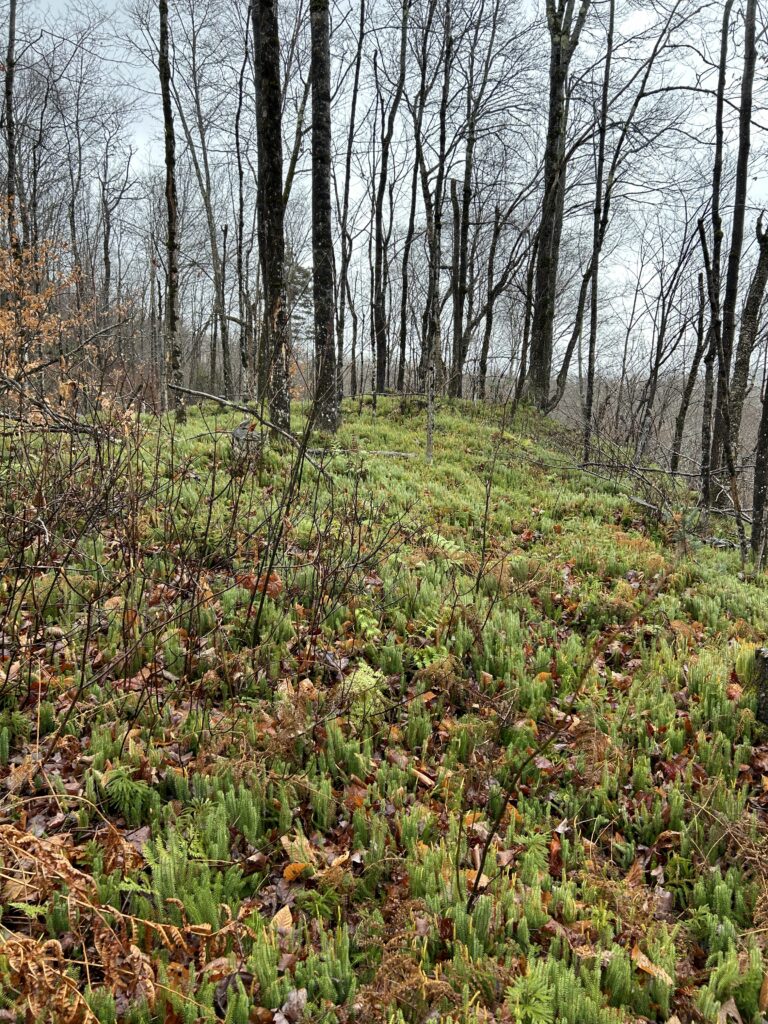
They’re pretty different from those in Burlington- settled in between mountains, the soil is rockier, filled with boulders that peek out from the soil. It makes it hospitable to a different kind of life- yellow birch are far more common, as are old hemlocks. Carpets of thick moss covered the ground, and walking the bike trail in the rain, with mist swirling up on all sides, felt like walking in another world. On higher rocks closer to the sky, deciduous trees and ferns made more of an appearance- mostly beeches. There used to be logging trails that run though here, so a lot of the larger-leafed trees were young, most living in the understory. Unlike Centennial woods, the place I went to in Elmore had signs of larger wildlife: I saw several signs of deer in the form of scat and prints in the muddier areas. When it snowed(four whole inches! Elevation gain really does something for the winter atmosphere), footprints of rabbits and mice could be seen wandering off into the woods. The area felt overall far less inhabited by people than my spot in centennial woods did, and it was nice to get to explore some denser woodland. I did not leave a gift while I was there, so I will be sure to do something for the space in the future.

Pictures of a mossy hilltop(above) with close ups of the moss type for identification(right). iNaturalist claims it is likely in the genus spinulum!

November 3rd- Birdseye View Map of Sit Spot!

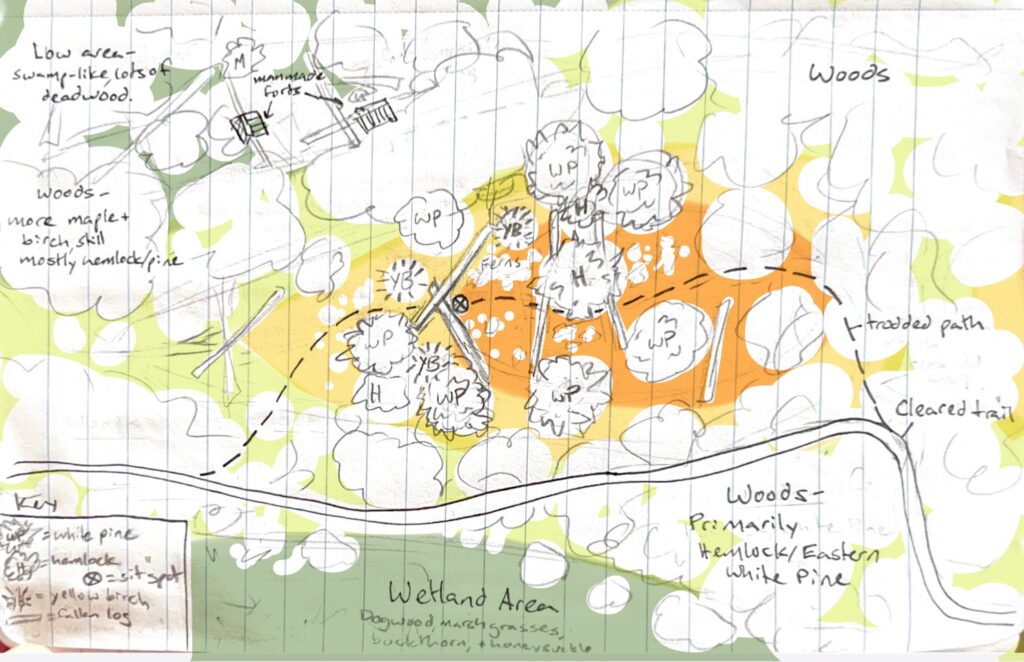
Hello all! Today, I bring you a map of my sit spot for this project. The coloration shows gradient levels, with orange being a hill and dark green being a valley. I wanted you to be able to get a lay of the land in more ways than one, so it felt important to include some type of color map. The Key in the corner should help clarify the immediate tree species in the area, and most things that aren’t in the key will have an annotation next to them. Tree coverage was left white for simplicity sake.

While the weather is dropping in temperature, there are yet to be too many major changes since my last visit- any deciduous trees have lot there leaves, but most in the area are coniferous, and as such aren’t very different. The ground has more leaf cover on it though, especially on the walk over, and the colder air means Canada geese could be heard flying south as I drew this map. There were other birdcalls too- chickadees, nuthatches, and blue jays, all of which are birds that overwinter here in Vermont. It definitely feels like winter’s on its way- my hands were starting to get chilled after fifteen minutes of not moving, and squirrel and chipmunks were hard at work gathering nuts(I almost stepped on one with its cheeks all puffed out on the way over- it was quite entertaining to look at). The sun was out though, which was nice- it was beautiful to watch it filter in through the trees. I’m trying to soak it up while I can- I know come December, it will be a rare sight.

Natural History Project- Phenology of Centennial Woods

Welcome! I’m Gabbie, and this will be my blog for the Natural History Phenology project. It will be detailing the seasonal changes of a small spot in Centennial Woods, one of the University of Vermont’s several research forests, located about a seven minutes walk North-East from the Aiken Center. This accessibility was only one reason why I picked this spot; the short commute means I can visit often and easily, without having to dedicate a huge chunk of my day to it. The ease of access isn’t the only reason I picked this spot though- it’s also gorgeous there. Situated as it is on the crest of a small hill, the location has a great view of the surrounding woods, with loads of mosses, ferns, and fallen trees. Its a little off the main path too, so it’s its a quiet area to take a moment for yourself if you need it.

Here it is on Google Maps-

The main types of vegetation here are small ground cover plants- wood ferns, hog peanuts, and partridge berry were the three most common plant types I could spot. There are also a few species of fungi in the area; while documenting today I saw a lot of lycoperdon puffballs. The tree species are a mix of conifers, mainly White Pine and Hemlock with a smattering of yellow birch, sugar maple, and even some witch hazel. I look forward to seeing how the vegetation and wildlife evolves as the seasons change.

That’s all for now! Be back soon.

Skip to toolbar