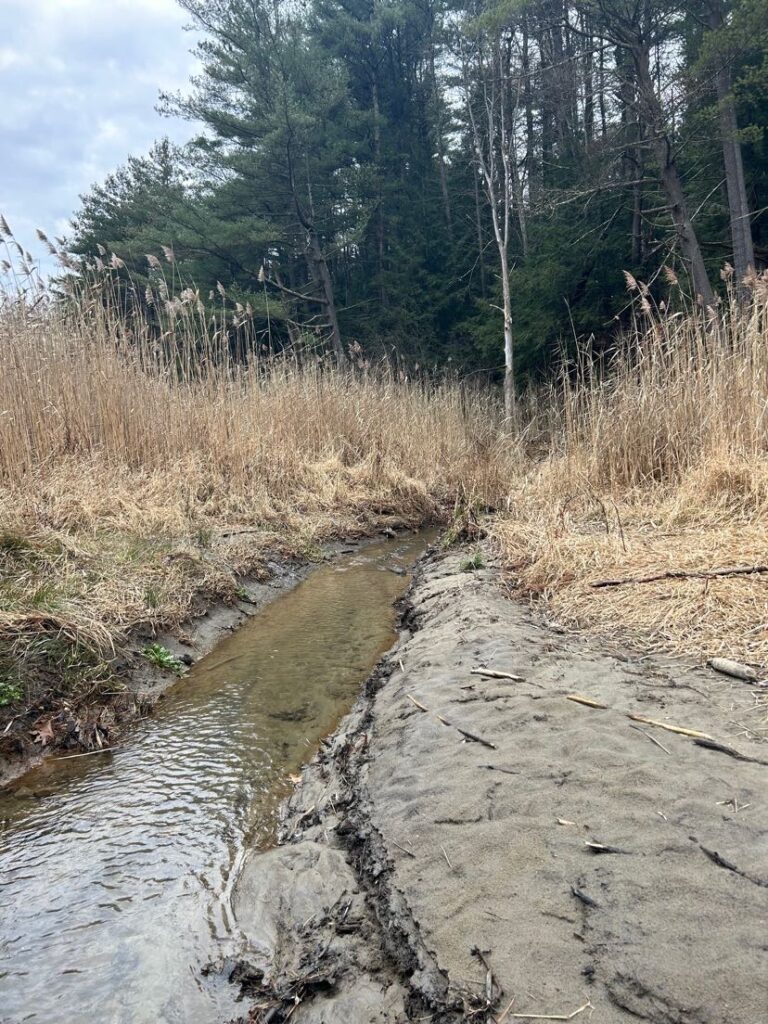
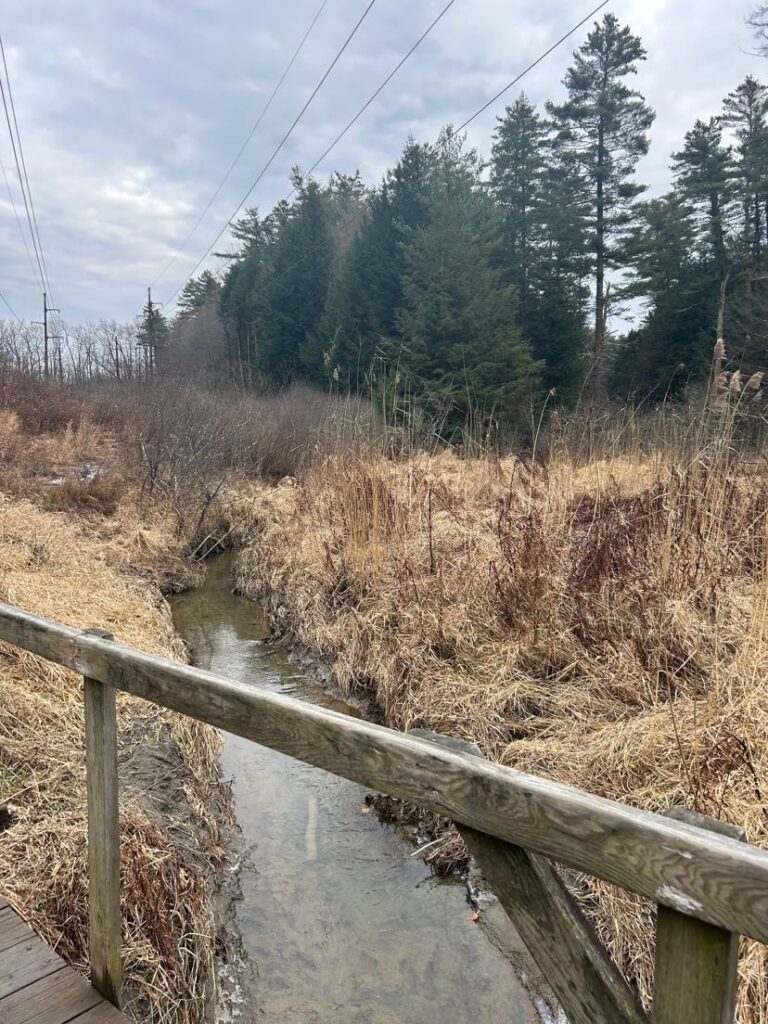
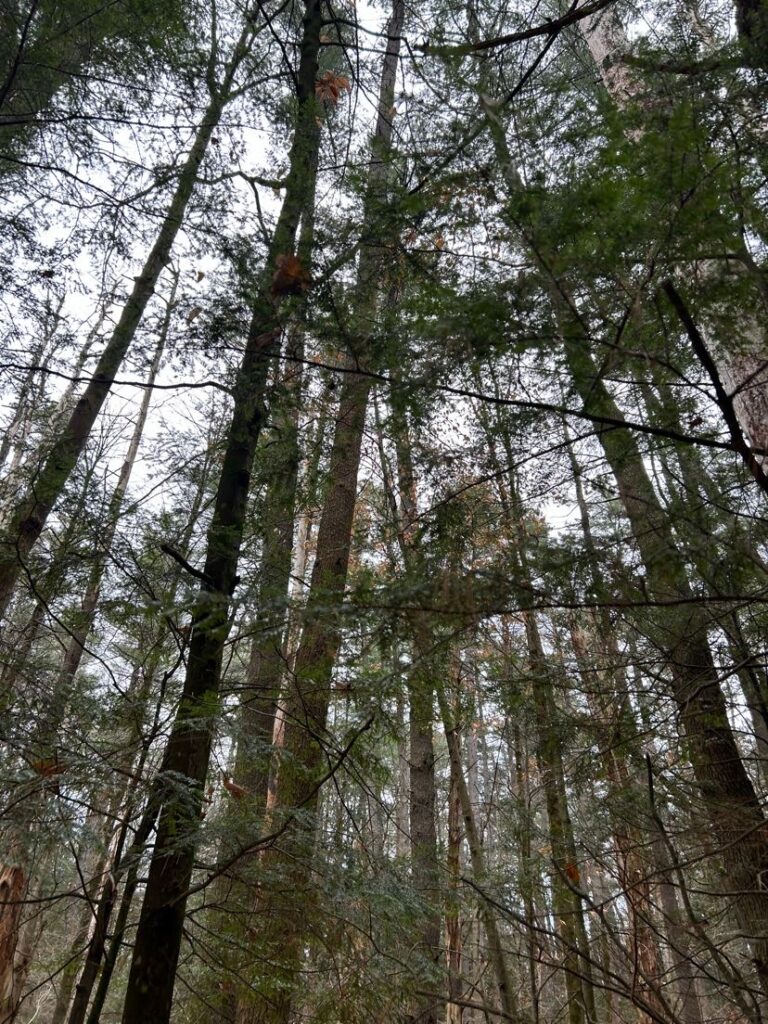
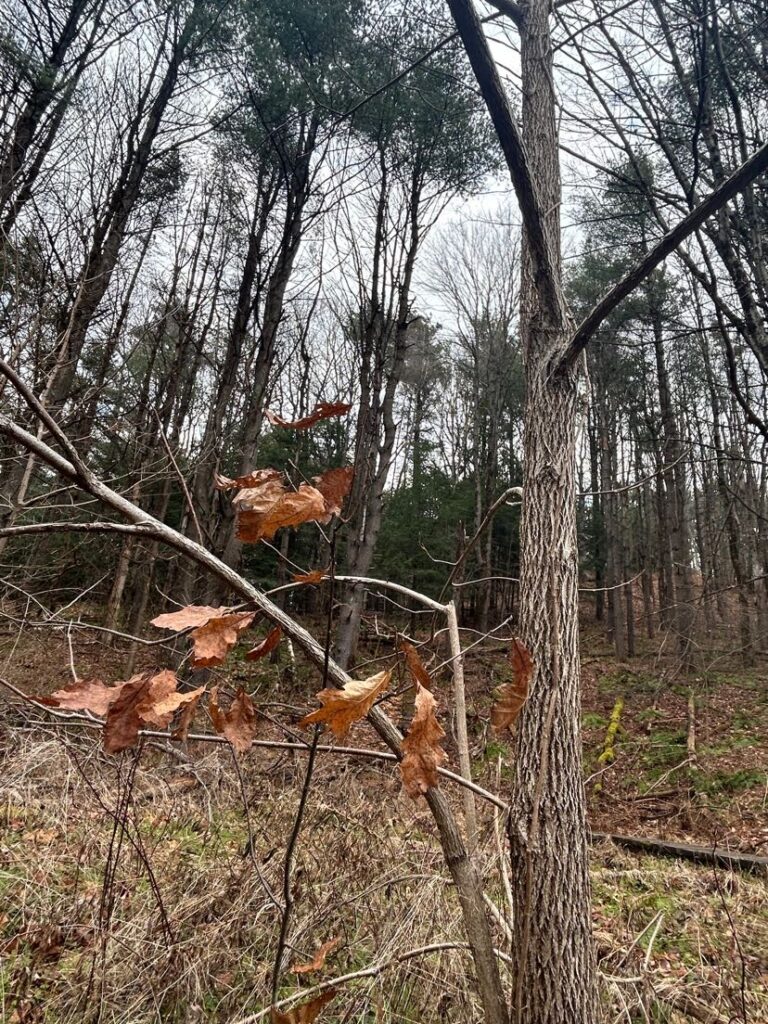
Upon arrival at my phenology spot, it was very apparent that winter was approaching. The state of my spot at this point wasn’t incredibly different from my last visit, but it was obvious that we’re moving closer and closer to the winter season. The phragmites which dominates my spot still stands, and the leaves of a few deciduous tree species surrounding the phenology spot still hang on for dear life (including):
- Sugar maples (Acer saccharum)
- American beech (Fagus grandifolia)
- Northern red oak (Quercus rubra)
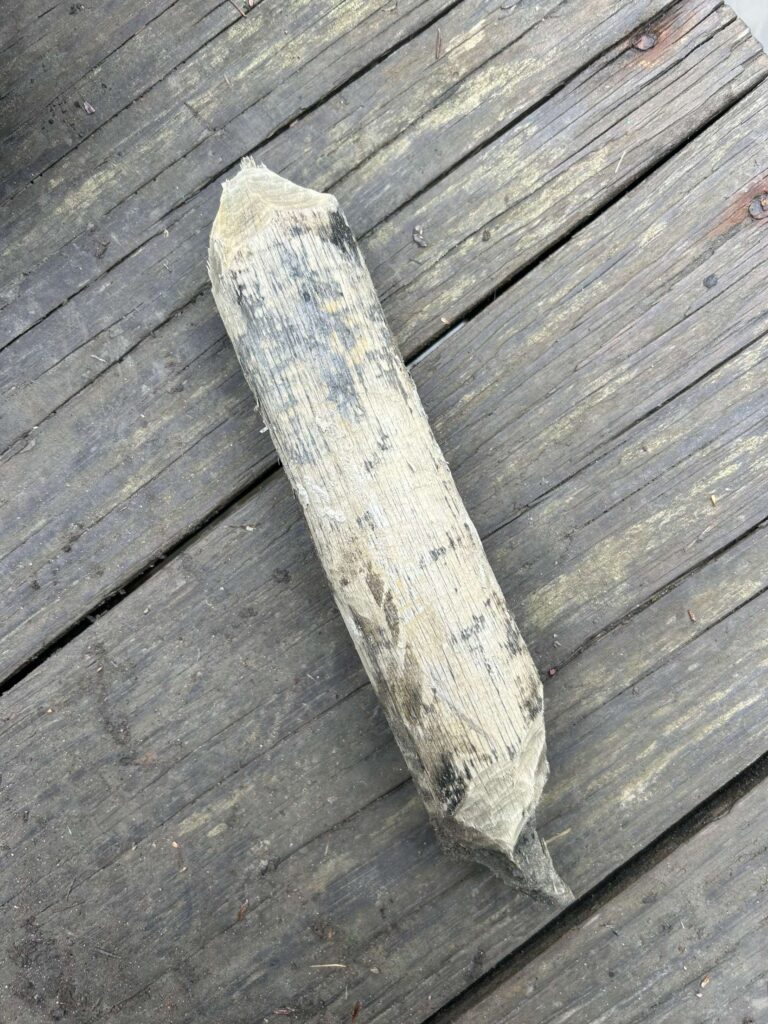
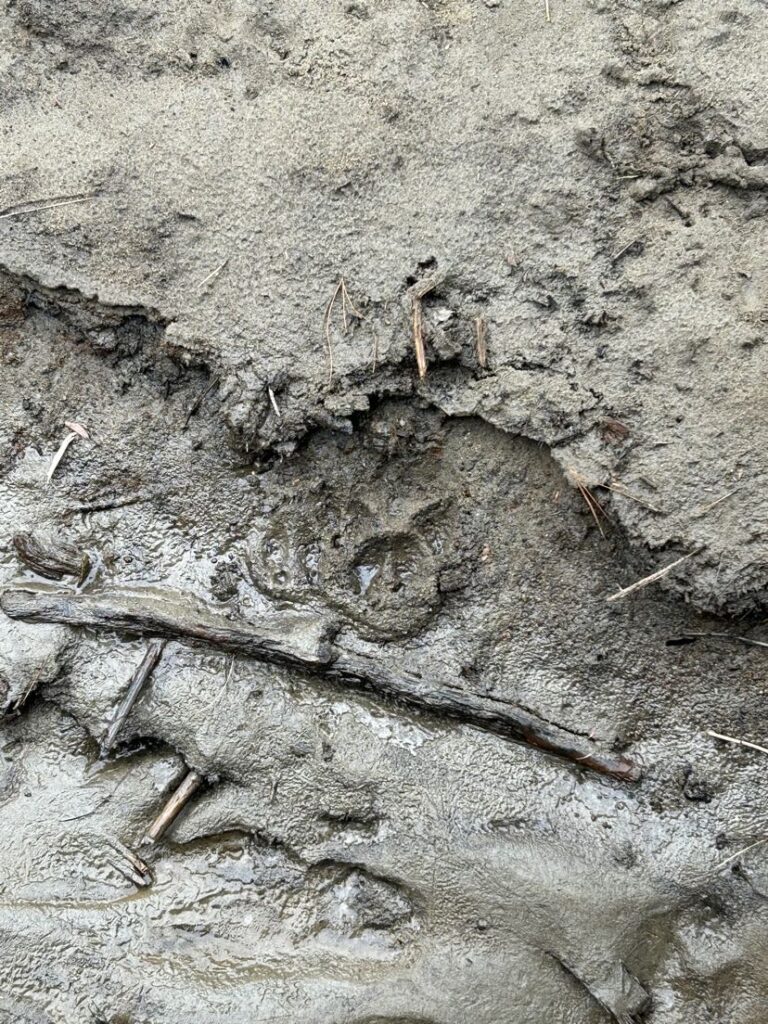
Some signs of animal activity could also be seen, specifically some animal tracks in the mud (possibly deer tracks) and a piece of wood indicating past beaver activity.
Final reflection question:
I genuinely love my phenology spot and feel like I couldn’t have picked a better place for this assignment. My spot is a relatively short walk from the entrance of Centennial, but still captures a unique aspect of the ecosystem of Centennial Woods being located at the most prominent stream (that I’ve found), in the forest. The stream is probably my favorite aspect of the spot, and upon seeing the stream for the first time I knew that I would pick this as my spot. In hindsight, my spot is very peaceful, but also fills me with a general nervousness due to the prominence of invasive species. I would say that the prominence of invasive species definitely docks a few points, but the entirety of Centennial Woods is infested with invasive species, so that wasn’t really escapable. Going to my phenology spot doesn’t feel like an assignment, it always feels like a little adventure where you never really know what you’re going to find or end up doing. I look forward to visiting my phenology spot after break and watching the changes take place as winter shifts to spring.