RSS
 

Final Phenology Visit

04 May

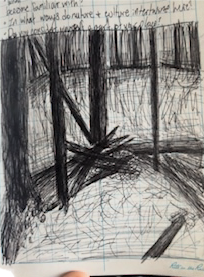
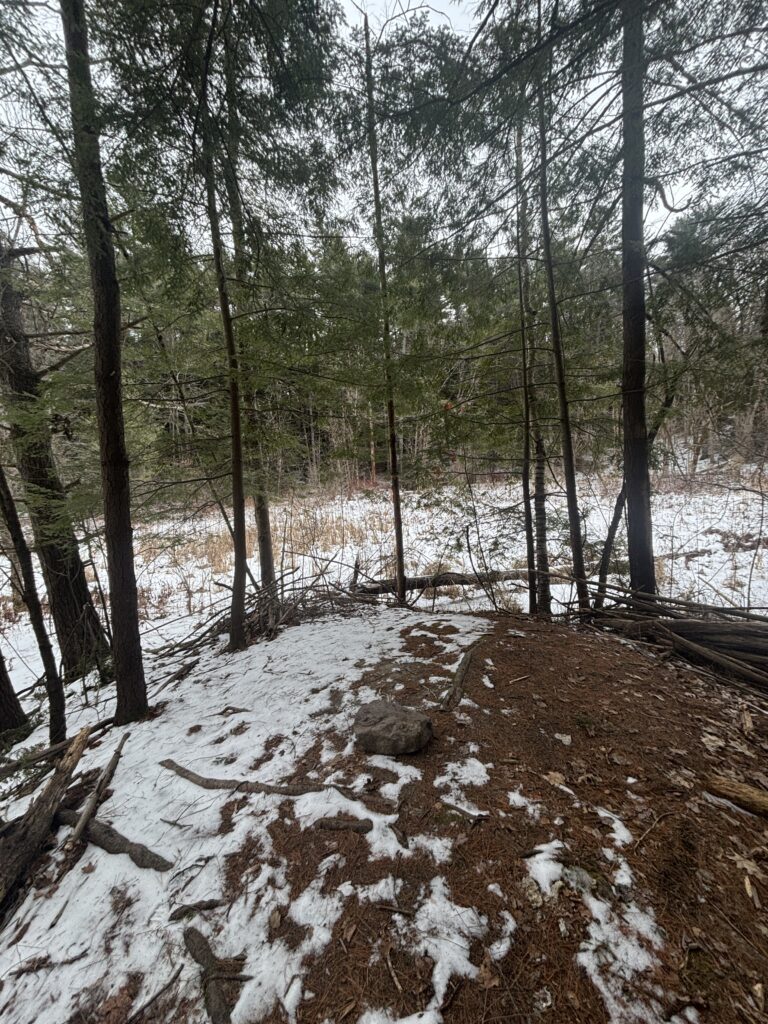
My site hasn’t changed much over time, but there was more foliage present and more water in the creek next to my spot now that it is spring. Other than that, the understory plants and surrounding forest structure were the same as when I first visited. Surrounding the site are many trees that I had become familiar with when navigating to the spot. Sometimes I would take different paths through Centennial to reach it, but I would always use a large fallen tree to let me know I was in the right place. The tree was old growth and probably about two feet in diameter, so it’s hard to miss. I would also follow the nearby stream and the sound of running water because it lies adjacent to my spot. This spot is a perfect example of where nature and culture intersect. Each time I go to the spot, I find some positive human remnants, indicating that other people were enjoying my spot too. Once I found a circle made of rocks, and this time I found two pieces of grass woven into a square. There is a common respect for nature when using it for recreation, emphasizing the culture of valuing nature here in Vermont.

As this semester comes to a close, I find I appreciate the little things more than I did early on. The leaves on the trees, the desk I always sit at to do my work, and even waking up early to go to class feel more significant now, knowing I will be 1,000 miles away in a week. My phenology spot is no different. Although I changed my phenology spot in the second semester, so I haven’t visited it for the entire year, I still feel connected to my spot. I found the spot originally on our first ever assignment for NR1010, where we took a walk in Centennial Woods, and I see it as a reminder of how far I have come over these past nine months. The connection and memories I have with my place make me feel like I am a part of it, as it has left a part of itself with me. This spot has given me a grounding place, a place of comfort in nature, and I see myself continuing to visit next semester when I return to campus.


iNaturalist City Nature Challenge

29 Apr

           During the BioBlitz, I made observations as I walked around campus as well as on my trip to the beach at North Point. I really liked using iNaturalist, especially with the updated app. I felt like it was a lot easier to navigate, and the suggestions were a lot more intuitive to what a species may actually be if I wasn’t able to identify it myself. I documented 10 species in total, ranging from plants, to fungi, to insects and spiders. Although I didn’t end up making as many observations as I wanted due to time constraints on my part, I still thoroughly enjoyed getting outside and making the observations. I felt like I was more connected to nature as I was seeing everything around me as a possible observation in the days leading up to the challenge. On a global scale, I found it exciting how people around the world were doing the same thing as me: collecting observations on wildlife around them. Looking on iNaturalist, it was cool to see what pictures other people could get of their findings. I’m not a great photographer, so it was really impressive to see the great pictures taken during the BioBlitz.


Phenology Walk

11 Apr

April 1st, 2025

When I was making observations, I found it difficult to confidently identify some of the trees because the buds were so small. I spent a lot of time comparing the buds to the diagrams that we have and making sure the bark matched up to what I thought it should look like, but there weren’t a lot of leaves or other easy identifiers because of how early it was in the season. Entering my data into Nature’s Notebook, I found it was the same for all of the trees that I observed. I didn’t notice any buds breaking or any leaves on the tree. There were no living leaves, but the sugar maple and white oak had a few dead leaves from last season still attached to their branches. When I was observing, there was no snow on the ground, but it had snowed two days prior and I think two days after as well. I feel like these observations line up with the normal phenological timeline, though.

I was interested in learning more about the maps and data on Nature’s Notebook, so I looked at the “Status of Spring” tab. It talks about how data is collected, what it means, and how they use it. For example, they use the global observations to tell if spring is coming early, late, or on time compared to past years. This could be a great tool for looking at the effects of climate change in relation to phenology because it combines lots of temperature and phenology data, and can compare it to historical data. It can be useful locally to see how climate change affects specific local actions, but can also be used on a broader scale to see how it is impacting the world as a whole. I also think it’s great how anyone can participate, so more people can make a difference!


February 2025

24 Feb

Phenology of Burlington

For my exploration of Burlington Phenology, I started at campus and began to walk toward Church St, with no real direction to where I wanted to end up. Walking for a while, I paid close attention to the ground, and any possible signs of wildlife. I saw a few birds (of which I could identify: a robin and a cardinal), and some gray squirrel tracks in the snow (I eventually saw another gray squirrel further down the road on my walk). I didn’t see as much wildlife in Burlington as I would have liked, but I didn’t have time to wander around the city for hours.

I saw the birds’ bright colors when they were sitting in their own respective trees, so I was quickly able to identify them but I still looked at iNaturalist to confirm that other people had also seen these birds nearby. As for the squirrel tracks, I saw them in the snow leading up to a tree. It was snowing, but the tracks weren’t fully covered, so they must have been relatively fresh. I couldn’t tell at first what kind of squirrel made the tracks, so I took out my pocket guide to check. Each track had four distinct places where the paws were, with two smaller ones and two larger ones. The larger ones were about 7 cm long and were spread out, so my guess is that the squirrel was running to get up the tree.


January 2025

27 Jan

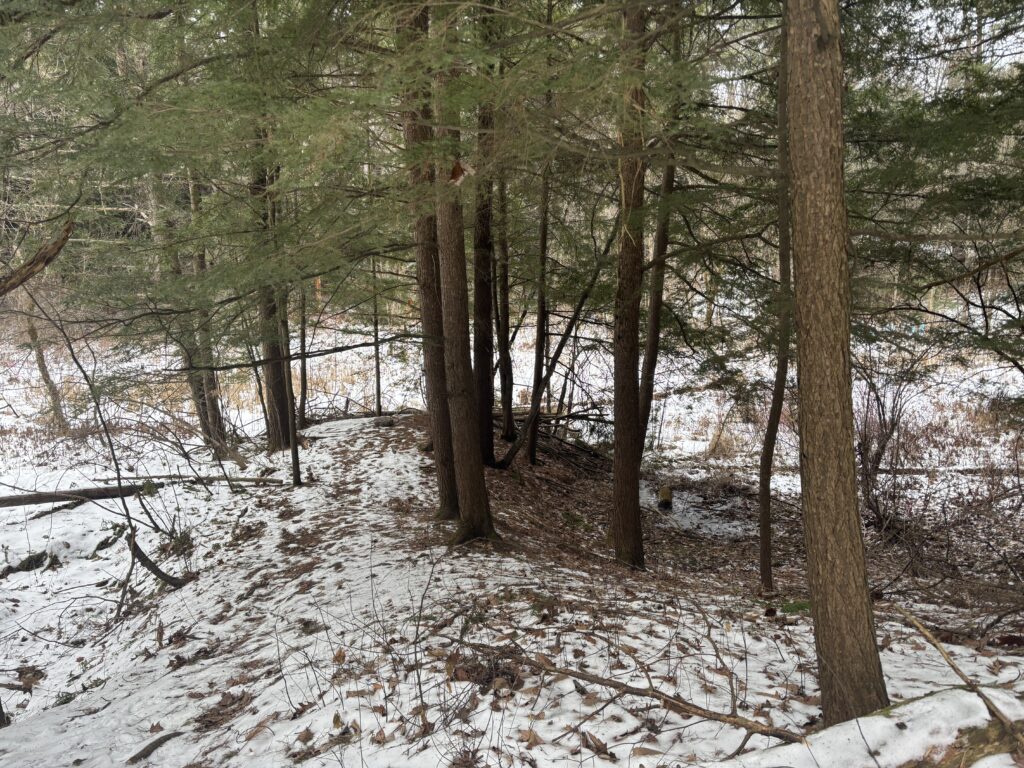
Because of the new semester, this visit was the first chance I had to make observations of my spot. I’m starting fresh, but I wanted to have a base of a few observations for the rest of the project. To start, the trees surrounding my spot were mostly conifers, with a lot of Eastern Hemlock and White Pine. There was a lot more scattering with the deciduous trees: a yellow birch, a paper birch, and some red oak. I also noticed a denser overstory with less shrubs and small trees in the understory.

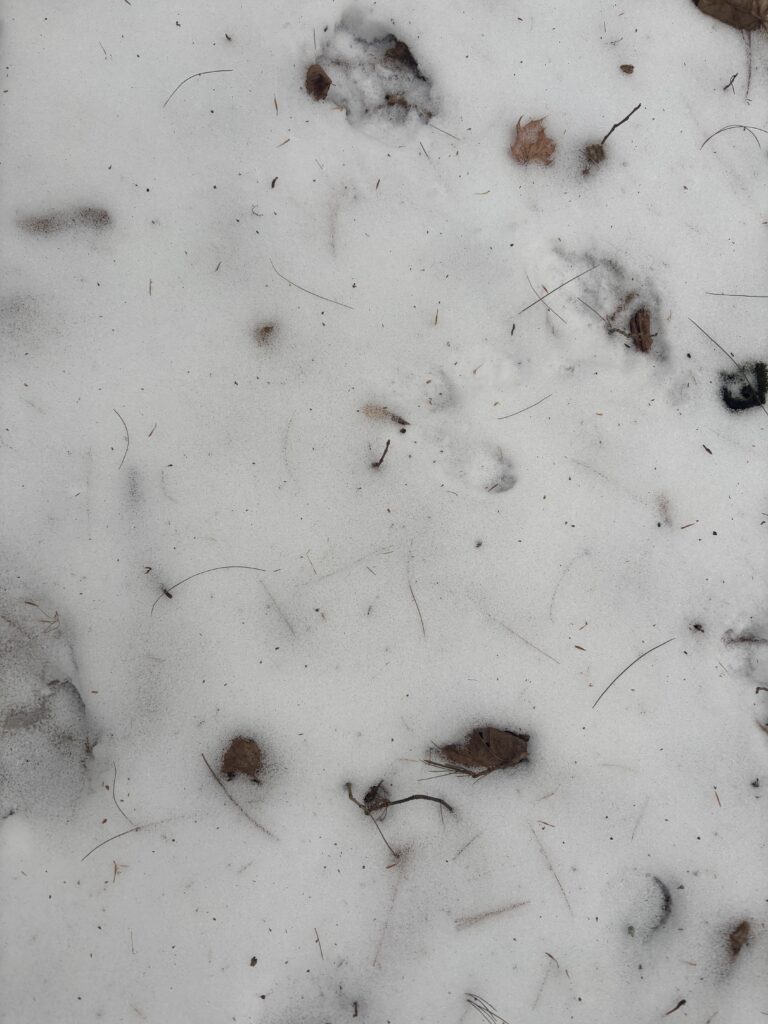
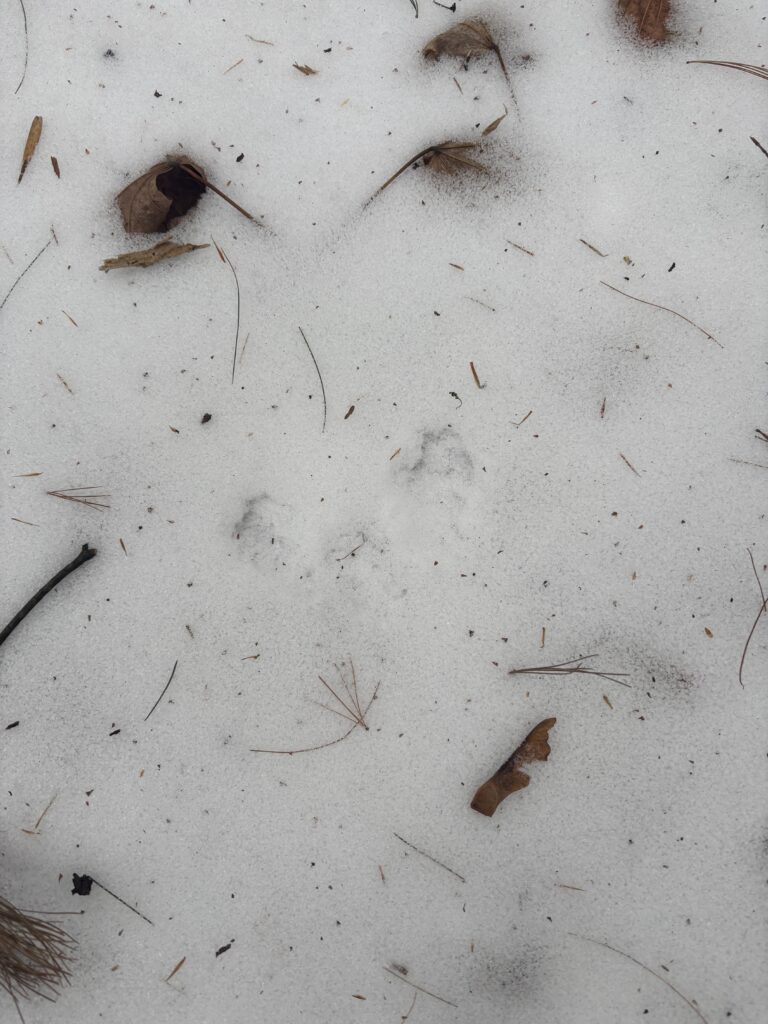
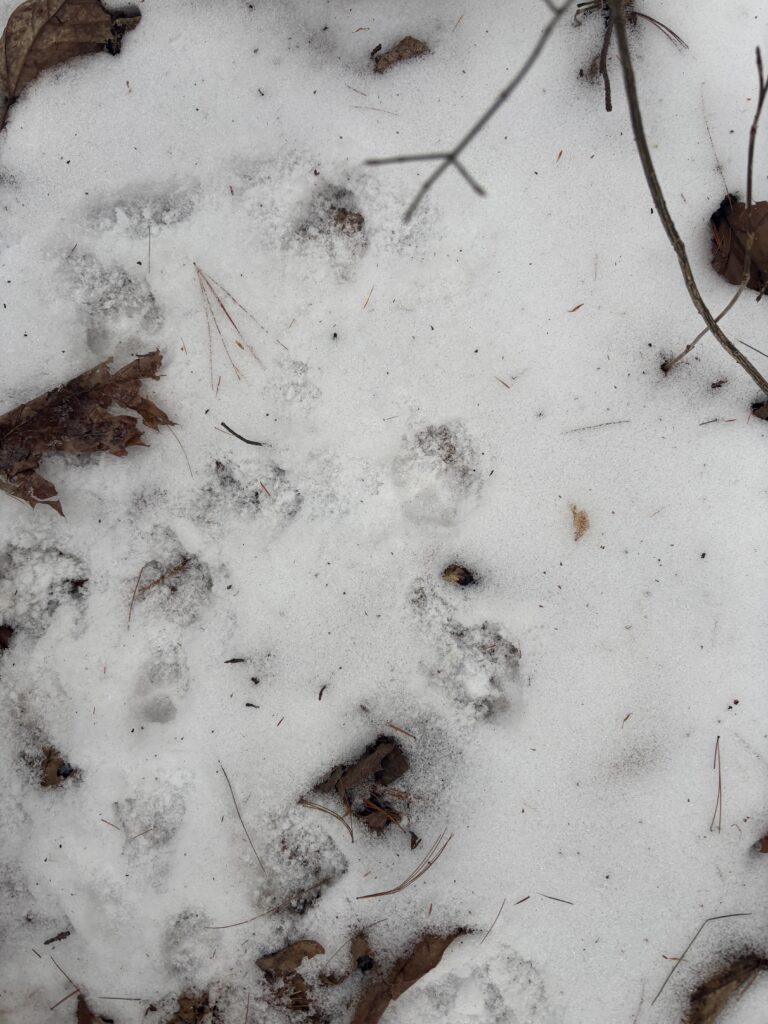
We’re beginning our tracking unit in class, so I couldn’t help but take some pictures of the prints that I saw on the path near my spot! The only one I was certain on when I first saw it was the one on the right, which is definitely a dog. The ones on the left and center look similar, but I didn’t recognize them. Looking at my tracking book, I think they could be mouse or squirrel tracks.


December 2024

08 Dec

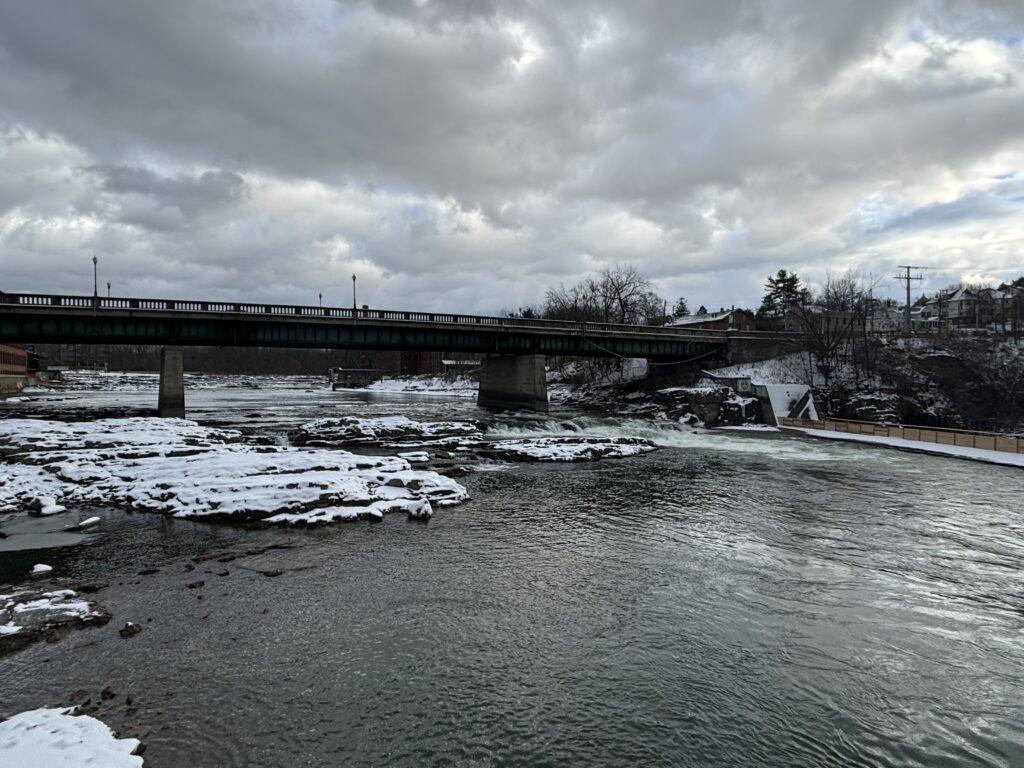
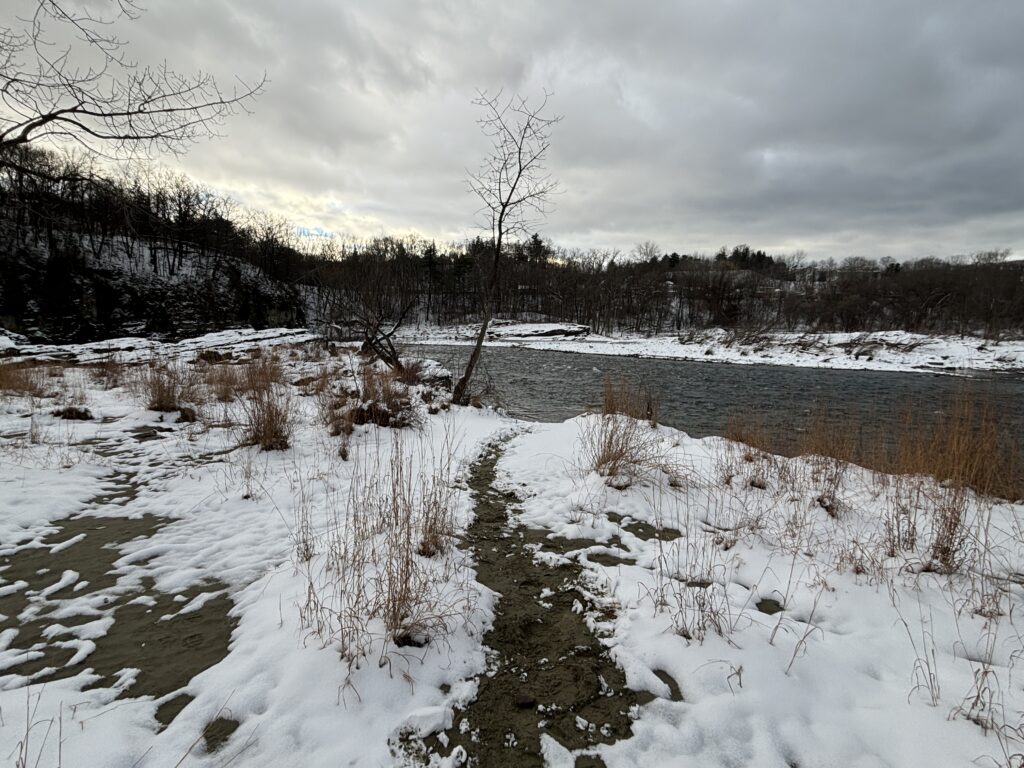
There has been a significant change in foliage now compared to the beginning of my project, mostly because the snow has covered all of the small plants and shrubs, leaving only the larger ones to poke through. I have noticed that the water in the river flowed faster, and the water level was lower than it was at the beginning of the project. There is no more living vegitation, and the leaves are buried under the 3+ inches of snow. There were no wildlife tracks, but there were a few human and dog prints near my spot.

What I most enjoyed about my phenology spot was how I could just be in nature and relax. When going to the spot, there wasn’t usually people around, and it was very calming to just sit, listen to the river flowing, and take in my surroundings. Even though this was for an assignment, it felt like taking a break from school for even just a moment. I had a lot of fun throughout this project, and it feels good knowing that I was able to contribute to the phenological data of the area.


Comparison of Vermont and Wisconsin

02 Dec

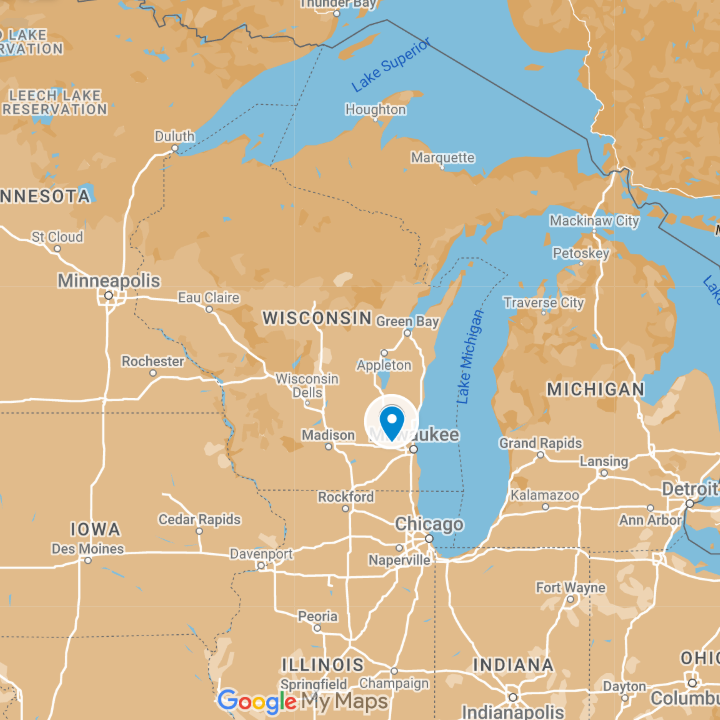
During thanksgiving break, I went back home to Lisbon, Wisconsin. I sat down in my backyard for 15 minutes or so, comparing the phenology of my backyard to my sit spot at Salmon Hole. I live about a half hour outside of Milwaukee in a relatively rural area, so there is a lot of open land by me. A lot of it is being used as farmland, but there is still a lot of natural areas surrounding my house which I love.

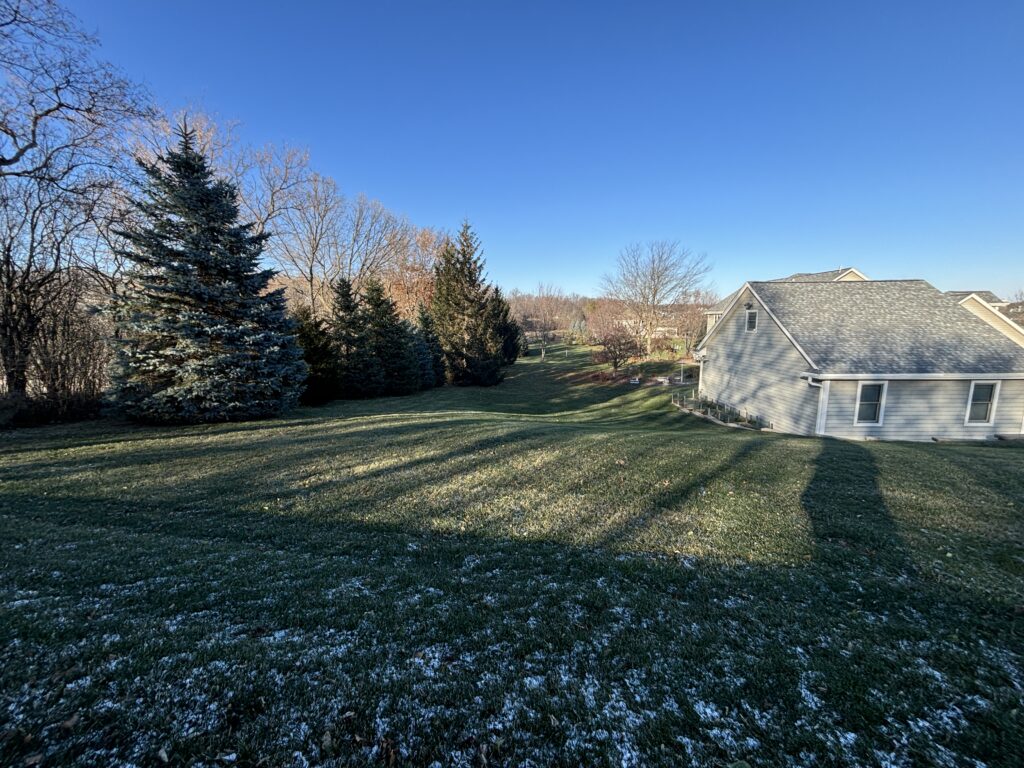
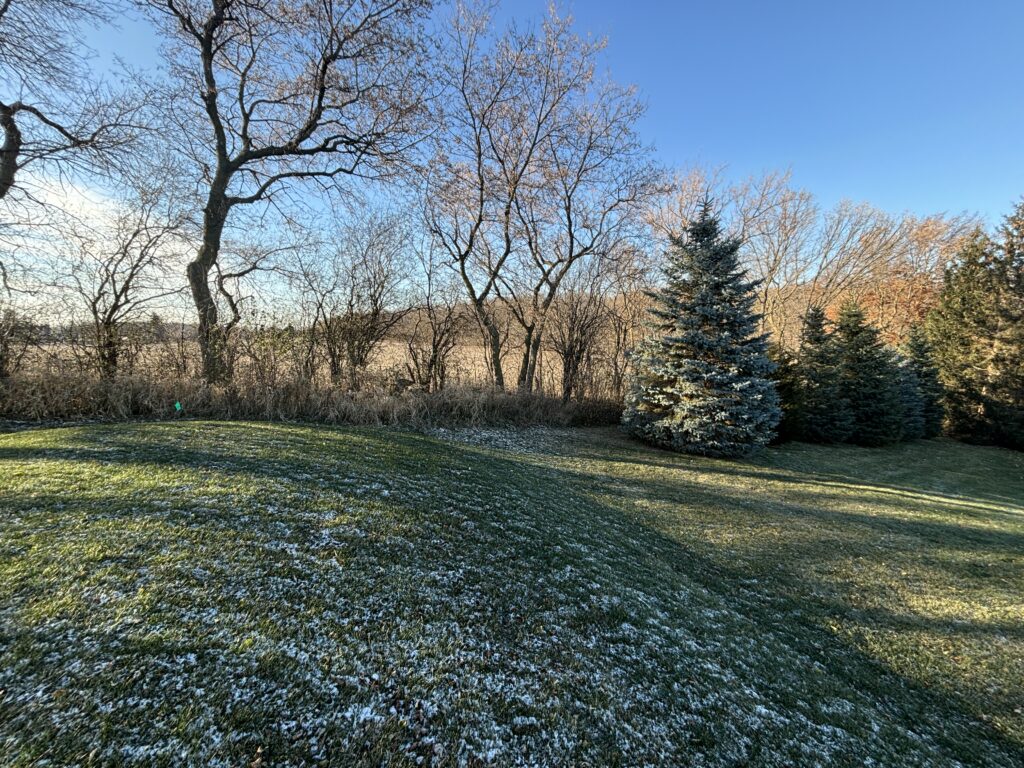
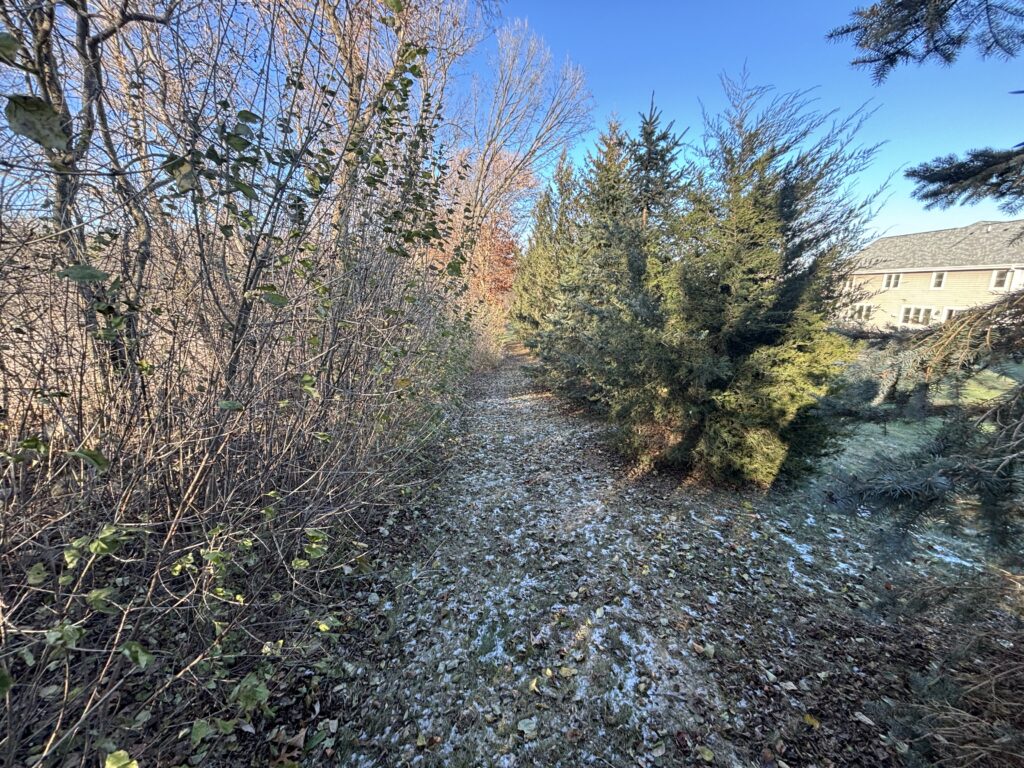
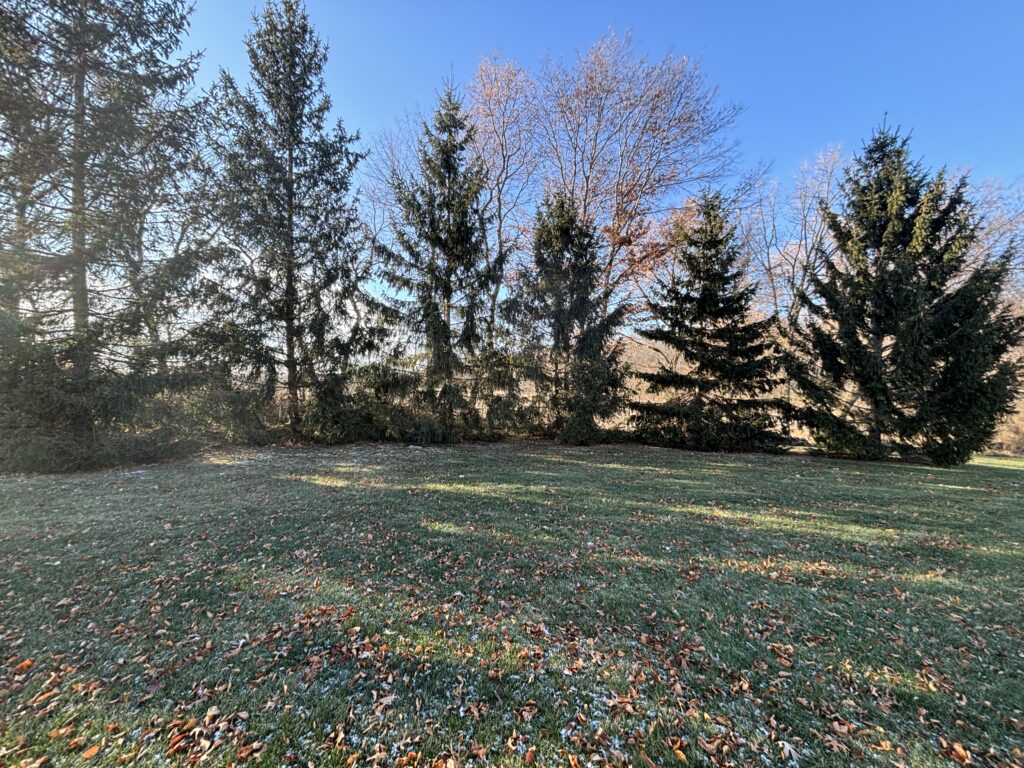
Here are some pictures I took of my yard! This place is special to me because it makes me feel a sense of place. I grew up in this backyard, and I have so many fond memories of exploring here with my sister when we were younger. The nature in my backyard is also contributed to my love for nature and environmental science, which got me here!

To state the obvious, the phenology of my Vermont and Wisconsin spots are very different. My Vermont spot is rocky and on the edge of the Winooski River and my Wisconsin spot is entirely green and hilly. In my backyard, there is a lot more vegitation including (but not limited to): plenty of species of conifers, some oaks and maples in the tree line, and a lot of transplanted bushes and shrubs for landscaping (of which my Vermont spot has none of). The spot in Wisconsin is much less rocky and is much greener at this time of year. I also noticed more wildlife activity of some birds and small mammals in Wisconsin compared to my spot in Winooski where I didn’t observe any wildlife.

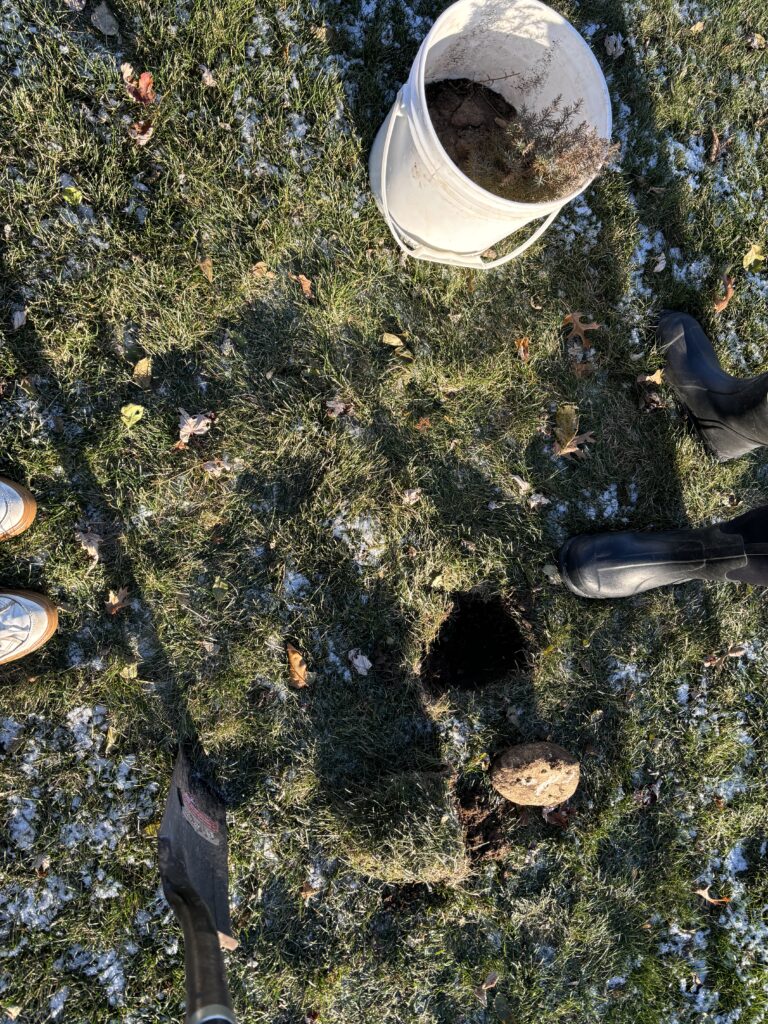
After reading Honorable Harvest, I thought it would be a perfect time to leave a gift of my own to the backyard. My dad found a small tree in the tree line that he was going to have to remove, so we took it an planted it along with some other small trees on the side of my yard. Using seek, we identified the little shrub as a common juniper! Insted of taking the tree and getting rid of it, we decided to give it a new life in my yard, out of the way of harm! It made me feel good knowing that we were preserving the nature of the backyard while moving it out of our way, making it mutually beneficial for us and the juniper.


November 2024

02 Dec

Sit Spot

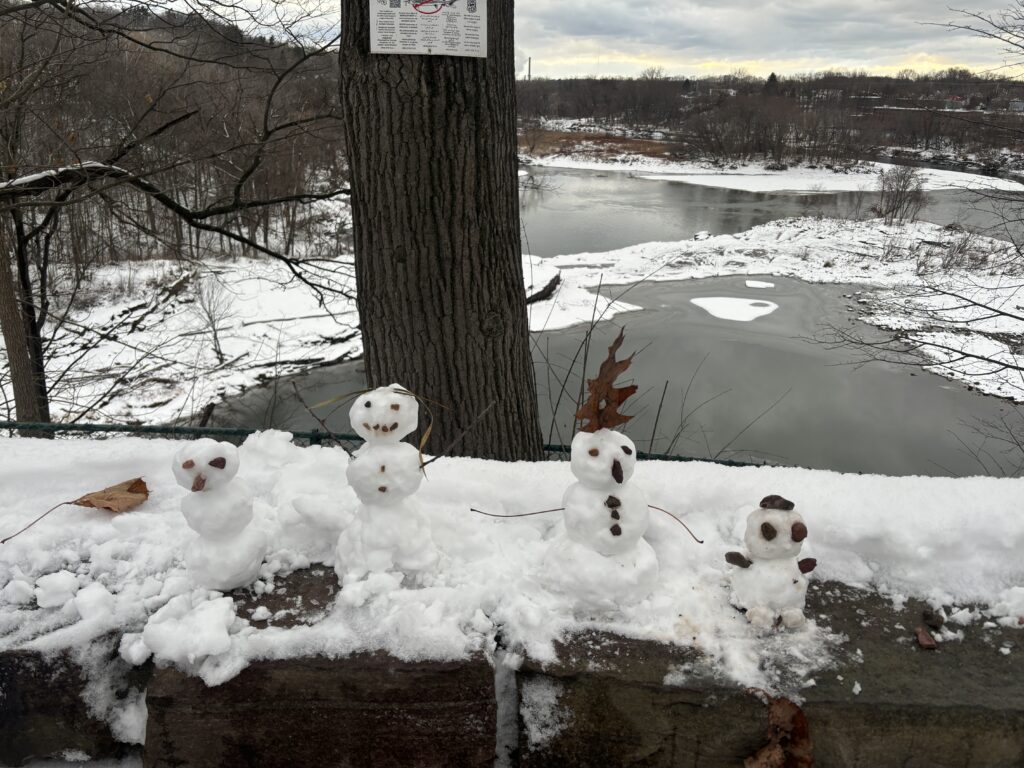
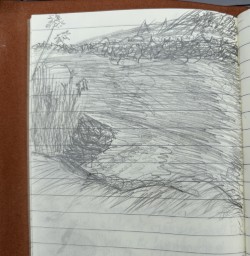
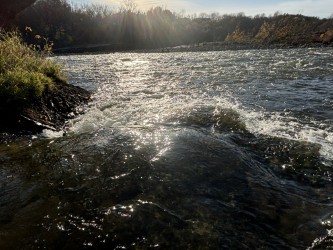
For my sit spot, I decided to sit next on the shore next to the running water because I found it very relaxing. I drew what I saw at the time without really thinking about what I was putting on the paper, and i came out with the image to the left. The image to the right is my approximate view at the time.

Phenological Changes

Some of the most prominent phenological changes that I noticed was that vegitation was more scarce. Much more leaves had fallen now compared to when I had originally visited, and there was less trace of wildlife.

Below is a video that I took from my phenology spot after sitting for a while. I felt at peace with the sounds and nature, so I thought I’d share the experience.


October 2024

04 Oct

This was the first month of my phenology project! Throughout October, I visited the site twice, and I was able to see some phenological change from the beginning of the month compared to the end. There was mostly only changes with leaves falling from trees and a few plants dying. I was curious about if there would be change in water level, but I didn’t notice any significant difference between early and late October. 


Skip to toolbar