A UVM blog Phenology Project

Posts

A Blast from the Past, the Land-Use History of Centennial Woods

At first glance, one may think that Centennial Woods has always been in Burlington, untouched by humans. This, however, is untrue. In the 19th century, during peak deforestation in Vermont, the land that now belongs to Centennial Woods used to be home to multiple dairy farms. Although this information is available in documents, you can also go to Centennial Woods and see evidence of this as well. In some of the trees, there is barbed wire and hog wire the has grown to be apart of them. Not to mention, throughout the woods there are stone walls which were built to section off different farmers plots of land during the 1800s.

In the late 19th century, The University of Vermont started to buy these plots of land from the farmers. In total, 5 different plots were purchased, but some of the land was seized by the federal government for the creation of I-89. Since then, other small chunks of Centennial Woods have been taken to make space for a recycling center, parking lots, housing complexes, and stormwater retention ponds (at the university’s discretion).

In 1991, UVM wanted to use some of the land to create the Centennial Apartments, however, the city of Burlington would only allow this if they created a plan to conserve the rest of it. The university agreed, decided to declare it a natural area, which we know today as Centennial Woods. It is now used as an area of recreation for hikers, while also being a research site for students at the University.

(Brooks & Poleman, personal communication, September 10, 2020).
A New Spot??

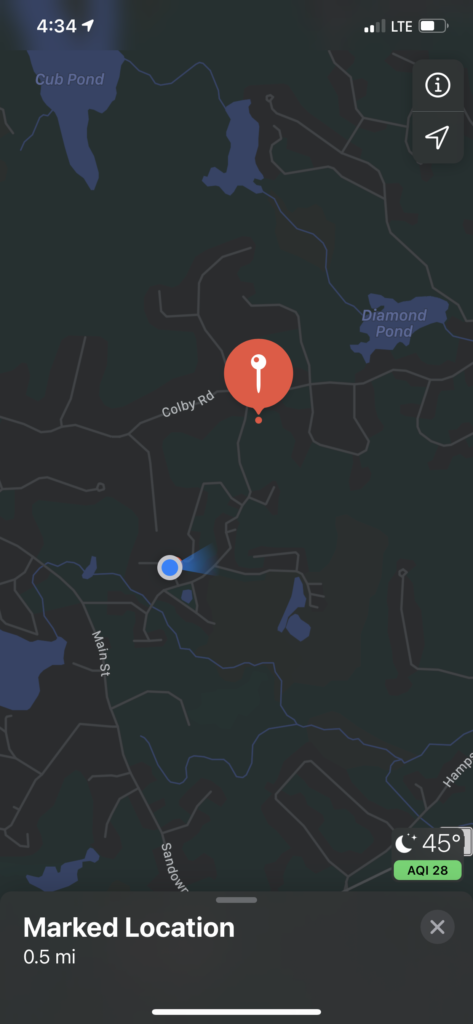
This week I am home for Thanksgiving, so I am in a different location for my phenology blog. The place that I chose is a wooded area in Danville, NH.

Apple Maps (2020). Screenshot from Danville NH [Image].
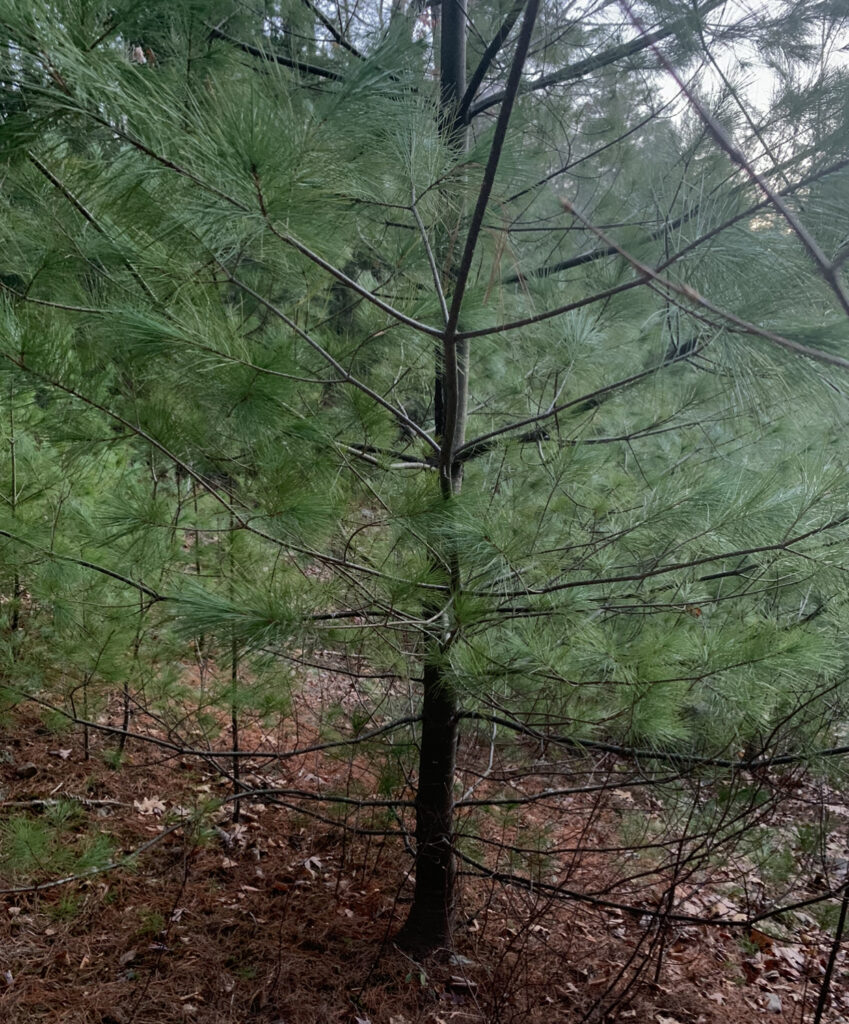
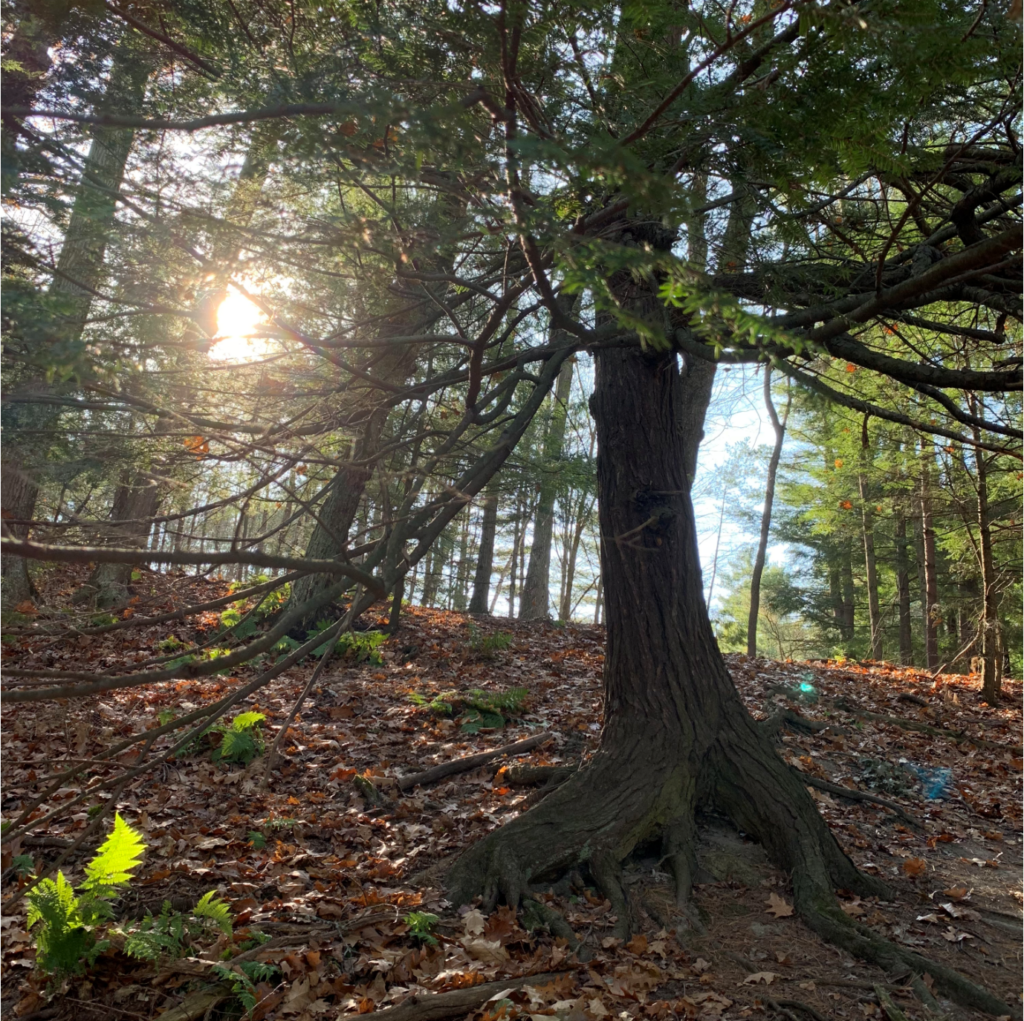
Although still quite small, pictured is the largest tree on my site. Carstensen (2020). Eastern White Pine at new site [Image].

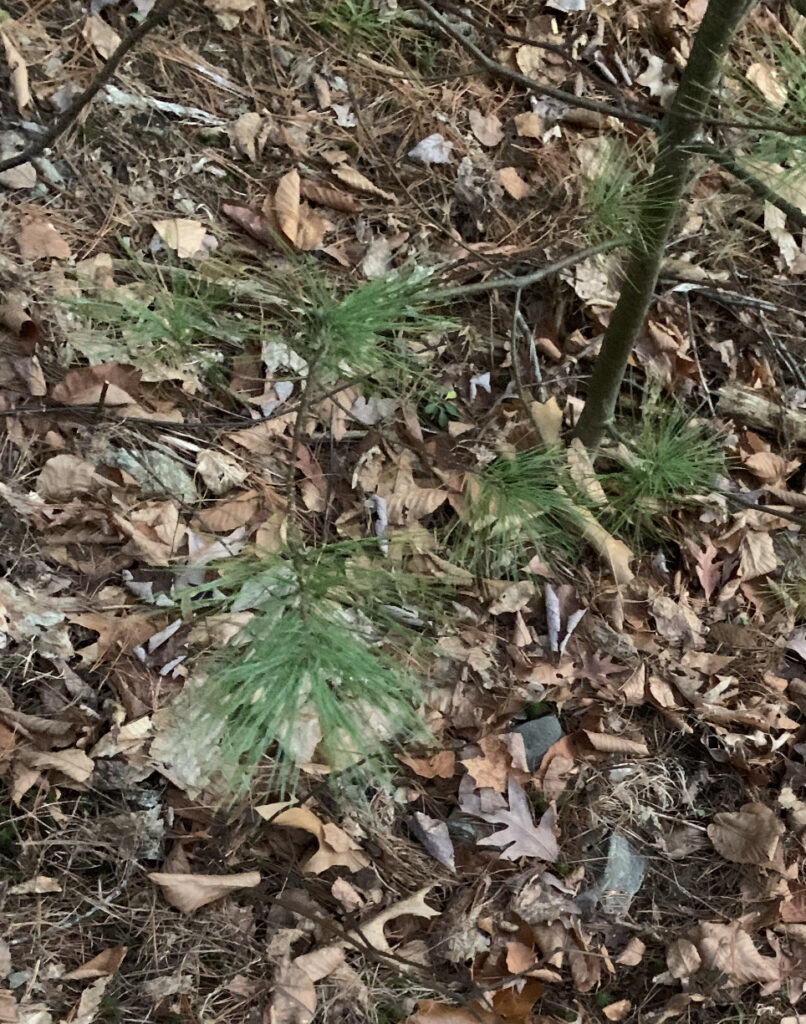
As I mentioned in my very first post, Eastern White Pines are one of my favorite trees. In this spot, there were at least 20 Eastern White Pine saplings. I really enjoy the smallest of the saplings because they remind me of truffula trees from the Lorax! (This is not the greatest picture, but I hope that you can see the resemblance)

Carstensen (2020). Eastern White Pine saplings [Image].
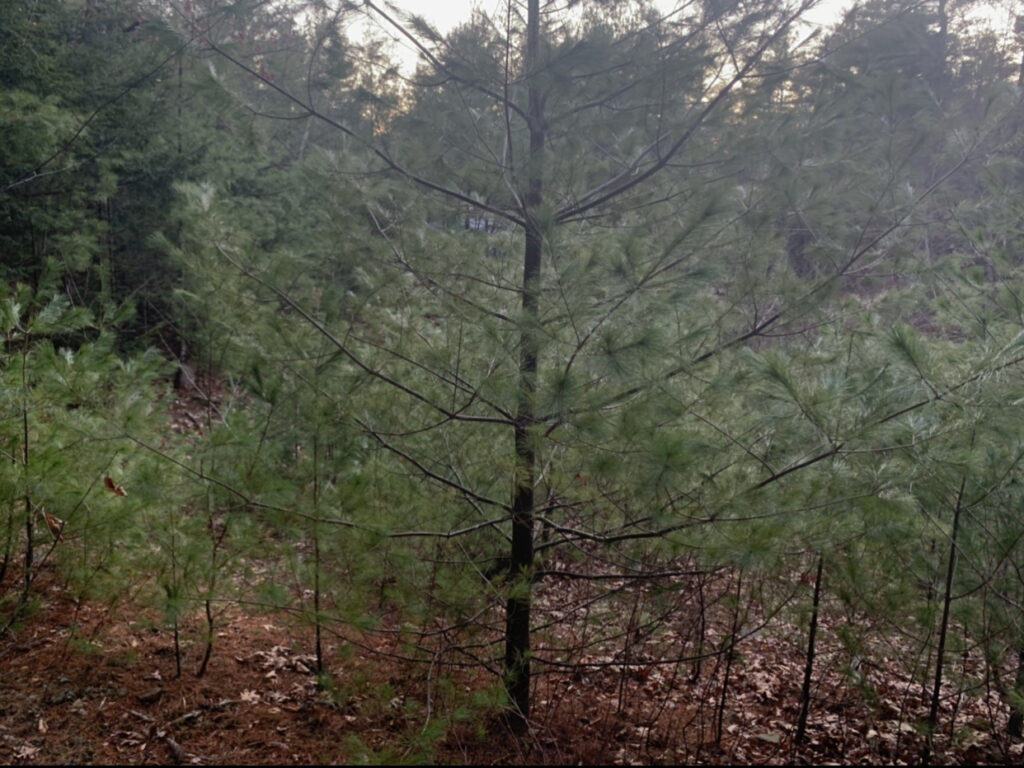
Pictured is my entire site. Carstensen (2020). Eastern White Pine grove [Image].

Something that I find really interesting is how different my new site in Danville is from my old site in Burlington. If you scroll down, you can see that my original site had few trees, yet there were multiple species. At my new site, there are at least 20 different Eastern White Pine trees/saplings, however, there is no other vegetation at this site.

In the woods surrounding this site, there are a variety of different species, which is why I was so drawn to my specific area. It is so dense with one particular type of tree, unlike the other areas in the woods that I could have chosen.

The main difference between the sites is how many trees there are. At my original site, there were very few trees, but majority of them were mature, towering up in the canopy. At my new site, all of the trees are still quite young. Once they are able to grow, I think a lot of the trees will end up dying due to the amount of competition there would be.

Additionally, since most of the trees at my original site were apart of the canopy, there was a lot more shade. This was favorable for trees like the Eastern Hemlock since they are one of the most shade tolerant trees. At my new site there is more sunlight available since it is closer to the edge of the woods. This promotes the growth of intermediately shade tolerant trees like the Eastern White Pine.

Geographically, my original site was at the bottom of a hill alongside a river, but my new site is at the top of the hill away from a constant water source.

My key takeaway from comparing the two sites is that the age of a site plays an important role in determining how many trees will be there, but also what species will be present as well.

Early November Phenology Spot (11/7)

What’s happened since my last visit?

The leaves are falling, which is reflected on the ground. Floating down gently, not making a sound. The keep piling up, forming into a mound. Observe the season changing, just look around.

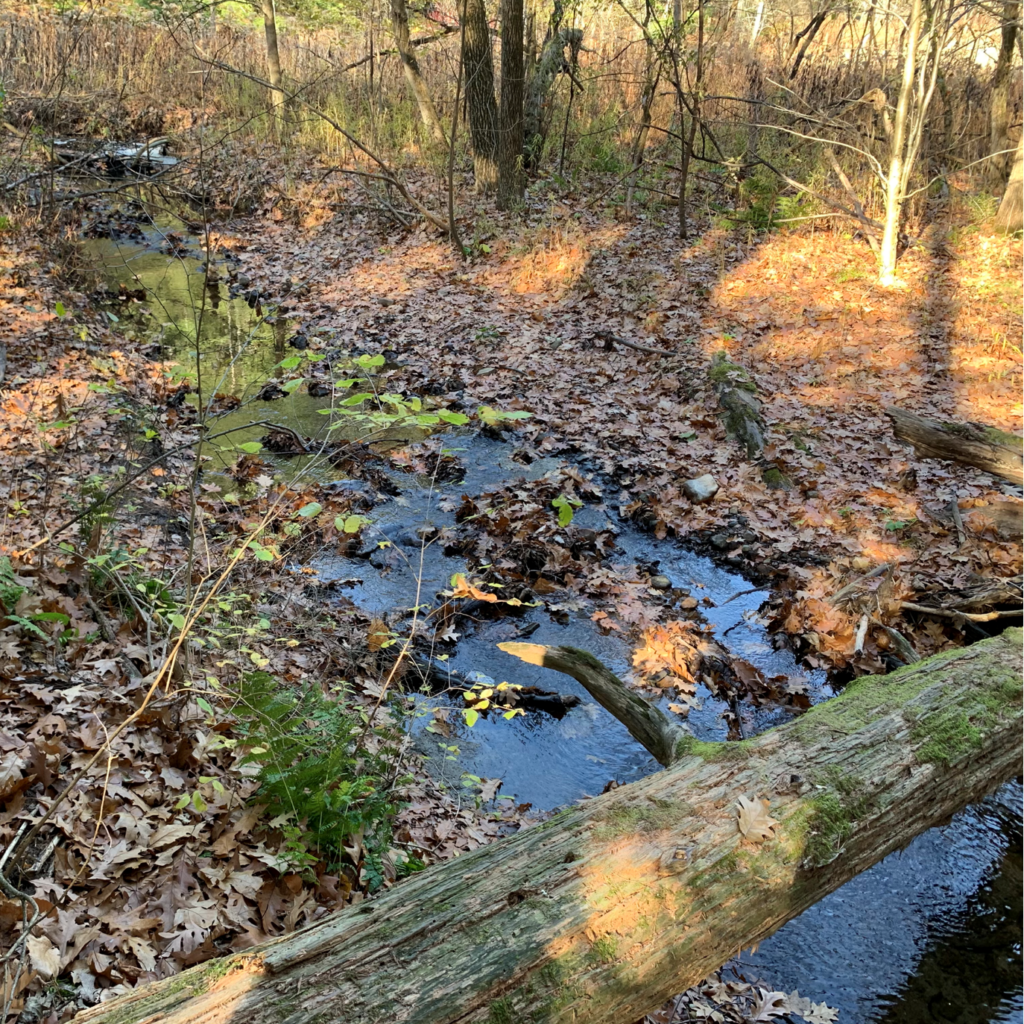
Carstensen (2020). Centennial Brook [Image].

Pictured is Centennial Brook. Because lots of the leaves have fallen, there is an abundance of them in the brook and on the banks. The stream is not flowing as aggressively as the last time. I think this is because the last time I visited my spot it had just rained opposed to this visit when the last rain was a few days ago.

Carstensen (2020). Eastern Hemlock [Image].

This is an Eastern Hemlock. I tried to see if there were any birds that had made any nests in the tree, however I was unable to find any. Since this is a conifer, it doesn’t lose its “leaves” (needles) during the fall; they stay on throughout the year.

Carstensen (2020). Norway Maple and Northern Red Oak [Image].

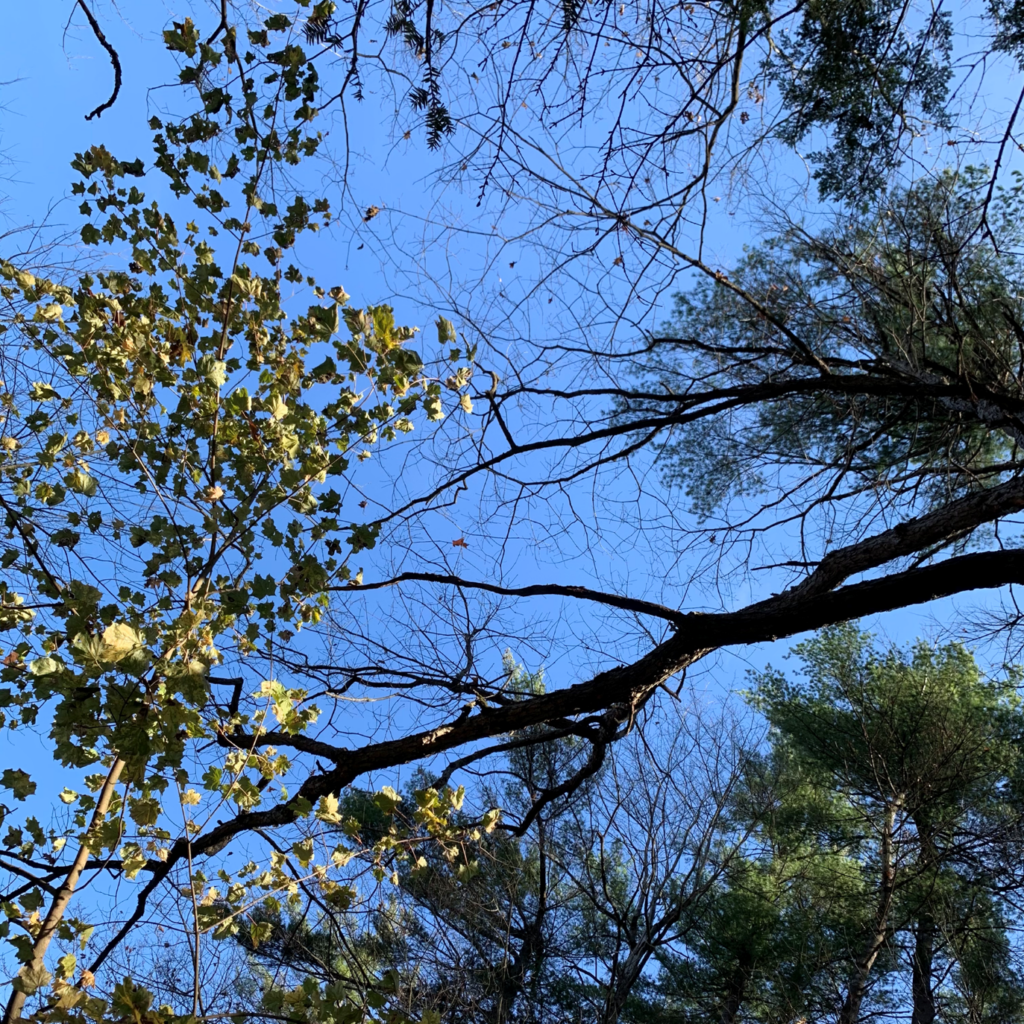
On the left side of the picture, there is a Norway Maple, and cutting through the picture just below halfway is a Northern Red Oak. The Norway Maple is still holding on to lots of its leaves, but contrary to what was discussed in class, the Red Oak has already lost the vast majority of its leaves. After taking a closer look at the trees bark, I would say that it is rotting and therefore can’t hold onto its leaves like other Northern Red Oaks I have observed.

Event Map

Event Map

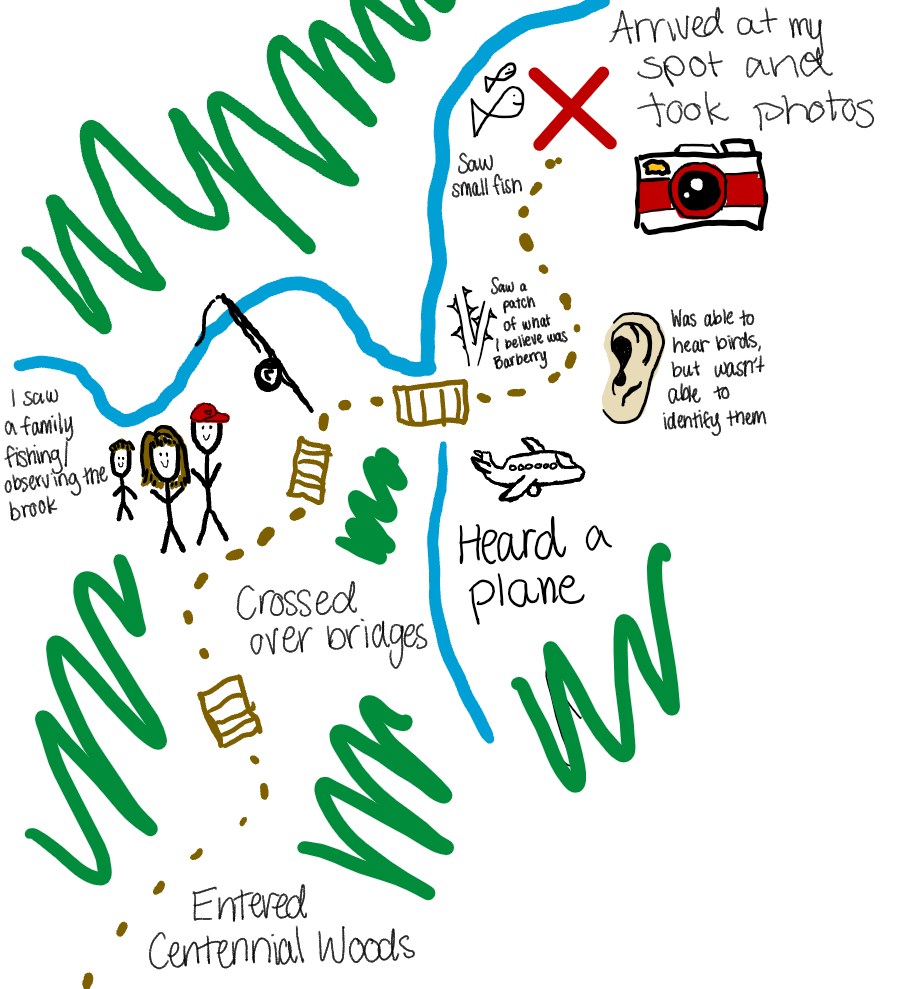
This is an event map I have created after my trip to my phenology spot on November 7th, 2020. As I entered the woods and started on the path, I heard people and soon saw them slightly off the trail fishing and observing Centennial Brook. I continued towards my phenology spot and heard one of the many planes that fly over Burlington. I then saw a patch of Barberry and was careful to avoid it as to not get pricked by it’s thorns. I also heard lots of birds but was unable to identify any of them. Once I got to my phenology spot, I took many pictures and saw a few small fish in brook.

Carstensen (2020). Screenshot of a digitally drawn image of an event map of Centennial Woods [Image].

Late October Centennial Woods Phenology

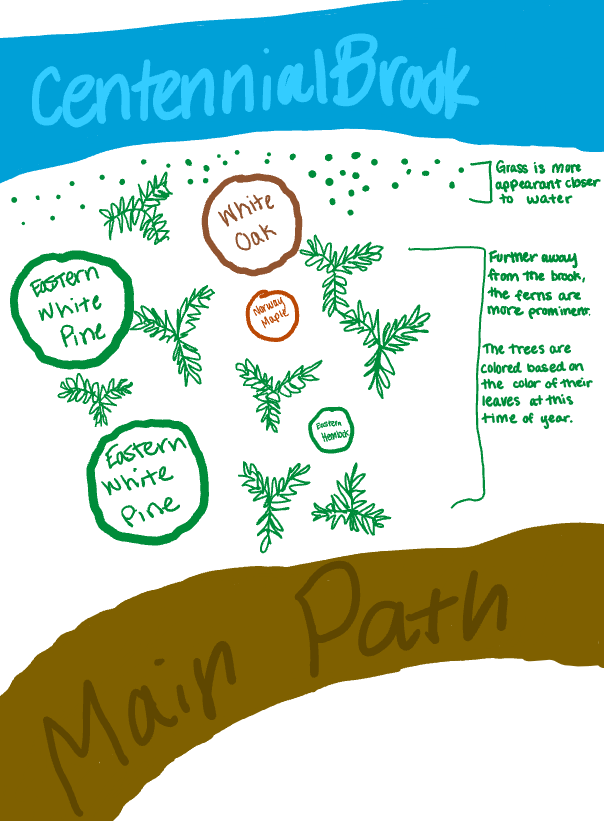
Carstensen (2020). Screenshot of digitally drawn bird’s eye map of Centennial Woods site [Image].

The image above is a bird’s eye view of my site. The deciduous trees can be identified by having the orange/brown circle around them, and the conifers have the dark green circle. I chose to do this because it visually shows what the color of the leaves/needles on the trees are without the need to physically go there to observe it yourself.

During late October, lots of the deciduous trees have lost the majority of their leaves exposing the bare branches and creating lots of leaf litter on the ground. This has been the most major change since my last visit to centennial woods in early October when the leaves had already changed colors but the trees still had most of their leaves.

Although the branches of the trees were bare, there was no evidence of any bird nests or other signs of animal habitat/activity in the area. That being said, in Centennial Brook, I was able to spot a few minnows along with other insects along the edge of the water. Just before I had come to my site, it rained, which caused the brook to be at a higher level than it has been in the past. This could have also caused any animals that live there to move to another area temporarily.

Vegetation in Centennial Woods

Centennial Woods is home to a wide variety of plant species, however, depending on your location in Centennial woods, you will see different vegetation. This can be explained by numerous things including differences soil pH, and light availability. Because of this, in some spots you might observe numerous Eastern White Pines along with Eastern Hemlocks, while in other areas, you may see an abundance of Yellow Birches, Maples, and Oaks.

Here is a list of trees/vegetation that can be found in Centennial Woods:

Red Maple, Striped Maple, Sugar Maple, Norway Maple, Black Cherry, Eastern White Pine, Eastern Hemlock, Yellow Birch, Paper Birch, American Beech, Northern Red Oak, White Oak, Boxelder, Green Ash, Basswood, Buckthorn, Barberry, and Honeysuckle.

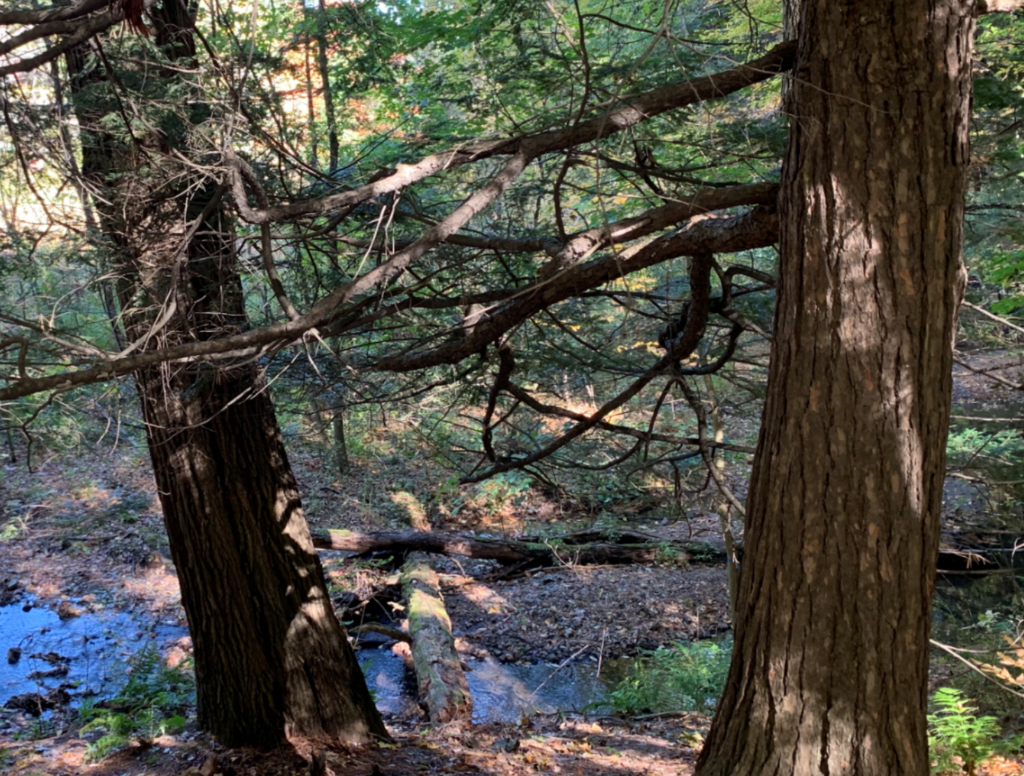
My particular plot is on a hill and there is a stream running adjacent to it. The area is mostly dominated by 2 large Eastern White Pines, but also had a smaller White Oak, Norway Maple, and an Eastern Hemlock. There is also a small Barberry plant on the edge of the plot at the top of the hill. For general vegetation, there are a few ferns that are scattered along the forest floor.

Since Centennial Woods has such a variety of plant life, you could pick any 20 foot plot within one part of the woods and get something completely different in another part.

Carstensen (2020). Two Eastern White Pines with brook running in background [Image]

Welcome to Centennial Woods!

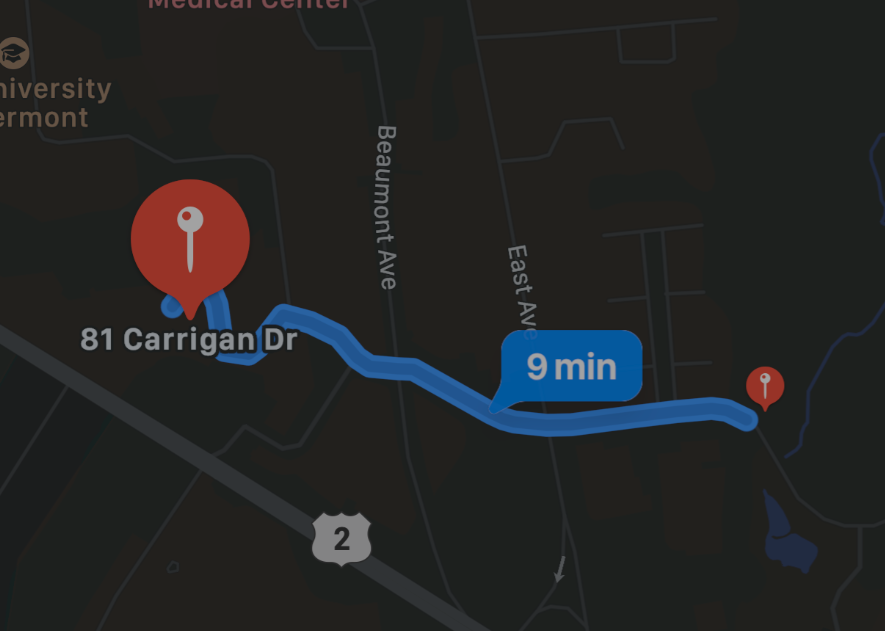
Centennial Woods is a natural area owned and protected by the University of Vermont. It is located behind the UVM Police Center on Catamount Drive. From the Aiken Center at UVM, it is only about a 9 minute walk so it is easily accessible from campus.

One of the reasons why I chose this area was because of its interesting land use history. Although one may think that since it is a forest, the land has always been untouched, this is not the case. When UVM purchased the land it had been used for dairy farming so this is a relatively new forest. Additionally, there is a wide variety of trees that can be found here depending on where you are. One of my favorite trees is the Eastern White Pine, which are abundant in Centennial Woods.

To get to my particular plot of land, once you enter the trail you will eventually approach a fork; bare left. Continue over the wooden bridges that carry you over part of the stream. You will eventually reach a clearing and will want to continue straight. If you start to go downhill, and see the stream along with two large Eastern White Pines, you are in the right place!

Apple Maps (2020). Screenshot showing directions to Centennial Woods [Image]

Skip to toolbar