
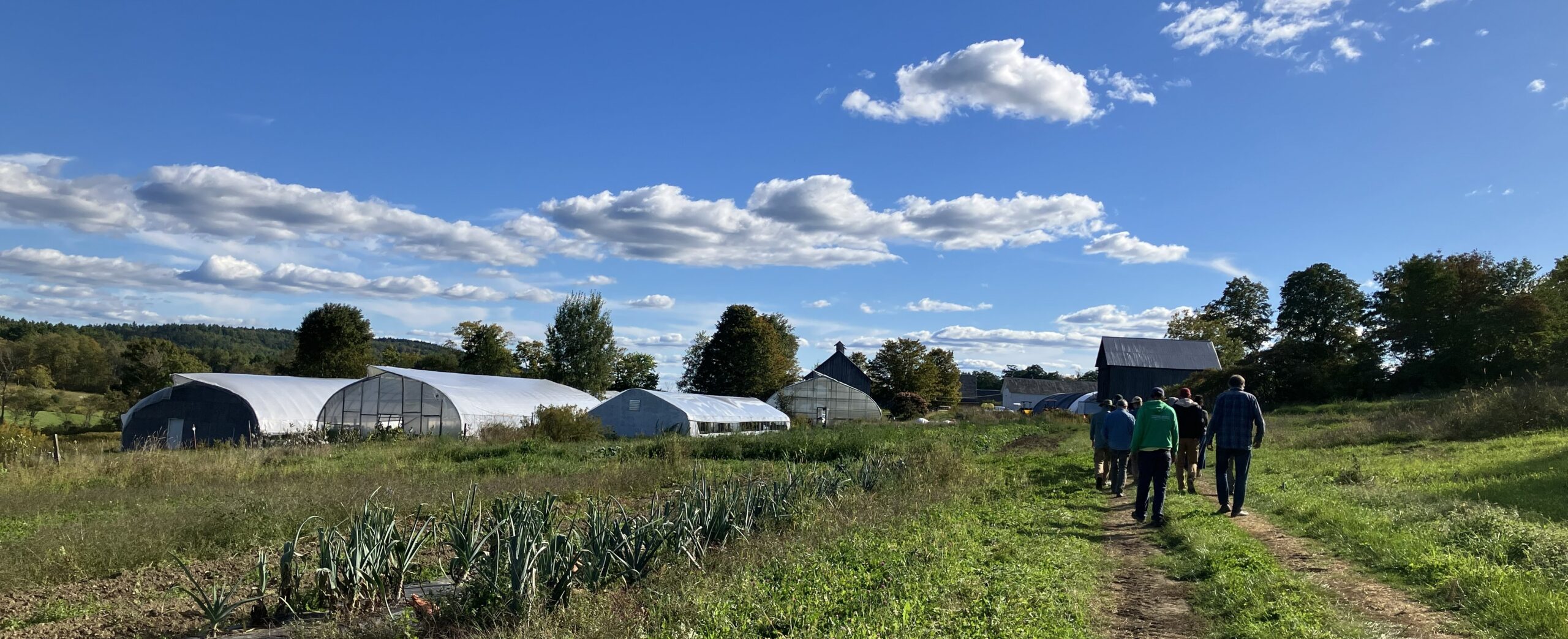
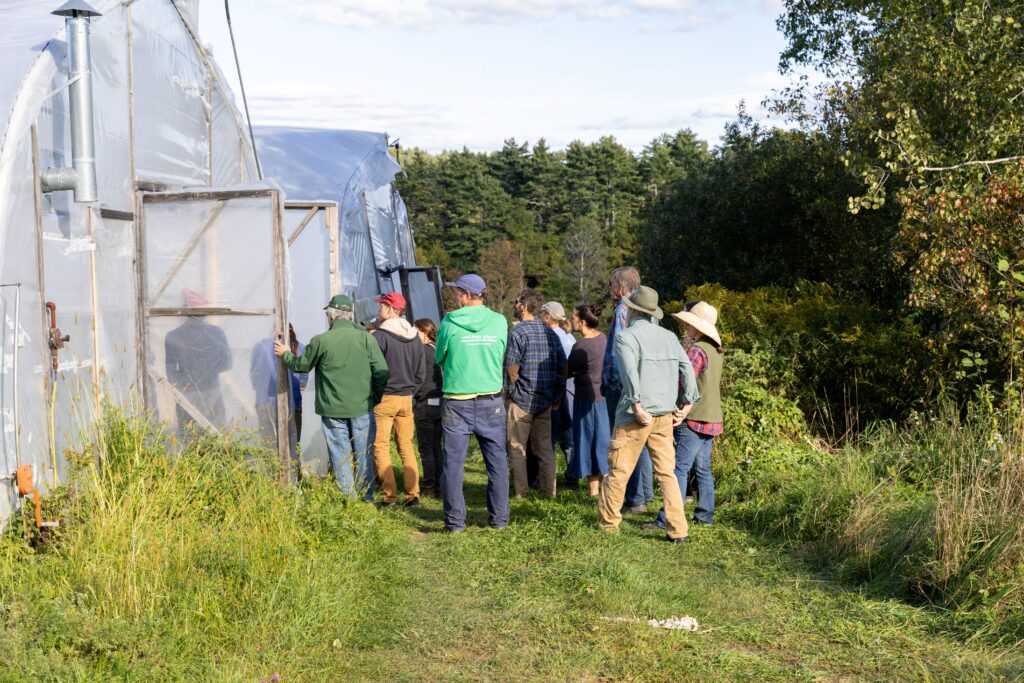
On Wednesday September 23 the VT Vegetable and Berry Growers Association and UVM Extension hosted a workshop at High Meadows Farm in Putney, VT. Howard Prussack has farmed in Putney since 1979. He grows a dozen acres of certified organic vegetables in the field and has 30,000 square feet of high tunnels. Sales are at the Brattleboro farmers’ market and wholesale to coops and garden centers throughout New England.
Prior to the COVID pandemic, the farm had 12 employees and shipped 100,000 potted herbs & plants to 4 states. 70-80% of their business was horticultural crops. This model was the backbone of the farm for 20 years. Post-COVID they throttled back the business. The crew is now 3 ½ people with 70-80% of sales in produce. They make less money, but there is less pressure. 80% of the products are sold wholesale. The remaining 20% are retail sales primarily to farmers’ market. Facebook is how the farm does all retail advertising.
Crop Mix-Field and Tunnels
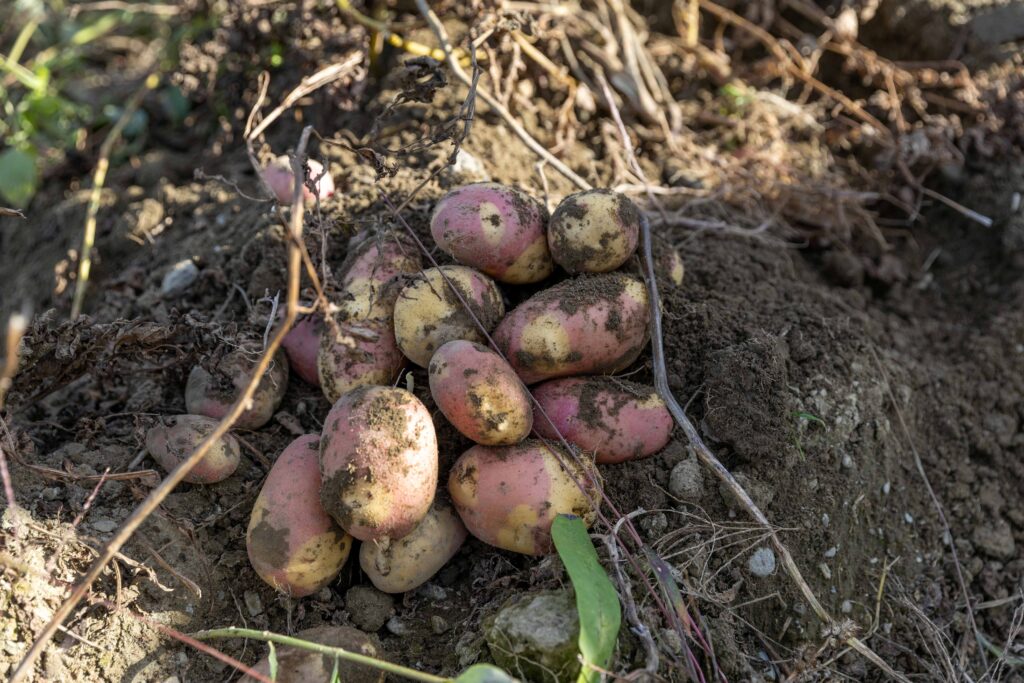
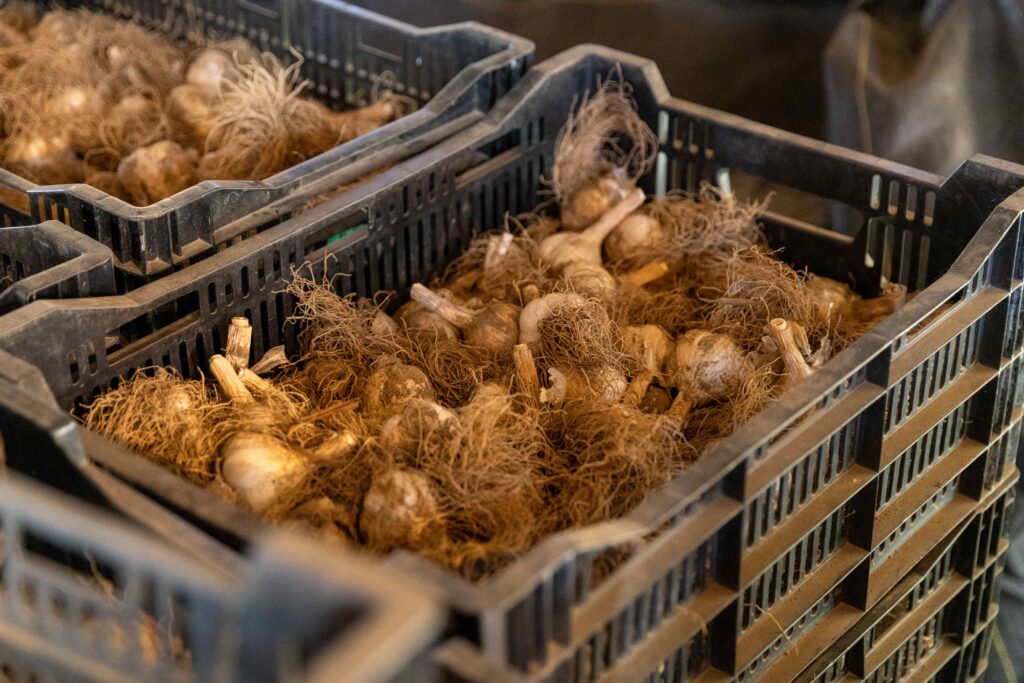
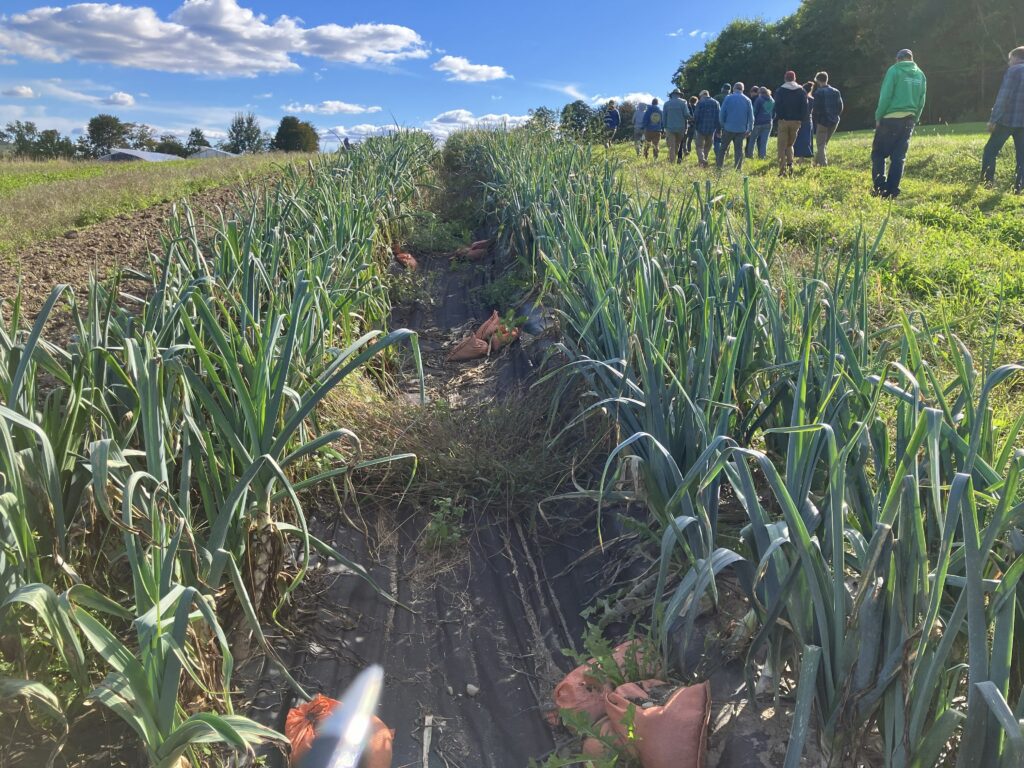
The top three crops grown in the field are squash, potatoes and garlic. Alliums are an important crop for the farm. Leeks (Megaton) are a good crop-always grown on plastic mulch. They grow sweet fresh onions (Expression), because of the good yields and price point. One-third of an acre of garlic is primarily sold for seed. The farm also produces black garlic.
While we checked out a beautiful pinto gold potato crop, we discussed Colorado potato beetle controls. There are a few control strategies used by the group. 1)Early potato plantings covered with row cover. 2) Strategic spraying of main season crops. 3) Delayed planting to reduce the need for spraying. Becky Maden shared that a July 1- July 14 planting window works for delayed plantings.
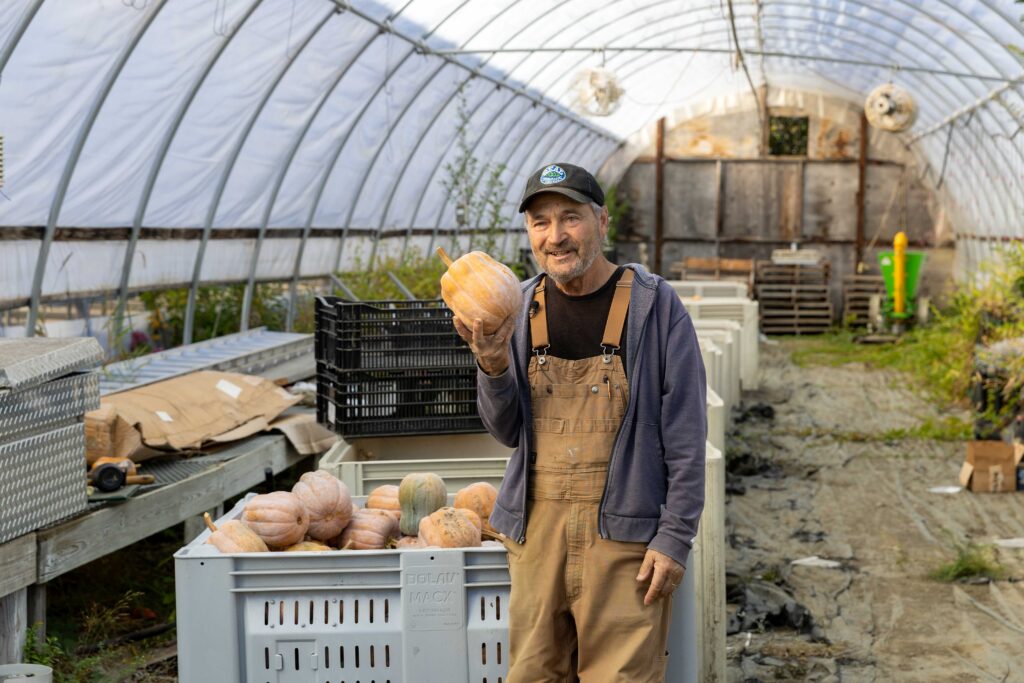
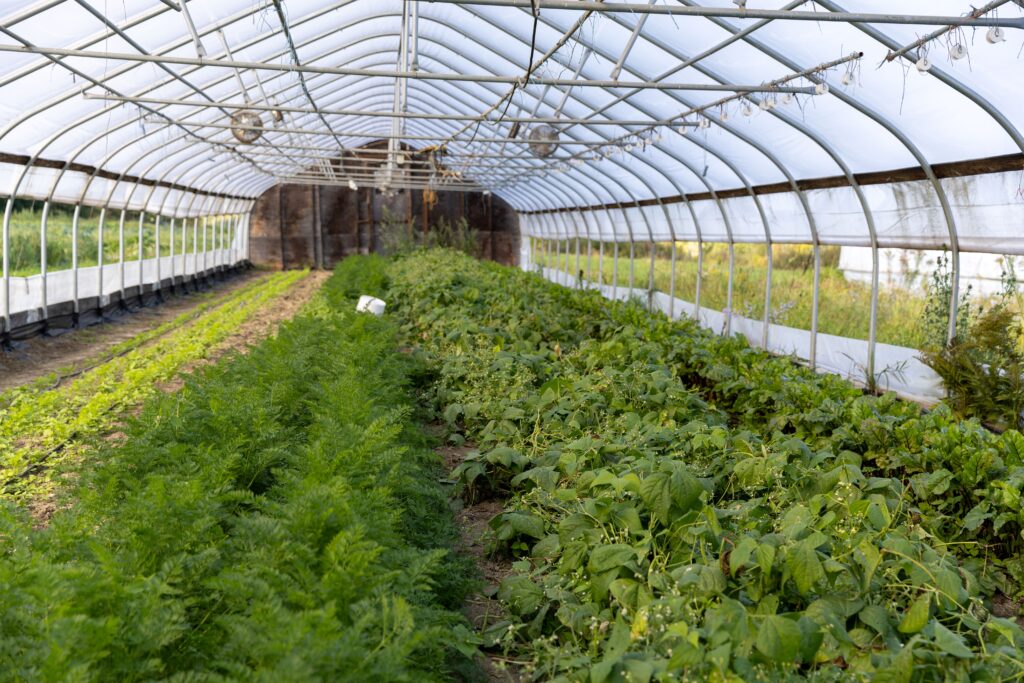
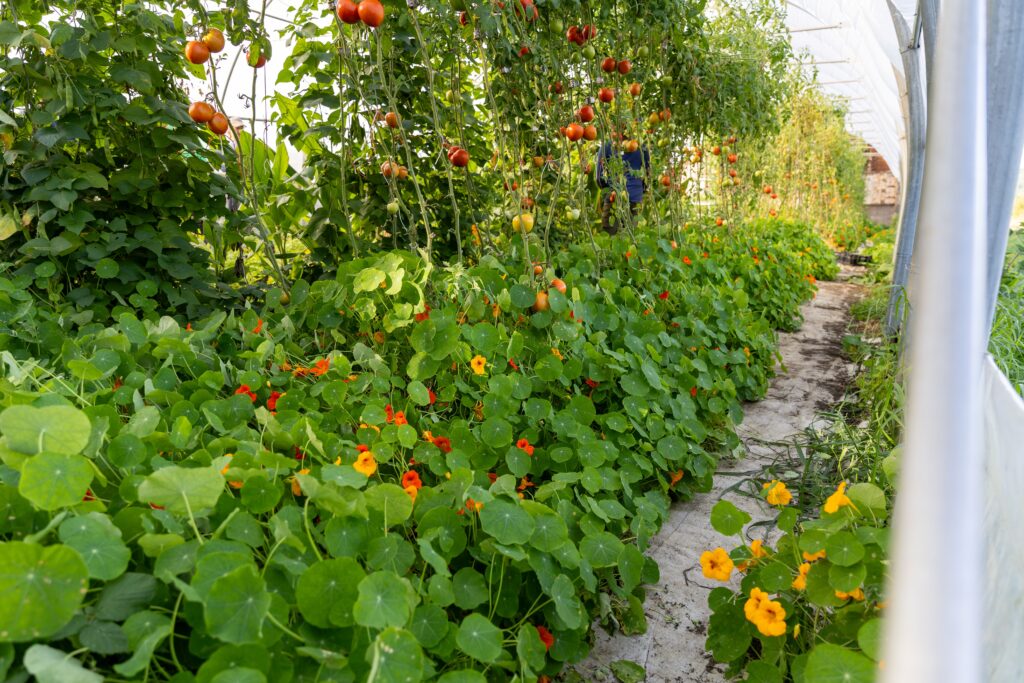
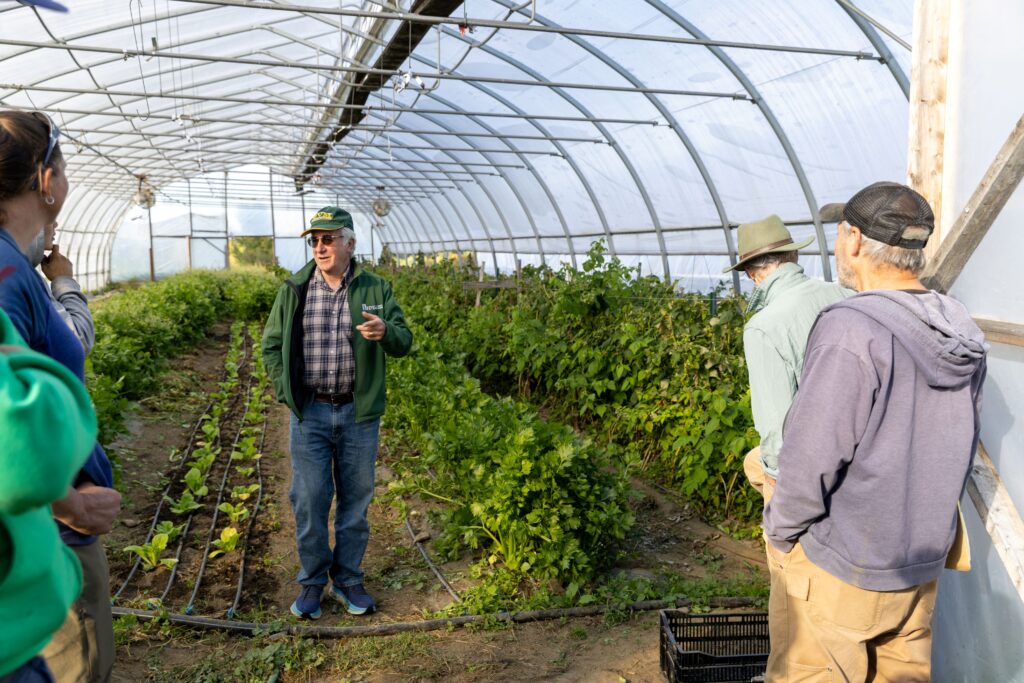
The tunnels have a wide variety of crops including turmeric, ginger, tomatoes (Caiman), celery (Tango), beets, beans, raspberries and nasturtium & alyssum to support beneficial insects.
Cover crops, ground cover and preventing erosion
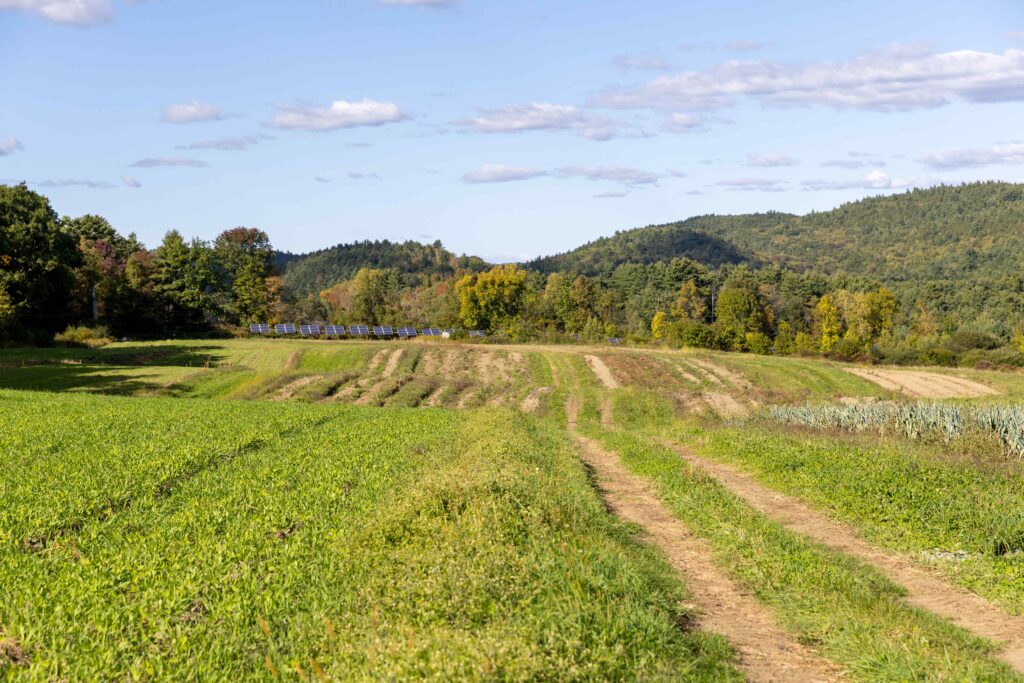
This is a typical Vermont hillside farm. The rolling hills make it hard to follow the contour for the 400’ rows needed for efficient wholesale production. Howard keeps different types of cover on the fields to prevent erosion (cover crops, cash crops and ground cover). 8 acres of the farm is in cash crops with 4-6 acres in cover crop rotation.
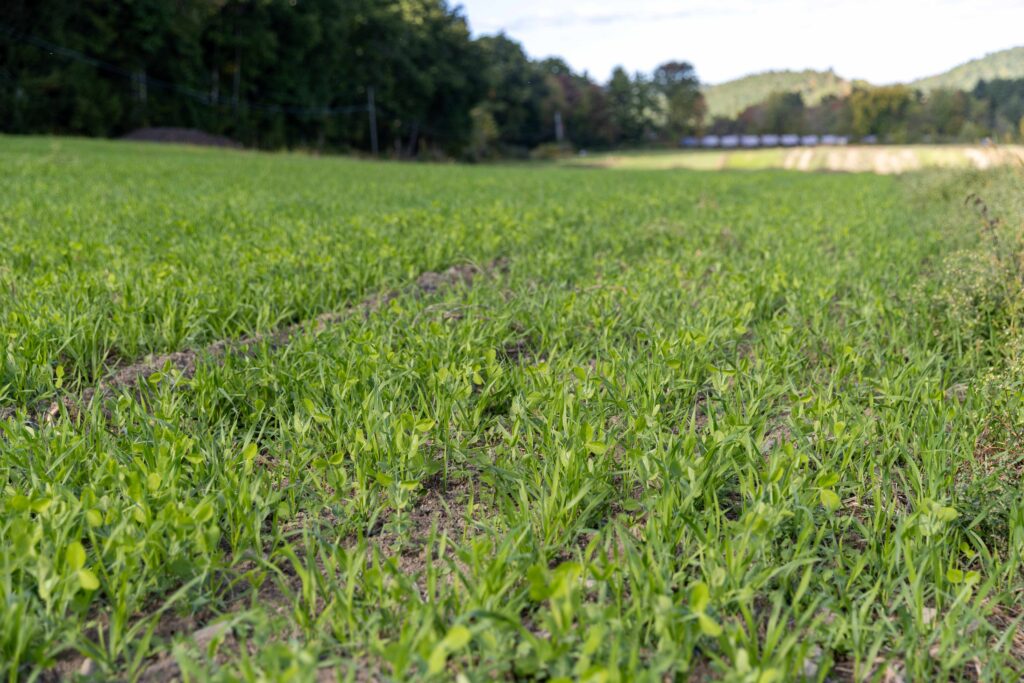
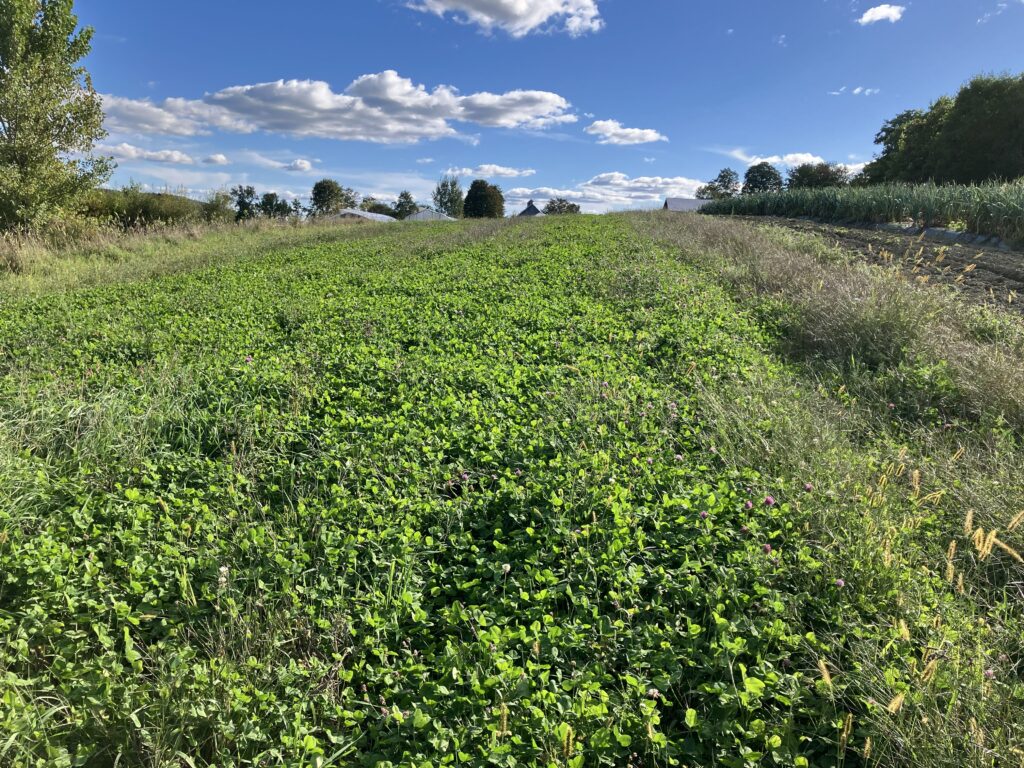
Our first cover crop stop was oats and field peas seeded in a field following a melon and spaghetti squash crops. Now that it is late September, Howard will use rye as the sole cover crop. He can seed up rye until Halloween and “just puts it on thicker”. The goal is to get winter cover crops on all fields if possible. Ideally, some fields are seeded into clover for 1-2 years. Clover is seeded with oats as a nurse crop. Buckwheat is another cover crop Howard used as short term cover crop to support pollinators on the farm. Cover crops are seeded with a PTO driven broadcast spreader.
Both black and white plastic mulch are used. For some crops, weed mat is used between the rows. Weed mat is “not a silver bullet”, but it is worth using on some crops to save on weeding and reduce erosion. The group discussed how they use weed mat or landscape fabric as ground covers between crops. Ground covers can be a benefit on long term crops like melons, summer squash, peppers and eggplant. In addition to saving labor on weeding, it prevents splash up- keeping crops free from soil and helping with disease.
Funding
Howard received NRCS funding for practices like cover crops, pollinator habitat, and hedgerows. We talked about how vegetable farms can get funding from both Conservation Stewardship Program and Environmental Quality Incentives Program. Your local conservation district (e.g. Windham county NRCD) or UVM Extension can help you understand which funding opportunities are right for your farm. If you are not awarded NRCS funding, there are state funded programs to help pay for cover crops (i.e. Farmer Agronomic Practices). Applications to receive assistance from losses due to the 2023-2024 weather disasters open later this year. UVM Extension will share relevant information about the Vermont Agriculture and Timber Disaster Assistance Program for vegetable and fruit growers through the VVBGA listserv and VT Veg and Berry newsletter.
Electric Tractor
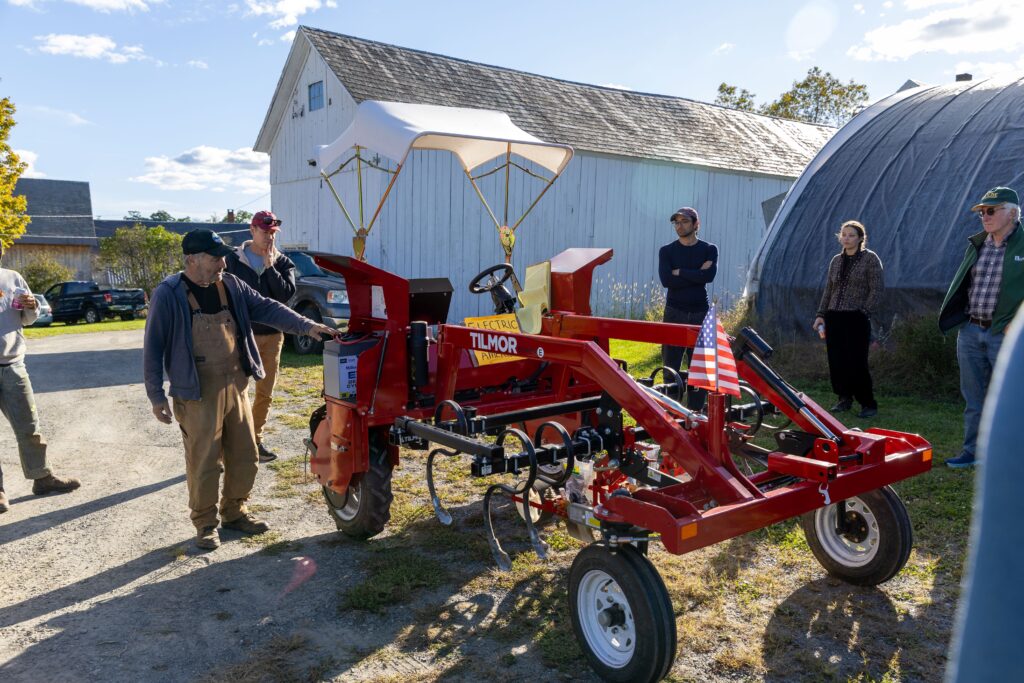
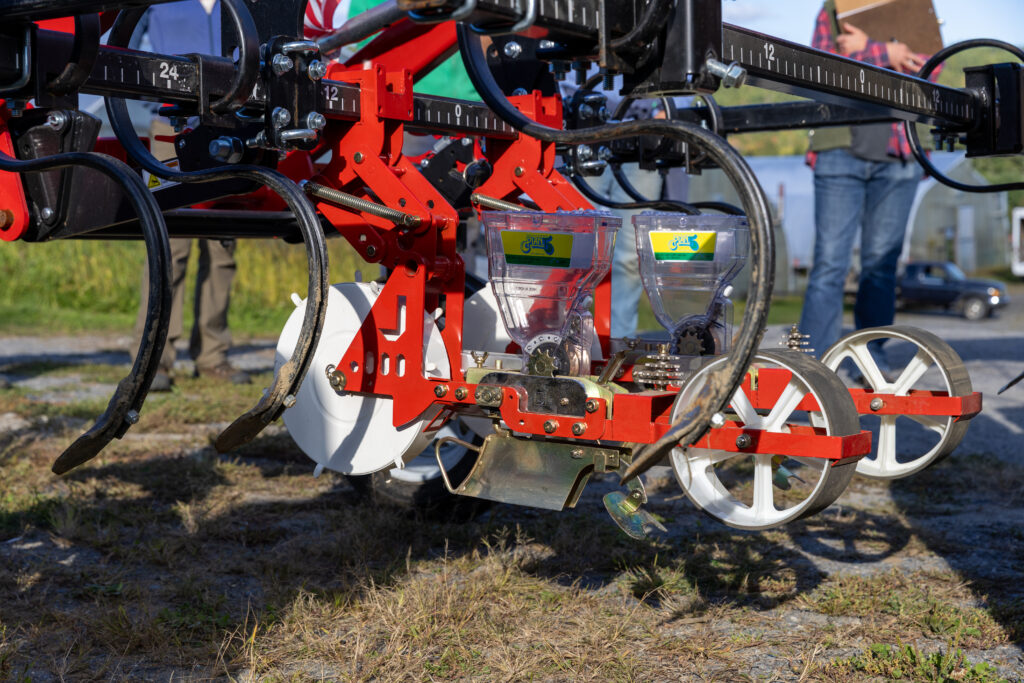
Howard uses the Tilmor electric tractor for seeding, cultivation and hilling potatoes. He likes the front mounted tools and the quiet ride. Each battery allows for 2 hours of use, and you can put up to 4 batteries on the tractor. Batteries are charged with a standard wall outlet. If you run out of charge in the field, batteries can be removed to charge. Howard uses 2 batteries, because 4 hours using the tractor is enough.
Greenhouse
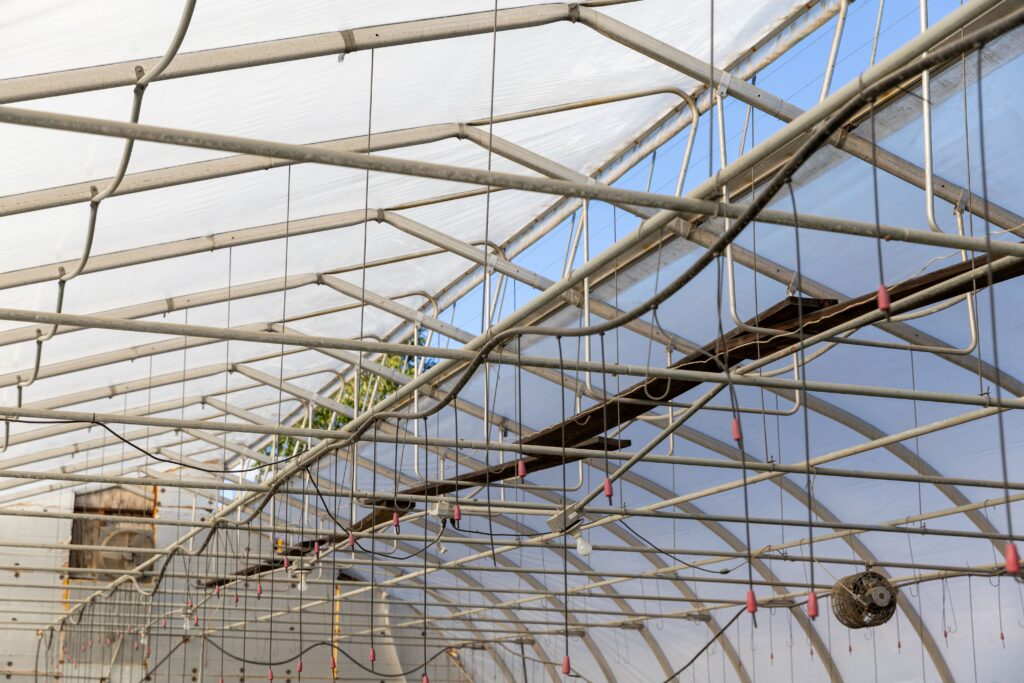
Howard shared a few of his favorite things in the production greenhouse including a flat filler imported from Canada and a ridge vent for natural ventilation. The boards pictured by the ridge vent are to help when changing plastic. Other growers use lifts to make changing plastic on tunnels with ridge vents easier.
Wash Pack Barn
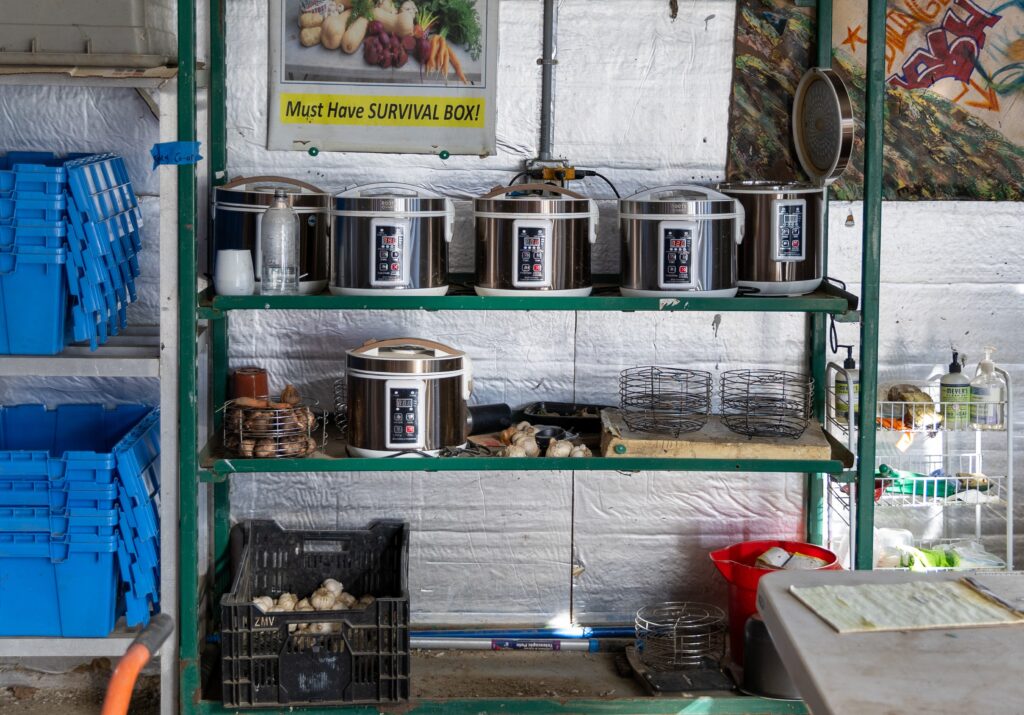
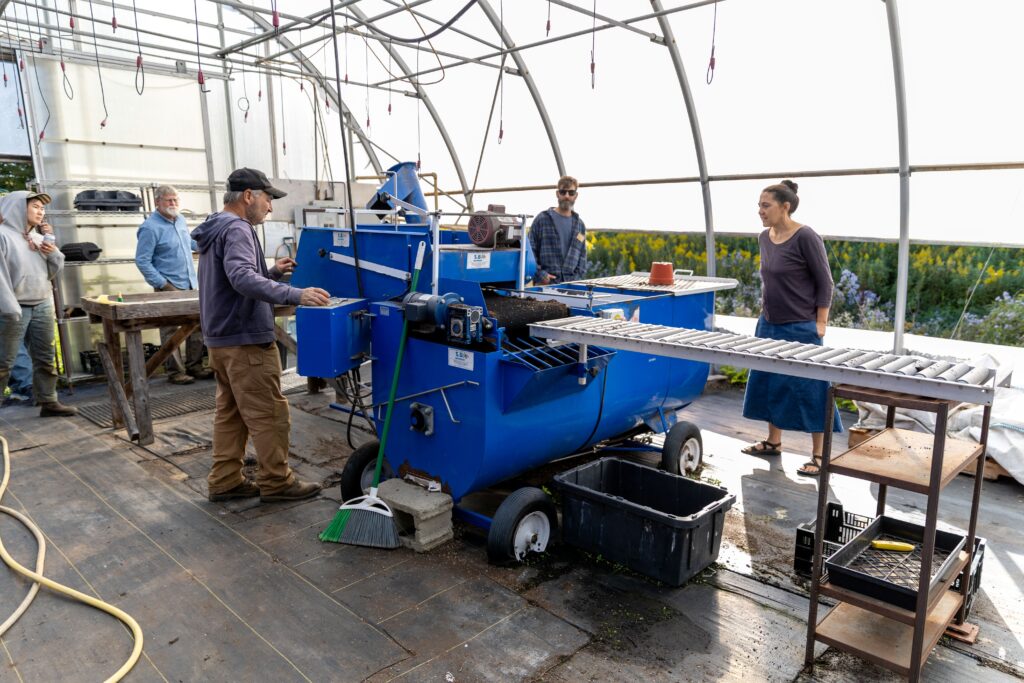
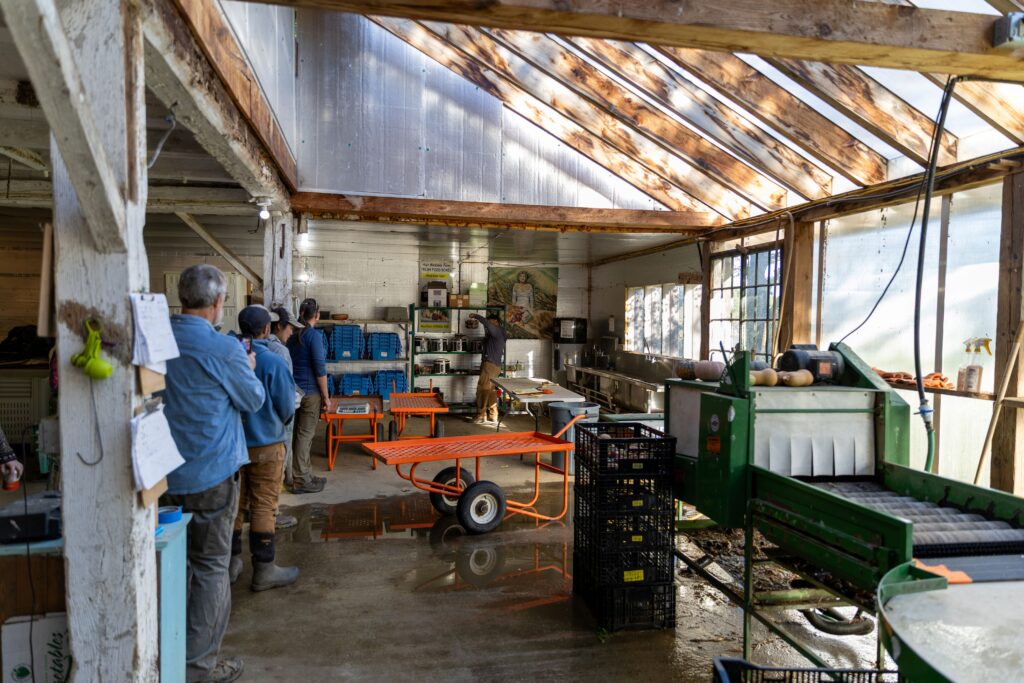
A former dairy barn was converted to produce storage and a wash pack area with the help of a $20,000 grant. We enjoyed the light-filled washing area while discussing current marketing opportunities and challenges. For more information and photos on the wash pack conversion check out the UVM Ag Engineering blog post and video.
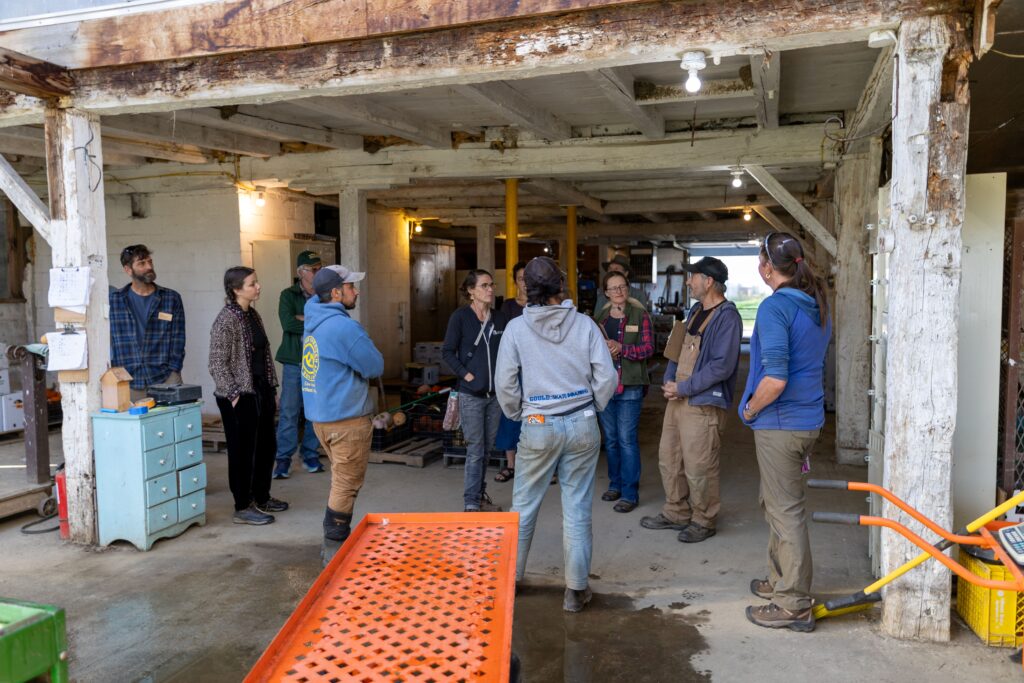
Thank you to Howard for hosting us! Thank you to everyone who attended and added to the conversation! This event was supported by the Transition to Organic Partnership Program and the Vermont Agency of Agriculture, Food, and Markets.
All photos by Andy Chamberlin, except header image, clover cover crop and leeks by Julie Callahan.