
By Becky Maden, Vegetable Nutrient Management Specialist, UVM Extension
Farmers appreciate the value of cover crops for the wide range of benefits they provide to the soil and the environment, but when it comes to calculating
nitrogen (N) contributions to cash crops from legume cover crops, there is a lot of uncertainty. Legume cover crops have a unique ability to “fix” nitrogen from the atmosphere, thereby adding a pool of N to the soil that can be utilized by a future cash crop. “Growing” legume nitrogen for subsequent crops can supplement or even replace expensive bagged fertilizer inputs, improve soil health, and protect water quality, but it is risky without understanding the timing and quantity of available N released from the cover crop.
The Process
Legumes fix atmospheric N through a biological process in association with
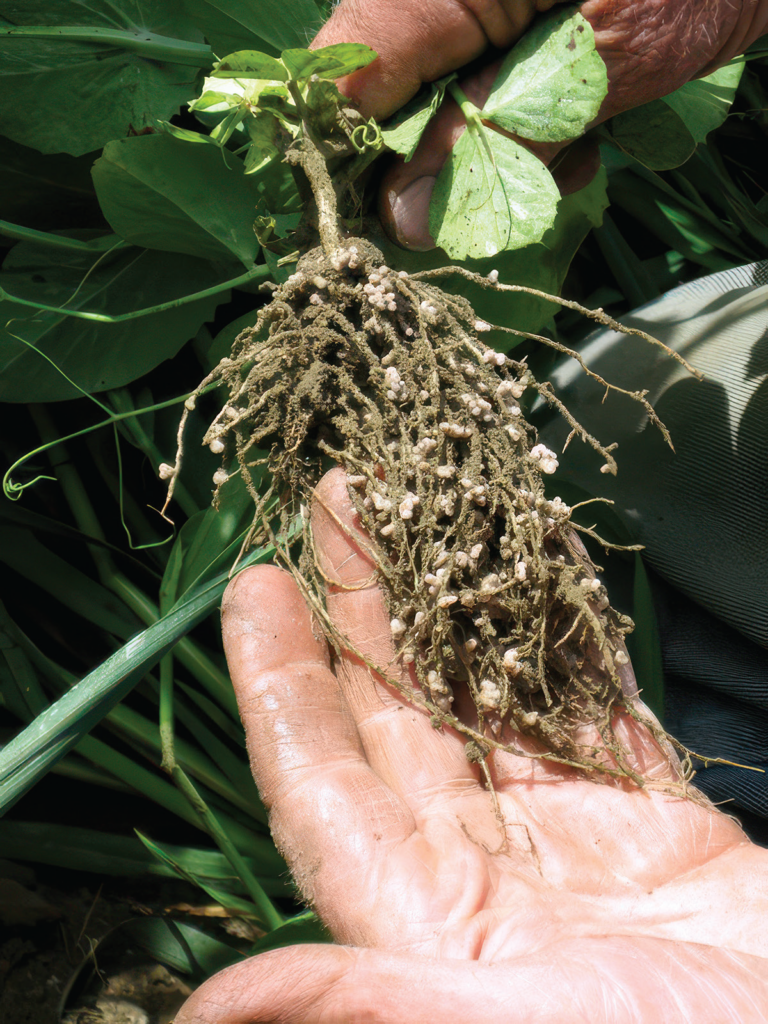
species of bacteria that live in small growths on the roots of legumes (nodules). These bacteria take N that is in the air and change it into forms that can be absorbed by the plant and stored in legume biomass. The individual species of bacteria required for N-fixation differs for different species of legumes, so cover crop seed should be inoculated at planting time with the specific bacteria for that legume. Commercially available inoculant is relatively inexpensive. It contains living organisms, so it should be purchased fresh and stored at cool temperatures. Once a legume cover crop species has been grown in a field, inoculation may not be necessary to ensure good nodulation.
After a legume cover crop is terminated, the organic N (in proteins, etc.) in the plant biomass is converted, or mineralized, into plant available forms of N by soil microorganisms, first into ammonium (NH4+), and then into nitrate (NO3-). For mineralization to occur, soil microorganisms need warmth
(temperatures above 65°F), oxygen, and moisture. In other words, when the soil is cool, saturated, or too dry, microbial activity is low, so this process is slow or does not occur. In the Northeast, conditions aren’t usually conducive to mineralization before June. Both NH4+ and NO3− can be utilized by cash crops; but NO3− is the more common form of plant available N in agricultural soils. Since it has a negative charge, nitrate is easily lost to leaching, which is both an economic loss for the farm and a potential threat to ground and surface water quality.
Estimating Quality of N from Cover Crops
The amount of N fixed by a cover crop varies based on factors including the legume species, the amount of legume biomass produced, and background
levels of soil N. (High soil N levels tend to suppress N fixation.) Several methods exist to estimate the amount of N available for cash crop use following a cover crop, but the most practical method for farmers
is to use locally published values (UVM Extension, Northeast Cover Crop Council, Cornell) and adjust these estimates based on the quality of their own
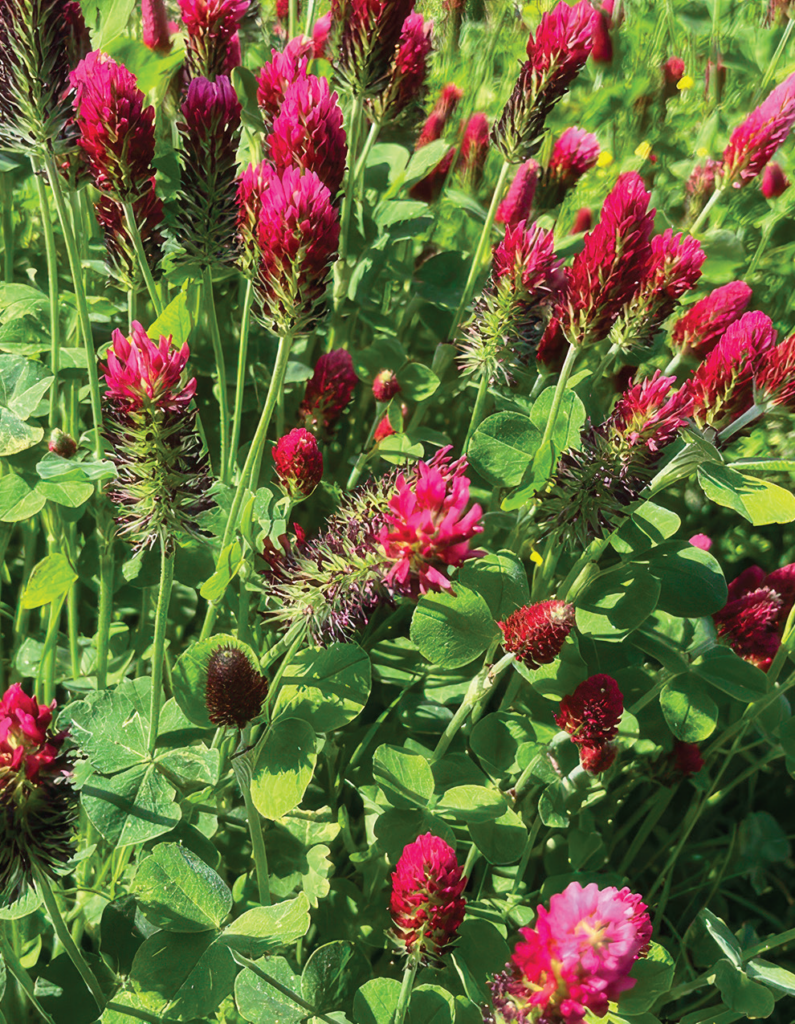
cover crop stand. For example, Cornell guidelines estimate that estimate that crimson clover contributes 70−150lbs N/acre. A farmer could assume that a good (but not excellent) stand could provide 100lbs N/acre, with about half of that becoming available the first season after incorporation. This means that the farmer can assume a contribution of 50lbs N/acre from the clover to the following cash crop. Note that the N content of legume cover crop biomass usually peaks around full bloom.
Estimating Timing of N Release for Cash Crop Utilization
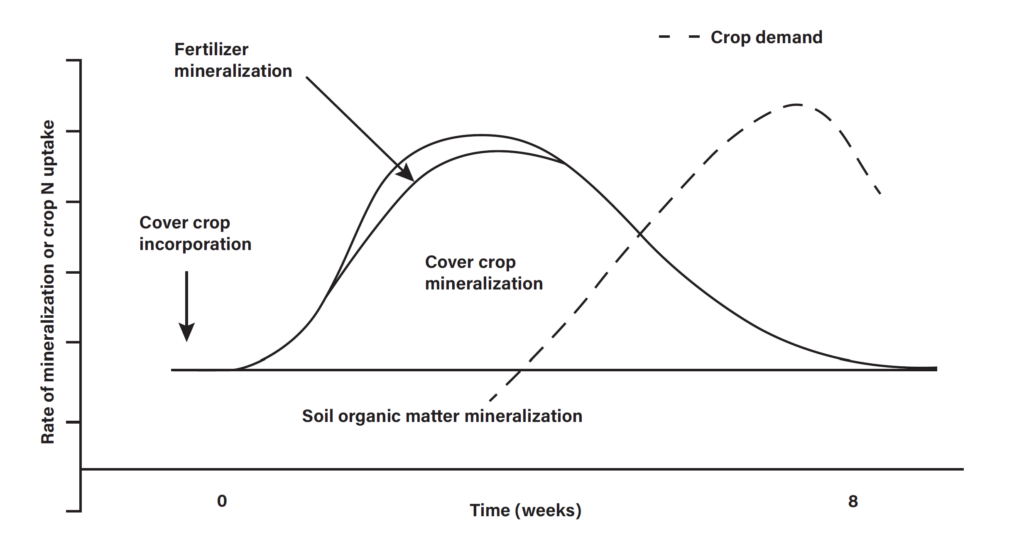
In order for a cover crop N to be utilized by the subsequent cash crop, the timing of the cover crop N mineralization and cash crop N uptake must synchronize. Conversion of organic N from a legume cover crop into plant available N will vary from region to region and year to year depending on soil temperature, moisture and soil biology.
Some practices can accelerate microbial activity and mineralization. Incorporating the cover crop when it is lush, before it matures, speeds N release because a lower C:N ratio promotes decomposition by microbes. If the cover crop is finely chopped, it is more quickly broken down by microbes. Incorporating the material into the soil instead of leaving it on the surface also accelerates decomposition.
Research done in Vermont and similar regions suggests that the majority of cover crop N is mineralized into a plant available form within 4−6 weeks a
er termination. This means that in Vermont it is nearly impossible to obtain early season N from cover crops terminated in the spring, but once soils warm up, typically by mid-June to early July, one can expect significant release of N after terminating a cover crop. In addition to weather effects on soil temperature, heavy rain can leach away nitrate-N that has mineralized.
Saturated soil conditions can lead to N loss through denitrification, when N in the ammonia form is lost to the atmosphere. Alternatively, if the soil is abnormally cool or dry, N mineralization may slow down and mismatch with cash crop uptake needs. Since these processes are mediated by the environment, each year can be very different, making it hard to plan.
Management Strategies
The presidedress nitrate test (PSNT) is a quick and affordable test for
available soil nitrate, offering farmers a tool to monitor the extent to which cover crop N is mineralizing. This test measures nitrate-N in the soil at the time of sampling. This information can offer growers confidence that there is plenty of nitrate from cover crops and guide fertilizer applications. One note about the PSNT — values from this test vary widely based on soil type, so results will be most informative if you take samples regularly and have a sense of what your background nitrate levels are at different times of year
in your soil.
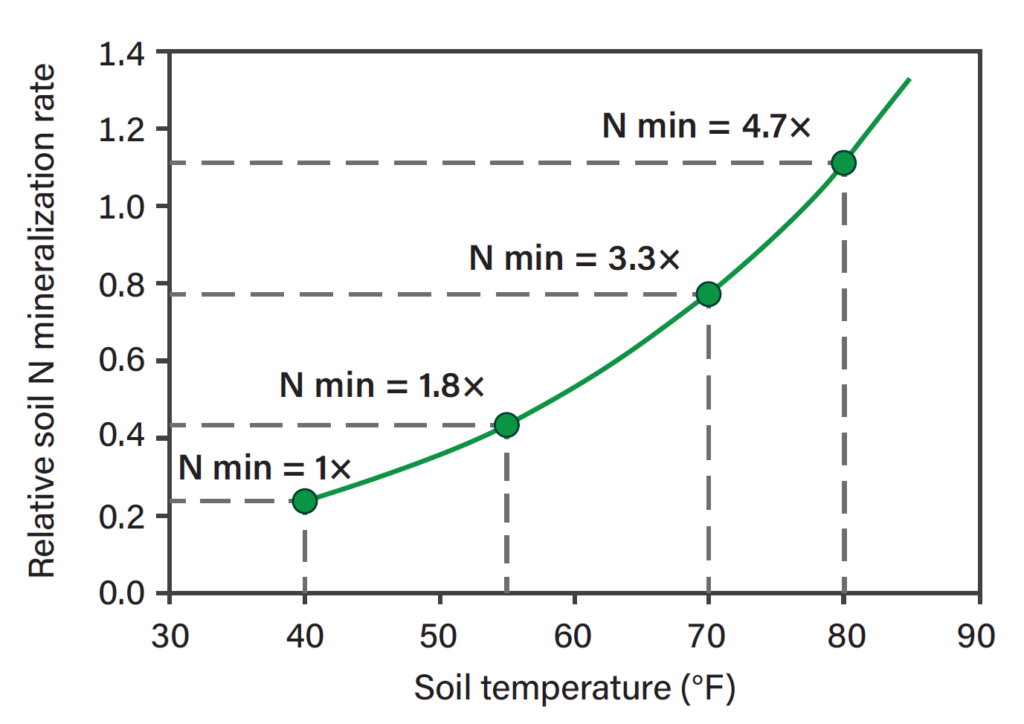
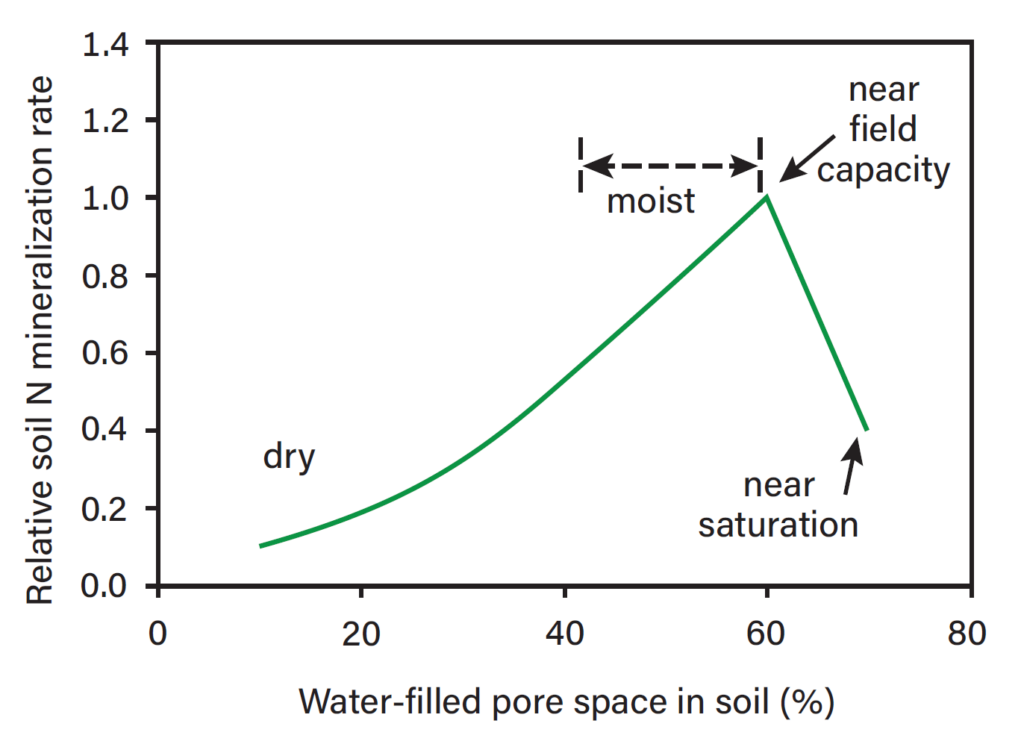
The good news for Vermont farmers is that legume cover crops can provide significant crop available N in most years, when weather conditions are not extreme. That N will be most abundant 4−6 weeks after cover crop incorporation.
One example of growing your own legume N is to plant an oat/field pea mix in the early spring, or to overwinter a rye/hairy vetch cover crop mix, then mow or chop the cover crop in early to mid-June, wait a couple of weeks for the material to break down, then plant a cash crop such as brassicas or root crops to be harvested in the fall. About a month later, in mid to late July, you could expect N release from the cover crop to align with cash crop demand. Applying a low rate of N fertilizer at planting (~30−50lbs/acre) helps ensure the cash crop gets off to a good start. It would be wise to take a PSNT 2−3 weeks after planting to assess whether the level of soil nitrate is adequate, or if side dressing additional N is warranted.
Growing cover crops for on-farm N production is a great way to reduce fertilizer inputs while protecting water quality and improving soil health.
References
Flynn and Idowu, “Nitrogen Fixation by Legumes”. (2015).
College of Agriculture , New Mexico State University.
https://pubs.nmsu.edu/_a/A129/
Gaskell et al. (2006). Soil fertility management for organic
crops. University of California.
https://anrcatalog.ucanr.edu/pdf/7249.pdf
Sullivan, D., Andrews, N. (Nick), & Brewer, L. (2012).
Estimating Plant-Available Nitrogen Release from Cover
Crops [Extension Catalog publication]. Extension Communications;
Oregon State University Extension Service.
https://extension.oregonstate.edu/catalog/pub/pnw-636-estimatingplant-
available-nitrogen-release-cover-crops
Sullivan et al. (2020). Baseline Soil Nitrogen Mineralization
Measurement and Interpretation. Oregon State University
Extension Service. https://extension.oregonstate.edu/sites/extd8/
files/documents/em9281.pdf

Leave a Reply