
Welcome to UVM Blogs. This is your first post. Edit or delete it, then start blogging!
Introduction (October 14, 2024):
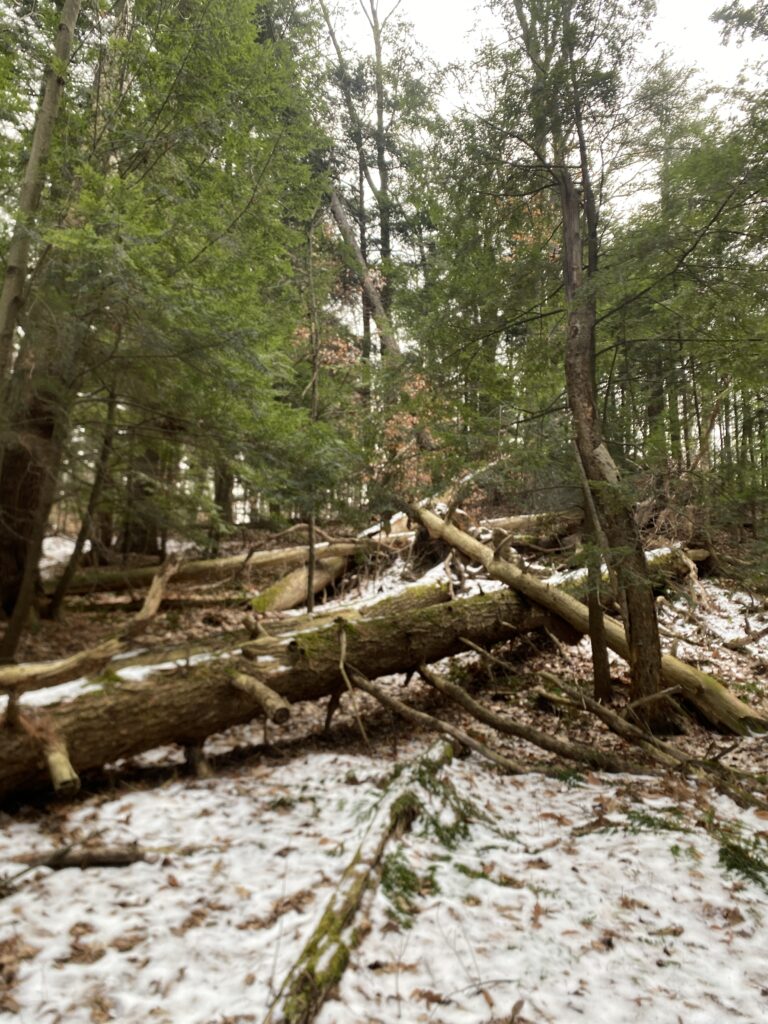
Directions: Follow the main trail for Centennial Woods, until you come to a big intersection and follow the path that runs parallel to the creek and my phenology spot is located on the right when you see several trees fallen over each other, covered in moss, and plenty of ferns in the surrounding area.
I chose this location because I have always had a fascination with ferns and moss, and in this area it is abundant. As well as the fact that this spot has a magnetism to it, with the odd pattern in which the trees had fallen.
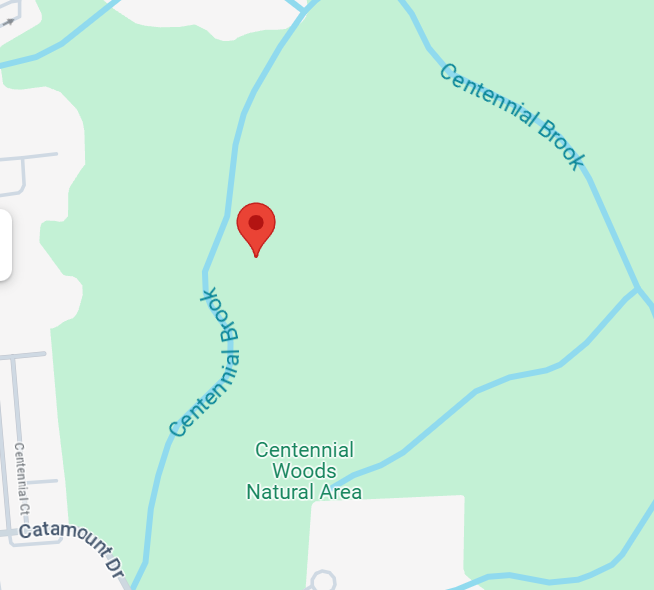
Description: Due to the fallen trees, this signifies that many of them were mature hardwoods. As well as the immense distribution of fern scattered throughout the understory. In my area, all the alive trees, that are still rooted are a part of the overstory, though many in the middle have fallen on top of each other. There are also various species of moss on many of the fallen trees’ bark.
Most Common Woody Plants:
- Fern
- Eastern White Pine
- Smooth-stalk Feather-moss
- Red Maple
- Smoothcap Moss
- Brocade Moss
- Sugar Maple
- Eastern Hemlock
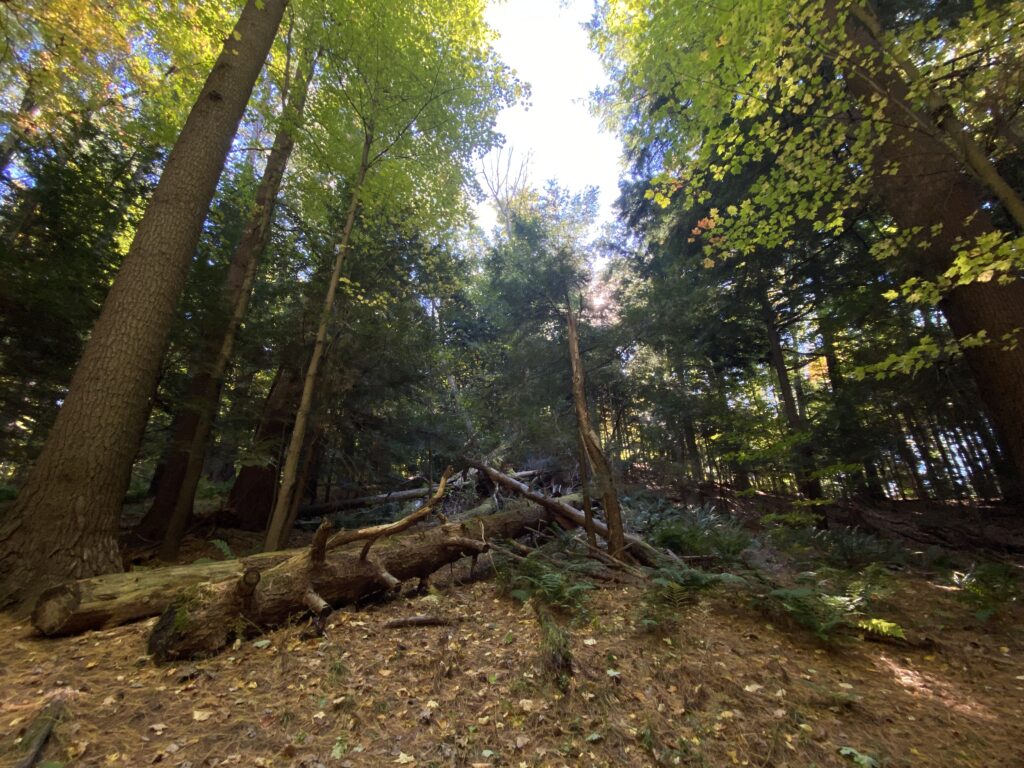
Phenology Post #2 (November 4, 2024): To get a bird’s eye view of my spot was a difficult task, as the logs that have fallen are at least to my waist, it was more difficult to be able to explore the entirety of my spot. However, once I did it, I realized that it was well worth it. Even just sitting there for fifteen minutes I could hear birds chirping, the wind rustling the leaves, and so many leaves falling off of the surrounding trees, such as the many Maple species I found.
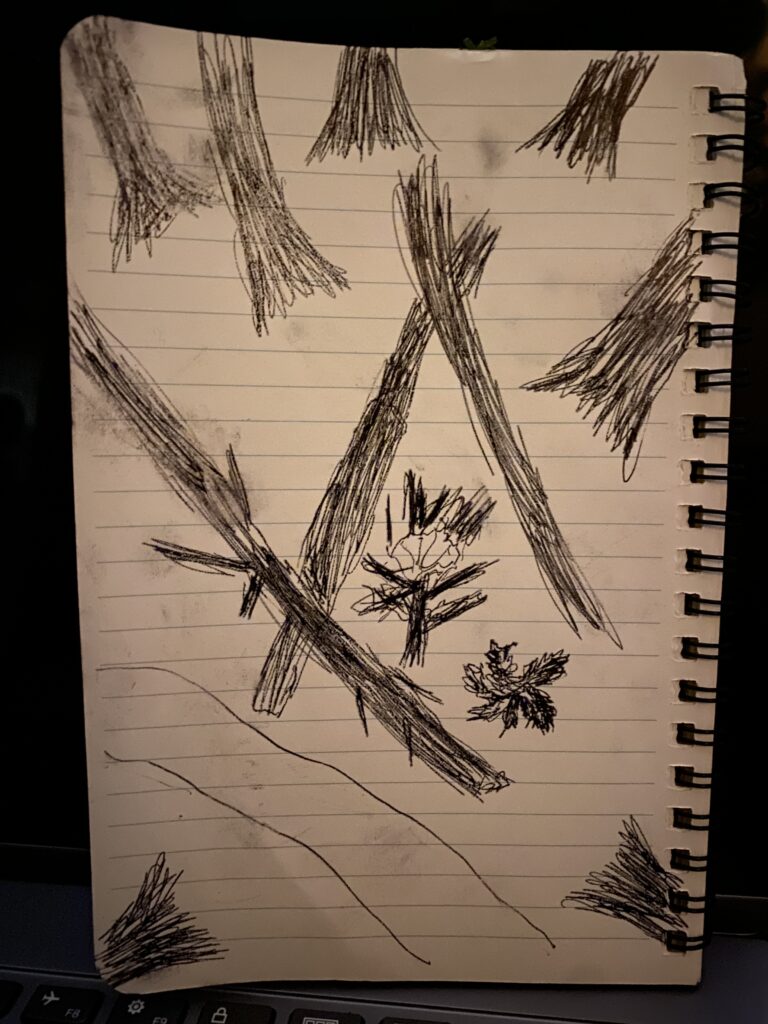
The most obvious change in the vegetation that has happened in my spot is the falling of the leaves due to Autumn and the normal seasonal patterns. However, they did fall much faster than I expected them to in between my last visit and this visit.
Phenology Post #3 (December 3, 2024):
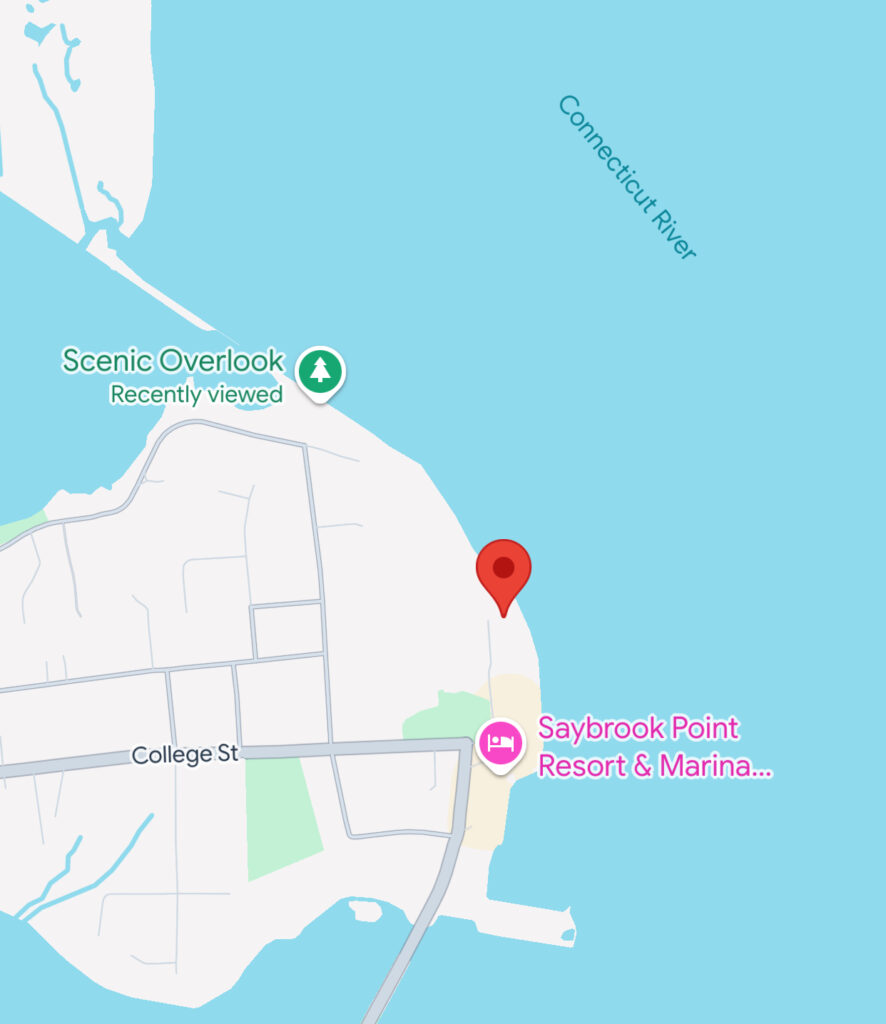
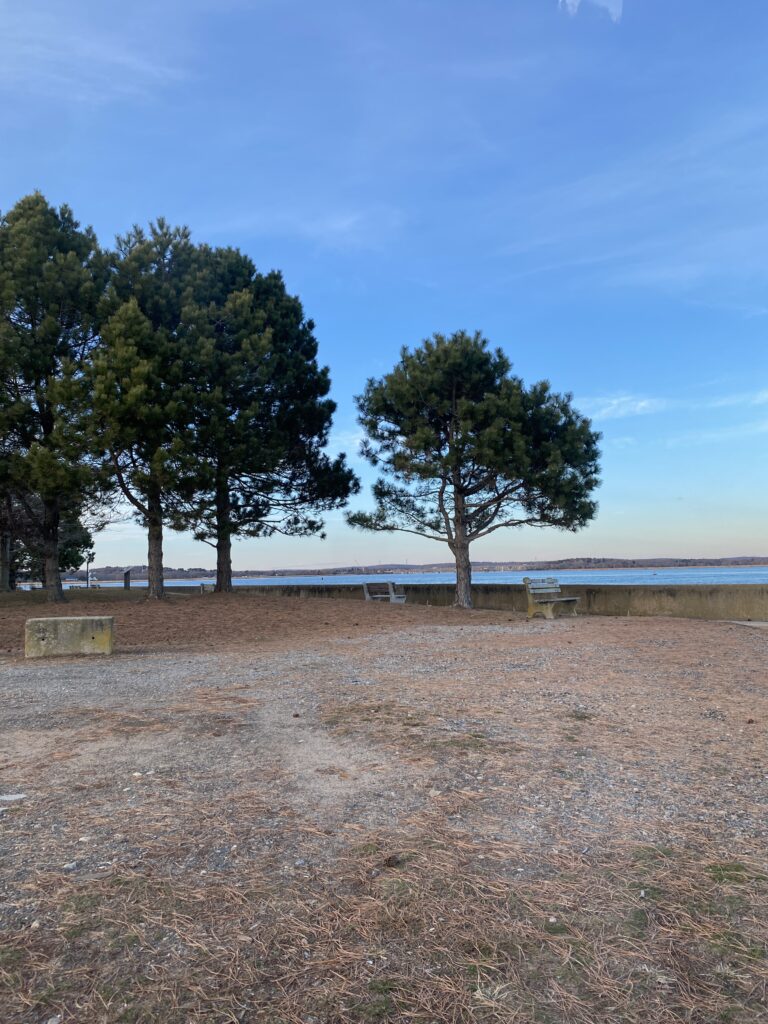
My new phenology place that I ventured out to over break was a small park looking out at the Connecticut River two towns over from where I live. I feel as though the ecology of this park is certainly different from that of my phenology spot in Burlington as there were far less species of trees. As seen in the image above there were different species of pine trees primarily. However, something I was not able to get a photo of was the other trees in the park, which were different kinds of maple and beech trees, which surprisingly had not lost all of their leaves yet. This is a pattern I had noticed after coming back home to Connecticut, was that many of the trees were on a slightly “delayed” schedule of losing their leaves comparatively to Vermont.
Phenology Post #4 (December 8, 2024): The foliage on the trees has changed drastically since I last came. And comparatively to my last picture of my spot, you can see that there are no more Maple leaves on the trees; and the bright, vibrant greens and yellows have turned to a subdued, cool green and white (due to the blanket of snow). As well as the ferns that essentially looked like they were monopolizing the ground are now hardly visible because of the snow covering them (seen in the bottom left image). The trees that still have anything attached to them are the Evergreens (Pines). The fall leaf litter is not visible anymore; however, I did remove some snow, and it was still very prevalent, and the leaves were very compacted and wet, which was a good sign of decomposition to me. I did not see any animal tracks nor any animals, yet I did hear a couple different species of birds in the distance (in the audio recording below). I believe that the animal activity definitely has decreased over the seasons change because in the beginning of this project, I saw far more squirrels and insects crawling around my spot and the logs, yet now I don’t see any.
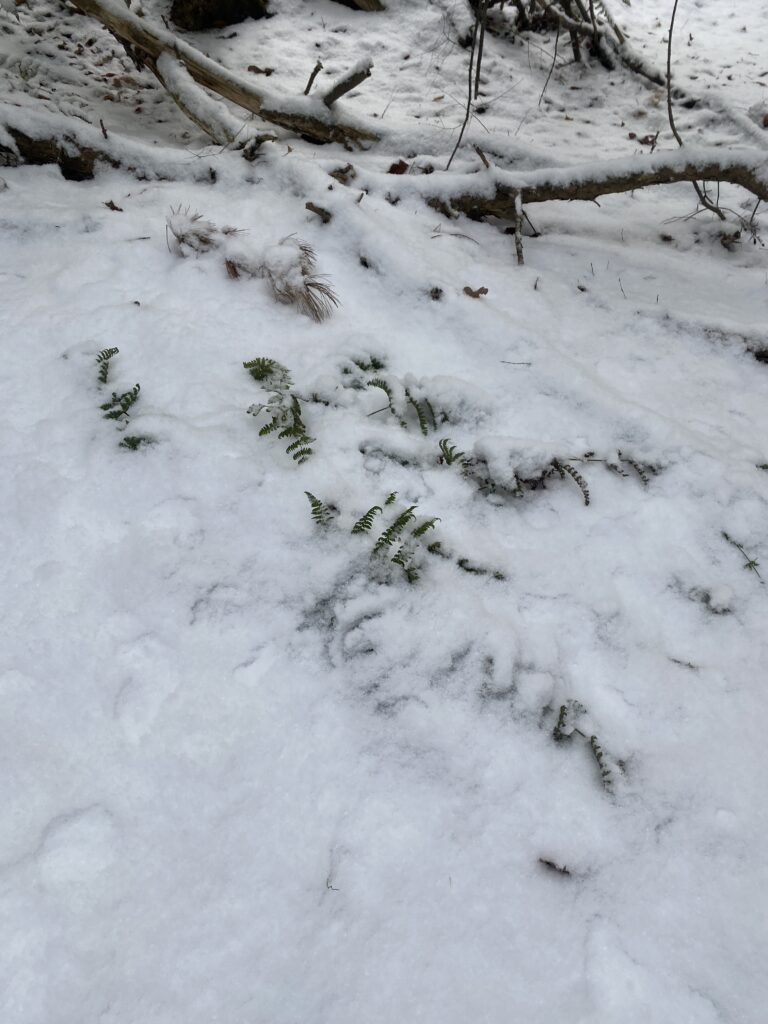
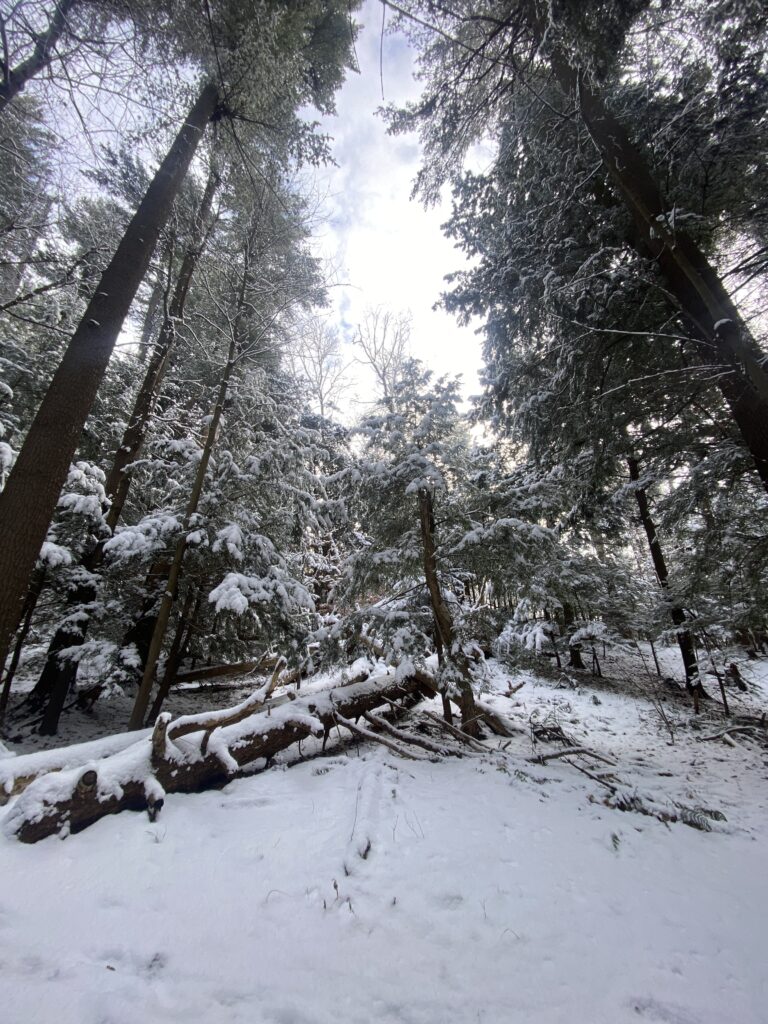
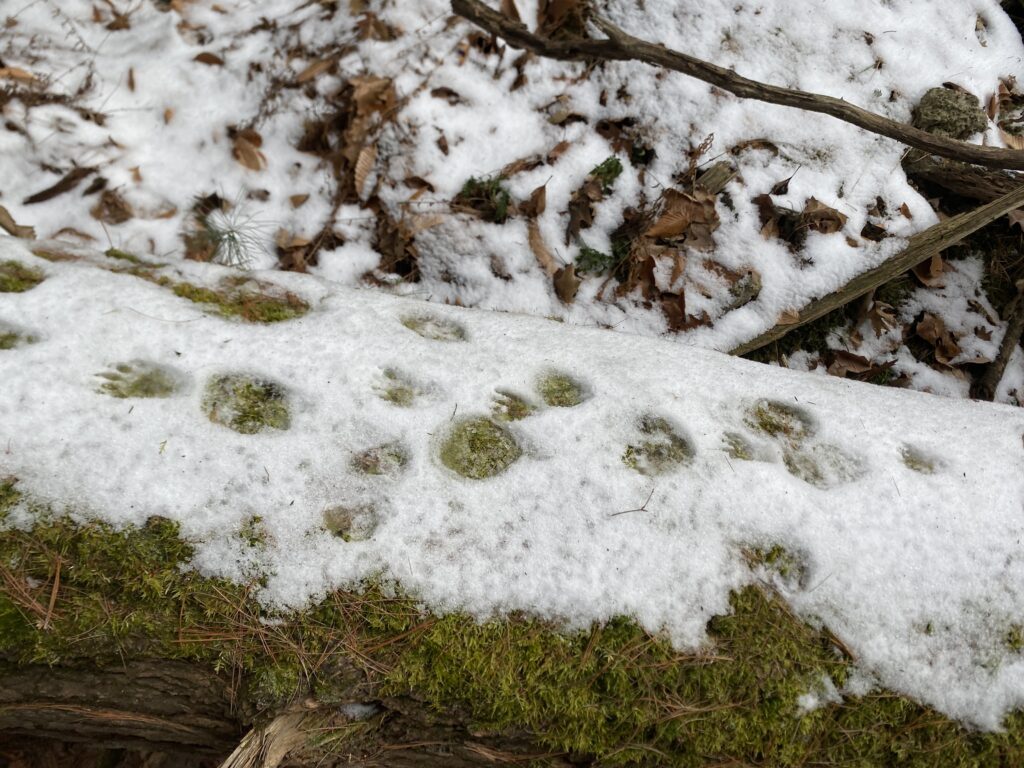
Phenology Post #1 (1/18/2025): Phenological changes include the wilting and freezing of the ferns surrounding the fallen wood. Also, the majority of the snow has shifted and decreased, yet also becoming more frozen and harder. I was able to document some animal tracks (below) on one of the fallen logs in my spot, and although I cannot decipher exactly what animal it is, it must be a smaller, four-footed, land-dwelling animal.
Phenology Post #2 (2/22/2025):
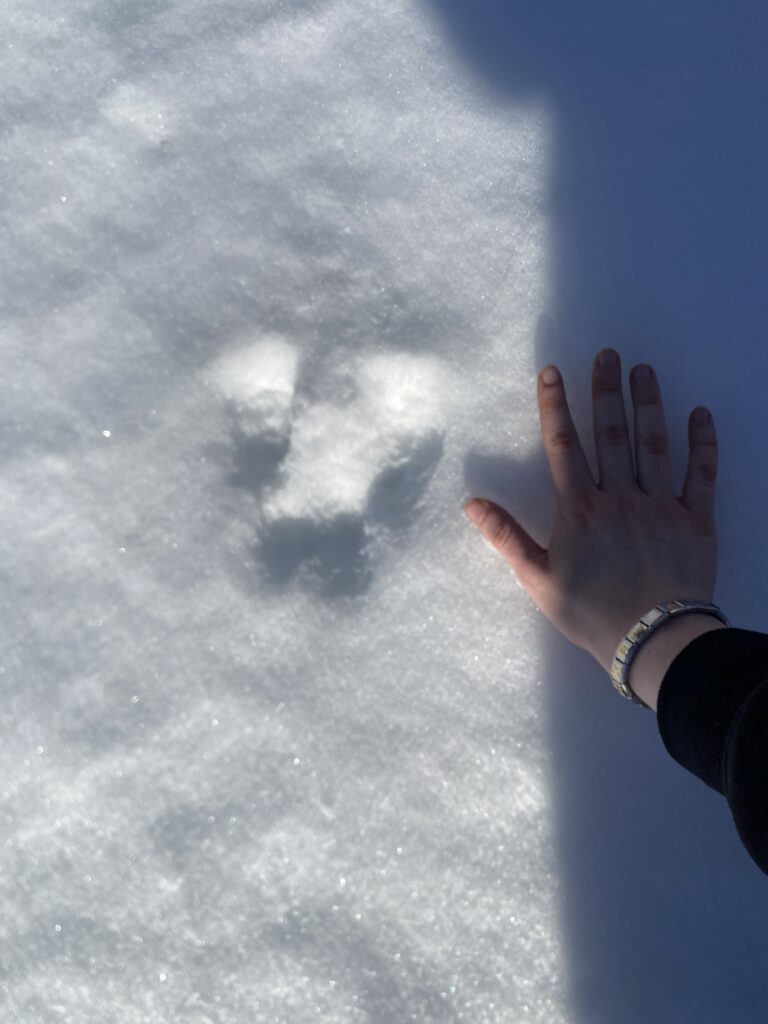
I was coming back from downtown Burlington, and on the campus greens when I saw these tracks. I believe they are Eastern Grey Squirrel because the spacing and path of the tracks indicated that they were headed up a tree on campus. The tracks also indicate that they are bounders, which the squirrel is. Additionally, I saw the imprint of four toes on each front print and five toes on each of the hind prints. And generally, their paws are significantly smaller than my hands, which makes me think it is a smaller creature. I’d say that my experience using iNaturalist was fairly easy, as I ran into very few issues, I just forgot how to join the project. However, other than that, uploading these tracks was very straightforward and simple. Although I am not completely sure if it is a grey squirrel or a red squirrel, I have found that after simply observing around campus, I have seen mostly grey squirrels, which is why I may be leaning that way.
Phenology Post (4/27/2025):
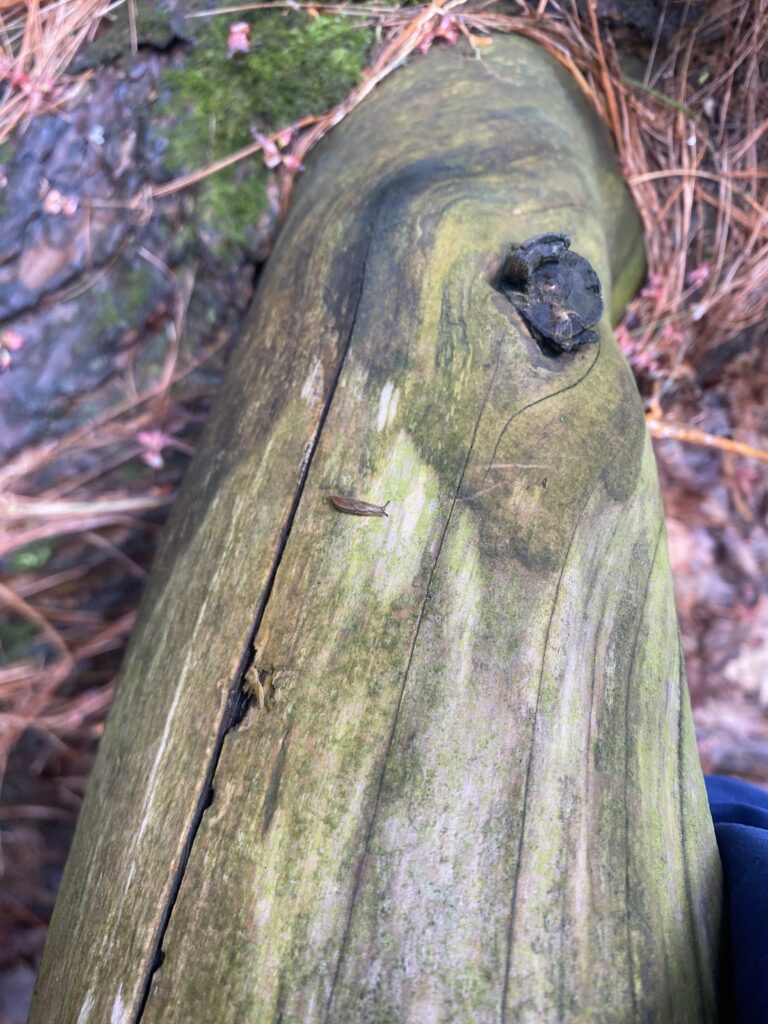
During the four-day BioBlitz, I visited Centennial Woods because it was fairly easy to access. Using iNaturalist was very straightforward, and it was very easy to access the project itself. I identified many species, including Tree Slug, Maidenhair Fern, and Intermediate Wood Fern. I also identified many hardy woods that I identified earlier last semester, such as Eastern White Pine, Smooth-stalk Feathermoss, Red Maple, Smooth cap Moss, and Sugar Maple. Something that I found interesting from the global postings was that besides the first ranked on the leaderboard, most of the top identifying cities were not from the U.S. I think this surprised me so much because I figured iNaturalist was based mainly in the U.S., and the variation in the countries is immense. For example, currently the second-ranked city is located in China, then the third-ranked city is located in the Czech Republic.
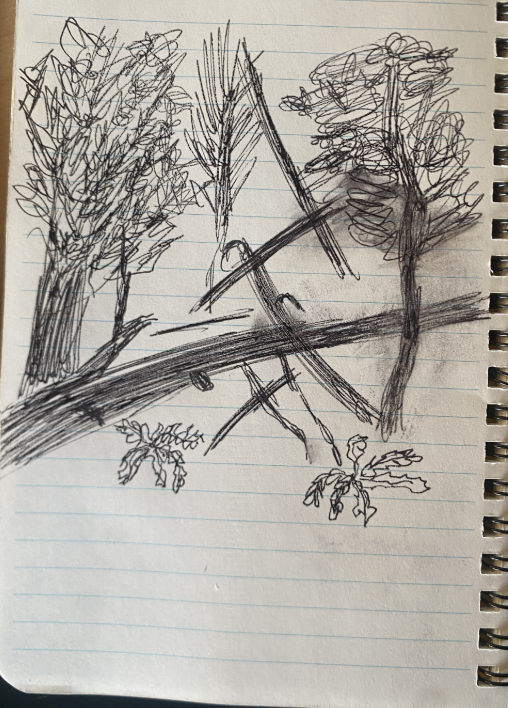
Phenology Post (4/28/2025): My phenology spot has transformed a lot in the last six months. I’ve witnessed several phenological changes through the seasons, such as the hardwood trees losing their leaves, snowfall trampling the ferns, and the buds on many trees starting to emerge. A major part of my spot is a significant tree blowdown, which often I find has various species of moss covering it, and sometimes species of slug, and surprisingly, pine residing on the bark of these trees. About half of the time, I have been able to spot the native fern, which makes up much of the ground cover of my area. This spot highlights how nature and culture interact. The plants and animals reflect a blend of natural processes and human influence over time, telling a story of coexistence. Spending time here has deepened my connection to the area. Although I’m not a natural part of this ecosystem, my experiences in this place have given me a sense of belonging. Taking care of and observing this space has reminded me of the bond we can form with the environments we immerse ourselves in.
Hi, this is a comment.
To get started with moderating, editing, and deleting comments, please visit the Comments screen in the dashboard.
Commenter avatars come from Gravatar.