The first thing I had noticed when I got to my phenology spot was the intermediate wood feens that remained green under the new fallen snow. I knew this would occur as it was mentioned in the Naturally Curious December Chapter that this species has evergreen leaves that will persist through Vermont’s harsh winters. Another observation I had was large somewhat rectangular holes within trees which I believe were made by a Pileated Woodpecker, as the book mentions they make these for feeding on ants. I searched for more implications of animals being in the area, yet I had no luck with tracking. I believe this is because I ventured out while it was snowing, which would let the snow fill in tracks as they were made. I also could not find many cones on conifers which was surprising as the book mentioned that they are everywhere during this time of year. Lastly I saw some red winter berries.
Event Map
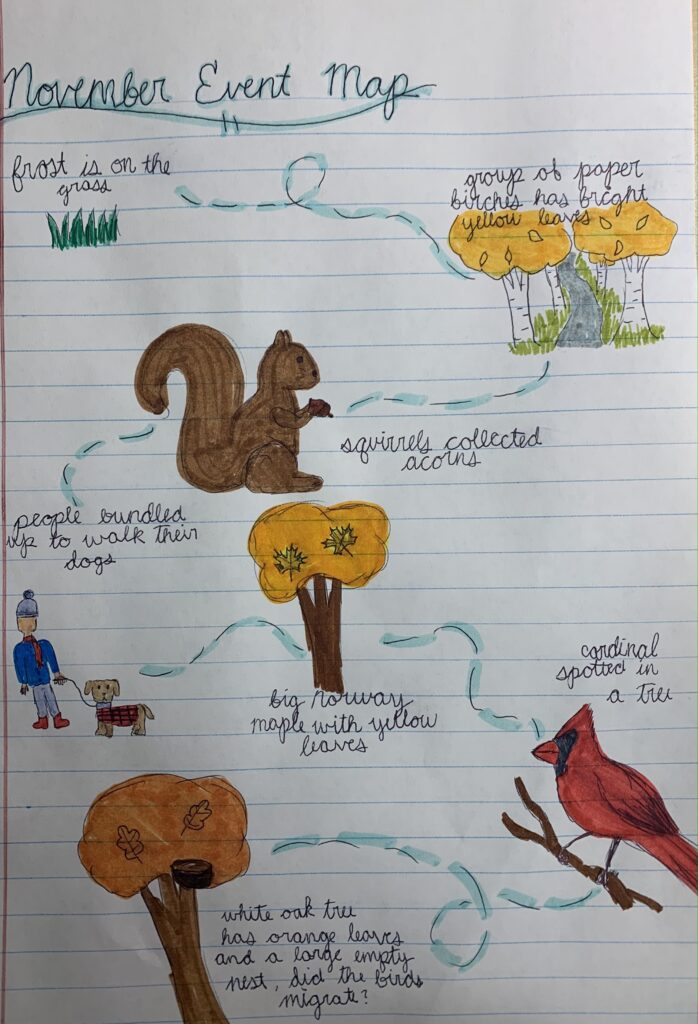
For this adventure, I first walked around our campus to inspect what was happening right around us. Here is where I saw the frost on the grass behind my dorms. Next I went down to Champlain College on Maple Street, passing through the Paper Birches and seeing several squirrels stocking up on acorns. I continued my walk down the hill to the lakeshore, and while I did not observe any natural phenology at the lake, I saw many people bundling up to keep warm while walking their dogs. Walking back up the campus there were several trees with changing leaves such as a Norway Maple and a White Oak. I also noticed a cardinal sitting in a tree as well as a big empty nest in another tree. While the birds that call this nest home could have simply been out getting food, this could also mean that these birds had migrated somewhere warmer for the winter.

Observing and Mapping
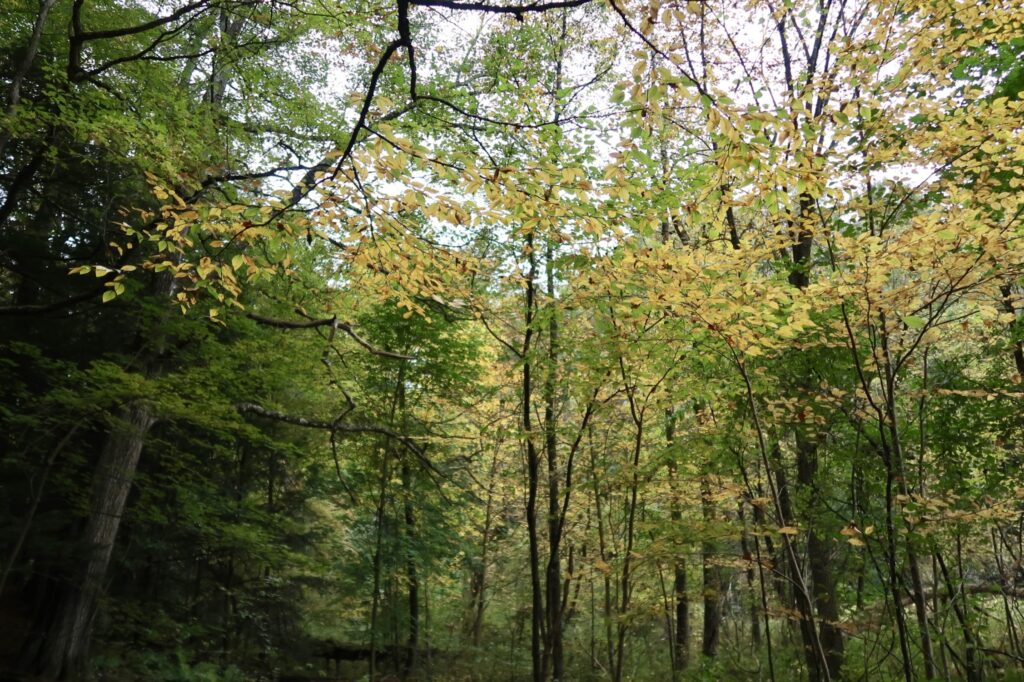
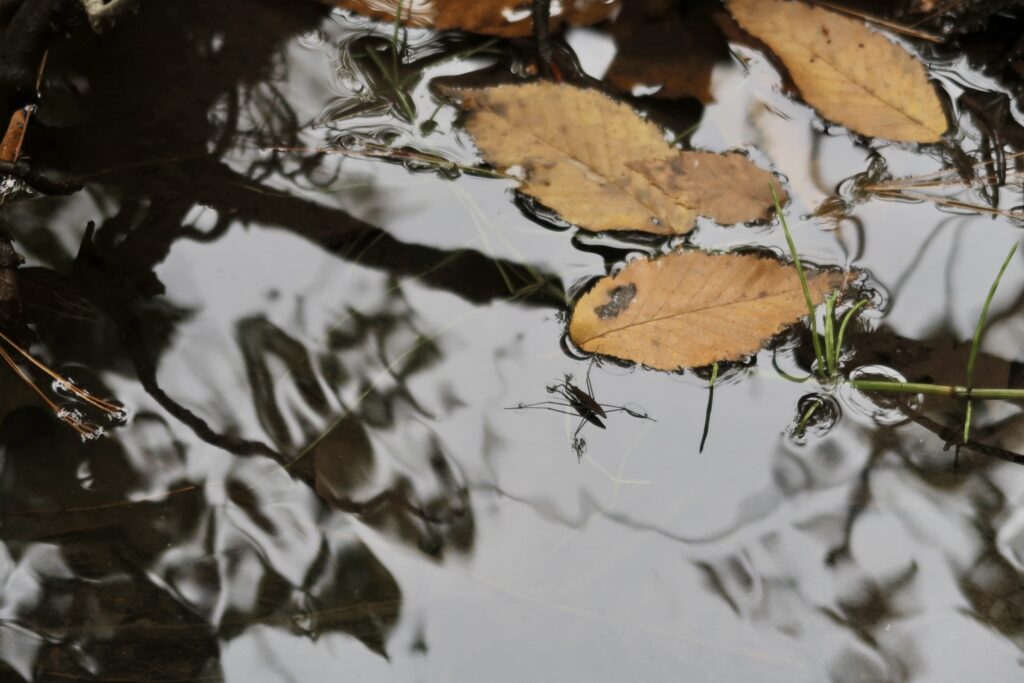
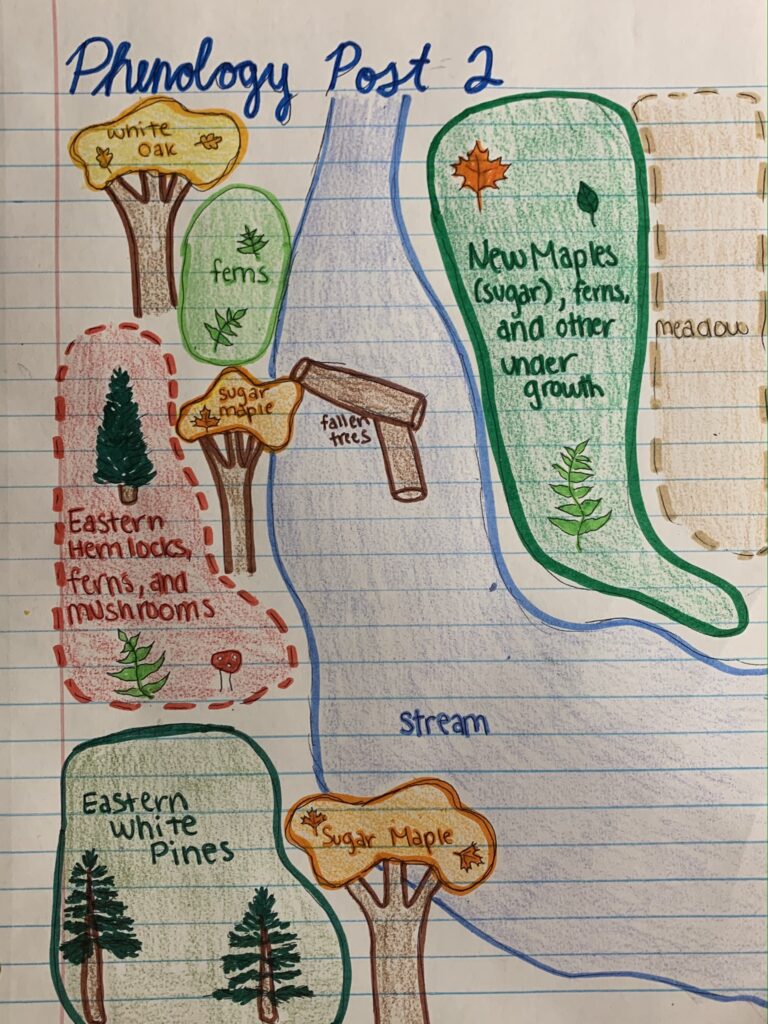
During the peaceful 15 minutes by the brook, I could smell the pines to my right as I sat on the damp ground. I felt the crunchy leaves and pine needles that lay over the forest floor. As I heard the wind blow through the trees, colorful leaves would fall into the stream which was running at a faster speed than normal as it has been rainy over the weekend. Birds and planes both flew over creating an odd symphony of sounds. Chipmunks would scale the trees creating scattering noises across the rather quiet forest. Overall, this experience was extremely relaxing and drew my attention to the small details of the area, especially the noises that can be easily drowned out if you do not remain silent to listen. The first thing I noticed when I arrived in the area was the change in leaves from the last time I visited. The sugar maples had bright yellow and red leaves while the white oak had leaves of yellow. The underbrush on the other side of the river was also changing, turning brown and barren. I have yet to see any evidence of wildlife in this area other than the live chipmunks climbing the trees.
Introduction
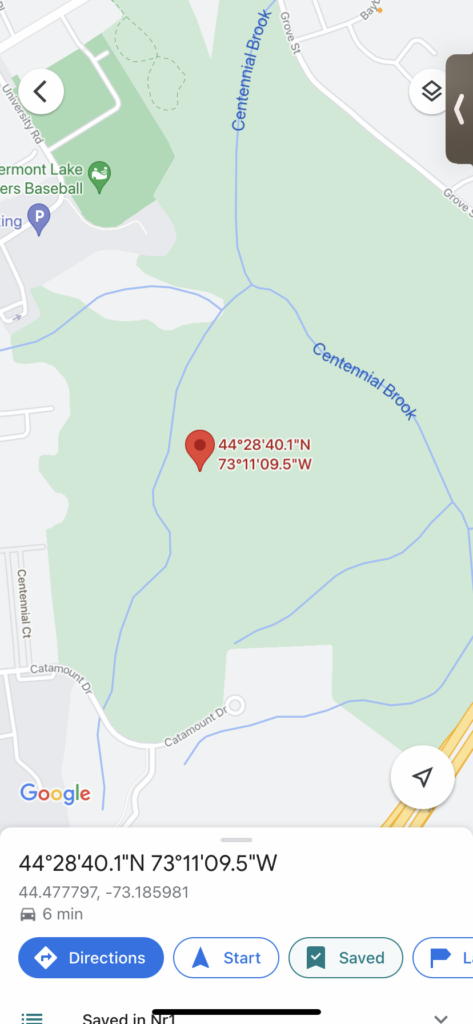
My phenology spot lies within Centennial Woods, which you can get to by walking east of Central Campus, down Carrigan Drive, and past the Police Station until you arrive at the opening of the trail. Once here, you will walk down past the stream bridge and continue over the hill. At the bottom of the hill, if you turn to your left you will be able to walk off trail to the continued stream slowly running and you have arrived. I chose this spot because of it’s peaceful and serene nature as well as it’s accessibility right near campus. I think that the water way will be interesting to observe throughout the seasons as well as the surrounding plants. This area has very few plants right next to the water but it does have lots of fallen trees and pine needles as well as some ferns and mushrooms sprawling the forests’ ground. The trees of the area mostly consist of Red Maple, Norway Maple, Eastern White Pines, Red Oak, White Oak, and American Beech.