A UVM blog Aiden’s Blog

Posts

Wonder Blog #4: Plot Field Guide

Location: Willoughby State Forest, 7/10, 6pm, wet rainy conditions

Description of project:

For my project I have decided to create a field guide of the plant and animal species I have discovered within my small plot of northern hardwood forest. This guide will identity the species and provide a picture of this species. These species were documented in all of my trips. Pictures and new species were found and documented on my final trip to the site. I will include a description of the species, key features, and a few interesting facts.

This project really helped me to expand my knowledge of the trees and animal life in this area. While I was aware of some of the species, I had to use tools and resources to help with many. By doing this specific project it helped deepen my understanding of my local ecosystem by reinforcing what I already knew as well as adding a multitude of new species to my awareness. I now have a broader scope of knowledge when I am walking and observing nature. It was difficult at points to correctly Identify species. I would sometimes misidentify and then have to find unique features and cross reference certain sources in order to feel confident in what I was looking at. All of these species are plants and animals I have personally observed during the past few weeks doing these projects. This project definitely helped better understand the process it takes to find and correctly recognize species in nature.

Contents:

Woody Plants:

  • Sugar Maple
  • American Beech
  • Yellow Birch
  • Balsam Fir
  • White Ash
  • White Birch (Paper Birch)

Small Plants and Shrubs:

  • Red trillium
  • Tall beech Fern
  • Northern Maidenhair (Fern)
  • Striped Maple (Mountain Maple/Moose Maple)

Animals and Bugs:

  • Dusky Arion
  • False Crocus Geometer
  • Downy Woodpecker
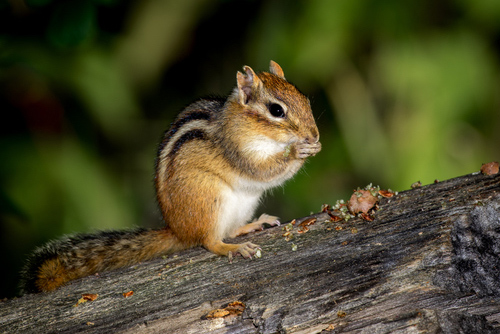
  • Eastern Chipmunk

Woody Plants:

Sugar Maple (Acer saccharum):

Family: Maple

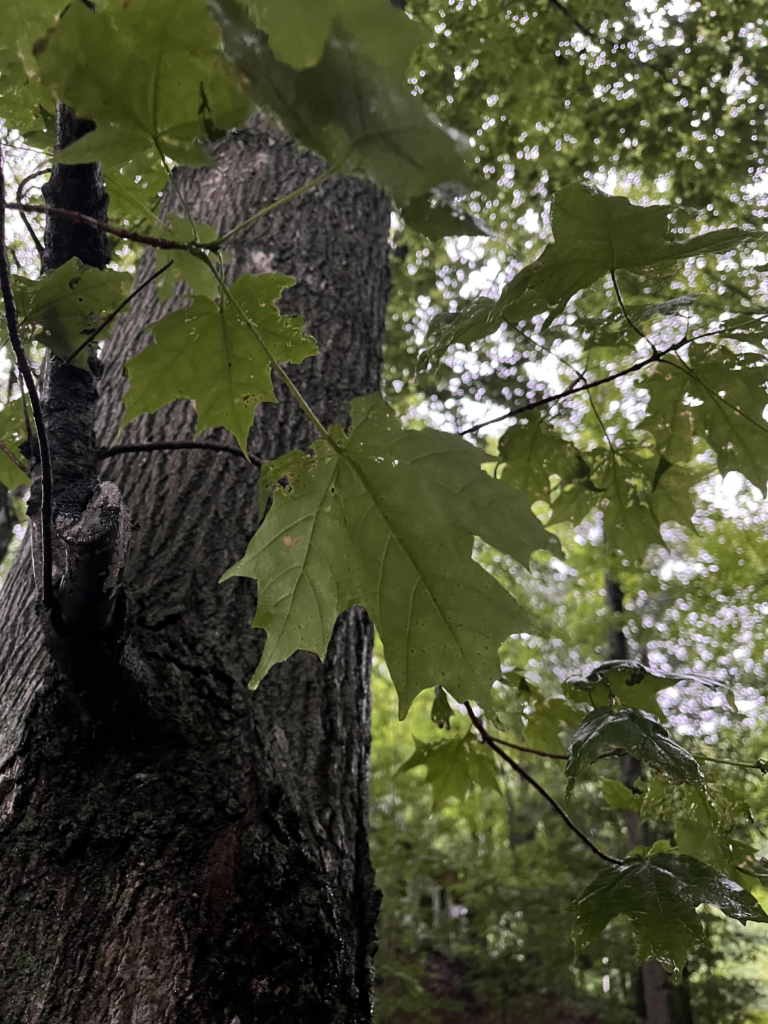
Key characteristics and facts: Smooth greyish bark on young trees and saplings. As the tree ages it develops fissures and less smooth bark. The leaves on maple trees all have the similar characteristics as they have multipole points and roughly can be associated with the shape of a star. A sugar maple will have a medium sized leave about 4-5 inches in diameter with 5 distinguishable lobes. Red maple is easily mistaken for sugar maple but the differnce is in the sinuses. Sugar maple has “u” shaped sinuses while red maple has “v” shaped sinuses. Maple trees are a staple of Vermont and the syrup that is made from them is historically a large piece of Vermont culture. In order for a Maple tree to produce the sap for they syrup, the tree must be of 30 years old, and it will take 40-50 gallons of sap to make one gallon of syrup.
American Beech (Fagus grandifolia):

Family: Fagaceae 

Key features and facts:

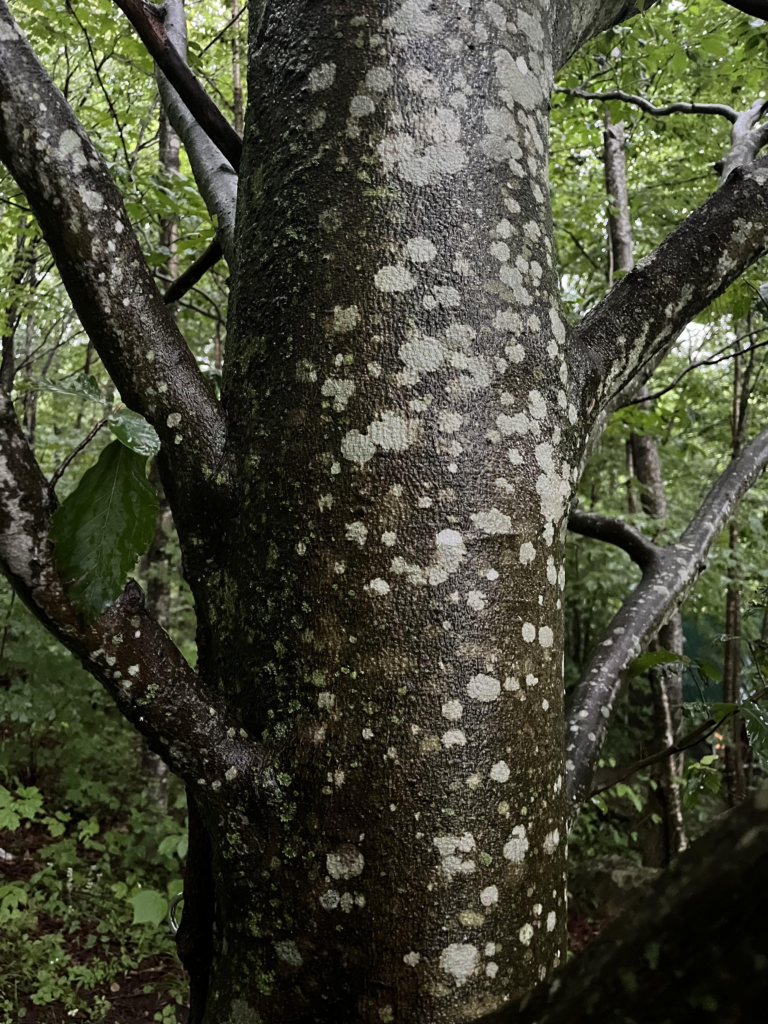
Bark is very smooth on beech trees, from when they are young to when they are old. The bark tends ot be generally lighter than that on maple but darker than ash. They grow up to 120 feet and are fruit bearing. They grow beechnuts which are favored by black bear of the area. The bark on beech trees is very easily scarred so you can often see the marks of bear claws as they climb to reach the branches. Beech trees are also susceptible to beech bark disease which creates boils on the bark and are commonly found on these trees. The leaves on beech trees are oval shaped and have ridged edges on mature trees they are about 5 inches long. They also bear a shiny waxy appearance.
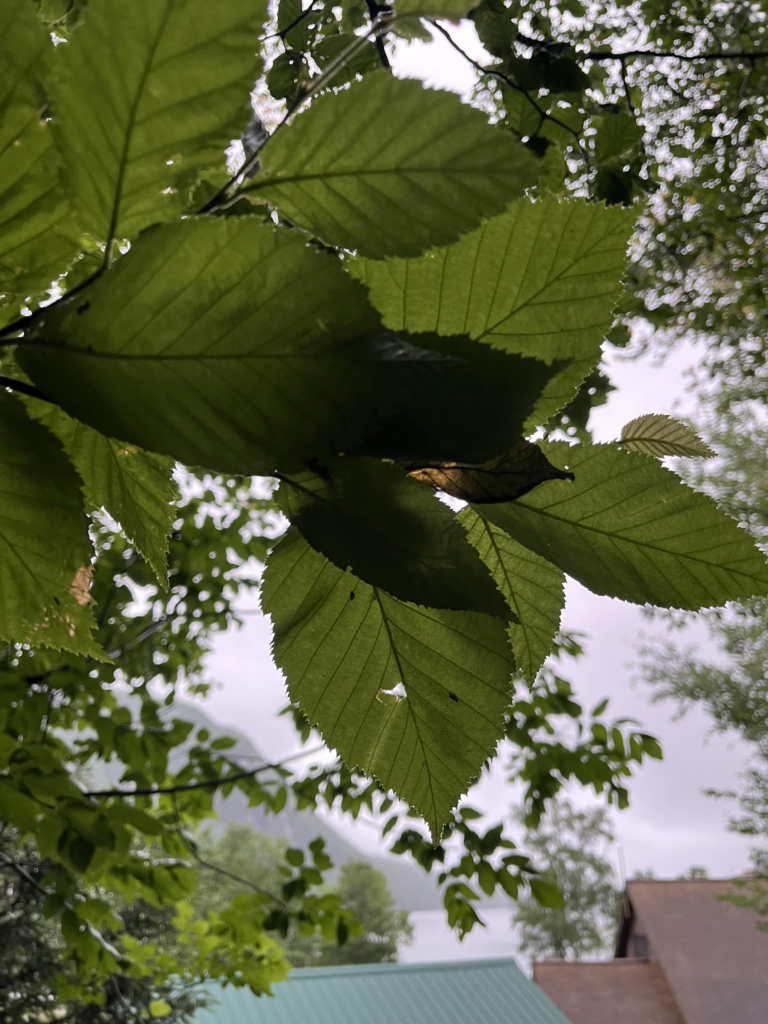
Yellow Birch (Betula alleghaniensis):

Family: Betulaceae

Key features and facts:

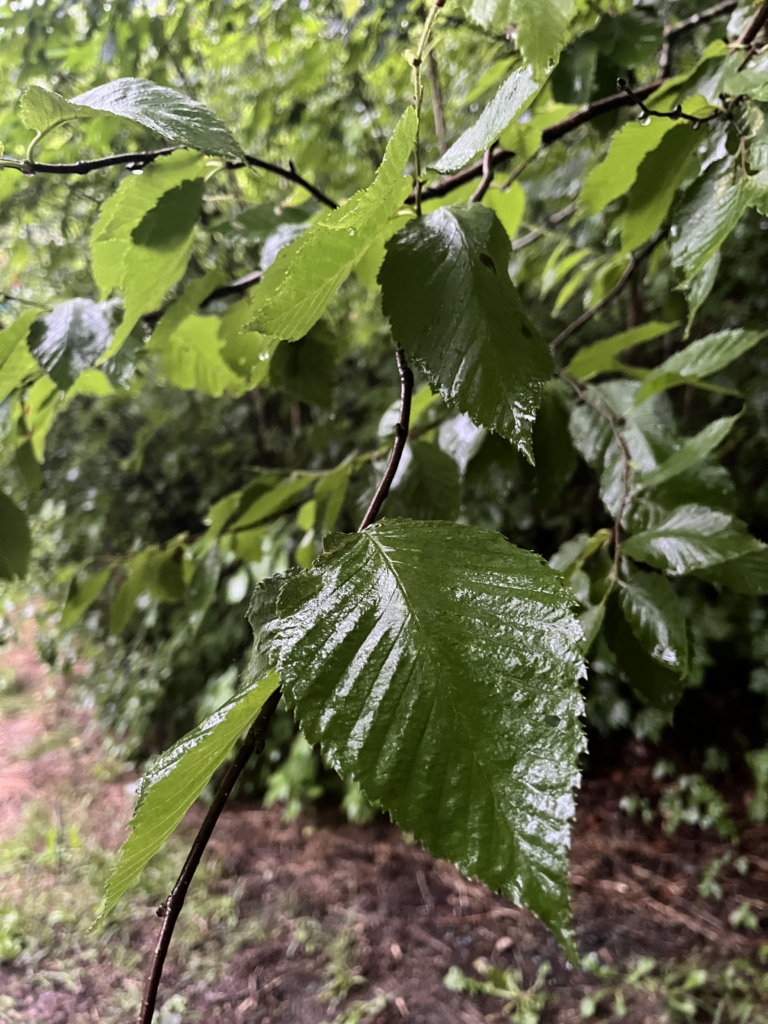
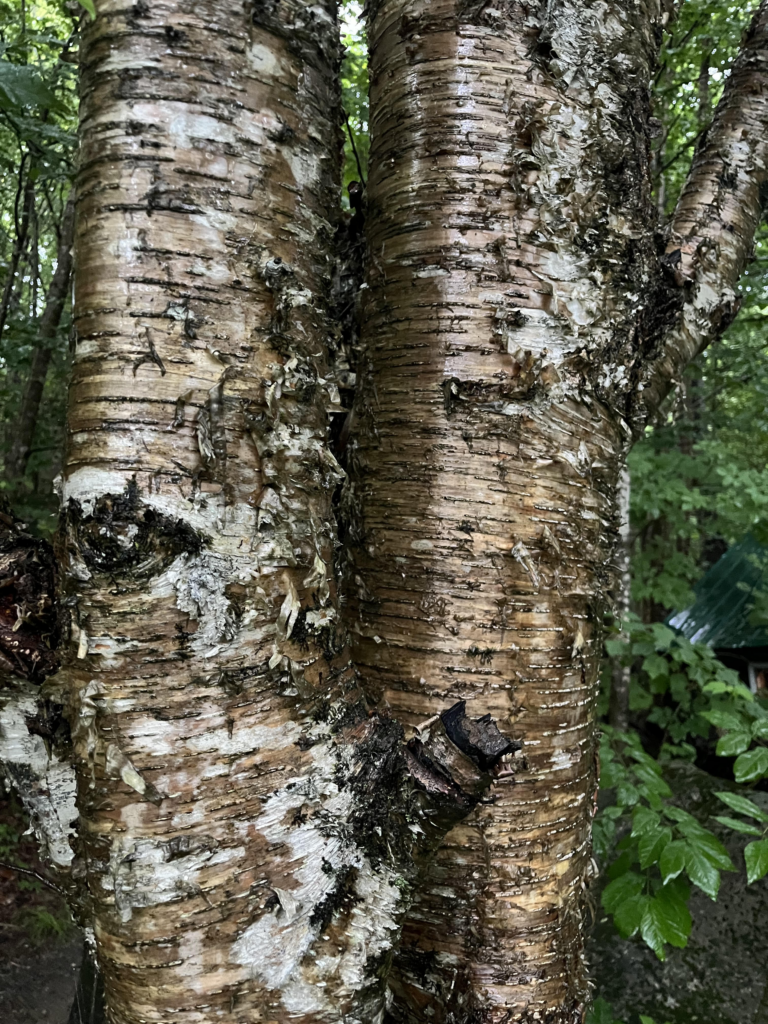
Yellow Birch is very distinguishable alike other species of birch because of it’s bark. While paper birch commonly peels off in large pieces yellow birch peels off the tree in smaller fibrous pieces all over the tree. it holds a golden shiny appearance most of its life. When it is young the bark is smooth but abnormally shiny. A middle-aged tree like this shown in the picture will have many fibers peeling and bear the same strong color. As the tree reaches a immense age it will turn a greyer color and lose its shine and gold. The leaves on yellow birch are longer and more elongated than paper birch. More of an oval shape than a rounded shape. Birch bark is a great firestarter, the natural oils in the bark make it easy to catch on fire.
Spruce (Picea glauca):

Family: Pinaceae

Key features and facts:

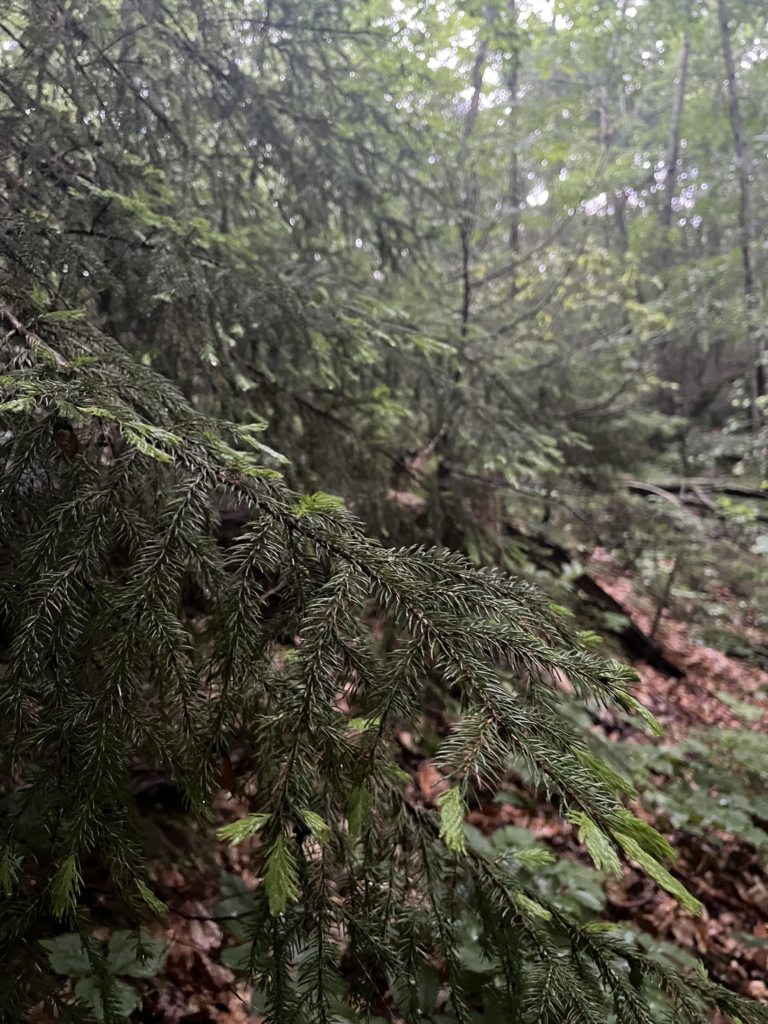
The only softwood tree I have on this list and the predominant in the area. Spruce have pointed needles, almost spikey to the touch, “Spikey spruce vs friendly fir”. Spruce has a lighter bark color kind of greyish color that holds it apart from Fir trees which have a darker complexation. If you look closely the base of the needles is held onto the branch by wooden peg like features. The needles have four sides which can be seen when you roll the needle with your fingers it does not roll smoothly. Spruce wood is widely used for making musical instruments and their parts.
White Ash (Fraxinus americana):

Family: Oleaceae

Key features:

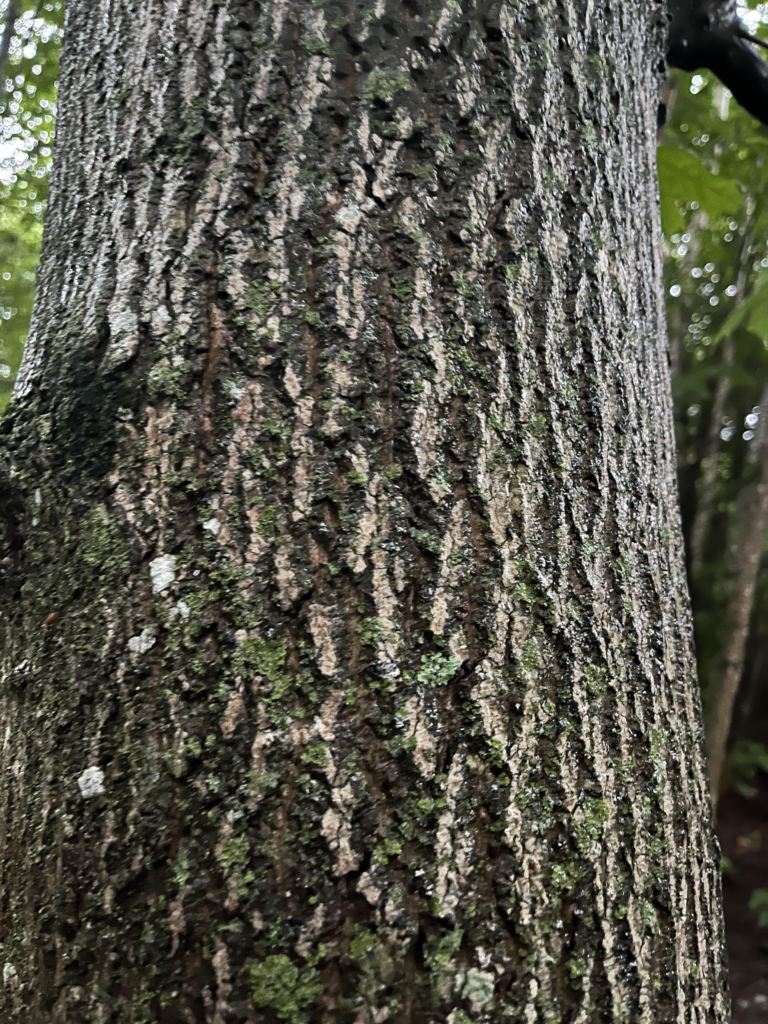
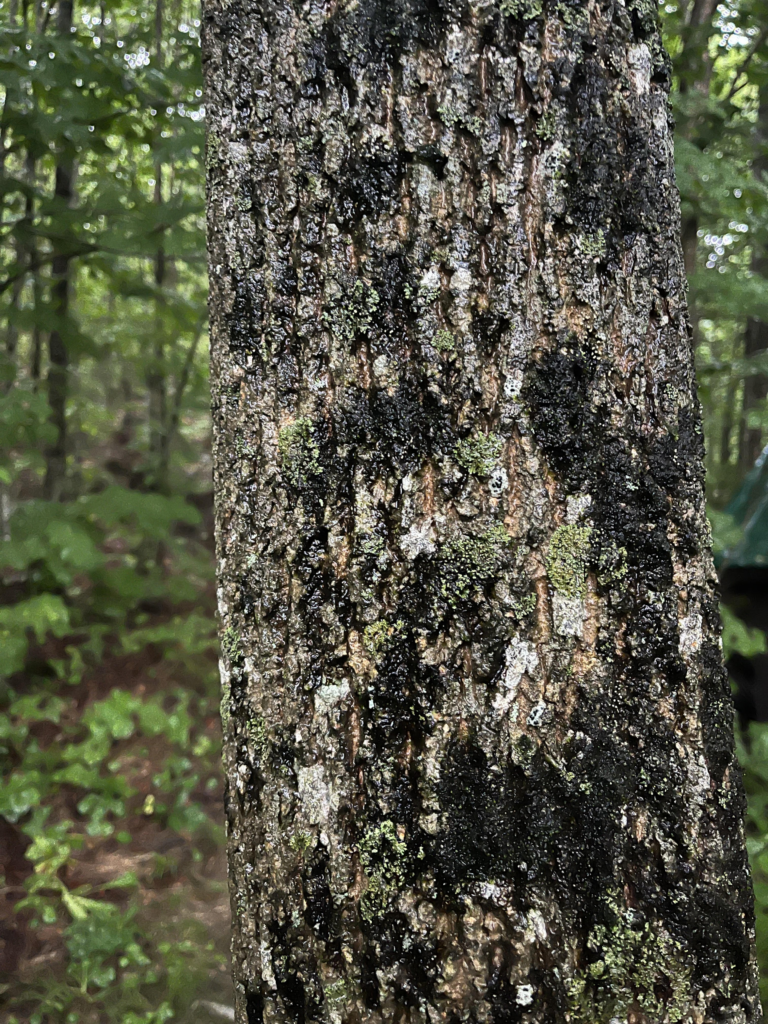
Deepy fissured bark in diamond-like shapes, even on younger trees, sometimes appears spongy. The bark is lighter than a maple or beech a lighter gray color. The leaves on white ash are compounds and on mature trees are situated high up on the tree of leaflets of 5-9 situated directly opposite of each other. White ash is easily distinguishable because the underside of the leaves are paler white compared to the top half. The wood of ash is dense and strong, it is cultivated everywhere and commonly used.
White Birch/Paper Birch (Betula papyrifera Marsh):

Family: Betulaceae

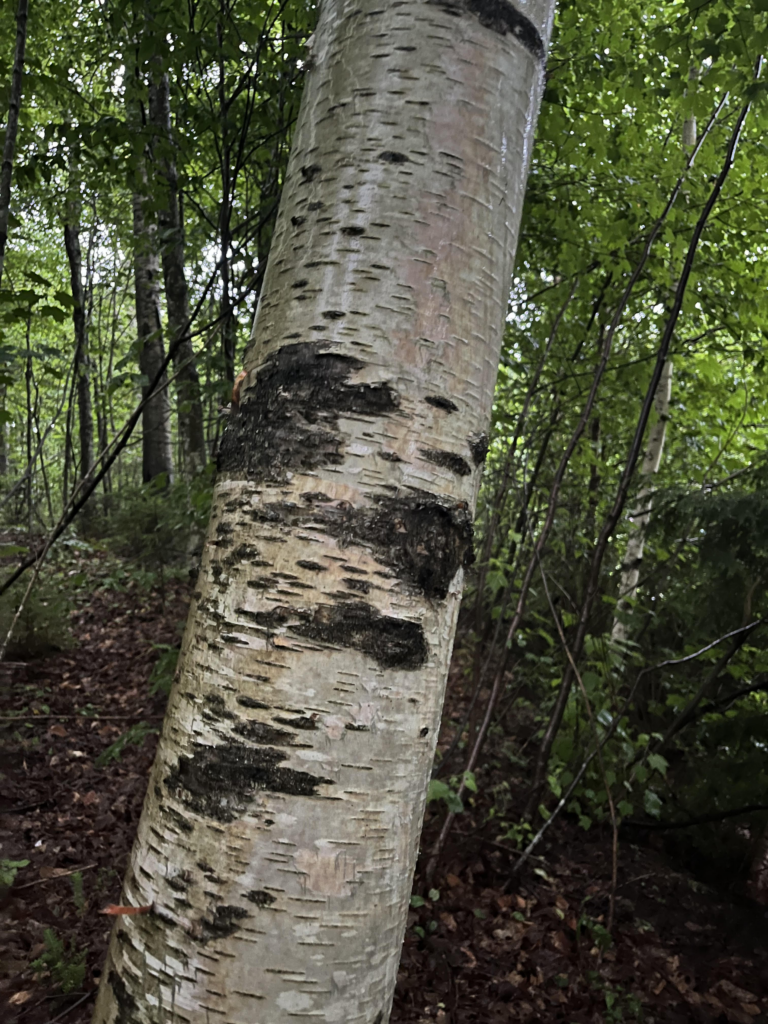
Key features: White bark, probably the easiest feature of the tree to determine the species a lot like yellow birch. Paper birch peels off very easy and is often seen dangling from the tree in large strips with an almost pink underside. The leaves on a paper birch differentiate from yellow birch in the fact that they are less elongated and have a more rounded feature closer to the base of the leaf. Paper Birch is often the first tree to colonize burned areas in norther latitudes.
Shrubs:

Red Trillium (Trillium erectum):

Key features and facts:

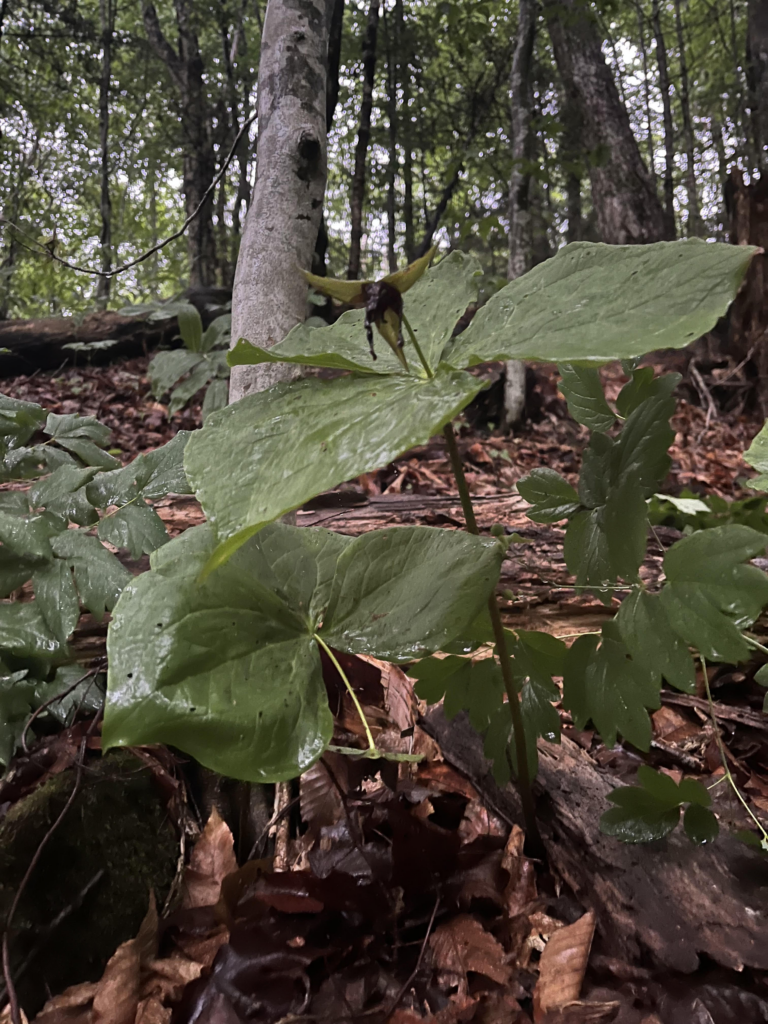
A shrub that has three leaves and one flower sprouting in the middle of them. The leaves are whorled around the stem. The flower in the middle is a deep red (just rained in the picture so cannot tell) and sit on a 2-8cm tall stalk. The flower commonly has a unpleasant odor, it is said to be similar to rotting meat, flies are drawn to it increasing pollination. The stem from the ground is thick and strong about the width of a straw.
Tall Beech Fern (Phegopteris hexagonoptera):

Key features and Facts:

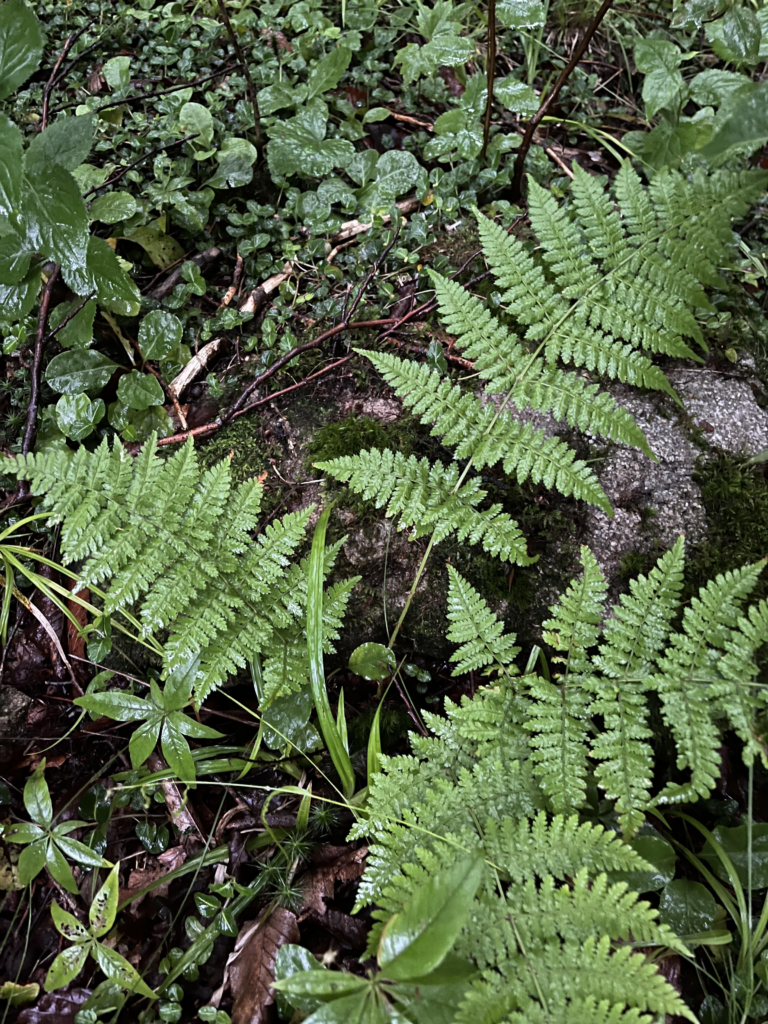
Tall Beech Fern is a deciduous fern native to moist woodlands and nearby streams. It has a delicate and lacy appearance They are about 10-25 cm long and are pinnately compounded. Fiddleheads are a commonly harvested wild plant, early in the season when the ferns are young and still coiled up. they can be cut up boiled and ate.
Northern Maidenhair (Adiantum pedatum L):

Found on rich wooded slopes and near ravines. It has frilly fronds that are palmately divided into finger-like projections. It has a waxy appearance and is much more ridged and firm than Tall Beech Ferns. Northern Maidenhair is a very useful plant that was once a common ingredient in cough syrup.
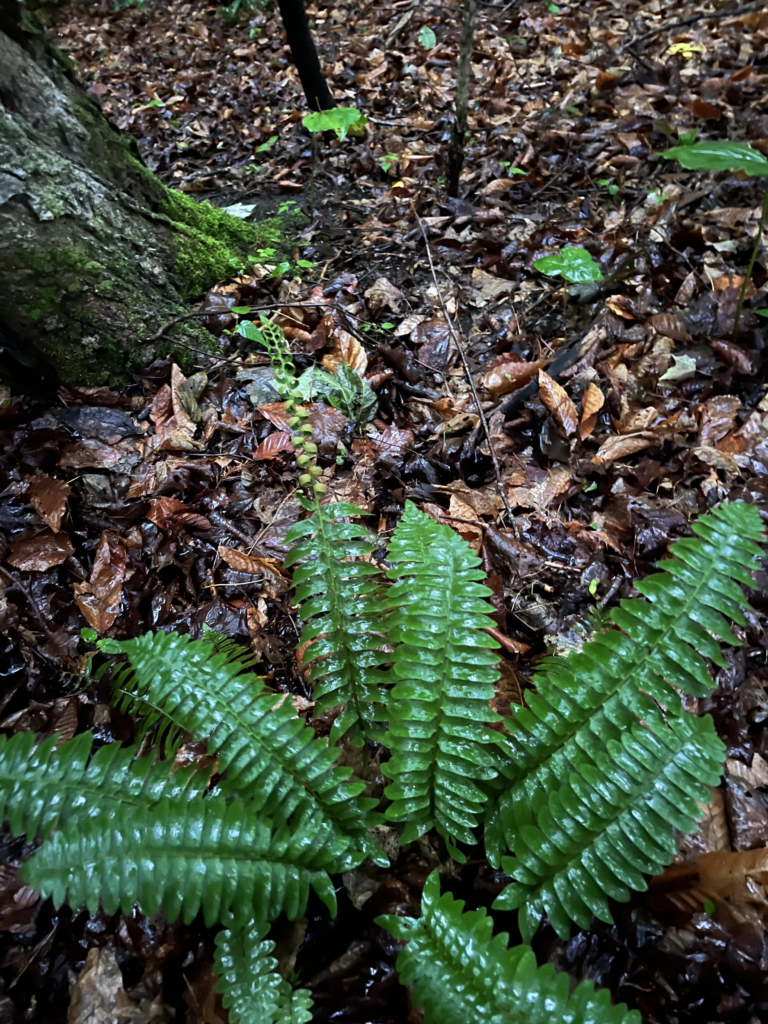
Striped Maple (Acer pensylvanicum):

Also called moose maple or mountain maple. This shrub grows to about 20-30 feet and has smooth bark that has light lines down it, hence the name striped maple. the leaves are large, about 6 inches or more across. They come to five points with very shallow sinuses. The striped maple is a sequential hermaphrodite, meaning that it can change its sex throughout its lifetime.
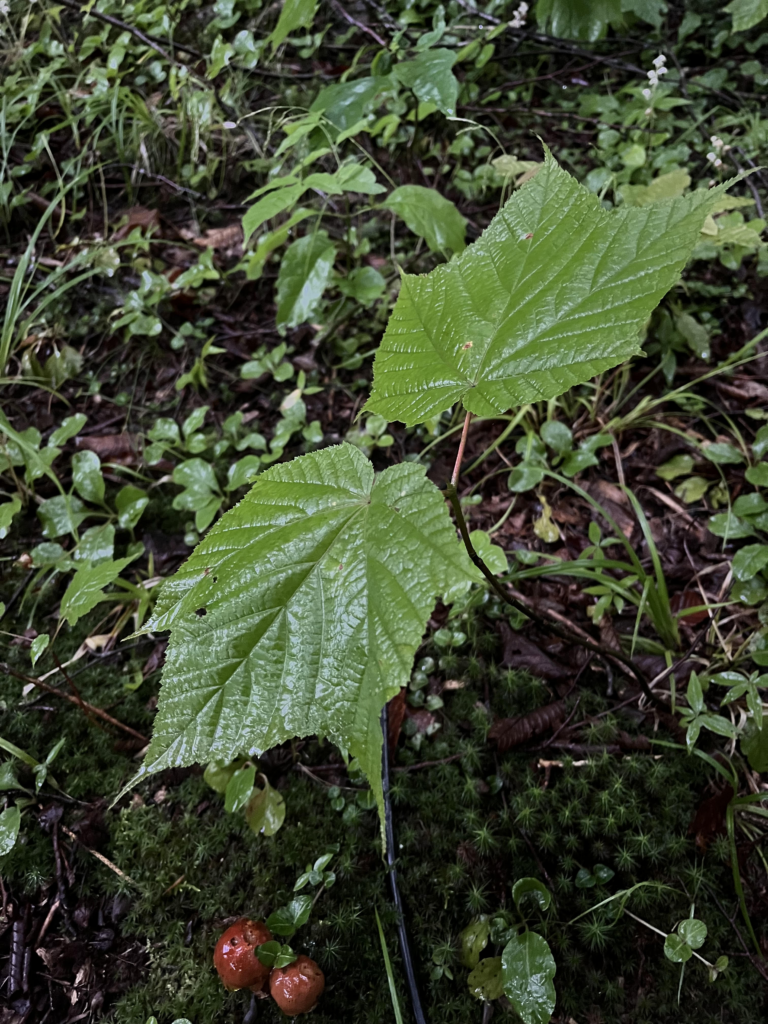
Animals and Bugs:

Dusky Arion (Arion subfuscus)

Key features and facts:

A species of slug that has a pale to darker orange color and bands of darker color that run down its sides. It has a pale yellow sole and leaves a trail of yellow pale mucus. there is a distinguishable rounded shell near the upper 1/3 of the body which often holds a lighter paler color. It uses a muscular “foot” to creep through vegetation and litter.
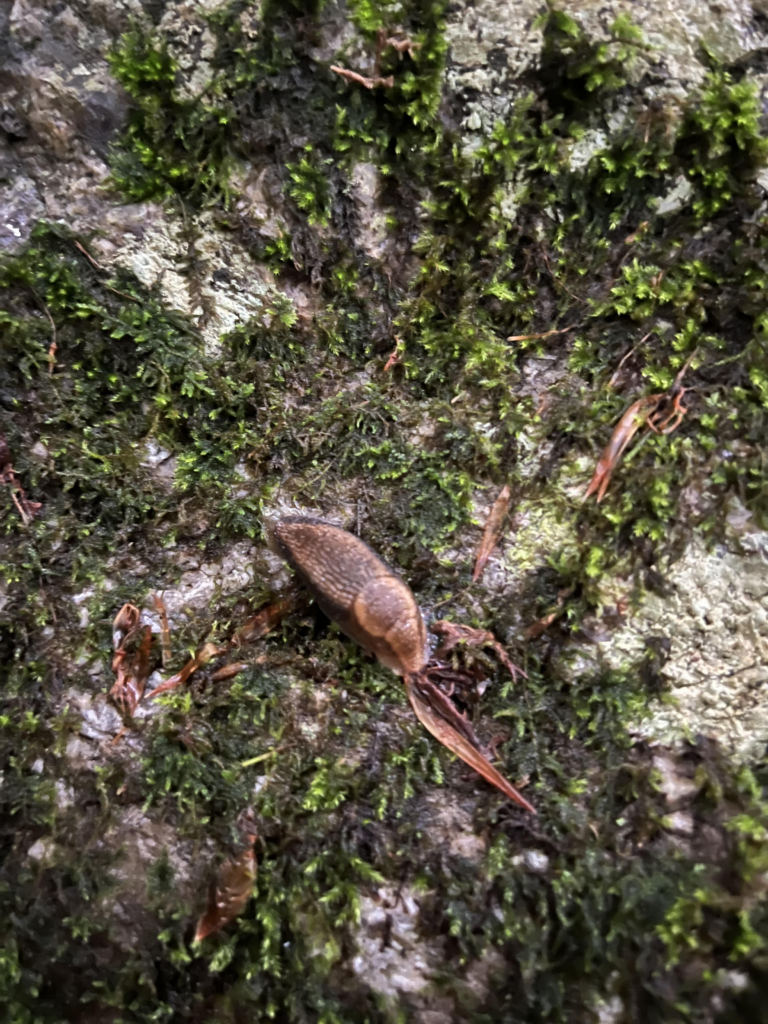
False Crocus Geometer (Xanthotype urticaria):

Key features and facts:

Some individuals are pale yellow while other may be a deeper yellow small brown speckles or brown or purple may be present over the wings of the moth. With such a vibrant color these moths often pass for butterfly’s. Males have more of these spots than females. Generally these species are 3-4cm long.
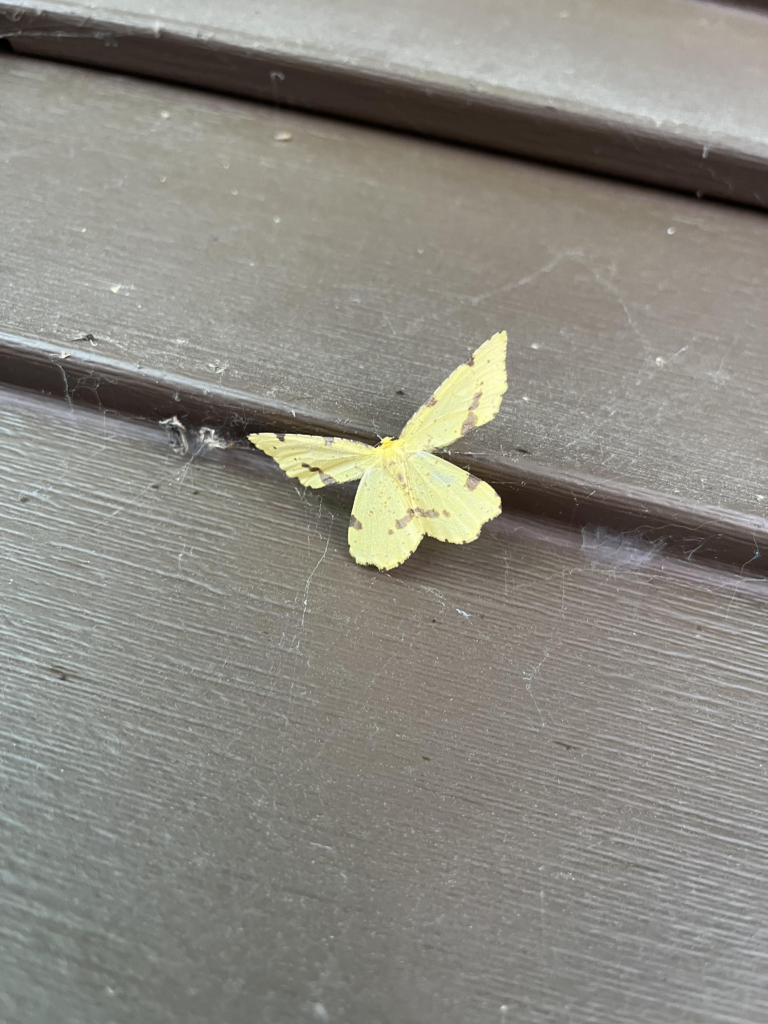
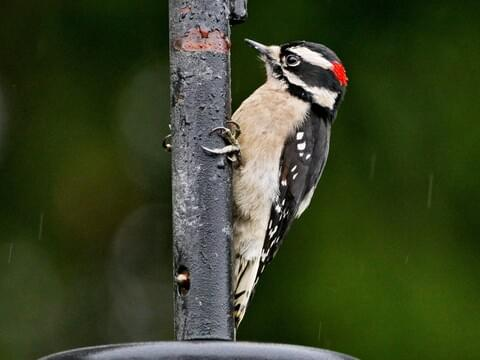
Downy Woodpecker (Dryobates pubescens):

Key features and facts:

A very easily recognizable bird, it has white spots on black wings with a stark white back, breast and stomach. The most noticeable feature, however, is the dash of read feathers on the backside of it’s head. It’s length ranges from 14-18 cm in length. They live in forested areas in the United States and Canada. The oldest living Downy Woodpecker was recorded at 11 years old.
Eastern Chipmunk (Tamias striatus):

Key features and facts:

A immensely common sight in rural, suburban, and urban areas these small rodents are about 30 cm in length. It has reddish brown fur on the upper 3/4 of its body while the underside is white. It has dark stripes that run down its back and tail, it also has smaller stripes around it’s eyelids. It prefers rocky bushy or log piles for cover. It eats nuts fruits mushrooms and insects; it commonly is seen transporting food in its cheek pockets.
Bibliography:

  • “Animal Inventory.” Vermont Fish & Wildlife Department, vtfishandwildlife.com/conserve/conservation-planning/animal-inventory. Accessed 10 July 2023.
  • Chipmunk image: “Humane Chipmunk Trapping Sevices.” Varment Guard Wildlife Services, varmentguard.com/wildlife-identification/chipmunk. Accessed 10 July 2023.
  • “Plant Inventory.” Vermont Fish & Wildlife Department, vtfishandwildlife.com/conserve/conservation-planning/plant-inventory. Accessed 10 July 2023.
  • “What’s A Bug to Do? Taking Inventory of Vermont’s Invertebrates.” What’s a Bug to Do? Taking Inventory of Vermont’s Invertebrates | Agency of Natural Resources, anr.vermont.gov/content/what%E2%80%99s-bug-do-taking-inventory-vermont%E2%80%99s-invertebrates. Accessed 10 July 2023.
  • Woodpecker image: Contrib1. “14 Common Backyard Birds in Chicago.” Sonoma Birding, 8 Dec. 2022, www.sonomabirding.com/common-birds-in-chicago/.\

Entry number three. Location: Willoughby State Forest

Tuesday, July fourth. 5:15 pm. Weather: Before and during a thunder shower. Wet and rainy low 70’s.

Part 1: As damp as the other day, leaves on the ground are glistening, and my feet sank in just like the other day. I went into the area focusing on bugs and insect life trying to look at a pattern of weather and insect presence. Immediately there was no indication of any flying insects nor of any slugs or spiders on the moss like there had been the last time I checked. However, I approached a larger boulder, appearing to be about six feet tall and eight feet across. Moss covered all the surface area that was facing upward toward the sky when I got down to get a closer look at the area that overhung over the ground, I was swarmed by mosquitos and smaller gnats. But, when I went a few feet away from the spot I noticed they did not follow. I went back to look at the site and noticed how much cooler and even more damp the area was than the surrounding area. The moss around the rock were holding a lot of water when I squeezed the moss water came out. When I touched it it left very interesting fur like stains on my hands when I removed them.

I noticed a particular tree I hadn’t before, the insides being gutted out. It was a dead tree the top had been snapped off not fairly recently but not too long ago. I made this assumption because the wood at the top which was almost to the canopy line was very tan and showed little rot but the bottom of the tree had a large tear in it it seemed. about 7 feet up and a half a foot wide it held spider webs and its inner wood was pulpy and falling off in long slender pieces toward the bottom. The water you could tell was getting into it somehow because it had left a trail from the inside out where water was flowing carrying the rotted-out debris of the tree. I did not see any moving animal or insect life in this tree. In this area I also observed some disturbances in the leaves by a steeper slope on the site the leaves were upturned revealing their darker side but not in a patter they were pushed about 5 yards down into a pile almost as if a small object or animal had slid down. There were no signs of disturbance leading away from it or leading up to it.

Part 2:

The thing I wanted to look at is similar to the topic I examined in the first blog post the large beech trees have boils on their bark while the smaller beeches have smoother bark, but their leaves are wilted and dead. I bring this up because in my last report I thought they were doing better but looking at it now at the ends of their branches the leaves are either a light unnatural shade of green or brown and drooping soaked in water pointed at the ground. The leaves closer to the bark were a darker shade. This is interesting to me I am curious if the trees at a young age are particularly susceptible to a certain disease or parasite. At first in my research I thought this could be Beech leaf disease, however, many sources claim it has not made its way to VT so I was looking at other reasons and found it could also be leaf scorch. This is the browning of plant tissue, including the leaf margin and tips it can also lead to the leaf yellowing. It is also the harshest on younger trees which would align with my observations. This would also account for the strikingly yellow leaves that were ill. This can occur on any plant when conditions are favorable for it. It is not cause by fungus or parasites but by high temperatures, wind, low soil moisture. When the water evaporates from the leaf surface the roots are unable to get enough water to compensate leaving the leaves looking like this.

Part 3:

Young Fir Tree: I choose this because I had been monitoring the tips of the branches and seeing them develop into these strikingly light green endings that contrasted so much with the rest of the branch. I thought it would make for a good choice of photo.
Moss on Tree: I found this one interesting because it was the only spot on the tree that held moss, I wanted to get a close up of the moss coming out of the bark because it is typically something I would have just ignored if I was walking through the woods.
Moss on Rock: I choose this spot because I was thinking more about lighting, and I could tell I was going to lose it. This moss was interesting because when I touched it it would leave little fibers on my hands it had a nice texture I wanted to capture.
Fungi on Trunk of Tree: I did not recognize this species, so I wanted to document it. It was also a strikingly different color than the rest of the fungi species I observed. I did not find them anywhere else in the plot.
Beech Leaves: I wanted to get a picture of a leaf for one of my photos and this turned out to be the perfect opportunity. I used the sun to get a clear shot of the veins in the leaf. This is why I choose this picture.

Part 5: I liked taking the photos, like the sketching it allowed me to get close and notice the details of the things I was observing. I did find it was much more difficult than I had previously thought. First finding things that I deemed interesting, and then having the right lighting, focus and angle to properly document and get the important features that intrigued me. I found it was hard to convey these features because of all that had to go right with these different variables, but I felt that the images I was able to collect showed a good variety and I was able to convey what I found interesting about them. It was different from sketching in the sense that I was thinking about different things like angle and light using a different part of my brain, it demanded a different skill set. Sketching was more observation and translating. I found both challenging but fun to work with in the field. The plot was wet again today, I hope it warms up so I can see the impact that it has on a dry environment, and I can get more variety on my observations.

Entry number 2, Willoughby State Forest

Part 1: Wednesday June 28th 7:30 pm. Weather, slightly rainy and damp. Approximately 20 minutes after a hard rainfall. Very dark and cloudy, much darker than usual this time of day.

Part 2: I arrived at the site and the leaves were very moist because of the past few days of rain. When I was walking around in the site the ground was sagging about two inches into the ground whenever I took a step. One of the first things I noticed was the absence of flying bugs. Last time I visited I was. getting bitten and mobbed by small gnats and mosquitos, however, today there were no bugs in the air I am not sure if this was because of the rain or the cooler air. Another difference was the presence of bugs on rocks and logs. I counted a total of 8 slugs on various moss-covered boulders during my visit. I noticed they looked one of two ways. More elongated and lighter brown color or larger and stubby and a darker brown color with various spots. I am unsure if this is because they are the same species different age or different species all together. Everything was lusher in general and green. I tested how full of water each of the different moss species were on the rocks and found they absorbed water very well especially this partially lush green species that grew about an inch and a half off of the rock in firm but soft points. It would be interesting to see how long it would be able to hold onto water after the rainfall stops. I heard no birds perhaps this was because of the rain. I noticed a lot of spiders under the leaves of shrubbery and in the nooks of bark. These were spiders I did not recognized they had long thin legs and a pale abdomen and a pronounced head. It was not a daddy long leg. Overall, the site conditions had changed a lot since I saw them last, the site had absorbed a lot more water and I saw new bug species as well as the absence of others.

Part 3: The species I could not identify was a small plant, it was approximately a foot tall with three large leaves in a rounded diamond type shape they were strong leaves not flimsy, they also seemed to have a waxy appearance. They came to a point at each end. The stem was very strong. It was a smooth stem that went straight into the ground and by estimate was a centimeter in diameter. The most noticeable feature, however, was the flower the sprouted out of the middle of the plant. It was a purple violet flower its shape was uncertain because the rain had caused it to droop but around the flower there was three smaller leaves that were shaped as triangles.

The plant I found this to be was Trillium erectum commonly known as red trillium. In order to identify this plant I took a look at a few of the sites that were recommended but instead I looked up common flowering plants in Vermont and used the state of Vermont’s database. It sent me to a website called Go Botany. On this site It asked for the type of plant I choose the option orchids and related plants because it held similar appearances to an orchid and didn’t fit in other categories. Once I chose this, I knew it wasn’t an orchid so I selected iris and other monocots, this brought me to a broad range of plant options that were in my area. I searched through when finally I found a match that looked exactly like the plant I had found I then looked up more pictures of the plant to make sure and was able to verify it was a red trillium.

Interesting Fact: Indigenous tribes of America as well as European settlers in north America used red trillium to enable the labor of childbirth. It was also used to cure other problems related to gynecology.

Part 4:

Conclusion: I enjoyed this project, while drawing is not my strong suit nor is it something I have ever really had to use for school I found that it helped me look at the details. When I was drawing it held my focus and interest, it really had me examine the unique parts of the species and things I was drawing enabling me to get the most accurate picture. When I return I want to place more emphasis on the insect and bug life at this site. I’ve noticed a shift in the bug and insect life in the field however I want to get more details and look harder for the different things present especially in different weather conditions, I’ve gone in two different weather conditions and noticed very different environments regarding bug life I want to be hyperaware of this next time and take more notes on it.

June 20th 8pm

Weather: 60 degrees Fahrenheit and dry, temperature was rapidly cooling during my visit. It has rained for a week prior to yesterday.

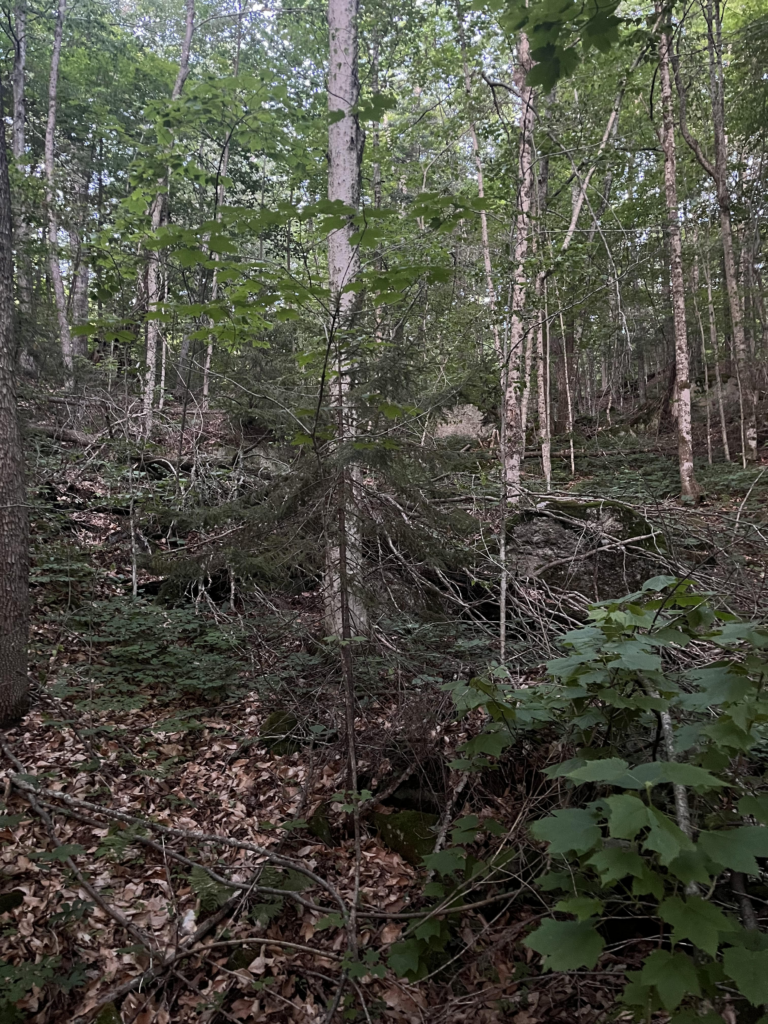
My site is located behind my home about a ten-minute walk from my house. It is not heavily traveled by people. It is situated just below a meadow and immediately below the sharp cliff face of Mount Piscah in Westmore Vermont just outside Willoughby state forest. The site itself is situated next to a seasonal ravine, during the spring there is a decent amount of water flow leaving exposed rocks the size of basketballs. Another unique thing about this site alike the rest of the state forest is the deposited rock that scatters around everywhere from glacial deposits. In my site there was 5 that were about half the size of a compact car and then numerous the size of refrigerators. Each was covered in an inch or dense wet moss. The sit was very buggy and the ground was still slightly damp from the rain the past week. The forest floor was littered in maple, red oak, and beech leaves because of their late shed. This cover was about two inches thick before one could observe the soil. There was a large canopy, dominated by Sugar maple, yellow birch, beech, and what appeared to be white ash. There was 5 or 6 large. trees that took up most of the canopy space with trunks I estimated to be at least 6.5 feet in circumference. The area was generally sparsely grown, there were plenty of new growth trees like small beeches, mountain maples, and fir trees. besides these the ground lay clear besides ferns and other shrubbery I could not Identify. The place I examined was on a slight slope facing westward. The westward side had a recently logged section as well so it has been getting more exposure in the past year. As for wildlife I heard a woodpecker and numerous birds calling. I also saw plenty of chipmunks. Tracks were hard to come by as the leaves were difficult to interpret however there were plenty of small trails where leaves had been upturned leaving their damper underside in a patternlike fashion. This area was hardwood dominated and the wood are labeled as northern hardwood forest. The softwood in this area consisted of mostly small fir but no large growth fir. In this area there was a lot of old large felled trees of natural causes, mostly birch well in the process of decaying with a variety of mushrooms and fungi on them.

  • Why are the younger beech dying
  • I was unable to find a beech that did not have boils on its bark. Are these trees particularly susceptible for what I am assuming is a disease or parasite?
  • Why are there no older growth firs in this area.
  • does the increased western exposure from logging have any large impacts on the biodiverity of the area and its health.
  • How does the large ammount of leave cover contibute to the dampness of the soil.
  • Why do beech, birch and maple dominate the area.
  • What species are dependent on the stream and dampness of the soil.
  • Is there a reason that birch primarily grew from the tops of the deposited rocks?
  • How can you understand levels of log decomposistion.
  • How close is the undergound water table?
  • Is this seasonal stream vital for some species?
  • What effect does the debris of a hardwood forest have on soil composition?
  • What bird species live in this area?
  • Why were the young beech’s leaves wilting early?”
  • How often is this stream in use?
  • Does the sudden uprise of the mountain cliffs impact sun exposure?
  • Is there increased runoff from the mountain?
  • If so do the exposed unique terrain of the mountain carry anything unique or valuable for plant health?
  • What is the permeability of the soil in this area?
  • What does this permeability mean for the plant growth?
  • What specific fungi were on the birch log I examined?
  • How do the deposited rocks impact animal and plant life?
  • How come only certain sized rocks were deposited?
  • What is the soil composition in this area?
  • Why does moss thrive on these rocks?

The question I choose to research is, “I was unable to find a beech that did not have boils on its bark. Why are these trees particularly susceptible for what I am assuming is a disease or paracitye ?”

Beech trees are attacked by a disease known as beech bark disease. It is formed by the help of both a invasive parasite and two types of fungi. The insects do the work and bore into the tree weakening the bark and creating lesions. These fungi will get into these holes and it creates these bumps that I saw that cover almost all the surface area on the tree. Beech trees scar very easily so it is very noticeable much like when bears try to get to beech nuts you can see the claw marks years later. While this disease is not directly responsible for beech trees death, it does weaken the tree and creates a great deal of stress and mortality especially around saplings. There is also a beech leaf disease that causes the leaves to prematurely wilt. These are ravaging both American and European beech. Source : (Beech Trees – Stowe Land Trust)

Bibliography:

“Beech Trees.” Stowe Land Trust, www.stowelandtrust.org/work/education-outreach/summer-naturalist/naturalists-journal/post/naturalist-highlight-beech-trees. Accessed 20 June 2023.

Conclusion:

I am glad I choose this spot the ravine provides a unique spot in the woods with different growth and plant presence. The recent logging also gives me a chance to see how it is impacted in the following years. It will be interesting to see how it handles this heat we will have this week. Something that caught my attention during this visit was the thick ground cover of maple, beech, and oak leaves. I am interested in learning more about how this impacts the ecosystem and why these hardwoods lose their leaves later than other trees. The cover was about 2 inches deep I found this interesting as it remains like this year-round, however, I have never really taken the time to notice it until now. Future visits I will pay closer attention to this feature of my area.

Skip to toolbar